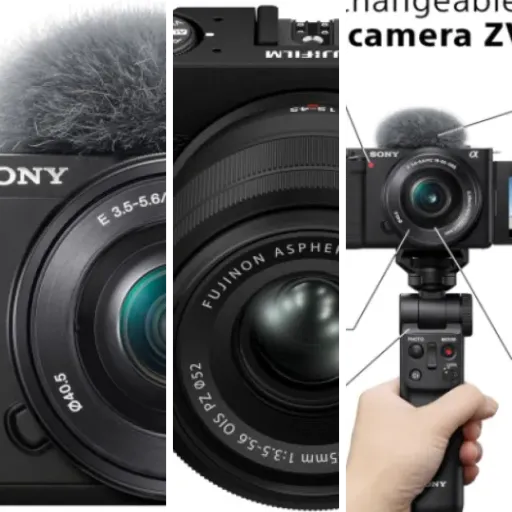

Summary
Editor's rating
Value for money: great starter body, but remember the hidden costs
Design: light, plastic, and clearly built for vloggers
Battery life: usable, but buy spares straight away
Durability and build: fine for normal use, not a tank
Performance: autofocus is the star, stabilization is the weak link
What the ZV-E10 actually offers in real life
Pros
- Very good autofocus with reliable eye tracking and handy Product Showcase mode
- Compact and light body with flip-out screen and built-in directional mic suited for vlogging
- APS‑C 4K image quality is solid for YouTube and social media, with no hard recording limit
Cons
- No viewfinder and a screen that’s hard to see in bright sunlight
- No in-body image stabilization and average battery life, so you need extra gear and batteries
- Plastic build with no weather sealing and older Sony menus that feel dated

Specifications
View full product page →| Brand | Sony |
A small camera that actually made me vlog more
I’ve been using the Sony ZV-E10 for a few weeks as my main camera for YouTube clips, some travel shots, and a bit of casual photography. Before this, I mostly used my phone and an older compact camera. The simple truth is: this thing made me shoot more content, just because it’s easy to handle and doesn’t scare you with pro-level complexity. That alone is already a win for me.
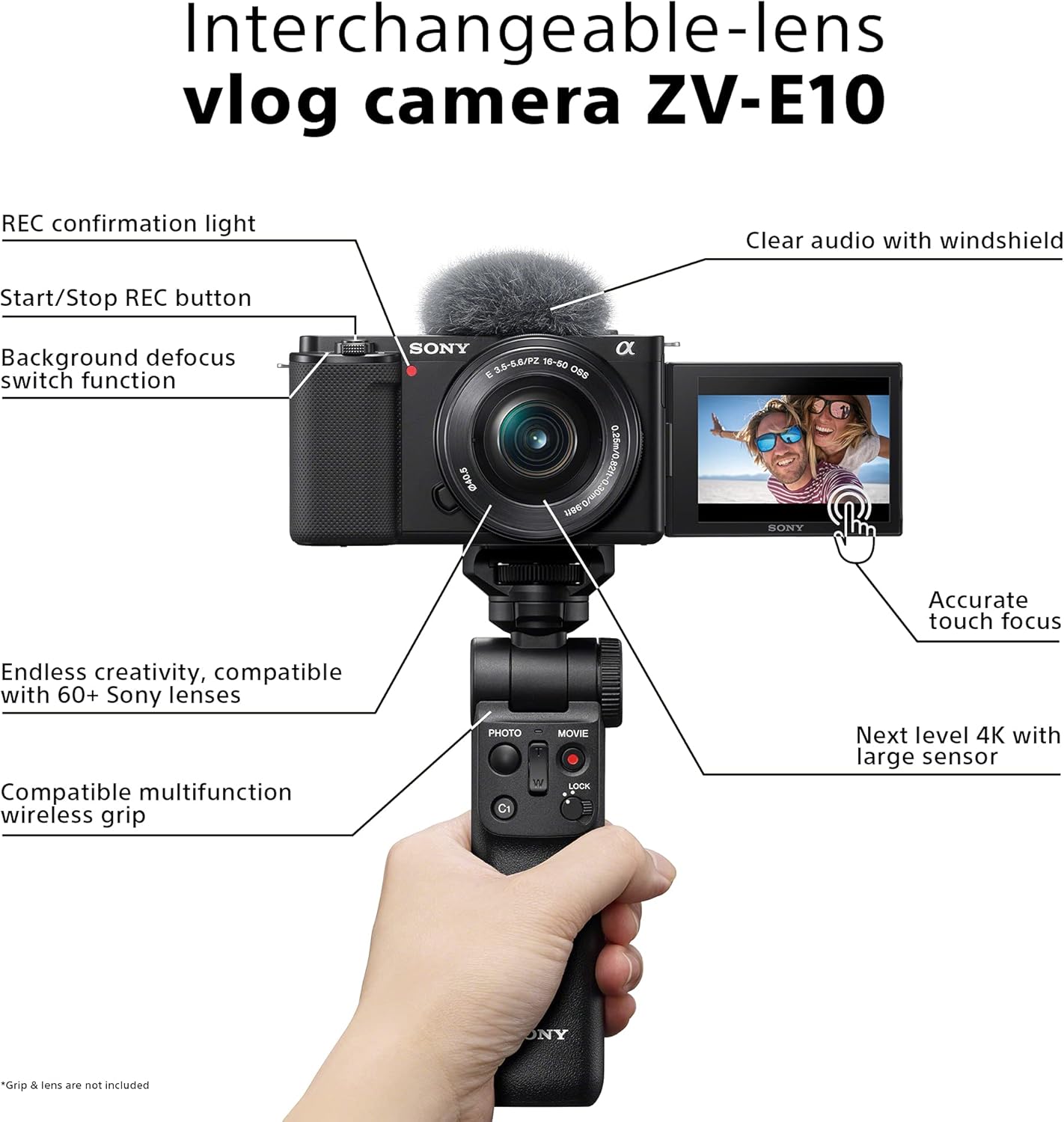
From day one, you feel that it’s built with content creators in mind. The flip-out screen, the red tally light, the big record button on top, the built-in directional mic with the little deadcat – all that is clearly for people who film themselves. You don’t get the fancy magnesium tank feeling of Sony’s higher-end bodies, but you get a tool that’s light, simple, and focused on video.
I didn’t buy the kit lens version; I used it mostly with a Sigma 18–50mm f/2.8 and briefly with the basic Sony 16–50mm OSS. That combo gave me a decent idea of what the body can and can’t do. It’s very capable for the price, but you do feel a few compromises: no viewfinder, no in-body stabilization, old-school Sony menus, and a battery that drains faster than you’d like.
If you’re wondering whether this is a good upgrade from a phone or a compact like the RX100 for vlogging and simple YouTube content, I’d say yes, it’s a pretty solid step up. If you’re chasing full-on pro features or you’re picky about ergonomics and robustness, you might get frustrated. I’ll break it down section by section so you can see where it shines and where it’s just “meh but fine.”
Value for money: great starter body, but remember the hidden costs
In terms of value, the ZV-E10 hits a nice spot. You get an APS‑C sensor, 4K video, strong autofocus, a flip screen, and a mic input at a price where many competitors still cut corners. For someone stepping up from a phone or a compact camera, the image quality jump and the flexibility of interchangeable lenses are very noticeable. It’s also one of the cheaper ways to get into the Sony E-mount ecosystem, which is packed with both Sony and third-party lenses.
However, you really need to factor in the extra costs. Out of the box (especially body-only), you’ll likely end up buying:
- At least one or two extra batteries
- A fast SD card (V30 is enough for most 4K work)
- A decent lens (the kit 16–50mm is okay to start, but you’ll want better later)
- Probably a tripod or grip, and maybe an external mic
Once you add all that, the total bill climbs. It’s still fair for what you get, but it’s not a cheap hobby. Compared to higher-end Sony bodies like the A6700 or full-frame options, you save a lot, but you also give up things like better menus, in-body stabilization, more robust build, and nicer color profiles like S-Cinetone. If you already know you’ll outgrow this quickly, it might be smarter to save up for the higher tier.
For beginners and hobbyist creators, though, the ZV-E10 offers good value for money. It gives you most of the tools you need to learn framing, exposure, audio, and editing, without spending pro money. You just have to go in knowing that the body is only part of the investment, and that you’re trading robustness and advanced features for a lower entry price and a focus on simplicity.
Design: light, plastic, and clearly built for vloggers
Design-wise, the ZV-E10 is compact and very light at around 299 g for the body. When you first pick it up, it doesn’t feel premium or rugged – it feels like a small plastic camera. That’s not necessarily a bad thing: for vlogging, I actually liked that it didn’t weigh down my arm after a few minutes of holding it at arm’s length. But if you’re used to something like an A7 series or even a mid-range DSLR, this will feel a bit toy-ish.
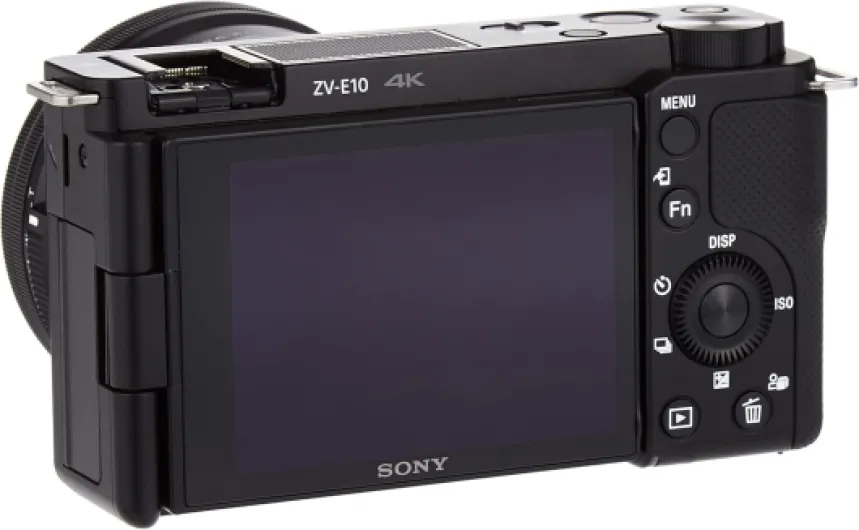
The button layout is clearly video-first. There’s a big red record button on top, a dedicated background “bokeh” button (basically a quick aperture/processing shortcut), and a button to switch between stills / video / S&Q modes. Personally, I would have preferred a physical mode dial for that, like on the A6700, because cycling through modes with one button is slower and less intuitive. That said, once you get used to it, you can work around it with custom buttons and the Fn menu.
The flip-out, fully articulating screen is the main design win. For self-recording, framing vertical content, or low/high-angle shots, it’s just practical. The downside is the screen is not very bright in harsh sunlight. In bright outdoor conditions, I sometimes had to shade it with my hand to see exposure and focus properly. And since there’s no viewfinder, you don’t have a backup. If you shoot a lot of photos outdoors, that might annoy you more than it did me.
Ports are well placed: you get 3.5mm mic input, micro-HDMI, and USB‑C (USB 3.2). The hot shoe on top supports Sony’s digital audio interface, so you can cleanly mount compatible Sony mics without extra cables. The grip is small but usable; if you have big hands, you might want a small cage or grip extension. In short: the design is practical for filming yourself, less so for people who want a robust, ergonomic stills camera they can beat up on a mountain.
Battery life: usable, but buy spares straight away
The ZV-E10 uses Sony’s older NP-FW50 battery, and you can feel it. For casual use, it’s fine; for a full shooting day or a long travel vlog session, it’s clearly not enough. In my use, shooting mostly 4K 25/30p, some B‑roll in 1080p, and occasionally using it as a webcam, I was getting roughly 60–90 minutes of real recording time per battery, depending on how much I messed with menus and playback.
Practically, that means: if you’re doing a couple of short talking-head videos at home, one battery is okay. But if you’re out all day filming travel clips, walking B‑roll, and maybe some photos on top, you’ll kill a battery fast. I ended up buying two extra third-party batteries and a dual charger, and that solved the problem. You can also power it via USB‑C from a power bank, which is handy for static setups like desk videos or streaming, but less practical when walking around.
The camera does give you basic battery percentage info, but it’s not super precise, and it tends to drop more quickly once you get under 30%. I got in the habit of swapping batteries a bit early rather than risking a shutdown mid-take. Also, 4K obviously drains the battery faster than 1080p, so if you’re okay with Full HD, you can stretch the life a bit.
So, battery life is not a deal-breaker, but it’s clearly a weak point. If you buy this camera, just assume extra batteries are part of the real price. For a vlogging camera in 2024, I would have liked a larger, more modern battery, but at this price point, I understand why Sony stuck to the older system. Just don’t expect DSLR-level endurance from this thing.
Durability and build: fine for normal use, not a tank
In terms of build quality, the ZV-E10 is very much a consumer-level camera. The body is mostly plastic, the doors and flaps feel a bit thin, and it doesn’t give the impression that it would love being dropped or soaked. There’s no official weather sealing, so I was careful in rain and dusty environments. It survived being tossed into a backpack without a case, but I wouldn’t push my luck too much.
After a few weeks of use, including a couple of short trips, the body still looks fine: no creaks, no loose dials, screen hinge still feels solid. The screen mechanism in particular is a point of concern on some cameras, but on this one it feels reasonably sturdy as long as you’re not yanking it around. I did notice that the finish can scratch if you’re clumsy with metal objects in the same bag, so a simple pouch or small camera cube is a good idea.
The ports and hot shoe held up fine with a small shotgun mic and a lightweight tripod. I wouldn’t mount heavy rigs or massive lenses on it without at least a cage, because the body just doesn’t feel designed for that kind of stress. Also, the battery and SD card share the same compartment at the bottom, so if you’re using a tripod plate, swapping cards or batteries is a bit more annoying and puts more wear on the door over time.
Overall, durability is okay for normal creator use: desk setups, handheld vlogging, travel, and casual shooting. If you’re expecting pro-level ruggedness or want to use it in rough conditions (heavy rain, sand, snow), this is not the body I’d trust without extra protection. Treat it like a piece of consumer electronics, not like a battle-hardened work camera, and you’ll probably be fine.
Performance: autofocus is the star, stabilization is the weak link
In terms of pure image quality and autofocus, the ZV-E10 holds up really well for its price. The 24.2 MP APS‑C sensor gives sharp 4K (downsampled from 6K) at up to 30p, and Full HD up to 120p for slow motion. For YouTube and social media, that’s more than enough. In low light, with a decent lens like an f/2.8 zoom or a fast prime, you can get clean footage up to ISO 3200–6400 if you don’t mind a bit of grain. It’s not a low-light monster, but it’s decent and definitely a step up from most phones.
The autofocus is the real strong point. Face and eye detection are quick and reliable, both for stills and video. When I filmed talking-head clips, the camera just stuck to my eye and didn’t randomly jump to the background. The Product Showcase mode also works as advertised: show an object close to the lens, it snaps focus to it; move it away, it goes back to your face. For solo creators, that’s a big quality-of-life feature and cuts down on retakes.
Where performance drops a bit is stabilization and rolling shutter. The body itself has no IBIS, so you rely on lens OSS (like the 16–50mm kit) and digital stabilization. Digital stabilization crops in further, and even with it on, walking shots still look a bit wobbly if you’re not careful. For static shots or slow movements, it’s fine. For walk-and-talk vlogs, you’ll probably want a small gimbal or at least a lens with good optical stabilization and a bit of practice in how you move.
For stills, the camera is okay: 11 fps burst is decent, and the 24 MP files are more than enough for prints and social media. But the lack of viewfinder and the lightweight, plasticky body make it feel more like a video tool than a photography workhorse. If your main focus is photos, I’d look at an A6xxx body instead. If your main focus is video and you just need decent photos on the side, this does the job.
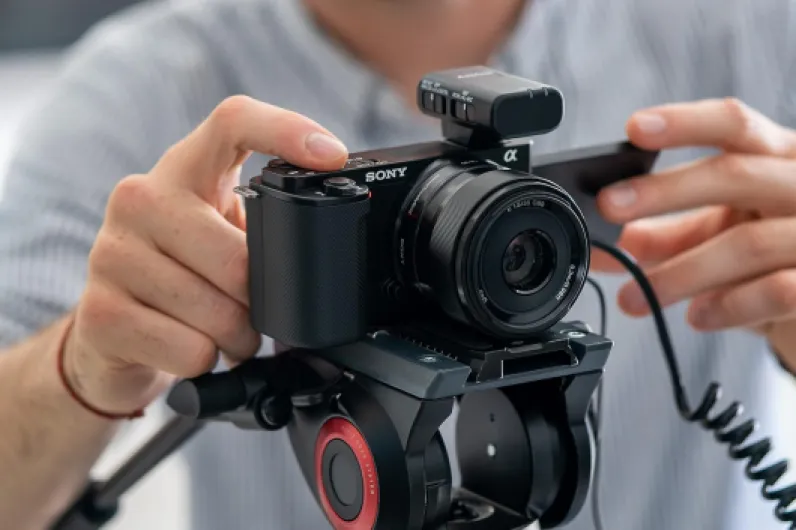
What the ZV-E10 actually offers in real life
On paper, the Sony ZV-E10 checks a lot of boxes: APS‑C sensor (24.2 MP), 4K up to 30p, Full HD up to 120p, flip screen, mic input, headphone out via USB monitoring workaround, and Sony’s well-known Real-Time Eye AF. In practice, it feels like a stripped-down A6000-series body that’s been tweaked specifically for vloggers. You lose some things (viewfinder, chunky grip, more buttons), but you gain some shortcuts and features aimed at people in front of the camera.
You get no 4K crop beyond the usual APS‑C (which is nice), decent rolling shutter control if you don’t whip the camera around too fast, and surprisingly solid autofocus. Face and eye tracking are the real highlight: for talking-head videos, it just locks on and stays there. There’s also a Product Showcase mode that quickly shifts focus from your face to an object you hold up to the lens. For unboxings or product reviews, that’s genuinely handy and saves you from hunting through AF settings.
The camera can record 4K without the old 30-minute limit, which is great on paper. In real life, you’re still limited by battery and heat, but for normal YouTube videos and travel clips, I didn’t hit a thermal shutdown. I mostly shot indoors and in mild weather though, so in very hot conditions it might be a different story. It also doubles as a USB webcam, which is convenient if you stream or do a lot of calls and want better quality than your laptop camera.
Overall, as a “presentation” of what it is: think of it as an entry-to-mid-level hybrid that leans heavily towards video and vlogging. It’s not a pro cinema camera, and it’s not a hardcore photography body. It’s more like a content creator’s Swiss Army knife: you get most tools you need, none of them are perfect, but they cover 90% of what beginners and hobbyists want to do.
Pros
- Very good autofocus with reliable eye tracking and handy Product Showcase mode
- Compact and light body with flip-out screen and built-in directional mic suited for vlogging
- APS‑C 4K image quality is solid for YouTube and social media, with no hard recording limit
Cons
- No viewfinder and a screen that’s hard to see in bright sunlight
- No in-body image stabilization and average battery life, so you need extra gear and batteries
- Plastic build with no weather sealing and older Sony menus that feel dated
Conclusion
Editor's rating
The Sony ZV-E10 is a practical, no-nonsense camera for people who mainly care about creating videos and vlogs, not for gear collectors or spec chasers. The strong points are clear: solid 4K quality, very reliable autofocus, a flip-out screen, and a built-in directional mic that’s actually usable. It’s light, easy to throw in a bag, and it doesn’t take long to learn the basics, even if you’re new to interchangeable-lens cameras.
On the flip side, you feel the compromises. The body feels a bit fragile, there’s no viewfinder, no in-body stabilization, battery life is average at best, and the old Sony menu system isn’t exactly friendly. If you plan to do a lot of handheld walking shots, outdoor photography in bright sun, or rough travel in bad weather, some of these limitations will get on your nerves.
I’d say this camera is well suited for: YouTubers, streamers, and beginners who want to move beyond a phone, shoot mostly talking-heads, B‑roll, and simple travel vlogs, and are okay investing in a couple of lenses and accessories over time. People who should probably skip it: those who are very serious about photography first, those who need strong stabilization and weather sealing, or anyone who already knows they’ll want higher-end Sony features soon. As a starting point into the Sony ecosystem and a daily content tool, though, it gets the job done and offers solid value.