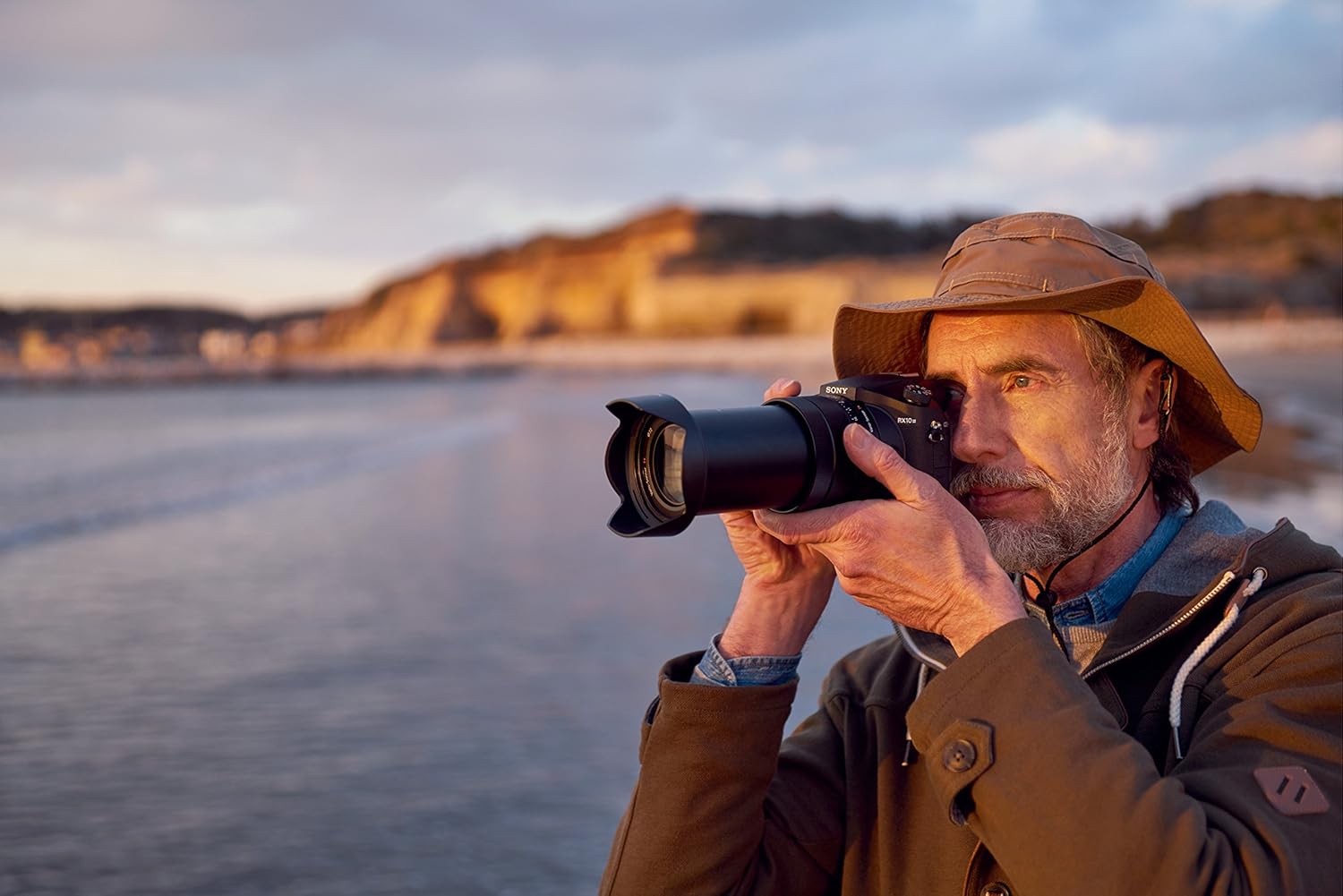

Summary
Editor's rating
Value for money: depends heavily on the price you find
Design & handling: small DSLR vibes with a few quirks
Battery life: usable, but carry a spare – seriously
Build quality & durability: feels tough enough for rough use
Image quality, zoom and autofocus: very capable with a few age‑related limits
What this camera actually is (and what it isn’t)
Pros
- Huge 24–600mm equivalent zoom range in one fixed lens with effective optical stabilization
- Good image quality in decent light and clean 4K video for travel and everyday shooting
- Solid build with weather resistance and comfortable DSLR‑style handling
Cons
- Autofocus and low‑light performance lag behind newer APS‑C and full‑frame cameras
- Battery life is only average and no external charger is included, so extra cost for spares

Specifications
View full product page →| Brand | Sony |
A do‑it‑all camera for people who are tired of carrying three lenses
I’ve been using the Sony RX10 III as my "lazy kit" camera for a while now – basically for days when I can’t be bothered dragging a DSLR body with a telephoto, a wide angle, and a backpack full of bits. If you’ve ever lugged a 70‑200 or 150‑600 lens around all day, you’ll get why a 24‑600mm built‑in zoom sounded very tempting to me. I bought it specifically for walks, trips, and casual wildlife where I still want decent quality but don’t want the weight and hassle of a full setup.
Out of the box, it doesn’t feel like a toy bridge camera at all. It’s closer to a small DSLR with a big lens glued on. The first day I took it out, I went from shooting wide landscapes to grabbing a squirrel halfway up a tree without changing anything except the zoom ring. That’s exactly what I wanted: one body, one lens, no swapping, no dust in the sensor, no panic about which focal length to bring.
But it’s not perfect. The sensor is 1‑inch, not APS‑C or full frame, so you can’t expect the same low‑light performance or background blur as a big camera with a fast prime. Also, the menu system is classic Sony: powerful, but a bit of a maze if you’re not used to it. And the Wi‑Fi/app side of things is clunky enough that I basically gave up after a few tries and just use a card reader now.
So this review is from that angle: someone who normally uses bigger cameras and lenses, but wanted something more compact and flexible. I’ll go through what actually works in real life – image quality, zoom, video, battery, handling, and whether I think it’s worth the money today compared to just buying a cheap DSLR/mirrorless with a couple of lenses.
Value for money: depends heavily on the price you find
Value is where opinions will differ a lot with the RX10 III. When it launched around the £1,200 mark, I honestly thought it was too expensive for a 1‑inch bridge camera. One Amazon reviewer basically said the same thing: they got it on a deal and would not have paid full retail. I’m in that camp too. At full price, you’re in the territory of a decent APS‑C body plus a kit lens and maybe a budget telephoto, which gives you more room to grow, better low‑light performance, and the option to upgrade lenses later.
Where it starts to make sense is when you find it around the £800–£900 range or used/refurbished. At that price, you’re effectively paying for the convenience of a 24–600mm Zeiss zoom with good stabilization and 4K video, all in a single package that you don’t have to think about. If you cost out a DSLR or mirrorless with lenses that actually cover 24–600mm with decent quality, you quickly end up spending a lot of money, plus dealing with size and weight. So if your main goal is simplicity – one camera that does almost everything – the RX10 III starts to look more reasonable.
There’s also the RX10 IV above it, which has faster autofocus and some tweaks, but usually costs quite a bit more. For what I shoot, the IV didn’t justify the extra cash, and I’d agree with the reviewer who said the IV wasn’t worth an extra £500 for them. If you’re a serious wildlife shooter and really need the best AF you can get in this category, maybe you stretch to the IV; otherwise, the III hits a better price/performance point, especially second‑hand.
So in terms of value, I’d say: if you’re happy carrying multiple lenses and like to upgrade gear often, your money is probably better spent on a modern APS‑C mirrorless system. If you just want a single, capable camera that covers most situations and you find this at a good discount, it’s a pretty sensible buy. It’s not cheap, but considering the zoom range, build quality, and video features, it’s not a rip‑off either – as long as you’re not paying top launch price in 2026.
Design & handling: small DSLR vibes with a few quirks
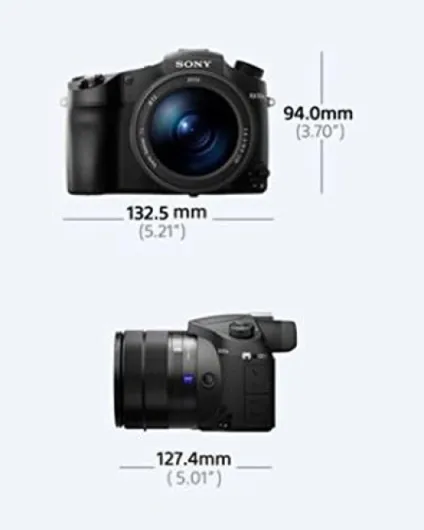
Physically, the RX10 III looks and feels like a compact DSLR with a big zoom lens permanently attached. It’s not a tiny camera you slip into a jacket pocket. With the battery and card in, it’s about 1.05 kg, so after a full day of walking you feel it on your neck, but it’s still lighter than carrying a DSLR plus a 70‑300 or 150‑600. The grip is deep and comfortable; I can hold it one‑handed without feeling like it’s going to slip, which is helpful when you’re zoomed way in and trying to stabilize yourself.
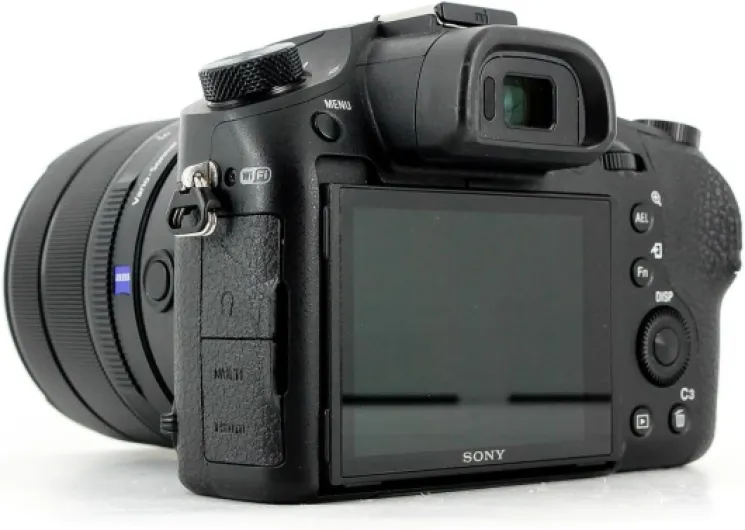
The lens has multiple rings: one for zoom, one for focus, and an aperture ring. That sounds fancy, but in reality they’re packed quite close to the camera body. With my average‑sized hands, I sometimes fumble between focus and zoom, especially with gloves. One Amazon reviewer mentioned the same thing and I agree – if you’ve got big fingers, you might find those rings a bit cramped. Still, it’s nice to have direct control when you want to shoot more manually, especially for video.
The electronic viewfinder (EVF) is actually pretty good. It’s sharp enough and bright, and I use it way more than the rear screen, especially at long focal lengths where holding the camera to your face naturally stabilizes it. The rear screen tilts up and down, which helps for low‑angle or overhead shots, but it doesn’t flip fully to the side, so it’s not ideal if you’re trying to vlog or film yourself. There’s no touch interface on this generation either, which in 2026 feels dated – poking buttons and dials through the Sony menu is functional but not exactly pleasant.
Weather sealing is a nice bonus. I’ve used it in light rain and dusty conditions and it held up fine. I wouldn’t dunk it in water, but I don’t baby it either – it’s been in backpacks, car boots, and on damp football fields without a problem. Overall, build quality feels solid, more like a serious camera than a plastic toy. The design isn’t flashy, but it’s practical. My main knocks are the slightly cluttered lens ring layout, the non‑articulating screen, and the old‑school menu system. None of these are deal‑breakers, but they remind you this is an older model compared to more recent mirrorless bodies.
Battery life: usable, but carry a spare – seriously
Battery life on the RX10 III is okay but not great. If you’re coming from a DSLR that happily shoots 800–1000 shots on a charge, this will feel short. In normal mixed use – some stills, some short 4K clips, reviewing shots on the screen, Wi‑Fi off – I typically see around 250–350 shots before the battery gauge makes me nervous. That lines up with what other users say. One Amazon reviewer mentioned battery life could be better but they just carry a spare, and that’s exactly how I treat it.
The camera charges over Micro USB, which is both good and bad. Good, because you can top it up with a power bank or any USB charger while travelling. Bad, because Sony doesn’t include a standalone charger in the box, so if you buy a second battery (which you absolutely should), you can’t charge one while using the other unless you buy an external charger separately. I ended up getting a cheap third‑party dual charger with two extra batteries, and that solved it, but it’s extra cost and clutter that really should be unnecessary on a camera at this price point.
Using the EVF instead of the rear screen helps a bit with battery life, but not dramatically. Shooting a lot of 4K video or slow motion eats the battery pretty quickly; on a day where I did mostly video tests, I chewed through a battery in a couple of hours. For a normal photo‑heavy day out, I always start with a full battery and keep one spare in my pocket, and that covers me without stress. If you forget the spare and shoot heavily, you’ll run it down faster than you expect.
So overall, battery life is acceptable but nothing special. It’s not a deal‑breaker if you plan around it and get at least one more battery and a charger. But considering the size of the camera, it would have been nice if Sony had gone with a higher‑capacity battery or at least included a proper charger. If you’re a casual shooter taking a few dozen photos per outing, you’ll probably be fine; if you’re doing all‑day travel, sports, or events, just treat extra batteries as part of the real cost of this camera.
Build quality & durability: feels tough enough for rough use
In terms of durability, the RX10 III feels solid. The body has that dense, slightly weighty feel that doesn’t creak when you twist it or grip it hard. I’ve had it in and out of bags, shoved into a sling with no special padding, and used it in light rain and damp conditions. Sony mentions weather resistance, and while I’m not keen to test that to the extreme, it’s handled drizzle and sea air without any obvious issues. One Amazon reviewer even mentioned being glad it’s weatherproof for rainy days in Scotland – that matches my experience in less‑than‑ideal weather.
The lens mechanism has held up well so far. The zoom action is smooth and doesn’t feel wobbly, even when fully extended to 600mm. That’s important because any flex at that length would show up in your photos and make the camera feel cheap. The rings (zoom, focus, aperture) still move cleanly and haven’t developed any play. The only sign of wear I see is cosmetic: a bit of shine on the grip where my fingers sit, and a few scuffs on the body from being banged against other gear in my bag.
The tilting screen hasn’t loosened or squeaked, and the hinge feels reasonably sturdy. That said, I’m careful not to use it as a handle. The port covers (for Micro HDMI, Micro USB, etc.) are basic rubber flaps – they do the job but I wouldn’t yank them around too much. Buttons and dials are still clicky, though the small function buttons on the top and back can be fiddly with gloves or cold fingers.
Overall, I’d say durability is more than good enough for regular travel and outdoor use. It’s not a rugged action camera you can throw off a bike, but for hikes, city trips, and casual sports sidelines, it holds up fine. The main thing to remember is that the lens is fixed – if anything serious happens to the optics or zoom mechanism, you’re basically sending the whole camera in for repair or replacing it. So I still keep a basic UV filter on the front as a sacrificial layer and try not to whack the lens into things. With basic care, I don’t see any reason this wouldn’t last several years of regular use.
Image quality, zoom and autofocus: very capable with a few age‑related limits
Image quality is pretty solid for a 1‑inch sensor, especially in good light. At 24–200mm, photos are sharp, colours are neutral, and there’s enough dynamic range to recover a bit of shadow and highlight detail in RAW. If you’re mainly shooting outdoors – landscapes, wildlife in daylight, travel – it does the job nicely. Compared to a modern APS‑C DSLR or mirrorless with a decent lens, you’ll see a bit more noise and slightly less detail when you zoom in 100%, but for prints and normal viewing it’s more than fine.
The big selling point is that 24‑600mm equivalent zoom. Being able to go from a wide shot of a lake to a tight frame of a bird on the far bank without swapping lenses is genuinely useful. At the long end (400–600mm), you do see a drop in sharpness and contrast if you’re picky, and you need decent light because the aperture closes down to around f/4 and the sensor isn’t huge. Still, for things like kids’ sports, animals at the zoo, or distant details on buildings, it’s good enough that I don’t feel I’m missing shots. Optical SteadyShot (stabilization) helps a lot – I’ve managed usable shots at 600mm at 1/100s handheld, which would be a mess without it.
Autofocus is where you feel its age a bit. It’s not terrible, but it’s not as fast or sticky as Sony’s newer cameras. For static subjects and slow‑moving people, it’s fine. For fast action – birds in flight, quick sports – it hunts sometimes and can be fooled by tricky light. One Amazon reviewer said the AF is not as fast as Sony markets, and I agree with that. It’s usable, but don’t expect modern Sony eye‑AF magic. You get 11 AF points, which is basic by today’s standards, and tracking is okay but not great.
On the video side, 4K is clean and detailed, with less moiré and aliasing than older 1080p‑only cameras. I’ve shot short clips in 4K and slow motion, and they look good enough for YouTube or casual projects. The slow‑motion modes up to 1000 fps are fun, but they’re more of a gimmick for me: resolution drops and you need very bright light. Still, for the occasional dramatic clip of a dog running or water splashing, it’s a nice extra. Overall, performance is strong for what it is, but if your main thing is fast action or low‑light, there are better, more modern options – just not with this kind of built‑in zoom range.
What this camera actually is (and what it isn’t)
The Sony RX10 III is a bridge camera with a fixed 24–600mm equivalent lens and a 1‑inch 20.1 MP sensor. That means you can’t change the lens at all – what you buy is what you live with – but in exchange you get a huge zoom range in one body, from fairly wide for landscapes and city shots to very long for wildlife or sports. The lens is roughly f/2.4–4 (Sony and some listings say 2.4–4, others 2.8–4; in real life it’s fairly bright at the wide end and slows down as you zoom). On top of that you get 4K video, slow motion modes up to 1000 fps, an electronic viewfinder, tilting screen, Wi‑Fi, and optical image stabilization.
In practice, I’d describe it as a high‑end bridge camera for people who don’t want to deal with lenses. It’s not pocketable at all – it weighs around 1 kg and looks like a small DSLR – but you don’t need anything else in your bag except a spare battery and an SD card. I’ve used it for: walks in the countryside, zoo trips, kids’ sports days, and some casual video. It covered all of that without me once wishing I had brought a second lens, which is kind of the whole point.
Where it differs from an entry‑level DSLR or mirrorless kit is the sensor size and flexibility. The 1‑inch sensor is bigger than what you’d get in a typical compact camera, so stills and video look pretty clean in good light. But it’s smaller than APS‑C or full frame, so once the light drops, noise creeps in faster and you don’t get that strong background blur look unless you’re zoomed in and quite close to the subject. If you’re coming from a phone, it’s a big step up; if you’re coming from a modern APS‑C camera with good lenses, you’ll see the limits.
So if you’re expecting it to replace a full system for everything, that’s where expectations need to be managed. For travel, hikes, and casual wildlife, it’s very handy. For serious low‑light, studio portraits, or if you want to grow a lens collection, this is not the right category. I see it as a smart compromise: one body that does a lot pretty well, with some obvious trade‑offs, mainly around sensor size, autofocus speed compared to newer models, and price.
Pros
- Huge 24–600mm equivalent zoom range in one fixed lens with effective optical stabilization
- Good image quality in decent light and clean 4K video for travel and everyday shooting
- Solid build with weather resistance and comfortable DSLR‑style handling
Cons
- Autofocus and low‑light performance lag behind newer APS‑C and full‑frame cameras
- Battery life is only average and no external charger is included, so extra cost for spares
Conclusion
Editor's rating
The Sony RX10 III is a solid all‑in‑one camera for people who are tired of swapping lenses but still want more reach and quality than a phone or basic compact can offer. The 24–600mm zoom, decent 1‑inch sensor, optical stabilization, and 4K video make it a very practical tool for travel, walks, zoo trips, kids’ sports, and general outdoor shooting. Build quality is reassuring, the weather resistance is handy in real‑world conditions, and the lens really does cover almost everything most non‑pros need day to day.
It’s not perfect. Autofocus is fine but not up to modern standards for fast action, low‑light performance is limited by the smaller sensor, battery life is just okay, and the menus/Wi‑Fi experience feel dated and clunky. You also pay a noticeable premium for the convenience of that huge built‑in zoom. If you’re into serious low‑light work, portraits with heavy background blur, or you like building a system with different lenses, an APS‑C or full‑frame mirrorless setup will serve you better in the long run.
I’d recommend the RX10 III to someone who wants one do‑it‑all camera for travel and everyday use, especially if they can find it at a good price and don’t care about having the latest autofocus tech. It’s a good fit for hikers, casual wildlife shooters, parents on the sidelines, and anyone coming from bulky DSLR gear who just wants to simplify. If you’re on a tight budget, or you’re very picky about low‑light and action performance, you should probably skip this and look at a newer mirrorless body with interchangeable lenses instead.