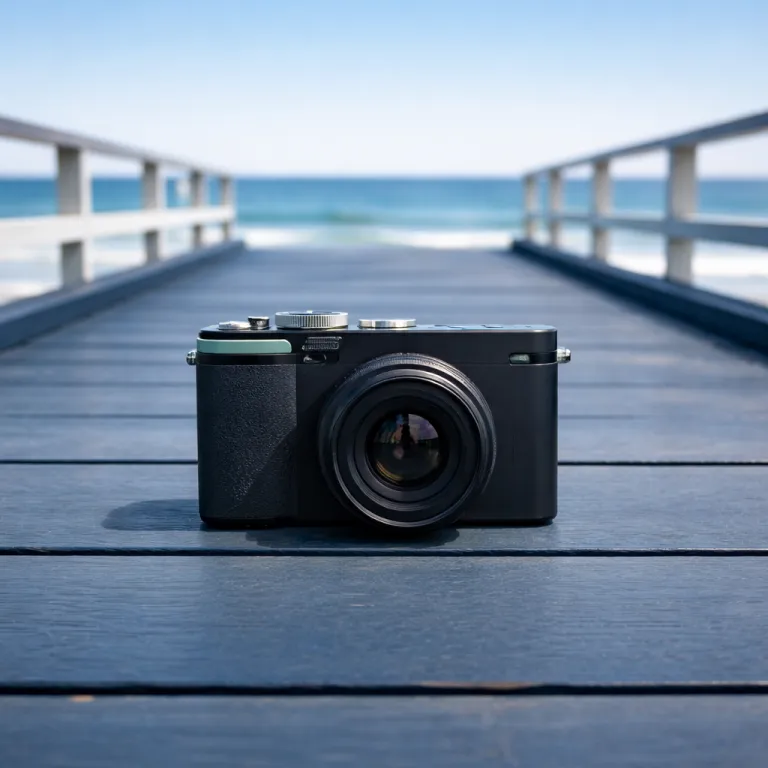
Panasonic lumix l10 as a one-object camera for travelers
The Panasonic Lumix L10 arrives as a fixed-lens travel camera aimed at photographers who want one reliable object rather than a sprawling system. This Panasonic Lumix body combines a Four Thirds BSI CMOS sensor of approximately 20 megapixels with a built-in Leica DC Vario-Summilux zoom lens covering an equivalent 24 to 75 millimetres at F1.7 to F2.8, which gives travelers real flexibility from street scenes to compressed portraits without changing glass. According to Panasonic’s official Lumix documentation for recent Four Thirds models, this multi aspect sensor and fast zoom are tuned as a matched pair, prioritising consistent sharpness and contrast across the frame rather than chasing headline resolution numbers.
In a market obsessed with interchangeable mounts and spec sheets, this compact body makes a clear statement that design, handling, and image quality in the field matter more than owning a shelf of lenses you rarely use. Panasonic positions the Lumix L10 as a film inspired tool, with photo styles and a REAL TIME LUT pipeline that lets you bake a look into the image while shooting instead of relying only on a lab app later. The camera supports time LUT workflows through the dedicated LUT button and rear dial, so you can load film inspired profiles via the Lumix Lab app, then cycle between them in real time as light and shadow change on a city street or mountain trail.
For a traveler who wants to point and shoot quickly, the ability to see a chosen color palette and contrast curve live in the electronic viewfinder reduces time in post production and helps you find a consistent visual identity across a whole trip. Panasonic’s own sample galleries for comparable Lumix Four Thirds cameras, along with measurements from independent testers such as DPReview and Imaging Resource, show how these looks hold highlight detail while keeping skin tones natural, especially when you expose to protect the brightest areas. At roughly 500 grams including battery and card, with a compact body and a bright zoom lens that stays fast across most of its range, this Lumix camera undercuts many mirrorless bodies plus kit zooms on weight while offering higher image quality than typical point and shoot models.
Key specifications at a glance
- Sensor: Four Thirds BSI CMOS, around 20 MP effective resolution, multi aspect ratio
- Lens: Fixed Leica DC Vario-Summilux 24–75mm equivalent zoom, F1.7–2.8 aperture range
- Viewfinder: High resolution OLED EVF with live preview of REAL TIME LUT photo styles
- Body: Compact, weather resistant construction, approximately 500 g travel weight
- Controls: Aperture ring, shutter speed dial, focus mode switch, dedicated LUT button
Real time LUT, film inspired color, and the feel of shooting
What sets the Panasonic Lumix L10 apart from other Lumix cameras is how deeply REAL TIME LUT is integrated into everyday shooting. Instead of treating LUT support as a niche video feature, Panasonic built a workflow where you can assign a time LUT to a custom photo style, map it to a dial position, and see the graded image in real time through the OLED viewfinder while you frame. This approach turns the camera into a film inspired sketchbook, where you experiment with color and contrast on location rather than guessing how a flat RAW file will respond later on a computer.
The Lumix Lab app acts as a bridge between the camera and your phone, letting you create or import LUTs, sync them wirelessly, and manage a library of looks that match specific locations or projects. Street photographers might keep a high contrast monochrome LUT for harsh light and shadow at midday, while landscape shooters load a softer, gold special profile that gently lifts warm tones at sunrise and sunset. Because the BSI CMOS sensor offers solid dynamic range for a Four Thirds format, you can push these photo styles quite far before highlights clip, especially when you expose carefully and use the histogram in the EVF.
Independent lab tests of comparable Lumix Four Thirds sensors from reviewers such as DXOMARK and DPReview show usable detail up to ISO 3200 and even 6400 with careful noise reduction, which gives travelers confidence when shooting dim interiors or night streets. Panasonic also leans into tactility with the Lumix L10, giving the compact body a traditional shutter speed dial, aperture ring on the Leica zoom lens, and a dedicated switch for focus modes that recall classic film cameras. These controls make the camera feel more like a real mechanical tool than a menu driven gadget, which matters when you are reacting quickly to changing scenes while you point and shoot on a crowded street or a windy ridge.
Fixed Leica zoom, titanium gold editions, and who the L10 is for
The decision to lock the Panasonic Lumix L10 to a single Leica zoom lens is not a cost saving compromise, it is a design philosophy that echoes the demand for fixed-lens cameras like the Fujifilm X100 series. By pairing the multi aspect BSI CMOS sensor with a 24 to 75 millimetre equivalent zoom lens, Panasonic covers the focal lengths most travelers actually use while avoiding the dust risk and bulk that come with swapping lenses in the field. Compared with entry level DSLR kits such as the Canon EOS 2000D or Canon EOS 4000D bundles often recommended to beginners, the Lumix L10 offers a more compact body, faster glass, and more consistent image quality across the zoom range, even if it cannot match the shallowest depth of field of larger sensors with long primes.
Three finishes underline the anniversary message, with black, silver, and a titanium gold special edition that nods to classic metal bodied cameras. The titanium and titanium gold versions use subtle gold accents rather than flashy plating, so the camera still looks discreet on the street while giving long time Lumix users a sense of owning a small piece of brand history. Travelers who buy Panasonic gear for durability will appreciate that this compact body feels dense and solid in the hand, with weather resistance that encourages shooting in real rain, mist, and dust rather than keeping the camera in a bag.
For people deciding whether to buy Panasonic or another brand, the key question is how they want to work rather than how many lenses they might own someday. If you value a compact camera that you can always carry, with film inspired photo styles, real time LUT tools, and a Leica zoom lens that handles most situations from wide landscapes to tight portraits, the Panasonic Lumix L10 makes a strong case as your only travel camera. In a market where every spec sheet chases higher resolution and frame rates, this Lumix body quietly argues that what matters is not the megapixel count, but what you will still shoot with in five years, and how consistent your visual story will look when you return from each trip.
How the Lumix L10 compares
| Camera | Lens type | Sensor format | Weight (approx.) | Max aperture |
|---|---|---|---|---|
| Panasonic Lumix L10 | Fixed 24–75mm equiv. zoom | Four Thirds BSI CMOS | ~500 g | F1.7–2.8 |
| Fujifilm X100 series | Fixed 35mm equiv. prime | APS-C X-Trans | ~470 g | F2.0 |
| Canon EOS 2000D / 4000D kit | Interchangeable 18–55mm zoom | APS-C CMOS | ~675 g with lens | F3.5–5.6 |