
Summary
Editor's rating
Value for money: solid starter kit if you know what you’re getting
Design and handling: looks like a DSLR, feels like a starter
Battery life: the extra battery is not just a bonus, it’s necessary
Build quality and durability: plastic but not flimsy
Image quality and autofocus: good step up from a phone, with limits
What you actually get in the box and what it can do
Pros
- 24.1 MP APS-C sensor gives clear, detailed photos and decent low-light performance for the price
- 18-55mm IS II lens covers everyday situations and has optical stabilisation
- Bundle includes a second battery, which makes full-day shooting much easier
Cons
- Old-school 9-point autofocus and 3 fps burst are weak for action and fast subjects
- No 4K video, fixed non-tilting screen and no weather sealing limit flexibility

Specifications
View full product page →| Brand | Canon |
A first "real" camera that doesn't scare you off
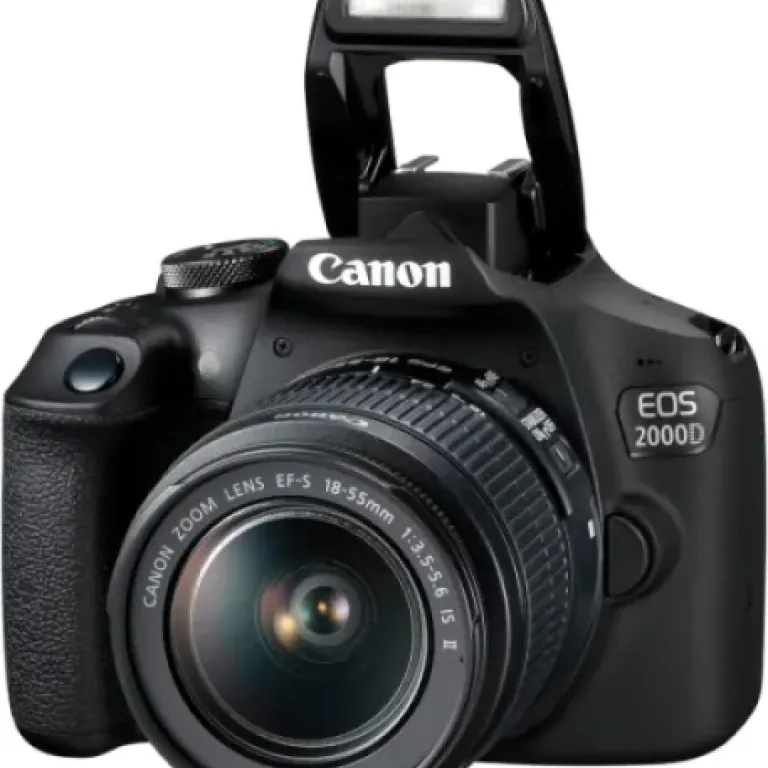
I’ve been using the Canon EOS 2000D kit (the body, 18‑55mm IS II lens and the spare battery) for a few weeks, mainly for family stuff, walks and a bit of casual video. Before this I mostly used my phone and an old Canon compact, so I’m not coming from a pro background. I just wanted something that gives cleaner photos than my phone, without needing a photography degree to get started.
The short version: this camera feels like a "proper" DSLR but stays pretty straightforward. You get that nice background blur, better low-light shots than a phone, and proper buttons. At the same time, the menus and auto modes are friendly enough that I could hand it to my partner and they’d manage fine on full auto. It’s not fast or fancy, but it’s reliable.
In day-to-day use, I mainly shot in Scene Intelligent Auto and the guided modes at first, then slowly moved to Av (aperture priority) once I understood what did what. The 18‑55mm lens covers most normal situations: indoors, portraits, quick street shots, and landscapes. The built‑in stabilisation helps a lot when your hands aren’t super steady, especially indoors where the light isn’t great.
What really makes this kit practical is the extra battery. I burned through the first battery halfway through a long day out and just swapped it without thinking. No hunting for a plug or power bank. So my first impression overall: pretty solid beginner setup, not perfect, but it gets the job done with less fuss than I expected from a DSLR.
Value for money: solid starter kit if you know what you’re getting
In terms of value, this bundle sits in that sweet spot for people who want to move beyond a phone but don’t want to drop a fortune on gear they might not fully use. You get a real DSLR body, a stabilised zoom lens and, importantly, two batteries from a major brand. Considering Canon’s ecosystem and the fact you can add second-hand EF and EF‑S lenses later, it’s a decent entry ticket into interchangeable-lens cameras.
Where the value shows is in the image quality and learning potential. For the price of some higher-end phones, you get better control over depth of field, more consistent colours and RAW files that you can actually work with. The camera’s guided modes and Auto settings mean you can start using it right away, then slowly move into manual settings without needing to upgrade the body immediately. For students or casual shooters, that’s a big plus.
On the downside, the tech is not cutting-edge. No 4K video, basic autofocus, fixed screen, no weather sealing. If you’re mainly into video, or you want serious sports/action performance, there are mirrorless bodies and newer DSLRs that will serve you better, even if they cost more. Also, you still have to add a memory card, maybe a bag, maybe a tripod – so the real cost is a bit higher than just the kit price.
Compared to other entry-level options, both Canon and competitors, I’d say this kit is good value for a first DSLR, especially if you find it on offer. It’s not exciting, but it’s reliable and does what it says: gives you a clear step up from a phone and a basic compact, without draining your bank account. If you accept its limits, the price-to-performance ratio is pretty fair.
Design and handling: looks like a DSLR, feels like a starter
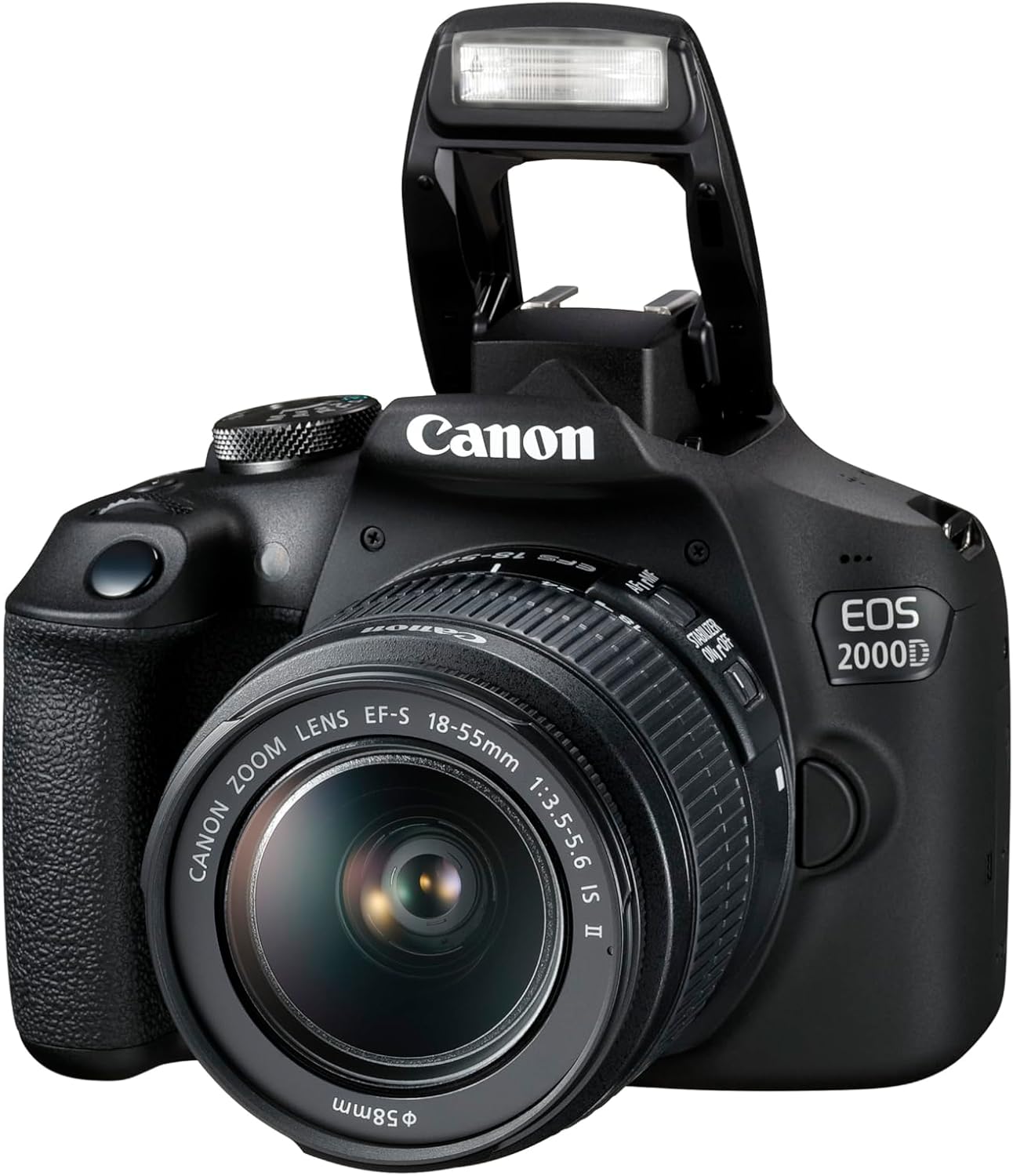
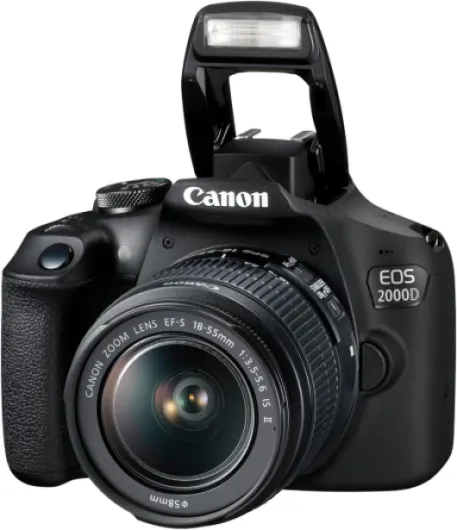
Design-wise, the EOS 2000D is exactly what you’d expect from a basic Canon DSLR: black plastic body, decent grip, simple dial on top and a 3-inch rear screen. It’s not heavy for a DSLR, but once you add the lens and spare battery in your bag, you do feel it compared to a phone or a compact. For me, that weight actually helped stability when shooting, but if you’re used to tiny cameras you’ll notice the difference on a long day out.
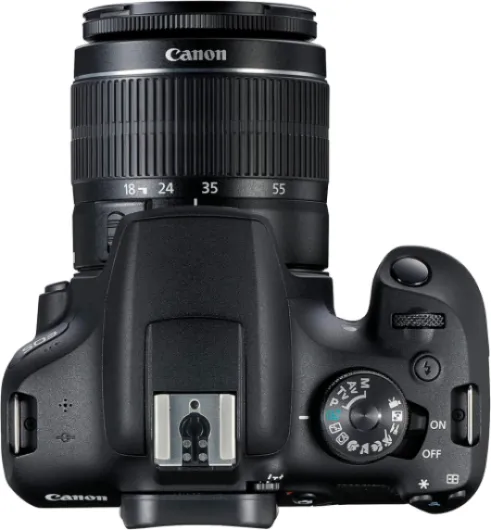
The grip is comfortable enough. I’ve got average-size hands and my fingers sit nicely around the front grip, with the shutter button in a natural spot. My partner with smaller hands found it fine too. The main mode dial is clear: big icons for Auto, Portrait, Landscape, etc. That helped a lot at the start; you don’t get lost in endless options. Most used buttons (ISO, exposure comp, playback) are easy to reach with your right thumb.
The viewfinder is optical, which I prefer over staring at a screen in bright daylight. It’s not huge, but it’s clear. One thing I noticed, and another Amazon reviewer mentioned it too: the framing through the viewfinder doesn’t match 100% what ends up in the photo. You get a bit more in the final image than what you saw, which can be annoying when you’re trying to crop someone out. It’s normal for entry-level DSLRs, but still something to know.
What I didn’t love: the rear screen is fixed, no tilt or flip. For low-angle shots or selfies, that’s just a pain. You end up lying on the ground or guessing your framing. Also, there’s no weather sealing, so I was careful in drizzle and kept it in the bag when it started raining properly. Overall, the design is practical but basic – it feels solid enough in the hand, but you can tell it’s built to hit a price point rather than impress.
Battery life: the extra battery is not just a bonus, it’s necessary
Battery life was one of my main questions before buying, and honestly, this bundle makes a lot more sense because of the spare battery. With just one battery, I’d be more nervous on a day trip. With two, I didn’t really worry. On a typical weekend day – a few hundred photos, some chimping (reviewing photos on the screen), maybe 5–10 minutes of video and some Wi‑Fi transfers – I got roughly 400–500 shots on the first battery before it started to get low. That’s with a mix of viewfinder and Live View.
When I used Live View more heavily (screen on all the time, video, some remote shooting via the app), the battery dropped faster, more like 300 shots or less. That’s normal, the screen and Wi‑Fi eat power. In that case, having the second LP‑E10 in the bag meant I could just swap and keep going. No need to drop to power-saving extremes or worry about missing an evening event.
Charging is simple: the included LC‑E10E wall charger takes a few hours to bring a battery from empty to full. It’s not USB‑C or anything modern, so you need a proper socket. On a short trip, I charged both batteries overnight and was covered for the next day without issues. The charger is small enough to throw in a bag, but it’s one more brick if you already carry laptop and phone chargers.
So in practice, I’d say the battery life is decent but not outstanding by DSLR standards. If this kit only had one battery, I’d be a bit more critical. With the extra one included, it becomes a non-issue for most people: you can easily shoot a full day, even two lighter days, as long as you remember to charge them. That extra battery is a real plus and not just a marketing line.
Build quality and durability: plastic but not flimsy
The EOS 2000D is clearly built as an entry-level body, so you shouldn’t expect tank-like construction. The shell is mostly plastic, but it doesn’t feel like a toy. After a few weeks of being thrown into a backpack (in a basic padded insert), bounced around in the car, and used by different family members, I don’t see any rattles, cracks or worrying flex. The buttons still click properly and the scroll wheel hasn’t gone mushy.
The 18‑55mm IS II lens is also plastic, including the mount, which is where you feel the cost-cutting the most. When you twist it onto the body, it locks in firmly enough, but it doesn’t have that metal-on-metal reassuring feel you get on pricier gear. That said, I didn’t notice any wobble once it’s mounted, and the zoom ring and focus ring turn smoothly. Just don’t expect it to survive big drops or heavy knocks.
One clear downside: there’s no weather sealing. I got caught in light drizzle once; I wiped it off and it was fine, but I didn’t push my luck. I wouldn’t use this in proper rain, on the beach with blowing sand, or in very dusty places without some protection. If you plan to shoot a lot outdoors in rough conditions, this is a weak point and you might want a higher-end body or at least be careful with covers and bags.
Overall, I’d describe the durability as "good enough if you’re not reckless". Treat it like an electronic device, not like a hammer, and it should last several years for hobby use. For students throwing it in a backpack every day, I’d definitely add a cheap padded bag and maybe a UV filter just as a sacrificial front element. There’s better-built gear out there, but for the price range, it’s acceptable.
Image quality and autofocus: good step up from a phone, with limits
On the photo side, the 24.1 MP APS‑C sensor is the main reason to buy this instead of just sticking with a phone. In decent light, the files are clean, detailed and give you room to crop. I shot both JPEG and RAW; the out-of-camera JPEGs in Auto mode already look pretty good, with natural colours and not too much sharpening. When I edited the RAW files in Lightroom, I could pull back sky detail and shadows in trees without the image falling apart too fast, which is where my old compact and my phone usually struggle.
The autofocus system is basic: 9 points, not the fancy tracking you see on newer mirrorless cameras. For static subjects – people posing, buildings, landscapes, food – it’s fine. Press half-way, it locks, you shoot. Where it starts to show its age is with moving subjects. I tried to photograph kids running and some birds in a park. In good light I got a decent hit rate, but it’s not fast or smart; you have to work a bit, anticipate, and accept some misses. The 3 fps burst speed doesn’t help much for action either.
Low light is mixed. The sensor handles ISO 1600 and 3200 reasonably well; you see noise if you zoom in, but for social media and prints up to A4, it’s acceptable. Above that, it gets grainy and softer. The kit lens being f/3.5‑5.6 doesn’t help indoors – you either turn on the flash (which flattens the look) or you push the ISO and accept noise. Compared to my phone, the Canon still does better in terms of detail and natural blur, but the gap narrows in very dark scenes.
Video is 1080p only, no 4K, and the autofocus in video is just okay. For simple clips of family, pets and travel, it’s fine. I wouldn’t pick this body if I was mainly into video or vlogging, especially with the fixed screen and no external mic input on this specific spec sheet. For stills, though, the performance is pretty solid for beginners: clear step up from a phone, as long as you’re not expecting pro-level speed or low-light magic.
What you actually get in the box and what it can do
This Amazon bundle is quite straightforward: Canon EOS 2000D body, EF‑S 18‑55mm f/3.5‑5.6 IS II lens, two LP‑E10 batteries, charger, strap, caps and the basic paper guide. No memory card, no bag, no fancy extras – so plan to buy at least an SD card on top. I went for a 64 GB V30 card and it’s been plenty for a day of mixed photos and a bit of 1080p video.
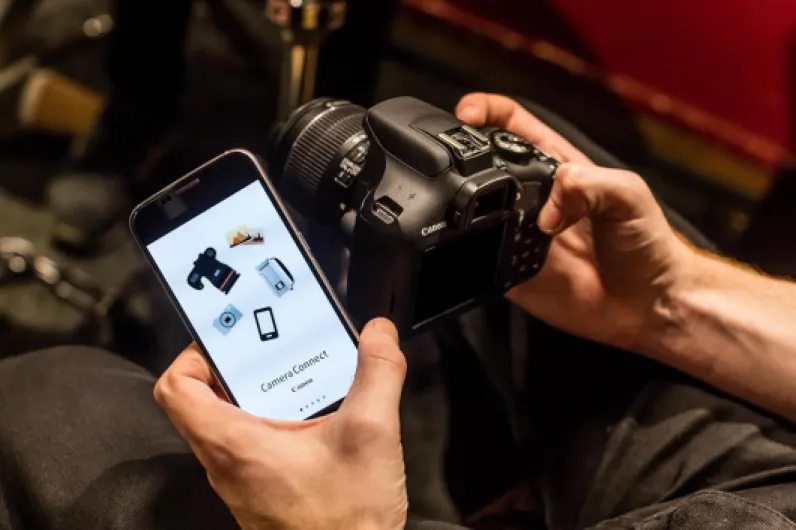
On the specs side, you get a 24.1 MP APS‑C sensor, 1080p video, 9‑point autofocus and a burst mode of 3 frames per second. So, not a sports machine, but fine for normal use. It has Wi‑Fi and NFC, so you can push photos to your phone with the Canon Camera Connect app and even trigger the camera remotely. That part took a few minutes to pair the first time, but after that it was pretty smooth.
The kit lens, the 18‑55mm IS II, is a basic zoom that goes from wide angle (for landscapes or group shots) to short telephoto (for portraits). The image stabilisation works – I could get sharp shots at 1/15s indoors if I didn’t shake too much. It’s not a bright lens (f/3.5‑5.6), so in darker rooms you’ll still hit the limits and the camera will bump the ISO up, which means more noise. But for daytime or well‑lit scenes it’s fine.
In practice, this kit is clearly aimed at beginners and students: lots of auto modes, guided Live View, and just enough manual control if you want to learn. If you already own Canon lenses or you want 4K video and fast autofocus tracking, this isn’t it. But as an entry into DSLR land, it’s a clean, no‑nonsense package that covers the basics properly.
Pros
- 24.1 MP APS-C sensor gives clear, detailed photos and decent low-light performance for the price
- 18-55mm IS II lens covers everyday situations and has optical stabilisation
- Bundle includes a second battery, which makes full-day shooting much easier
Cons
- Old-school 9-point autofocus and 3 fps burst are weak for action and fast subjects
- No 4K video, fixed non-tilting screen and no weather sealing limit flexibility
Conclusion
Editor's rating
After using the Canon EOS 2000D kit for a while, my honest take is this: it’s a straightforward, no-drama first DSLR. The image quality is clearly better than a phone in normal light, you get real background blur, and the controls are simple enough that beginners don’t feel lost. The included 18‑55mm IS II lens is basic but versatile, and the extra battery in this bundle is actually very useful, not just a gimmick. For family photos, travel, casual portraits and learning manual photography, it does the job well.
It’s not perfect though. The autofocus is dated, the burst rate is slow, there’s no 4K video, the screen doesn’t flip, and the body isn’t weather-sealed. If you already know you want to shoot sports, serious wildlife, or do a lot of video and vlogging, I’d look at a newer mirrorless camera or a higher-end DSLR. But if you’re a beginner, student, or someone who just wants better photos than a phone without diving into complicated gear, this kit is a pretty solid and affordable starting point. Accept its limits, treat it decently, and it will give you good-looking photos and a nice way to learn the basics.