
Summary
Editor's rating
Is the Alpha 6400 body good value for money?
Compact, practical design with a few small annoyances
Battery life: decent, but bring a spare
Build quality and how it holds up in everyday use
Autofocus and image quality: where it actually shines
What you actually get with the Alpha 6400 body only
Pros
- Autofocus and eye tracking work very well for both photos and 4K video
- Compact, lightweight body that’s easy to carry for travel and daily use
- Image quality is solid for APS-C, with good detail and usable high ISO
Cons
- No in-body stabilisation, so handheld video can be shaky with non-OSS lenses
- Battery life is only average and basically requires at least one spare
- Tilting screen gets blocked by a top-mounted mic without extra accessories

Specifications
View full product page →| Brand | Sony |
A small camera that actually made me leave my phone at home
I’ve been using the Sony Alpha 6400 body for a few weeks now, mainly with a cheap 35mm f/1.8 and an old adapted Sigma zoom. I bought it because I was tired of hitting the limits of my phone for low light and fast moving subjects, but I didn’t want a huge DSLR hanging from my neck. This little body seemed like a good compromise: small, but still a "real" camera.
In practice, it sits in that sweet spot between casual and serious. It’s clearly more capable than a basic entry-level DSLR, but it doesn’t feel like pro gear that you’re scared to throw in a backpack. I’ve used it for city walks, a couple of indoor family events, and some quick talking-head videos for social media. So I’ve had time to see its strengths and its annoying bits.
The first thing that stood out is the autofocus. I came from an older Canon DSLR and the jump is pretty obvious. Faces and eyes snap into focus even when people are moving around the room or kids are running toward the camera. For video, it’s the first time I’ve felt like I could trust a camera to keep my face sharp while I’m talking and moving slightly.
It’s not perfect though. The menu system is cluttered, there’s no in-body stabilisation, and the body starts to feel cramped with bigger lenses. But overall, this is a pretty solid camera body for someone who wants to get serious about photos and video without going full pro budget or carrying a brick all day.
Is the Alpha 6400 body good value for money?
In terms of value, the Alpha 6400 sits in an interesting spot. It’s not the cheapest APS-C body out there, and you’re only getting the body here, no lens. But you are getting a camera with very competent autofocus, solid 4K video, and image quality that’s good enough for serious hobby work and even some paid jobs. If you compare it to newer Sony APS-C bodies, this one often comes in cheaper while still sharing a lot of the same core performance.
The catch is that you need to factor in lenses and a couple of extra batteries. A basic used kit zoom plus a fast prime adds up quickly. If you’re starting from scratch, the total system price can climb. On the other hand, once you’re in the Sony E-mount ecosystem, there are a lot of third-party lenses from Sigma, Tamron, Viltrox, etc., that are decent and not crazy expensive. I built a small kit with one zoom and one prime without feeling like I’d burned a hole in my wallet, but you do need to shop smart, maybe buy some stuff used.
Compared to just using a good smartphone, this camera is obviously more expensive and less convenient. But if you care about shallow depth of field, reliable subject tracking, and flexibility in editing, the difference is clear. Low-light shots of people indoors look cleaner, and I can crop a lot more without the image falling apart. For someone who posts regularly on YouTube or does client work on the side, the cost starts to feel justified.
So in my opinion, the Alpha 6400 body is good value if you’re serious about learning photography or content creation and plan to use it regularly. If you just want nicer vacation photos once a year, it’s probably overkill and you might be better with a cheaper body or even just your phone and a small gimbal. But for regular creators who want a compact, capable workhorse, the price-to-performance ratio is pretty fair.
Compact, practical design with a few small annoyances
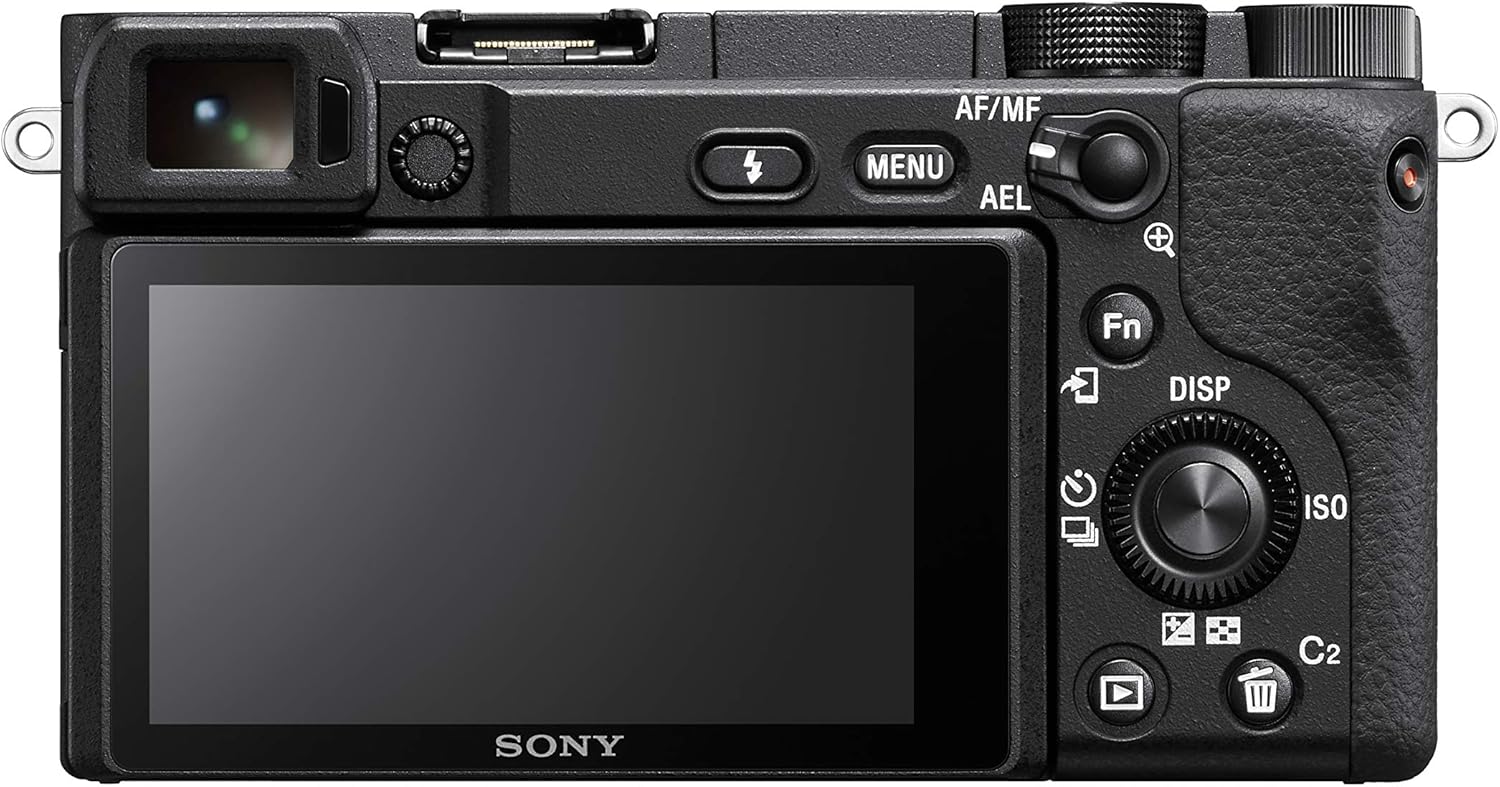
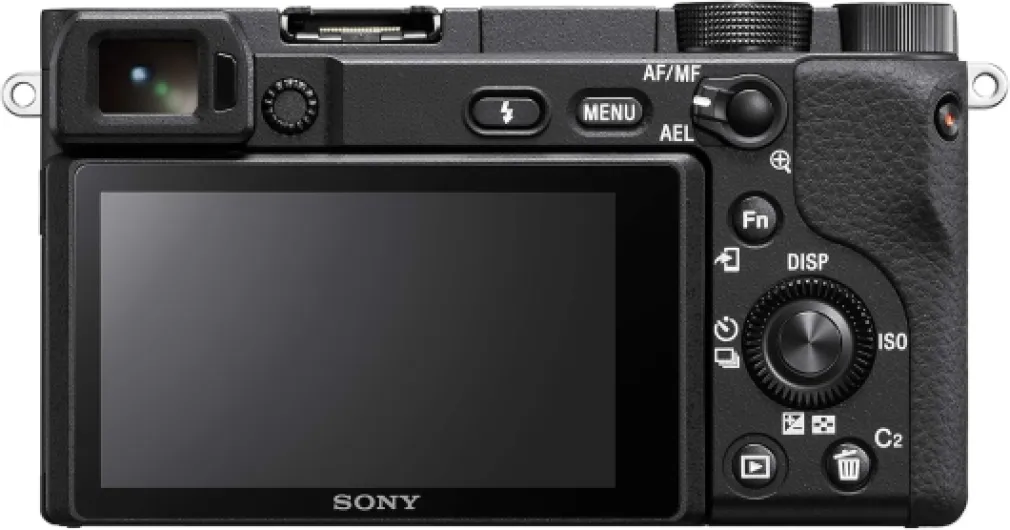
Design-wise, the Alpha 6400 looks like most of Sony’s APS-C bodies: a small rectangular block with a modest grip and a tilting screen. It weighs about 400 grams with battery, which means it doesn’t drag your neck down like a full-frame DSLR. I had it around my neck for a full afternoon in the city with a small prime lens and it was fine, no shoulder pain and it fit easily in a small sling bag.
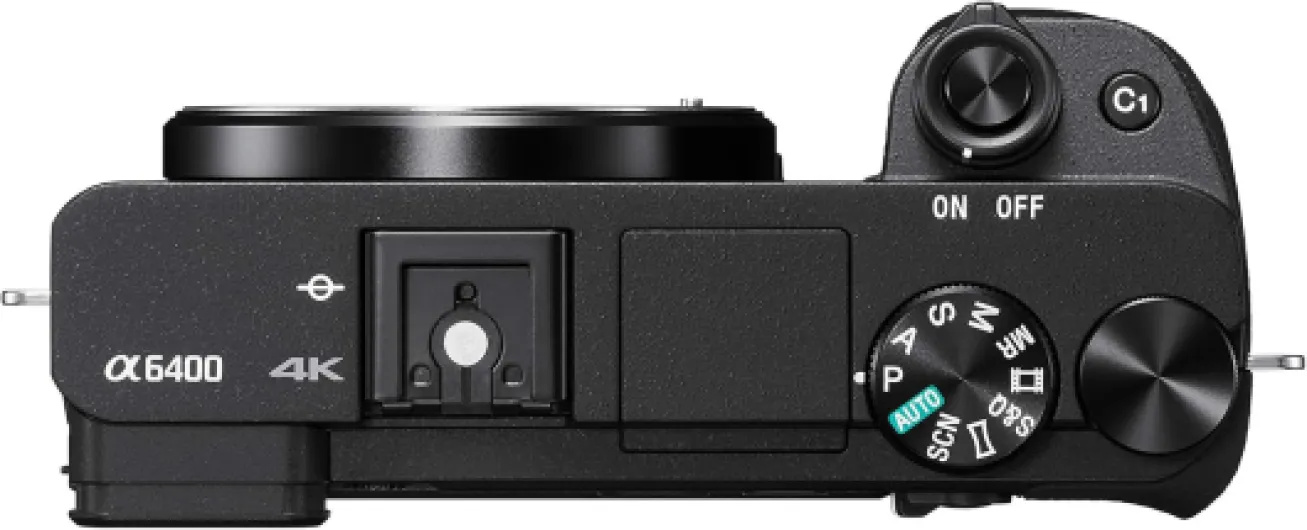
The main controls are straightforward: two dials on top (mode and command dial), a rear wheel, and a bunch of custom buttons. After a couple of days, I had AF-ON assigned to a back button and ISO to a custom button, and I barely had to dive into menus anymore. The buttons are a bit small if you have big hands, and with winter gloves it’s honestly not great, but bare-handed it’s okay. The shutter button has a nice, clear half-press feel, so you know when you’ve locked focus.
The tilting screen flips up 180 degrees, which is handy for vlogging or selfies, but there’s a catch: if you put a mic on the hot shoe, it blocks the screen. I got around this by buying a small side-mount bracket, but that’s extra cost and bulk. I would have preferred a fully articulating side-hinged screen, but at least you can still tilt it down for shooting above crowds or low to the ground.
The electronic viewfinder is fine. Not mind-blowing, not terrible. It’s clear enough to frame and check focus, even in bright sunlight when the rear screen becomes harder to see. If you’re coming from a DSLR optical viewfinder, it takes a day to get used to, but the benefit is you see the exposure and white balance before you shoot. Overall, the design feels like a practical compromise: compact and travel-friendly, but not the most ergonomic if you stick a big zoom on it.
Battery life: decent, but bring a spare
The Alpha 6400 uses Sony’s older NP-FW50 battery, not the newer bigger ones from the full-frame line. On paper that’s not great, but in actual use it’s acceptable if you manage it a bit. For mixed use (some photos, some short 4K clips, a bit of menu browsing), I get roughly 300–350 shots plus a few short videos before I start to feel nervous and swap batteries. If I hammer 4K video, the battery drops faster.
During a half-day city walk, shooting mostly stills in RAW+JPEG with occasional 4K clips, I got through one battery and dipped into a second one by the evening. So for travel or a full day of shooting, I’d say: plan on at least two batteries, ideally three if you do a lot of video. The good thing is that third-party batteries and chargers for this model are cheap and easy to find, and I haven’t had issues with the couple of non-Sony batteries I bought.
The camera charges over micro-USB, which is a bit dated now but still workable. You can plug it into a power bank and shoot while charging, which saved me during a long indoor event where I forgot to fully charge all my batteries. It’s not as convenient as USB-C, but at least you’re not stuck if you forget the dedicated charger at home.
One thing to note: if you leave Wi‑Fi and Bluetooth on all the time, the battery drains faster, even in standby. After the first weekend, I turned off the wireless features when I didn’t need them and saw a clear improvement. So, battery life is fine but not great. It’s not a camera you take on a 12-hour day with one battery and hope for the best, but with a couple of spares and maybe a power bank, it’s totally manageable.
Build quality and how it holds up in everyday use
The body is mostly plastic with some metal parts, and it feels more solid than it looks at first glance. It’s not a tank, but it doesn’t feel cheap either. I’ve had it tossed into a backpack without a dedicated camera compartment, just wrapped in a thin cloth, and it’s survived bumps, a bit of rain spray, and being knocked against a table edge. No creaks, no loose dials, nothing weird so far.
There’s no official full weather sealing, so I wouldn’t take it out in heavy rain without some sort of cover. I did use it in light drizzle under a hood and quickly dried it off after, and it was fine. Buttons and dials still feel consistent after several weeks of use. The rear wheel is a bit small and feels like the part that might wear out first if you’re constantly spinning it, but that’s just a guess based on feel, not something I’ve actually broken.
The tilting screen feels sturdier than I expected. I flip it up and down a lot for low angles and vlogging, and it hasn’t loosened. I do treat it with some care though; I don’t throw the camera screen-first into a bag, and I keep a tempered glass protector on it. The hinge doesn’t feel like it would survive a hard impact, but that’s true for most flip screens.
Ports (micro-USB, HDMI, mic jack) still grip cables firmly, and the memory card door and battery door close securely without wobble. Overall, durability so far is reassuring for normal use: commuting, travel, occasional bumps. If you’re a heavy outdoor shooter in dust, sand, or constant rain, you might want a more rugged, weather-sealed body. But for regular content creation, family events, and travel, it feels up to the job.
Autofocus and image quality: where it actually shines
For me, the biggest strength of this camera is the autofocus. The real-time eye AF is not just a marketing line; it actually locks onto eyes in both photos and video in a way that feels almost like cheating compared to older systems. I shot kids running around in a garden, and the hit rate of sharp eyes was much higher than with my previous Canon DSLR. Even in slightly dim indoor light, it still grabbed focus quickly, as long as there was some contrast.
Continuous shooting at 11 fps is honestly more than I need, but it’s useful for sports or fast action. I used it during a local basketball game from the stands with a 70–200mm lens, and the combo of 11 fps and tracking AF did a solid job. The buffer is not endless though. If you shoot RAW at full speed, you’ll hit the buffer after a short burst and then the camera slows down. For casual sports or street, it’s fine; for heavy pro work, there are better options.
Image quality is pretty solid for an APS-C sensor of this generation. At ISO 100–800, photos are very clean with good detail. At ISO 1600–3200, noise starts to appear, but it’s still usable for web and moderate prints, especially if you process RAW. I’ve pushed it to ISO 6400 for indoor events and, while you see grain, the files are still okay if you don’t pixel-peep. So compared to a modern phone, you get cleaner detail, better dynamic range, and more flexibility to edit.
For video, 4K 25p from this camera looks sharp and holds detail in textures like hair and grass. Autofocus during video is one of the reasons I actually use it instead of my phone now: it tracks my face smoothly without hunting, even when I lean in or step back. The main downside is the lack of in-body stabilisation. Handheld shots with a non-stabilised lens look shaky unless you’re very careful or use a monopod/gimbal. With an OSS lens, it’s better but still not as stable as some newer bodies with IBIS. So performance is strong overall, but stabilisation is the weak point.
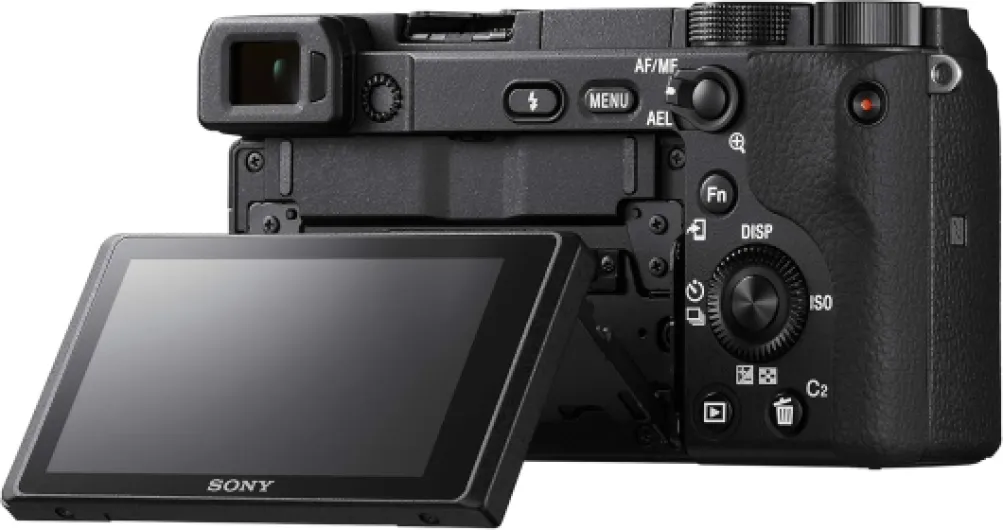
What you actually get with the Alpha 6400 body only
This version is "body only", which basically means: you get the camera, battery and strap, but no lens. If you don’t already own a Sony E-mount lens, you’ll need to add at least a cheap kit zoom or a prime, otherwise it’s just an expensive paperweight. I paired it with a used 16–50mm power zoom at first to keep things light and cheap, then added a brighter prime later.
On paper, the camera has a 24.2 MP APS-C sensor, shoots 4K video, has real-time eye autofocus for humans and animals, and fires at up to 11 frames per second. In real life, that translates to: photos that are detailed enough for big prints or cropping, and video that looks very clean on a 4K TV or YouTube. I mostly shoot in RAW+JPEG, and the files hold up well when you push shadows or recover highlights a bit in editing.
The 4K is oversampled from the full width of the sensor at 24/25 fps, and it looks sharp. I’ve used it for indoor talking-head videos with a simple LED light and the footage looks clean and professional enough for YouTube or client previews. There’s also 1080p slow motion up to 120 fps, which I used for some skate clips. It’s not the sharpest thing in the world, but for social media it’s more than fine.
One thing that matters in practice: there’s no recording limit anymore like on older cameras. I’ve recorded about 45 minutes straight in 4K 25p in a normal room and it didn’t overheat or stop. The body got warm but not worrying. So if you do longer podcasts or talking videos, that’s a real plus compared to older Sony bodies that used to shut down.
Pros
- Autofocus and eye tracking work very well for both photos and 4K video
- Compact, lightweight body that’s easy to carry for travel and daily use
- Image quality is solid for APS-C, with good detail and usable high ISO
Cons
- No in-body stabilisation, so handheld video can be shaky with non-OSS lenses
- Battery life is only average and basically requires at least one spare
- Tilting screen gets blocked by a top-mounted mic without extra accessories
Conclusion
Editor's rating
After using the Sony Alpha 6400 for a while, my overall feeling is that it’s a very capable little workhorse with a few compromises you need to accept. The autofocus and 4K video performance are the highlights. If you shoot people, pets, or any kind of talking-head content, the eye AF and tracking alone make daily use easier. Image quality from the 24 MP APS-C sensor is solid, both for stills and video, and the body is small enough that you actually carry it instead of leaving it at home.
On the downside, there’s no in-body stabilisation, the battery is only okay, and the menu system is cluttered. You also need to budget for lenses and at least one spare battery. It won’t magically make you a better photographer, but it gives you reliable tools to work with. I’d recommend it to hobbyists and content creators who want something more serious than a phone or basic DSLR, without jumping into huge full-frame bodies. If you mainly shoot handheld video while walking, or you often work in harsh weather, you might want to look at a body with IBIS and better sealing instead.
Overall, for the current price level and considering it’s often discounted, I’d say the Alpha 6400 is a strong mid-range option that gets the job done with minimal fuss once you set it up to your liking.