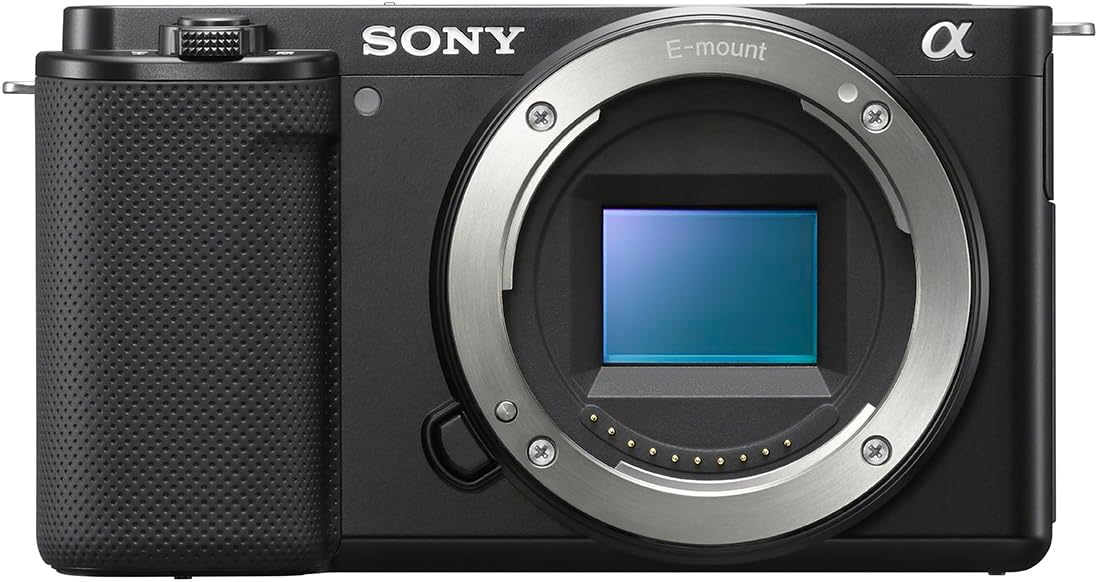

Summary
Editor's rating
Value: solid image and audio for the price, with a few hidden costs
Design: compact, light, and clearly built for video first
Battery and connectivity: okay for short sessions, plan ahead for longer shoots
Durability and long-term feel: light, plastic, but holds up with normal care
Performance: strong image quality and autofocus, a few quirks in motion
What you actually get with the ZV-E10 + ECM-S1 bundle
Pros
- Strong 4K image quality and reliable autofocus with eye and face tracking
- Flip-out screen and simple vlogging features (Background Defocus, Product Showcase) make filming yourself easy
- Included ECM-S1 mic delivers clearly better audio than the built-in mics, good enough for YouTube and streaming
Cons
- Usually sold as body only, so you must buy a lens separately, which increases the real cost
- No in-body optical stabilisation; digital stabilisation is only okay for walking shots
- Battery life is average, and the small NP-FW50 battery means you’ll likely need spares for longer shoots

Specifications
View full product page →| Brand | Sony |
A camera kit made for people who just want to hit record
I’ve been using the Sony ZV-E10 with the ECM-S1 mic as my main camera for casual YouTube videos, product shots, and a bit of streaming. Before this, I used my phone and a very old DSLR, so I was really looking for something that felt simple to use but still looked like a proper camera. This combo is clearly aimed at people who create content first and worry about photo geek stuff second, and that shows in daily use.
Right away, the thing that stands out is how easy it is to get a nice background blur and clean 4K video without digging into complicated menus. The “Background Defocus” button is literally just that: tap it, and you get the blurry background people like on YouTube. I’m not going to pretend it turns you into a pro, but it makes it much easier to get footage that doesn’t look like a webcam.
I mainly used it for talking-head videos at my desk, some handheld vlogs outside, and a couple of live streams through USB. In these situations, the camera and mic combo mostly did what I wanted without much stress. The autofocus locks on to faces quickly, and the internal audio is already decent, but with the ECM-S1 the sound finally feels “finished” enough to upload without heavy editing.
It’s not perfect though. The body feels light but a bit plasticky, the menu still has some classic Sony weirdness, and the digital-only stabilisation is just okay if you walk a lot while recording. Also, this listing seems to be body-only, so if you don’t know cameras, you might be surprised that you need to buy a lens separately. Overall, though, for vlogging and content creation, it’s a pretty solid setup that balances ease of use and quality fairly well.
Value: solid image and audio for the price, with a few hidden costs
On the value side, the ZV-E10 sits in that “serious but not crazy” price range. You’re not paying flagship money, but it’s still a proper investment, especially once you add a lens, SD card, and maybe a small tripod. Compared to using just a phone, the difference in control, lens choice, and background blur is clear. If your main goal is to improve the look of your YouTube or Instagram content, this camera gives you a noticeable step up without getting into super complex gear.
The included ECM-S1 mic helps the value story. Buying a decent external mic separately can easily add a good chunk to your budget, so getting a matched mic from the same brand as part of the kit is handy. The audio quality is clearly better than the internal mics, and for most creators, it’s good enough to skip extra audio gear at the start. That saves time and money, especially if you don’t want to mess with audio interfaces and XLR stuff.
However, there are a few hidden costs. First, this is usually a body-only kit, so you must buy at least one lens. Even a cheap prime or basic zoom adds a fair amount to the total. Second, if you plan on doing a lot of handheld walking shots, you might end up buying a gimbal or a better stabilised lens, because the digital stabilisation isn’t magic. Third, with the smaller battery, you may want at least one spare battery and maybe a dual charger if you shoot a lot.
Compared to something like the Sony a6000 series or other entry-level mirrorless bodies, the ZV-E10 gives you better video features, a flip screen, and easier streaming, which for a content creator is worth the price difference. If you’re mainly a photographer, you might find better options with a viewfinder and stronger ergonomics. But if your focus is video and you want a decent all-in-one base for content, the value is pretty good, as long as you remember to budget for the lens and a couple of small accessories.
Design: compact, light, and clearly built for video first
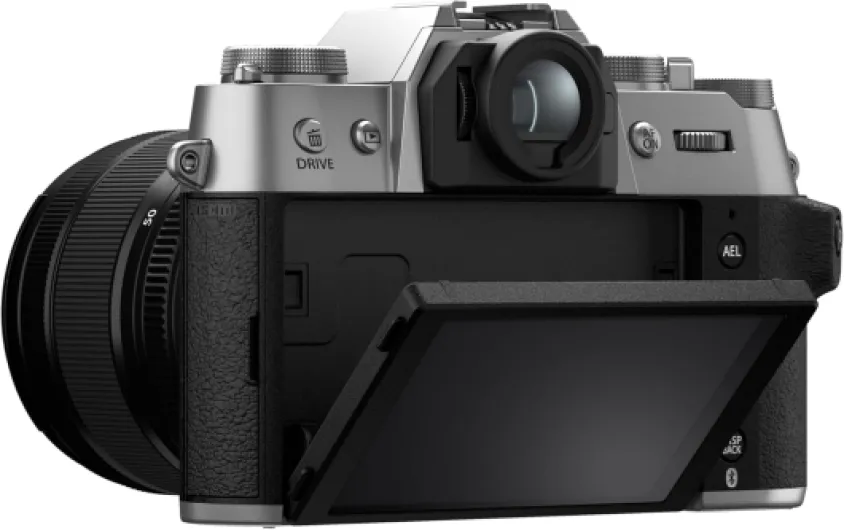
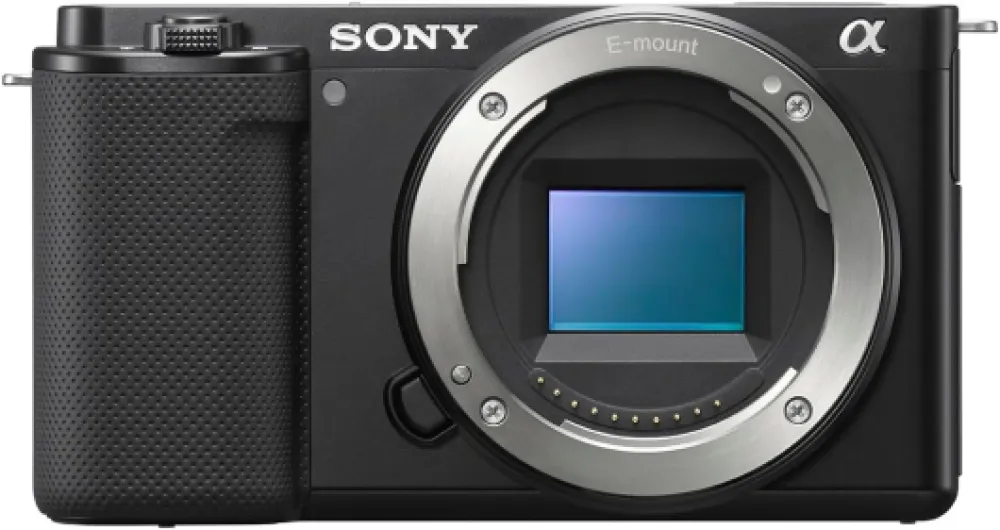
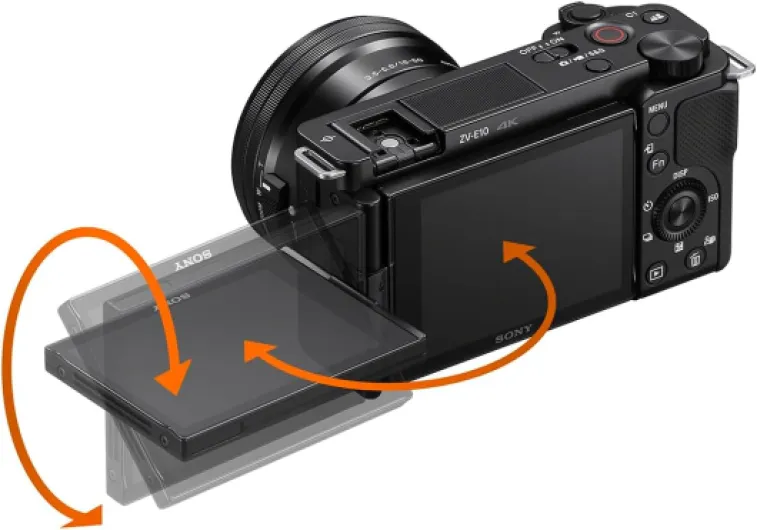
Design-wise, the ZV-E10 is clearly focused on video and vlogging. There’s no electronic viewfinder at all; you only have the fully articulating 3-inch LCD screen. For filming yourself, that’s actually great: you flip it to the side, rotate it, and you can see your framing, audio levels, and exposure without twisting your neck. For stills shooters who like a viewfinder, it’s a compromise, but for people coming from phones, you probably won’t miss it.
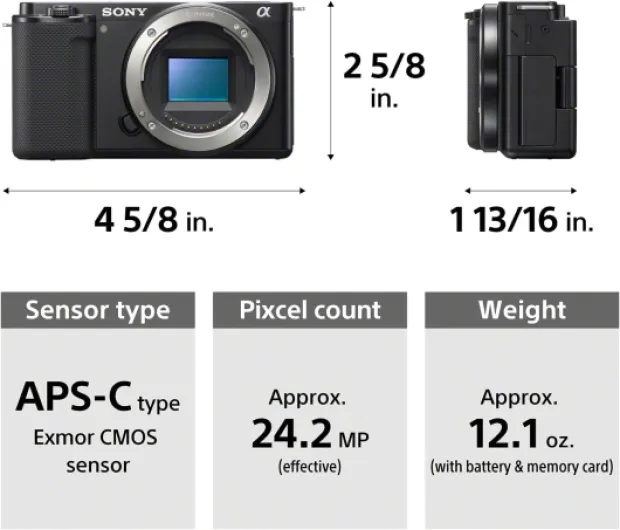
The body is very light at around 345 g, and with a small lens it stays compact enough to throw in a small bag. The grip is okay but not deep; with a heavier lens it starts to feel a bit front-heavy. The buttons are mostly on the right side, which helps when you’re holding the camera with one hand and reaching for the record button or the background defocus button with your thumb. The dedicated big red record button on top is handy and feels way more natural than the tiny video button on older Sony bodies.
Build quality is decent but clearly plastic. It doesn’t feel like it will break from normal use, but I wouldn’t want to drop it on concrete. The doors for USB and HDMI are small and a bit fiddly, and if you plug in HDMI, USB, and a mic at the same time, it starts to look like a little cable monster. On the plus side, you get USB-C for power and data, Micro-HDMI, and a mic input. The ECM-S1 sits nicely on the hot shoe and doesn’t make the setup too top-heavy, which is good for longer talking sessions.
In daily use, the design works well if you’re behind the camera or filming yourself on a tripod. For walking vlogs, the lack of a big grip and only digital stabilisation makes it a bit harder to keep stable, especially if you have bigger hands. Still, the layout and flip screen make it very clear Sony thought a lot about people filming themselves, and in that scenario, the design is pretty practical overall.
Battery and connectivity: okay for short sessions, plan ahead for longer shoots
The ZV-E10 uses the smaller Sony NP-FW50 battery, and that shows in real use. For normal vlogging and talking-head videos, I was getting roughly 60–90 minutes of mixed shooting in 4K, depending on how much I stopped and started recording, screen brightness, and Wi-Fi usage. If you shoot a lot of B-roll and keep the camera on all the time, you can drain a battery in under an hour pretty easily. It’s not terrible, but it’s not great either, especially compared to newer Sony bodies with the bigger Z batteries.
The good part is that you can power the camera via USB-C while using it. For streaming or long recording sessions at a desk, I just plug it into a USB-C charger or power bank and don’t worry about the internal battery too much. That makes it a lot more usable as a webcam or live streaming camera. You can also use it as a USB webcam without any extra capture card, which is very convenient if you stream on Twitch or do Zoom calls and want a nicer image.
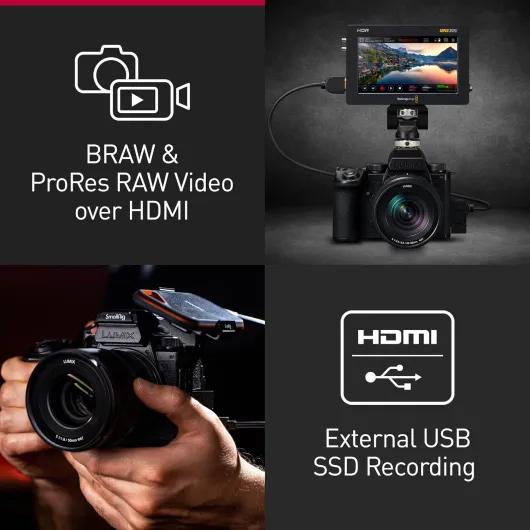
Connectivity is fairly complete for this type of camera: you get Wi-Fi and Bluetooth for transferring photos/videos to your phone and some remote control features. The Sony phone app is still a bit clunky, but once it’s set up, it works well enough for quick transfers. The Micro-HDMI port lets you hook it up to a capture card if you want a more professional streaming setup or record externally.
Overall, the battery life is acceptable but nothing special. If you’re out filming a whole day of vlogs, you will need at least one or two spare batteries, no question. For home content, streaming, or shorter shoots where you can plug into USB-C, it’s much less of an issue. So, I’d say: good enough if you plan around it, but don’t expect long DSLR-style endurance from this small body.
Durability and long-term feel: light, plastic, but holds up with normal care
After some weeks of use, the ZV-E10 feels like a camera that’s built to be light and portable first, not to survive a war zone. The plastic shell doesn’t creak, and the buttons still feel consistent, but you can tell this isn’t a heavy-duty pro body. I tossed it in a backpack a few times (inside a basic camera pouch) and carried it around the city, and there are no visible scratches or issues so far. As long as you’re not reckless, it should be fine for everyday creators.
The articulating screen is usually the first thing people worry about. On this camera, the hinge feels reasonably solid, and it doesn’t wobble excessively when flipped out. I wouldn’t constantly grab the camera by the screen, but normal flipping in and out for vlogs hasn’t caused any problems. Just be careful when packing it so the screen isn’t facing outwards where it could get hit or scratched.
The ports and doors are a bit more delicate. The rubber doors for USB and HDMI feel like they could wear out over time if you’re constantly plugging and unplugging cables, especially for streaming. Same for the hot shoe mount: the ECM-S1 mic sits securely, but if you use heavy accessories or keep attaching/removing them, there is always a small risk of loosening things over the years. That’s not specific to this camera, but something to keep in mind.
From what I’ve seen and read from other users, the sensor and electronics are reliable, and there are no common overheating issues for normal 4K recording lengths, as long as you’re not shooting for hours in a hot room. So in terms of durability, I’d say: it’s not a tank, but for home use, everyday vlogging, and careful travel, it holds up well. If you treat your gear decently, this camera should last several years without much drama.
Performance: strong image quality and autofocus, a few quirks in motion
On the performance side, the 24.2 MP APS-C sensor and BIONZ X processor do a solid job. In good light, 4K footage is crisp, with nice detail and natural colours (once you tweak the profile a bit). The camera oversamples 4K from 6K, which basically means you get more detail than a simple 4K sensor readout. For YouTube and social media, the quality is more than enough, and it already looks much cleaner than most phones, especially in tricky indoor light.
The autofocus is one of the strong points. You get Real Time Eye-AF, face tracking, and a “Product Showcase” mode that’s actually handy if you do product reviews. When that mode is on, the camera quickly shifts focus from your face to the object you hold near the lens, without hunting too much. In real life, it works well 80–90% of the time. Sometimes, in low light or with a busy background, it hesitates a bit, but overall it’s reliable enough that I stopped worrying about focus while talking to the camera.
For stills, the 24 MP resolution is perfectly fine for social media, small prints, and thumbnails. You can shoot at up to 11 fps continuous, which is nice for quick action or kids/pets, but this is not a sports camera. Dynamic range is okay: you can recover some highlights and shadows if you shoot RAW, but don’t expect miracles. In low light, up to ISO 3200 is usable; beyond that, noise starts to show more clearly, but it’s still manageable for video if you don’t pixel-peep.
The main downside in performance is stabilisation. The camera only has digital stabilisation, no in-body optical stabilisation. If you stand still or just pan slowly, it’s fine. If you walk and talk, micro-shakes and bobbing are visible unless you use a wide lens and hold it quite steady. You can fix some of it in post or use a gimbal, but that adds cost and bulk. Overall, though, for a desk setup, tripod shots, and light handheld use, the performance is more than decent, especially for people upgrading from phones or older entry-level cameras.
What you actually get with the ZV-E10 + ECM-S1 bundle
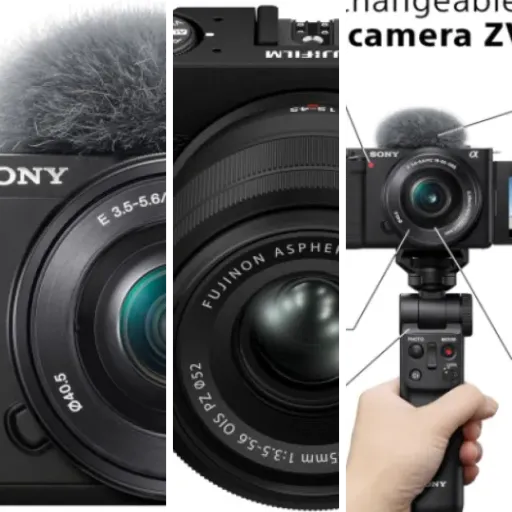
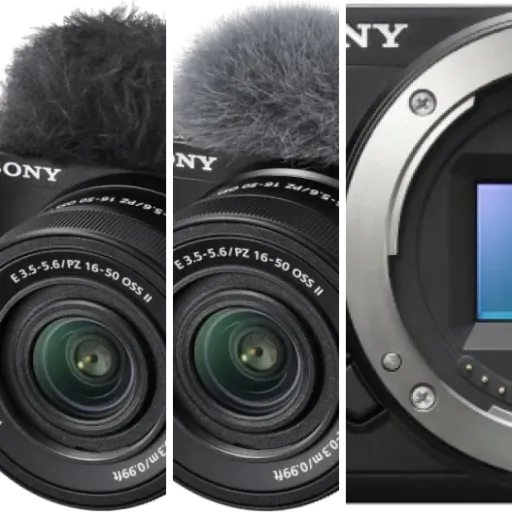
In practice, this kit is basically a Sony APS-C mirrorless body (ZV-E10) plus an external Sony ECM-S1 microphone. The camera itself has a 24.2 MP APS-C sensor, shoots 4K video up to 30 fps oversampled from 6K, and has all the typical Sony E-mount advantages: you can put a ton of different lenses on it, from cheap manual primes to more expensive zooms. The sensor is bigger than what you get on most phones and compact cameras, which is why the background blur and low-light look better.
One important thing: this specific product is mostly sold as body only, meaning there is no lens in the box. A few Amazon reviewers clearly got caught by this and were confused when they couldn’t take any pictures out of the box. If you’re new to cameras, budget for a lens right away. The basic 16–50mm kit lens or something like a 35mm or 56mm prime already gives nice results. Without a lens, it’s just an expensive brick that turns on.
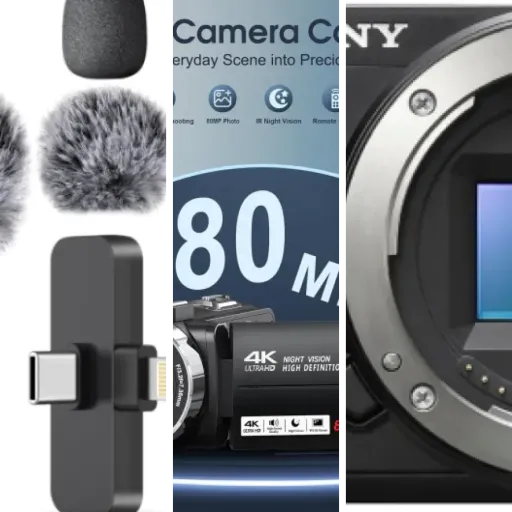
The ECM-S1 mic is there to cover the audio side. Compared to the built-in mic, it gives cleaner and fuller sound, especially for voice. It’s not studio-level magic, but for YouTube, product reviews, and talking to camera, you clearly hear the difference. It also makes the camera feel more like a dedicated content rig instead of “just a camera.”
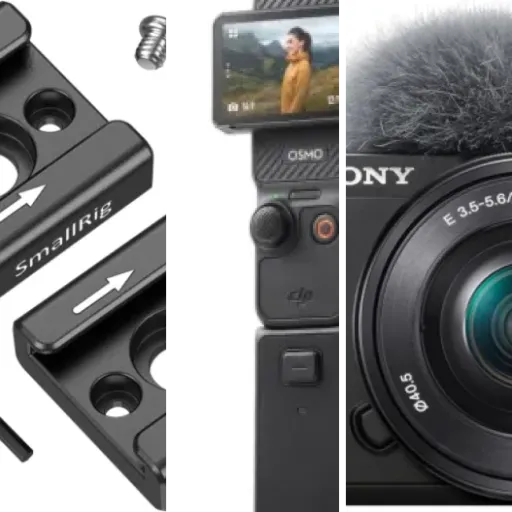
Overall, the presentation of the product is a bit confusing online: the specs list a zoom lens with a crazy 25–1650 mm range and F2.2–5.6, which doesn’t really match any real Sony kit lens I know. In real life, think of it as: you’re buying a compact, light body built for video, plus a solid mic. You still need: an SD card, at least one lens, and probably a small tripod or grip if you plan to vlog handheld a lot.
Pros
- Strong 4K image quality and reliable autofocus with eye and face tracking
- Flip-out screen and simple vlogging features (Background Defocus, Product Showcase) make filming yourself easy
- Included ECM-S1 mic delivers clearly better audio than the built-in mics, good enough for YouTube and streaming
Cons
- Usually sold as body only, so you must buy a lens separately, which increases the real cost
- No in-body optical stabilisation; digital stabilisation is only okay for walking shots
- Battery life is average, and the small NP-FW50 battery means you’ll likely need spares for longer shoots
Conclusion
Editor's rating
The Sony ZV-E10 with the ECM-S1 mic is a practical kit for people who mainly care about video and vlogging. The 24 MP APS-C sensor, 4K oversampled footage, and strong autofocus make it easy to get sharp, clean video with nice background blur. The flip-out screen and simple features like the Background Defocus button and Product Showcase mode are actually useful in day-to-day shooting, not just marketing buzzwords. Add the ECM-S1 mic and you’ve got audio that is way better than most camera mics, enough for YouTube and streaming without much effort.
It’s not without drawbacks. The body feels a bit plasticky, there’s no in-body stabilisation, and the battery life is just okay. Also, the fact that this is generally sold as body only means beginners can easily forget they still need to buy a lens, which bumps up the real cost. If you’re expecting a rugged pro camera or if you mostly shoot photos and want a viewfinder, this isn’t the best fit. But if your main goal is to improve your video quality for social media, YouTube, or live streaming, and you want something simple that still gives you room to grow with better lenses later, this kit makes sense.
So, who is it for? Content creators, vloggers, and streamers who want better image and sound than a phone, without diving too deep into camera geek territory. Who should skip it? People who mainly shoot still photos, need strong stabilisation for action, or want a more rugged body. For the right user, it’s a pretty solid balance between price, quality, and ease of use.