Camera Comparison Tool

Comparison of the 4 best digital cameras with microphone input (June 2026)

Learn how to choose the best digital cameras with microphone input for vlogging and video, including audio jacks, preamp quality, flip screens, stabilization, and real‑world buying tips.

14 May 2026 13 min read
Discover our ranking of the 4 best digital cameras with microphone input based on our tests.

Why microphone input defines the best digital cameras with microphone input

When people compare the best digital cameras with microphone input, they are really comparing how reliably each camera captures clean, intelligible sound. A camera with a dedicated 3.5 mm microphone jack, a responsive touchscreen, and dependable audio controls will always serve vlogging and video creators better than a body that only records through a tiny built in mic. For anyone planning serious recording, the difference between cameras with proper audio inputs and cameras without them is as significant as the difference between a kit lens and a professional lens.

Most compact camera models and mirrorless camera bodies now include at least one 3.5 mm port for an external mic, but not every camera with this feature treats audio as a priority. Some cameras limit manual control, hide audio meters deep in menus, or disable the microphone input when you use digital zoom or certain video modes. For instance, the Sony ZV-1 keeps its mic jack active in 4K but offers no headphone port, while the Canon EOS R7 adds both a mic input and a 3.5 mm headphone output for live monitoring. When you evaluate the best options, you should always check whether the camera body allows manual levels, headphone monitoring, and clear on screen indicators for clipping during video recording.

Creators in the United States and elsewhere often buy their first vlogging camera from a large marketplace such as Amazon, where product pages highlight 4K video and image stabilization but barely mention microphone performance. That is why a focused list of cameras vlogging enthusiasts can trust, with clear notes on each mic input and compatibility with popular shotgun microphones such as the Rode VideoMic GO II or Deity D4 Mini, is more valuable than a generic ranking based only on sensor size or zoom range. Treat audio as a core specification, not an accessory, and you will quickly narrow down which cameras truly count as the best digital cameras with microphone input for your style of shooting.

Ranking

#1 🏆 Best choice
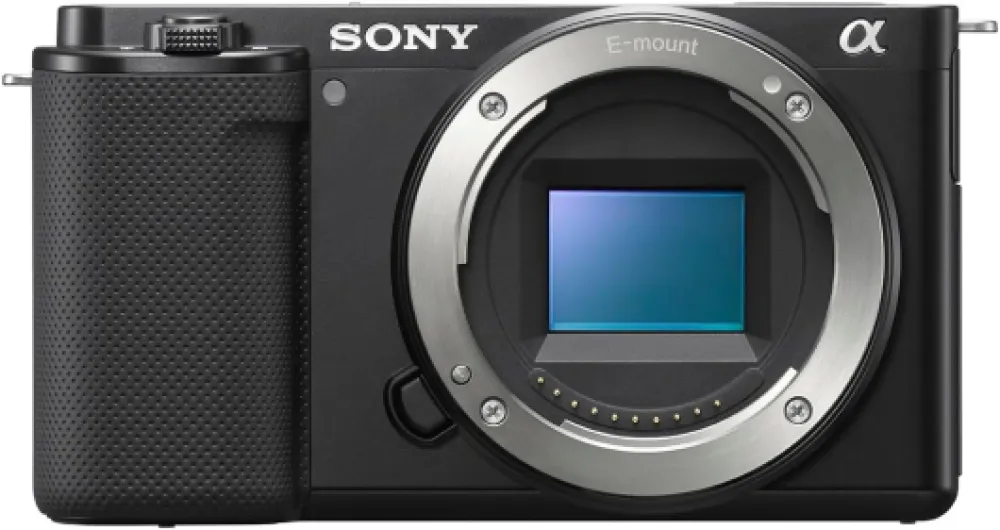
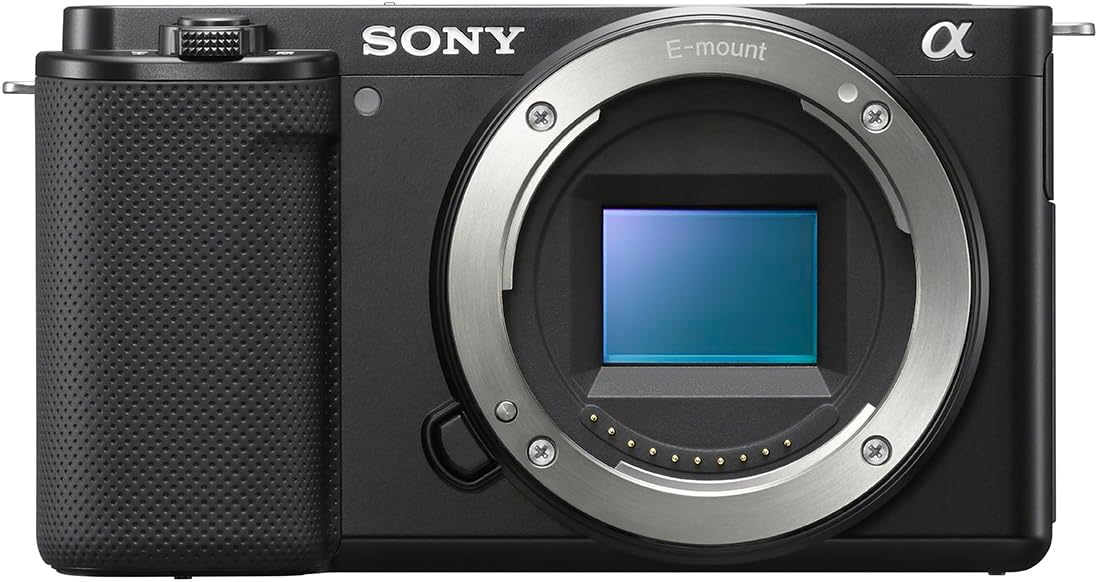
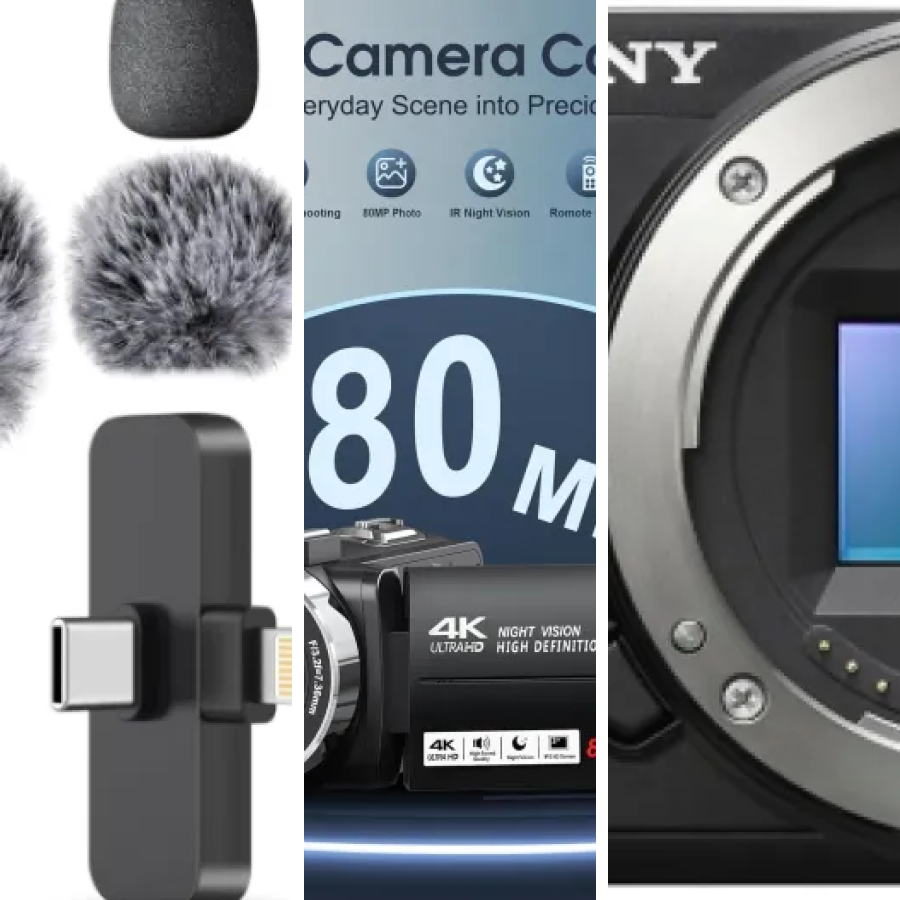
SONY Alpha ZV-E10 - APS-C Interchangeable Lens Mirrorless Vlog Camera - Black Black Base w/ Mic ECM-S1

Sony

SONY Alpha ZV-E10 - APS-C Interchangeable Lens Mirrorless Vlog Camera - Black Black Base w/ Mic ECM-S1

⭐ Très bien noté
  • Strong 4K image quality and reliable autofocus with eye and face tracking
  • Flip-out screen and simple vlogging features (Background Defocus, Product Showcase) make filming yourself easy
  • Included ECM-S1 mic delivers clearly better audio than the built-in mics, good enough for YouTube and streaming
The Sony ZV-E10 with the ECM-S1 mic is a practical kit for people who mainly care about video and vlogging. The 24 MP APS-C sensor, 4K oversampled footage, and strong autofocus make it easy to get sharp, clean video with nice background blur. The flip-out screen and simple features like the Background Defocus button and Product Showcase mode are actually useful in day-to-day shooting, not just marketing buzzwords. Add the ECM-S1 mic and you’ve got audio that is way better than most camera mics, enough for YouTube and streaming without much effort.It’s not without drawbacks. The body feels a bit plasticky, there’s no in-body stabilisation, and the battery life is just okay. Also, the fact that this is generally sold as body only means beginners can easily forget they still need to buy a lens, which bumps up the real cost. If you’re expecting a rugged pro camera or if you mostly shoot photos and want a viewfinder, this isn’t the best fit. But if your main goal is to improve your video quality for social media, YouTube, or live streaming, and you want something simple that still gives you room to grow with better lenses later, this kit makes sense.So, who is it for? Content creators, vloggers, and streamers who want better image and sound than a phone, without diving too deep into camera geek territory. Who should skip it? People who mainly shoot still photos, need strong stabilisation for action, or want a more rugged body. For the right user, it’s a pretty solid balance between price, quality, and ease of use.
8.8 /10
★★★★★ ★★★★★
🌟 Excellent See full review →
See offer Amazon
#2 🔥 Most popular
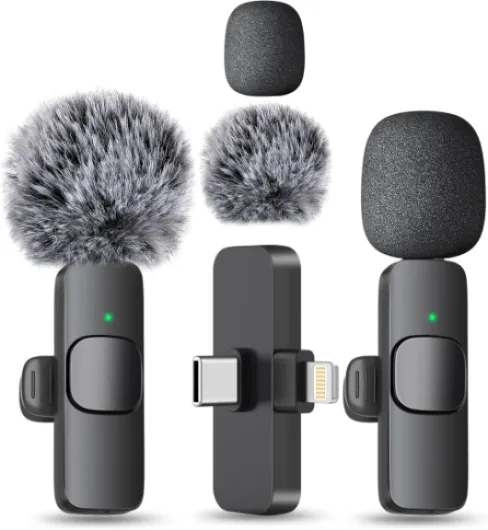
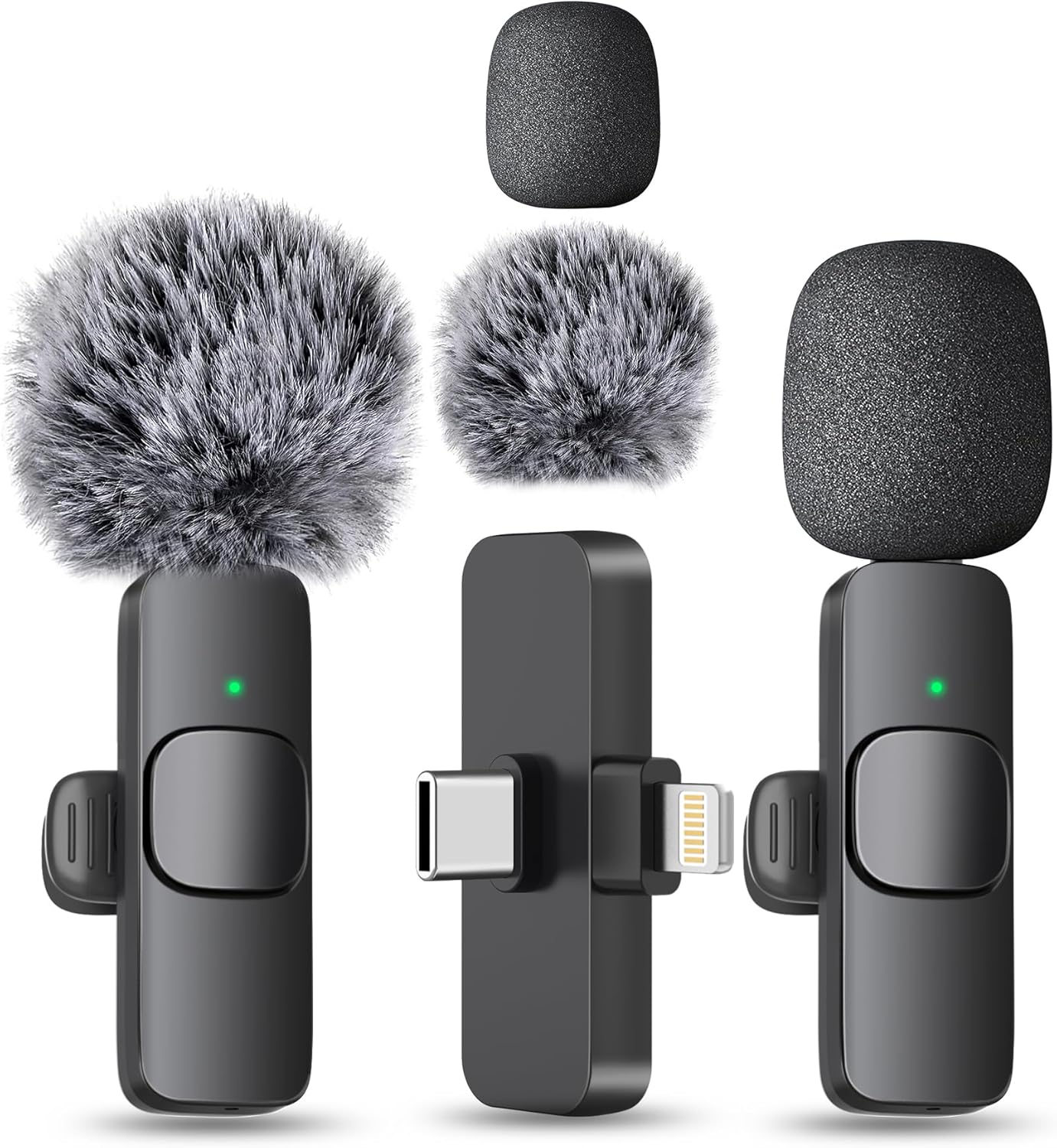
Wireless Mini Microphone for iPhone, Android Phone - Bluetooth Lavalier Lapel Mic for Audio Video Recording - Clip on Content Creator Microphones for YouTube Tiktok Podcast Vlogging All iPhones & Androids (USB-C + Lightning)

MAYBESTA

Wireless Mini Microphone for iPhone, Android Phone - Bluetooth Lavalier Lapel Mic for Audio Video Recording - Clip on Content Creator Microphones for YouTube Tiktok Podcast Vlogging All iPhones & Androids (USB-C + Lightning)

🔥 Populaire
  • Easy to use with plug-and-play setup
  • Decent battery life for extended use
  • Compatible with a wide range of devices
The MAYBESTA Wireless Mini Microphone is a solid choice for casual content creators who need a simple and portable audio solution. Its ease of use and decent performance make it suitable for vlogging, podcasts, and other light recording tasks. It's especially appealing if you're working with a budget.That said, it's not ideal for professional use due to its lack of advanced features. If you're looking for something with more control and customization, you may want to look at higher-end options. However, if you need a reliable microphone that won't break the bank, this one checks the boxes.
8.3 /10
★★★★★ ★★★★★
🌟 Excellent See full review →
See offer Amazon
#3
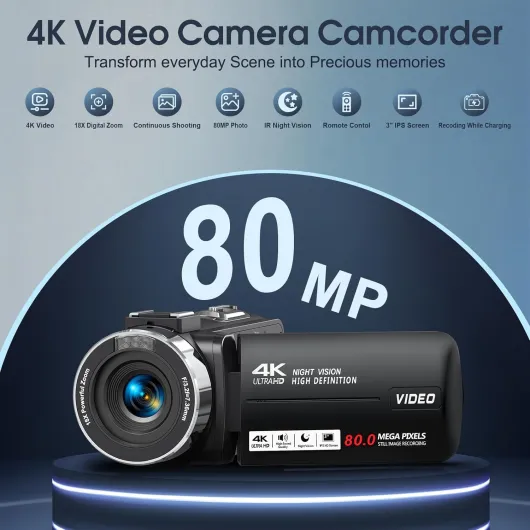
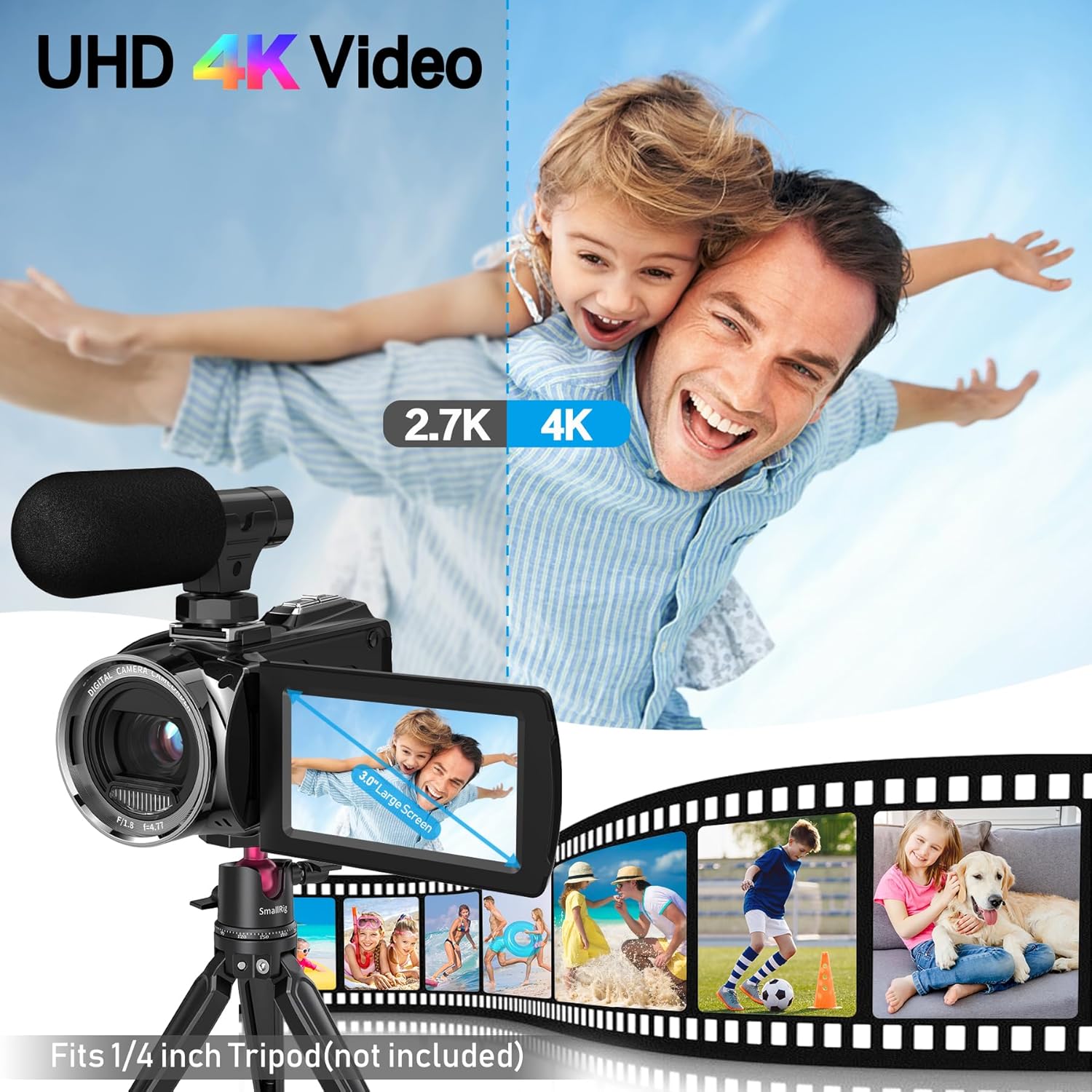
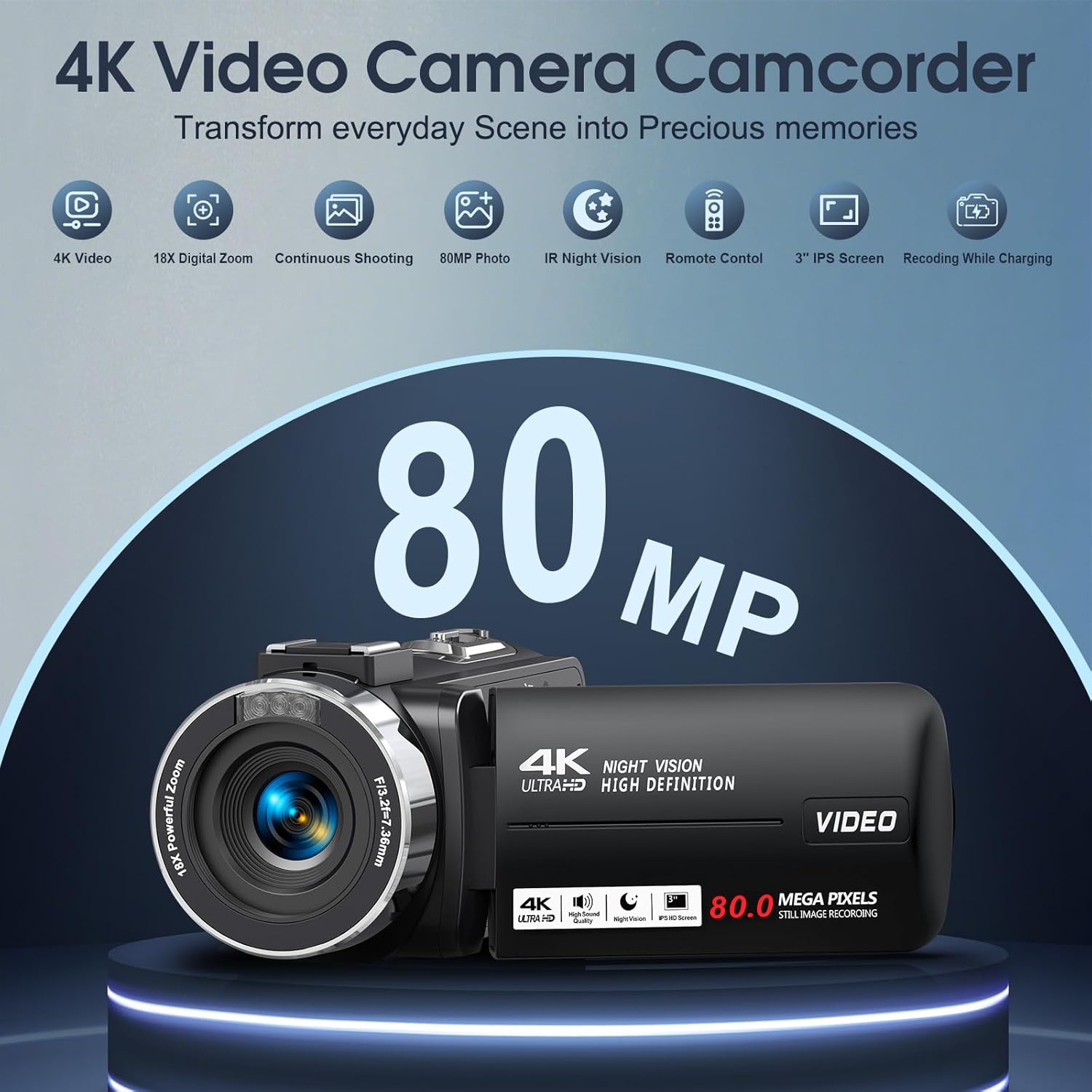
4K Video Camera Camcorder 80MP 18X Digital Zoom IR Night Vision Vlogging Camera, 3.0 Inch Screen YouTube Camera with 32GB SD Card, Microphone, Remote Control and 2 Batteries Deep Black

Delmodes

4K Video Camera Camcorder 80MP 18X Digital Zoom IR Night Vision Vlogging Camera, 3.0 Inch Screen YouTube Camera with 32GB SD Card, Microphone, Remote Control and 2 Batteries Deep Black

  • Comes with 2 batteries and a 32GB SD card, ready to use out of the box
  • Flip-out 3" screen and night vision make it versatile for vlogging and dark rooms
  • External mic input and webcam mode add flexibility for YouTube and video calls
After using the Delmodes 4K camcorder for a bit, my take is simple: it’s a solid budget option for casual users, but not a miracle camera. The video quality in good light is decent, the 4K is real enough for YouTube and family clips, and the flip screen plus night vision and external mic input give it more flexibility than many cheap devices. The fact that it comes with two batteries and a 32GB SD card means you can start shooting straight away without extra spending.At the same time, you need to be aware of its limits. There’s no proper stabilization, so handheld shots can get shaky, especially at higher zoom. Low-light performance is average, and the 80MP photo spec is clearly mostly software. The build is lightweight and a bit plasticky, so you have to treat it with normal care and keep it away from water and drops.I’d say this camera is well-suited for: beginners, teenagers starting a YouTube channel, parents who want something simple for holidays and school events, and anyone who wants a separate camcorder so they don’t drain their phone battery. People who should probably skip it: anyone serious about video quality, vloggers who walk and talk a lot (you’ll miss stabilization), and those expecting it to rival a mid-range phone or mirrorless camera. Within its price range and purpose, though, it gets the job done and offers good value if you know what you’re buying.
8.3 /10
★★★★★ ★★★★★
🌟 Excellent See full review →
See offer Amazon
#4
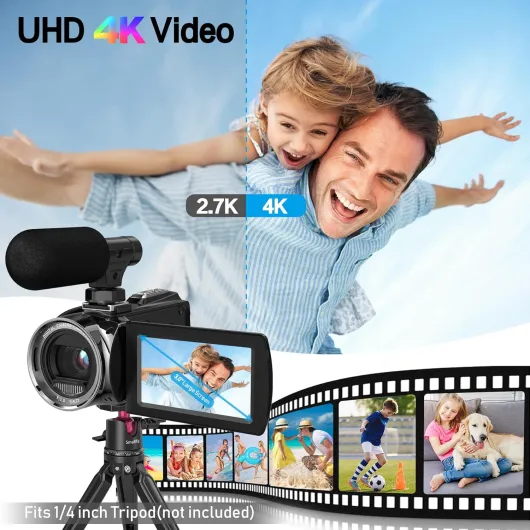
Video Camera Camcorder, Full HD 4K 48MP Digital YouTube Vlogging Camera Recorder,Video Camera 30FPS 3.0 Inch LCD 270 Rotatable Degrees IPS Screen with Microphone and 32GB SD Card

Rumyums

Video Camera Camcorder, Full HD 4K 48MP Digital YouTube Vlogging Camera Recorder,Video Camera 30FPS 3.0 Inch LCD 270 Rotatable Degrees IPS Screen with Microphone and 32GB SD Card

  • Complete starter kit with external mic and 32GB SD card included
  • Simple interface and light body, easy for kids and beginners to handle
  • Flip screen (270°) makes vlogging and self-recording straightforward
This Rumyums 4K camcorder is basically a budget-friendly, entry-level video camera that makes more sense as a gift for kids or total beginners than as a tool for serious creators. The best parts are the complete kit (camera + mic + 32GB card), the light and simple design, and the flip screen that makes self-recording easy. In good light, the footage is perfectly usable for casual YouTube videos, school projects, or family memories. The external mic also helps keep spoken audio reasonably clear without any setup hassle.On the downside, the big “4K 48MP” numbers are misleading if you compare them to what you get from a decent smartphone or a real camera. Low-light performance is weak, digital zoom quickly ruins quality, and the build is clearly budget plastic. Battery life is okay for short sessions but not great for long days, and there’s no water resistance or rugged protection. If you already own a halfway decent phone, this won’t be an upgrade in image quality. But if you just want a cheap, dedicated camcorder that you’re not afraid to hand to a child, it does the job without being complicated.
6 /10
★★★★★ ★★★★★
👌 Good See full review →
See offer Amazon

Comparison table : Digital cameras with microphone input

Overall score Value for money Design Battery Durability Performance Presentation
SONY Alpha ZV-E10 - APS-C Interchangeable Lens Mirrorless Vlog Camera - Black Black Base w/ Mic ECM-S1
#1 Sony
SONY Alpha ZV-E10 - APS-C Interchangeabl...
See offer Amazon
8.8/10 ★★★★★ ★★★★★ ★★★★★ ★★★★★ ★★★★★ ★★★★★ ★★★★★ ★★★★★ ★★★★★ ★★★★★ ★★★★★ ★★★★★
Wireless Mini Microphone for iPhone, Android Phone - Bluetooth Lavalier Lapel Mic for Audio Video Recording - Clip on Content Creator Microphones for YouTube Tiktok Podcast Vlogging All iPhones & Androids (USB-C + Lightning)
#2 MAYBESTA
Wireless Mini Microphone for iPhone, And...
See offer Amazon
8.3/10 ★★★★★ ★★★★★ - ★★★★★ ★★★★★ - ★★★★★ ★★★★★ -
4K Video Camera Camcorder 80MP 18X Digital Zoom IR Night Vision Vlogging Camera, 3.0 Inch Screen YouTube Camera with 32GB SD Card, Microphone, Remote Control and 2 Batteries Deep Black
#3 Delmodes
4K Video Camera Camcorder 80MP 18X Digit...
See offer Amazon
8.3/10 ★★★★★ ★★★★★ ★★★★★ ★★★★★ ★★★★★ ★★★★★ ★★★★★ ★★★★★ ★★★★★ ★★★★★ ★★★★★ ★★★★★
Video Camera Camcorder, Full HD 4K 48MP Digital YouTube Vlogging Camera Recorder,Video Camera 30FPS 3.0 Inch LCD 270 Rotatable Degrees IPS Screen with Microphone and 32GB SD Card
#4 Rumyums
Video Camera Camcorder, Full HD 4K 48MP...
See offer Amazon
6/10 ★★★★★ ★★★★★ ★★★★★ ★★★★★ ★★★★★ ★★★★★ ★★★★★ ★★★★★ ★★★★★ ★★★★★ ★★★★★ ★★★★★

Key features that separate average cameras from the best options

Several technical details consistently separate average cameras from the best digital cameras with microphone input for serious video work. First, a camera with a clean audio preamp, a reliable external mic jack, and a flip touchscreen gives you far more control than a basic video camera that only offers automatic gain and a fixed rear screen. For example, the Sony ZV-E10 provides manual audio levels, a 3.5 mm mic port, and a headphone jack, while many entry level compact cameras still rely on auto gain and lack any monitoring. Second, pairing a bright lens with effective optical stabilization or in body stabilization helps keep both handheld vlogging and more formal professional video sequences sharp and steady.

Look closely at the screen design, because a fully articulating flip touchscreen is almost essential for camera vlogging and solo recording. A vlogging camera with a side hinged screen lets you frame yourself while keeping the top of the camera body free for a shotgun mic, whereas a screen that flips upward can collide with a hot shoe microphone and limit your options. The Canon EOS R10, for instance, uses a side flip LCD that clears the hot shoe, while older Sony compact models with flip up screens can block the mic. When you compare products with similar price points, prioritize those that keep the mic port and headphone jack clear of the screen hinge and tripod plate.

Lens flexibility also matters, especially if you want one camera for both wide angle talking head clips and tighter shots with some background blur. Many mirrorless camera systems offer compact black prime lenses that are ideal for lens vlogging, while others rely more on zoom lenses that trade maximum aperture for convenience and digital zoom extensions. If you are weighing full frame models against smaller sensor bodies, a dedicated guide to top full frame digital cameras can help you understand how sensor size, stabilization, and microphone input options interact in real world vlogging scenarios.

Comparing camera types in a practical camera comparison tool mindset

Thinking like a camera comparison tool helps you weigh the best digital cameras with microphone input against your actual shooting habits instead of abstract specifications. Start by dividing candidates into three groups, namely compact camera models, interchangeable lens mirrorless camera bodies, and rugged action camera designs, then rate each group for video, vlogging, and travel convenience. This structured approach keeps you from being distracted by marketing claims about digital zoom or extreme frame rates that you may never use.

Compact cameras with built in zoom lenses and with touch controls are usually the easiest to operate, especially for beginners who want a small black body that slips into a jacket pocket. Many of these cameras vlogging creators choose include a flip touchscreen and a side mounted microphone input, which makes them ideal for handheld vlogging camera work in busy city streets. The Sony ZV-1, for example, combines a 3.5 mm mic jack, optical stabilization, and a fast 24–70 mm equivalent lens in a pocketable body. Their main limitation is that you cannot change the lens, so you must accept the manufacturer’s balance between wide angle coverage, maximum aperture, and overall price.

Mirrorless camera systems offer more flexibility, because you can pair the camera body with different lenses for lens vlogging, telephoto work, or low light recording. A mid range Sony mirrorless camera with mic input, strong autofocus, and good stabilization can outperform a premium compact camera for professional video, but it will also be larger and more expensive. For instance, the Sony a6400 with an external mic and a stabilized lens delivers better low light performance than most compact cameras, even though it lacks in body stabilization. To understand how upcoming models might shift this balance, it is worth reading an analysis such as what new camera launches mean for buyers, then updating your personal list of best options accordingly.

Audio first: how to judge microphone, external mic support, and with mic workflows

Sound quality is where the best digital cameras with microphone input truly justify their premium price over basic cameras. A camera with a quiet preamp, a standard 3.5 mm microphone jack, and clear audio meters on the screen will let you record dialogue that needs minimal cleanup in editing. By contrast, a video camera without proper gain control or headphone monitoring can force you to discard entire clips because of hiss, clipping, or handling noise.

When you test cameras vlogging setups in store or at home, plug in the same external mic and record a short clip at a consistent distance, then listen on good headphones for background noise and tonal balance. Some cameras boost the signal aggressively, which makes small room echoes and street noise more obvious, while others keep levels conservative and rely on you to move the mic closer. For example, many reviewers note that the Canon EOS M50 Mark II preamp sounds cleaner at mid gain than at maximum, while the Sony ZV-E10 remains relatively quiet even when pushed higher. A vlogging camera with a hot shoe mounted shotgun mic will usually sound better than a camera with only its internal microphones, but lavalier microphones clipped to clothing can be even more effective for interviews.

Pay attention to how the camera with mic input behaves when you start and stop recording, because audible clicks or pops can complicate editing. On certain models, the microphone jack is placed so close to the flip touchscreen that the cable blocks part of the screen, which is frustrating during camera vlogging sessions. The Panasonic Lumix G100, for instance, keeps its mic port on the side but can still crowd the hinge area when you use a thick right angle plug. If you plan to shoot in the rain or dust, remember that most action camera designs do not keep their weather sealing when you open doors for a microphone cable, so you may need cages or adapters that remain compatible with your preferred microphones.

Real world buying guide: balancing price, size, stabilization, and lens choices

Choosing among the best digital cameras with microphone input means balancing budget, portability, and performance rather than chasing a single headline specification. A small compact camera with a modest zoom range, decent stabilization, and a flip touchscreen might be perfect for daily vlogging, even if its sensor is smaller than that of a more expensive mirrorless camera. On the other hand, a larger camera body with interchangeable lenses can grow with you as your video skills and professional video ambitions expand.

Price differences between cameras often reflect more than just image quality, because better stabilization systems, stronger weather sealing, and more advanced autofocus all cost money to engineer. A Sony mirrorless camera with in body stabilization, a bright wide angle lens, and a robust microphone input will usually sit higher on any list of premium products with strong video features. For example, the Sony a7 IV combines 5 axis IBIS, a full frame sensor, a 3.5 mm mic jack, and a headphone port, which makes it attractive for hybrid shooters who prioritize audio. Still, many creators in the United States start with a mid range kit bought through Amazon or a local retailer, then add a faster lens and an external mic later when their vlogging income or enthusiasm grows.

Weight and handling also matter, especially if you film handheld for long stretches or travel frequently. For some people, a lightweight action camera with a front facing screen and digital zoom is easier to carry than a traditional camera with a heavy zoom lens, even if the action camera’s low light performance is weaker. The GoPro Hero series, for instance, can accept an external mic only through a dedicated adapter, which adds cost and bulk compared with a compact camera that includes a native 3.5 mm jack. If portability is a priority, a dedicated guide to top lightweight digital cameras can help you compare compact camera and mirrorless camera options that remain compatible with your preferred microphones and tripods.

Building your personalized camera comparison tool for vlogging and video

Once you understand the trade offs, you can turn your notes into a simple camera comparison tool that highlights the best digital cameras with microphone input for your specific needs. Create a table with columns for price, weight, stabilization type, screen design, microphone input, and lens options, then score each camera with a number from one to five in each category. This forces you to think about how much you value a flip touchscreen versus a brighter lens or more advanced video codecs.

To make this more concrete, you might compare a few popular models side by side:

Model Mic jack type Headphone port Screen hinge Stabilization Typical kit price
Sony ZV-1 3.5 mm input No Side flip Optical + digital Mid range compact
Sony ZV-E10 3.5 mm input Yes, 3.5 mm Fully articulating Lens based OIS Mid range mirrorless
Canon EOS R10 3.5 mm input Yes, 3.5 mm Side hinged Digital + lens IS Upper mid range
GoPro with mic adapter USB adapter to 3.5 mm No built in Front + rear screens Electronic only Mid range action cam

Include separate rows for compact camera models, mirrorless camera bodies, and action camera designs, because each category serves different vlogging and video styles. For example, a Sony compact camera with touch controls, a fast wide angle lens, and a side mounted mic jack might score highest for travel vlogging, while a larger mirrorless camera with interchangeable lenses and better low light performance might win for studio based professional video. You may even keep a second list that focuses only on cameras vlogging creators recommend, which can highlight models that feel better in the hand than their raw specifications suggest.

Finally, remember that the best camera with mic input is the one you will actually carry and use regularly. A small black body that fits into your everyday bag, works smoothly with your favorite external mic, and offers reliable stabilization will help you record more often than a bulky flagship that stays on the shelf. By revisiting your scores every few months and updating them as new products with improved audio and video features arrive, you keep your personal ranking of the best digital cameras with microphone input aligned with both the market and your evolving creative goals.

Key figures about digital cameras with microphone input

  • According to Camera & Imaging Products Association (CIPA) shipment data, mirrorless camera models now account for more than half of interchangeable lens camera sales worldwide, reflecting a strong shift toward bodies that typically include modern microphone inputs and advanced video features.
  • Industry surveys of online creators, including public YouTube Creator Surveys on equipment usage, indicate that a clear majority of full time vloggers use an external mic with their primary camera, underlining how critical microphone jacks and audio controls are for professional video workflows.
  • Retail analysis from major marketplaces shows that product pages mentioning both stabilization and microphone input in their feature list tend to see higher conversion rates than similar cameras without these terms, suggesting buyers actively search for audio ready video tools.
  • Testing by independent reviewers often finds a dynamic range of around 12 stops in mid range mirrorless cameras, which, combined with clean audio from a dedicated microphone input, provides enough latitude for both visual and sound editing in most vlogging projects.

References

  • Camera & Imaging Products Association (CIPA) shipment statistics and market summaries
  • YouTube Creator Surveys and public creator equipment polls
  • Retail trend reports and category insights from major online marketplaces
Frequently asked questions

If you only record short clips for friends, a camera without a microphone jack can be enough, but any regular vlogging benefits from an external mic. Built in microphones pick up handling noise and echo, while a small shotgun or lavalier mic improves clarity dramatically. Once you compare recordings side by side, most people prefer cameras with proper microphone inputs.

A compact camera is lighter and easier to carry, which suits spontaneous travel vlogging and quick handheld shots. A mirrorless camera offers better lens choices, larger sensors, and more advanced video features, but it adds weight and cost. Many creators start with a compact model, then move to mirrorless once they understand their style and stabilization needs.

A flip touchscreen is extremely helpful for framing yourself, checking focus, and monitoring audio meters while you record alone. Side hinged screens work best with hot shoe microphones, because they avoid collisions between the mic and the screen. If you plan to film yourself frequently, prioritize cameras that combine a flip screen with a front facing tally lamp and clear on screen recording indicators.

An action camera excels at rugged, wide angle shots and extreme stabilization, which is ideal for sports and travel sequences. However, its small sensor, limited lens options, and sometimes restricted microphone support make it less flexible than a dedicated vlogging camera. Many creators use an action camera as a second angle while relying on a compact or mirrorless camera with a proper mic input for main dialogue.

Entry level compact cameras with microphone inputs start around a few hundred euros, while mid range mirrorless kits with better lenses and stabilization often cost several times more. You should also budget for at least one external mic, a small tripod, and extra batteries. Spending slightly more on a reliable audio ready body usually saves money later by avoiding an early upgrade.

According to our tests, the best digital cameras with microphone input is the SONY Alpha ZV-E10 - APS-C Interchangeable Lens Mirrorless Vlog Camera - Black Black Base w/ Mic ECM-S1 with a score of 8.8/10.

The cheapest digital cameras with microphone input in our comparison is the Wireless Mini Microphone for iPhone, Android Phone - Bluetooth Lavalier Lapel Mic for Audio Video Recording - Clip on Content Creator Microphones for YouTube Tiktok Podcast Vlogging All iPhones & Androids (USB-C + Lightning).

The most popular digital cameras with microphone input is the Wireless Mini Microphone for iPhone, Android Phone - Bluetooth Lavalier Lapel Mic for Audio Video Recording - Clip on Content Creator Microphones for YouTube Tiktok Podcast Vlogging All iPhones & Androids (USB-C + Lightning) with 10 199 customer reviews.

To choose a digital cameras with microphone input, we recommend comparing performance, build quality, value for money and user reviews. Our comparison table above helps you make the right choice.

We have tested 4 Digital cameras with microphone input to establish this ranking.
#1 SONY Alpha ZV-E10 - APS-C Interchangeable Lens Mirrorless Vlog Camera - Black Black Base w/ Mic ECM-S1 Sony ZV-E10 + ECM-S1 (APS-C Mirrorless Vlog Camera)
8.8/10 Best choice
See offer Amazon