
Summary
Editor's rating
Value for money: what you really pay for
Design: lightweight, plasticky, but practical
Battery life and real-world usage time
Build quality and how tough it feels
Video, photo and zoom: what the 4K actually looks like
What you actually get and what this camera really is
Pros
- Comes with 2 batteries and a 32GB SD card, ready to use out of the box
- Flip-out 3" screen and night vision make it versatile for vlogging and dark rooms
- External mic input and webcam mode add flexibility for YouTube and video calls
Cons
- No real image stabilization, so handheld footage can be shaky
- Average low-light performance and heavily upscaled 80MP photos
- Light, plasticky build with no water resistance, needs careful handling

Specifications
View full product page →| Brand | Delmodes |
A budget 4K camcorder I actually used outside the living room
I picked up this Delmodes 4K camcorder mainly out of curiosity and because I was tired of draining my phone battery every time I filmed family stuff or tried to record a quick YouTube-style video. It’s one of those no-name-ish Chinese cameras that pop up on Amazon, so I went in with pretty low expectations. I’ve used it for a couple of weekends: a walk in the park, some indoor clips, a bit of test vlogging, and a few night-vision shots in a dark room.
Right away, what struck me is that it feels more like a simple tool than a fancy gadget. You take it out of the box, charge the batteries, insert the SD card (already provided), and you’re pretty much ready to shoot. No complicated setup, no app nightmare, no account to create. For the price, that’s already a plus. It’s clearly not meant to compete with a DSLR or a high-end Sony camcorder, but that’s not really the point.
My mindset while testing it was: can this replace using my phone for casual videos, kid events, and basic YouTube content? And also: can someone who’s not into camera tech use it without getting frustrated? I lent it to a friend for an afternoon who barely knows how to change camera settings on a smartphone, and they managed just fine. That told me a lot about who this thing is aimed at.
It’s not perfect, and a few things are a bit “meh” or feel cheap, but overall it actually works. If you go in expecting a basic family/vlogging camcorder with some nice extras like night vision and an external mic input, it makes sense. If you expect pro-level 4K and rock-solid stabilization, you’re going to be disappointed.
Value for money: what you really pay for
For the price bracket this Delmodes camcorder sits in, I’d say the value is pretty good, as long as your expectations are aligned. You’re paying for a complete kit: camera, two batteries, 32GB SD card, remote, cables, and sometimes a little carry bag depending on the bundle. That means you can start filming right away without hunting down extra accessories, which is ideal if you’re buying this for a teen, a beginner, or just as a simple family camcorder.
Where the value shows is in the small conveniences: flip screen, night vision, external mic input, and webcam mode. Most budget devices don’t combine all of that. The night vision in particular is not a gimmick; it actually lets you see in a dark room and record usable black-and-white footage. For basic streaming or Zoom calls, the webcam mode works fine too, so you’re getting a bit more than just a basic video recorder.
On the downside, the lack of proper image stabilization and the average low-light performance do limit it. If you compare it to just using a recent smartphone, the phone might give you better image quality and stabilization, but you lose the dedicated device, flip screen, and zoom form factor. So it really comes down to what you want: if you’re happy using your phone, you might not need this. If you want a separate camera you don’t mind handing to kids or tossing in a bag, this makes sense.
Overall, I think the price is fair for what you get. It’s not a hidden gem, but it’s also not a scam. It’s a decent budget camcorder that does what it says, with some nice extras. If you catch it on sale, it becomes even easier to recommend for casual users and beginners who just want something simple that works out of the box.
Design: lightweight, plasticky, but practical
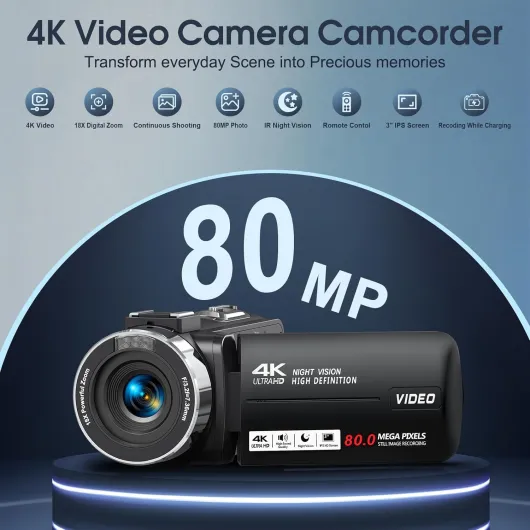
Design-wise, it’s pretty straightforward: small black camcorder, 3-inch flip-out screen that rotates 270°, and a simple hand grip. It’s very light, which is good if you’re carrying it all day or if a kid is using it, but that also means it feels a bit cheap in the hand. The plastic doesn’t scream quality, but nothing was creaking or bending when I squeezed it a bit, so at least it doesn’t feel like it’s going to fall apart instantly.
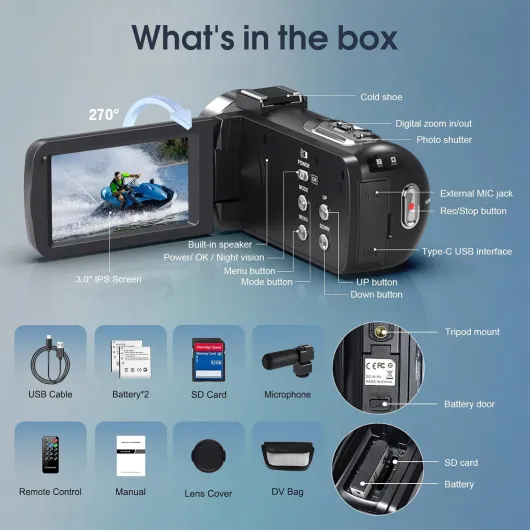
The layout is pretty classic: zoom rocker on top, record button near your thumb, mode and menu buttons around the screen, and a small joystick for navigating the menus. The flip screen is the best part of the design for me. Being able to turn it toward you for vlogging or selfies is actually handy, and it’s bright enough indoors and in the shade. In direct sun it becomes harder to see, but that happens with most cheap screens.
One thing I liked is that the batteries go into a compartment under the camera, more like an old-school camcorder, instead of a big battery sticking out the back. It keeps the overall shape compact. The SD card slot is inside the battery compartment too, which is slightly annoying if you use a tripod, because you have to remove the camera to swap cards. Not a deal breaker, but worth knowing.
Ports are all on one side: USB for data and charging, HDMI out, and the mic jack on top. No weather sealing, no rubber flaps that feel solid – this is clearly a “keep it dry and don’t drop it” device. Overall, the design is functional and simple. It doesn’t feel premium, but it’s easy to hold, easy to understand, and light enough that your arm doesn’t get tired after a few minutes of filming.
Battery life and real-world usage time
The camera comes with two 1500mAh batteries, and that’s honestly one of its strong points. One battery gave me roughly an hour of mixed use at 4K: some continuous filming, some on-and-off short clips, and a bit of menu fiddling. If you just hit record and don’t stop, you’re looking at around 60–65 minutes per battery, which matches the spec sheet more or less. Having the second battery included means you can comfortably cover a half-day outing without stressing too much.
Swapping batteries is quick: open the flap underneath, slide the old one out, slide the new one in, done. The only slight annoyance is if you’re using a tripod, because the battery door is on the bottom, so you’ll probably have to take the camera off the tripod to change it. Not the end of the world, but a bit of a design compromise. Charging is done via USB in the camera, which is convenient because you don’t need a separate charger, but it’s also slower than using a dedicated external charger would be.
One thing I liked is that it supports recording while charging. I tested this by plugging it into a power bank and leaving it recording on a table. It kept going without complaining, so for long stationary recordings (like a school play, small event, or a fixed vlog setup), you can basically ignore battery life as long as you have power. Just be aware the camera can get slightly warm after long sessions, but nothing alarming.
Overall, I’d say battery performance is pretty solid for this price range. You’re not going to get all-day pro coverage, but for family outings, beginner vlogging, or casual shooting, the two batteries are enough. If you’re the type who records hours of footage in one go, you’ll still need to manage power carefully, but for normal use it holds up well and doesn’t feel like a constant limitation.
Build quality and how tough it feels
Durability-wise, this is clearly not a tank. The body is light plastic, the hinges are okay but not heavy-duty, and there’s zero water resistance. I wouldn’t take it out in the rain without protection, and I definitely wouldn’t trust it on a sandy beach without being careful. That said, it doesn’t feel like it’s going to snap in half from normal use either. I tossed it in a backpack (no padded case) a couple of times, and it came out fine, no scratches on the screen or lens.
The flip screen mechanism is usually the weak point on cheap camcorders, so I paid attention to that. After several days of opening and closing it a lot, rotating it for selfie mode, and letting a kid handle it, the hinge still felt solid, with no wobble. You can feel it’s not premium, but it doesn’t feel like it’s about to break either. Just don’t twist it like crazy or slam it shut and you’ll probably be fine.
Buttons and ports are basic but functional. The port covers are thin and don’t seal tightly, which reinforces the idea: this is an indoor / dry-weather camera. The lens has a cap, which I recommend actually using, because there’s no built-in cover. The body picks up fingerprints easily, but that’s just cosmetic. After a few days of use, I didn’t notice any play in the zoom rocker or the record button.
So in short, durability is acceptable for the price, as long as you treat it like a budget electronic and not like a GoPro. It’s fine for family trips, home videos, and light travel. If you want something that survives drops, dust, and bad weather, this is not the right type of device anyway. Handle it with normal care and it should last, but I wouldn’t count on it surviving serious abuse.
Video, photo and zoom: what the 4K actually looks like
Let’s be honest: the 4K label is mostly marketing here. Yes, it records in 4K resolution, and the image is fairly sharp in good light, but it’s not on the same level as a decent smartphone or a real camera. During the day, outdoors, colors are decent, detail is fine, and for YouTube or family videos it’s totally usable. Indoors, especially in average room lighting, it starts to show its limits: more noise, softer image, and the autofocus occasionally hunts a bit before locking on.
The 80MP photo mode is clearly upscaled. The files are big and you can crop a bit, but it’s not like you’re suddenly shooting DSLR-level photos. I’d say the photos are okay for social media and sending to family, but this is not a stills camera. Compared to my mid-range smartphone, the phone usually wins in terms of dynamic range and color, but the camcorder has the advantage of being easier to hold stable when filming longer clips.
The 18x digital zoom is useful if you don’t push it all the way. Up to about halfway, it’s still decent for casual use. At full zoom, the image gets soft and a bit jittery, especially since there is no real image stabilization. That’s one of the bigger drawbacks: handheld shots at full zoom look shaky, and even at normal zoom, you can see every little movement if you’re walking or not careful. On a tripod, it’s fine, but for run-and-gun handheld stuff, don’t expect miracles.
Overall, in terms of performance, I’d rate it as: good enough for beginners and casual content, but nothing more. If you’re used to shooting with a phone and just want a separate device with a flip screen and physical buttons, this will do the job. If you’re picky about image quality, dynamic range, and stabilization, you’ll find its limits pretty quickly. For the price though, it delivers what I expected: workable 4K in good light, okay photos, and a zoom that’s useful if you’re realistic about its range.
What you actually get and what this camera really is
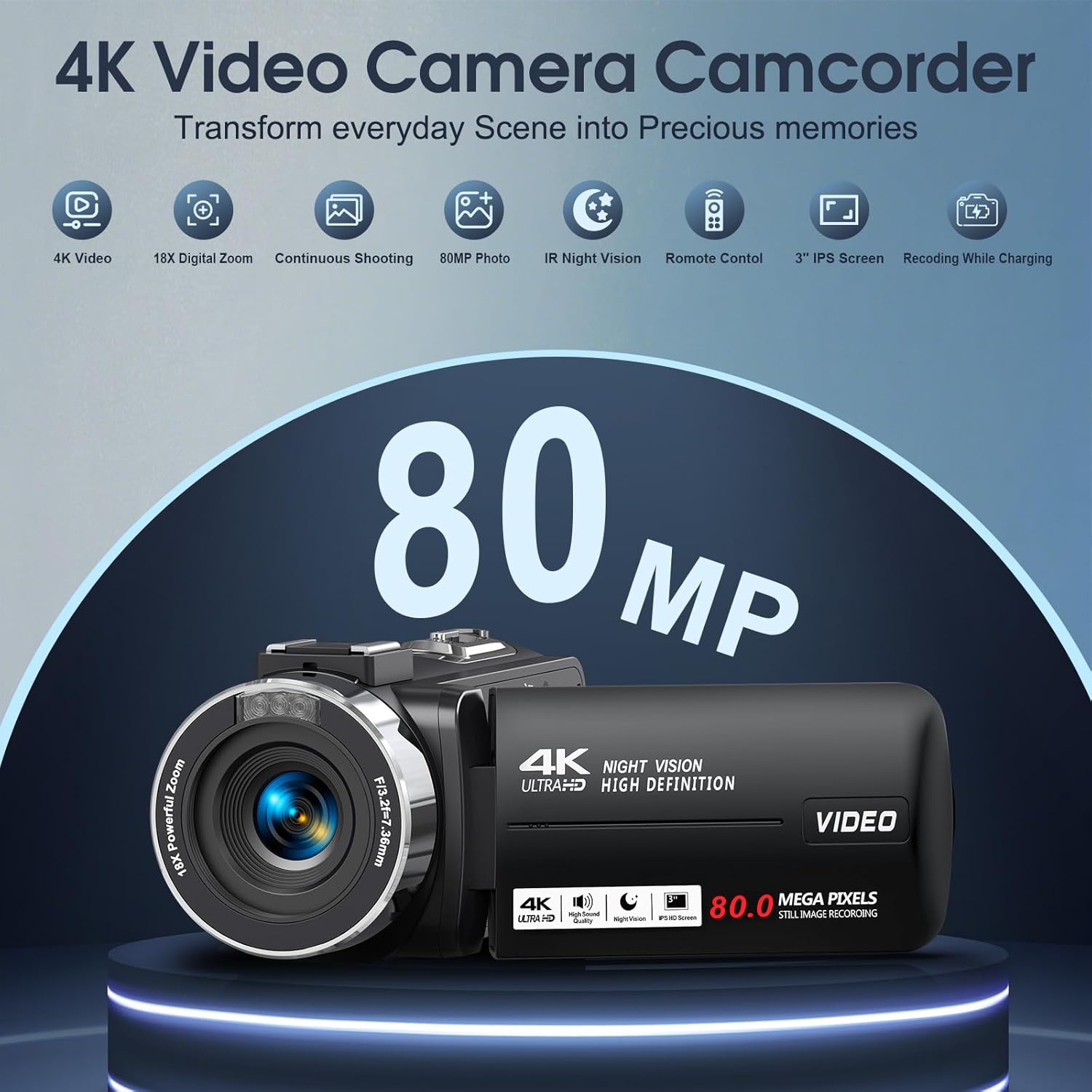
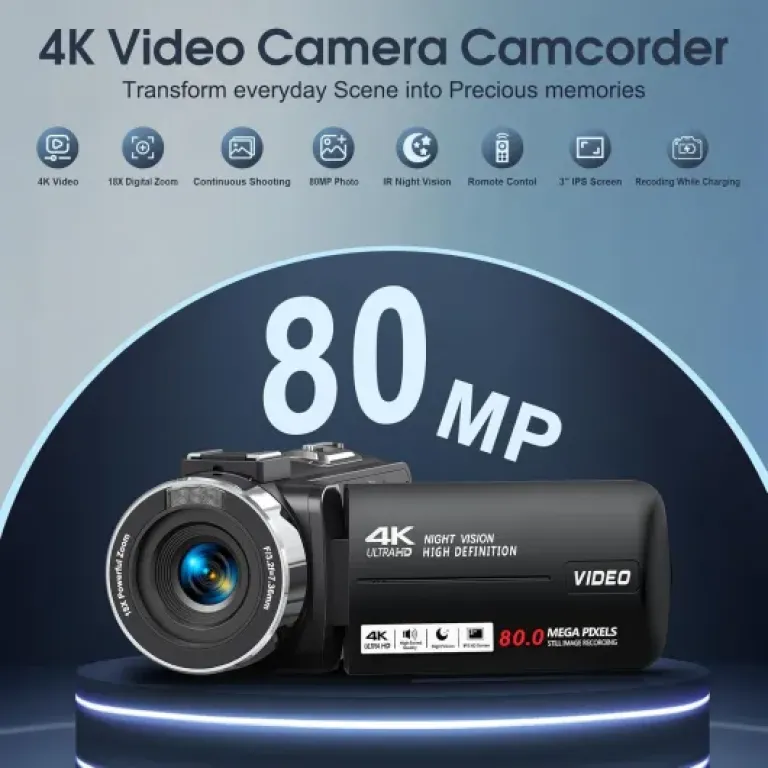
On paper, this thing screams big numbers: 4K video, 80MP photos, 18x zoom, IR night vision, external mic support, webcam mode, and it even ships with a 32GB SD card and two batteries. That’s the spec sheet. In real life, it’s a small, lightweight camcorder meant for casual users, not a miracle machine. The 4K is there, but don’t expect Netflix documentary quality. It’s more like “good enough for YouTube and family videos” rather than cinema-grade footage.
Out of the box, you get: the camera, 2 x 1500mAh batteries, a 32GB SD card, a simple remote, and the usual cables. Some Amazon reviews mention an external mic in the box; mine didn’t have one, and the listing itself says the mic isn’t included, so I’m assuming there are different bundles. Either way, there is a 3.5mm input on top if you want to plug in your own microphone. That’s handy if you care about audio at all.
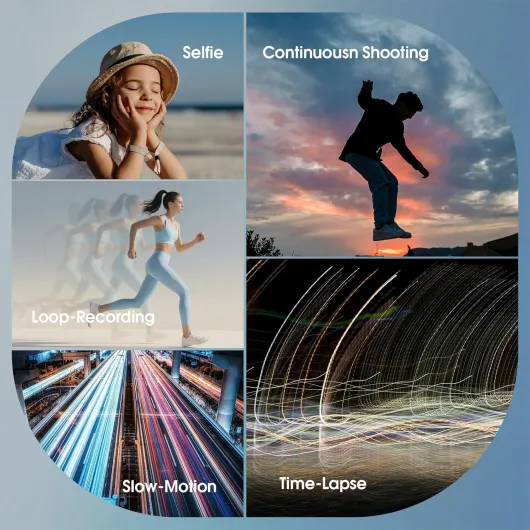
The camera records in MP4, which is standard and easy to edit on any basic PC. The menus are in plain English and not buried under layers of nonsense. You have the usual shooting modes: slow motion, continuous shooting, time delay, night vision, etc. It’s really built for people who want plug-and-play rather than fiddling with ISO, shutter speed and all that. You can change some settings, but it’s clearly more of an auto mode camera.
So in practice, I’d describe it like this: it’s a starter camcorder for beginners, teens, or parents who want something separate from their phone, with enough features to be fun (night vision, zoom, selfie screen), but not something you buy if you’re serious about filmmaking. Think of it as a step up from random toy cameras and a step below any mid-range mirrorless camera.
Pros
- Comes with 2 batteries and a 32GB SD card, ready to use out of the box
- Flip-out 3" screen and night vision make it versatile for vlogging and dark rooms
- External mic input and webcam mode add flexibility for YouTube and video calls
Cons
- No real image stabilization, so handheld footage can be shaky
- Average low-light performance and heavily upscaled 80MP photos
- Light, plasticky build with no water resistance, needs careful handling
Conclusion
Editor's rating
After using the Delmodes 4K camcorder for a bit, my take is simple: it’s a solid budget option for casual users, but not a miracle camera. The video quality in good light is decent, the 4K is real enough for YouTube and family clips, and the flip screen plus night vision and external mic input give it more flexibility than many cheap devices. The fact that it comes with two batteries and a 32GB SD card means you can start shooting straight away without extra spending.
At the same time, you need to be aware of its limits. There’s no proper stabilization, so handheld shots can get shaky, especially at higher zoom. Low-light performance is average, and the 80MP photo spec is clearly mostly software. The build is lightweight and a bit plasticky, so you have to treat it with normal care and keep it away from water and drops.
I’d say this camera is well-suited for: beginners, teenagers starting a YouTube channel, parents who want something simple for holidays and school events, and anyone who wants a separate camcorder so they don’t drain their phone battery. People who should probably skip it: anyone serious about video quality, vloggers who walk and talk a lot (you’ll miss stabilization), and those expecting it to rival a mid-range phone or mirrorless camera. Within its price range and purpose, though, it gets the job done and offers good value if you know what you’re buying.