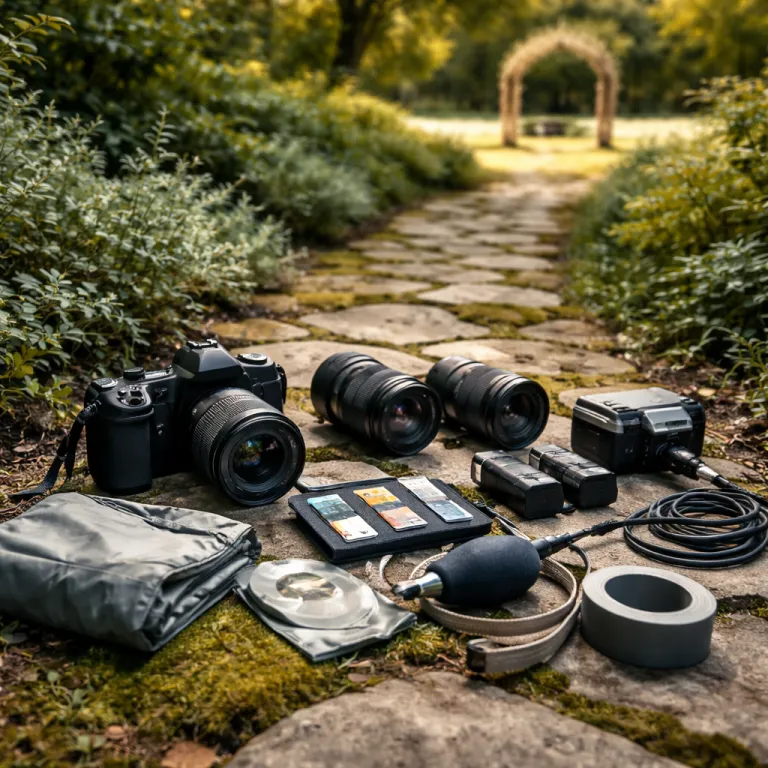
Building an amateur wedding photography gear kit that works
Wedding season is weeks away and your wedding photography gear amateur kit needs to be ready. This is the moment when your existing photography skills meet real pressure, because a wedding day moves fast and the camera never gets a second chance. Treat the event with the respect of a professional wedding assignment, even if you are the "friend with a camera" who will help the couple.
Start with two reliable camera bodies, or at least one main camera and a backup body you can reach within seconds. A second body is not about looking like professional photographers; it is about having essential gear that keeps working if a battery fails or a memory card corrupts at the worst possible time. If you cannot afford two bodies, rent a second camera gear setup for the weekend and treat it as cheap insurance for the entire wedding day.
Your core lenses should be a fast prime and a flexible zoom, because this pairing covers almost every part of wedding photography. A 50 mm f/1.8 lens or an 85 mm f/1.4 lens gives you flattering portraits, creamy background blur, and enough low light performance for indoor ceremonies without flash. Pair that with a 24–70 mm or 24–105 mm zoom lens on full frame, or an equivalent wide angle zoom on APS C, and you will handle everything from tight getting ready rooms to wide group shots.
Carry at least one additional wide angle option if you expect cramped venues, because a 24 mm field of view on full frame can feel barely wide enough for large families. Many photographers prefer a 24–70 mm on one camera and a dedicated wide angle prime on the second body, which keeps them from constantly swapping lenses during key moments. That approach also protects your camera sensor from dust when you move between outdoor sun and indoor lighting during the same essential wedding sequence.
Memory is the second pillar of reliability, so treat memory cards as consumables rather than permanent investments. Use several smaller capacity memory card units instead of one huge card, because spreading the risk across multiple cards limits the damage if one fails during the ceremony. Label your cards clearly, rotate them through the day, and never reformat a card until you have verified the files on at least two separate drives after the wedding.
Modern camera bodies with dual memory card slots give you a huge safety net, because they can write every frame to two cards at the same time. Set your camera to record RAW files to both cards simultaneously, not RAW plus JPEG, so that a single card failure does not erase the entire wedding photography story. If your body lacks dual slots, swap cards more often and keep full cards in a separate, zipped pocket away from your active photography equipment.
Power management matters just as much as memory, so plan your batteries like a professional wedding shooter. One camera battery is never enough for a full wedding day, and even two batteries can be risky if you chimp often or use continuous autofocus and image stabilization heavily. Typical mirrorless bodies rated around 300–500 shots per charge (CIPA figures from major brands) may deliver 800–1,000 real world frames with careful use, so bring at least three spare batteries for your main body, and if you run two camera bodies, carry spare batteries for each system so you never have to steal power from one to feed the other.
Many photographers underestimate how quickly an external flash drains power, especially during the reception when lighting is dim and people are dancing constantly. Your flash batteries should be high quality rechargeables, clearly labeled, and rotated through a dedicated pouch so you never mix fresh and spent cells. To keep this simple, build a one page, printable kit checklist that lists camera bodies, lenses, flash units, spare batteries, formatted memory cards, cleaning cloths, and a basic rain cover, then tape that list inside your bag so you can run through it the night before and the morning of the wedding.
If you are still on an entry level body and kit zoom, use the next weeks to upgrade strategically rather than chasing specs. A mid range body with better autofocus, dual card slots, and stronger low light performance will help you more than a high megapixel sensor that struggles in dim churches. For a clear sense of which camera upgrades matter most for enthusiasts, compare mid range bodies such as the Canon EOS R8, Nikon Z5, or Sony a7 III and map those strengths to real wedding scenarios instead of focusing only on headline resolution.
To make choices easier, think in price tiered kits. A budget friendly combination might be an older full frame or APS C body with a 50 mm f/1.8 and a 24–105 mm f/4 zoom, while a mid range setup could pair a current mirrorless body with dual card slots and lenses like a 35 mm f/1.8 plus a 24–70 mm f/2.8. A more advanced enthusiast kit might add an 85 mm f/1.8 portrait lens and a second body with similar controls, giving you redundancy and faster response when the wedding day speeds up.
Lenses, lighting, and flash strategy for real wedding days
Once your core camera gear is sorted, refine the lens and lighting mix for the specific wedding you will shoot. Every venue, couple, and schedule changes the demands on your photography gear, so you should walk through the day mentally and match each moment with a lens and lighting plan. That habit turns you from a casual photographer into someone who thinks like a gear professional without needing a studio truck.
For ceremonies, a fast telephoto prime or a long zoom lets you stay unobtrusive while still filling the frame with emotion. An 85 mm or 135 mm lens on full frame, or a 50–140 mm zoom on APS C, keeps you out of the aisle and away from the hired wedding photographer while still capturing tears, rings, and hand squeezes. Use continuous autofocus with face and eye detection, but test how your specific camera bodies behave with backlit stained glass or mixed lighting before the wedding day.
During portraits, your fast prime becomes the hero of your essential wedding kit. A 50 mm f/1.8 lens on full frame gives a natural perspective for couples, while an 85 mm lens flatters faces and compresses backgrounds for more professional looking images. Shoot wide open when you want dreamy separation, then stop down to f/2.8 or f/3.2 for group shots so that all eyes stay sharp even if people lean forward or backward.
Group photos demand a careful balance between wide angle coverage and flattering perspective, because going too wide can distort faces at the edges. Many photographers settle on 28–35 mm on full frame for family groups, which keeps lines straight while still fitting everyone in without forcing them into awkward rows. Step back, raise the camera slightly, and keep shoulders turned slightly toward the center to avoid the flat, passport style look that weakens otherwise strong photography.
Lighting strategy changes as the sun moves, so treat the wedding day as a sequence of mini environments. In bright outdoor light, use open shade or backlighting and expose for faces, then lift shadows in editing software later rather than blasting people with direct flash. As the sun drops, shift to higher ISO values, slower shutter speeds, and wider apertures before you even think about turning on an external flash.
When you do use flash, keep it respectful and intentional, especially during the ceremony. Many couples and officiants prefer no flash during vows, so rely on fast lenses, higher ISO, and steady handholding instead of strobing the most intimate part of the wedding. Save your external flash for the reception, where bounced light off a neutral ceiling or wall can create soft, flattering lighting that still feels natural.
Flash technique matters more than flash power, so practice bouncing at home before the event. Angle the flash head toward a nearby wall or ceiling, use a modest bounce card if needed, and avoid pointing the flash directly at faces unless you want a documentary, on camera look. For a low ceiling reception with a neutral surface, a simple starting point is ISO 1600, f/2.8, and 1/80 second with bounced flash and automatic TTL metering, then adjust flash exposure compensation until skin tones look natural.
Do not forget physical comfort and safety, because a long wedding will punish your neck and shoulders if your carrying system is poor. A secure strap with a proper lanyard clip can keep your camera ready without swinging wildly, and guides on how lanyard clips keep your digital camera safe are worth reading before you load up two bodies and several lenses. When your photography equipment sits comfortably and predictably on your body, you move more gracefully through crowds and stay out of the hired photographer’s frame.
Low light receptions, backup habits, and respectful etiquette
Receptions are where wedding photography gear amateur kits either shine or fall apart. The lighting is low, the action is fast, and people expect both flattering portraits and energetic dance floor images from the same photographer. This is where your preparation around camera settings, backup strategy, and etiquette pays off.
Start with a clear ISO strategy, because modern sensors handle higher values far better than older bodies. On many mid range camera bodies, ISO 3200 to 6400 still produces clean files if you expose carefully and use gentle noise reduction in editing software. Expose slightly to the right on your histogram without clipping highlights, because lifting underexposed shadows later will look worse than a well exposed high ISO frame.
For dance floor photography, combine a moderate ISO with a bounced flash and a slower shutter speed. Something like ISO 1600, f/2.8, and 1/60 second with a bounced external flash often freezes faces while leaving a hint of motion in hands and feet, which feels lively without becoming a blur. If the ceiling is too high or dark for bounce, aim the flash toward a nearby wall or use a small diffuser, but avoid blasting people straight on unless you want a raw, documentary style.
Sometimes the best choice is to turn the flash off entirely and embrace shallow depth of field. Open your fast prime to f/1.8, raise ISO as needed, and accept that not every frame will be tack sharp when people move quickly in dim lighting. Those imperfect but emotionally rich images often feel more like the real wedding day than technically perfect but overlit shots.
Backup habits should be invisible to guests but constant in your mind. If your camera offers dual card slots, set them to record identical RAW files to both memory cards, then swap pairs of cards at natural breaks like dinner or speeches. Without dual slots, change your memory card more often and keep full cards in a separate, secure pouch so that a single lost wallet does not erase the entire wedding.
Between ceremony and reception, use any downtime to copy at least the ceremony and portrait images to a laptop or portable SSD. Some photographers also enable automatic cloud backup from their laptop or tablet when Wi Fi is available, which adds another layer of protection before the party even starts. Whatever your method, treat data safety as part of your essential gear, not an afterthought for later.
Etiquette matters as much as exposure, especially when you are not the hired wedding photographer. Dress in neutral, quiet clothing, avoid loud shoes on hard floors, and keep your camera’s shutter in silent or electronic mode during vows and speeches. Stay behind or beside the professional wedding team, never block their angle, and remember that your role is to complement their work, not compete with it.
Your body will feel the strain of ten or twelve hours on your feet, so think about posture and load distribution before the big day. A cross body harness or a neck and shoulder support system can spread the weight of two cameras and several lenses, and resources on neck harness training for safer camera work can help you avoid fatigue that leads to sloppy framing. When you move smoothly and predictably, guests relax, and your photography tips about posing and group arrangements land better.
To keep your mental load manageable, sketch a simple sample timeline that links gear choices to key parts of the day. For example, you might plan one camera with a 24–70 mm for getting ready and family formals, then switch that body to a fast prime for golden hour portraits, while your second body carries a telephoto zoom for the ceremony and speeches. Having this written plan in your pocket means you spend less time debating lenses and more time watching for real moments.
Shot lists, timing, and a practical checklist for amateurs
A clear shot list turns wedding photography gear amateur efforts into a coherent story. You are not trying to mimic every frame a full time wedding photographer would deliver, but you can still cover the essential wedding moments that matter most to the couple. Think in sequences rather than isolated hero shots, because albums and slideshows live on narrative flow.
Before the day, ask the couple for three short lists; must have family groupings, important details, and any sensitive situations to avoid. Translate those into a simple checklist you can fold into your pocket, with sections for ceremony, couples, family, details, and reception so that you can glance at it quickly between moments. During the ceremony, focus on processional, exchange of rings, first kiss, and recessional, then add a few wide angle establishing shots that show the full space and guests.
For couples portraits, plan a short session immediately after the ceremony when emotions are high and clothing is still fresh. Use your fast prime lens for intimate close ups, then switch to your zoom for wider frames that include architecture, trees, or city streets that matter to the couple. Keep posing simple; gentle walking, forehead to forehead, and a few looking at camera frames will feel natural and give you enough variety for later editing.
Family groups are where timing and organization save you from chaos. Work from largest group to smallest, starting with extended family, then immediate family, then siblings and special friends, so that older relatives can leave sooner. Keep your camera at eye level, use a slightly stopped down aperture for depth of field, and project your voice clearly so that people know when to look at the lens.
Details round out the story and give your photography equipment a chance to shine in close up work. Capture rings, bouquets, table settings, and signage early, before guests move things around or spill drinks, using a macro capable lens or the long end of your zoom. These frames may feel small in the moment, but they anchor the memory of the wedding day when the couple looks back years later.
Reception coverage should prioritize speeches, first dance, parent dances, cake cutting, and a few strong dance floor images rather than endless party snapshots. Use your external flash thoughtfully, bouncing whenever possible, and remember to check your flash batteries after intense sequences like the first dance so that you do not miss the next key moment. When you carry spare batteries and memory cards in a consistent place on your body, you can swap them during applause without fumbling.
Finally, build a physical checklist for your bag so that no essential gear gets left behind in the rush out the door. Include camera bodies, lenses, flash units, spare batteries, charged battery banks, formatted memory cards, cleaning cloths, and a simple rain cover or plastic bag for unexpected weather. Tape that checklist inside your camera bag lid and run through it the night before and the morning of the wedding, then export a one page PDF version of your shot list and timing plan so you can print or save it on your phone as a quick reference.
To make that timing plan concrete, sketch a sample one page schedule with rough times and lenses: for example, 1:00–2:00 p.m. getting ready with a 24–70 mm, 2:30–3:00 p.m. ceremony with a telephoto zoom, 3:15–3:45 p.m. family formals at 35 mm, 4:00–4:30 p.m. couples portraits on an 85 mm, and 7:00–10:00 p.m. reception coverage using a zoom and bounced flash. Alongside each block, jot down a default camera setting, such as a backlit ceremony starting point of ISO 3200, f/2, and 1/200 second, or a family group baseline of ISO 400, f/4, and 1/160 second, so you can dial in exposure quickly and then focus on expression.
FAQ
How many camera bodies and lenses does an amateur need for a wedding
For a serious amateur covering a full wedding, one main camera body and one backup body are strongly recommended. Two lenses, a fast prime like a 50 mm f/1.8 and a versatile zoom like a 24–70 mm, will handle most situations from portraits to groups. Renting a second body and an extra lens for the weekend is a sensible option if you do not own them.
Are dual card slots essential for wedding photography
Dual card slots are not strictly mandatory, but they dramatically reduce risk. When a camera writes every frame to two memory cards at once, a single card failure will not erase the entire event. If your body has only one slot, rotate smaller cards more often and back up to a laptop or drive during breaks.
Should an amateur use flash during the ceremony
In most cases, amateurs should avoid using flash during the ceremony unless the couple and officiant explicitly approve it. Flash can be distracting, and many venues or hired photographers consider it inappropriate during vows. Rely on fast lenses, higher ISO, and careful handholding instead, then save flash for the reception.
How many batteries and memory cards are enough for one wedding day
A practical minimum is three batteries for your main camera and at least four memory cards of moderate capacity. If you run two bodies or use flash heavily, increase that to four or five batteries and six or more cards. The goal is to carry spare power and memory so that no single failure can stop your coverage.
What editing software is suitable for an amateur wedding photographer
For most amateurs, mainstream editing software such as Adobe Lightroom, Capture One, or DxO PhotoLab offers enough control over exposure, color, and noise. These tools handle large batches of RAW files efficiently and include presets that speed up consistent processing. Choose one program, learn it well before the wedding, and build a simple workflow for culling, backing up, and exporting final images.
Sources
Lab tested reviews and comparison data from Digital Camera World, DPReview camera databases, and PetaPixel field tests.