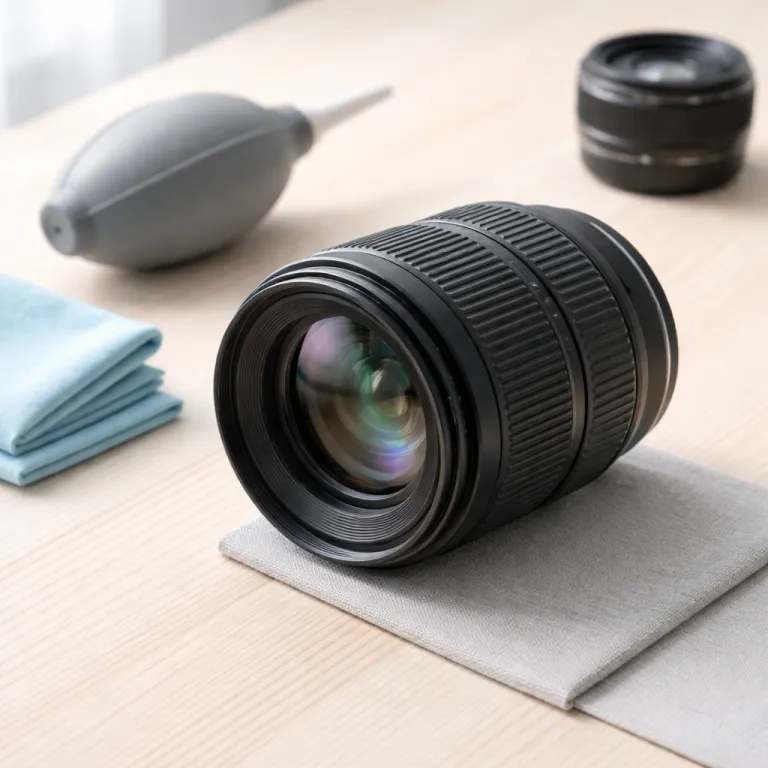

How to know when your kit lens is really holding you back
Your first question is simple yet tricky: is the kit lens worth upgrading for the way you actually shoot with your camera? A modern kit zoom on a mirrorless body, like a Canon RF 24–50 mm or a Nikon Z DX 16–50 mm, already delivers better sharpness, autofocus, and overall image quality than many previous generation lenses, so you need clear, measurable limits before spending money. The goal is to learn where this basic kit performs well, and where a different lens would make a visible difference in your photography or video work.
Start with light, because that is where most people hit the wall with their first camera and lenses. A typical kit zoom opens only to f/3.5 at the wide end and f/5.6 at the long end, while a simple 50 mm f/1.8 prime lets in around four times more light, which is the difference between a noisy ISO 6400 file and a clean ISO 1600 shot at the same shutter speed. For example, in a dim living room at 1/125 s, a kit lens might force ISO 6400 at 50 mm and f/5.6, while a 50 mm f/1.8 can shoot the same scene at ISO 1600 with noticeably smoother tones. The table below shows a typical side‑by‑side result when you keep shutter speed constant, based on common exposure tests you can easily repeat at home:
| Lens & aperture | Shutter speed | Required ISO | Visible result |
|---|---|---|---|
| Kit zoom at 50 mm, f/5.6 | 1/125 s | ISO 6400 | More grain, flatter tones |
| 50 mm f/1.8 prime | 1/125 s | ISO 1600 | Cleaner detail, smoother colour |
If you constantly find your shutter speed dropping below 1/60 s indoors, or your children are blurred in every living room photo, your kit zoom is probably the limiting factor and worth replacing in a very targeted way with a faster lens.
Depth of field is the second hard limit that makes many people ask whether their kit lens is worth upgrading for portraits. Even at 55 mm and f/5.6, background blur stays modest, so faces do not pop from the scene the way you might hope, while a fast prime at f/1.8 or f/1.4 gives that creamy separation you see in professional work. On an APS‑C camera, a head‑and‑shoulders portrait at 50 mm and f/5.6 might show roughly 60–80 cm of depth in acceptable focus, while the same framing at 50 mm and f/1.8 shrinks that zone to around 20–30 cm, making the eyes sharp and the background melt away. In a simple RAW comparison, two side‑by‑side crops at those settings clearly show sharper eyelashes and softer backgrounds with the faster lens, and you can confirm this using any depth of field calculator or sample gallery from a reputable review site. When you compare real prints or 100% crops on screen, the difference in subject isolation is obvious, and that is when a new series lens or a fast prime becomes genuinely worth the cost in both money and time spent learning it.
The one week exercise that reveals your natural focal length
Before you decide whether your kit lens is worth upgrading, run a simple experiment with your current camera. Set the zoom to one focal length, for example 35 mm or 50 mm, tape the zoom ring so it cannot move, then shoot that way for a full week of everyday photography and video. This forced limitation feels odd at first, yet it quickly teaches you how you see the world, and that knowledge is worth more than any random lens recommendation from a pro friend or an online community.
After that week, review your images carefully and look for patterns in both quality and subject matter. Sort by focal length in your viewer and note where your favourite frames cluster. If most of your best shots sit at the long end of the kit, around 50 to 55 mm on APS‑C or 70 mm on full frame, a portrait prime in that range will give a much better look than another general purpose zoom, while also working well for discreet indoor scenes or candid family moments. If you instead live at the wide end, shooting 16 to 24 mm views of streets, kitchens, and travel scenes, then a wider series lens or an ultra wide zoom might be the smarter upgrade, because that is where your real creative energy sits.
Repeat the same exercise at a different focal length if you are still unsure whether the kit lens is worth upgrading right now. While reviewing, pay attention to the EXIF data: note typical shutter speeds, ISO values, and apertures for your favourite images. Many first time buyers realise they are satisfied with the kit for most daylight use, and that only low light or fast action really exposes its limits, which means a single fast prime is the smarter first addition. Taking this slower, more reflective approach respects both your budget and your time, and it keeps you focused on photography skills rather than chasing every new lens that a professional reviewer praises.
Prime versus zoom : which upgrade adds more real capability
When you finally decide that your kit lens is worth upgrading, the next choice is between a fast prime and a higher grade zoom. For most first time camera owners, a simple 35 mm or 50 mm f/1.8 prime adds more real world capability than an expensive constant f/2.8 zoom, because it solves the two biggest problems at once: low light and shallow depth of field. A good rule is that if you mostly shoot people, pets, food, or details around the house, a prime is the better first step, while a zoom upgrade suits sports, wildlife, or travel where you cannot move your feet as easily.
Cost makes the difference even clearer when you compare typical prices and performance. A 50 mm f/1.8 often costs around the same as a budget kit, yet it gives you professional looking background blur, sharper results at equivalent apertures, and more reliable autofocus in dim rooms, while an 800 dollar zoom upgrade mostly buys you convenience and slightly better build quality. In practical terms, you might see centre sharpness improve from “acceptable” to “very good” at f/4 with a mid‑range zoom, but the jump from f/5.6 to f/1.8 can turn a 1/30 s, ISO 6400 snapshot into a 1/125 s, ISO 1600 keeper. The table below shows a realistic comparison based on typical RAW files from the same scene, similar to controlled tests you will find in independent lab reviews:
| Lens | Exposure settings | Resulting image |
|---|---|---|
| Kit zoom at 50 mm, f/5.6 | 1/30 s, ISO 6400 | Motion blur, heavy noise in shadows |
| 50 mm f/1.8 prime | 1/125 s, ISO 1600 | Crisp subject, finer grain and better colour |
If your previous frustration was always about grainy indoor photos or flat looking portraits, then a fast prime makes your kit zoom worth replacing in a way you will notice every single time you press the shutter.
There are cases where a higher grade zoom or a rugged digital camera alternative is the smarter path, especially for outdoor adventure or rough travel. If you regularly shoot kids playing sports at 200 mm, or you hike in rain and dust where changing lenses is risky, a weather sealed series lens or a tough compact from a list of top rugged digital cameras can be worth choosing instead of a delicate prime. As a rough buying guide, think in these ranges: entry level 35 mm or 50 mm f/1.8 primes often sit around 150–250 dollars, mid‑range 24–70 mm f/2.8 zooms around 800–1200 dollars, and weather sealed telephoto zooms such as 70–300 mm or 70–200 mm f/4 typically fall between 600 and 1200 dollars depending on brand. The key is to match the upgrade to your real shooting conditions, not to an abstract idea of what a pro photographer is supposed to use.
When not to upgrade : problems your kit lens does not actually have
Many people ask whether their kit lens is worth upgrading because they assume it is low quality by definition. Modern mirrorless kits from Canon, Nikon, Sony, and Fujifilm are surprisingly sharp when stopped down to f/8, and for daylight travel photography or casual family video they perform well enough that a more expensive lens will not make a visible difference. If your images look soft or noisy, the real culprit is often technique, shutter speed, or ISO, not the optical design of the kit itself.
Before spending money, check whether you are using the camera in a way that lets the kit lens shine. Use aperture priority, set the aperture to f/5.6 or f/8, raise ISO until your shutter speed is at least 1/125 s for people, and enable any in body or lens based stabilisation, then compare those results with your previous attempts, because this simple change often transforms perceived quality. For instance, a handheld indoor shot at 18 mm, 1/30 s, ISO 3200 and f/3.5 might look blurry and grainy, while the same scene at 1/125 s, ISO 6400 and f/5.6 can be much crisper despite the higher ISO. A quick side‑by‑side crop at 100% usually shows that the sharper, faster exposure looks better even with more noise, and you can document this for yourself with a small test chart or bookshelf scene. If the new images look much better, your kit zoom may not need replacing yet, and your time is better spent learning focus modes, exposure compensation, and basic editing.
Also be wary of chasing upgrades just because a professional on YouTube says a certain series lens is essential. Their work often involves demanding commercial photography or high end video production, where tiny gains in micro contrast or focus breathing matter, while your needs might be simple family albums and occasional travel prints, where the kit zoom already does the job well. Ask yourself whether the new lens will change what you can shoot, or only how you feel about the gear, because only the former makes the kit lens genuinely worth replacing in any meaningful sense.
Budget, ecosystem, and the long game with your camera system
Thinking about whether a kit lens is worth upgrading also means thinking about the whole camera system you are buying into. If you shoot with a body that has limited future lenses, or if the only appealing series lens options cost more than the camera itself, it may be smarter to keep the kit for now and save for a body switch later, especially if you care about long term photography growth. A system with a healthy community of users, frequent firmware updates, and a clear roadmap of lenses will serve you better over time than a slightly sharper zoom on a dead end mount.
Consider how you actually use your camera across both photography and video before committing to any expensive glass. If you mainly shoot short clips for social media, a kit zoom with decent stabilisation and quiet autofocus might already be good enough, while your money would be better spent on a microphone, a tripod, or even a second battery, because those upgrades improve real usability more than a marginally sharper lens. For hybrid shooters who care about both stills and clips, reading a focused guide to top Wi Fi digital cameras can help you balance connectivity, autofocus, and lens options without getting lost in marketing jargon.
Finally, treat your gear choices as part of a long relationship rather than a one time purchase. A lens that feels slightly limiting now might still be worth keeping as a lightweight travel option even after you add a faster prime, and selling every previous piece of equipment the moment you upgrade often leads to regret when your needs change. Think about how each new lens or accessory fits into your broader creative life, your respect for terms of privacy when sharing images online, and the kind of work you hope to be proud of in five years. A simple decision checklist helps: if you frequently shoot indoors above ISO 3200, want stronger background blur for portraits, and have identified a focal length you love from your EXIF data, then a fast prime in that range is usually the most sensible next step.
FAQ
How can I tell if my kit lens is limiting my image quality ?
Test the kit lens in good light at f/5.6 or f/8, using a fast enough shutter speed to avoid blur, then compare those files to your previous attempts. For example, photograph the same scene at 1/250 s, ISO 200, f/8 and then at 1/60 s, ISO 800, f/3.5, and inspect the corners at 100% on screen. If sharpness across the frame looks strong and noise is low in the well lit test, the lens itself is probably fine, and any issues come from technique or settings. Real optical limits show up when you need more background blur, cleaner low light performance, or more reach than the kit can provide, and you can cross‑check your impressions against sample images from trusted review sites.
Is a 50 mm f/1.8 prime a better first upgrade than a zoom ?
For most first time buyers, a 50 mm or 35 mm f/1.8 prime is the most impactful first upgrade. It lets in far more light than a kit zoom, produces stronger subject separation, and usually costs relatively little compared with professional zooms. In practical terms, going from 50 mm, f/5.6, 1/60 s, ISO 6400 to 50 mm, f/1.8, 1/125 s, ISO 1600 can turn a blurry, noisy frame into a sharp, clean image. If you mainly photograph people indoors or in the evening, that kind of prime makes your kit lens worth upgrading in a very noticeable way.
Should I upgrade my lens or my camera body first ?
If your current camera focuses reliably and offers acceptable high ISO performance, upgrading the lens usually brings a bigger improvement than changing the body. A better lens can transform both sharpness and rendering, while a new body with the same kit zoom often feels similar in everyday use. Consider a body upgrade first only if autofocus, ergonomics, or video features are clearly holding back your work, such as frequent missed focus at 1/250 s or unusable footage above ISO 3200.
Do I need a professional grade lens for family and travel photos ?
Most people do not need a professional grade lens for casual family and travel photography. Modern kit zooms are sharp enough for prints and online sharing, especially when used at moderate apertures and with good technique. A single fast prime is usually a more sensible upgrade than a heavy, expensive pro zoom for this kind of everyday work, and the lighter setup often means you actually carry the camera more.
How many lenses should a beginner aim to own ?
A practical starting goal is two lenses: the original kit zoom and one fast prime that matches your favourite focal length. This pair covers most situations without overwhelming you with choices or cost. Over time, you can add a telephoto or an ultra wide only if your real shooting habits show a clear need, such as regularly hitting the 55 mm limit at sports events or constantly wishing you could go wider than 16 mm on city trips.