
Summary
Editor's rating
Is it good value, or should you save for something newer?
Old-school DSLR body that still feels familiar
Battery life: honestly one of the nicer surprises
Build quality and the reality of buying it renewed
Image quality and autofocus: good in daylight, just okay in low light
What you actually get with this renewed D3100
Pros
- Very affordable way to get a real DSLR body plus a stabilized zoom lens
- Image quality is still good in daylight and for casual use
- Simple controls and comfortable grip make it easy for beginners to learn
Cons
- Old autofocus system and sensor struggle in low light and fast action
- No tilting screen, no Wi‑Fi/Bluetooth, and generally dated features
- Renewed condition can be a bit of a lottery depending on the seller’s quality control

Specifications
View full product page →| Brand | Nikon |
A cheap way to get into DSLR photography
I picked up this renewed Nikon D3100 kit mainly out of curiosity and budget. I wanted a cheap DSLR to mess around with, something I wouldn’t cry over if it got scratched or rained on. This one came with the 18‑55mm VR kit lens, batteries included, and a one‑year warranty, so on paper it looked like a low‑risk way to get a proper camera in my hands again. I’ve been using mirrorless bodies lately, so I was curious to see how this older DSLR holds up in 2024.
Out of the box, it’s clear this is not a new model. The design and the menus scream “early 2010s”. But that’s not really a problem if your goal is to learn the basics, shoot family events, or just get better photos than your phone in certain situations. With a 14.2 MP APS‑C sensor, 1080p video, and 3 fps burst, it’s not going to impress anyone on specs alone today, but it’s still perfectly usable for everyday stuff.
I shot with it for a couple of weeks: walks in the park, indoor family shots, some street photography, and a bit of low‑light testing. I also compared it to my entry‑level mirrorless and my phone to see where it holds up and where it clearly shows its age. The short version: it’s decent, especially for the price, but you need to know its limits and accept some quirks that come with a renewed, older body.
If you’re expecting a modern autofocus system, flawless video, or perfect low‑light performance, you’ll be disappointed. If you just want to learn exposure, use real lenses, and get sharper photos than your phone in good light, it actually makes sense. In this review, I’ll go through what stood out to me: build, handling, performance, battery, image quality, and whether the renewed condition is worth the savings.
Is it good value, or should you save for something newer?
For me, the biggest selling point of this Nikon D3100 renewed kit is the price versus what you can actually do with it. You’re getting a real DSLR with an APS‑C sensor, interchangeable lens mount (Nikon F), optical viewfinder, and full manual controls, plus a stabilized zoom lens. For someone starting photography on a tight budget, that’s a lot better than spending the same money on a random compact camera or relying only on a mid‑range phone, especially in good light.
However, you have to be honest about what you’re giving up. You don’t get modern autofocus, you don’t get Wi‑Fi or Bluetooth, you don’t get a tilting screen, and low‑light performance is clearly behind even cheap current models. If you think you’ll really get into photography and maybe do paid work later, it might make more sense to save a bit more and go for a newer Nikon DSLR or a basic mirrorless kit. That will cost more up front but age better and be less frustrating in tricky situations.
Compared to buying the same camera used from a private seller, the renewed option gives you a one‑year limited warranty, which is not nothing. On the other hand, you’re paying a bit of a premium for that, and you still risk getting a bad copy, as some reviews show. Personally, I think the value is pretty solid if you catch it at a low price and you’re clear on your needs: learning, travel snapshots, casual family photos, school photography projects. For more serious or demanding use, it starts to look like a stopgap rather than a long‑term solution.
So, value-wise: if you want a cheap, simple way into DSLR land and don’t care about the latest tech, this kit makes sense. If you’re already picky about focus speed, low‑light noise, or video features, you’ll probably outgrow it fast and wish you had saved for something more recent.
Old-school DSLR body that still feels familiar
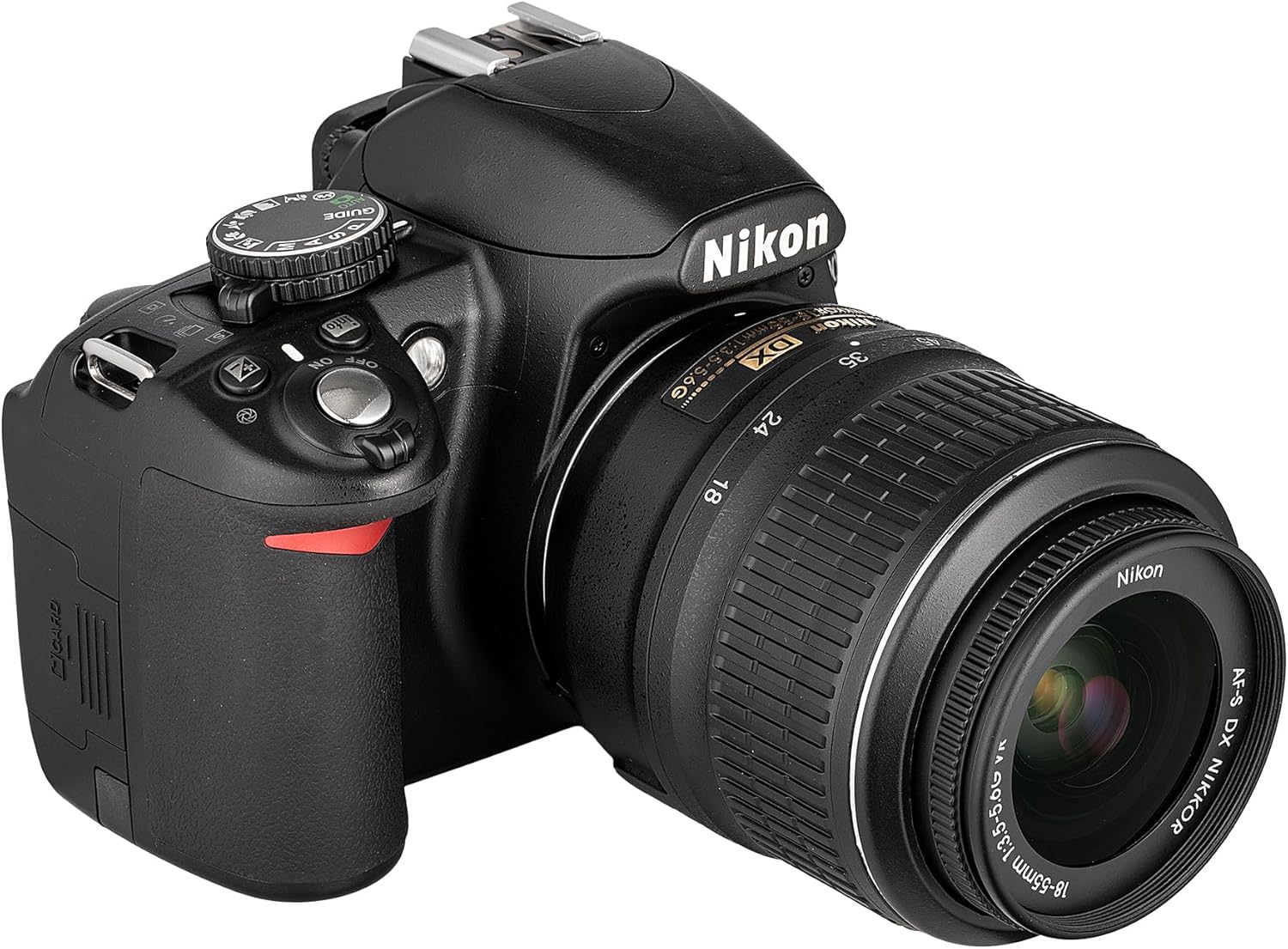
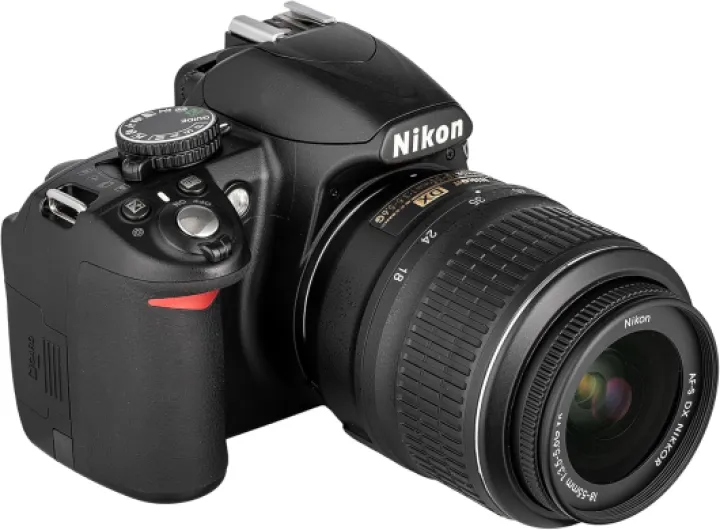
The design is very much “classic Nikon entry-level DSLR”. It’s a small-ish black body, a decent grip on the right side, a mode dial on top, and a 3‑inch fixed LCD at the back. No flip screen, no touch, no fancy stuff. If you’ve ever handled a Nikon from the D3000 or D5000 series, you’ll feel at home instantly. It’s simple, which is actually a plus if you’re just starting out and don’t want to dig through complex menus.
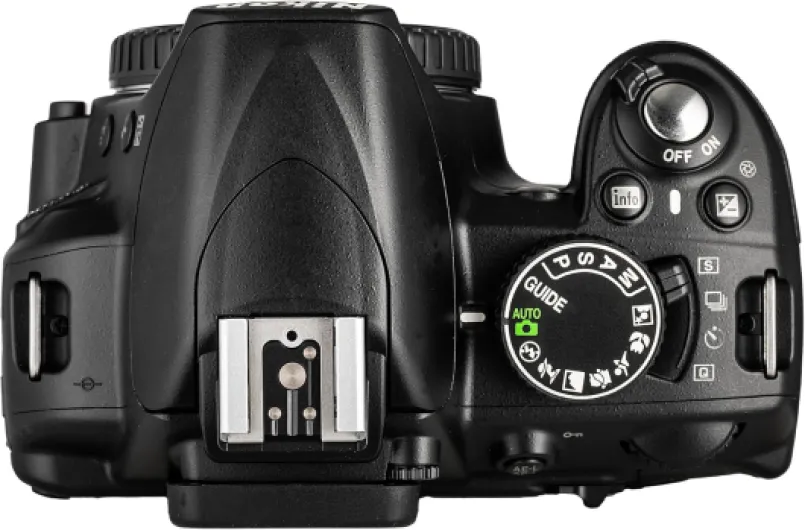
In the hand, the D3100 is pretty comfortable. It weighs about 2.5 pounds with the lens, which is light for a DSLR but still heavier than most modern mirrorless kits. The grip is deep enough that I never felt like I was going to drop it, even using one hand quickly to grab a shot. The buttons are clearly labeled and spaced out. You get direct access to exposure compensation, drive mode, and a dedicated Live View switch and movie record button, which is handy for beginners who want to try video without hunting in menus.
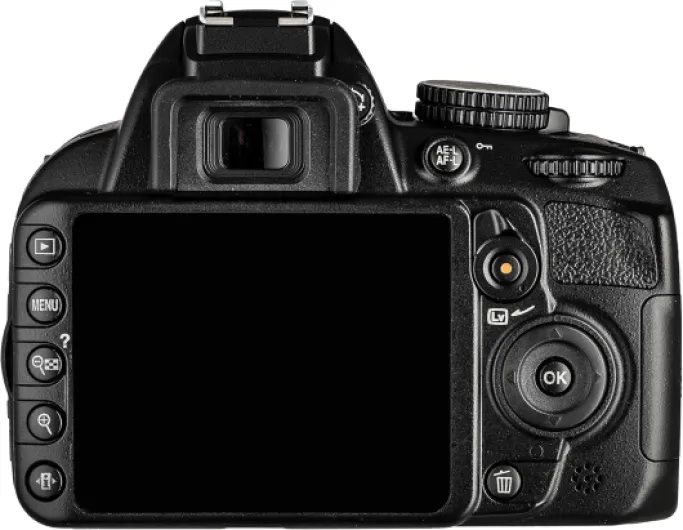
There are some clear signs of age in the design. The viewfinder is small and not very bright compared to newer cameras. The screen is fixed, so shooting from low angles or overhead is awkward—you either guess or crouch. The resolution of the screen is also nothing special; it’s good enough to check focus and exposure, but don’t expect a crisp smartphone-like display. Also, the camera has only one SD card slot and one USB 2.0 port, plus HDMI out. No Wi‑Fi, no Bluetooth, just the basics.
For a budget or beginner setup, I actually like this simple design. The main downside is that it feels dated if you’re used to modern cameras, especially the lack of a tilting screen and any kind of wireless transfer. If you plan to shoot a lot of video, vlogs, or selfies, this design will frustrate you. For regular photography—landscapes, portraits, travel snapshots—it’s fine, just not flashy.
Battery life: honestly one of the nicer surprises
Battery life on this renewed D3100 was actually better than I expected. The battery that came with mine looked used but not destroyed, and I was able to get through a full afternoon of shooting—roughly 300–400 photos—without killing it, as long as I didn’t spend ages in Live View or video. DSLRs are generally more efficient than mirrorless when you use the optical viewfinder, and that shows here.
When I used Live View and recorded some 1080p clips, the battery dropped faster. If I mixed stills and short videos, I was looking at maybe 200–250 shots plus a few minutes of footage before the low battery warning started to show up. That’s still okay for casual use, but if you plan to shoot a full day event with a lot of video, I’d definitely grab a spare battery. Since it’s an older Nikon system, third‑party batteries are usually cheap and easy to find.
Charging is straightforward: basic wall charger, no USB‑C or anything modern. The downside is you can’t just plug the camera into a power bank and keep going; you have to remove the battery and use the external charger. For home use or hotel charging, that’s fine. For travel where you’re constantly on the move, it’s slightly less convenient than modern cameras that charge via USB. Still, for the price range and age, I can’t really complain.
The main thing to watch with a renewed unit is battery health. I got lucky with a battery that still holds a decent charge, but some people might get one that’s more worn. My advice: assume you’ll need to buy a second battery, and if it turns out you don’t, then great. Overall, battery life is a plus on this camera, as long as you mostly shoot through the viewfinder and don’t treat it like a video camera.
Build quality and the reality of buying it renewed
Physically, the D3100 feels like what it is: an entry‑level DSLR that’s mostly plastic but put together decently. The body doesn’t creak when you grip it, the buttons still have a clear click, and the dials turn with enough resistance that you don’t change settings by accident. It’s not weather‑sealed, so I wouldn’t take it out in heavy rain, but it handled a bit of drizzle and dusty paths without any issues during my tests.
The lens, the 18–55mm VR, is also plastic, including the mount. That’s normal for this class. The zoom ring on my copy was smooth with no grinding or wobble, and the VR (image stabilization) worked as expected. You can feel it kick in slightly when you half‑press the shutter. For a renewed product, that’s a good sign—it means the lens hasn’t been totally abused. Still, it’s not a tank; if you drop it, don’t expect miracles.
Now, the big question with any renewed item: reliability. My unit behaved perfectly over a couple of weeks—no random errors, no sensor spots beyond the usual dust, no AF problems. But the Amazon reviews show a mixed picture. Some people got units in “as new” condition and are very happy. Others had faulty cameras and struggled with returns or support, including one review saying it ruined a birthday because the camera was dead on arrival. That’s the risk with this kind of purchase.
So in practice, I’d say the hardware itself is fairly robust for casual use, but you’re depending a lot on how well the refurbishing was done and on Amazon’s/seller’s quality control. If you buy it, test everything in the first days: autofocus on all points, video recording, flash, VR on the lens, and check the sensor for big dust spots. If something feels off, don’t hesitate to send it back. Treated decently, this camera can easily last a few more years of hobby use, but it’s not built like a pro body.
Image quality and autofocus: good in daylight, just okay in low light
In terms of pure performance, the D3100 is very much a “good enough” camera. The 14.2 MP APS‑C sensor still produces clean, sharp images in good light. Outdoors during the day, I got photos that look totally fine even compared to newer cameras, especially if you’re just sharing on social media or printing small. Colors are neutral, maybe a bit flat out of the box, but that’s easy to tweak in-camera or later in editing. Dynamic range is not on the level of modern sensors, but it’s acceptable—you can recover a bit of shadow detail, just don’t expect miracles.
Autofocus is where the age shows more. You get 11 AF points with phase detection. For still subjects, it locks focus reliably in decent light. Faces, objects, street scenes—no drama. Once things start moving quickly (kids on bikes, pets running) and light starts to drop, it misses more often. The AF‑A mode (automatic) works, but it’s not smart like modern tracking systems. I found myself using the center point and recomposing most of the time because it was the most reliable.
In low light, noise kicks in pretty fast. ISO 100–800 looks fairly clean. At ISO 1600 you start to see grain, but it’s still usable for casual shots. Beyond that, it gets rough: colors wash out and detail drops. Compared to a modern entry‑level mirrorless, this is clearly behind. Indoors at night, without a fast lens or flash, you’ll hit the limits very quickly. The built‑in flash helps for snapshots, but it’s still a small on‑camera flash, so don’t expect pretty lighting.
Continuous shooting at 3 fps is fine for casual stuff but not for serious sports. The buffer fills if you hold the shutter too long, especially if you shoot a lot of JPEGs in a row. For most people using it for travel, family, or learning, this is acceptable. Overall, performance is decent but clearly dated: good in daylight, workable indoors if you’re careful, and not ideal if your main thing is fast action or low‑light events.
What you actually get with this renewed D3100
This kit is pretty straightforward: you get a Nikon D3100 body and the 18–55mm VR lens. Mine arrived with the body cap, lens caps, a battery, and a charger. No fancy extras, no bag, no memory card. So if you’re new to cameras, plan on buying at least an SD card right away. The listing says it supports SD, SDHC, and SDXC, and I used a 32 GB SDHC card without any issues. It’s rated for Class 4 and U1, which is slow by today’s standards, but fine for 1080p video and 3 fps burst on this camera.
The sensor is a 14.2 MP APS‑C CMOS, which is still totally usable if you’re not printing massive posters. You get full manual control: Program, Aperture Priority, Shutter Priority, and Manual modes are all there, plus the usual auto and scene presets. There are 11 autofocus points with phase detection, and a maximum burst speed of 3 frames per second. Nothing fast, but enough for casual action shots like kids running or pets if you time it well.
The lens is the standard 18–55mm VR, which covers wide to short telephoto. It’s not bright (f/3.5–5.6), but it has optical image stabilization (VR), which helps a bit with camera shake at slower shutter speeds. If you’re walking around outside during the day, this combo is fine. Indoors in bad light, you’ll quickly feel the limits: higher ISO noise and slower shutter speeds. Still, for learning composition and exposure, it does the job.
One important point: this is renewed, not new. My unit looked very clean, almost like new, but you can tell it’s been used. A couple of tiny marks near the strap lugs, some faint wear on the rubber grip. Everything worked, though—no dead pixels on the screen, no AF issues, and the lens zoom and focus rings were smooth. But the Amazon reviews show it’s a bit of a lottery: some people get a great copy, others had faults and bad support. So if you buy it, keep that in mind and test it thoroughly as soon as it arrives.
Pros
- Very affordable way to get a real DSLR body plus a stabilized zoom lens
- Image quality is still good in daylight and for casual use
- Simple controls and comfortable grip make it easy for beginners to learn
Cons
- Old autofocus system and sensor struggle in low light and fast action
- No tilting screen, no Wi‑Fi/Bluetooth, and generally dated features
- Renewed condition can be a bit of a lottery depending on the seller’s quality control
Conclusion
Editor's rating
After spending time with the renewed Nikon D3100 kit, my take is pretty straightforward: it’s a decent, no-frills DSLR for beginners or budget-conscious users, as long as you accept that it’s an old model with limits. In good light, the 14.2 MP sensor and 18–55mm VR lens produce sharp, usable photos that easily beat cheap compacts and can still hold their own against many phones, especially if you care about using a real zoom lens and manual controls. The body is light, the grip is comfortable, and the basic controls are easy to learn.
On the downside, you’re buying into older tech. Autofocus is fine for still or slow subjects but not great for fast action. Low‑light performance is clearly behind modern cameras, the screen is fixed and not very sharp, and there’s no built‑in wireless connectivity. Being a renewed product adds another layer of uncertainty: my copy was in good shape, but some buyers clearly weren’t as lucky. If you go for it, do it for the low price and the chance to learn photography basics on real hardware, not because you expect a modern all‑rounder.
I’d recommend this kit to: students starting photography, people who want a cheap DSLR for travel and family shots, or anyone curious about interchangeable-lens cameras who doesn’t want to invest too much upfront. I’d skip it if: you care a lot about video, shoot a lot in low light, need fast autofocus, or are planning to do paid work soon. In those cases, saving for a newer body will probably make you happier in the long run.