
Summary
Editor's rating
Value for money: good zoom for the size, but you do pay for it
Design and handling: compact, solid enough, a bit plasticky in places
Battery life and charging: decent, but the missing charger is annoying
Image quality and zoom performance: strong in daylight, average in low light
Wi‑Fi, Bluetooth and sharing: handy once set up, not instant magic
What this camera actually is (and what it isn’t)
Pros
- 30x zoom (24–720mm) in a genuinely pocketable body
- Good image quality in daylight for travel and everyday shots
- Tilting screen, 4K video, Wi‑Fi/Bluetooth and Send Image button make it versatile for trips
Cons
- Average low‑light performance and softness at full zoom
- No viewfinder, no charger or USB‑C cable in the box, and a somewhat flimsy battery door

Specifications
View full product page →| Brand | Panasonic |
A pocket camera for when your phone hits its limits
I’ve been using the Panasonic LUMIX DC-TZ99 for a few weeks as my “throw in the bag and go” camera. I mainly wanted something small with a big zoom for holidays and weekends, because my phone is great up close but pretty useless when I need to zoom in on anything far away. This TZ99 felt like a modern version of the old travel zoom compacts I used to carry, so I gave it a proper try on a couple of day trips and some evening walks.
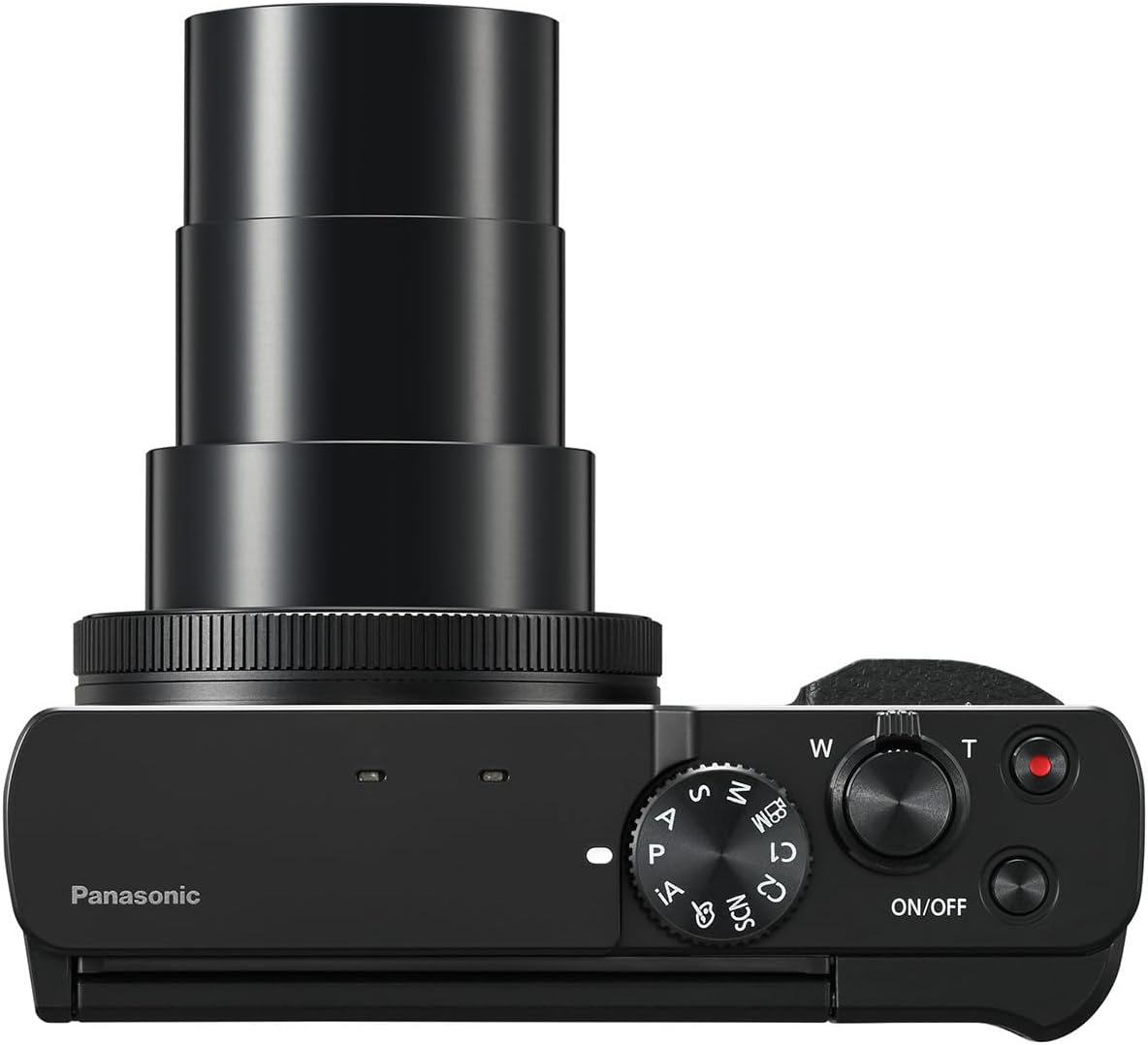
Right away, the big thing that stands out is the 30x zoom in a genuinely pocketable body. It’s one of those cameras where you look at the tiny body and then at how far it zooms and you sort of laugh. It’s not a DSLR replacement, but that’s not the point. It’s more for people who don’t want to drag a big camera and lenses around, but still want better reach than a phone.
I used it mostly in full auto at first, like most normal people would. It really is a point-and-shoot: power on, half-press to focus, click. When I had more time, I played with the manual and semi-auto modes, but honestly, most of the time I just left it on auto and let it do its thing. The 4K video and 4K Photo modes are there, but I’d say they’re more nice extras than the main reason to buy it.
It’s not perfect. There are some clear trade-offs: small sensor, lens that’s not very bright, and the fact that it no longer comes with a charger or cable is a bit cheap from Panasonic. But overall, as a travel camera for casual use, it does the job pretty well: better zoom and more control than a phone, without turning into a heavy brick around your neck.
Value for money: good zoom for the size, but you do pay for it
On the value side, this camera sits in a slightly awkward spot. It’s not cheap, especially when you compare it to older TZ models or entry‑level mirrorless bodies on sale. One Amazon reviewer said they’ve had cheaper cameras with similar results, and I partly get that point. You’re mainly paying for the combination of compact size, 30x zoom, 4K, and the Panasonic/Leica branding on the lens. If you don’t really need the 30x reach, you might feel it’s overpriced.
Where it does make sense is if you specifically want a pocket camera that goes way beyond phone zoom and you don’t want the bulk of a bigger camera. Phones with 5x or 10x lenses are getting better, but they still can’t match 720mm equivalent optical zoom in a dedicated camera, especially for detail on distant subjects. If you regularly shoot wildlife in parks, kids on far‑off playgrounds, or things like airshows or sports from the stands, the TZ99 gives you shots your phone just can’t get.
You do have to factor in the extra costs: spare battery, maybe a USB‑C cable if you don’t already have one, SD card, and probably a small case since it doesn’t come with one. That adds up. On the other hand, you’re getting a complete travel package: zoom, 4K video, tilting screen, wireless sharing, and full manual controls if you feel like learning more photography later.
So, in my opinion, the value is decent but not outstanding. If you’ll actually use the zoom and travel a lot, the price is easier to justify and it becomes a handy tool. If you mostly shoot close‑up stuff and city scenes where your phone already does a good job, then it’s harder to see the point, and you might want to either spend less on an older compact or more on a bigger‑sensor camera instead.
Design and handling: compact, solid enough, a bit plasticky in places
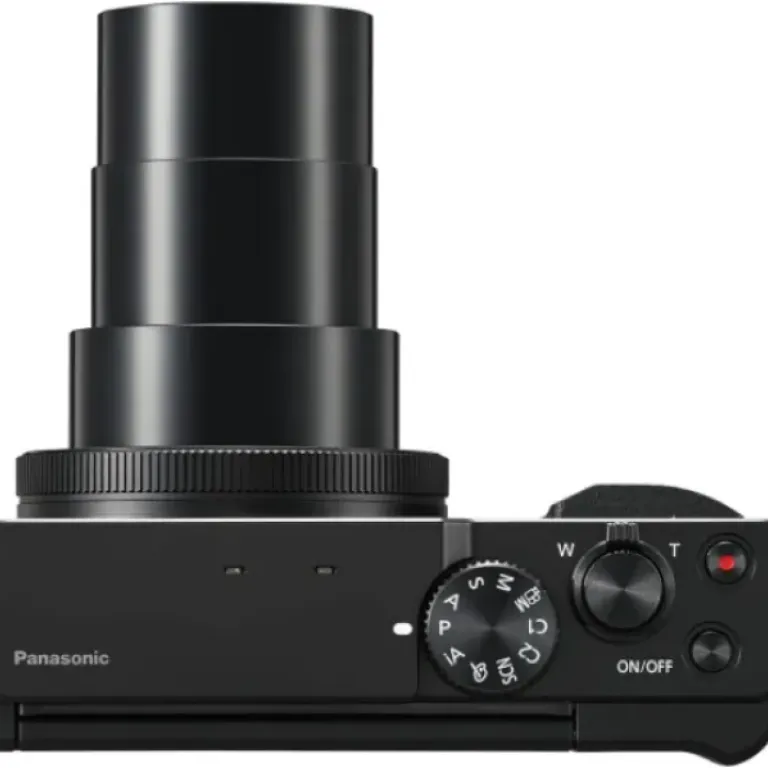
From a design point of view, the TZ99 is properly compact. It fits in a normal jeans pocket or a small handbag without any drama. I carried it in a hoodie pocket on a walk and mostly forgot it was there. At around 320g, it has enough weight to feel like a real camera, but not enough to be annoying. The body is mostly plastic with some metal feeling parts, and overall it feels decent, but not premium. It’s fine for a travel camera, but you can tell where Panasonic saved a bit on materials.
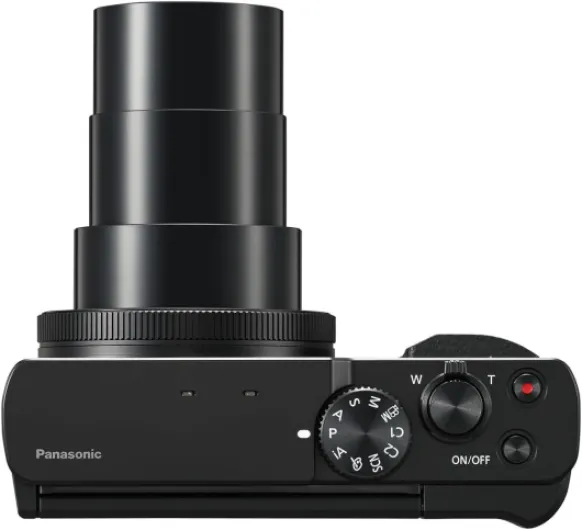
The right-hand grip is shallow but usable. With my medium-sized hands I could hold it one‑handed, but when you extend the zoom all the way out, you really want two hands to keep it steady. The buttons and dials are fairly logically placed: a mode dial on top, zoom rocker around the shutter, a few custom buttons, and a dedicated “Send Image” button for transferring photos to your phone. I like that last one – it’s a small thing, but it makes it easier to actually use the wireless features instead of forgetting they exist.
The tilting screen goes up 180° for selfies or vlogging. The resolution (about 1.84M dots) is good, the screen is sharp and bright enough most of the time. In strong sunlight, though, it can get a bit hard to see details, and this is where I really missed a proper viewfinder. Some older TZ models had an EVF; here you’re stuck with the screen only, which is annoying if you shoot a lot outdoors in midday sun. Several Amazon reviewers mentioned this, and I agree – a small EVF would have made a big difference.
One thing that feels a bit cheap is the battery/SD card door. The plastic latch doesn’t inspire much confidence. It hasn’t broken on me, but compared to my older TZ70, it feels flimsier. Also, no dedicated charger or cable in the box – just the camera and battery. Overall, the design is practical and travel‑friendly, but don’t expect premium build. It’s more “gets the job done” than “wow this feels high‑end”.
Battery life and charging: decent, but the missing charger is annoying
The battery life is okay, not impressive, not terrible. On a typical day out, shooting mostly photos with some short 4K clips, I got through roughly 200–250 shots before the battery level started to make me nervous. If you shoot more video, especially 4K, you’ll drain it faster. For a full travel day where you’re constantly taking pictures, I’d definitely recommend buying a second battery. For casual weekend use, one battery is usually enough if you start the day fully charged.
Charging is done via USB‑C directly in the camera, which is convenient in theory: you can use a power bank, your phone charger, or plug it into a laptop. In practice, Panasonic doesn’t include a USB‑C cable or AC adapter in the box, which feels a bit stingy at this price. I get the whole “reuse what you have” idea, but not everyone has a spare USB‑C cable lying around, especially if they’re still on older phones. I ended up stealing a cable from another device, which worked fine, but it’s still annoying for a new purchase.
The ability to charge via power bank is genuinely useful for travel. On a long train trip, I plugged it into my power bank in my bag and it topped up while I wasn’t using it. That’s the upside of in‑camera charging. The downside is you can’t shoot while the battery is out, obviously, so if you want to charge one battery while using another, you’d need to buy an external charger separately. For some people that’s no big deal; for others, it’s an extra hidden cost.
So overall, battery and charging are acceptable but not a strong point. Expect to buy at least a spare battery if you travel a lot or shoot heavily, and don’t be surprised when you open the box and realise there’s no cable. Once you get past that, day‑to‑day use is fine, but I wouldn’t rely on a single battery for a long day of heavy shooting.
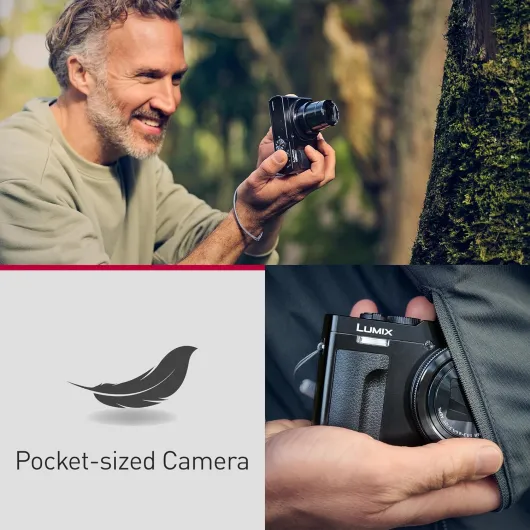
Image quality and zoom performance: strong in daylight, average in low light
In normal daylight, the image quality is pretty solid for a compact with a 1/2.3" sensor. At the wide end (24mm), photos are sharp in the centre and decent towards the edges. Colours are realistic and the camera doesn’t overdo the contrast. For travel shots – buildings, landscapes, street scenes – I was happy with the results. You can zoom in on a computer and still see good detail up to moderate enlargements. For social media and regular prints, it’s more than enough.
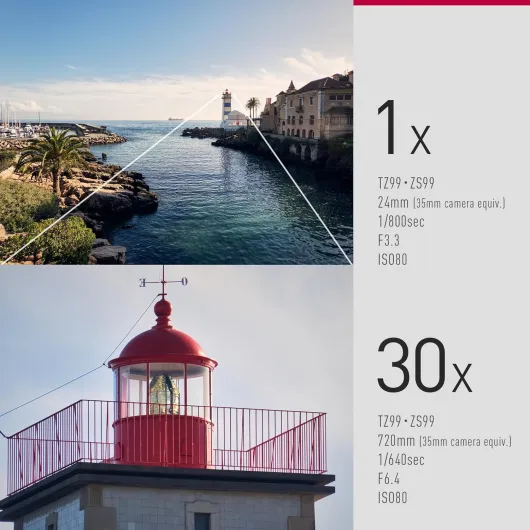
The 30x zoom (24–720mm) is the real selling point. Up to about 15–20x, the quality holds up pretty well. Beyond that, you start to see more softness and you have to be careful with camera shake. The 5‑axis HYBRID OIS+ stabilisation helps, but it’s not magic. At full 30x zoom, I often needed to brace my arms or lean against something, and indoors I sometimes ended up with slightly blurred shots if the shutter speed dropped. One Amazon reviewer said you basically need a tripod at full zoom; I wouldn’t go that far, but you definitely need to pay attention to how you hold it.
Low light is where the camera starts to struggle. The lens is f/3.3–6.4, which is not very bright, and the small sensor doesn’t help. Indoors or at dusk, the ISO climbs quickly and you see noise and smudging from noise reduction, especially if you zoom in. You can still get usable shots for casual use, but don’t expect clean, detailed night photos. Phones with strong computational processing sometimes do better in these specific situations, especially for static scenes. The built‑in flash is there but nothing special – it’s okay for close subjects, harsh for anything else.
Autofocus is fast enough in good light. The DFD/contrast AF locks on quickly for still subjects. For moving subjects (kids running, dogs, bikes), it’s hit and miss in lower light, but again, this isn’t a sports camera. Burst shooting with 4K Photo (30fps) gives you plenty of frames, but the resolution is only 8MP for those extracted images. Overall, the performance is good for its category: strong in daylight, very usable up to mid‑zoom, and clearly limited in low light and at full reach. If you keep those limits in mind, you can get plenty of decent photos out of it.
Wi‑Fi, Bluetooth and sharing: handy once set up, not instant magic
The TZ99 has Wi‑Fi and Bluetooth, and overall they work as advertised, but with the usual small quirks. You pair the camera with your phone using Panasonic’s app, and after that you can transfer photos, control the camera remotely, and geotag images if you want. The dedicated “Send Image” button is actually useful – press it, pick your shots, and they go to your phone without digging through menus. Once I got past the initial setup, I used this quite a bit to post photos on the go.
Transfer speed over Wi‑Fi is reasonably quick for single photos or small batches. Sending a big group of 4K photos or long videos is slower, so I usually just grabbed a few favourites instead of everything. For social media or WhatsApp sharing, it’s fast enough. The Bluetooth connection keeps the link alive for easier reconnection, but like most camera apps, it can still be a bit finicky. Sometimes the app didn’t see the camera right away and I had to toggle Wi‑Fi or reopen the app.
The remote control feature is a nice extra. You can see a live view on your phone, change some settings, and trigger the shutter. I used it for a group shot with the camera on a mini‑tripod, and it worked fine. It’s not something I’d use every day, but it’s handy to have. Geotagging is there too if you like to see where your shots were taken, but it does nibble at your phone battery.
In short, connectivity is useful but not perfect. It’s better than nothing and definitely more convenient than pulling the SD card out every time, but don’t expect the same smoothness as using your phone camera. Once you’re used to the app and the Send Image button, sharing photos from the TZ99 becomes part of the routine, especially on trips where you want to post better zoom shots than your phone can manage.
What this camera actually is (and what it isn’t)
The Panasonic LUMIX DC-TZ99 is basically a compact travel zoom camera: 20.3MP sensor, 30x optical zoom (24–720mm equivalent), 4K 30p video, tilting screen, Wi‑Fi and Bluetooth. In practice, that means it’s built for people who travel, go to events, or just want reach for wildlife or kids’ sports without dealing with a bulky camera. You pop in an SD card, charge via USB‑C, and you’re ready. No lens swapping, no big learning curve if you just stay in auto modes.
Compared to using only a smartphone, the main difference is the zoom. At 720mm equivalent, you can grab shots of birds, people on stage, or details on buildings that are just impossible with a phone. The sensor is still small (1/2.3"), so don’t expect miracles in low light, but in decent daylight you get clean, usable photos with enough detail to print or crop a bit. I found the colours fairly neutral – not too punchy, not too flat – and the JPEGs straight out of camera are fine for everyday use.
The camera also has 4K video and 4K Photo modes. 4K video at 30p looks sharp enough for YouTube or family clips, and the 4K Photo modes let you extract 8MP stills from short video bursts. I tried that a few times for moving subjects (kids running, bikes passing) and it’s handy when your timing is bad, but it’s not magic – you still get rolling shutter and some motion blur if the light is low. There’s also a high‑speed 1080p mode at 120fps for slow motion, which is fun but soft compared to normal 4K.
What this camera is not: it’s not a low‑light beast, it’s not for serious bokeh lovers, and it’s not really aimed at pro video work. It’s more a practical tool: throw it in your pocket, use it in auto, and enjoy the reach. If that’s your expectation, you’ll probably be satisfied. If you expect mirrorless quality in a tiny body with a 30x zoom, you’re going to be disappointed, because physics still wins.
Pros
- 30x zoom (24–720mm) in a genuinely pocketable body
- Good image quality in daylight for travel and everyday shots
- Tilting screen, 4K video, Wi‑Fi/Bluetooth and Send Image button make it versatile for trips
Cons
- Average low‑light performance and softness at full zoom
- No viewfinder, no charger or USB‑C cable in the box, and a somewhat flimsy battery door
Conclusion
Editor's rating
After using the Panasonic LUMIX DC‑TZ99 for a while, I’d sum it up like this: a very practical travel zoom camera with clear strengths and clear limits. The big win is the 30x zoom in a genuinely pocketable body. In decent light, you can grab detailed shots of things that are way out of reach for a phone, and the stabilisation plus simple auto mode make it easy to use even if you’re not a camera nerd. The tilting screen and 4K video are nice extras that round it out as a solid all‑round travel companion.
On the downside, it’s not cheap, the low‑light performance is only average, and the lack of a viewfinder and charger/cable in the box make it feel a bit cost‑cut for the price. At full zoom, you need steady hands or some support, and the plasticky battery door doesn’t inspire long‑term confidence. If you go in expecting DSLR or mirrorless quality, you’ll be disappointed; if you treat it as a compact with big reach for holidays and everyday use, it does its job pretty well.
I’d say this camera is ideal for travellers, parents, and casual users who often find their phone’s zoom lacking and want something small with more reach and a bit more control. It’s less suited for people who mainly shoot indoors, at night, or who are very picky about image quality and dynamic range – those people should look at bigger‑sensor cameras instead. For what it is, it’s a handy little tool, just not a miracle device.