
Summary
Editor's rating
Is the EOS RP kit good value for money?
Compact body with a few obvious trade-offs
Battery life: fine for a day, not for heavy video
Build quality and long-term feel
Image quality and autofocus in real life
What you actually get in the box
Video and everyday usability
Pros
- Lightweight full-frame body with good image quality for everyday use
- User-friendly interface and vari-angle touchscreen that help beginners
- Versatile 24-105mm zoom range with optical stabilization for general photography
Cons
- Slow kit lens (f/4-7.1) limits low-light and background blur
- 4K video is heavily cropped and loses the best autofocus performance
- Single SD card slot and average battery life reduce appeal for serious or professional work

Specifications
View full product page →| Brand | Canon |
A realistic jump into full-frame
I’ve been using the Canon EOS RP with the RF 24-105mm f/4-7.1 IS STM kit lens for a few weeks now. I bought it as a way to move from APS-C and phone photos into full-frame without spending silly money. I’m not a pro, I’m more the “family photos, a bit of travel, and some YouTube” type. So this review is from that angle: normal user, not pixel-peeping every corner at 400%.
The first thing I noticed is how small and light it feels for a full-frame body. Coming from older DSLRs, it’s almost weird to hold something that light and still get that shallow depth of field look. But it’s not perfect: you do feel some compromises, especially in video and in low light when you push the kit lens. It’s a camera that can deliver very good results, but you have to know what you’re doing and where its limits are.
In day-to-day use, I mainly shot my kids indoors, some street stuff, and a couple of short talking-head videos. During that time, I used mostly aperture priority and full manual for video. I also tried the full auto modes just to see how someone coming straight from a phone might experience it. Overall, it’s pretty friendly, but there is a learning curve if you want more than basic snapshots.
If I had to sum it up: the EOS RP with this lens is a solid entry into the Canon full-frame world. It’s not the latest and greatest, and there are better bodies now, but for the price I paid it gets the job done nicely. You just need to be aware that the kit lens is more about flexibility and convenience than about bright apertures and razor-sharp performance in every situation.
Is the EOS RP kit good value for money?
On value, it really depends what you compare it to. At the price I paid, getting a full-frame body with a versatile zoom is pretty solid. You get good image quality, Canon’s color science, and access to the RF lens system, which is growing fast. For someone coming from a phone or an old DSLR, the jump in control and flexibility is quite noticeable. You can play with depth of field, use proper lenses, and grow into more serious photography without spending what a pro body costs.
That said, the kit lens is clearly a compromise. It’s slow (f/4-7.1), so low light performance is limited unless you crank ISO. For portraits and background blur, you can get some nice results at 24–50mm, but it’s not the same as having an f/1.8 or f/2.8 lens. So in practice, if you get into photography a bit more, you’ll quickly start eyeing a faster prime or a better zoom. That means the “cheap full-frame kit” can become more expensive once you start adding glass.
Compared to other brands, there are APS-C bodies with better autofocus and video specs at similar or lower prices. But those won’t give you full-frame depth of field or the same look. If you care more about speed and video features than sensor size, you might find better options elsewhere. If your goal is mainly stills, with decent video on the side, this RP kit makes more sense.
So for me, the value is good but not mind-blowing. It’s a fair deal: you pay for an entry into Canon’s full-frame world, with a lens that covers most situations but doesn’t excel at anything. If you go in knowing you might eventually add at least one better lens and maybe extra batteries, it’s a sensible purchase. If you expect a perfect all-in-one solution at this price, you might feel a bit underwhelmed in low light and video-heavy use.
Compact body with a few obvious trade-offs
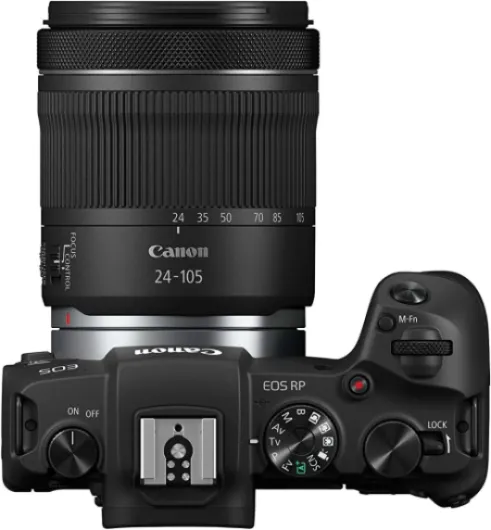
Design-wise, the EOS RP feels like Canon tried to squeeze a full-frame sensor into something close to a small DSLR body. The grip is actually quite decent for such a light camera. In my medium-sized hands, it sits well, and I never felt like I was going to drop it, even with the 24-105mm attached. That said, if you’re used to chunky pro bodies, this will feel a bit toy-like at first, just because of the weight and smaller size.
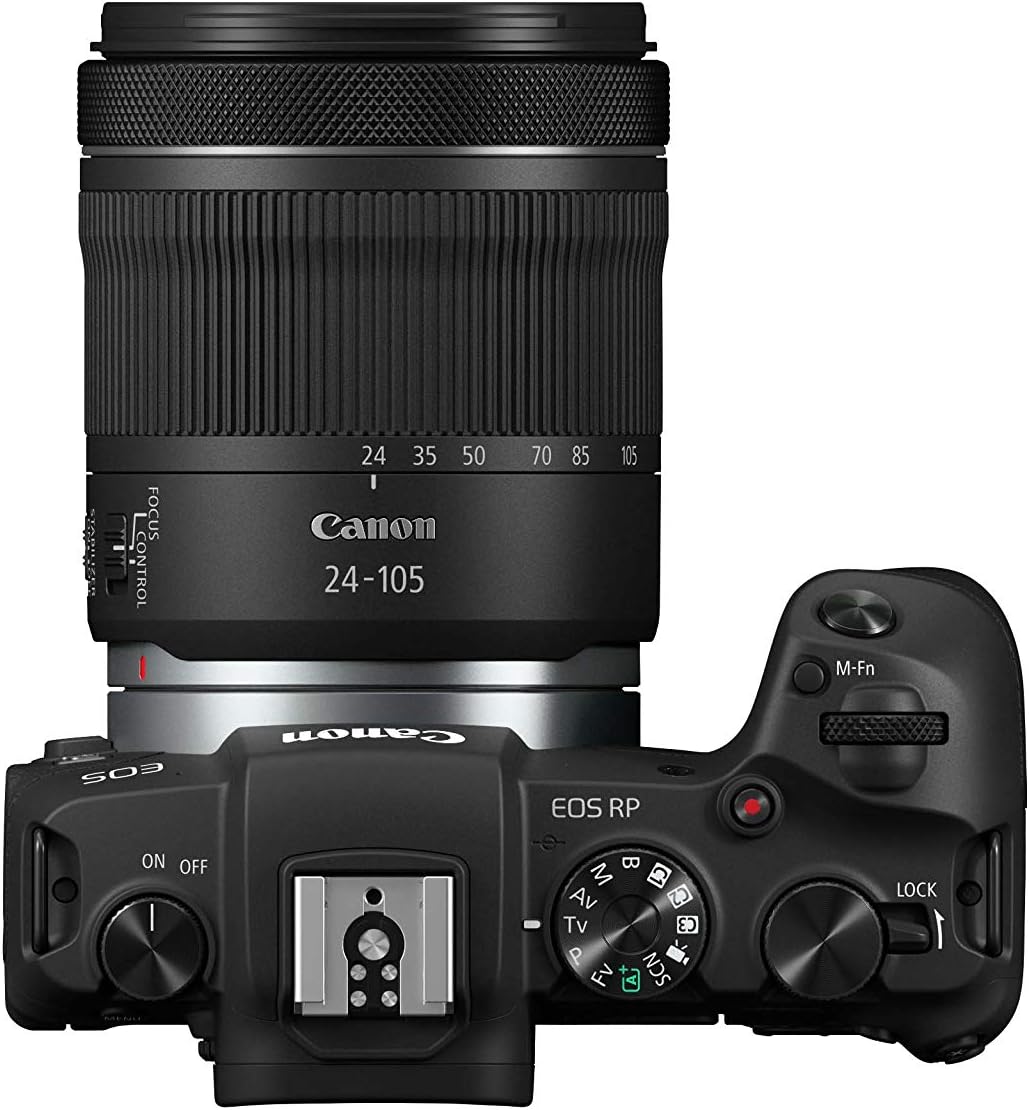
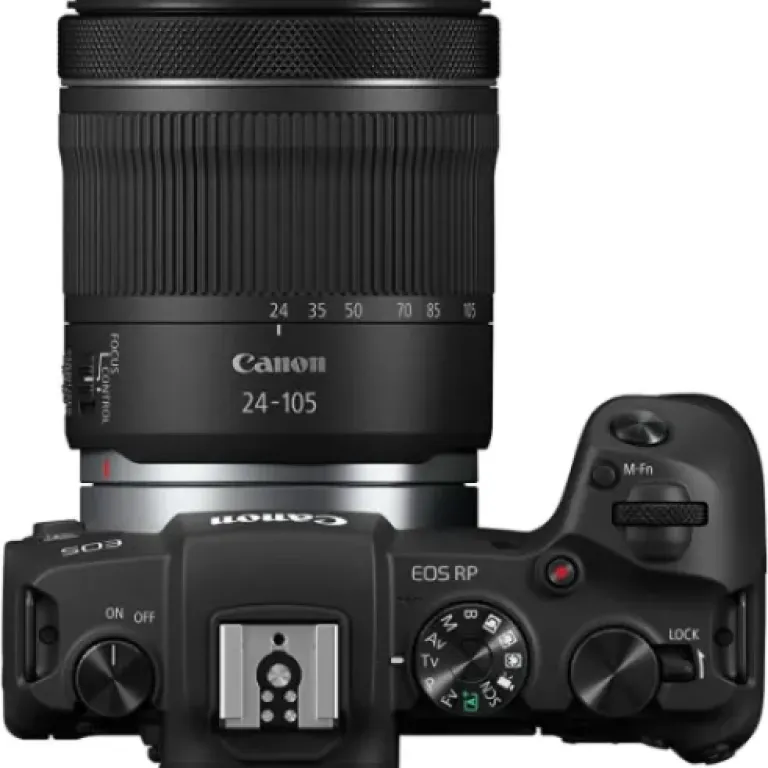
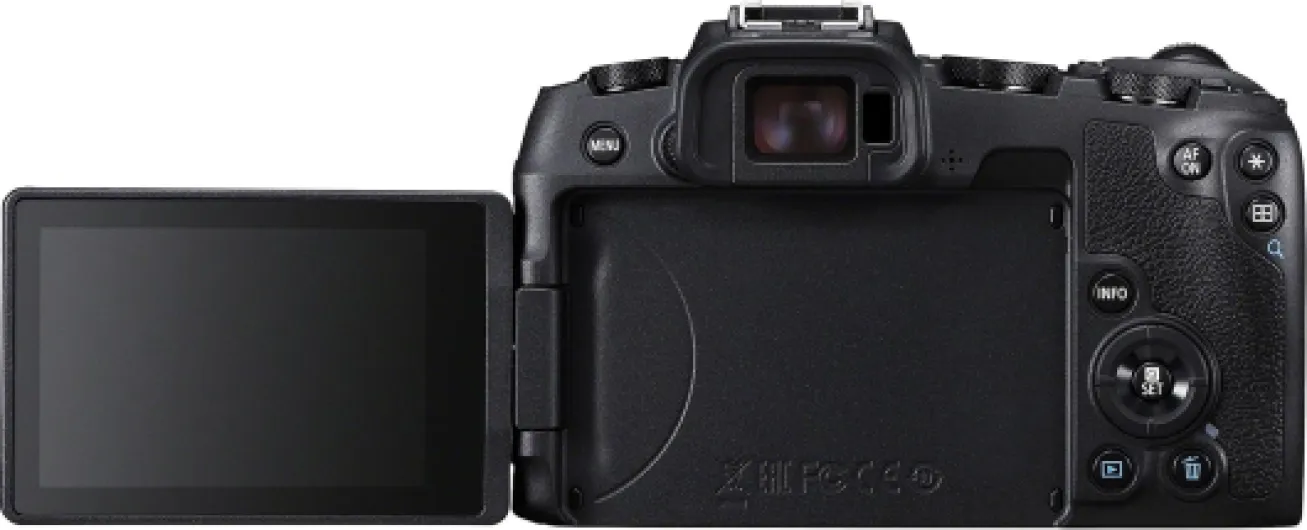
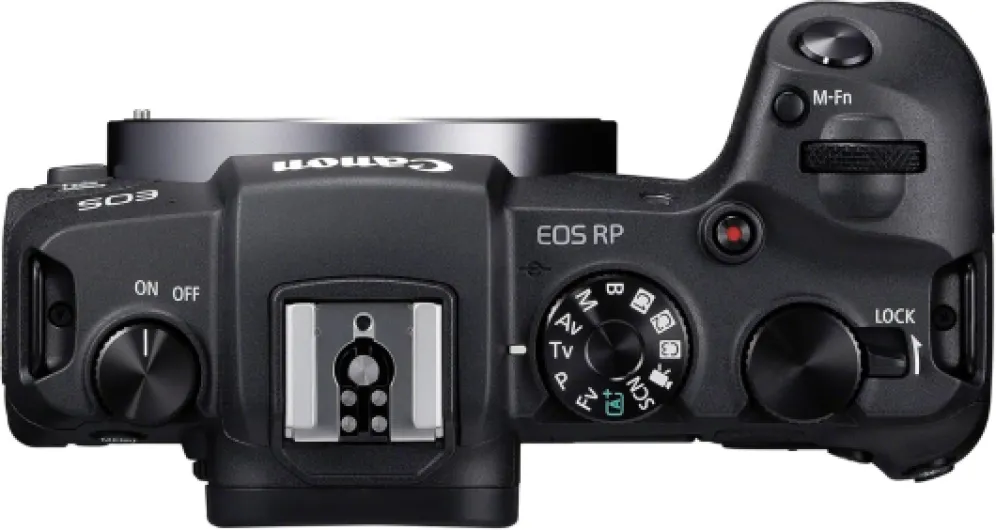
The button layout is pretty logical. You get a mode dial on top, a main dial for settings, and enough buttons on the back to access ISO, AF, and other key functions. There’s no top LCD like on higher-end Canon bodies, and you don’t get a joystick for AF point selection. Instead, Canon expects you to use the touchscreen or the D-pad. In practice, I ended up using the touch-and-drag AF on the screen a lot, which works fine, but if you’re used to a joystick you might miss it.
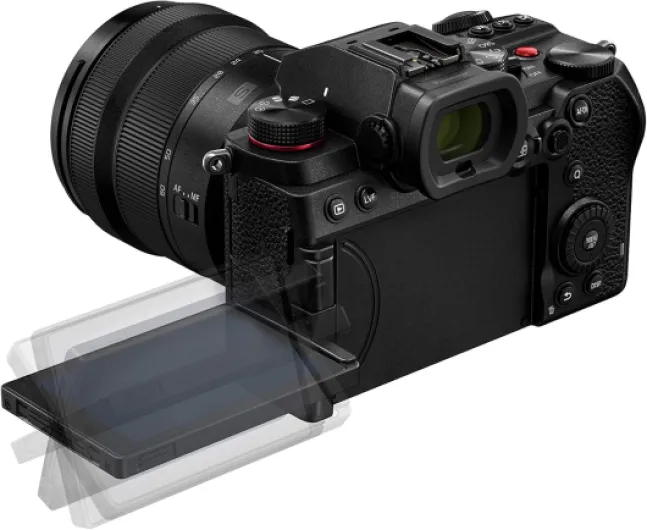
The vari-angle screen is one of the better design choices. You can flip it all the way around for vlogging or selfies, tilt it for low/high angle shots, and it’s fully touch-capable. For normal use, I turned the EVF on and off quite a bit: EVF for bright outdoor shots, screen for casual or low-angle stuff. The EVF is not top-tier in resolution, but it’s clear enough and I didn’t feel limited by it for stills. For long sessions though, you can tell it’s an entry-level unit, not one of those super crisp ones you get on expensive models.
On the downside, there’s only one card slot, the battery door feels a bit plasticky, and the body doesn’t scream heavy-duty weather sealing. I used it in light drizzle and dusty streets without problems, but I wouldn’t be fully relaxed in heavy rain or on a beach with lots of sand flying around. Overall, the design is practical and friendly rather than rugged or fancy. It gets the job done for everyday use, but if you’re rough with your gear or shoot in harsh conditions a lot, this might feel a bit fragile.
Battery life: fine for a day, not for heavy video
The EOS RP uses the LP-E6N battery, which is the same family as a lot of Canon DSLRs. That’s good because spares are easy to find. In practice, battery life is okay but not impressive, especially if you’re coming from a DSLR. Mirrorless bodies always chew more power because of the EVF and screen, and the RP is no exception. Over a typical day out shooting stills, I got through roughly one battery with a mix of EVF and screen use, turning the camera off between shots.
When I did more video, the battery meter dropped much faster. Shooting a few 4K clips and several 1080p takes for a short talking-head video, I managed to drain a full battery in an afternoon. That’s not surprising for a small mirrorless body, but it means if you plan to film a lot, you really should budget for at least one or two extra batteries. The kit only includes one, so factor that into the total cost.
There is USB-C on the body, but it’s not as simple as plugging in any power bank and shooting forever. Depending on the power source and cable, it may or may not charge while operating, so you need to check what works. I ended up mostly swapping batteries instead of relying on USB power, which is less convenient but more predictable. It’s a bit of a shame that the power management isn’t more generous, especially if they’re pitching this to vloggers and travel shooters.
Overall, battery life is acceptable for casual photography: a day of normal stills shooting is realistic on one battery if you’re not hammering the shutter or recording long videos. For events, travel days with lots of photos, or any serious video work, I’d call it borderline and basically assume you need at least one spare. Not a deal-breaker, but definitely something to plan for.
Build quality and long-term feel
In terms of build, the EOS RP feels like a mid-range plastic body, which is basically what it is. The grip and main shell feel solid enough, nothing creaks, and the dials have a decent click to them. It doesn’t feel cheap in the way some low-end cameras do, but it also doesn’t give that tank-like impression you get from higher-end bodies. I carried it in a small shoulder bag, sometimes just on the strap, and it handled bumps and knocks fine during these weeks.
The RF 24-105mm kit lens is light and mostly plastic as well. The zoom ring is smooth enough, and there’s not much play. It doesn’t feel fragile, but I also wouldn’t call it robust. I’d be careful with it if you tend to throw your gear in a bag without caps or protection. The mount is metal, which is reassuring. I didn’t notice any zoom creep (lens sliding out when pointed down), at least not with my copy.
Weather resistance is the big question. Canon doesn’t shout about full weather sealing on the RP, and you can tell. There are some seals, but this is not a body I’d gladly use in heavy rain or a sandstorm. I shot in light drizzle and a bit of wind with dust, wiped it down afterwards, and had no issues. For normal hobby use, that’s probably fine. If you’re planning a lot of outdoor adventures in rough conditions, I’d be a bit cautious or invest in a more robust body and lens combo.
Overall, durability feels acceptable for a careful user. Treat it like a decent electronic device, not like a brick, and it should last. The good thing is that Canon’s ecosystem is mature, so batteries and accessories will be easy to find down the line. Just don’t expect pro-level toughness at this price point and weight. It’s more of a home/travel camera than a hardcore field tool.
Image quality and autofocus in real life
On the image side, the 26.2 MP full-frame sensor is pretty solid for normal use. In good light, photos look clean, with nice detail and the typical Canon colors that a lot of people like straight out of camera. I mostly shot JPEG + RAW, and the JPEGs were already good enough for sharing without much editing. Skin tones look natural, which is important if you’re doing family shots or portraits. Compared to my older APS-C Canon, the EOS RP files have a bit more flexibility when you push shadows in post, but it’s not a night-and-day difference.
Low light is where you start to see the limits, especially with the kit lens. At the long end you’re at f/7.1, so indoors you often end up around ISO 3200 or higher if you want to freeze motion (kids running, etc.). The camera handles ISO 3200 and 6400 reasonably well for casual use, but if you zoom in you do see noise and some smudging in the JPEGs. For web use and small prints, it’s fine. If you’re a pixel freak, you’ll want a faster lens or a newer body.
Autofocus is generally quick and accurate for stills. Canon’s Dual Pixel AF locks onto faces pretty reliably, and eye detection works okay, especially in decent light. I had a few missed shots when my kid was running towards the camera indoors, but that’s a tough situation for any entry-level body. For slower subjects, portraits, and travel photos, it did the job well. Continuous AF tracking is not at the level of the newest Canon R bodies or some Sony models, but for a hobby user it’s usable.
The camera is rated around 5 fps for continuous shooting, which is enough for casual action but nothing more. If you’re into sports or wildlife, you’ll probably be frustrated by both the frame rate and the buffer. For normal day-to-day stuff, I mostly shot single frames or short bursts and didn’t hit the buffer wall too often. Overall, the performance is decent for stills, clearly geared towards beginners and enthusiasts, not hardcore action shooters.
What you actually get in the box
Out of the box, you get the EOS RP body, the RF 24-105mm f/4-7.1 IS STM lens, a Canon LP-E6N battery, charger, strap, and the usual paperwork. No memory card, no bag, no external charger dock beyond the standard one. So if you’re a first-time camera buyer, plan to add at least one SD card (and I’d say get two). The camera only has a single SD slot, and it prefers something reasonably fast (UHS-I U3 / V30) if you’re going to shoot bursts or video.
The lens covers 24-105mm, which in practice means you can go from fairly wide (good for landscapes, rooms, and vlogging at arm’s length) to a short telephoto (nice for portraits and some close details). The aperture is f/4 at 24mm and closes down to f/7.1 at 105mm, so it’s not a bright lens. This is fine outdoors or in good light, but indoors you’ll see the ISO climb pretty fast if you want fast shutter speeds.
The body is clearly aimed at beginners or enthusiasts: lots of automatic modes, scene presets, and a touchscreen interface that feels quite close to a smartphone. You still get full manual control, RAW shooting, and Canon’s Dual Pixel AF, so it’s not a toy. But don’t expect pro-level features like dual card slots, super high burst rates, or advanced video codecs. Canon clearly cut some corners to keep the price and size down.
In short, the kit is a decent all-round starting point. You can shoot stills and basic video out of the box, and the lens covers most everyday situations: family, holidays, casual portraits. If you already own EF or EF-S lenses, you’ll need to buy the EF–RF adapter separately, which adds to the bill. For someone new to the system though, this combo is usable as-is, provided you also budget for a couple of SD cards and maybe a spare battery.
Video and everyday usability
For video, the RP is usable but clearly not a video-focused camera. It can shoot 4K, but there’s a pretty heavy crop, and you lose Dual Pixel AF in that mode, which is a big downside. In practice, I tried 4K a couple of times and went back to 1080p because the autofocus in 4K just isn’t as reliable. In 1080p, the AF is much better and tracks faces well enough for basic vlogs or talking-head content. If you’re not obsessed with 4K, 1080p from this camera is fine for YouTube or family videos.
The built-in mic is okay to get an idea of the sound, but if you care even a bit about audio, plan on an external mic. There is a mic input, which is nice, but no headphone jack to monitor audio. I used a small shotgun mic on top, and that already made a big difference. Stabilization is lens-based here (no in-body IBIS), so for handheld video you feel the lens IS helping, but it’s not magic. Walking shots still have some wobble. For static talking-heads or gentle pans, it’s fine.
On the usability side, the vari-angle touchscreen is genuinely helpful. I set up the camera on a cheap tripod, flipped the screen around, and could frame myself easily. Touch-to-focus works well, and the menus are pretty clear once you get used to Canon’s logic. For a beginner, the guided menus and scene modes are handy, but if you want to grow into manual control, the camera allows that too. After a week, I was mostly in aperture priority and manual video with no real friction.
As an everyday tool, it’s effective if your expectations are realistic. It’s great for photos of family, travel, and basic content creation. It’s weaker if you want serious video features, uncropped 4K, or very strong stabilization. If you look at it as a stills-first camera with decent video as a bonus, it makes more sense. If you want a pure video workhorse, this is not it.
Pros
- Lightweight full-frame body with good image quality for everyday use
- User-friendly interface and vari-angle touchscreen that help beginners
- Versatile 24-105mm zoom range with optical stabilization for general photography
Cons
- Slow kit lens (f/4-7.1) limits low-light and background blur
- 4K video is heavily cropped and loses the best autofocus performance
- Single SD card slot and average battery life reduce appeal for serious or professional work
Conclusion
Editor's rating
After using the Canon EOS RP with the RF 24-105mm f/4-7.1 IS STM for a while, I see it as a very decent entry into full-frame rather than any kind of miracle camera. For photos in good light, family stuff, travel, and basic content creation, it does the job well. The files look good, autofocus is reliable for normal use, and the camera is light enough that you actually want to carry it. The vari-angle touchscreen and simple menus also make it friendly for people moving up from a phone or a basic DSLR.
On the flip side, the compromises are clear: the kit lens is slow, so low light and indoor action are not its strong points. Video is fine in 1080p but limited and cropped in 4K, and battery life is just okay. Build quality is honest but not rugged, and serious shooters might miss features like dual card slots, strong weather sealing, and more advanced AF tracking. It’s a camera that rewards someone who wants to learn and accept a few limitations, not someone who expects pro-level performance on a tight budget.
I’d recommend this kit to beginners and enthusiasts who mainly care about stills, like Canon colors, and want a light full-frame body to grow with. If your main focus is video, fast action, or heavy low-light work, I’d look at other options or at least budget for better lenses and extra batteries. For what it is—an affordable way into Canon’s full-frame RF system—it’s a pretty solid choice, as long as you know what you’re getting.