
Summary
Editor's rating
Is it worth the money compared to other options?
Compact and light, but a bit plasticky
Battery life: fine if you’re realistic, bring a spare if you shoot video
Feels decent, but not something I’d abuse in bad weather
Autofocus and image quality: where it actually shines
What you actually get with this kit
Pros
- Fast and reliable autofocus with real-time eye tracking for humans and animals
- Compact and lightweight body that’s easy to carry daily or while traveling
- Good 24 MP APS-C image quality and usable 4K video for beginners and casual creators
Cons
- Average battery life, especially when shooting a lot of 4K video
- Kit lens is convenient but not great in low light and only average in sharpness

Specifications
View full product page →| Brand | Sony |
A small camera that actually made me leave my phone at home
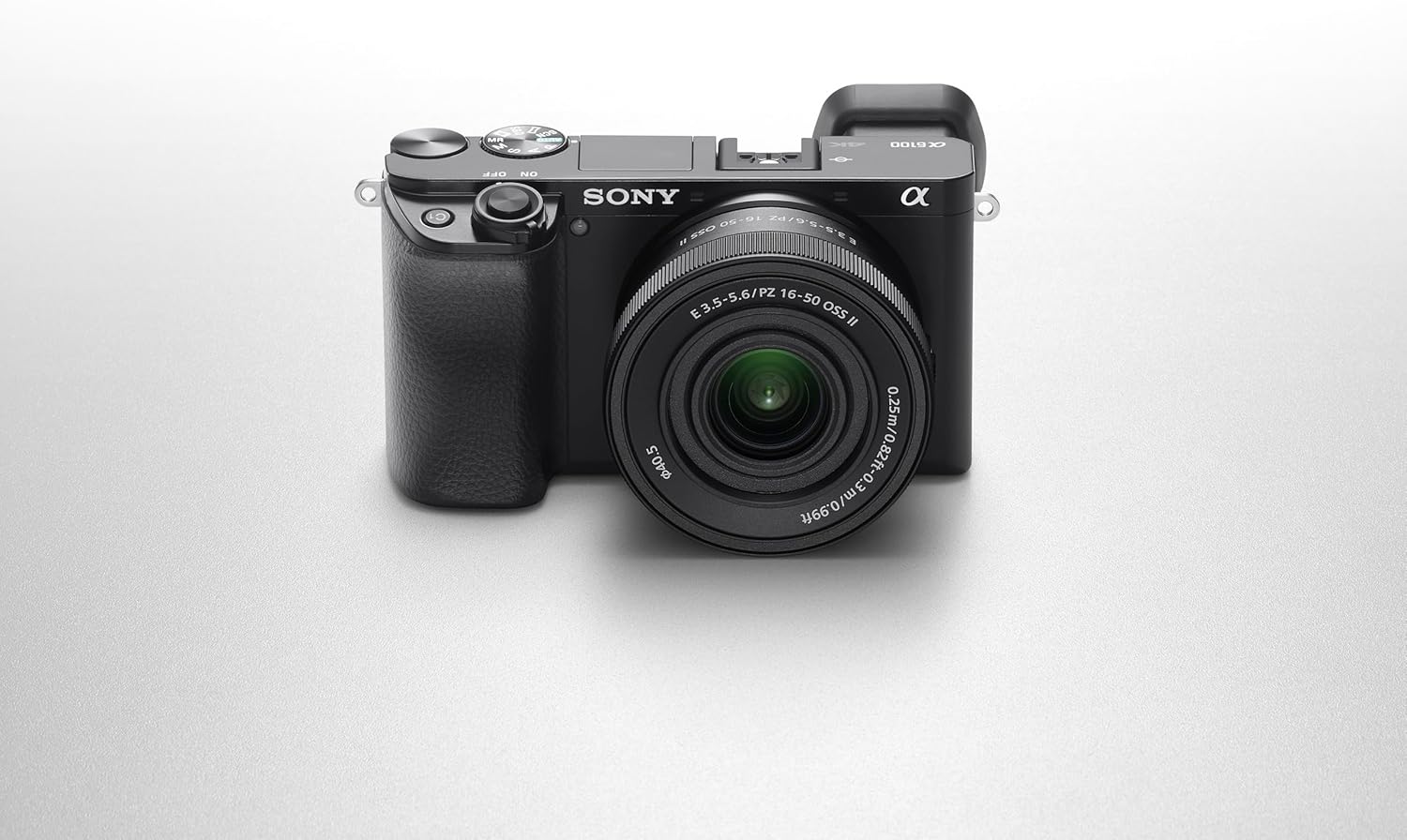
I’ve been using the Sony Alpha 6100 kit with the 16‑50mm power zoom for a few weeks now, mainly for trips, family stuff and a bit of YouTube-style video. I’m not a pro photographer, I’m just someone who got tired of phone photos looking noisy and flat in the evening. I wanted something small, easy to use, but with better autofocus and nicer images than my phone or my old entry‑level DSLR.
Right away, what stood out is how simple it is to pick up and shoot. You turn it on, half‑press the shutter, and the focus just snaps onto faces and eyes. No hunting, no guessing. For casual use, that matters more than all the technical specs. The menus are a bit dense, but I could get usable shots on day one without reading the manual from start to finish.
I mostly shot in aperture priority and auto ISO, plus a bit of full auto for quick stuff. The camera didn’t really get in my way. It’s light enough that I actually took it with me instead of leaving it in a drawer, which is what happened with my older, bulkier DSLR. If a camera stays at home, it’s pointless, so the size and weight here are a real advantage.
It’s not perfect though. The 16‑50mm kit lens is handy but a bit soft at the edges, and it’s not bright, so indoors you hit the ISO limits quickly. The body also feels more "plastic" than higher-end models. But overall, first impression: pretty solid little all‑rounder that makes sense for beginners and casual creators who want better than a phone without diving into pro territory.
Is it worth the money compared to other options?
In terms of value, the Alpha 6100 kit sits in a slightly awkward but still interesting spot. It’s not the cheapest mirrorless out there, and there are newer models with better screens or bigger batteries. But what you’re paying for here is mainly the very reliable autofocus and decent 24 MP APS‑C sensor, plus the compact size. For someone starting out or stepping up from a phone, those two things matter more than fancy specs.
Compared to older entry-level DSLRs I’ve used, the difference in autofocus and video is clear. The 6100 tracks faces and eyes far better, and 4K video with proper AF is a big step up. So if you want one camera that can handle both photo and simple video, it makes sense. On the other hand, the kit lens holds it back a bit. It’s practical, but image quality and low-light performance would jump with a better prime or a brighter zoom. That’s an extra cost you should factor in down the line.
There are also competitors from Canon, Fujifilm or even Sony’s own lineup. Some give you better ergonomics or nicer screens, others have stronger video features. But many of them are either bulkier or more expensive once you add lenses. Here, you get a compact, complete setup that works out of the box. For a beginner or casual shooter, that simplicity has value.
So, is it good value? I’d say yes, if you’re actually going to use the autofocus, 4K, and flip screen. If you only shoot occasional photos in full auto and never touch video, you might be just as happy with a cheaper body or even a good phone. And if you’re already deep into photography or video, you might be better off saving for a higher-end body. For the in‑between crowd—beginners, travelers, and new content creators—it’s a fairly sensible buy.
Compact and light, but a bit plasticky
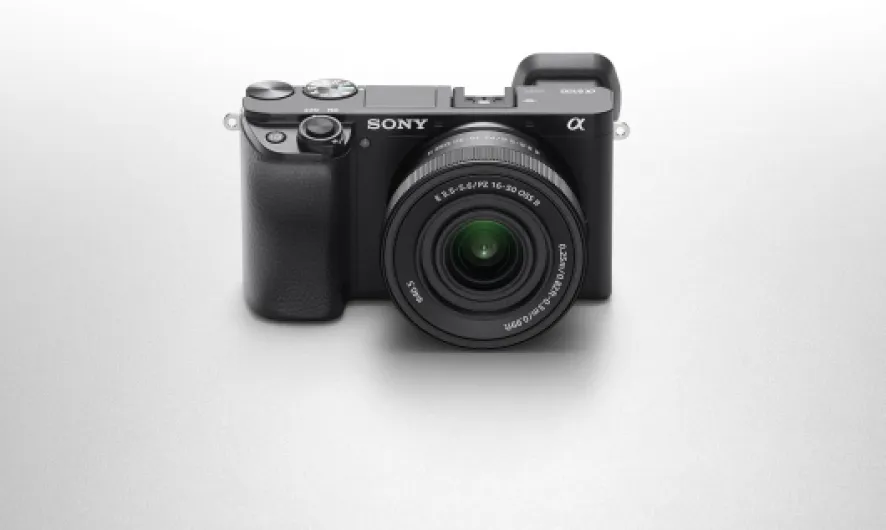
Design-wise, the Alpha 6100 is very much in line with Sony’s older APS‑C bodies: small rectangular block with a decent grip. At around 396 grams with battery and the tiny kit lens, it’s light enough to throw in a small bag or even a jacket pocket. Compared to a basic DSLR I used before, it feels like half the weight and bulk, which made a real difference on a weekend trip where I walked around all day.
The grip is ok but not huge. I have average-sized hands and I can hold it fine with one hand, though my pinky hangs underneath the body. If you have big hands, you might find it a bit cramped, especially with a heavier lens. With the 16‑50mm, though, the combo balances well. It doesn’t feel front-heavy and I could shoot one-handed for quick snapshots without worrying.
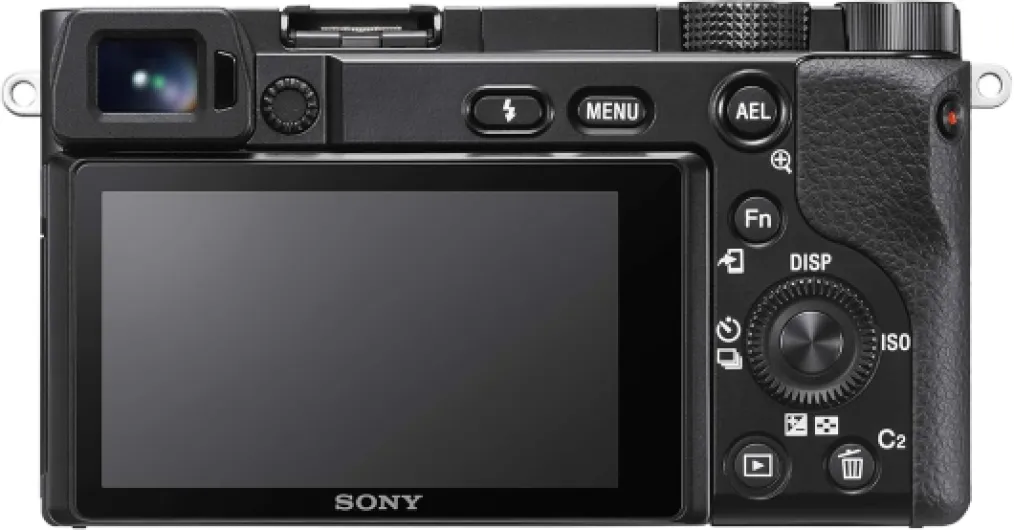
The button layout is decent but not super intuitive at first. Sony menus are known to be a bit messy, and that’s still true here. I had to dig a bit to find some settings like eye AF and silent shooting. Once I assigned a couple of custom buttons, it got better. The dials are small but clickable enough, and I didn’t accidentally change settings in my bag, which is something that annoyed me on other cameras.
Build quality is fine for a mid‑range camera but it’s not tank‑like. Lots of plastic, no real weather sealing, and the flip screen feels like something I wouldn’t push too hard. That said, nothing creaked, and after tossing it in a backpack with no special protection for several days, it came out without scratches. So overall: light, compact, practical design, but you can tell Sony saved on materials compared to their higher-end models.
Battery life: fine if you’re realistic, bring a spare if you shoot video
The camera uses Sony’s smaller NP‑FW50 battery, which is known for being a bit weak compared to newer batteries in more recent models. In my use, with a mix of photos and short 4K clips, I got around 250–350 shots per charge, depending on how much I chimped (reviewed images on the screen) and how long I left the camera on between shots. That’s roughly a day of casual shooting, but if you’re heavy on video, it drains faster.
For a half-day of walking around and mostly taking stills, the battery was fine. I didn’t feel stressed about it. But on a full day trip where I did more 4K filming and some slow motion tests, the battery dropped quicker than I’d like. I ended up charging via power bank using the micro USB port while having lunch. It works, but it’s not the most practical solution if you’re moving all the time.
There’s no separate external charger in the box, which I find a bit cheap. You charge the battery in the camera via USB. It’s convenient if you only have one battery and don’t want extra gear, but if you buy a second battery, you’ll probably want a dual charger to avoid having the camera tied up while charging. For a camera at this price, I would have preferred a dedicated charger included.
In short, battery life is acceptable but not great. For casual users shooting mostly photos, it gets the job done. For travel vloggers or people filming a lot of 4K, I’d say two batteries is the minimum, three if you don’t want to think about it. It’s not a disaster, but it’s clearly one of the weaker points of this body compared to newer models with bigger batteries.
Feels decent, but not something I’d abuse in bad weather
After a few weeks, the Alpha 6100 has held up fine to normal use. I’m not gentle with gear, but I’m not throwing it around either. It spent time in a backpack without a dedicated camera compartment, bumped against other stuff, and was used in light drizzle once. So far, no issues with buttons, dials, or the flip screen. The body still looks new, no obvious scuffs.
That said, this doesn’t feel like a tank. The plastic shell and lack of clear weather sealing make me cautious. I wouldn’t trust it in heavy rain or dusty environments without extra protection. The flip screen in particular feels like the weak point: it’s practical, but if you drop the camera with the screen flipped up, I wouldn’t be surprised if it breaks. So I’m careful when putting it down or tossing it in a bag.
The lens mount is metal, which is reassuring if you plan to change lenses a lot. I tried a couple of other Sony E‑mount lenses and didn’t feel any wobble or play. The kit lens itself retracts when you turn the camera off, which protects it a bit. The power zoom mechanism hasn’t shown any weird noises or play yet, but long term, motorized zooms always worry me more than fully manual ones.
Overall, I’d say durability is fine for normal everyday and travel use, as long as you’re not throwing it into extreme conditions. It’s not built like a pro body, and you can feel that, but nothing about it screams "fragile toy" either. Just don’t expect it to survive hard knocks or heavy rain without consequences.
Autofocus and image quality: where it actually shines
The main thing this camera does well is autofocus. That 0.02s AF claim doesn’t mean much on paper, but in real life it just locks on fast. I used it on kids running around in a park and a dog that never stayed still. With continuous AF (AF‑C) and real-time eye AF turned on, the hit rate was very good. Most shots were sharp on the eye, even when the subject moved across the frame. For a beginner camera, that’s a big deal because it takes away a lot of frustration.
Image quality from the 24.2 MP APS‑C sensor is also pretty solid. In good light, you get detailed, clean images with decent dynamic range. I could recover shadows and highlights in RAW without the file falling apart. Up to ISO 3200, I was comfortable using the photos for prints and social media. At ISO 6400, you see noise, but it’s still usable for casual stuff. Compared to my phone, low-light shots look much cleaner, with less smearing and more real detail.
Video performance is decent for this level. 4K looks sharp enough for YouTube, and the fact that it uses full-pixel readout without pixel binning helps avoid mushy detail. The autofocus in video is probably the best part: it tracks faces and eyes very reliably. For vlogging, I could hold it at arm’s length and it stayed focused on my face, even when I moved it around a bit. Rolling shutter is there if you pan too fast, but for normal use it’s not a deal breaker.
One thing to note: there’s no in‑body stabilization. The 16‑50mm lens has optical stabilization, which helps for photos and casual video, but if you walk while filming, you’ll still get some shake unless you use a gimbal or careful handholding. Also, the kit lens limits the overall sharpness and low-light performance. The sensor can do more, but the lens is the bottleneck. Still, for a starter kit, the overall performance is more than good enough for learning and everyday shooting.
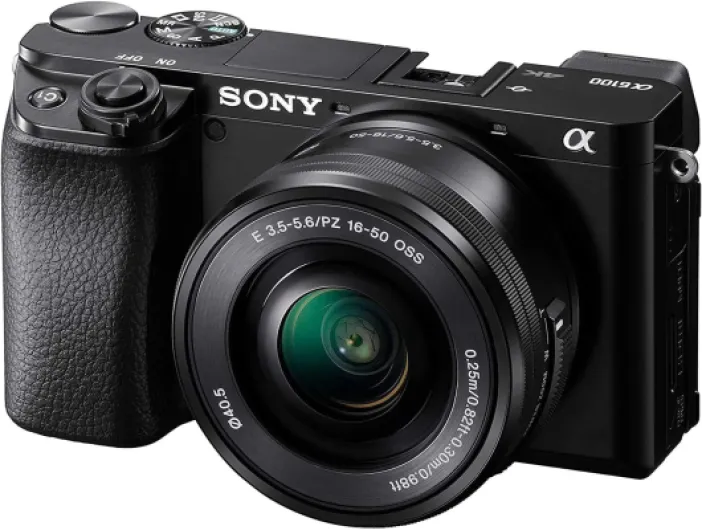
What you actually get with this kit
This specific package is the Sony Alpha 6100 body plus the 16‑50mm f/3.5‑5.6 power zoom lens. So you’re getting a compact mirrorless camera with an APS‑C 24.2 MP sensor and a small retractable zoom that covers roughly 24–75mm in full‑frame equivalent. In real life, that means: wide enough for landscapes and selfies at 16mm, and tight enough for portraits or details at 50mm.
The body itself has an electronic viewfinder, a 3‑inch flip-up screen that can tilt 180° for vlogging or selfies, and one SD card slot. It shoots up to 11 fps with autofocus and auto exposure, and does 4K video (no crop from what I’ve seen) at 24/25/30p. You also get 1080p for slow motion. There’s a microphone jack, which is important if you want usable audio for YouTube or travel vlogs.
In the box, I had: the body, the 16‑50mm lens, a battery, basic strap, and a USB cable for charging/data. No external charger, which is a bit annoying if you want to charge multiple batteries. Everything feels like standard Sony kit-level stuff: functional, nothing fancy. The lens is motorized (power zoom), which is nice for smooth zooming in video, but a bit weird at first if you’re used to manual zoom rings.
On paper, the camera is clearly aimed at beginners and hobbyists: automatic modes, scene presets, eye autofocus for humans and animals, Bluetooth, Wi‑Fi, etc. You can go full manual if you want, but most people buying this will probably stay in the semi‑auto modes. If you’re expecting pro features like dual card slots, weather sealing, or crazy high bit‑rate video, this is not it. But for daily photography, travel and simple video, the spec sheet is more than enough.
Pros
- Fast and reliable autofocus with real-time eye tracking for humans and animals
- Compact and lightweight body that’s easy to carry daily or while traveling
- Good 24 MP APS-C image quality and usable 4K video for beginners and casual creators
Cons
- Average battery life, especially when shooting a lot of 4K video
- Kit lens is convenient but not great in low light and only average in sharpness
Conclusion
Editor's rating
After living with the Sony Alpha 6100 kit for a bit, my overall feeling is that it’s a solid, no‑nonsense camera for beginners and casual creators. The autofocus is the star here: eye tracking for humans and animals works well, and continuous AF keeps up with kids, pets and general movement. Image quality from the 24 MP APS‑C sensor is more than good enough for prints, social media and basic client work, as long as you’re not expecting miracles in very dark conditions with the kit lens.
On the downside, the body feels a bit plasticky, battery life is only average, and the 16‑50mm power zoom is more about convenience than top-notch sharpness or low-light performance. There’s no in‑body stabilization, so video can be shaky if you walk around without extra support. The menus are also a bit messy at first, especially if you’ve never used a Sony camera before, but that’s something you can get used to.
I’d recommend this camera to people who want to move beyond a smartphone without carrying a huge DSLR: travelers, new vloggers, parents who want reliable focus on their kids, and anyone learning photography who values compact size. If you’re already serious about video, need longer battery life, or plan to shoot in rough weather, you might want to look at higher-end or newer models. But as a practical, everyday mirrorless that you’ll actually take with you, the Alpha 6100 does the job well and feels like a reasonable investment, especially if you plan to upgrade lenses later.