
Summary
Editor's rating
Good value for beginners, less interesting if you’re already into cameras
Basic plastic body that feels cheap but is light
Battery life is decent, but bring a spare
Renewed condition: used but serviceable, don’t expect tank-like build
Image quality is decent, autofocus is basic, video is just okay
What you actually get in this renewed bundle
Pros
- Very affordable way to get a DSLR body plus two lenses covering 18–300mm
- Decent 18 MP image quality in good light and simple, beginner-friendly controls
- Wi‑Fi makes it easy to transfer photos to a phone and there’s a 1‑year limited warranty on the renewed product
Cons
- Plastic build, no weather sealing, and lenses without image stabilization
- Autofocus and low-light performance are basic, and video is limited to simple 1080 with no mic input

Specifications
View full product page →| Brand | Canon |
A cheap DSLR bundle that actually does the job
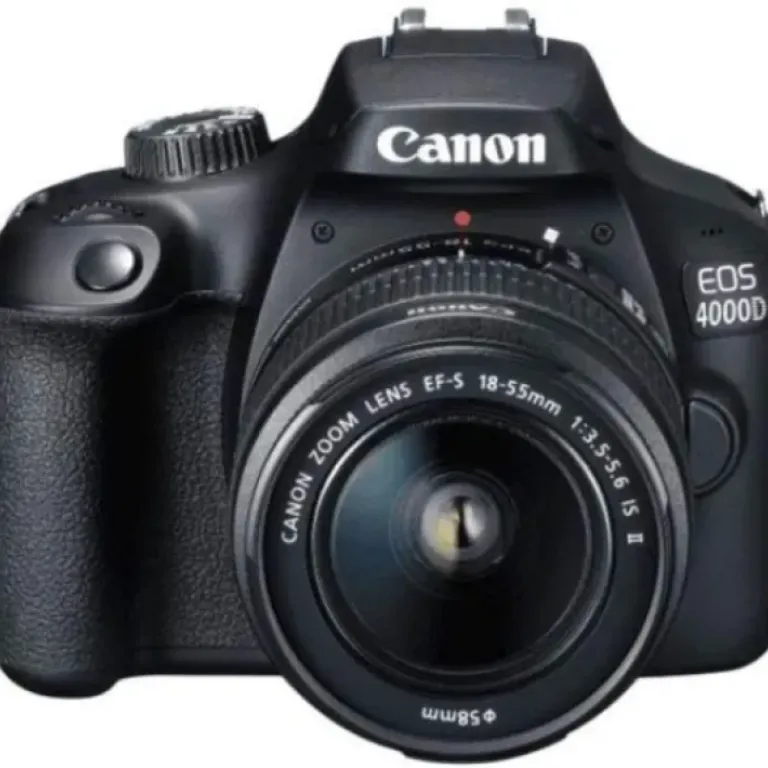
I picked up this renewed Canon EOS 4000D kit with the 18–55mm and 75–300mm mainly because I wanted a cheap backup camera and something I could lend to friends who are just starting out. I wasn’t expecting much at this price, especially for a body plus two lenses, and the fact it’s renewed made me a bit cautious at first. After using it on a weekend trip, a couple of walks, and some indoor family shots, I’ve got a pretty clear idea of what it can and can’t do.
The short version: it’s basic but usable. You’re not getting fancy features like 4K video, a flip screen, or fast autofocus tracking, but you do get a proper DSLR feel, decent 18 MP image quality, and a telephoto lens that lets you zoom way more than any phone. For a beginner or someone on a tight budget, it’s a pretty solid way to learn photography without blowing the bank.
Being renewed, I paid close attention to the condition: buttons, screen, lens glass, mount, battery, all that. On mine, the body had some light marks near the strap lugs and the rear screen, but nothing dramatic. Both lenses were clean, no scratches on the front elements, and the zoom/focus rings turned smoothly. So at least in my case, the “renewed” label didn’t mean “beat up”. It felt used but looked taken care of.
It’s not perfect. The camera feels a bit cheap in the hand, the screen is low-res and fixed, and the autofocus isn’t fast. But if your goal is to learn exposure, play with depth of field, and be able to zoom from 18 to 300mm, it gets the job done. That’s basically how I’d sum it up: no frills, but it lets you actually shoot and learn without fighting the camera too much.
Good value for beginners, less interesting if you’re already into cameras
Value-wise, this kit makes sense mainly for two types of people: total beginners who want a cheap way into DSLR photography, and folks who need a low-cost backup body with a long zoom. You’re getting a body plus an 18–55mm plus a 75–300mm, covering 18–300mm in total, which is a wide range. For the usual renewed price, that’s pretty solid value, especially if you consider what you’d pay for each piece separately, even used. You can shoot landscapes, portraits, kids’ sports, and some basic wildlife without buying extra glass right away.
But there are trade-offs. The lenses have no image stabilization, the body is old tech, and you’re limited to JPEG and 1080 video. If you think you’ll quickly get serious about photography—shooting a lot in low light, wanting to edit RAW files heavily, or needing fast autofocus—you might outgrow this setup quite fast. In that case, spending more on a slightly newer used Canon body (like a 2000D/1500D or 250D) plus one stabilized kit lens might be a better long-term play.
Compared to just using a modern smartphone, the value question is more nuanced. Phones today are very good in auto mode and low light, and they do computational tricks this camera can’t. Where this Canon wins is in optical zoom and learning manual control. If your goal is to actually learn photography—aperture, shutter speed, ISO, depth of field—this kit gives you that experience at a low entry cost. You just have to accept that some shots (especially in low light) might actually look worse than what your phone produces.
Personally, I think the price is fair for what you get, as long as you’re realistic. It’s not a long-term investment piece; it’s more like a training tool or a cheap all-in-one bundle for casual shooting. If you find it at a good renewed price and you’re okay with its limits, the value is there. If the price creeps too close to newer models or mirrorless kits, then I’d say skip it and go for something a bit more modern instead.
Basic plastic body that feels cheap but is light
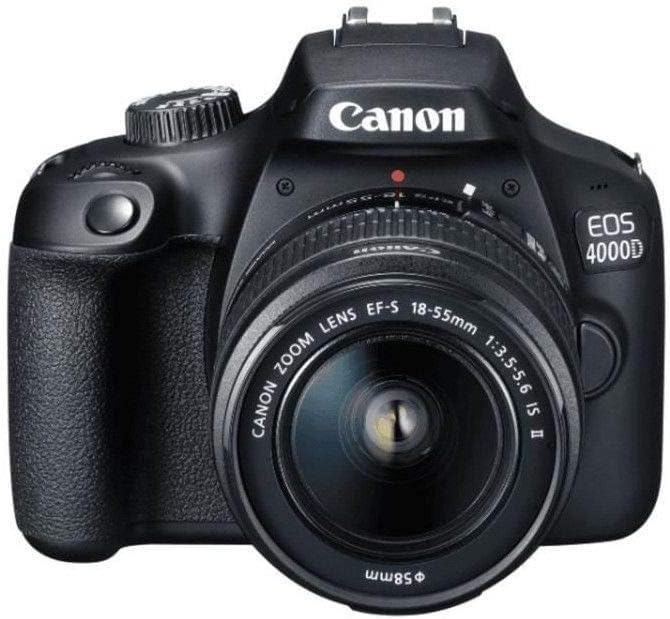
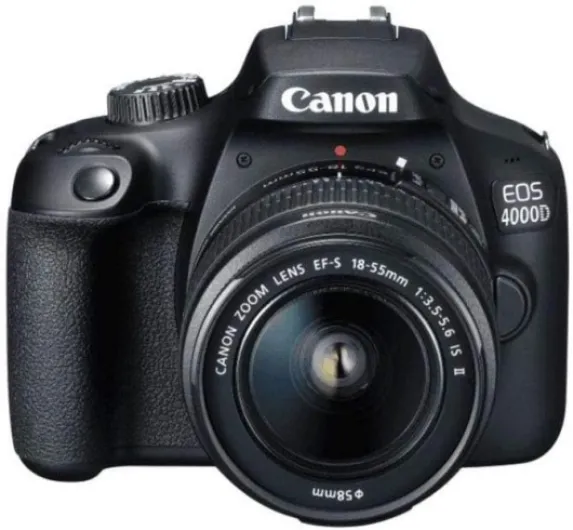
Design-wise, the Canon 4000D is as entry-level as it gets. The body is small and light (around 440 g), all plastic, and you feel that right away. If you’ve ever held a mid-range DSLR like a Canon 80D or even a Rebel T7i, this one feels more toy-like in comparison. The grip is okay but not deep, so with the 75–300mm attached, the setup feels a bit front-heavy and less balanced. I found myself using my left hand more to support the lens, otherwise my right hand got tired quicker than usual during a long walk.
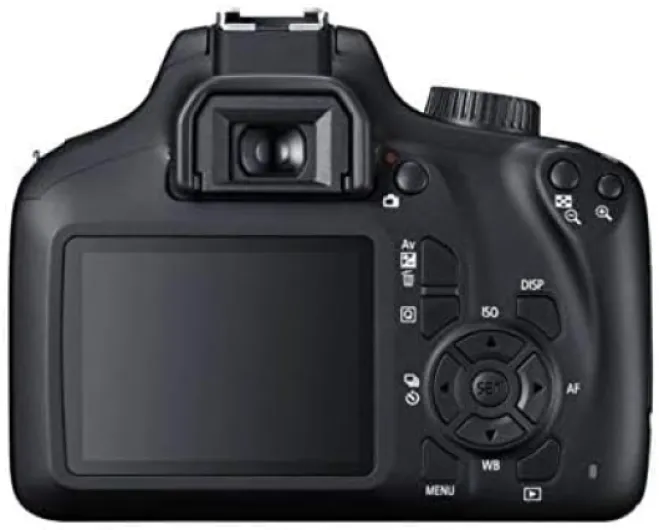
The rear LCD is 6.8 cm (about 2.7–3 inches), fixed, and not touch-sensitive. Resolution is pretty low by today’s standards. You can compose and review shots fine, but don’t expect crisp image previews. Outdoors in bright sun, it’s usable but not great; I ended up relying on the optical viewfinder a lot. On the positive side, the physical buttons are simple: mode dial on top, a few buttons on the back for menu, info, playback, and some quick settings. If you’re a beginner, it’s not overwhelming, and you get used to the layout quickly.
One design compromise is the lack of some ports and features you might expect now. There’s HDMI out and a USB port, but no mic input, no headphone jack, and no articulated screen. So if you’re thinking of vlogging with this on a regular basis, it’s not ideal. You can shoot 1080 video, but framing yourself and monitoring sound is a pain. For stills, though, the design is fine: basic but functional. The built-in flash pops up when needed in auto modes, and you have a hot shoe if you want to add an external flash later.
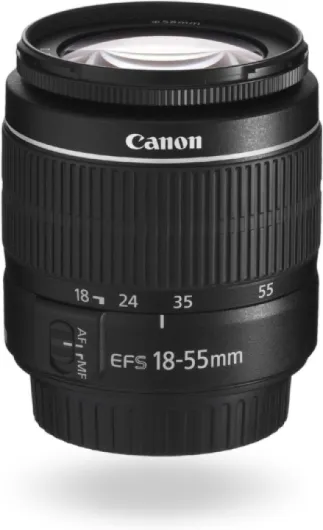
The lenses themselves are also very plastic. The 18–55mm DC III doesn’t have image stabilization (important detail), and the focus ring is narrow and not very smooth. Same story with the 75–300mm: plastic mount, no stabilization, simple zoom ring. It all works, but don’t expect premium feel. For the price, I can live with that, but if you’re picky about build quality, this kit will feel cheap. Personally, I’m okay with it as a light travel setup or learning tool, but I wouldn’t treat it roughly or expect it to survive serious abuse.
Battery life is decent, but bring a spare
The kit comes with a single lithium-ion battery, and in my use it held up reasonably well. On a half-day outing, shooting a mix of photos and some short videos, plus checking images on the screen and using Wi‑Fi a bit, I got through around 250–300 shots before the battery icon started to drop into the danger zone. That’s in line with what I’d expect from an older entry-level DSLR. If you mostly shoot stills and don’t chimp every shot for minutes, you can stretch it a bit more.
Where the battery takes a hit is if you use Wi‑Fi a lot to send photos to your phone. The wireless connection works, but it does chew through the battery faster. After an afternoon of shooting and transferring a batch of photos, I noticed the battery dropping quicker than I’d like. So my advice is simple: use Wi‑Fi only when you need it, not constantly. It’s convenient to share a couple of shots on the spot, but don’t treat it like your main backup method.
The supplied charger in my renewed kit looked generic but worked fine. Full charge from empty took around 2 hours. Nothing fancy like USB‑C charging or charging via the camera body; it’s the old-school brick you plug into the wall. For travel, that’s one more thing in your bag. I’d strongly recommend buying a second battery (it doesn’t have to be Canon original if you’re on a budget) so you don’t get caught with a dead camera halfway through a day trip.
Overall, I’d rate the battery situation as acceptable but not generous. For casual use—weekend shooting, occasional events—it’s okay. If you’re planning a full day at a zoo or on a city tour, especially using the 75–300mm and checking your shots a lot, a spare battery is basically mandatory. It’s not a deal-breaker, but it’s one of those practical details you need to factor into the total cost and your packing routine.
Renewed condition: used but serviceable, don’t expect tank-like build
Since this is a renewed product, durability was my main concern. When I unboxed it, the body had a few cosmetic marks, mostly light scuffs near the strap lugs and some hairline scratches on the rear screen. Nothing that affects use, but you can tell it’s not fresh out of the factory. The buttons and dials felt normal—no sticky buttons, no wobble in the mode dial. The lens mounts were tight, and there was no play when attaching the 18–55 or 75–300, which is important for long-term reliability.
I took it out in light drizzle once (not a smart move, since it’s not weather-sealed), keeping it mostly under my jacket. It survived with no issue, but I wouldn’t push my luck. The plastic body doesn’t inspire a lot of confidence for rough conditions. This is a camera you treat with some care: avoid rain, don’t drop it, and don’t toss it loose into a backpack with keys and metal stuff. Think of it as basic consumer electronics, not pro gear built to take a beating.
The lenses are also on the fragile side. Both are mostly plastic, including the mounts, and neither is stabilized. The zoom action on my 75–300mm was smooth but clearly not built like Canon’s higher-end lenses. I wouldn’t hang the camera from the lens or let it swing around on a strap too much. After a few weeks of normal use—walks, family events, some light travel—everything still works as on day one. No zoom creep, no weird noises, autofocus motors still sound the same.
One reassuring point is the 1-year limited warranty mentioned in the specs. That doesn’t cover you forever, but for a renewed product, it’s better than nothing. My take: if you’re reasonably careful and don’t abuse it, the camera and lenses should last you a few years of amateur use. But if you know you’re rough on gear or plan to shoot in harsh conditions, I’d either look for something more robust or accept that this is a budget setup that you might eventually replace rather than repair.
Image quality is decent, autofocus is basic, video is just okay
In terms of performance, I’d describe this kit as good enough for beginners, but clearly behind more recent entry-level cameras. The 18 MP APS‑C sensor is not new tech, but it still produces decent images in good light. Outdoors during the day, I got sharp photos with nice detail and colors that look like typical Canon: a bit warm, pleasing enough straight out of camera. If you shoot mostly JPEG and don’t plan to do heavy editing, it’s perfectly fine for social media, prints, or family albums.
Low light is where you feel the age of the sensor and the cheaper lenses. With ISO pushed above 3200, noise becomes pretty visible, especially in shadows and flat areas like walls or skies. The lenses are not very bright (f/3.5–5.6 on the 18–55 and f/4–5.6 on the 75–300), so indoors you quickly hit higher ISO or slower shutter speeds. And remember: no image stabilization in either lens, so you need steady hands or you’ll get motion blur. I ended up bumping ISO and accepting some grain, or using the built-in flash for casual family shots.
Autofocus is 9 points with phase detection, and it’s clearly not built for fast action. For static subjects, portraits, landscapes, it works fine. Focus locks in a second or so in decent light. In low light or with the 75–300mm zoomed in, it hunts a bit more, and I had a few missed shots of moving kids and dogs. If you’re into birds in flight or sports, I’d say this is not the right body; you’ll get some keepers, but it’s not reliable for fast sequences. Continuous shooting is listed at 9 fps in the data, but in real use it feels slower and the buffer fills quickly with JPEGs.
Video performance is basic. You get 1080 resolution (listed as 1080i, but effectively Full HD), MP4 format, and that’s it. No 4K, no high frame rates, no fancy autofocus tracking. For simple clips, talking-head videos with the camera on a tripod, or just capturing memories, it’s fine. But focus can be a bit slow and noisy, and with no mic input, you’re stuck with onboard sound or separate audio recording. If your main goal is video content, there are better options, even among used mirrorless bodies. For primarily stills with occasional video, this is acceptable but nothing more.
What you actually get in this renewed bundle
This kit is the Canon EOS 4000D (also called Rebel T100 / 3000D depending on the region) plus two lenses: an EF-S 18–55mm DC III and an EF 75–300mm DC. In practice, that covers everything from basic wide-angle (18mm) for landscapes and group shots to proper telephoto at 300mm for wildlife, sports from the sidelines, or just zooming into stuff far away. The body is 18 MP APS-C with a simple 9-point autofocus system, shoots JPEG and MP4 video at up to 1080, and has built-in Wi‑Fi to send photos to your phone.
Out of the box (well, renewed box), I got the camera body, both lenses with caps, a battery, a basic charger, and a generic strap. No remote, no fancy case, and no memory card in my case, so keep that in mind. Some listings include a pile of cheap accessories; this one is more straightforward: body + two lenses + battery/charger. For a beginner, that’s enough to start shooting, but you’ll need to add at least an SD card right away.
Compared to buying everything new, this bundle is clearly targeting people who care more about price than the latest tech. Specs are simple: 18 MP sensor, up to ISO 12,800 expanded, 1080 video, 3-inch fixed LCD, and automatic exposure modes. It’s labelled for "all ages" and "amateur" skill level, and that’s accurate. If you’re already into photography and used to mid-range or higher Canon bodies, this will feel limited. But for someone coming from a phone, it’s a step up in manual control and lens options.
The renewed aspect is the main question mark. In my case, everything worked as advertised: no dead pixels on the screen, no weird noises from the shutter, autofocus worked on all points, and the battery held a normal charge. There’s a 1-year limited warranty listed, which gives a bit of peace of mind. I’d still say: check everything the first week—mounts, contacts, zoom range, and Wi‑Fi connection—so if something’s off, you can send it back while you’re still within return/warranty windows.
Pros
- Very affordable way to get a DSLR body plus two lenses covering 18–300mm
- Decent 18 MP image quality in good light and simple, beginner-friendly controls
- Wi‑Fi makes it easy to transfer photos to a phone and there’s a 1‑year limited warranty on the renewed product
Cons
- Plastic build, no weather sealing, and lenses without image stabilization
- Autofocus and low-light performance are basic, and video is limited to simple 1080 with no mic input
Conclusion
Editor's rating
After using this renewed Canon EOS 4000D kit with the 18–55mm and 75–300mm, my opinion is pretty straightforward: it’s a basic but useful starter kit. Image quality in good light is decent, the zoom range from 18 to 300mm covers most everyday situations, and the Wi‑Fi is handy for quickly sharing photos. The camera feels cheap and the features are dated, but for someone who just wants to learn the basics of DSLR photography without spending much, it does the job.
Who is it for? Beginners on a tight budget, parents who want more reach than a phone for kids’ events, or someone who needs a simple backup camera. You get enough control to learn exposure, and the two lenses let you experiment with wide and telephoto shots right away. Who should skip it? Anyone serious about video, people who shoot a lot in low light, or users already used to faster autofocus and better build quality. If you’re picky about image stabilization, 4K, or weather sealing, this kit will feel limiting pretty fast.
Overall, I’d rate it as a solid budget option with clear compromises. If you go in knowing it’s an entry-level, older DSLR with plastic lenses and no fancy features, you’ll probably be satisfied. If you expect modern performance and pro-level build, you’ll be disappointed. For the price I paid as a renewed bundle, I’m okay with it and will keep using it as a loaner and casual travel setup.