
Summary
Editor's rating
Is the Canon 2000D kit worth the money?
Old-school DSLR feel (in a good and bad way)
Battery life: boring but reliable
Build quality and how it holds up in real life
Image quality is solid, speed is just okay
What you actually get with this kit
Pros
- 24.1 MP sensor delivers sharp, detailed photos in good light
- Simple controls and feature guide make it friendly for beginners
- Good battery life and optical viewfinder keep it practical for full-day use
Cons
- Fixed, non-touch screen with no flip or tilt
- Autofocus and 3 fps burst are limited for sports and fast action
- No 4K video and fairly basic video features overall

Specifications
View full product page →| Brand | Canon |
A cheap way to get into “real” photography
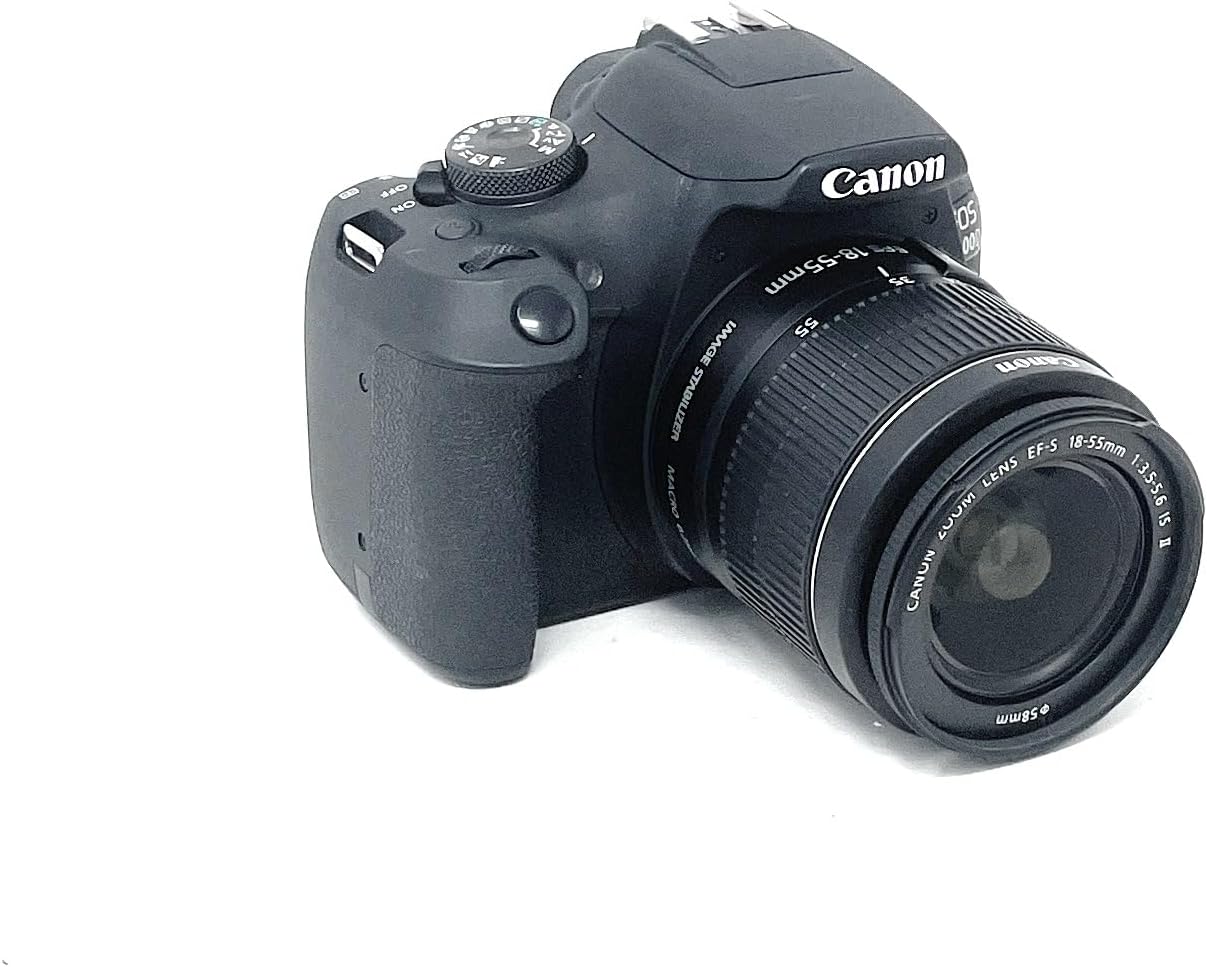
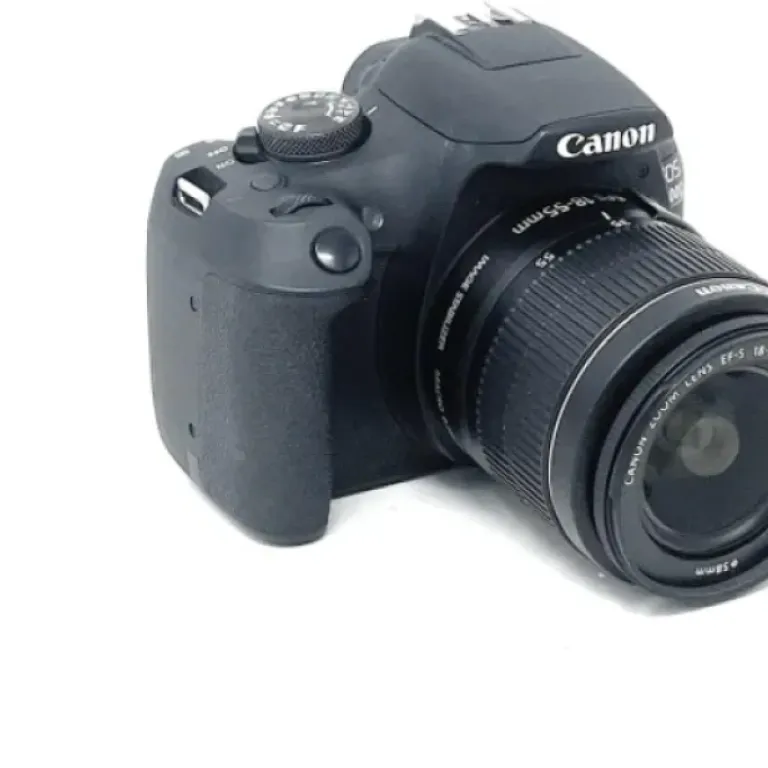
I’ve been using the Canon EOS 2000D with the 18‑55mm IS II kit lens for a few weeks, and it’s basically my “first serious camera that isn’t my phone”. If you’re in the same situation, this will probably feel like a big step up. You get real buttons, a proper optical viewfinder, and pictures that you can actually print and hang without them looking like mush. It’s not a fancy camera, but it does the job.
Out of the box, it feels like a typical entry-level Canon: light, mostly plastic, but not toy-like. I took it on a few walks, a family birthday, and some basic product shots at home. The camera didn’t slow me down, and I didn’t have to fight with the menus to get something usable. On full auto, it behaves a bit like a smart phone on “photo mode”, except the quality is clearly better, especially in decent light.
What stood out to me quickly is that it’s clearly built for beginners or casual users. The mode dial has all the usual “portrait/landscape/sports/food” presets, there’s an on-screen guide explaining stuff, and the kit lens covers the usual range from wide-ish (for group shots and landscapes) to a bit of zoom (for portraits and random details). I didn’t feel lost, and I’ve only used simple compacts and phones before.
It’s not perfect though. The screen doesn’t flip, there’s no 4K video, the burst speed is slow, and the autofocus isn’t made for serious sports or wildlife. But if your main goal is better photos of trips, family, and everyday life without going deep into technical stuff on day one, this body + lens combo is a pretty solid starting point. Think of it as a reliable “training camera” that can still deliver photos good enough to frame.
Is the Canon 2000D kit worth the money?
In terms of value, this kit sits in that sweet spot where you’re not paying for pro features you’ll never use, but you’re also not stuck with a toy. You get a proper 24.1 MP DSLR body, an image-stabilised zoom lens, decent battery life, and Wi‑Fi connectivity. For someone moving up from a phone or compact camera, the jump in control and image quality (especially in good light) is noticeable. Prints look sharp, and you can actually play with depth of field a bit.
There are trade-offs, of course. At this price, you don’t get 4K video, fast burst rates, top-tier autofocus, or a flip screen. If those are must-haves for you – for example, if you’re planning to do a lot of sports photography or serious YouTube work – you might be better off saving for a higher model or looking at newer mirrorless options. But if your main use is photos of travel, family, pets, streets, and some basic video, this combo is good value for money.
One thing that boosts the value a lot is the ecosystem around it. Because the 2000D is popular, you can find tons of cheap used EF/EF‑S lenses, third-party accessories, and free tutorials specifically for this model. That means you can start small with the kit and slowly add a 50mm f/1.8, maybe a telephoto, a tripod, etc., without breaking the bank. You’re not locked into some dead-end system.
Overall, I’d say the price matches what you get: a basic but capable DSLR that lets you learn and grow. There are better cameras out there, sure, but most of them cost more. For an entry into the DSLR world, this kit is a sensible purchase rather than an impulse gadget.
Old-school DSLR feel (in a good and bad way)
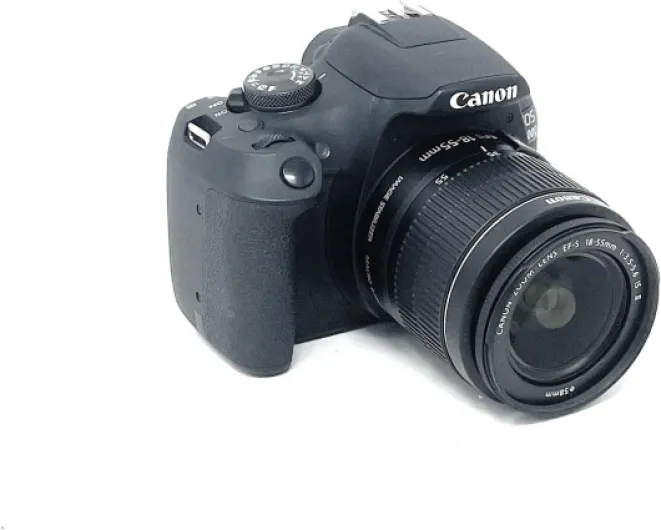
The design is very “classic Canon entry-level DSLR”. No fancy curves, no retro vibe, just a black plastic body with a chunky grip and a big mode dial on top. It doesn’t scream premium, but it also doesn’t feel like a toy. The weight is around 680g with the battery (before adding the lens), so with the 18‑55mm attached it’s still light enough to carry all day without your neck hating you. Compared to older film SLRs or bigger DSLRs, it feels pretty compact.
The optical viewfinder is a big part of the experience. You’re looking through a mirror at what the lens sees, not at a little screen. If you’ve only used phones or mirrorless cameras with electronic viewfinders, this feels a bit different – more direct, no lag, and the battery lasts longer because you’re not powering another display. On the flip side, the viewfinder is not huge or super bright like on expensive models, but it’s good enough to compose and check focus points.
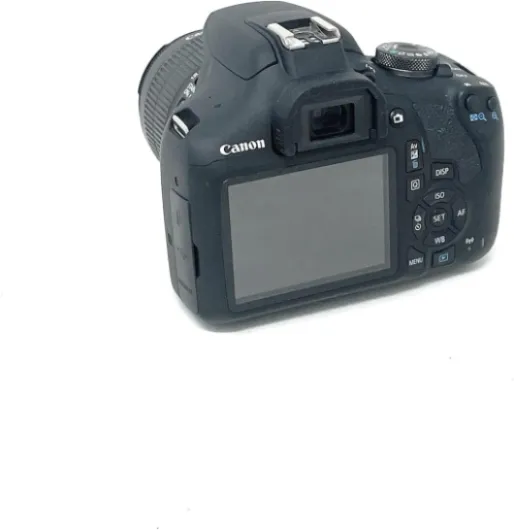
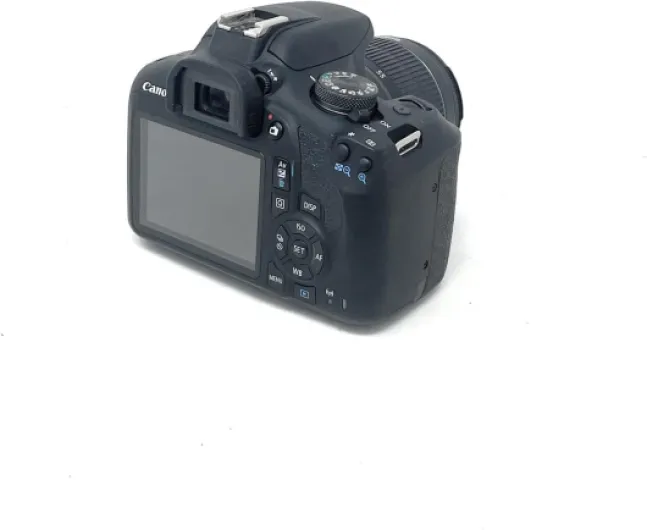
The rear screen is 3 inches, fixed (no flip, no tilt) and not a touchscreen. This is where you feel the age and price of the camera. For normal shooting through the viewfinder, it’s fine, and the resolution is decent to check if a shot is roughly sharp. But if you like vlogging, low‑angle shots, or holding the camera above your head in a crowd, the lack of an articulating screen is annoying. You can use Live View, but framing from awkward angles is guesswork.
Button layout is typical Canon: mode dial and main dial on top, a row of buttons on the back for menu, playback, ISO, white balance, etc. After a couple of days I could change basic settings without thinking too much. There’s also a Feature Guide that pops up little explanations, which is handy when you’re learning. Overall, the design is very functional: no fancy extras, but nothing confusing either. It feels like something built to be used, not displayed.
Battery life: boring but reliable
The battery performance is one of the quiet strengths of this camera. Because it uses an optical viewfinder instead of an electronic one and the rear screen isn’t always on, it sips power pretty slowly. On a typical day out – a few hundred photos, some quick video clips, occasional review on the back screen – I didn’t manage to drain the battery completely. I usually came home with around 30–40% left according to the indicator.
If you’re the type who chimp (constantly checking every shot), use Live View a lot, or transfer tons of pictures via Wi‑Fi, you’ll obviously use more power. But compared to mirrorless cameras I’ve tried from friends, where the battery seems to drop every time you blink, this thing is way more relaxed. For a weekend trip, I’d still bring a second battery just for peace of mind, but one fully charged battery can realistically cover a full day of mixed shooting for a casual user.
Charging is done with the included external charger (LC‑E10E) and a power cable. You take the battery out of the camera and charge it separately. Personally, I prefer this to USB charging because you can keep a spare battery on rotation and keep shooting while one charges. The downside is: no emergency top-up from a power bank, unless you have a separate charger for that.
There’s nothing flashy about the battery system, but that’s almost the point. It just works. For travel or events where you don’t want to be glued to a wall socket or worrying about 10% remaining, this kind of old-school DSLR power management is actually pretty practical. It makes the camera feel dependable, even if the rest of the specs aren’t cutting-edge.
Build quality and how it holds up in real life
The body is mostly plastic, and you can feel that when you tap it or flex it slightly, but it doesn’t feel fragile. I carried it around with the kit lens on, hanging from the strap, banging a bit against my side, and throwing it in a basic padded bag. No weird creaks, no loose parts, and the buttons still click properly. It’s not a tank like high-end pro bodies, but for normal use – trips, weekends, family stuff – it seems tough enough.
There’s no official weather sealing, so I wouldn’t trust it in heavy rain or dusty storms. I got caught in light drizzle once, wiped it down quickly, and it survived without any problem, but that’s about as far as I’d push it. If you’re planning a lot of outdoor hiking or beach shooting, just be a bit careful: keep it in a bag when not in use, don’t change lenses in a sandstorm, and maybe use a cheap rain cover if the weather looks bad.
The lens mount is metal, which is good news. Some cheap cameras use plastic mounts that can wear faster, especially if you’re swapping lenses often. Here, the body mount looked solid, and I tried a couple of other EF and EF‑S lenses without any play or wobble. The kit lens itself feels light and a bit plasticky, but that’s standard for this range. The zoom and focus rings have a bit of resistance but nothing crunchy or weird.
Long term, the biggest “durability” plus in my opinion is that it’s a Canon EOS body with EF/EF‑S mount. That means if you later upgrade to a better Canon DSLR, your lenses can move with you. So even if, in a few years, this particular body feels old, the stuff you bought around it (lenses, flashes, etc.) won’t be wasted. For the price, the build is decent: not premium, not junk, just solid enough if you don’t abuse it.
Image quality is solid, speed is just okay
In terms of pure image quality, this camera is honestly more than enough for most people. The 24.1 MP APS‑C sensor gives sharp, detailed photos in good light. Outdoors during the day, I got clean, crisp shots with natural colours. Skin tones look decent straight out of camera in JPEG, and you can tweak the picture styles if you want more contrast or saturation. If you’re coming from a phone, the biggest difference you’ll see is in dynamic range and how the background can blur a bit when you zoom in or get closer.
Low light is where things get more nuanced. Up to ISO 1600, photos are still quite usable, especially if you don’t zoom in too much. At ISO 3200 and above, you start to see more noise and a loss of detail, but for social media or small prints, it’s acceptable. The image stabilisation on the 18‑55mm IS II lens helps keep the shutter speed low enough to avoid motion blur from your hands, as long as your subject isn’t moving too fast. Indoors at family gatherings, I mostly got sharp shots without needing the pop‑up flash, which is exactly what I wanted.
Autofocus is where you feel the “entry-level” side. Through the viewfinder, it uses a basic phase-detect system with a limited number of AF points (the spec list says 50, but in practice it behaves like the usual small Canon cluster). For static subjects – portraits, landscapes, food, random objects – it’s fine and locks focus quickly. For fast-moving stuff like kids running towards you, dogs, or sports, it struggles more. The 3 fps burst rate doesn’t help either; you just don’t get that many frames to pick from. If your main use is sports or wildlife, this is not the ideal choice.
Video is capped at 1080p. Quality is decent for casual clips, YouTube, or home movies. I tested it on a projector and it looked clean enough. There’s no fancy 4K, slow motion, or advanced autofocus tracking. You can use Live View and manual focus, or basic AF, but it’s not a vlogging powerhouse. For someone who mainly wants a photo camera that can sometimes shoot video, it’s fine. For a dedicated video creator, I’d look at something else.
What you actually get with this kit
This kit is basically the classic Canon starter pack: you get the EOS 2000D body, the EF‑S 18–55mm f/3.5‑5.6 IS II lens, battery, charger, strap, body cap, and front/rear lens caps. No memory card, no bag, no extra battery. So if you’re buying this as a first camera, plan to add at least an SD card and ideally a cheap bag and second battery to your order. Without a card, it’s literally unusable out of the box.
The camera itself has a 24.1 MP APS‑C sensor, which is plenty. Photos are 6000×4000 pixels, so you can crop a bit and still have enough resolution for prints. It shoots Full HD 1080p video, not 4K, and tops out at about 3 frames per second in burst mode. There’s built-in Wi‑Fi and NFC, so you can connect it to your phone with the Canon Camera Connect app. It’s not as seamless as Bluetooth cameras, but once set up it works fine for transferring images and using your phone as a remote.
The 18‑55mm IS II lens is your basic “do everything a bit” zoom. At 18mm you can do landscapes and group shots; at 55mm you can do portraits with some background blur if you’re close enough. The key thing is that this version has image stabilisation (IS II), which helps a lot in low light or when your hands aren’t super steady. I tried a non‑stabilised older Canon kit lens before and the difference when shooting indoors without flash is real – more keepers with this IS version.
In daily use, the camera feels like a straightforward tool. You turn the dial to Auto, half‑press the shutter, it focuses, you shoot. If you want to dig deeper later, there are manual and semi‑manual modes (P/Av/Tv/M), and tons of tutorials online that use this exact model. That’s actually a plus: when you search YouTube or books about learning DSLR basics, the 2000D pops up a lot, so it’s easy to follow along with the same buttons and menus.
Pros
- 24.1 MP sensor delivers sharp, detailed photos in good light
- Simple controls and feature guide make it friendly for beginners
- Good battery life and optical viewfinder keep it practical for full-day use
Cons
- Fixed, non-touch screen with no flip or tilt
- Autofocus and 3 fps burst are limited for sports and fast action
- No 4K video and fairly basic video features overall
Conclusion
Editor's rating
The Canon EOS 2000D with the 18‑55mm IS II lens is a straightforward, no-nonsense way to get into “real” photography. The image quality is solid, the controls are easy to understand, and the optical viewfinder plus decent battery life make it a reliable tool for day-to-day shooting. If you mostly shoot travel, family, and everyday scenes and want something better than your phone without drowning in complexity, this combo does the job very well for the price.
It’s not a perfect camera. The fixed, non-touch screen feels dated, the autofocus and 3 fps burst are clearly limited for action or fast-moving subjects, and video is capped at 1080p with basic features. If you’re focused on sports, wildlife, or serious video work, you’ll hit those limits pretty quickly. But as an entry-level DSLR that lets you learn manual modes, experiment with lenses, and still get photos good enough to print and frame, it’s a pretty solid package.
I’d recommend it to beginners, casual shooters, and anyone who wants a cheap but capable body to start building a Canon lens collection. People who should probably skip it: hardcore videographers, action shooters, and those who absolutely need a flip screen or 4K. For everyone else who just wants a reliable starter DSLR, this kit is a sensible choice that gets the basics right.