
Summary
Editor's rating
Value for money: good learning tool if you know what you’re buying
Design & handling: old school but easy to live with
Battery life & connectivity: lasts long, but don’t expect modern extras
Build quality & refurbished condition: used but trustworthy
Image quality & autofocus: fine in good light, limited in low light
What you actually get with this renewed D60 kit
Pros
- Low price for a DSLR body + stabilised 18–55mm lens kit
- Decent image quality in good light, fine for everyday use and learning
- Refurbished unit came clean and functional, backed by a 1‑year warranty
Cons
- Very dated specs: weak low‑light performance, basic autofocus, small non‑touch screen
- No real modern connectivity (no Wi‑Fi/Bluetooth) and video is poor
- Product page specs are misleading compared to what the actual D60 offers

Specifications
View full product page →| Brand | Nikon |
An old DSLR in 2026… still worth it?
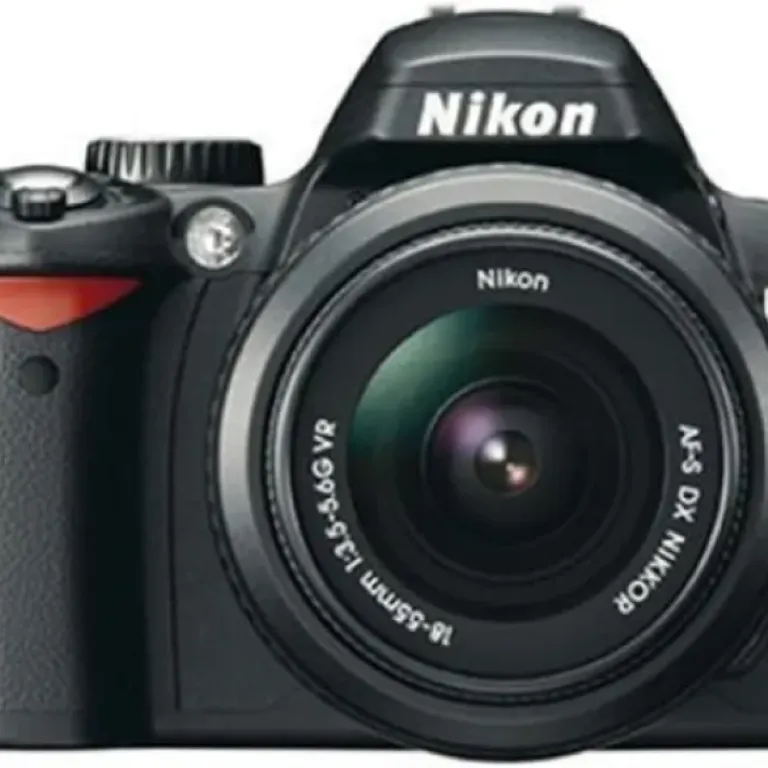
I picked up this Nikon D60 renewed kit with the 18–55mm VR lens mainly out of curiosity. I already use a newer mirrorless camera, but I wanted something cheap I wouldn’t cry over if it got bumped around on trips or lent to friends. The D60 is clearly an older model, and on paper it looks way behind current cameras: 10.2 MP, no fancy 4K, basic screen. But the price on the renewed offer was low enough that I figured it was worth a try.
Out of the box, it really felt like a trip back in time. No touch screen, no flip screen, basic menus, and a classic DSLR feel. I’ve used it for a couple of weeks: walks in the city, a family birthday, a bit of indoor stuff under bad light, and some quick product shots for classifieds. So this isn’t a lab test, it’s just how it behaved in normal everyday use.
What surprised me is that, despite the old spec sheet, it still takes decent photos if you know what you’re doing, or at least if you’re ready to learn the basics (ISO, aperture, shutter). Image quality in good light is more than enough for social media, small prints, or simple use. On the other hand, a lot of the specs listed on the product page are frankly wrong or optimistic: 60 fps burst, Wi‑Fi, NFC, 1080p video… the real D60 doesn’t do all that. So don’t buy it for those features.
In short: it’s a cheap way to get into DSLR photography, but you have to accept its age and a few limitations. If you want something plug‑and‑play that behaves like a modern smartphone, this will probably feel dated and a bit clunky. If you’re okay with that and mainly want to learn photography on a budget, it can still make sense.
Value for money: good learning tool if you know what you’re buying
Let’s be honest: the main reason to buy a renewed Nikon D60 in 2026 is the price. Newer entry‑level DSLRs or mirrorless cameras cost more, and good smartphones aren’t cheap either. This kit gives you a body, a stabilised zoom lens, and a 1‑year warranty for a relatively low amount. If your budget is tight and you just want to step into interchangeable‑lens photography, it starts to look interesting.
However, you really need to understand what you’re trading off. You’re getting: an old sensor with limited low‑light performance, basic autofocus, a small non‑touch screen, and almost no video options. You’re also missing any kind of modern connectivity (no Wi‑Fi, no Bluetooth, no NFC despite what the listing suggests). If those things matter a lot to you, the value drops quickly and you’re better off saving a bit more for a newer body or even just using a good phone.
Where the value makes sense is if you see it as a cheap learning tool or a second camera. Compared to something like a newer Nikon D3xxx or D5xxx series, the D60 is weaker, but also usually cheaper in renewed offers. For the price I paid, I got image quality in good light that still beats a lot of low‑end compacts, and the ability to use other Nikon F‑mount lenses later if I want to upgrade the body. That upgrade path is a real plus.
So in my opinion: good value if you go in with realistic expectations and you’re okay with the age of the camera. If you’re picky about image quality in low light, or if you want modern comfort features, it will feel dated and the savings might not be worth the compromises.
Design & handling: old school but easy to live with
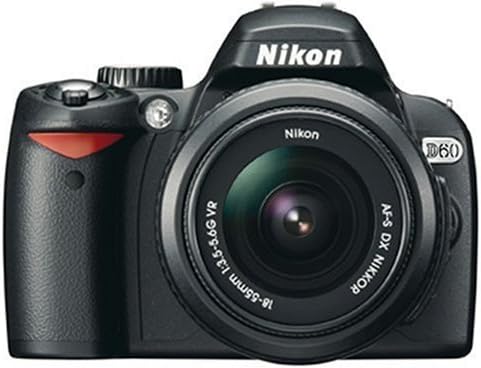
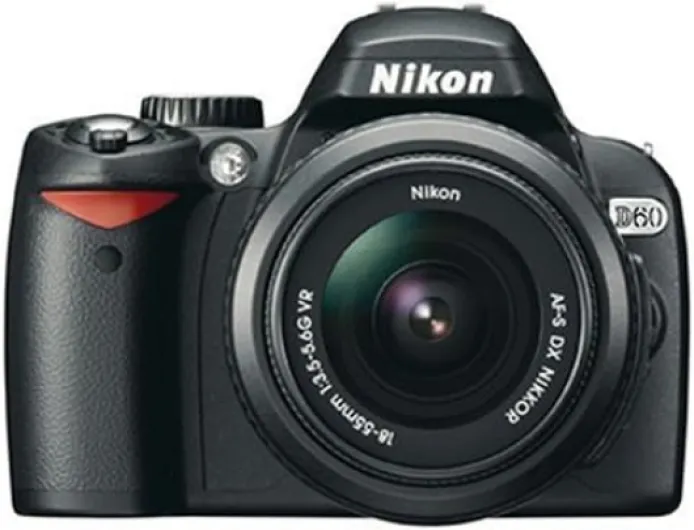
Design‑wise, this is pure classic DSLR from the 2000s. It’s smaller and lighter than many bigger pro bodies, but still bulkier than a compact or a mirrorless. In hand, it’s actually pretty comfortable: the grip is deep enough, the rubber isn’t peeling, and the weight with the 18–55mm lens is light enough to carry all day without wrist pain. I walked around the city with it for about three hours and didn’t feel like it was a brick around my neck.
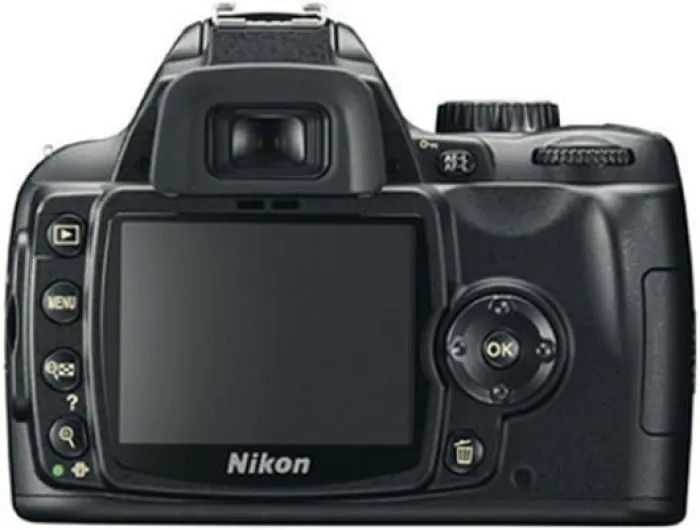
The layout is simple: mode dial on top (P/A/S/M plus scene modes), a wheel for changing settings, a few buttons on the back for ISO, white balance, exposure comp, etc. There’s no touch screen, no tilting screen, and the LCD is small and not very sharp by today’s standards. But it’s usable to review shots and check focus roughly. The optical viewfinder is basic but clear enough; you see your frame properly and it’s much nicer than shooting with a phone screen in bright sun.
One thing I liked is that there aren’t dozens of useless buttons. For a beginner, that’s actually nice: you quickly learn where everything is, and you don’t get lost in endless menus. On the downside, some things are slower to access, like ISO if you’re used to more modern bodies with dedicated controls. Also, there’s no live view focusing like on newer cameras: you basically compose through the viewfinder if you want proper autofocus performance.
In practice, the design feels a bit dated but very straightforward. If you’re coming from a smartphone, it will feel like a “proper camera” with real controls. If you’re used to modern mirrorless cameras with big screens and touch controls, it will feel like going back a couple of generations. Personally, for a backup or learning body, I found the design perfectly fine and even a bit refreshing in its simplicity.
Battery life & connectivity: lasts long, but don’t expect modern extras
Battery life was actually one of the good surprises. Even with a third‑party battery in my renewed kit, I managed to get through a full day of casual shooting (around 300–400 photos) without needing to recharge. I wasn’t chimping (checking the screen) after every single shot, but I did review sequences and browse the menu quite a bit. Compared to many modern mirrorless cameras that drain faster, this is pretty comfortable.
The flip side is that charging is old‑school: external charger, no USB charging. You remove the battery and plug it into the included charger. It’s not a deal breaker, but if you’re used to just plugging a USB‑C cable into the camera, it feels a bit archaic. Also, the listing mentions Wi‑Fi and NFC, but my D60 has none of that. If you want to get photos onto your phone, you either pop out the SD card or connect the camera to a computer via USB and transfer files the old way.
For video, I basically gave up quickly. The product page talks about MP4 and 1080p, but the real D60 is not a serious video tool. Quality is soft, controls are limited, and handling is clunky. If you want video for YouTube or TikTok, you’re honestly better off with your smartphone. I treated the D60 as a photo‑only camera, and in that context, the battery life is solid and predictable.
Overall, I’d say: good autonomy, zero smart features. If you’re okay with that and you don’t mind transferring files via SD card, it’s fine. If you expect Bluetooth pairing, remote control from your phone, or instant social sharing, this camera will feel stuck in the past.
Build quality & refurbished condition: used but trustworthy
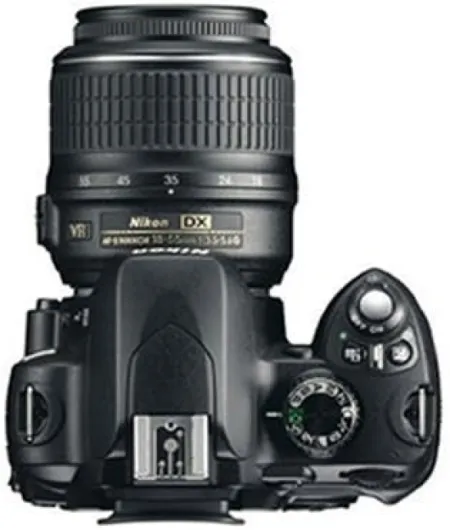
In terms of build, the Nikon D60 is plastic but sturdy enough. It’s not a pro magnesium tank, but it doesn’t feel like a toy either. After a couple of weeks throwing it in a backpack (sometimes just wrapped in a hoodie), I didn’t notice any new marks or play in the lens mount. The buttons still click properly, the dials don’t wobble, and the battery door closes firmly. I wouldn’t take it into heavy rain or sandstorms, though – there’s no real weather sealing here.
About the refurbished aspect, my unit arrived clean: no dust in the viewfinder, no grime between buttons, and no sticky grip. You could clearly see it was used, but whoever refurbished it did at least a basic clean and check. The lens zoom ring is smooth, no weird grinding noises, and the VR seemed to work fine – I could shoot at around 1/15–1/20s at 18mm and still get sharp shots fairly often, which is what I expect from this kind of lens.
The main advantage of the renewed program is the 1‑year warranty. With old cameras, you always have that little fear that the shutter or electronics will die randomly. Knowing there’s at least some coverage if it fails early makes it easier to accept the risk. I didn’t have to use the warranty, so I can’t say how smooth the process is, but just having it is reassuring on a product this old.
So on durability, I’d say: it’s a well‑built entry‑level DSLR that has already proven it can survive years of use, and the refurbished unit I got felt reliable for what it is. Don’t abuse it like a pro sports camera, but for travel, family events, and learning, it feels robust enough.
Image quality & autofocus: fine in good light, limited in low light
This is where you really feel that the D60 is an older camera. The 10.2 MP sensor is enough for everyday stuff: social media, A4 prints, small photo books, that kind of thing. In good light (outdoors during the day, or well‑lit interiors), the photos are actually nice: decent sharpness with the 18–55mm, pleasant colors, and enough detail. Compared to a modern phone, you don’t get the same computational magic, but you do get more natural depth of field and a more “camera” look.
Where it struggles is low light and high ISO. Above ISO 800, you start to see noise pretty clearly, and at ISO 1600–3200 it gets grainy and mushy, especially in shadows. The listing says ISO can go up to 6400, but honestly, the files at that level are more for emergency use than anything. I tried shooting a birthday party indoors with only ceiling lights: I could get usable shots, but I had to use the built‑in flash quite often or accept noisy images. If you’re used to recent sensors, you’ll feel the difference.
Autofocus is also basic: few AF points and not very fast, especially in low light. For static scenes or people who aren’t moving much, it’s fine. For kids running around or sports, you quickly hit the limits. I tried tracking my nephew on a bike in a park: some shots were sharp, but I lost quite a few because the AF just couldn’t keep up. Burst mode is also nothing like the 60 fps stated in the description – it’s more around 3 fps and the buffer fills up quickly when shooting JPEGs.
So, performance summary: perfectly OK for calm, everyday photography in decent light, but not great for action or dark environments. If your main goal is learning composition and basic manual settings, it’s enough. If you want to shoot concerts, indoor sports, or fast action, you’ll hit the wall pretty fast and you’d be better off with a more recent body.
What you actually get with this renewed D60 kit
The renewed kit I got included the Nikon D60 body and the AF‑S DX Nikkor 18–55mm f/3.5–5.6G VR lens. That’s the standard beginner zoom: wide enough for everyday shots, a bit of zoom for portraits or details, and integrated optical stabilisation (VR) which helps a bit in low light. In my box there was also a generic strap, a third‑party battery, and a simple charger. No memory card, so keep in mind you’ll need an SD card right away.
As for the “renewed” side, the description says it’s been checked and tested. On my copy, the body had a few tiny scratches on the plastic and a little shine on the grip from previous use, but no cracks or serious damage. The screen had some micro‑marks that you only see when it’s off and under strong light. The lens was clean: no dust inside, no fungus, no marks on the glass, just a light sign of use on the zoom ring. For a refurbished product, that’s honestly pretty solid.
The product page mentions a bunch of stuff that doesn’t really match the real camera: Wi‑Fi, NFC, 1080p video, 39 AF points… My D60 is the standard old D60: no Wi‑Fi, no NFC, basic 3‑point AF, and 720p‑ish video at best (and even that is not great). So I’d say: treat the listing specs with caution and look up the real D60 specs on Nikon’s site or a photo forum before deciding. The core promise, though – a working DSLR with a kit lens and a 1‑year warranty – was respected.
So overall, in terms of what you actually receive: it’s a functional old DSLR bundle, ready to shoot as soon as you add an SD card, with physical condition closer to “lightly used” than “like brand new”. For the price bracket, that’s okay, but don’t expect it to look fresh out of the factory.
Pros
- Low price for a DSLR body + stabilised 18–55mm lens kit
- Decent image quality in good light, fine for everyday use and learning
- Refurbished unit came clean and functional, backed by a 1‑year warranty
Cons
- Very dated specs: weak low‑light performance, basic autofocus, small non‑touch screen
- No real modern connectivity (no Wi‑Fi/Bluetooth) and video is poor
- Product page specs are misleading compared to what the actual D60 offers
Conclusion
Editor's rating
After using this renewed Nikon D60 kit for a couple of weeks, my feeling is pretty clear: it’s an old but still usable DSLR that makes sense at the right price and for the right person. In good light, the photos are perfectly decent, the 18–55mm VR lens covers everyday needs, and the camera is simple enough that a beginner can learn the basics without drowning in menus. The refurbished unit I got was clean and functional, with only minor cosmetic wear, and the 1‑year warranty is a nice safety net.
On the other hand, you have to accept that you’re buying technology that’s clearly behind what’s standard today. Low‑light performance is limited, autofocus is basic, the screen is small, and modern features like Wi‑Fi or proper video are basically absent (regardless of what the product page tries to suggest). If you want something that connects to your phone in two taps and shoots clean photos at ISO 3200, this is not it.
So who is it for? It’s for beginners on a tight budget who want to learn photography with a real camera and don’t care about the latest gadgets, and for people who want a cheap backup body they won’t stress about. Who should skip it? Anyone serious about low‑light shooting, action, or video, and anyone who hates dealing with old‑school file transfers and menus. If you fit in the first group and catch it at a good price, it’s a pretty solid deal. If not, better to save a bit more for something newer.