
Summary
Editor's rating
Value for money: good budget starter, but there are trade-offs
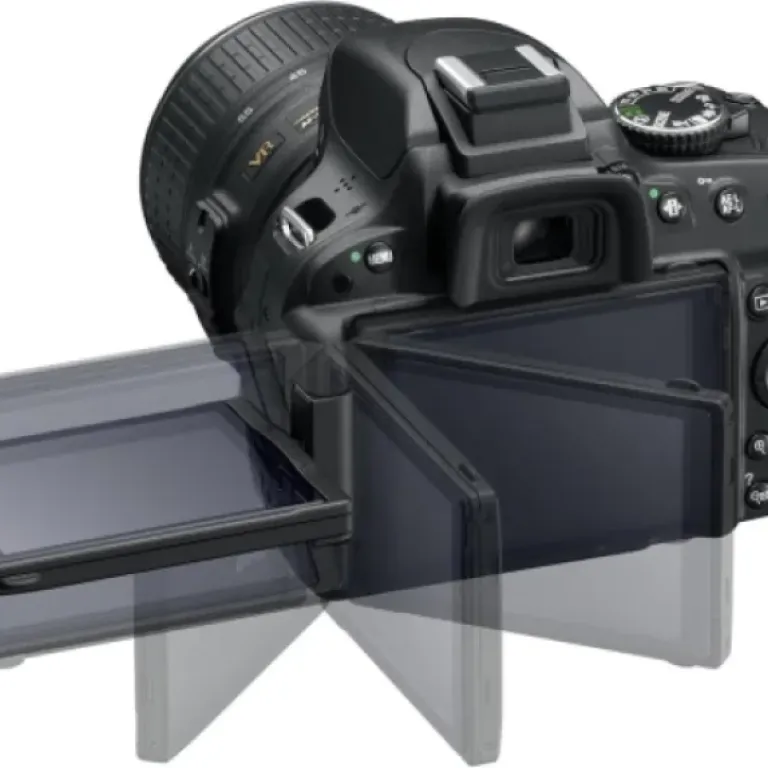
Old-school DSLR feel with a handy flip screen
Battery situation: decent endurance, annoying that it’s not included
Refurb quality: good enough, but don’t expect like-new perfection
Image quality is still good, autofocus and video show their age
What you actually get with this renewed D5100 kit
Pros
- Good image quality in decent light from the 16.2 MP APS-C sensor
- Flip-out vari-angle screen makes low and high angle shots much easier
- Very affordable way to get into DSLR photography with an optical viewfinder
Cons
- Battery not included, and overall kit is very barebones
- Autofocus and video features feel outdated, especially for moving subjects
- Low-light performance is limited with the basic 18–55mm f/3.5–5.6 kit lens

Specifications
View full product page →| Brand | Nikon |
A cheap way to get into DSLR photography (if you accept its age)
I picked up this renewed Nikon D5100 kit mainly because I wanted a cheap backup body and a camera I wouldn’t be afraid to throw in a backpack. It’s an old model, the specs are clearly not 2026-level, but the price in the renewed section was low enough that I thought, “why not.” I’ve used quite a few Nikon bodies over the years (D3200, D5300, D7100), so I kind of knew what I was getting into in terms of ergonomics and image quality.
Out of the box, it’s exactly what you’d expect from a refurbished DSLR: basic packaging, body + 18‑55mm VR lens, no battery in this listing, and no fancy extras. The description says it’s checked to look and work like new. Mine wasn’t 100% “like new”, but it was clean enough: a couple of tiny marks on the screen protector frame, rubber grips slightly shiny, but nothing that affects use. So if you’re expecting it to feel brand new, lower your expectations a bit.
I’ve used it for a couple of weeks for casual shooting: walks in the city, some indoor family stuff, and a few quick video clips. I also compared the files against my phone and a newer Nikon body. The main thing to understand: this camera is about reliable basic photography, not about having every modern feature. No 4K, no fancy autofocus tracking, no touch screen. But if you just want decent photos and you’re okay with learning a few manual settings, it still holds up.
So in this review I’ll go through how it feels in the hand, how the screen and controls are, what the 18–55mm lens actually lets you do, and where this old D5100 clearly shows its age. I’ll also be blunt about the “renewed” aspect: it’s a good way to save money, but it’s not magic, and there are a few things you need to be aware of before you hit “buy”.
Value for money: good budget starter, but there are trade-offs
From a value standpoint, this renewed Nikon D5100 kit sits in an interesting spot. You’re basically buying older tech at a discount. For someone who wants to learn photography on a tight budget, that can make a lot of sense. You get a real DSLR with an optical viewfinder, a flip screen, a basic zoom lens, and image quality that is still clearly better than super cheap compact cameras. For the price this usually goes for in the Renewed section, I’d say the photo quality per dollar is pretty good.
However, you have to factor in the extras you’ll need: at minimum a battery, charger (if not included), and SD card. If you don’t own any of these, that can add a decent chunk to the bill, and suddenly the gap between this and a newer entry-level mirrorless or a more recent used DSLR gets smaller. Also, you’re buying into an older system: no modern autofocus for video, no 4K, no built-in wireless convenience. If you think you’ll quickly get hooked and want better performance, you might outgrow the D5100 fairly fast and end up upgrading again.
Compared to just using a recent smartphone, the value question is also a bit mixed. For casual sharing on social media, a good phone is easier, faster, and has better video and computational tricks. Where this D5100 wins is when you want more control, better lenses, and that DSLR look with background blur. If that matters to you and you’re okay carrying a bigger device, the money starts to feel well spent. If you just want snapshots for Instagram, your phone is probably enough.
So in my view, this renewed D5100 kit is good value for a specific type of user: someone who wants to step into DSLR photography cheaply, doesn’t care about the latest features, and is fine with a used/refurbished body. It’s not the best choice for video-focused users, or for people who want something super compact and modern. There’s better gear out there if you’re ready to spend more, but at this price, as a learning tool or backup body, it makes sense.
Old-school DSLR feel with a handy flip screen
Design-wise, the D5100 is very much classic Nikon entry-level DSLR. It’s mostly plastic, fairly light at around 1.1 pounds for the body without lens, and it has that familiar deep grip on the right side. In the hand, it feels solid enough, not premium, but not like a toy either. Compared to my phone or a small mirrorless, it’s obviously bulkier, but for a DSLR with an optical viewfinder, it’s still on the compact side. After a couple of hours of walking with it around my neck, it was noticeable but not painful.
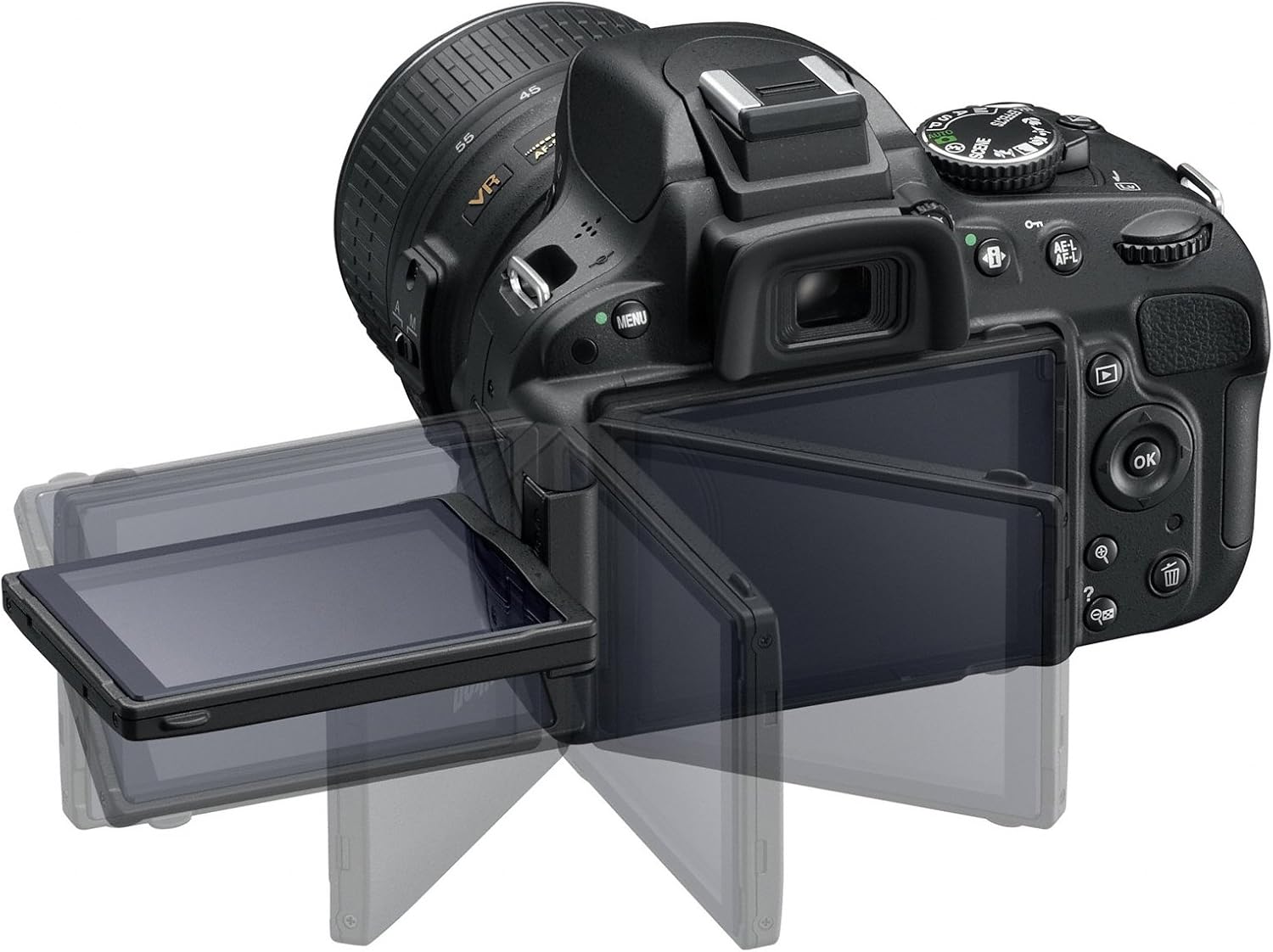
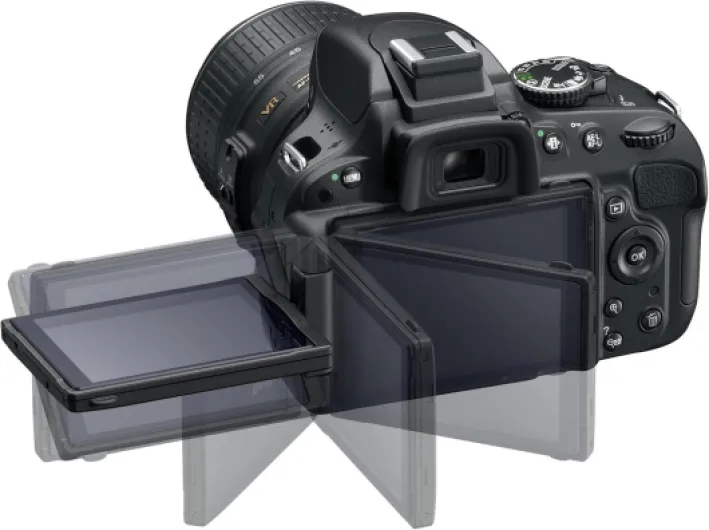
The control layout is straightforward: mode dial on top, a command dial near the thumb, and buttons for ISO, exposure compensation, info, etc. on the back. If you’ve used any Nikon DSLR from that era, you’ll be at home in 10 minutes. If you’re new, there’s a bit of a learning curve, but the labels are clear enough. The vari-angle screen is the one modern touch that still feels useful today. Being able to flip it out for low-angle shots or to film yourself is genuinely handy. It’s one of the main reasons I’d pick this over an even older fixed-screen body.
There are some obvious signs of age in the design. No touch screen, no joystick for AF point selection, and the menu system looks dated compared to newer cameras. Also, the body has no built-in Wi‑Fi in the original spec; the listing mentions wireless technology, but in practice you’ll likely need a separate dongle or cable to move photos. Don’t expect built-in Bluetooth or easy phone pairing like on newer mirrorless cameras. It’s very much “take the SD card out and plug it into your computer” territory.
In practice, the design works fine if you mainly shoot through the optical viewfinder and occasionally use live view for tricky angles. I had no trouble changing basic settings without taking my eye off the finder once I remembered where everything was. But if you’re used to doing everything via touch on a phone, this will feel a bit clunky at first. It’s not pretty or modern, but it’s functional, and at this price point that’s honestly enough.
Battery situation: decent endurance, annoying that it’s not included
One important point that’s easy to miss in the listing: no battery is included. The D5100 uses the EN‑EL14 battery, which is common and easy to find, but it’s an extra cost and a bit of a hassle if you expected to shoot straight out of the box. I already had a couple from another Nikon body, so I just grabbed one and started using it. If this is your first Nikon DSLR, budget for at least one original or decent third-party battery plus a charger if it’s not bundled.
In terms of actual battery life, it’s pretty solid for stills. I got around 400–500 shots per charge with a mix of viewfinder and some live view use, which lines up with what I remember from this generation. If you mostly use the optical viewfinder and don’t chimp every photo on the screen, you can easily get through a day of casual shooting. Video drains it faster, and long live view sessions also chew through the battery more quickly. For a weekend trip where you shoot a bit every day, I’d want two batteries to be safe.
Charging is straightforward: pop the battery into the external charger (assuming you buy one) and wait. There’s no USB charging directly in the camera, which is normal for its age but feels dated compared to newer gear and even phones. On trips, this means you need to carry the dedicated charger and find a wall outlet. Not a big deal, but again, it shows this is older tech. If you’re used to topping up your devices from a power bank over USB‑C, this will feel like going back in time.
Overall, once you get past the annoyance of having to buy the battery separately, the battery performance itself is fine. It’s not a power hog, and for stills photography it holds up well. Just don’t expect to shoot hours of video on a single charge or to recharge it conveniently from your laptop. For the price and age of the camera, I’d call the battery situation acceptable, but the missing battery in the box is a clear downside that buyers need to plan for.
Refurb quality: good enough, but don’t expect like-new perfection
Since this is a renewed product, the big question is: how does it hold up physically? My unit arrived clean, with no big scratches or dents. The rubber grips were slightly worn and a bit shiny, which tells me it’s seen some use, but they were not peeling or sticky. The screen itself was in good condition, just a few micro marks that you only see under certain light. Nothing that bothered me in real-world use. Buttons and dials all clicked properly, no weird squeaks or loose feeling.
Mechanically, the mirror and shutter sounded normal. Obviously, with a refurbished DSLR, you don’t know the exact shutter count unless you check it yourself with software. That’s one of the risks: you might get a body that’s been used lightly or one that’s closer to the end of its rated shutter life. Amazon Renewed gives you some protection with their guarantee, but it’s not the same as buying a brand-new camera with a fresh life ahead of it. I didn’t notice any issues during my test period: no random errors, no lockups, no dead pixels on the sensor.
One thing to keep in mind is that this is a plastic-bodied DSLR, not a weather-sealed pro camera. I wouldn’t take it out in heavy rain or drop it on concrete and expect it to survive. It’s fine for normal use: light drizzle, a bit of dust, casual travel. I tossed it in a backpack (in a basic camera pouch) several times, and it came out fine, but I didn’t abuse it. The 18–55mm kit lens also feels basic but sturdy enough; the zoom ring has a bit of play, typical for this type of lens, but nothing alarming.
Overall, the refurb quality on my unit was pretty solid, but not flawless. If you’re picky about cosmetics and expect something that looks straight out of the factory, you might be annoyed by small signs of previous use. If you care more about function than tiny marks, it’s a good way to save money. Just test everything thoroughly when it arrives: check autofocus, try different shutter speeds, inspect the sensor for dust, and use the Amazon Renewed guarantee if something feels off.
Image quality is still good, autofocus and video show their age
Let’s talk about what actually matters: the photos. The 16.2 MP APS‑C sensor is old but still decent. In good light, the images are sharp enough, colors look natural, and dynamic range is okay for everyday use. Compared to a newer mid-range phone, the DSLR still wins for background blur and detail when you use it properly. I shot some outdoor scenes at ISO 100–400, and the files were clean, with enough room to tweak exposure and shadows later in basic editing. You’re limited to JPEG in this listing description, but the camera itself does support RAW if you want that flexibility.
Where it starts to struggle is low light. ISO 1600 is usable, 3200 is okay if you don’t pixel-peep, and 6400 starts to get noisy and muddy. The lens doesn’t help much there: the 18–55mm kit lens is f/3.5–5.6, so it’s not very bright. Indoors in the evening, you’ll either need to use flash, accept some noise, or learn to slow the shutter and hold very steady (or use a tripod). The built-in VR (image stabilization) on the lens helps a bit for still subjects, but it won’t freeze motion. So for concerts, fast indoor sports, or dimly lit events, this setup is clearly limited.
The autofocus system is fine for static subjects: portraits, landscapes, objects, that kind of thing. The 11-point system locks focus reasonably fast in decent light. When I tried to photograph kids running in the yard, it missed a fair number of shots, especially in continuous mode. It’s just not on the same level as modern mirrorless tracking. If you mainly shoot travel, street, or family portraits where people aren’t sprinting all the time, it’s okay. For action, you’ll be frustrated.
For video, you get 1080p at up to 30 fps. The image is usable for casual clips, but it’s soft compared to recent cameras and phones. Continuous autofocus in video is noisy and hunts a lot, so I ended up prefocusing and then just letting it roll. The flip screen is nice for framing yourself, but the lack of proper continuous AF and no 4K makes this a poor choice if your main goal is YouTube or serious video work. As a stills-focused camera that can occasionally record a clip, it’s acceptable. Just don’t expect miracles from a body of this age.
What you actually get with this renewed D5100 kit
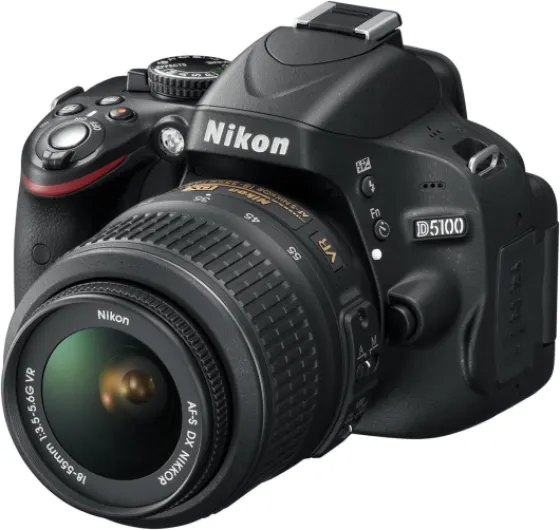
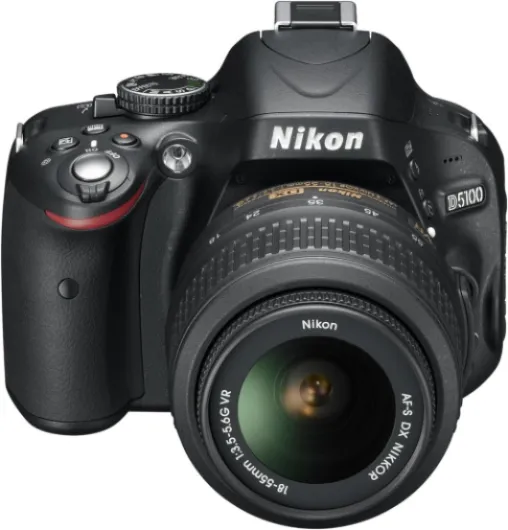
This listing is for the Nikon D5100 body plus the basic 18‑55mm VR zoom lens, sold as an Amazon Renewed product. That means it’s been checked by an external supplier, not coming straight from Nikon as new stock. The camera has a 16.2 MP APS‑C CMOS sensor, shoots up to 1080p video, and uses the Nikon F mount, so you can add other Nikon lenses later. The autofocus system is the older 11‑point phase detection system, which is fine for still subjects but not really built for fast sports or erratic kids running around in low light.
In terms of modes and settings, it’s very much a “first DSLR” type body: you get all the automatic modes, scene modes, and then the full PASM (Program, Aperture, Shutter, Manual) for when you’re ready to learn more. There are also seven special effects modes (miniature, selective color, etc.) that you can apply to photos and video. Honestly, they feel a bit gimmicky, and I barely used them after the first day of playing, but some people might enjoy having them built in instead of editing later on a computer.
The screen is a 3‑inch vari‑angle LCD with 921k dots. It flips out and rotates, so you can shoot from low angles, overhead, or even do basic vlogging facing yourself. It’s not touch, and the resolution is fine but not razor sharp by today’s standards. It’s good enough to check focus and exposure, but don’t expect phone-level clarity. Storage is on SD cards (Class 10 recommended), which are cheap and easy to find. Just know that batteries are not included in this particular bundle, so you’ll need to buy at least one EN‑EL14 battery separately.
So overall, the presentation is simple: this is a no-frills DSLR kit that gives you the essentials to start shooting, as long as you add a battery and an SD card. No bag, no remote, no extra lens. If you’re okay with that and just want a basic camera with a flip screen and an optical viewfinder, the package makes sense. If you’re expecting a complete starter bundle with everything in the box, this is not it.
Pros
- Good image quality in decent light from the 16.2 MP APS-C sensor
- Flip-out vari-angle screen makes low and high angle shots much easier
- Very affordable way to get into DSLR photography with an optical viewfinder
Cons
- Battery not included, and overall kit is very barebones
- Autofocus and video features feel outdated, especially for moving subjects
- Low-light performance is limited with the basic 18–55mm f/3.5–5.6 kit lens
Conclusion
Editor's rating
After using this renewed Nikon D5100 kit for a couple of weeks, my feeling is pretty clear: it’s not a modern camera, but it still does the basics well, and for the right person it’s a sensible budget choice. The 16.2 MP sensor still delivers clean, nice-looking photos in good light, the flip-out screen is genuinely useful for awkward angles, and the overall handling is straightforward once you get used to the Nikon layout. As a low-cost way to learn manual settings, depth of field, and general photography basics, it works.
On the downside, the age shows everywhere else. Autofocus is just okay, especially for moving subjects, low-light performance is limited, video is dated at 1080p with weak continuous AF, and the lack of included battery in this listing is annoying. The refurbished condition on my unit was solid but not “like new” cosmetically, so you have to be comfortable with minor wear. If you want modern features like 4K, fast tracking AF, easy phone connectivity, or USB charging, this is not for you.
I’d recommend this kit to beginners on a tight budget, students, or someone who wants a cheap Nikon body to play with F-mount lenses. It’s also fine as a backup body if you already shoot Nikon and don’t want to risk your main camera in rough situations. If you’re serious about video, shoot a lot of action, or hate dealing with older tech, you’re better off saving up for a newer DSLR or mirrorless. For the price in the Renewed section, though, it’s a pretty solid, no-frills tool for learning and casual photography.