
Summary
Editor's rating
Value for money: one of the easiest ways into full-frame
Design: small, light, and a bit "plastic budget" in the hand
Battery life: usable, but carry a spare (or two)
Comfort and handling: great to carry, a bit cramped to hold
Durability: fine for normal use, not built like a tank
Performance: great for photos, clearly limited for video and action
What the Canon EOS RP actually offers on paper
Pros
- Lightweight full-frame body that’s easy to carry all day
- Good image quality and reliable Dual Pixel autofocus for photos
- Flip-out touchscreen and RF/EF lens compatibility give a lot of flexibility
Cons
- Heavily cropped 4K video and no in-body stabilisation
- Single UHS-I SD card slot and modest 5 fps burst rate
- Body feels a bit plasticky and not strongly weather sealed

Specifications
View full product page →| Brand | Canon |
A full-frame body that doesn’t kill your shoulders
I’ve been using the Canon EOS RP for a few weeks as my main travel and everyday camera, after years of dragging around a chunky Canon DSLR. In short: it feels like Canon finally made a full-frame that doesn’t make you hate walking around all day. It’s not perfect, and some choices are clearly budget driven, but for the price I paid, it gets a lot of things right.
My use case is pretty simple: city trips, family stuff, some portraits, and the occasional video clip for YouTube. Before this I was on an older Canon APS-C DSLR, and I also borrowed a 6D Mark II a few times. So I’m not coming from a high-end R5/R6, more from the "enthusiast who wants full frame without selling a kidney" angle. I used the RP with an RF 35mm f/1.8 and a couple of older EF lenses via the adapter.
From day one, what stood out was the combo of light weight and full-frame quality. You really feel the difference in low light compared to an APS-C body, and at the same time your bag is way lighter. The flip side is that Canon clearly cut corners on some stuff: 4K video is cropped, there’s no in-body stabilisation, and the body doesn’t feel super tough or weather sealed.
If you want a small full-frame mostly for photos, this body is pretty solid. If you’re dreaming of a pro hybrid photo/video machine, you’ll probably hit its limits pretty fast. I’ll break down what worked for me and what was a bit meh so you can see if it fits the way you shoot.
Value for money: one of the easiest ways into full-frame
On value, the EOS RP is honestly where it starts to make sense. When it’s on sale, it’s often one of the cheapest full-frame mirrorless bodies you can buy new, especially from a big brand like Canon. For that price, you get a full-frame sensor, good autofocus, a flip-out screen, and compatibility with both RF and older EF/EF-S lenses. For someone moving up from a crop-sensor DSLR or mirrorless, it’s a pretty straightforward way to try full-frame without going straight to R6 or equivalent prices.
That said, the low price comes with trade-offs: single SD slot, UHS-I only, no in-body stabilisation, cropped 4K, modest burst rate, and a body that doesn’t feel super tough. If you’re mainly into video, other brands give you better specs at similar prices. If you’re a pro who needs dual card slots and strong weather sealing, you’ll probably skip this anyway. But for an enthusiast who shoots mostly photos and wants better low-light and shallower depth of field than APS-C, it’s good value for money.
One thing to keep in mind: the cost of RF lenses. The body is cheap (relatively), but RF glass can get expensive fast. You can soften that by adapting EF lenses, which works well, but then you lose some of the size advantage. So the real “value” depends a bit on what lenses you already own or plan to buy. If you already have a couple of EF lenses, the RP plus adapter is a pretty sensible combo.
Overall, I’d say the EOS RP sits in a nice spot: it’s not flashy, it has clear limits, but for the price you pay and the image quality you get, it’s a pretty solid deal for hobbyists and travellers who want full-frame without going deep into debt.
Design: small, light, and a bit "plastic budget" in the hand
Design-wise, the EOS RP is all about compact size. Compared to my old Canon DSLR, it feels almost like a toy when you first pick it up, in both good and bad ways. Good, because it’s genuinely light and easy to carry all day. Bad, because you can feel that it’s not a tank. The grip is an EOS-style grip, but on the smaller side. With my medium-sized hands it’s okay, but with a heavier lens like a 24–70 f/2.8 via adapter, the combo feels a bit unbalanced and front-heavy.
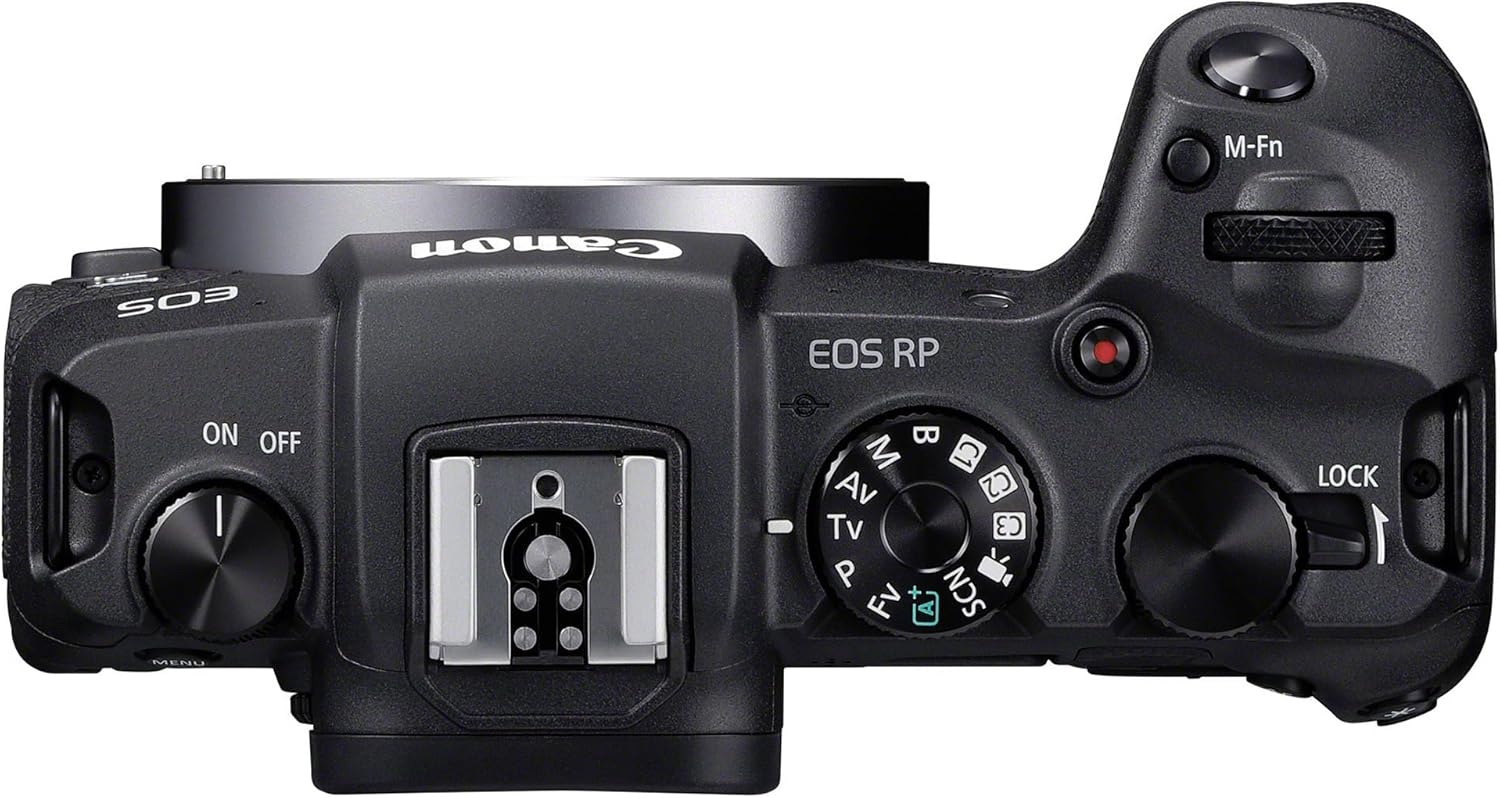
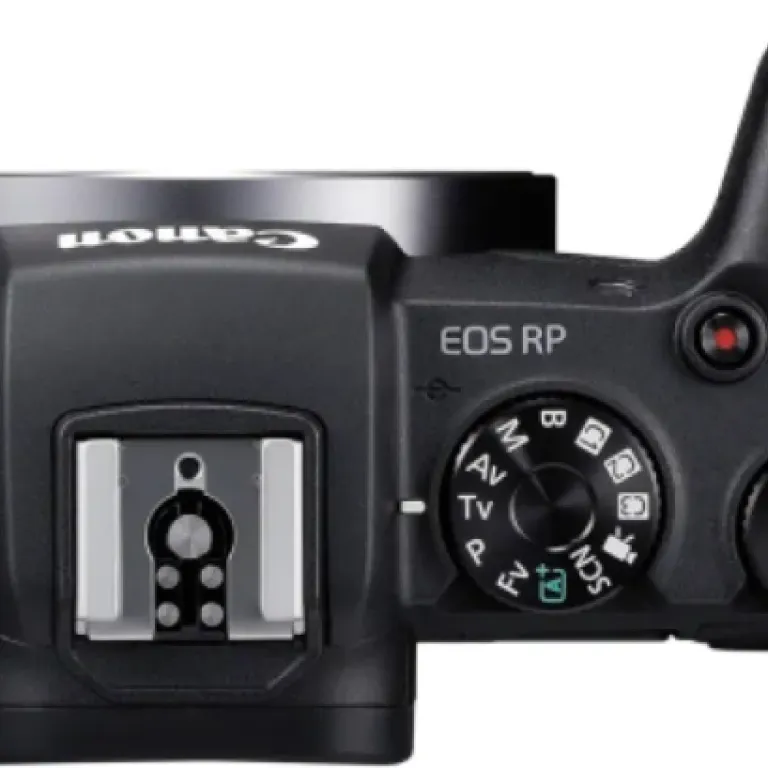
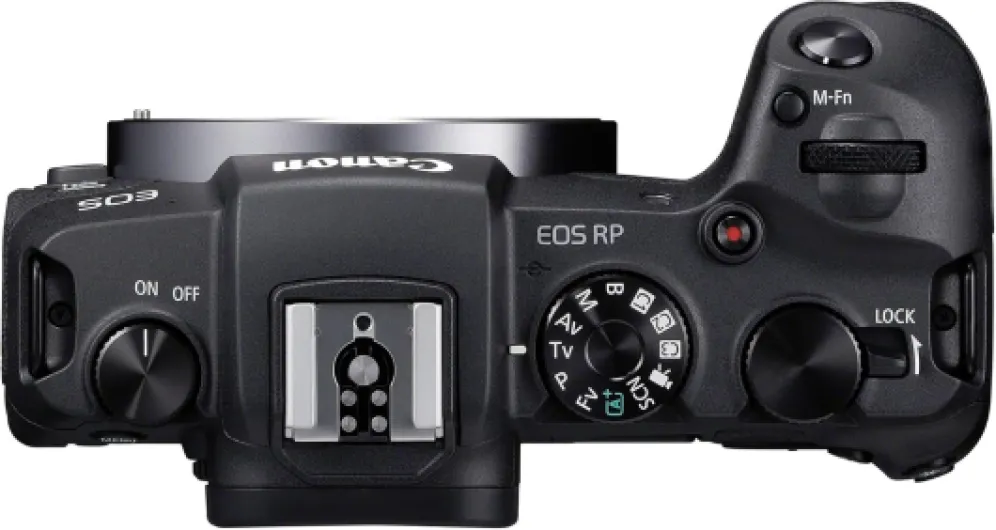
The button layout is classic Canon, so if you come from another Canon body you’ll get used to it fast. You’ve got the usual mode dial, top dial, rear dial, and a few custom buttons. One thing I noticed: Canon didn’t fully exploit the top plate. There’s space where a small info screen or extra buttons could have gone, but they kept it pretty bare. Not a disaster, but it shows this is not a pro body where every millimetre is optimised.
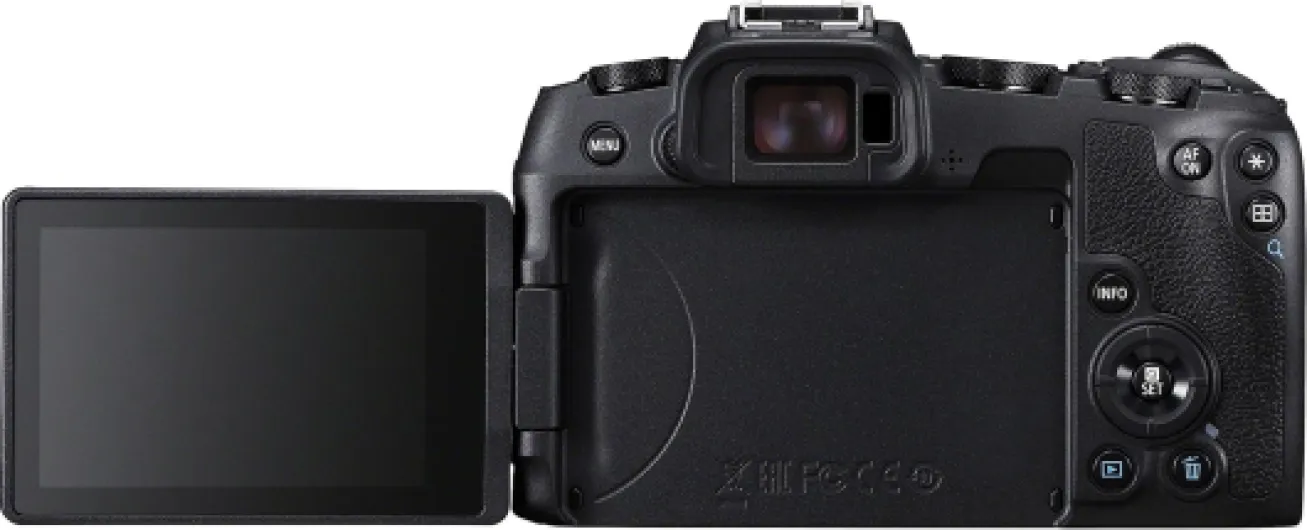
The fully articulating screen is a big plus. For low angles, selfies, or vlogging, it’s just practical. It’s not the biggest or sharpest screen on the market, but it’s good enough. The EVF is also decent: not mind-blowing, but usable. If you’re coming from an optical viewfinder, you’ll need a few days to adapt, but then the ability to preview exposure and white balance quickly becomes very handy.
On the downside, some parts feel a bit cheap. The battery door sits close to the edge and doesn’t inspire much confidence if you’re rough with your gear. There’s no visible status LED on the top to show the camera is on, so a couple of times I left it powered on in the bag without noticing. Overall, the design is practical and compact, but you can clearly feel where Canon saved money. For travel and casual use, it’s fine. For heavy professional abuse in rain and dust, I’d be more nervous.
Battery life: usable, but carry a spare (or two)
Battery life on the EOS RP is clearly not its strong point, but it’s not a disaster either. It uses the smaller LP-E17 battery, which already tells you it won’t last like a big DSLR brick. In real-world use, shooting RAW + JPEG, some Wi‑Fi transfers, and a bit of video, I usually get through 250–350 shots on one charge. That’s fine for a short outing, but for a full day of travel shooting, I would not leave home with just one battery.
Using the EVF instead of the rear screen helps a bit, but not massively. The camera also has some power-saving options (screen off timers, etc.), which are worth setting up. I noticed that if you forget to turn it off and just rely on sleep mode, it still drains faster than I’d like. A couple of times, I pulled it out of the bag and the battery had lost a noticeable chunk of charge just by sitting there.
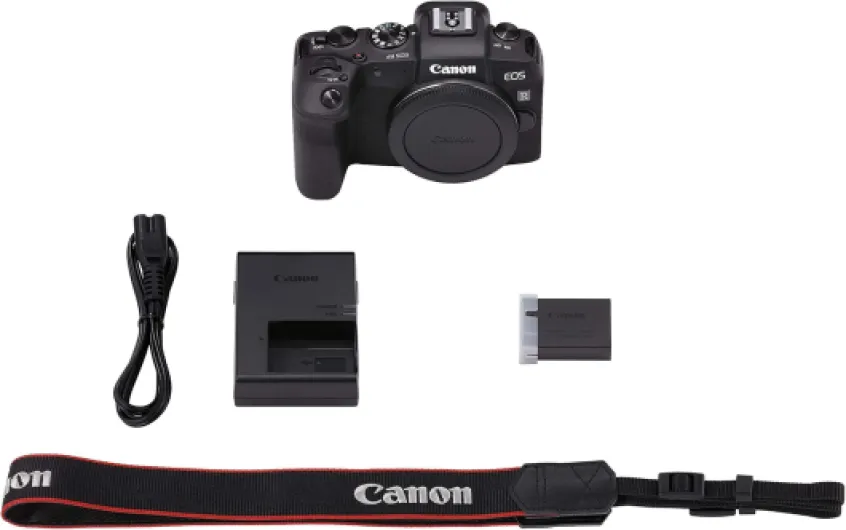
The good news is that replacement batteries are easy to find, and they’re not insanely expensive. I ended up with one original Canon battery and two third-party ones, and with that I’m comfortable for a full day of walking and shooting. The body is light enough that carrying extra batteries is not a big deal in terms of weight or space.
If you’re coming from a big DSLR that could do 800+ shots on a single battery, you’ll feel the downgrade. If you’re used to mirrorless in general, it’s about what you’d expect from an entry-level full-frame mirrorless body. It’s basically “good enough if you plan ahead,” but definitely not something I’d rely on with only one battery for an all-day event or a wedding.
Comfort and handling: great to carry, a bit cramped to hold
In terms of comfort, the EOS RP is a bit of a mixed bag. To carry, it’s great. The weight is low, and with a small RF prime like the 35mm f/1.8, it feels almost like carrying a compact camera. For travel, that’s a big plus: my shoulders and back are much happier compared to lugging around a full-size DSLR with a heavy zoom. Throw it in a small sling bag and you’re good to go all day without feeling like a pack mule.
In the hand, though, it’s not perfect. The grip is shaped like a typical Canon, but it’s short and narrow. With my average hands, my pinky sometimes hangs off the bottom if I don’t use a strap or small grip extension. After a few hours with a heavier lens, you start to feel that it’s not as comfortable as a bigger body. If you mainly use lighter RF primes, it’s fine. If you plan to run big EF zooms via an adapter, the combo works, but it’s not exactly balanced or relaxing to hold.
The controls are familiar if you’ve used Canon before, and the touchscreen helps a lot. Touch and drag AF is actually more comfortable than using a joystick once you get used to it. Menus are typical Canon: lots of options but logically structured. You can customise buttons enough to avoid diving into menus all the time, which helps with overall comfort during a shoot.
One small annoyance: the battery and SD card slot share the same door at the bottom, and because it’s so close to the edge, it feels a bit fragile. Also, if you’re using a tripod plate, you often have to remove it to change the battery, which is annoying during longer sessions. Overall, the RP is super comfortable to carry and “okay” to shoot with. Not painful, but not the most ergonomic body if you have big hands or use heavy glass.
Durability: fine for normal use, not built like a tank
On the durability side, the EOS RP feels like what it is: an entry-level full-frame, not a pro workhorse. The body is mostly plastic, with a decent finish but nothing that screams "abuse me in a storm." I’ve used it in light drizzle and cold weather without any issue, but I wouldn’t push it too far in heavy rain or dust. There’s no real mention of strong weather sealing, and just handling it, you can feel it’s not meant for extreme conditions.
The buttons and dials feel okay, though some of them are a bit on the lighter side. The mode dial has enough resistance not to spin accidentally in the bag, which is good. The rear wheel is fine, but not as firm as on higher-end models. Over a few weeks of use, nothing has loosened or rattled, so for normal enthusiast use I’m not worried. It just doesn’t give that confidence you get from a semi-pro magnesium alloy body.
The parts that concern me a bit more are the battery/SD door and the port covers. The battery door is very close to the edge and feels like it could be a weak point if you drop the camera or bump it hard. The rubber flaps covering the ports are standard for this range: they work, but I wouldn’t be surprised if they start to get looser over a few years of constant plugging and unplugging.
If you treat your gear decently, throw it in a padded bag, and don’t shoot in a sandstorm every weekend, the EOS RP should hold up fine. If you’re a working pro who abuses cameras at events, in bad weather, and on rough trips, I’d be more cautious. It’s clearly aimed at amateurs and enthusiasts who value light weight over tank-like construction.
Performance: great for photos, clearly limited for video and action
In terms of photo performance, the EOS RP holds up pretty well. The 26.2 MP full-frame sensor delivers clean, detailed files with that typical Canon color rendering that many people like. Compared to my old APS-C DSLR, the difference in low light is obvious: I can shoot at ISO 6400 or even 12800 and still get usable shots, especially if I’m shooting RAW. Dynamic range is decent for this price level; you can pull shadows and recover highlights without the file falling apart instantly, but it’s not on the same level as newer, higher-end bodies.
The autofocus is one of the big strengths for stills. Dual Pixel AF with thousands of selectable points, face and eye detection – all of that works well in practice. For portraits and street shots, it locks on fast and usually nails the focus. I’d say it gets it right the vast majority of the time in normal light. In low light it slows down a bit but still manages. For static or moderately moving subjects, it’s more than enough. For fast sports or birds in flight, between the 5 fps burst and the AF tracking, you clearly feel the limits. It can do it in a pinch, but that’s not really what it’s built for.
On the video side, this is where the camera feels more compromised. Full HD looks fine and is perfectly usable for casual content or simple YouTube stuff. But the 4K mode is heavily cropped and also loses Dual Pixel AF, which makes it much less attractive. Add the lack of in-body stabilisation, and handheld 4K is not great unless your lens has stabilisation and you’re careful. For someone who wants a hybrid camera mainly for video, there are better choices in the same budget range, especially from Sony or even newer Canon R bodies.
In short, if your main use is photography – travel, portraits, everyday life – the performance is pretty solid for the price, with fast AF and good image quality. If you want serious video features or shoot a lot of action, the RP feels like an entry-level compromise and you’ll probably outgrow it quickly.
What the Canon EOS RP actually offers on paper
On paper, the Canon EOS RP is basically Canon’s “entry ticket” into full-frame mirrorless. You get a 26.2 MP full-frame CMOS sensor, the DIGIC 8 processor, Dual Pixel AF, and a fully articulating 3-inch touchscreen. It shoots up to 5 fps, does 4K video at 25p (with a heavy crop), and Full HD at 60p. It supports RF lenses natively and EF/EF-S lenses via an adapter. Weight is around 485 g for the body, which is a big drop compared to a typical DSLR.
Connectivity-wise, it has Wi‑Fi and Bluetooth, so you can transfer photos to your phone or use the Canon app as a remote. There’s one SD card slot (UHS-I, not UHS-II), a USB‑C port, and mini HDMI. The viewfinder is a 0.39" OLED EVF, and the rear screen is a 1.04M-dot vari-angle LCD. ISO goes up to 40,000 natively and can be pushed higher, though in practice I try to stay at 12,800 or below if I don’t want noise to be too obvious.
In real use, the specs that matter most to me are: full-frame sensor, Dual Pixel autofocus, flip-out touchscreen, and size/weight. The 5 fps burst rate is fine for casual stuff but clearly not for serious sports or wildlife. The single SD slot and slower UHS-I support also show this is not aimed at pros who need redundancy and speed.
Overall, the feature set feels like Canon took the 6D Mark II sensor, stuck it in a smaller mirrorless body, removed some pro things, and priced it to be the "cheapest full-frame" in their lineup. If you accept that it’s a budget full-frame and not a flagship, what you get is decent and pretty usable day to day. Just don’t expect miracles on the video side or pro-level robustness.
Pros
- Lightweight full-frame body that’s easy to carry all day
- Good image quality and reliable Dual Pixel autofocus for photos
- Flip-out touchscreen and RF/EF lens compatibility give a lot of flexibility
Cons
- Heavily cropped 4K video and no in-body stabilisation
- Single UHS-I SD card slot and modest 5 fps burst rate
- Body feels a bit plasticky and not strongly weather sealed
Conclusion
Editor's rating
The Canon EOS RP is basically a light, affordable way to get into full-frame if you mostly care about photography. The image quality is good, autofocus is reliable for portraits and everyday scenes, and the body is so light that carrying it all day is not a problem. The fully articulating touchscreen and Wi‑Fi/Bluetooth make it practical in real life, and if you already own EF lenses, the adapter option saves you from rebuilding your lens kit from scratch.
On the flip side, it’s not a camera for everyone. If you shoot a lot of video, the cropped 4K and lack of in-body stabilisation are annoying. If you do serious sports or wildlife, the 5 fps burst and entry-level AF tracking will feel limiting. The build is fine for normal use but clearly not aimed at heavy professional abuse or harsh weather. Battery life is acceptable but you absolutely need at least one spare.
If you’re an amateur or enthusiast who wants a compact travel camera with full-frame quality mainly for stills, the EOS RP is a good, no-nonsense option, especially when discounted. If you’re planning to shoot paid events, heavy video, or need robust weather sealing and dual card slots, you’re better off saving for a higher-end R body or looking at other brands. It’s a “does the job” camera that offers solid value, as long as you go in knowing its limits.