
Summary
Editor's rating
Value for money: who this budget camera actually makes sense for
Design & handling: feels like a lightweight toy DSLR
Battery life & overheating: mixed experience
Image & video performance: big numbers, modest real-world results
What this camera actually offers on paper
Wi‑Fi, app, and webcam mode: good idea, shaky execution
Pros
- Lightweight body with 180° flip screen that’s handy for vlogging and selfies
- Includes 64GB SD card and two batteries, so you can start shooting right away
- 16x optical zoom gives more reach than a phone for distant subjects
Cons
- Image and video quality don’t live up to the 8K/64MP claims, especially in low light
- Slow autofocus and basic digital stabilization, not ideal for moving subjects or walking shots
- Unreliable Wi‑Fi/app experience and mixed feedback on battery life and heating

Specifications
View full product page →| Brand | Monitech |
An 8K camera for this price… too good to be true?
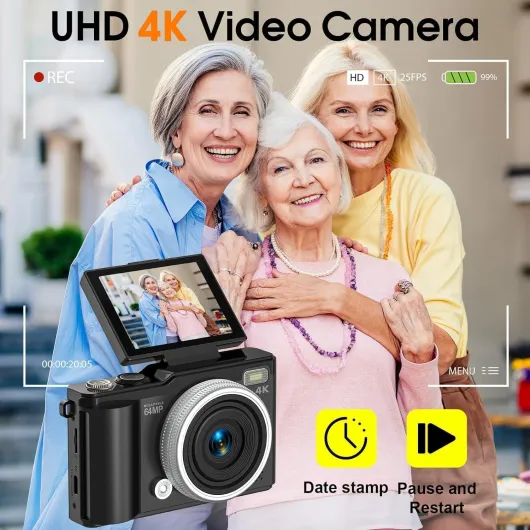
I’ve been testing this Monitech S210 for a bit as a cheap vlogging / travel camera, mostly to see if those big claims (8K video, 64MP photos, 16x zoom, flip screen) are real or just marketing. I usually shoot with my phone and an older Sony mirrorless, so I’m not coming from a pro DSLR, but I do know when something feels off. I used it for weekend walks, some indoor clips, and a couple of YouTube-style talking videos to see how it behaves in real life.
First impression: it looks like a “proper” camera, but the price already tells you there are compromises. You don’t get true pro performance here, even if the listing shouts 8K and 64MP everywhere. Those numbers are technically on the box, but in practice the jump over a decent modern phone camera isn’t as big as the spec sheet suggests. You notice it fast when you zoom in on photos or try to shoot in low light.
On the positive side, the camera is light, easy to carry, and the 180° flip screen is actually handy. For simple vlogs or family videos where you just want something separate from your phone, it does the job. You take it out, turn it on, hit record, and you’re set. No need to dig into complex menus like on a DSLR. That part is nice if you’re just starting out and don’t want to mess with too many settings.
But it’s not all good news. Between the mixed user reviews, the app issues, and the battery complaints, you can feel this is a budget product pushed a bit beyond its limits. Some people seem happy with it, others had to return it because of Wi‑Fi bugs and overheating batteries. My experience sits somewhere in the middle: usable, but with clear limits. If you expect a cheap camera that behaves like a Canon or Sony, you’ll be disappointed. If you go in knowing it’s more of a starter toy / backup cam, it makes more sense.
Value for money: who this budget camera actually makes sense for
Looking at everything together, the Monitech S210 sits in that awkward zone between a phone and a proper camera. For the price, you get a lot of stuff in the box: camera, 64GB card, two batteries, flip screen, zoom lens, external mic support, Wi‑Fi, HDMI, webcam mode. On paper, it looks like strong value. But once you factor in the small sensor, the average image quality, the app issues, and the mixed battery feedback, it’s clear where the cost savings are.
If you already have a decent smartphone from the last 2–3 years, the photo quality jump isn’t huge. Where this camera adds something is mainly in the flip screen, optical zoom, and having a dedicated device you don’t mind throwing in a bag or handing to kids. It’s also less scary to lose or damage than a more expensive mirrorless or your main phone. For a beginner teenager wanting to play with vlogging, or someone who just wants a simple point-and-shoot with a flip screen, it can be a reasonable buy as long as expectations stay modest.
Compared to real entry-level mirrorless cameras from Canon, Sony, or Nikon, this Monitech loses clearly in image quality, autofocus, and reliability. But those systems cost a lot more once you add lenses and accessories. So it really depends where you’re coming from. If your budget is tight and you just want something better than an old phone, with zoom and a flip screen, the price can feel fair. If you’re already thinking about learning manual controls and taking photography a bit seriously, you’re better off saving a bit more and skipping this step.
In short, the value is decent but not mind-blowing. Good for casual users, kids, or as a throw-in-the-bag backup camera for the beach or risky situations, like one reviewer said. Not great if you expect the “8K & 64MP” tags to mean pro-level sharpness and low-light performance. The marketing oversells it; the reality is a basic compact with some extras.
Design & handling: feels like a lightweight toy DSLR
In the hand, the Monitech S210 feels like a small, lightweight point-and-shoot dressed up to look like a mini DSLR. The body is compact and doesn’t weigh much, so you can easily toss it in a small bag or even a big jacket pocket. For vlogging or travel, that’s nice: your arm doesn’t get tired holding it at arm’s length, and it’s way less bulky than a real DSLR with a big lens. The grip is okay, nothing special, but you won’t drop it as long as you use the strap.
The 3-inch flip screen that rotates 180° is the main design win. For recording yourself, it’s genuinely handy. You can see if you’re in frame, check your background, and adjust your position without guessing. The screen itself is not super high resolution (253 x 253 is what’s listed, which is pretty low), and you can tell when you zoom in on playback. It’s fine for framing, but don’t judge image sharpness only from the screen; you need to check on a phone or computer to really see.
The buttons and menus are fairly simple. You’ve got a mode dial, a few basic buttons for playback, menu, and navigation, plus zoom controls near the shutter. Nothing fancy, but if you’ve used any compact camera before, you’ll find your way in a couple of minutes. The menus are a bit basic and not super polished, but you can at least find the main things: resolution, white balance, shooting modes, etc. It doesn’t feel like a pro camera, more like a budget gadget, but that matches the price.
One thing I noticed: the camera tries to look more advanced than it really is, with mentions of compatible mountings (Nikon F, Nikon Z) in the specs, which in practice is quite misleading. This is not a Nikon-mount camera in the way people usually understand it; you’re not buying into a lens system here. So from a design point of view, it’s fine for basic use and vlogging, but don’t let the DSLR-style look fool you into thinking it competes with real interchangeable-lens cameras. It’s more of a dressed-up compact.
Battery life & overheating: mixed experience
The camera comes with two lithium-ion batteries and a charger, which is a good start. Out of the box, that looks generous for the price, and it’s one of the selling points versus some competitors that only give you a single battery. In my use, one battery handled roughly an hour of mixed shooting (short clips, some photos, menu fiddling) before dropping low. If you’re just filming short vlogs or taking photos here and there, carrying both batteries is enough for a day, but you definitely don’t get DSLR-level endurance.
However, user reviews point out some real issues. One person mentions the batteries draining very quickly, heating up in the camera, and problems with charging even when following the instructions. Another highlights very short battery life in general. I didn’t get anything that extreme, but I did notice the camera warms up a bit during longer video sessions, especially if you use Wi‑Fi or keep the screen on constantly. It’s not burning hot, but you feel the temperature rise around the battery area.
In practice, you need to treat the batteries as short-session power packs. If you want to film a long event in one go, this is not ideal. For vlogging style usage (record 5–10 minutes, stop, move, record again), it’s manageable, as long as you keep the second battery charged and maybe even carry a power bank plus the charger if you’re out all day. Also, the charger and batteries feel generic, like the kind you get with many budget cameras from China, so I wouldn’t be shocked if there’s some unit-to-unit variation in quality.
So overall, battery side is “okay but nothing more”. You do get two, which helps, but don’t trust the camera for long, continuous recording sessions. And based on the negative reviews, there’s clearly a risk of getting a bad battery batch that drains fast or overheats. If you buy it, I’d test both batteries thoroughly in the first week so you can still return it if something is off.
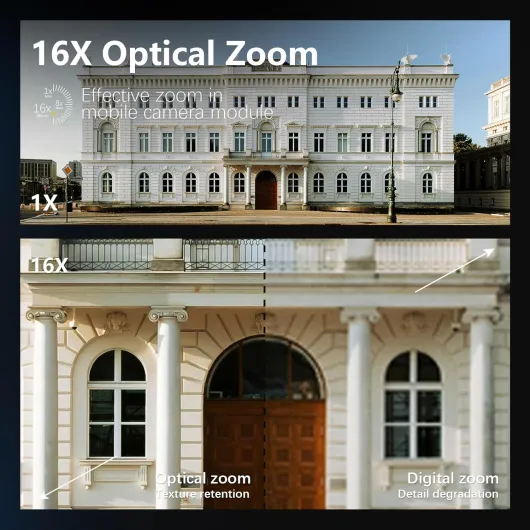
Image & video performance: big numbers, modest real-world results
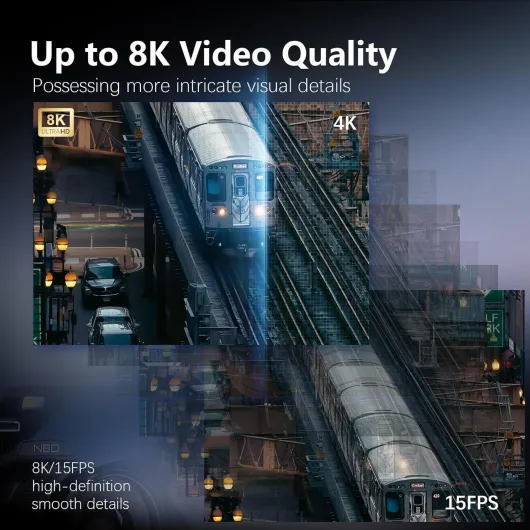
This is where expectations and reality diverge a bit. The camera advertises 8K video and 64MP photos, but in actual use, the image quality feels closer to a decent budget compact or a mid-range phone, not a high-end 8K rig. Photos in good daylight are decent: colors are okay, detail is acceptable for social media, and for casual family shots or travel snaps, it’s fine. But when you zoom in on the files, you can see they’re not on the same level as even older APS‑C mirrorless cameras. The 1/3-inch sensor is tiny, and you feel that in dynamic range and low-light performance.
Video is usable, especially for talking-head content with decent lighting. For YouTube vlogs where the final output is 1080p or 4K on a phone screen, it gets the job done. The digital image stabilization is basic; it helps a little with small hand movements, but if you walk while filming, you still get noticeable shake. I wouldn’t rely on it for smooth walking shots unless you’re okay with a slightly wobbly look. Focusing is also not very fast. Several users mention slow focus and I agree: it hunts a bit, especially in lower light or when you move closer and farther from the camera mid-shot.
The 16x optical zoom is the one feature that feels genuinely useful if you like to zoom in on distant stuff. At the long end, you can bring a subject much closer than with a phone, and it’s nice for things like animals or a stage performance. But at full zoom, the image gets softer, and without strong stabilization, it’s hard to keep the frame steady. You really need both hands or a tripod. Also, the camera struggles more to focus accurately at full zoom in anything but bright light.
Low-light performance is clearly the weak point. Indoors at night or in dim rooms, noise creeps in quickly, colors wash out, and the autofocus gets even slower. There’s no real flash to save you, despite the conflicting specs. So if you plan to film a lot in dark bars, concerts, or night streets, this isn’t the best choice. In short: in good light, performance is okay for casual content and social media. In bad light or for more serious work, you’ll hit the limits pretty fast.
What this camera actually offers on paper
On paper, the Monitech S210 looks loaded for the price. You get "8K" video, 64MP stills, 16x optical zoom, a 3-inch flip screen, 64GB SD card included, two batteries, Wi‑Fi, HDMI out, and the option to use it as a webcam. For a beginner who just wants a ready-to-go kit, that’s attractive: you open the box and basically everything is there to start shooting. No extra card to buy, no spare battery to order later.
The manufacturer also pushes some creator-friendly features: time-lapse, slow motion, continuous shooting, external mic support, and webcam mode. You can connect it over USB to a PC, use Wi‑Fi and an app to transfer photos, or plug it into a TV with HDMI. On the listing, it’s clearly targeted at vloggers, YouTubers, and beginners who want something more than a phone but less heavy than a DSLR. There’s even a 2-year warranty mentioned in the description, though the specs table says 1 year, which is already a bit confusing.
Specs-wise, it uses a small 1/3-inch CMOS sensor, digital image stabilization, and an aperture that goes from f/2.8 to f/5.6. Frame rates are up to 60 fps according to the sheet, with MP4 video in H.264/H.265. There’s autofocus, but only contrast detection with a single AF point, so don’t expect fast tracking or eye detection like on more serious cameras. Also, there’s no real built-in flash despite the listing saying “camera flash type: no flash” and then “flash modes: automatic”, which is weird. In practice, think of it as a basic compact camera with some extra modes and a flip screen.
Reading through the Amazon reviews, you see the split: some people praise the ease of use and the fact it comes with everything, others complain about slow focus, poor resolution compared to what they expected, Wi‑Fi crashes, and short battery life. That matches what you’d expect from a low-cost all-in-one: a lot of features on paper, but not all of them polished. So if you buy it, I’d say ignore the “8K” hype and see it more as a simple HD/4K-ish vlogging camera with some bonuses, rather than a real high-end photo tool.
Wi‑Fi, app, and webcam mode: good idea, shaky execution
One of the reasons I was curious about this camera was the Wi‑Fi and app support, plus the ability to use it as a webcam. On paper, that’s great: shoot on the camera, quickly transfer to your phone, or plug it into your PC for streaming or video calls. In reality, it’s a bit hit-or-miss. Connecting over USB as a webcam works, but it’s basic. Don’t expect fancy camera controls from your computer; it’s more like plugging in a generic USB cam. For simple Zoom calls or a basic streaming setup, it’s fine, but the image quality isn’t leagues above a decent standalone webcam.
Wi‑Fi and the mobile app are where things get frustrating. One review mentions the camera freezing in Wi‑Fi mode and the app having a bug that makes it unusable on Android. Another user said they couldn’t even get the camera to connect to Wi‑Fi at all and ended up returning it. On my side, pairing the camera with the app took a few tries. The connection dropped a couple of times, and the interface of the app is not exactly polished. It feels like a generic camera app rebranded for Monitech, with a slightly clunky layout and the occasional lag.
When it does work, transferring photos is convenient. You can quickly pull clips to your phone and upload to social media without touching a computer. But the unreliability makes it hard to trust if you’re in a hurry or on a trip. If the app decides to crash or the camera freezes, you’re stuck pulling the SD card out and using a reader, which kind of defeats the purpose of having Wi‑Fi in the first place.
So I’d say: treat Wi‑Fi and the app as a bonus, not a core feature. If you absolutely need rock-solid wireless transfer and remote control, you’ll be annoyed. If you’re okay just using the SD card most of the time and occasionally trying the app when it behaves, then it’s acceptable. The webcam function is a bit more reliable, but again, it’s not miles better than a mid-range USB webcam plugged directly into your PC.
Pros
- Lightweight body with 180° flip screen that’s handy for vlogging and selfies
- Includes 64GB SD card and two batteries, so you can start shooting right away
- 16x optical zoom gives more reach than a phone for distant subjects
Cons
- Image and video quality don’t live up to the 8K/64MP claims, especially in low light
- Slow autofocus and basic digital stabilization, not ideal for moving subjects or walking shots
- Unreliable Wi‑Fi/app experience and mixed feedback on battery life and heating
Conclusion
Editor's rating
After using the Monitech S210 and digging through other user reviews, I’d sum it up like this: it’s a budget vlogging/compact camera with lots of advertised features but average real-world performance. In good light, it does fine for casual photos and YouTube-style videos, especially if your main goal is to get away from using your phone and have a flip screen plus optical zoom. The included 64GB card and two batteries are practical, and the camera is light enough to carry everywhere without thinking about it.
On the downside, the 8K/64MP marketing is mostly numbers on paper. Autofocus is slow, low-light performance is weak, and the digital stabilization and app are pretty basic. The Wi‑Fi and Android app issues mentioned by several buyers are real concerns if you rely on wireless transfer. Battery life is just okay, and there seems to be some quality variation, with a few people getting units with overheating or very fast drain. So it’s not something I’d use for paid work or important one-time events.
Who is it for? Beginners, teens, or casual vloggers who want a cheap camera to learn on, record simple videos, and don’t want to risk an expensive body at the beach or on trips. Who should skip it? Anyone expecting true 8K quality, fast autofocus, solid low-light performance, or reliable pro-style features. If you’re already serious about content creation, better to save up for an entry-level mirrorless or even stick to a good modern phone plus a tripod and a mic.