
Summary
Editor's rating
Value for money: good for the right user, questionable if you can live with a bigger body
Design & handling: more point-and-shoot than traditional camera
Battery life & charging: acceptable, but the charger situation is annoying
Build & durability: solid enough, but not for rough weather
Image quality, autofocus & video: strong output with a few quirks
What the Lumix S9 actually is (and what it isn’t)
Pros
- Very compact full-frame body with a practical 18–40mm travel lens
- Strong image quality and solid 4K/open gate video with good stabilisation
- Real Time LUTs and LUMIX Lab app make social-media-friendly output quick and easy
Cons
- No viewfinder, no mechanical shutter, and no built-in flash at this price
- Battery life is only okay and no charger/USB-C cable included in the box
- Not weather-sealed and less suitable for fast action or demanding professional use

Specifications
View full product page →| Brand | Panasonic |
A pocketable full-frame that actually made me leave my phone in my pocket
I’ve been using the Panasonic Lumix S9 with the 18–40mm kit lens for a couple of weeks as my "always with me" camera. I usually shoot with bigger bodies (think S5II / Sony A7 size) and end up leaving them at home because they’re bulky. This S9 is the first full-frame that actually fit in my small sling bag next to my wallet and keys, and that alone changed how often I took it out.
My main use has been day trips, walks, and some quick social content for Instagram and TikTok. I shot both stills and video, mostly in 4K and the open gate mode, and I tried to rely on the camera JPEGs and LUTs instead of editing everything on the computer. I also used the LUMIX Lab app to push a few custom looks and to get files onto my phone quickly.
From the start, two things stood out: the camera feels like a point-and-shoot in size, but the files behave like a proper full-frame body. Dynamic range and low light are clearly better than my phone and than smaller sensor compacts I’ve had. On the flip side, the lack of viewfinder and the electronic-only shutter are very noticeable if you’re used to more traditional cameras, and you need to accept those limits.
Overall, my experience is that the S9 is a pretty solid little content camera if you mainly shoot with the screen and care about quick social output. If you’re used to composing through an EVF, shooting fast action, or you want the best value in the Lumix line, you’ll probably feel a bit frustrated. It’s good, but it’s not some miracle body that replaces everything.
Value for money: good for the right user, questionable if you can live with a bigger body
Price-wise, the S9 with the 18–40mm kit lens sits in a slightly awkward spot. You’re paying for the compact full-frame form factor and the social-friendly features, not necessarily for raw specs. As one Amazon reviewer said, if you compare it directly to the S5II, the value doesn’t look great – the S5II often isn’t that much more expensive and gives you a viewfinder, better controls, and a more flexible body overall. If you don’t care about size, the S5II is simply the more sensible buy.
Where the S9 starts to make more sense is if portability and social workflow are your top priorities. If you want something better than a phone, but you hate carrying big cameras, this sits in a sweet spot: real full-frame image quality, L-mount lens options, decent autofocus, open gate video, and in-camera LUTs that you can pair with a quick phone app. In that specific use case – travel, daily carry, quick reels and shorts – the price feels more justifiable.
That said, there are still compromises that sting a bit at this price: no EVF, no mechanical shutter, no flash, and no charger or cable in the box. You also need to factor in at least one spare battery and maybe a faster SD card if you want to push 6K/open gate more seriously. Once you add those, the cost creeps up.
For me, the S9 feels like good value if you truly use the things that make it different – the compact form, the open gate workflow, the LUT system, and screen-based shooting. If you’re mainly shooting photos, like using a viewfinder, and don’t care too much about social media formats, you’ll probably get more for your money with a slightly bigger camera or even a used body from another brand. It’s not overpriced to the point of being silly, but it’s also not the bargain of the century.
Design & handling: more point-and-shoot than traditional camera
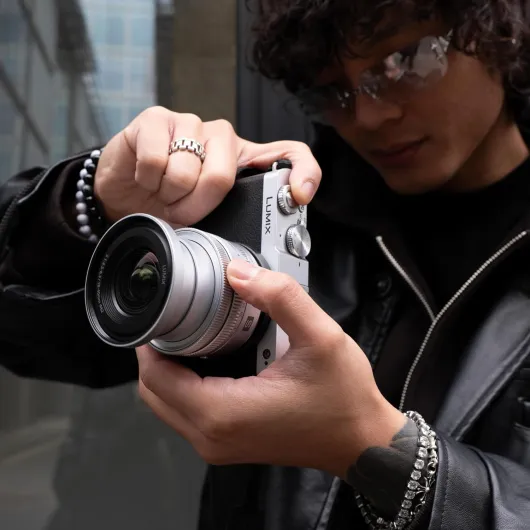
The design is clearly focused on staying small and looking a bit like a retro compact. With the 18–40mm lens mounted, it feels closer to a chunky point-and-shoot than a typical full-frame mirrorless. I could fit it easily in a small sling bag or even a big jacket pocket. For travel and walks, that’s a big plus, because my larger bodies usually stay home unless I’m going out specifically to shoot.
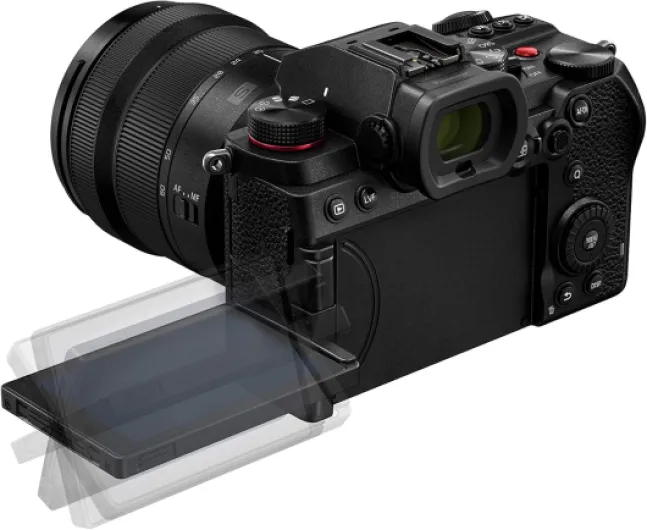
The free-angle screen is one of the highlights. It flips out and rotates fully, so you can vlog, shoot from the hip, or hold the camera above your head without guessing your framing. Brightness is decent in daylight, but in very bright sun I still found myself shielding it with my hand. Coming from a camera with a viewfinder, I did miss having an EVF when the sun was behind me. One Amazon reviewer mentioned constantly lifting it to their eye by habit, and I did the same for the first few days.
Button layout is fairly minimal. You don’t get as many dedicated dials and switches as on the S5II, so you rely a lot on the menus and a couple of custom buttons. The good news is that Panasonic’s menu customisation is quite deep. After about an hour of tweaking, I had quick access to the things I use most: frame rate, open gate toggle, focus mode, and LUT selection. Out of the box it feels a bit menu-heavy, but once set up it’s fine. If you hate digging through settings, you might find the first setup a bit tiring.
One small but real annoyance: there’s no built-in flash, and the camera doesn’t feel like something you’d want to top with a big external flash either, because that kills the compact vibe. For casual indoor shots you’ll be relying on higher ISO and the stabilisation, which works but doesn’t replace a flash. In short, the design is great for portability and vlogging, but it’s less friendly if you’re used to a more traditional, viewfinder-first shooting style.
Battery life & charging: acceptable, but the charger situation is annoying
Battery life on the S9 is okay but not impressive. With mixed use (a few hundred photos, some short 4K clips, some open gate video, and a lot of menu fiddling) I was getting through a battery in a long afternoon. If I focused mainly on stills with occasional clips, it stretched to a full day of casual use. For a compact full-frame with a bright screen and IBIS, that’s about what I expected, but it’s not something I’d rely on for a long shoot without a spare.
The camera charges via USB-C, which is good, but Panasonic doesn’t include a USB-C cable or AC adapter in the box. Officially it’s for environmental reasons, but in practice it just feels cheap on a camera at this price. I had spare cables and a USB charger lying around, so it wasn’t a big deal for me, but if this is your first camera and you don’t have those, it’s one more cost and a bit of hassle right out of the gate.
Charging from a regular USB-C wall adapter is reasonably fast. I usually plugged it in during lunch or in the evening and it was ready to go again. You can also top it up from a power bank while traveling, which I did on a day trip by train. That part is handy: one power bank can charge your phone and the S9. Just keep in mind that if you’re recording a lot of 4K or open gate video, you will see the battery drain faster than you might like.
My recommendation: budget for at least one spare battery if you plan to shoot video regularly, especially travel vlogs or events. For a pure stills tourist day, one full charge is probably fine if you’re not chimping every shot. The charging situation is workable, but the missing cable/charger is the kind of small annoyance that sticks with you when you look at the overall value.
Build & durability: solid enough, but not for rough weather
The S9 feels well built for its size. The body doesn’t flex or creak, and the lens mount feels secure even with slightly heavier lenses like a small Sigma prime. The 18–40mm kit lens is light but doesn’t feel toy-like. Zoom and focus rings have a decent amount of resistance, and nothing felt loose after a couple of weeks of daily use, going in and out of bags and being carried around without a case.
However, this is not a weather-sealed, rugged camera. It’s also explicitly listed as not water resistant. I got caught in a light drizzle once and just tucked it under my jacket immediately. I wouldn’t be comfortable using it in heavy rain or very dusty conditions. If you’re used to weather-sealed bodies that you can beat up a bit, you need to baby this one more. The flippy screen also feels like something you don’t want to knock too hard – it’s fine, but any articulated screen is a potential weak point.
The finish on the black & silver version looks nice enough, but after tossing it in my bag with keys once (my mistake), I picked up a couple of small cosmetic marks. Nothing dramatic, but it reminded me that this isn’t a tank. A small half-case or just being more careful with what else is in your bag is a good idea if you care how it looks after a year.
In short: build quality is decent for normal use – city trips, indoor shooting, general travel. I didn’t see any worrying signs in terms of wobble or misalignment, and the controls still felt tight. But if you want something to drag through bad weather or rough hikes, I’d look at a more robust body like the S5II and accept the extra weight. The S9 is more of a compact everyday camera you treat like decent electronics, not a workhorse you throw around.
Image quality, autofocus & video: strong output with a few quirks
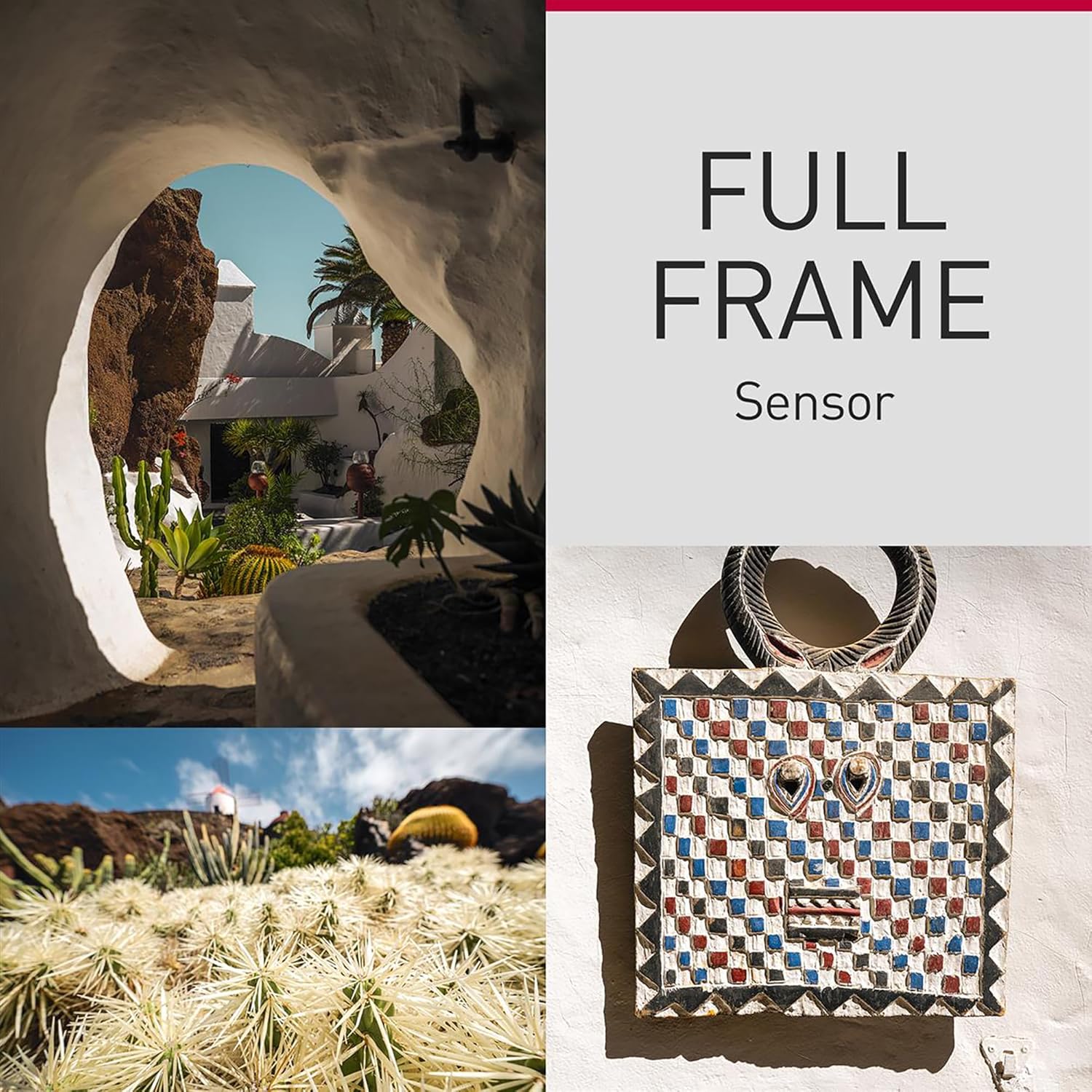
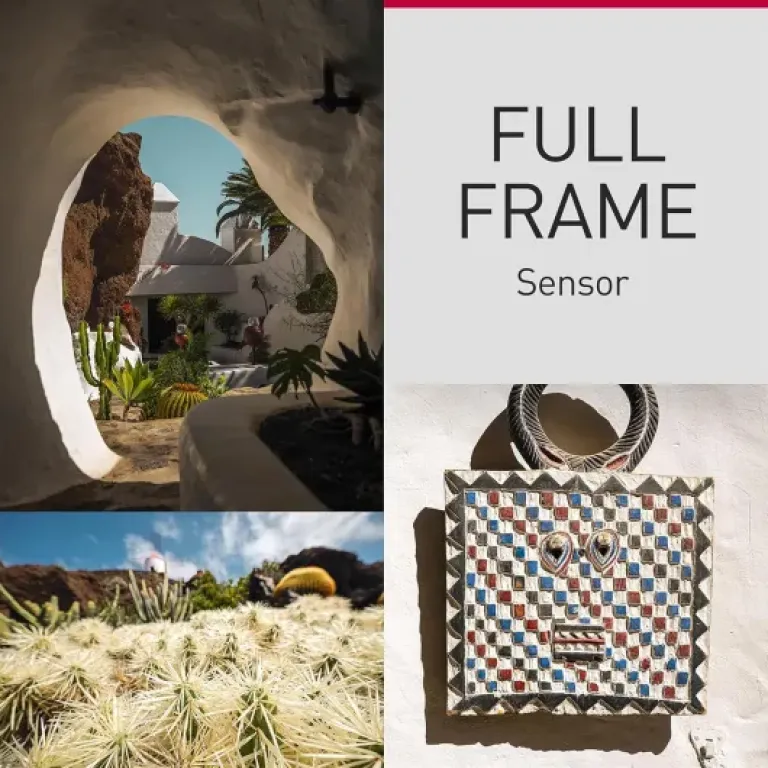
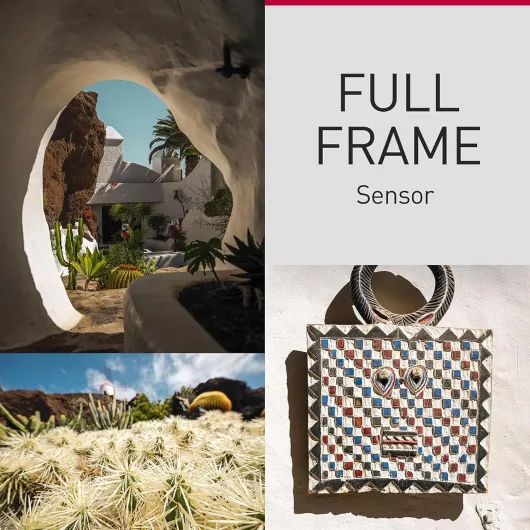
On the image quality side, the S9 is solid. The 24.2 MP full-frame sensor gives clean files with good dynamic range. I pushed shadows on some backlit shots and the files held up nicely, much better than anything from my phone and clearly in the same ballpark as other modern full-frame bodies. High ISO up to 6400 is totally usable for casual stuff, and even 12800 is okay for social media use. With the 18–40mm lens at F2.8 on the wide end, you can get a bit of background blur for portraits or food shots if you get close, but it’s not going to give you the same separation as a fast prime.
Autofocus uses phase detection with 779 points, and in practice it’s quick and reliable for most things. Face and eye detection worked well for both photos and video, even in slightly dim light. I had a couple of misses when people moved quickly towards the camera, but nothing dramatic. For walking vlogs and everyday shooting, it locked on and stayed there. Compared to older contrast-only Lumix bodies, this is clearly a step up. It’s not magic, but it’s fast enough that I stopped thinking about it.
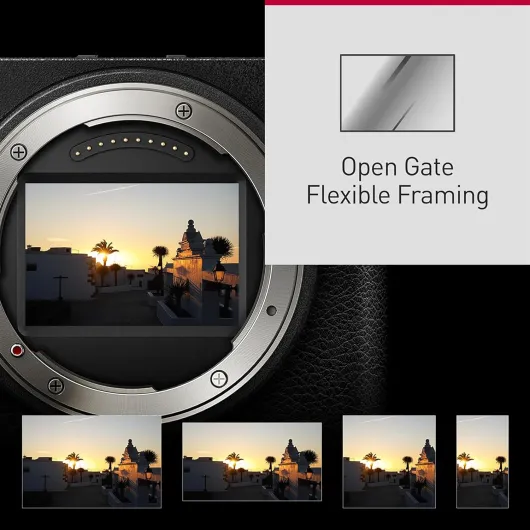
Video performance is where this camera makes more sense. 4K looks sharp, colours are nice, and the open gate 6K/4K MP4 Lite mode is actually useful if you post both horizontal and vertical content. I shot in open gate, then reframed in the LUMIX Lab app to export vertical clips for Instagram. It saved me from reshooting the same thing twice. In-body image stabilisation is effective for walking shots, though you still get a bit of that micro-jitter if you’re not careful. It’s fine for handheld use, but don’t expect gimbal-smooth footage just from the IBIS.
The main downsides in performance are tied to the electronic-only shutter and lack of EVF. With fast-moving subjects or under certain artificial lights, you can see rolling shutter (skew) or banding. It’s not horrible, but if you’re picky or shoot a lot of sports or indoor events, you’ll notice it. Also, framing in bright sunlight using only the rear screen can slow you down or make you misjudge exposure sometimes. Overall, performance is very good for travel, social content, and casual shooting, but this is not a sports or pro event camera.
What the Lumix S9 actually is (and what it isn’t)
The Lumix S9 is basically Panasonic’s smallest full-frame L-mount body, clearly aimed at vloggers and people who shoot a lot of vertical and social content. You get a 24.2 MP full-frame sensor, 6K open gate recording (in their MP4 Lite format), 4K video at up to 60 fps, and phase-detect autofocus with 779 points. On paper, it shares a lot with the S5II sensor-wise, just squeezed into a more compact body and stripped down in a few areas.
The kit I used comes with the new 18–40mm lens. That focal range is actually very practical: 18mm is wide enough for vlogging and landscapes, and 40mm is decent for portraits and general shots. It’s only a 2.2x zoom, but for day-to-day use I didn’t feel limited. Aperture is F2.8–5.6, so it’s not super bright, but the full-frame sensor and in-body stabilisation help a lot in low light. Just don’t expect crazy background blur at the long end unless you get closer to your subject.
Feature-wise, the big pitch is open gate video and Real Time LUTs. Open gate lets you record using the whole sensor (3:2) and then crop vertical, horizontal, or square later. In practice, that’s handy if you’re shooting once and publishing to multiple platforms. The LUT system lets you bake in looks directly in-camera, or load your own from the LUMIX Lab app. I tried a couple of custom looks and it was nice to have ready-to-post footage without sitting in front of a computer.
What the S9 doesn’t have is just as important: there’s no viewfinder, no mechanical shutter, and no built-in flash. Also, Panasonic doesn’t include a USB-C cable or charger in the box, which is annoying if you don’t already have a drawer full of them. It feels very much like a camera designed for people who are used to shooting with a phone screen and who don’t mind some compromises to keep size down.
Pros
- Very compact full-frame body with a practical 18–40mm travel lens
- Strong image quality and solid 4K/open gate video with good stabilisation
- Real Time LUTs and LUMIX Lab app make social-media-friendly output quick and easy
Cons
- No viewfinder, no mechanical shutter, and no built-in flash at this price
- Battery life is only okay and no charger/USB-C cable included in the box
- Not weather-sealed and less suitable for fast action or demanding professional use
Conclusion
Editor's rating
After using the Panasonic Lumix S9 with the 18–40mm lens in real life, my takeaway is pretty straightforward: it’s a very handy compact full-frame camera that suits people who mostly shoot like they use their phone – with the rear screen, for social media, and on the go. Image quality is strong, autofocus is quick enough, and the open gate + Real Time LUT combo genuinely speeds up getting decent-looking content onto your phone without a full editing session. As an everyday or travel camera you actually carry, it does its job well.
Where it falls short is for more traditional camera users. The lack of viewfinder, no mechanical shutter, no flash, and the basic battery/charger situation all feel like clear trade-offs. If you shoot a lot of fast action, work in tricky artificial light, or are used to composing through an EVF, you’ll probably get frustrated. And if you compare pure value to the S5II or some competitors, the S9 doesn’t look like the smartest buy unless size really matters to you.
I’d recommend the S9 to people who: come from smartphones, want better quality without a huge body, care a lot about vertical/horizontal flexibility, and like the idea of shooting once and posting quickly. I’d say skip it if: you’re a more serious photographer who relies on a viewfinder, you often shoot in tough conditions, or you want the most camera for your money and don’t mind a larger body. It’s a good tool with clear strengths and clear limits – as long as you accept those, you’ll probably be happy with it.