
Summary
Editor's rating
Is the D850 still worth buying in 2025?
Big, heavy, and built like it means business
Battery life: where this DSLR still embarrasses mirrorless
Box contents and out-of-the-box experience
Build quality and long-term use feel
Image quality and autofocus: where it shines and where it lags
What the Nikon D850 actually offers in real life
Pros
- High-resolution 45.7 MP sensor with strong dynamic range for detailed stills
- Excellent battery life that easily covers long shooting days
- Robust, weather-sealed body with lots of direct controls and a bright optical viewfinder
Cons
- Autofocus tracking and video features lag behind modern mirrorless cameras
- Large and heavy body with no in-body stabilization and no USB-C charging

Specifications
View full product page →| Brand | Nikon |
A late jump into the Nikon D850 world
I came to the Nikon D850 pretty late. Mirrorless bodies are everywhere now, and I’ve been using a Z6 and a Sony A7 III for the last few years. I picked up a used D850 body for a couple of weeks mainly out of curiosity and because I still have a bag full of F-mount glass that I like. I wanted to see if this camera still makes sense in 2025 when everyone tells you DSLR is “dead”. Spoiler: it’s very far from dead, but it’s also not for everyone anymore.
During my test, I used it mostly for landscape, some casual portraits, and a bit of indoor event shooting. Lenses were a 24–70mm f/2.8, a 70–200mm f/2.8, and an old 50mm f/1.8D. I shot both RAW and JPEG, a mix of tripod work and handheld. I also tried the 4K video for a small client clip and a bit of B‑roll at 1080/120p just to see what it can do.
Right away, the main thing you feel is that this is a serious camera body, not a casual travel toy. It’s big, it’s heavy, and it’s packed with options. If you’re coming from a phone or an entry-level DSLR, it feels like jumping from a hatchback into a big pickup truck. In a good way if you like that kind of thing, in an annoying way if you don’t.
Over these two weeks, I ended up with a pretty clear idea: the D850 is still very strong for photo work, especially if you print big or crop a lot. But it also has obvious limits next to modern mirrorless bodies, especially in autofocus tracking and video convenience. In the rest of the review I’ll stick to the basics: how it handles, how it performs, how the battery behaves, and if it’s still worth putting money into this system today.
Is the D850 still worth buying in 2025?
Value is where things get interesting. When the D850 came out, it was priced as a top-end DSLR, and it was hard to justify for casual users. Now, with mirrorless taking over and prices dropping, both new and used D850 bodies sit in a range where serious hobbyists and working shooters can realistically consider them. Compared to a new high-res mirrorless body, you often pay less for the D850 while still getting very strong stills performance and great battery life.
But there are trade-offs. You’re buying into an F‑mount system that is no longer the main focus for Nikon. Lenses are easy to find used and often cheaper than equivalent Z or Sony glass, which is nice. At the same time, future development is basically done. If you want the latest autofocus tech, eye-detection, and video features, you’re better served with something like a Nikon Z7 II, Z8, or even a competitor’s mirrorless system. The D850 gives you stability and maturity, not cutting-edge features.
For a photographer who mainly shoots stills (landscape, portrait, product, studio, weddings) and already owns Nikon F lenses, the D850 is honestly good value right now. You get a high-resolution body that can easily handle client work and prints, and you don’t need to spend extra on adapters or new glass. For someone starting from zero, I’d think twice: the body may be well-priced, but building an F‑mount lens collection in 2025 might not be the smartest long-term move unless you’re OK with a system that’s basically at its final stage.
So in terms of value, I’d put it like this: if you know what you’re buying and you prioritize stills quality and reliability over the latest tech buzzwords, the D850 gives you a lot of camera for the money. If you’re more into video, fast AF tracking, and compact size, it’s probably better to put your budget into a modern mirrorless kit instead.
Big, heavy, and built like it means business
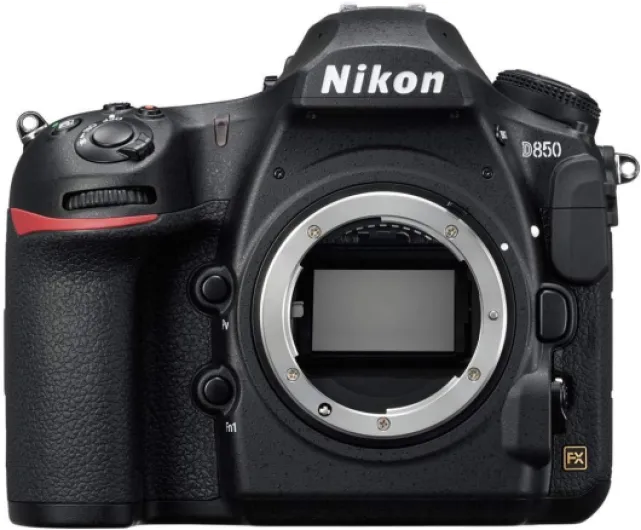
The design is classic Nikon DSLR: big grip, deep viewfinder hump, lots of buttons, and a top LCD. If you’ve used a D750, D810, or any of that line, you’ll feel at home in about 10 minutes. I personally like the layout: separate buttons for ISO, WB, quality, and drive mode, plus a proper joystick and a generous number of customizable buttons. You’re not diving into menus every two minutes, which is a relief when you’re working fast.
The body is not small. At around 1.05 kg just for the body, once you add a 24–70mm f/2.8 it feels like a brick hanging from your neck. For long hikes with a tripod and two lenses, I definitely felt it in my shoulders. If you’re used to a small mirrorless body with a compact prime, this will feel old-school heavy. On the flip side, that weight and size make it stable in the hand, especially with longer lenses; it balances well with big F‑mount glass.
The tilting rear touchscreen is one of the few “modern” touches. It’s not fully articulating, so no selfie vlogging nonsense, but for low-angle shots or tripod work, it’s very handy. Touch is responsive for selecting focus and reviewing images, but I mostly used physical buttons for menus because that’s just faster on this camera. The optical viewfinder is large and bright with 0.75x magnification; after spending so much time with EVFs, looking through this feels clean and lag-free, but of course you don’t see exposure previews or zebras.
In short, the design is very much in the “tool, not toy” category. If you like knobs, dials, and direct controls, you’ll probably enjoy it. If you want a compact travel companion that slips into a small bag, this is not it. The D850 feels like a camera you bring when the job matters, not when you’re just going out for casual snaps.
Battery life: where this DSLR still embarrasses mirrorless
Battery life is the one area where the D850 absolutely crushes most mirrorless cameras I’ve used. With a single EN‑EL15 battery, I easily shot over 1,200 photos in a day with plenty of chimping and menu fiddling, and still had juice left. CIPA ratings are conservative here; in normal stills work you can pretty much forget about battery anxiety. Coming from my Sony and Nikon Z bodies, where I need at least two batteries for a long day, the D850 feels almost boring: you just keep shooting.
During my two weeks, I only charged the battery three times, and that covered a mix of stills-heavy days and a bit of 4K video testing. Video does drain it faster, of course, but even then it’s very manageable. For a short corporate interview plus some B‑roll, one battery was enough. If you’re doing all-day video, you’ll still want spares, but for hybrid stills and occasional clips, it’s more than fine.
The lack of USB-C charging is the annoying part. You need to use the dedicated charger, so you can’t just plug the camera into a power bank like many modern bodies. For travel, that means carrying one more charger and planning a bit more. For some people that’s a small detail, but once you get used to USB-C on newer gear, going back feels a bit dated. That said, because the battery lasts so long, it’s not like you’re constantly hunting for outlets.
In practice, if you shoot weddings, events, or long outdoor days, this battery performance is a real advantage. One or two batteries in the bag and you’re covered. It doesn’t sound glamorous, but not having to worry about power lets you focus on the actual job. For me, that’s one of the strongest arguments in favor of sticking with a DSLR like this for heavy stills work.
Box contents and out-of-the-box experience
The unit I used came in the standard Nikon D850 box: nothing fancy, just the usual brown/gold Nikon packaging. Inside, you get the camera body, body cap, strap, battery, charger, USB cable, and some paperwork. No lens, obviously, since this is a body-only kit. It’s straightforward and pretty basic. Don’t expect any extras like a screen protector, bag, or memory card; you’re clearly assumed to already know what you need.
The strap is the typical Nikon branded one. It does the job but is not very comfortable with such a heavy body plus a pro zoom. After two days, I swapped it for a wider padded strap I already had. If you plan to carry this camera on your shoulder for long periods, I’d budget for a better strap or a sling system. The included charger is the usual Nikon brick: reliable but a bit bulky compared to some third-party dual chargers you can find now.
Setup is simple. Once you pop in a battery and card, you go through the date/time and language menu and you’re done. The menu system is classic Nikon: a bit dense, but organized once you get used to it. There are no “smartphone unboxing” vibes here, just a functional kit aimed at people who care more about shooting than unwrapping. I didn’t feel like anything important was missing, but it’s also clear Nikon didn’t try to impress with the box.
If you’re coming from cheaper consumer cameras that sometimes bundle a kit lens or small extras, the D850 package may feel a bit bare. But for the target user, it’s fine. You’ll likely already have decent cards, a strap you like, and maybe even spare EN‑EL15 batteries lying around. The box gives you what you need to start shooting, nothing more, nothing less.
Build quality and long-term use feel
The D850 feels like a camera designed to survive abuse. The body is magnesium alloy with sealing around buttons and doors. I didn’t throw it in a river to test, but I did shoot in light rain and dusty conditions on a couple of walks, and it never flinched. Buttons feel firm, dials have a clear click, and nothing rattles. Compared to some cheaper plastic bodies, this feels solid enough that you don’t baby it every time you put it down on a rough surface.
The shutter is rated for a high cycle count (Nikon quotes hundreds of thousands of actuations), and based on how it sounds and feels, I believe it. The mechanism has that confident clack, not a flimsy snap. Over my test period I put around 4,000 shots on it; obviously that’s nothing in the life of this camera, but I’ve seen pros run these things into the six-figure range without major issues. The body I used already had about 70k clicks on it and still felt tight, so that says something about how it ages.
One thing to mention: because it’s an older DSLR platform, parts and service will eventually get more limited as time goes on. Right now, Nikon support and third-party repair shops still handle D850s without any problem, but if you’re planning to keep it 10–15 years, that’s something to keep in the back of your mind. On the flip side, there are tons of used accessories, L‑brackets, grips, and spare batteries floating around at decent prices, which makes running this system cheaper than some newer mounts.
Overall, in terms of durability and long-term confidence, I’d trust a D850 body more than many lighter mirrorless cameras if I knew I’d be working in rough conditions. It’s not indestructible, but it clearly wasn’t built to be disposable. If you’re rough on your gear, that’s a real plus.
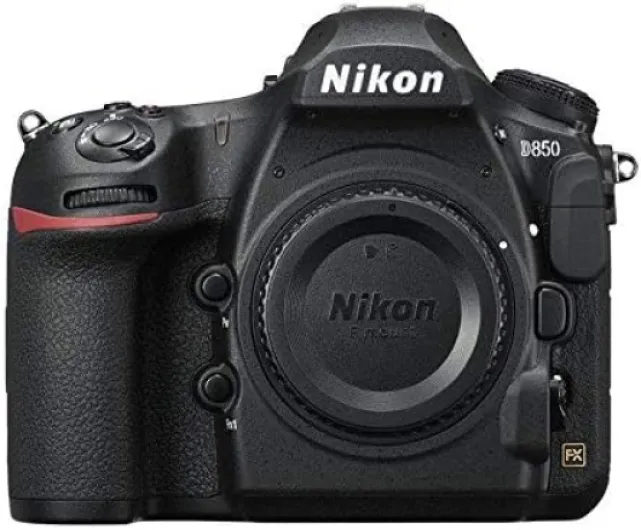
Image quality and autofocus: where it shines and where it lags
The main strength of the D850 is stills performance. The 45.7 MP sensor delivers very detailed files with plenty of room to crop. Shooting RAW at base ISO (64) gives you a lot of dynamic range to pull shadows and protect highlights. In real life, that means if you slightly underexpose a landscape to keep the sky, you can lift the darker areas in Lightroom without the image turning into a noisy mess. For prints and client work where you sometimes need to reframe after the fact, this resolution is genuinely useful, not just a number on the box.
Autofocus is good but not on the same level as the latest mirrorless systems. You get 153 AF points with phase detection and a bunch of modes (single point, group, 3D tracking, etc.). For portraits, weddings, and general events, it did fine for me. Face detection is not like modern eye-AF, so you still have to think about where you place your point. For fast-moving subjects like kids running or casual sports, I got a decent keeper rate, but not as high as my Sony A7 III. 3D tracking works, but it doesn’t feel as sticky or intelligent as newer mirrorless tracking.
In low light, performance is solid up to ISO 6400, usable at 12800 if you don’t mind some noise and a bit of detail loss. Compared to my Z6, the D850 files look slightly grainier at the same ISO, but still perfectly usable for most real-world uses like events and small prints. The lack of in-body stabilization is noticeable when you’re used to IBIS; you need to pay more attention to shutter speed, especially with non-stabilized primes. With VR lenses (like a 70–200 VR), it’s much less of an issue.
Continuous shooting at 7 fps is enough for a lot of action work, but it’s not a dedicated sports beast. If you’re coming from an entry DSLR, it feels quick. If you’ve used something like a modern stacked-sensor mirrorless at 20+ fps, it feels modest. For my use (short bursts of a dancer, kids, and some dogs running around), 7 fps plus careful timing was plenty. Just don’t expect it to behave like a top-end mirrorless sports body, because it doesn’t.
What the Nikon D850 actually offers in real life
On paper, the Nikon D850 sounds like a spec monster: 45.7 MP full-frame sensor, up to 7 fps (or 9 fps with the grip), 4K video, 153 autofocus points, tilting touchscreen, Wi‑Fi, focus stacking mode, and a claimed battery life that puts most mirrorless bodies to shame. In practice, the main thing it offers is very detailed still images with a lot of flexibility in post. If you shoot landscapes, studio, products, or anything where you care about fine detail and dynamic range, the sensor is the big selling point.
The camera takes SD and XQD cards (or CFexpress Type B with the right card in many cases), which is handy. I used a fast SD UHS‑II card in one slot and an older SD in the other as backup. The buffer at 45 MP isn’t endless, but for my shooting (short bursts of 4–6 shots) it held up fine. Sports or wildlife shooters who hammer the shutter might want XQD or CFexpress to keep the camera from choking. Still, for a DSLR of its age, the throughput is pretty solid.
The 4K video is there, but it’s basic compared to current mirrorless cameras. No fancy 10‑bit internal options, no crazy log formats, no modern autofocus tracking magic. It records clean 4K that’s sharp and usable, but you have to work a bit more: manual focus or careful AF‑C, and pay attention to rolling shutter. For my simple talking-head and B‑roll tests, it did the job, but I wouldn’t pick this as my main video body if video is my core activity.
Overall, if you strip away the spec sheet noise, the D850 is mainly a high-resolution stills camera with decent speed and video as a bonus. It’s targeted at people who already know what they’re doing and who want reliable, consistent output. If you want a camera that helps you with fancy AI autofocus and lots of automated modes, this one feels more old-school and expects you to know how to drive it.
Pros
- High-resolution 45.7 MP sensor with strong dynamic range for detailed stills
- Excellent battery life that easily covers long shooting days
- Robust, weather-sealed body with lots of direct controls and a bright optical viewfinder
Cons
- Autofocus tracking and video features lag behind modern mirrorless cameras
- Large and heavy body with no in-body stabilization and no USB-C charging
Conclusion
Editor's rating
After using the Nikon D850 for a couple of weeks, my feeling is pretty clear: as a stills camera, it’s still very strong, even today. The 45.7 MP sensor delivers detailed files with good dynamic range, the body feels solid, and the battery life is on another level compared to most mirrorless bodies. If your work is mainly landscapes, portraits, studio, or events and you already own Nikon F glass, this camera still makes a lot of sense. You get reliable performance, a big optical viewfinder, and a control layout that’s made for people who shoot a lot and don’t want to live in menus.
On the flip side, you feel its age in autofocus tracking and video features. It’s fine for casual 4K and slow motion, but if video is your main thing, there are better choices in modern mirrorless systems. It’s also big and heavy, with no in-body stabilization and no USB‑C charging, so it’s not exactly a travel-friendly or beginner-friendly body. For someone starting from scratch, I’d probably point them toward a newer mirrorless system for long-term flexibility.
So, who is it for? Serious hobbyists and pros who prioritize high-resolution stills, already have F‑mount lenses, and don’t care much about having the latest autofocus tricks or the lightest kit. Who should skip it? People who shoot a lot of video, want compact gear, or are just entering photography and don’t have lens investments yet. In that case, going mirrorless from the start is the cleaner path. But if you’re in that first group, the D850 is still a very capable workhorse at a more reasonable price than when it launched.