Summary
Editor's rating
Value for money: tough but competing with smartphones
Design: compact workhorse with a practical accessory bundle
Battery and day-to-day practicality
Durability: where the WG-1000 makes the most sense
Photo and video performance: decent for casual use, but nothing more
What the Pentax WG-1000 actually offers
Pros
- Waterproof to 15 m for up to one hour, shockproof to 2 m and dustproof
- Includes protective jacket and carabiner strap for rough outdoor or work use
- Simple operation with auto, scene and underwater modes plus many color effects
- Can be disinfected with common solutions, useful for medical and industrial environments
Cons
- Image quality and 4x zoom are modest compared with modern smartphones and higher-end compacts
- No RAW support, basic 2.7-inch 230k-dot screen and digital-only stabilization
- Lens lacks a dedicated protector, which is a concern in dusty or gritty environments

Specifications
View full product page →| Brand | Pentax |
A basic tough camera for people who don’t want to baby their gear
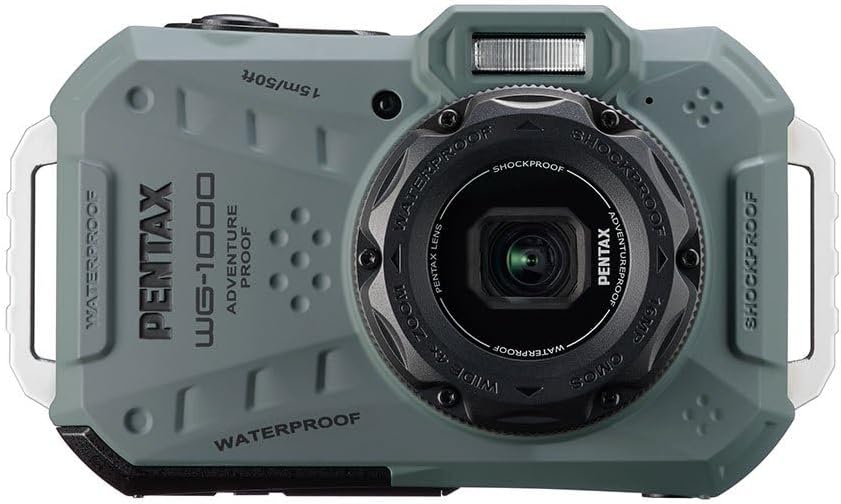
The Pentax WG-1000 aims straight at people who want a simple, rugged camera they can throw in a bag, take to the beach, or use at work without worrying too much. On paper it is clearly built for that: waterproof to 15 meters for up to an hour, shockproof for drops up to two meters, and dustproof. In short, it is not trying to compete with high-end travel zooms or mirrorless systems; it is meant to survive rough conditions and keep taking pictures.
The technical core is modest but serviceable: a 16 MP 1/2.3-inch CMOS sensor, a 4x optical zoom equivalent to 27–108 mm, and 1080p video. That’s more or less what you’d expect from an entry-level tough compact. ISO goes up to 3200, there are basic manual and auto modes, and several color effects to play with. Nothing fancy, but enough to handle typical holiday and work documentation shots.
Among the published reviews, opinions are mixed: the average rating hovers around 3.4/5 from several dozen comments. Some verified buyers praise the simplicity, robustness and ease of use. Others complain about image quality issues after some time or feel the camera is a bit pricey for what it delivers and that a good phone might do as well or better. So it clearly isn’t a crowd-pleaser across the board.
In my opinion, this camera should be seen as a tool first and a creative device second. If you mainly need something tough that takes decent photos in conditions where you do not want to risk your phone, the WG-1000 could make sense. If your priority is image quality or zoom reach for wildlife or travel, there are probably better options, even if that means spending a bit more or relying on a mid-range smartphone.
Value for money: tough but competing with smartphones
The WG-1000 sits in a tricky spot in terms of value. It is marketed as an affordable tough camera, and one reviewer explicitly calls it a cheap, sturdy option that fits their trips well, while acknowledging that picture quality is only okay. Another buyer thinks it is a bit expensive for what it is and notes that for about £50 more, better cameras are available. That same person even says they might have been better off going for a phone with a good camera, mainly because of the limited zoom and overall performance.
Looking at the specs, the camera offers 16 MP stills, 1080p video, a 4x zoom, and a basic 2.7-inch LCD. None of that is impressive by modern smartphone standards. Many mid-range phones now offer multiple lenses, higher resolutions, stronger computational photography and better screens. Where the WG-1000 tries to justify its price is in the toughness: waterproof to 15 m, shockproof to 2 m, dustproof, disinfectable, and bundled with a carabiner strap and protective jacket. If those aspects matter to you—because you work in harsh environments, do water sports, or simply do not want to risk an expensive phone—then the value equation starts to look more favorable.
The average customer score of around 3.4/5 shows that users are neither thrilled nor completely disappointed. Some are very satisfied for the price, others find it underwhelming and would have preferred to stretch their budget for a better model. In my opinion, this camera offers fair value if you truly need the ruggedness and waterproofing. If you just want better photos for city trips or family events, a good smartphone or a slightly more expensive compact with a larger zoom and better sensor will likely give you more satisfaction for the money.
So the WG-1000’s value is highly context-dependent. For a diver, construction worker, or outdoor instructor who regularly deals with water, dust and impacts, paying for this level of protection instead of risking a high-end phone can be reasonable. For a casual tourist who mostly wants sharp images of monuments, restaurants and city streets, the compromises in zoom, features and image quality may feel like a poor trade-off, especially when phones keep improving every year.
Design: compact workhorse with a practical accessory bundle
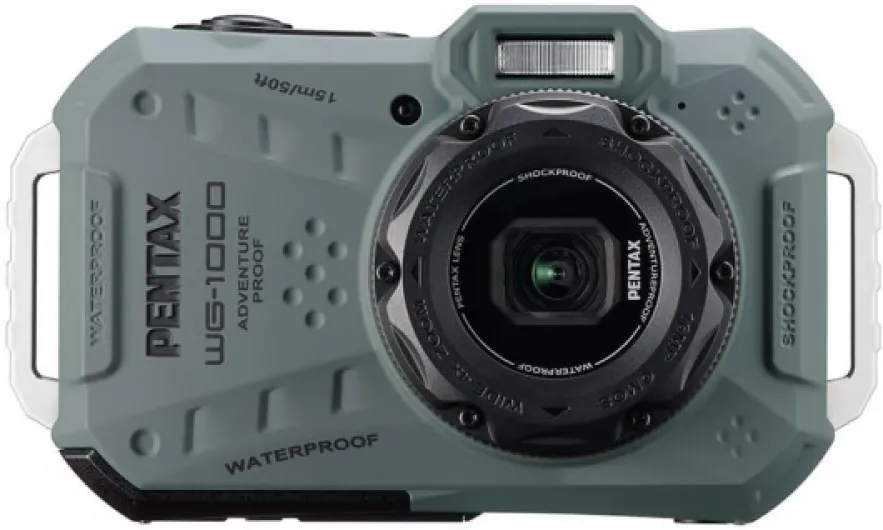
The WG-1000 follows the usual tough-compact approach: a compact, sealed body with a fixed 2.7-inch LCD on the back and no optical viewfinder. The screen resolution is 230,000 dots, which is basic but acceptable for framing and reviewing shots in this segment. The camera weighs about 520 grams according to the specs, which is relatively hefty for a compact; part of that likely comes from the rugged construction and protective elements. Buyers who commented on handling tend to describe it as small and light enough to carry easily, so the weight figure may include packaging or be on the high side.
The olive color gives it more of an outdoor or work-gear look than a glossy consumer gadget. Combined with the included carabiner strap, it is clearly meant to be clipped to a harness, backpack, or belt loop rather than slipped into a suit pocket. One review notes that the camera feels robust and comfortable to hold, which fits with the idea of a chunky, rubberized design rather than something ultra-slim and slippery. The protector jacket is another sign that the brand expects the camera to live in rough environments where scratches and bumps are common.
On the control side, you get typical compact-camera buttons: directional pad, menu, playback, zoom rocker, and shutter release. There is no mention of touch input, so navigation seems to rely entirely on physical buttons. For a camera meant for underwater and work use, that is actually more practical, since wet fingers and gloves do not play well with touchscreens. HDMI and USB ports handle connectivity; Wi‑Fi is listed as a wireless technology type, though there is no detailed description of app features, so expectations for seamless smartphone integration should probably stay modest.
In my opinion, the design language is straightforward: this is a tool-focused object rather than a stylish gadget. The olive color and protective accessories underline that. It will appeal more to hikers, workers, or parents who want something tough for the kids than to people looking for a sleek travel camera. The main design criticism in the reviews is the absence of a lens protector, which a buyer using it in dusty environments sees as a real weakness. For a camera that advertises worksite and outdoor use, that missing piece does stand out and could mean more frequent lens cleaning or the risk of scratches over time.
Battery and day-to-day practicality
The spec sheet does not give a clear CIPA rating for the battery, but there are a few clues. The camera is rated for up to one hour of continuous operation underwater at 15 meters, and video recording capacity is mentioned as 60 minutes. That suggests the battery is sized for at least an hour of continuous use, and usually compact cameras deliver several hundred still shots on a full charge under mixed shooting. The battery weight is 25 grams, which is in line with typical small lithium-ion packs used in compact cameras.
Since no published review goes into detailed battery life figures, any conclusion has to be inferred. With a 2.7-inch 230k-dot LCD and a 16 MP sensor, power draw should be moderate. No 4K video, no huge high-refresh screen, and no motorized zoom beyond the 4x lens all play in favor of decent endurance. Wi‑Fi is mentioned but not heavily promoted, so it is probably not a big drain unless used constantly. In practice, this kind of configuration usually allows a day of casual shooting—occasional photos and a few short clips—without needing to recharge, as long as you are not recording long video sessions.
From a usability angle, the WG-1000 charges and connects via USB and offers HDMI out. That means you can review content easily on a TV or monitor and should be able to recharge from common USB power sources. For outdoor and work use, this is practical: power banks, car chargers, or any USB socket can top it up. The camera comes with batteries included, which removes the need to buy one separately on day one, though in my opinion anyone planning intensive use should consider a spare battery if compatible options are easy to find.
In my opinion, the battery setup looks adequate but unexciting. It matches the overall philosophy of the camera: simple, robust, and not overly power-hungry. People who mainly shoot stills and short clips during hikes, days at the beach or on worksites will probably be fine. Heavy video users or those who keep the camera on for long periods might hit limits more quickly and should plan for recharging options. The lack of precise official endurance figures is a small downside, but nothing unusual in this price and product category.
Durability: where the WG-1000 makes the most sense
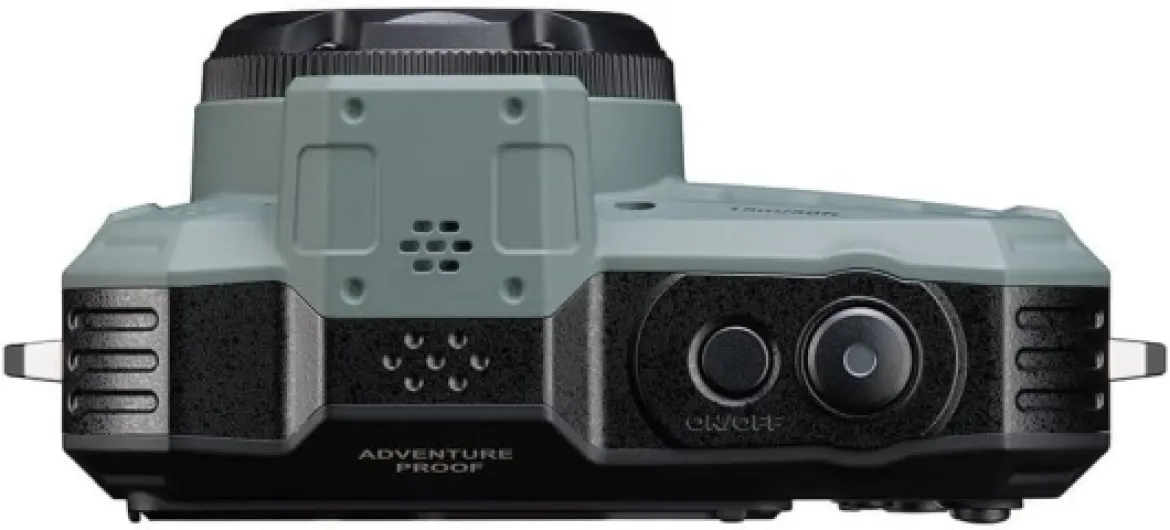
Durability is clearly the main selling point of the Pentax WG-1000. The camera is advertised as waterproof down to 15 meters for up to one hour of continuous operation, which is deeper than simple “splash-proof” devices and enough for snorkeling, pool games, or shallow dives. It is also rated shockproof for drops from up to two meters and dustproof against dirt and stains. These three aspects—water, shock, dust—place it firmly in the tough-camera category, meant to survive abuse that would easily damage a normal compact or a smartphone.
Pentax adds two accessories that reinforce this positioning: a protector jacket and a carabiner strap. The protector jacket is meant to shield the body from scratches and minor impacts, which is useful in rocky environments, sandy beaches, or worksites where tools and debris can hit the camera. The carabiner strap allows the camera to be clipped securely to backpacks or belts, reducing the chance of accidental drops. One buyer who uses it for work specifically mentions that it is robust and takes good quality pictures, which aligns with the tough positioning.
Another interesting durability-related claim is the ability to sterilize the camera with ethanol, sodium hypochlorite, or chlorine dioxide. That is unusual for consumer cameras and suggests that the seals and external materials are designed to withstand disinfectants without degrading quickly. This makes the WG-1000 viable for medical, industrial or food-related environments where gear must be cleaned thoroughly and regularly. It also gives peace of mind for users who want to wipe it down with strong cleaning solutions after muddy or dirty outdoor use.
However, durability is not flawless. A work user points out the lack of a dedicated lens protector as a serious issue in dusty environments. The body may be tough, but the front glass of the lens remains vulnerable to fine particles, which over time can cause scratches or smears that affect image quality. In my opinion, that is the main weak point of the durability package. Overall, though, if you need a camera that can be dropped, splashed, submerged, and disinfected, the WG-1000 looks much more suitable than a standard compact or most phones. Just be ready to take extra care of the lens area or look for third-party solutions to protect it.
Photo and video performance: decent for casual use, but nothing more
From a pure performance standpoint, the WG-1000 is built around a 16 MP 1/2.3-inch sensor with a 4x optical zoom (27–108 mm equivalent) and digital image stabilization. On paper, that means you can cover typical everyday scenes: landscapes at the wide end, portraits and closer details at the tele end. The maximum aperture of around f/3 at wide angle should help a bit in moderate light, but the small sensor size and reliance on digital stabilization suggest that low-light performance will be limited, especially at higher ISOs like 1600 or 3200.
The camera can shoot stills and 1080p MP4 video, with continuous shooting advertised up to 30 fps. That 30 fps figure likely refers to a reduced-resolution burst mode rather than full-resolution raw speed, but it still indicates that the camera should be able to capture some basic action sequences, like kids playing or sports in good light. Shooting modes include Automatic, Manual, Landscape, Sports, Night Portrait, Portrait, and a dedicated Underwater mode. That last one should adjust white balance and exposure for underwater colors, and the spec sheet even mentions a special white balance for underwater use.
Among the Amazon comments, image quality feedback is mixed. Some buyers call the picture quality good or okay, aligned with the price and the tough nature of the device. One verified buyer says it is a cheap, sturdy camera and that “the quality of the pictures is ok, seen better though”, which matches what the sensor and lens suggest. On the other hand, there is a very negative comment from a user who reports “bad images after a few months”, without much extra detail. That isolated case raises a question mark about consistency or potential degradation, but since it is one brief report, it is hard to know if it was a unit fault, handling issue, or general limitation showing up over time.
In my opinion, the WG-1000’s performance is clearly aimed at documentation and casual memories, not at demanding photography. For work reports, social media, or holiday snapshots in good light, it should be fine. For bird watching or distant subjects, several users point out the 4x zoom is underwhelming; one buyer explicitly says it is “no good for bird watching” and that a phone might have been a better choice. So if you expect long zoom reach or very clean low-light images, this camera will likely feel limited. If your priority is getting usable images in wet, dirty or risky conditions where you don’t want to pull out an expensive phone, its performance level is more acceptable.
What the Pentax WG-1000 actually offers
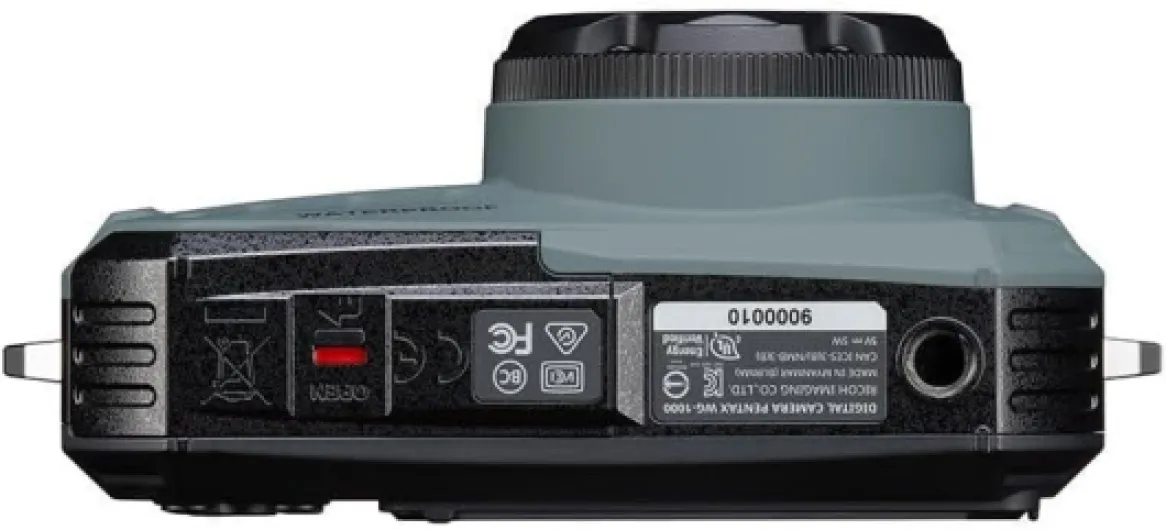
On the spec sheet, the Pentax WG-1000 is a compact camera with a clear focus on toughness and basic versatility. It uses a 16 MP 1/2.3-inch CMOS sensor, which is standard for entry-level compacts, and a 4x optical zoom lens covering 27–108 mm in 35 mm equivalent. That range goes from a decent wide angle for landscapes or group shots to a short telephoto for portraits or closer framing. The maximum aperture is around f/3 at the wide end, closing down to f/8, which is typical for this class.
The body is advertised as waterproof to 15 meters for up to one hour of continuous operation, shockproof to 2 meters, and dustproof. That already sets it apart from most smartphones and regular compacts. Pentax includes a carabiner strap (O-ST180) to clip it to a backpack or belt and a protector jacket (O-CC180) to limit scratches, which strengthens the “tool” positioning. Interestingly, the manufacturer also states that the camera can be sterilized with ethanol, sodium hypochlorite or chlorine dioxide solutions, which makes it suitable for medical or industrial environments where disinfecting gear is routine.
On the shooting side, it offers seven capture modes including Auto, Manual, Underwater and a Scene mode. There are about 20 color modes, such as Black and White, Sepia, and themed looks like “Japan Style” or “Italian Style”. Files are recorded as JPEG (no RAW), with video in MP4 at up to 1080p. Autofocus is hybrid with 49 AF points and continuous AF support, and exposure can be left on automatic or adjusted manually for those who want a bit more control. It has a built-in flash with different modes including slow sync and rear curtain sync for more flexibility in low light.
In my opinion, the WG-1000 clearly positions itself as a basic but robust camera for beginners or occasional shooters. It is not feature-packed by modern standards, and the lack of RAW or higher-resolution video will put off enthusiasts. But for someone who just wants a dedicated device to document outdoor activities, field work, or pool and beach days, the feature set looks coherent. The real question is whether the price and image quality line up well enough with current smartphone cameras, and the published reviews suggest the answer is mixed.
Pros
- Waterproof to 15 m for up to one hour, shockproof to 2 m and dustproof
- Includes protective jacket and carabiner strap for rough outdoor or work use
- Simple operation with auto, scene and underwater modes plus many color effects
- Can be disinfected with common solutions, useful for medical and industrial environments
Cons
- Image quality and 4x zoom are modest compared with modern smartphones and higher-end compacts
- No RAW support, basic 2.7-inch 230k-dot screen and digital-only stabilization
- Lens lacks a dedicated protector, which is a concern in dusty or gritty environments
Conclusion
Editor's rating
The Pentax WG-1000 is a straightforward proposition: a tough, waterproof compact designed more as a tool than a gadget. It brings 15 m waterproofing, 2 m drop resistance, dustproof sealing and even compatibility with disinfectant cleaning, plus a protective jacket and carabiner strap in the box. For outdoor activities, worksites, or any situation where gear gets wet, dirty or knocked around, that package makes sense. Image quality and features are modest but usable: 16 MP stills, 1080p video, a 4x zoom starting at 27 mm, several scene and color modes, and basic manual controls.
On the downside, this camera does not compete with modern smartphones on pure image quality, zoom flexibility or screen quality. The 4x zoom is short, the sensor is small, there is no RAW, and digital stabilization plus high-ISO shooting will have limits. Reviews also hint at some variability in satisfaction, with an average around 3.4/5: some buyers are happy with a robust, easy camera, others find it a bit expensive for what it delivers and would have preferred a better phone or a higher-end compact. The lack of a dedicated lens protector is a real flaw for dusty environments.
In my opinion, the WG-1000 is a good fit for beginners, workers and outdoor users who mainly want something rugged that they are not afraid to abuse. It is less convincing for enthusiasts, travelers who care a lot about image quality, or anyone already carrying a solid waterproof phone. If toughness is your top priority and your expectations about photo performance stay realistic, it can be a sensible purchase. If you want more zoom, cleaner low-light images or advanced features, you should probably look higher in the Pentax/Ricoh lineup or at competing tough compacts, even if that means spending more.