
Summary
Editor's rating
Value for money: depends what you expect versus your phone
Design and handling: pocketable with a few quirks
Battery life and connectivity: fine for a day, but watch the extras
Build quality and longevity: solid enough, but keep it dry and padded
Photo and video performance: strong zoom, average low light
What this camera actually is (and what it isn’t)
Pros
- Huge 30x optical zoom (24–720mm) with optical stabilization in a compact body
- Simple point-and-shoot operation with decent daylight image quality
- Lightweight, easy to carry, and usually quite affordable as a renewed unit
Cons
- Weak low-light performance due to small 1/2.3'' sensor and JPEG-only output
- Older feature set (1080p only, dated Wi‑Fi, no water resistance)
- Renewed/used condition means some wear and less long-term confidence than a new camera

Specifications
View full product page →| Brand | Sony |
A small camera that tries to replace your phone (and sometimes succeeds)
I’ve been using the Sony DSC-HX50 for a couple of weeks as a “throw in the bag and forget it” camera. I didn’t buy it new, it’s a renewed/used unit, which is important because this is not a recent model. Think of it as a compact travel camera from the pre-smartphone era that someone cleaned up and put back on sale. I wanted something with more reach than my phone, without going full DSLR or mirrorless.
Right away, the main thing that stands out is the 30x optical zoom (24–720mm) in a pretty small body. That’s the whole point of this camera: you can shoot a building across the street or a bird at the top of a tree without changing lenses. The sensor is around 20 MP on a 1/2.3'' CMOS, so it’s basically like a good old compact, not a modern big-sensor beast. I went in with realistic expectations: better than a phone for zoom, probably worse than a modern big-sensor camera in low light.
In daily use, I used it for walks, a night out in the city, and some indoor family photos. I also shot a bit of 1080p video at 60 fps to see if it could handle simple vlog-style clips. I’m not a pro; I just want nice photos without having to think too much. Most of the time I stayed in full auto, with some macro and landscape mode tests just to see if the camera did anything smart on its own.
Overall, it feels like a pretty solid little travel camera with clear strengths and clear limits. The zoom and stabilization are the big positives. The age of the sensor, the low light performance, and some missing things like a proper built-in flash (specs say none, though some versions have one) are the weak spots. If you go in knowing it’s an older compact, not a miracle machine, you’ll probably be okay with what it can do.
Value for money: depends what you expect versus your phone
Value on this kind of product is tricky because it’s not a new camera. You’re basically paying for a used or refurbished compact whose main selling point is a 30x optical zoom and optical stabilization. If you compare it to a modern smartphone, the phone usually wins in overall image quality, low light, convenience, and sharing. Where the HX50 pulls ahead is pure zoom reach and having a dedicated camera you don’t mind handing to kids or tossing in a bag without worrying as much as you would with your main phone.
If the renewed price is low enough (I can’t see the live price, but let’s say in the budget range), then it starts to look like good value for someone who wants a travel zoom camera without spending a lot. For that use case – holidays, zoo, sports day at school, casual bird shots – the camera does the job better than most phones when you need long reach. The Amazon rating around 4.5/5 matches my feeling: it’s not perfect, but people who know what they’re buying are mostly happy.
On the downside, you’re buying into an older ecosystem: no RAW, only 1080p video, small sensor, no real water protection, dated Wi‑Fi, and a user experience that feels old. If you’re a beginner and think this will make you suddenly “do photography,” you might be a bit underwhelmed. There are newer entry-level mirrorless or even some newer compacts that give better image quality and more headroom for learning, but they also cost more and are usually bulkier.
So in my opinion, value is decent but very context-dependent. If you already have a good phone and just want more zoom for cheap, this makes sense. If you’re looking for your main camera for the next 5–7 years and care about video quality and low light, I’d save up for something newer. The HX50 is more of a practical, budget-friendly tool than a long-term investment.

Design and handling: pocketable with a few quirks
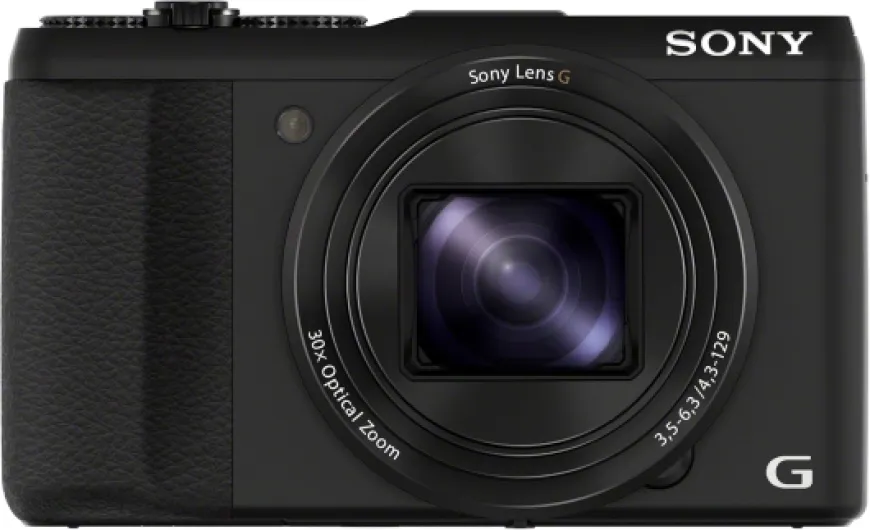
Physically, the DSC-HX50 is pretty compact and light at around 245 g. It’s not jeans-pocket tiny if you’re also carrying keys and a phone, but it fits fine in a jacket pocket or a small bag. The black finish is fairly discreet; it doesn’t scream “expensive camera,” which I like when traveling. The body feels like plastic with some metal bits, nothing premium, but not toy-like either. You can tell it was built to be carried, not displayed.
In the hand, it’s okay but not perfect. There’s a small grip area, but it’s not super deep, so if you have big hands you’ll probably hold it with a wrist strap just in case. The 3-inch LCD screen is decent enough for framing and reviewing shots, but it’s not super sharp by modern standards and it can be a bit hard to see in bright sunlight. There’s an electronic viewfinder mentioned in the specs, but in practice I ended up using the rear screen 99% of the time; it’s just quicker and more natural for a camera like this.
The button layout is classic Sony compact: mode dial on top, zoom rocker around the shutter, a few buttons on the back for menu, playback, and navigation. If you’re used to Sony menus, you’ll feel at home, but if not, it can feel a bit cluttered. I mostly stuck to auto modes because digging into the deeper settings is not very pleasant. There’s also a tripod mount (standard), a USB port, and a video out port. Nothing fancy, but it covers the basics.
What I liked is that, despite the long zoom lens, when it’s turned off the camera is still relatively flat. You don’t walk around with a huge tube sticking out. When you power it on, the lens extends, but the mechanism felt solid on my unit; no wobble or weird grinding noises. Overall, the design is practical: small, light, and easy enough to use, but clearly from a previous generation of cameras, with a screen and controls that feel dated compared to what you get on newer compacts or even some phones.
Battery life and connectivity: fine for a day, but watch the extras
The camera uses a lithium-ion battery, and in practice, I was getting around a day of casual shooting: roughly 150–250 photos plus a few short video clips, with the screen on most of the time. That’s not impressive by today’s standards, but for an older compact, it’s acceptable. If you hammer the zoom constantly, review every shot, or record a lot of video, you’ll drain it faster. For a full sightseeing day, I’d feel safer with a spare battery in my pocket.
Charging is done over USB 2.0, which is slow but convenient. I plugged it into a normal USB charger overnight and it was full by morning, no problem. The downside is there’s only one USB port and it’s not USB-C, obviously, so you’re stuck with older cables. Not a dealbreaker, but worth noting if you’ve moved your whole life to USB-C and hate carrying extra types of cables.
The camera has Wi‑Fi and GPS on board. Wi‑Fi is okay for transferring a few photos to a computer or phone, but the process feels clunky compared to newer cameras or just using your phone directly. Don’t expect modern app integration or fast transfers. GPS is handy if you like seeing where your photos were taken on a map later, but it does nibble at battery life. When I left GPS on all day, I noticed the battery dropping a bit faster; nothing dramatic, but enough that I’d turn it off if I didn’t need it.
So overall, battery life is decent but not generous, and the extra features like Wi‑Fi and GPS are more “nice to have” than daily essentials. If you treat it as a simple camera, avoid constant Wi‑Fi use, and maybe carry a spare battery, you’ll be fine for normal travel or family days. If you expect all-day heavy shooting and video on a single charge, you’ll likely be disappointed.
Build quality and longevity: solid enough, but keep it dry and padded
Since this is an older model sold as renewed/used, durability is something I paid attention to. My unit arrived with some minor cosmetic marks, nothing crazy, and the body felt reasonably solid for a compact. The lens mechanism extended and retracted smoothly, no grinding or weird noises, which is important on a long-zoom camera like this. If the zoom motor goes, the camera is basically done. After a couple of weeks of normal use, throwing it in a bag (inside a soft pouch) and using it daily, I didn’t notice any new issues.
The camera is not water resistant at all. The specs clearly say “Not Water Resistant,” and you can feel that: there are plenty of gaps and moving parts. I would not use this in the rain without some kind of cover, and I definitely wouldn’t take it to the beach without being very careful about sand and dust. This is a typical compact design: fine if you treat it decently, fragile if you’re rough or careless. The lens barrel when extended looks especially vulnerable to knocks.
Buttons and dials on my unit still had decent click and resistance, which is a good sign. The tripod mount is metal and firmly attached, so using a small travel tripod feels safe. The battery door and SD card slot feel a bit flimsy, but that’s pretty standard for cameras in this category. I wouldn’t open and close them constantly for no reason, but under normal use they should hold up.
Given that this is a renewed product with a 1-year limited warranty, I’d say durability is “good enough if you’re not clumsy.” It’s not built like a pro camera, but it doesn’t feel like it’s going to fall apart in your hands either. Just remember: no water, avoid dust, use a small case or pouch, and don’t bang the extended lens on anything. Treated that way, it should last a while, even if it’s already had a previous life with another owner.
Photo and video performance: strong zoom, average low light
The big thing with the HX50 is the 24–720mm lens with 30x optical zoom and optical image stabilization. In good light, this combo is actually pretty fun. You can stand far back and still fill the frame with a subject, whether it’s a building detail, a sign, or a person across the street. During a weekend walk, I shot some birds and distant windows at full zoom; the stabilization did a solid job keeping the image usable even at 720mm, handheld. You still need a steady hand, but it’s much better than what you’d get trying to digitally zoom on a phone.
Image quality in daylight is good enough for casual use. The 20 MP JPEGs look fine on a laptop screen and for prints up to normal sizes. Colors are typical Sony compact: a bit punchy, slightly strong on contrast, but nothing crazy. Face detection and autofocus generally lock on quickly in auto mode. The camera has 17 AF points and a hybrid AF system, but honestly, I treated it as a simple point-and-shoot, and it behaved like one. For street scenes and travel snapshots, it gets the job done.
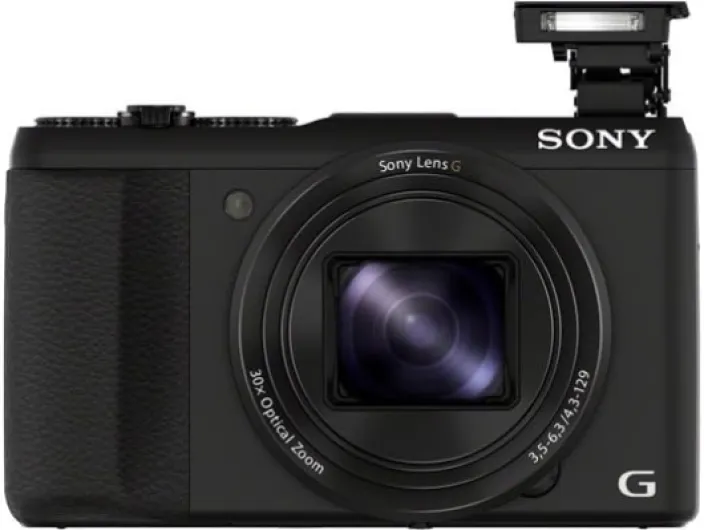
Where it starts to struggle is low light and indoor scenes. With a 1/2.3'' sensor, you can’t expect miracles. Noise creeps in fast, and the camera tends to push the ISO up, which softens details. Indoor family shots are okay for memories, but don’t expect super clean files if you zoom in. Also, the specs suggest “no flash” but there is an auto flash mode listed, so it depends on the exact variant. On my unit the built-in flash was weak and not very flattering, so I avoided it. If you want great night photos, this is not the right tool.
For video, you get 1080p MP4 at 24/30/60 fps. For a casual clip, it’s fine. Stabilization helps a lot when walking slowly. Autofocus tracks decently as long as the light is okay and you don’t move too fast. It’s nowhere near modern 4K cameras, and the dynamic range is limited, but for simple travel videos or recording events for personal use, it’s acceptable. Overall, performance is solid in daylight and with the zoom, average to weak in low light. As long as you keep that in mind, you’ll be reasonably happy.
What this camera actually is (and what it isn’t)
The Sony DSC-HX50 is basically a compact point-and-shoot with a huge zoom. No lens swapping, no big body, no fancy pro controls. You get a 20 MP sensor, 30x optical zoom (24–720mm equivalent), optical image stabilization, and 1080p video recording in MP4. It’s meant for people who want to zoom a lot and just press the shutter in auto mode. That’s why you see things like AF-A focus mode, evaluative metering, auto white balance, and shooting modes like automatic, macro, and landscape. It’s not built to be a manual photographer’s playground.
One thing to note: this is sold as Amazon Renewed / used with a 1-year limited warranty and some tax note about differential taxation. So don’t expect a shiny new unboxed 2024 product. My unit looked decent, but you can tell it’s not fresh from the factory. The box contents are listed as “Camera Body Only” even though batteries are included, which in practice meant: I got the camera, battery, and a basic charging setup, but no fancy extras. If you want a case, strap, or fast SD card, you’ll probably buy those separately.
On the feature list, there’s Wi‑Fi and GPS, which were trendy when this came out. The Wi‑Fi is there mainly to move photos to your computer or phone and maybe do some basic remote control, but it’s nowhere near as smooth as a modern camera app. GPS is nice if you care about geotagging your travel photos, but it does hit the battery a bit. The camera shoots JPEG only, no RAW, which tells you right away who it’s aimed at: casual users, not people who want to heavily edit files later.
So in short: this is a compact travel zoom camera, not a modern hybrid camera. If you want 4K, big dynamic range, or pro-level control, look elsewhere. If you want a small camera that zooms way more than your phone, takes decent holiday photos, and you don’t mind that it’s a bit old and renewed, then the product starts to make sense.
Pros
- Huge 30x optical zoom (24–720mm) with optical stabilization in a compact body
- Simple point-and-shoot operation with decent daylight image quality
- Lightweight, easy to carry, and usually quite affordable as a renewed unit
Cons
- Weak low-light performance due to small 1/2.3'' sensor and JPEG-only output
- Older feature set (1080p only, dated Wi‑Fi, no water resistance)
- Renewed/used condition means some wear and less long-term confidence than a new camera
Conclusion
Editor's rating
The Sony DSC-HX50, in its renewed form, is basically a compact travel zoom camera that still does its core job: lots of reach in a small body, with simple operation. The 30x optical zoom and optical stabilization are the main reasons to buy it, and in good light they deliver. Daytime photos look fine for everyday use, and 1080p video is okay for casual clips. It’s light, fairly small, and easy to throw in a bag when you don’t want to rely only on your phone.
But you do feel its age: small 1/2.3'' sensor, no RAW, limited low-light performance, basic screen, dated Wi‑Fi, and no real weather protection. As a renewed product, you also accept that it’s had a previous life, even if you get a 1‑year warranty. I’d recommend this camera to someone who wants a cheap way to get big zoom for travel, zoo visits, or kids’ sports, and who mainly shoots in daylight and in auto mode. If you’re more serious about image quality, shoot a lot indoors or at night, or want 4K and modern connectivity, you’re better off saving for a newer compact or an entry-level mirrorless body.