Summary
Editor's rating
Value for money: a complete starter kit with few hidden costs
Compact, flip-screen design aimed at kids and casual vloggers
Battery life: two batteries included, realistic expectations
Build and durability: basic but reassuring for a starter camera
Image and video performance: good enough for learning and social media
What this NBD compact camera actually offers
Pros
- Compact and lightweight body with 180° flip screen, well suited to kids and vlogging
- Complete starter kit: includes 64GB TF card and two batteries, so no immediate extras needed
- High user satisfaction (4.8/5) and generally praised for ease of use and daytime image quality
Cons
- Small 1/2.3" sensor with digital-only zoom limits low-light performance and true detail
- No external microphone input or weather sealing, so limited for serious vlogging or rough conditions

Specifications
View full product page →| Brand | NBD |
A budget 5K camera aimed at beginners and young vloggers
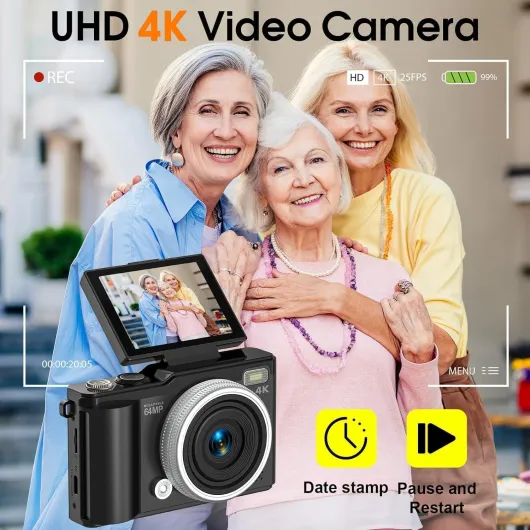
The NBD 64MP digital camera positions itself as a simple, affordable way to get into photography and vlogging without jumping straight to a DSLR or mirrorless system. On paper, it offers a long list of features for the price: up to 5K video, a 64MP stills mode, 180° flip screen, 18x digital zoom, and a compact body that weighs around 238 g. It’s clearly not targeting professionals, but rather kids, teens and adults who want something better than a phone in some situations, without the bulk or complexity of higher-end gear.
In the Amazon comments, most buyers describe giving it to children, nieces, or beginners as a first “real” camera. That already sets the tone: this is a learning tool and a casual content camera more than a serious production device. People mention ease of use, simple menus and a manageable size as key positives. The average rating sits very high (4.8/5 with a small number of reviews), which suggests that expectations are generally aligned with what the product delivers at this price level.
On the flip side, the spec sheet reveals some typical compromises for this category: a small 1/2.3" CMOS sensor, digital-only zoom, and a shutter that only goes down to 1/2 second, which limits low-light and creative long-exposure work. The 5K claim also raises the usual question of whether the resolution is native or heavily interpolated from the small sensor. There are no public lab measurements to verify this, so it’s safer to treat the high megapixel and 5K labels as marketing-friendly numbers rather than a guarantee of pro-grade image quality.
Overall, this camera looks like a compact, kid-friendly device that focuses on convenience: flip screen for selfies, included 64GB card so you can start shooting straight away, and two batteries to avoid running out of power quickly. In my opinion, the right way to look at it is as a step up from toy cameras and many budget compacts, not as a competitor to entry-level mirrorless kits. For that role, the mix of features, positive comments, and price point makes it a realistic candidate if you keep your expectations in check.
Value for money: a complete starter kit with few hidden costs
The exact price is not displayed here, but judging from the positioning and comments about it being "affordable" and "fair price", the NBD 64MP camera clearly targets the budget to lower mid-range segment. For that, the bundle is quite generous: you get the camera itself, two batteries, and a 64GB TF card included. That means no immediate extra purchases are strictly required to start shooting, which is a big advantage compared to some brands that sell cameras without storage or spare power.
Feature-wise, the camera ticks a lot of boxes for beginners: high-resolution stills, multiple video resolutions up to 5K, 180° flip screen, auto and manual exposure, different white balance modes, self-timer, continuous shooting, and stereo microphone. When you compare that to many cheap kids’ cameras or ultra-basic compacts, this NBD model looks more capable while staying accessible. The 4.8/5 average rating from a small number of buyers suggests that, for most people who bought it, the performance and build match what they expected at this cost.
Where the value is less clear is if you compare it to older used mirrorless or DSLR bodies, or to a good mid-range smartphone. Those alternatives can sometimes offer better image quality, especially in low light, but they also tend to be bulkier, more complex, and not as kid-friendly. This NBD camera trades some image performance for simplicity and a complete package. For a child, teen, or adult who just wants a straightforward camera for learning and casual vlogging, not having to think about lenses, extra cards, or separate chargers is a real plus.
In my opinion, the value proposition is solid as long as you accept the limits of a small-sensor digital-zoom compact. It’s not a professional tool and doesn’t pretend to be one. But as a gift camera, a first step into photography, or a light travel/vlog device that won’t cause panic if it gets lost or broken, it offers a lot for the money. If you’re the type of user who will quickly want RAW files, interchangeable lenses, and clean HDMI output, you’d be better off saving for a different class of camera. For everyone else in the beginner bracket, it looks like a sensible purchase.
Compact, flip-screen design aimed at kids and casual vloggers
The NBD camera is clearly designed to be compact and travel-friendly. With dimensions of 12.5 × 5.6 × 7 cm and a weight of about 238 g, it’s closer to a classic point-and-shoot than a bulky DSLR. Several reviews highlight the small size and say it fits easily in a hand or pocket, which is ideal for children or anyone who doesn’t want to lug around heavy gear. One buyer did find it surprisingly heavy and returned it for that reason, but that seems to be an isolated comment compared to others who describe it as lightweight and easy to carry.
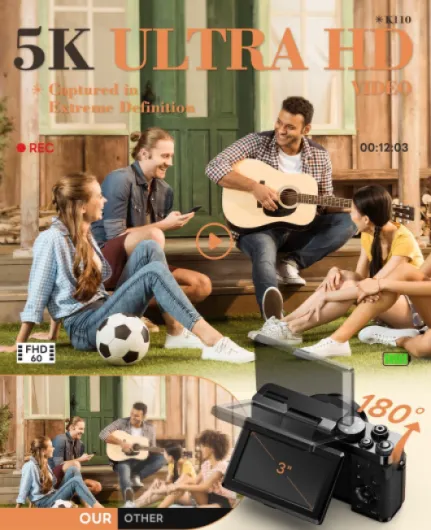
The 3-inch LCD with articulating mount is one of the key design features. It flips up to 180°, so you can see yourself when filming or taking selfies. For vlogging, that’s almost mandatory nowadays, and it’s a big step up from fixed-screen budget cameras that force you to guess framing. The absence of an optical viewfinder means you rely entirely on the screen, which is common at this price but can be less practical in bright sunlight. On the plus side, this keeps the body simple and reduces cost and bulk.
Controls appear straightforward: mode selection, zoom, shutter, and basic navigation buttons next to the screen. There’s no complex dial-heavy layout like on enthusiast cameras, which should help beginners get comfortable quickly. Buyers describe explaining the functions to kids in under an hour, which suggests the interface is reasonably intuitive. The design also includes a built-in flash for low-light snapshots, which is handy for indoor family scenes or evening shots where the small sensor would otherwise struggle.
In my opinion, the design choices fit the intended audience: simple, compact, and vlogger-friendly. You give up some ergonomic refinements and pro controls, but you gain portability and ease of use. The only real design caveat is the lack of a viewfinder and external mic jack, which could bother more demanding users. For a child’s first camera or a casual travel companion, the overall layout and flip-screen concept are coherent and practical.
Battery life: two batteries included, realistic expectations
The product highlights long battery life with two batteries included, which is a strong selling point for travel and vlogging. The spec sheet mentions a 12V lithium-ion battery with a weight of 28 g, but not the exact capacity in mAh. Two batteries in the box means you can swap when one runs low instead of stopping your session, which is especially useful for events, holidays or kids who forget to charge devices. For a compact camera with a relatively small screen and no heavy-duty processing like advanced image stabilization, on-paper consumption should be moderate.
Among the reviews, one buyer gives a rough real-world estimate: with the screen on and the camera used constantly, the battery reportedly lasts around two hours, and a full recharge takes about one hour. That’s one data point, not a lab measurement, but it gives a ballpark. For continuous video recording or very intensive photo sessions, two hours per battery is decent but not outstanding; with two batteries, you could reasonably expect around four hours of heavy use, and more if you shoot intermittently.
There’s no mention of USB-C vs micro-USB or whether charging can be done directly in-camera or via an external charger, but the presence of USB connectivity suggests at least basic in-camera charging. For a beginner audience, being able to plug the camera straight into a wall adapter or power bank is practical. Since the camera is light and compact, carrying the spare battery isn’t a big burden, and it reduces the risk of a dead camera halfway through a day out.
In my opinion, the battery setup is adequate for the target user. It’s not in the same league as high-end mirrorless cameras with huge batteries, but that would be unrealistic at this price. The fact that NBD includes a second battery by default is a real plus, because many brands sell spares separately. As long as you plan to charge both batteries and maybe bring a power bank for longer trips, this camera should handle typical family days, school events or casual vlogging sessions without too much stress about power.
Build and durability: basic but reassuring for a starter camera
The NBD camera is manufactured in China and built as a compact plastic-bodied device, which is standard in this price range. There are no claims of weather sealing, shock resistance or ruggedisation, so it should be treated like any typical consumer electronic: it will likely handle everyday use, but it’s not meant to be dropped, soaked or exposed to sand and dust for long periods. The relatively low weight of 238 g suggests a mostly plastic chassis with some metal elements at most, not a heavy-duty magnesium alloy frame like on pro cameras.
Public comments from buyers are generally positive about perceived quality for the price. People mention that it "appears built to last" and describe it as decent quality rather than flimsy. One reviewer specifically calls it a good gift for kids and notes that it feels robust enough for that role, which is encouraging given that children tend to be less careful. Another user appreciated the classic design and packaging, although they returned the unit for weight reasons, not because of build issues. Importantly, there are no recurring reports of early failure, loose parts or buttons breaking in the handful of reviews available.
The spec sheet lists the lens type as macro with digital zoom only, which means fewer moving mechanical parts than a retractable optical zoom. That can actually help durability, since there’s no telescoping barrel to jam if the camera is turned on in a pocket or exposed to dust. The articulating LCD is one potential weak point if mishandled, but that’s true of any flip screen. Treated with normal care, it should be fine, and the benefit for vlogging usually outweighs the added mechanical complexity.
Overall, my take is that durability is acceptable for a budget beginner camera. It’s not a rugged action cam, so expectations need to stay realistic. But for home use, school trips, family holidays and casual vlogging, the combination of a simple body, no optical zoom mechanism, and generally positive comments about build quality makes it a reasonable choice. A basic protective case and some guidance to kids about not dropping it or forcing the flip screen would be enough to keep it going in most everyday scenarios.
Image and video performance: good enough for learning and social media
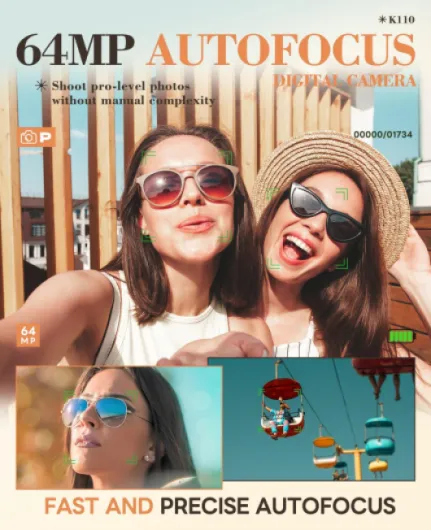
From a pure specs perspective, the 64MP still resolution and 5K video sound impressive for a compact camera in this price range. However, the 1/2.3-inch CMOS sensor size is similar to what you find in many basic compacts and some smartphones. That means the real differentiator is likely how the camera processes images and how honest the 64MP and 5K figures are. It’s common in this segment to use interpolation to reach high megapixel counts, so expecting true 64MP-level detail would be optimistic. Still, for typical use (web, prints up to A4, social media), that resolution is more than enough.
In the Amazon comments, buyers who bothered to inspect their shots on a computer generally describe the daytime image quality as crisp with vibrant colours. One user mentions that photos taken in good light look sharp and pleasant, which aligns with what you’d expect from a small-sensor camera when conditions are favourable. In low light or evening scenes, comments shift to "ok" or "acceptable", which is also predictable: small sensors with limited maximum exposure time (this one only goes to 1/2 second) and likely modest aperture simply can’t gather much light without introducing noise or blur.
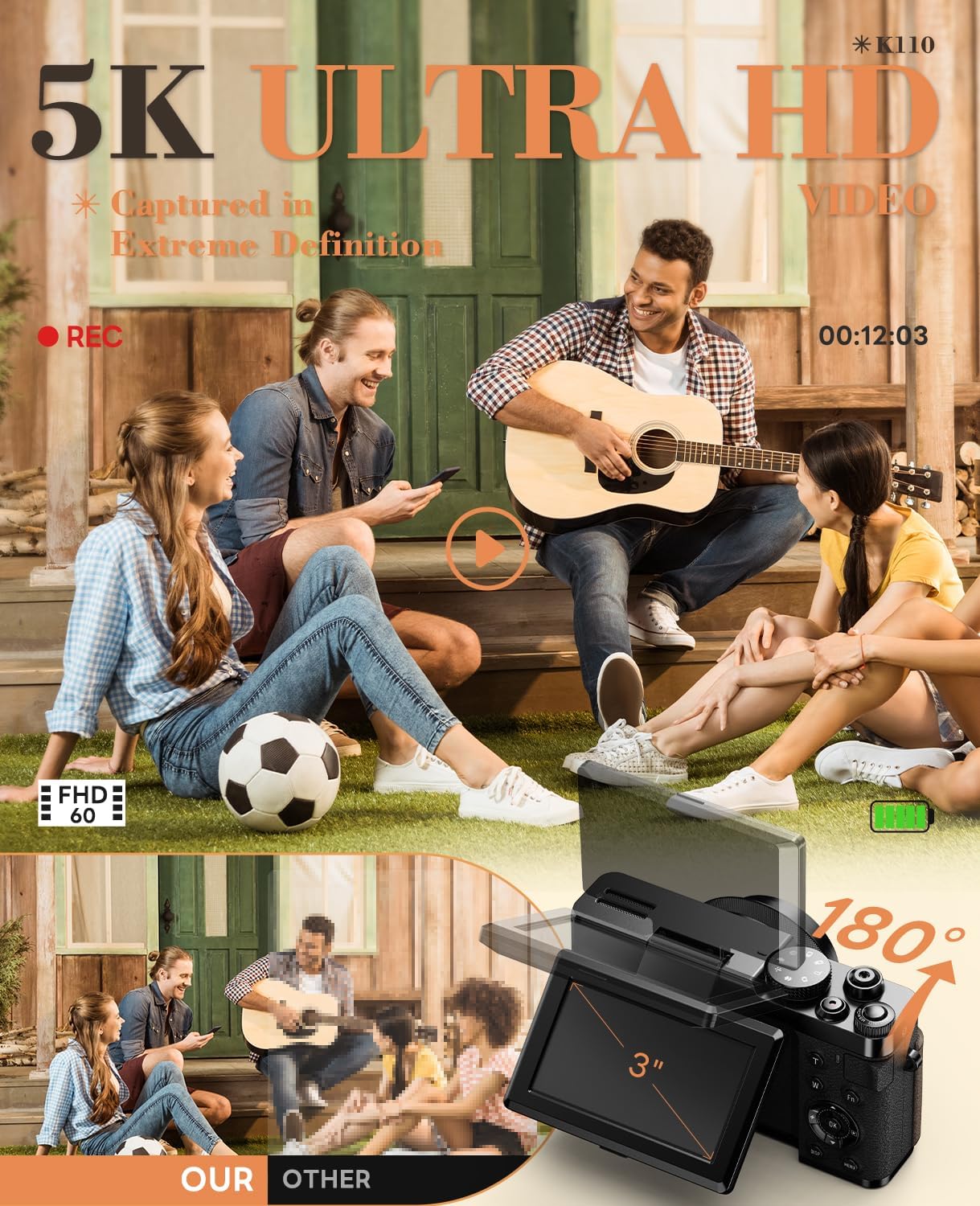
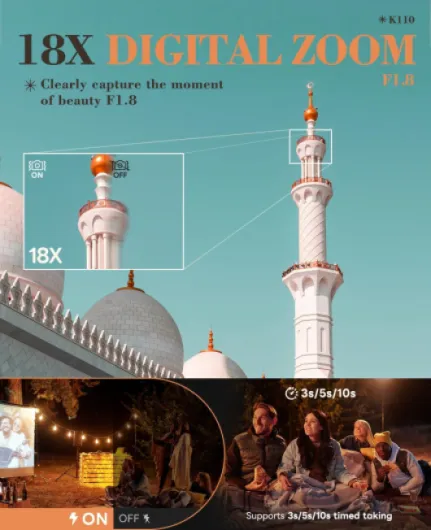
On the video side, the camera supports several resolutions: 5K, 4K, 2K, 1080p and 720p. For a beginner vlogger or someone filming family events, 1080p and 4K are probably the most relevant. There’s no information about frame rates, bitrates or advanced codecs, so it’s safe to assume a fairly standard, compressed MOV output. The autofocus and 18x digital zoom are highlighted as features that help capture distant subjects or quick moments. Buyers don’t go into technical detail, but they seem satisfied with the overall clarity for casual vlogging and social media videos.
In my opinion, the performance profile is straightforward: solid for daylight and casual use, limited in low light and when pixel-peeping. Compared to a modern mid-range smartphone, this camera may not always win, especially at night, but it offers a dedicated device with a flip screen, optical-style handling, and kids can use it without touching a phone. For learning framing, basic exposure, and getting comfortable behind and in front of a camera, it looks like it gets the job done. If your goal is professional-grade image quality or advanced manual control, you’d need to move up to a larger-sensor system.
What this NBD compact camera actually offers
On paper, the NBD-UK-K100C is a compact point-and-shoot with a strong emphasis on versatility for casual users. It advertises 64MP still photos and up to 5K video, which for a small 1/2.3-inch CMOS sensor is ambitious. The lens is listed as a macro type with 18x digital zoom, meaning there is no optical zoom mechanism; the camera crops into the sensor to simulate zoom. That’s fine for social media and family shots, but it usually can’t match the detail and low-noise performance of true optical zoom lenses.
There’s a 3-inch articulating LCD with a 360×640 resolution, and it can flip 180° for selfie framing or vlogging. The camera supports several modes and settings that are useful when learning photography basics: automatic and manual exposure control, different white balance presets (Auto, Cloudy, Daylight, Fluorescent, Incandescent), self-timer, continuous shooting, and various scene modes like portrait, landscape and night. Files are saved in JPG for photos and MOV for video, which keeps things simple and compatible with most computers and phones.
For storage, NBD includes a 64GB TF (microSD) card and the slot supports up to 256GB, which is generous for this class. Connectivity is basic but sufficient: USB for file transfer and likely charging, and the camera can function as a webcam up to 64MP according to the listing, which can interest beginners who want to improve their video calls or basic streaming without investing in a dedicated webcam. Audio is handled by a built-in stereo microphone; there’s no mention of an external mic input, so serious vloggers may find this limiting.
The overall positioning is clear: this is a simple all-in-one camera for photos, casual video, and beginner vlogging. In my opinion, the spec sheet makes sense for someone who wants a single small device to record holidays, family events, and basic content for YouTube or TikTok, with more control than a toy camera but less complexity than interchangeable-lens systems. If you walk in expecting pro features like RAW shooting, large sensor performance or optical zoom, you’ll likely be underwhelmed. If you see it as a solid starter package that comes ready to use, the feature list is fairly convincing for the segment.
Pros
- Compact and lightweight body with 180° flip screen, well suited to kids and vlogging
- Complete starter kit: includes 64GB TF card and two batteries, so no immediate extras needed
- High user satisfaction (4.8/5) and generally praised for ease of use and daytime image quality
Cons
- Small 1/2.3" sensor with digital-only zoom limits low-light performance and true detail
- No external microphone input or weather sealing, so limited for serious vlogging or rough conditions
Conclusion
Editor's rating
This NBD 64MP 5K vlogging camera is, in my opinion, a good fit for beginners, kids and casual vloggers who want a dedicated camera without getting into complex or expensive gear. The compact body, 180° flip screen, included 64GB card and two batteries, and straightforward controls make it easy to put in someone’s hands and let them start experimenting. Reviews consistently describe it as simple to learn, comfortable for small hands, and producing pleasing images in daylight, which is exactly what this segment needs.
It does have clear limits: the small 1/2.3" sensor, digital-only zoom, and basic low-light capabilities mean it won’t compete with serious cameras or even some good smartphones once the light drops. There’s no external mic jack or weather sealing, and the impressive-sounding 64MP/5K specs should be treated as marketing ceilings rather than guarantees of pro-level detail. But the high user satisfaction, decent build, and complete starter kit give it a strong case as a value-focused learning tool.
If you’re shopping for a first camera for a child or teen, or you want a light, low-risk device for travel and simple vlogging, this NBD model is worth considering. If you already know you care about advanced image quality, RAW workflow, or long-term system growth with lenses and accessories, you should skip it and look at entry-level mirrorless options instead.