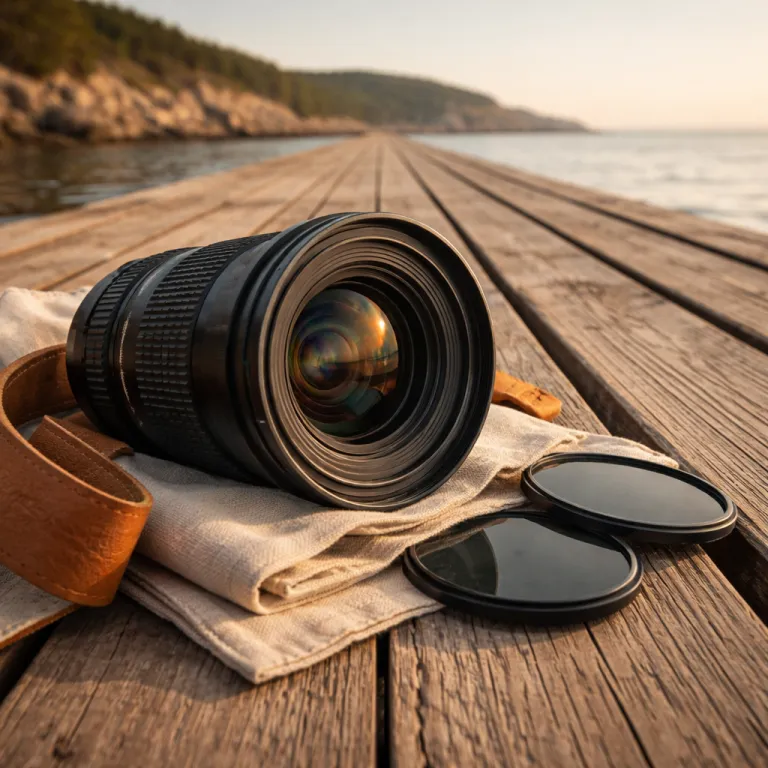
How to match your vision with the right landscape lens
The best landscape lens for a new photographer depends on the scenes they love most. If you dream about huge mountain ranges and dramatic skies, a wide angle camera lens between 14 mm and 24 mm on a full frame body will feel natural and let your photography breathe. For tighter landscapes or city skylines, a focal length between 24 mm and 35 mm gives a more realistic angle of view and keeps buildings from bending at the edges.
Think first about what kind of landscape photography excites you, then choose the focal range that supports that style. Grand vistas usually benefit from an ultra wide zoom lens, while intimate forest details or compressed hillsides often look better with a standard zoom or even a short telephoto prime lens around 50 mm to 85 mm on full frame. Once you know your preferred focal lengths, every later landscape lens purchase becomes easier because you are building a deliberate set of lenses instead of chasing random specifications.
On a crop sensor camera, you must translate focal length numbers to understand the real angle you will get. Most APS C cameras use a crop factor close to 1.5x (about 1.6x on many Canon models), so a 10 mm to 18 mm zoom range roughly matches a 16 mm to 29 mm range on full frame, which is ideal for beginners learning landscape photography. When people talk about the best wide angle lens a beginner can afford, they usually mean something in that translated wide range that keeps weight low and image quality high enough for large prints.
Ultra wide drama versus standard wide realism
Ultra wide lenses around 14 mm to 20 mm on full frame create drama, but they can also distort foreground rocks or trees if you are not careful. For many beginners, the most confidence inspiring landscape lens sits closer to the standard wide range between 24 mm and 28 mm, where straight lines stay straighter and the image feels more natural. If you use a crop sensor camera, that same feeling comes from a focal length between about 16 mm and 18 mm, which most kit zoom lenses already cover.
Use ultra wide glass when you want to stand very close to foreground elements and exaggerate depth in your shot. A 14 mm focal length on a full frame body pulls in a huge angle of view, so a small rock can dominate the frame while distant peaks still look impressive in the background. Standard wide options such as a 24 mm prime lens or a 24 mm to 70 mm standard zoom lens keep proportions calmer, which suits lakes, seascapes, and city landscape photography where you want balance more than spectacle.
If your camera has been sitting unused for months, a simple gear reset can help you decide which focal range you truly enjoy using most. Spend a weekend shooting only at the wide end of your zoom lens, then another weekend locked at a more standard focal length and compare how each shot feels. This kind of deliberate shooting will quickly reveal whether your personal starter landscape lens should lean toward ultra wide drama or toward a more restrained wide angle perspective.
Choosing between Canon, Sony and third party options
Brand names matter less than how a lens handles on your specific camera, but beginners still face real choices between Canon, Sony and third party options. If you own a Canon APS C mirrorless body such as an EOS R50, the compact Canon RF S 10 18mm F4.5 6.3 IS STM zoom lens gives a genuinely useful range for landscape photography while keeping weight in the very light travel category (around 150 g according to Canon’s published specifications). On Sony E mount, a lightweight Sony APS C zoom such as the E 10 18mm F4 OSS offers a similarly wide angle view with optical stabilization, a commonly quoted 62 mm filter thread and a travel friendly weight of roughly 225 g in most spec sheets.
Full frame shooters on Canon EOS R can look at a Canon RF 15 35mm F2.8 L IS USM wide angle zoom lens, which covers both ultra wide drama and more controlled wide perspectives in one camera lens. Sony full frame users often pair a 16 35mm Sony G or G Master zoom with a smaller standard zoom for travel, creating a flexible two lens kit that covers almost every landscape situation. If your budget is tight, third party lenses from Tamron or Sigma often deliver excellent image quality and useful focal lengths at lower prices, especially in the classic 17 28 mm or 17 35 mm ranges.
To make buying decisions more concrete, compare lenses by mount, focal range, weight, filter size and price tier. For example, a Canon RF S 10 18mm or Sony E 10 18mm F4 sits in the lightweight, mid priced bracket with small filter threads, while a Canon RF 15 35mm F2.8 L or Sony 16 35mm G Master belongs in the heavier, premium category with larger front elements and correspondingly bigger filters. When you are choosing the most sensible landscape lens a beginner can realistically afford, remember that any modern kit zoom stopped down to f/8 or f/11 can produce sharp landscape images, so handling, reliability and total system cost should guide your final choice.
Aperture, sharpness and practical field technique
Landscape photography rarely needs a very bright aperture, so do not obsess over f/1.4 or f/2.8 numbers when you pick your first lens. For most scenes, the most useful landscape lens for beginners is one that stays sharp and consistent around f/8 to f/11, where depth of field is deep and image quality usually peaks. At these apertures, both prime lenses and zoom lenses tend to perform similarly, which means your choice can focus more on focal range and handling than on maximum aperture bragging rights.
To keep everything from foreground grass to distant mountains sharp, think in terms of depth of field rather than a single magic rule. On a wide angle lens around 16 mm to 24 mm, focusing somewhere between one third and halfway into the scene at f/8 will usually keep the whole landscape acceptably sharp on both crop sensor and full frame cameras, especially when your nearest subject is not extremely close. If your camera offers focus peaking, a depth of field preview or a distance scale, use those tools to confirm that your chosen focal length, focus point and aperture give you the front to back sharpness you want before committing to the shot.
Tripods still matter, but wide angle lenses are more forgiving of hand shake than longer focal lengths, especially with modern image stabilization. A common guideline is to keep shutter speed at least as fast as the reciprocal of the full frame equivalent focal length, then give yourself extra safety for high resolution sensors or if your hands are not very steady. You can often handhold a stabilized 16 mm shot at relatively slow speeds in good light, but reserve the tripod for blue hour, long exposures of water or clouds, and very precise compositions where you will refine the frame carefully and wait for the perfect light.
Filters, protection and building a future proof kit
Filters remain one of the most underrated tools for landscape photography, especially for beginners who want to control reflections and skies. A circular polarizer on a wide angle lens can deepen blue skies, cut glare on wet rocks and improve overall image quality without any editing, as long as you avoid over rotating it on ultra wide focal lengths where the sky can darken unevenly. Neutral density filters let you blur water or clouds during long exposures, turning an ordinary shot into something more atmospheric while your camera stays locked on a tripod.
When you buy your first camera lens, pay attention to the filter thread size because it affects long term cost. Choosing landscape lenses with common sizes such as 67 mm, 77 mm or 82 mm means you can share one high quality polarizer or ND filter across several lenses, which saves money as your kit grows. Protecting that investment with a proper lens cap or hood also matters, and learning how a Canon lens cap, padded pouch or simple rain cover protects your camera investment every day will remind you that prevention is cheaper than repair.
As you refine your kit, think about how each new lens will complement your existing focal lengths rather than duplicate them. A practical three lens landscape set might include an ultra wide zoom lens, a standard zoom for general shooting and a small prime lens for low light or environmental portraits on the trail. In the end, the best first landscape lens is the one that encourages you to keep shooting regularly, because the most important upgrade is not the megapixel count but what you will still enjoy using in five years.
FAQ
What focal length is best for beginner landscape photography
For most beginners, a focal length between 16 mm and 35 mm on a full frame camera works well for landscape photography. On a crop sensor body, that translates to roughly 10 mm to 24 mm, which many kit zoom lenses already cover at the wide end. Staying in this range gives a natural wide angle view without extreme distortion that can make learning composition harder.
Should beginners buy a prime lens or a zoom lens for landscapes
A zoom lens is usually more practical as a first landscape lens because it covers several focal lengths in one piece of gear. Something like a 10 mm to 18 mm on APS C or a 16 mm to 35 mm on full frame lets you experiment with both ultra wide and standard wide perspectives. You can always add a small prime lens later once you know which focal length you use most often.
Do I really need a tripod for landscape photography
You do not always need a tripod, especially when using a wide angle lens in good light with image stabilization. Handheld shooting works fine for daytime landscapes if you keep your shutter speed reasonably fast and your stance stable. A tripod becomes essential for long exposures, blue hour scenes and precise compositions where you want to fine tune every part of the frame.
What aperture should I use to keep everything sharp in a landscape shot
For most landscapes, an aperture between f/8 and f/11 offers a good balance of sharpness and depth of field on both crop sensor and full frame cameras. At these settings, most lenses deliver their best image quality while keeping foreground and background reasonably sharp. Avoid stopping down beyond about f/16 unless you specifically want a starburst effect from the sun, because diffraction can start to soften the image.
Is an expensive professional lens necessary for good landscape photos
An expensive professional lens is not required to make strong landscape images, especially when you are starting out. Many kit zoom lenses become very sharp when used at f/8 or f/11, and careful composition plus good light matter far more than the price tag. Upgrading to higher end glass mainly brings better build quality, weather sealing and slightly improved image quality, which are helpful but not mandatory for learning.