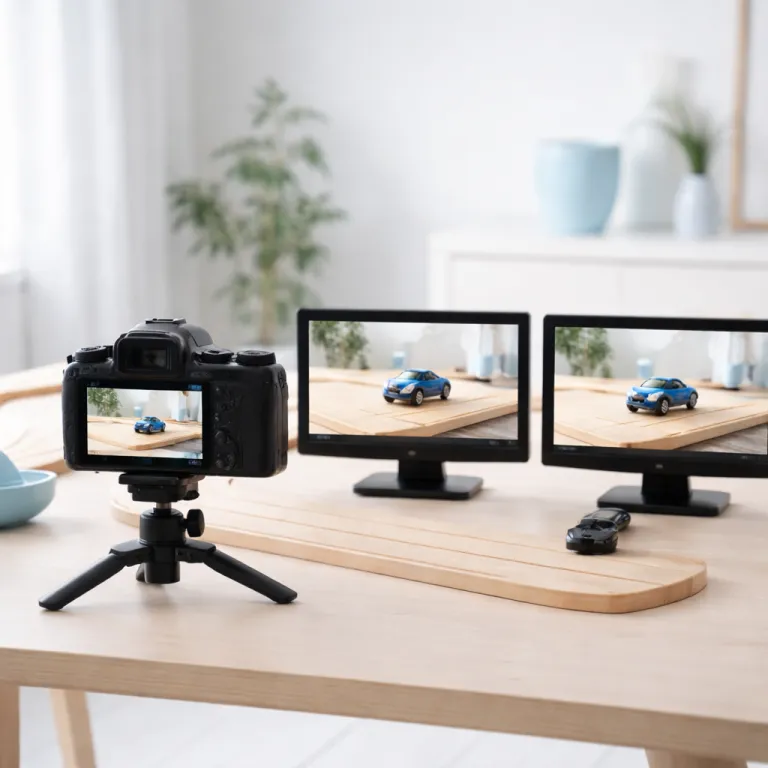
How ai autofocus cameras 2026 change solo shooting for creators
For a solo vlogger, the new wave of ai autofocus cameras 2026 finally tackles the oldest problem in self filming: staying sharp while you move. When you turn a camera like the Sony A7 V toward yourself, its driven autofocus systems can lock onto your eye, track your walk through a busy street, and keep your face crisp while the background melts away in full frame bokeh. That means you can shoot more confidently, talk to your audience, and trust the intelligent autofocus to do its job instead of babysitting the screen.
Across the camera industry, every major brand now sells mirrorless cameras that promise smarter autofocus performance for both photography and video. Sony, Canon, and Nikon each claim their latest cameras will recognize humans, animals, vehicles, and even helmets, using computational photography techniques that analyse patterns rather than just contrast. In practice, these subject detection systems help photographers and content creators get a higher keeper rate when shooting unpredictable subjects, especially when they move toward or away from the lens.
For video creators, the biggest shift is how these cameras handle continuous focus while you move and talk. On the Sony A7 V or the Canon EOS R5 Mark II, you can set back button autofocus, tap your face on the screen, and then walk toward the lens without the focus breathing or hunting. That kind of driven autofocus is what turns a stressful solo shoot into something closer to a conversation, where the camera will quietly track you while you think about story, not settings.
Still photographers feel the change differently, because they can always slow down and use single point focus. A landscape photographer with a Nikon Z8 or a Canon EOS R5 Mark II can rely on traditional autofocus points, manual focus, or focus peaking, and the AI layer mostly stays out of the way. For them, ai autofocus cameras 2026 are nice to have, but not always the best cameras investment compared with better lenses or longer battery life.
Where AI really earns its place is in hybrid shooting, when you switch between stills and video in the same session. A wedding shooter using both Canon and Nikon mirrorless systems might photograph the ceremony, then instantly roll video for the vows, trusting the autofocus systems to stay locked on the couple’s eyes. That hybrid flexibility is why many working photographers now treat advanced AI autofocus bodies as essential tools rather than just another spec sheet upgrade.
Entry level buyers feel the benefit too, especially those starting YouTube channels or TikTok accounts. A compact mirrorless camera with a flip screen, decent video capabilities, and reliable autofocus performance lets a beginner shoot talking head clips, B roll, and social media shorts without learning complex focus techniques. When a camera will quietly correct small framing errors and keep your face sharp, you can focus on content instead of constantly checking the screen.
For people who mainly shoot static subjects, AI is less transformative but still helpful. Product photographers filming overhead shots or flat lays can use subject detection to keep a logo or label sharp while they move lights or props. In these cases, ai autofocus cameras 2026 act like a safety net rather than a magic trick, catching small mistakes before they ruin a take.
One thing that often gets overlooked is how firmware updates extend the life of these bodies. Sony, Canon EOS, and Nikon regularly push new firmware that refines autofocus, adds subject types, and sometimes improves video codecs. When you buy into modern mirrorless cameras, you are also buying into a stream of firmware updates that can quietly turn a good camera into one of the best cameras in your bag two years later.
When AI autofocus earns its price for video and when it does not
For walking and talking vlogs, AI driven autofocus is no longer a luxury, it is the baseline. A camera like the Canon EOS R5 Mark II or the Nikon Z8 can track your eye as you weave through a crowd, keeping focus nailed even when people briefly block the frame. In these scenarios, ai autofocus cameras 2026 genuinely feel like a second camera operator, one that never gets tired or distracted.
Solo product reviewers see similar gains when they shoot close ups and then flip back to their face. On the Sony A7 V, the camera will lock onto your eye, then instantly switch focus to the object you hold near the lens when you cover your face, before snapping back as soon as you move the product aside. That kind of autofocus performance used to require careful focus pulls or a dedicated focus puller, but now content creators can handle it alone.
Where things fall apart is in complex group scenes with multiple faces at similar distances. At a family dinner, a Canon EOS body or a Nikon mirrorless camera might jump between faces as people lean in and out, forcing you to override the autofocus systems with touch focus or back button control. In those moments, ai autofocus cameras 2026 remind you that they are still guessing, not reading your mind.
Creative selective focus can also confuse even the best cameras with AI. If you want a foreground glass in focus and the person behind it blurred, many mirrorless cameras will stubbornly snap to the face unless you explicitly tell them otherwise. Photographers who care about this kind of nuanced focus often switch to manual focus or use a single point, proving that AI is not a replacement for intent in photography.
Fast lateral movement is another weak spot, especially in low light. A skateboarder crossing the frame at close range can outrun the tracking on some entry level bodies, even when the marketing promises perfect autofocus. In these edge cases, the camera industry hype around ai autofocus cameras 2026 feels ahead of what the hardware and firmware can reliably deliver.
For many working professionals though, even imperfect AI still pays for itself. If a wedding filmmaker gets a higher keeper rate on first kisses and aisle walks because the camera will cling to the bride’s eye, that is real money saved on reshoots and missed moments. Over a season, the combination of better autofocus performance and robust video capabilities often matters more than another stop of dynamic range.
New creators choosing their first mirrorless camera should weigh AI features against ergonomics and lenses. A well balanced body with a fully articulating screen, headphone and microphone jacks, and solid battery life will serve a vlogger better than a spec monster that overheats or feels awkward on a small tripod. For a clear starting point, many beginners do well with a thoughtfully chosen entry level mirrorless body, and guides such as the one mirrorless camera beginners should buy can help narrow the field.
Ultimately, the question is not whether AI autofocus is good, but whether it is good for your specific shooting style. If you mostly film static talking heads in controlled light, a simpler camera with reliable but basic autofocus may be enough. If you constantly move, reframe, and juggle social media content across platforms, ai autofocus cameras 2026 start to look less like a luxury and more like a necessary assistant.
Top mirrorless bodies where AI autofocus actually helps creators
Among current full frame options, the Sony A7 V stands out as a workhorse for hybrid photography and video. Its autofocus systems use a dedicated AI processing unit to track eyes, heads, and bodies, which gives content creators a noticeably higher keeper rate when shooting erratic subjects like kids or dogs. In real use, that means fewer soft clips and more usable content from each shoot.
The Canon EOS R5 Mark II takes a slightly different approach, leaning heavily on subject recognition tuned for people and vehicles. Canon EOS bodies have long been favourites among photographers for their colour and ergonomics, and the latest EOS Mark generation adds AI driven autofocus that feels sticky without being jumpy. For wedding shooters and documentary filmmakers, this balance between intelligence and predictability matters more than raw spec numbers.
Nikon’s Z8 brings much of the flagship Z9 autofocus performance into a smaller body. For sports and wildlife photography, its subject detection and tracking are strong enough that many photographers now trust it for critical assignments where missed focus used to be common. When paired with fast lenses, this camera will keep up with birds in flight or athletes sprinting toward the frame, even as light fades.
Not everyone needs full frame though, especially creators who prioritise portability. A well chosen APS C or Micro Four Thirds body can still rank among the best cameras for travel vlogging, particularly when paired with compact lenses and good in body stabilisation. For those who value light weight above all, curated lists such as this guide to top lightweight digital cameras can be more relevant than chasing the biggest sensors.
Panasonic Lumix bodies deserve a special mention for video capabilities, even though their autofocus has historically lagged behind Sony and Canon. Recent Lumix mirrorless cameras with phase detect autofocus narrow that gap, and firmware updates continue to refine subject tracking and human detection. For creators who care about codecs, waveform monitors, and open gate recording, these cameras offer serious tools with increasingly competent AI support.
Across brands, the real differentiator is how confidently you can shoot without second guessing the focus. A camera that lets you walk, talk, and reframe without hunting will free your attention for storytelling, lighting, and sound. That is why many content creators now rank autofocus performance alongside battery life and stabilisation when choosing their next body.
For buyers cross shopping Canon Nikon and Sony, it helps to think in systems rather than isolated cameras. Lenses, accessories, and long term firmware support shape your experience more than any single spec, especially as computational photography features evolve. When you commit to a mount, you are betting that the camera industry behind it will keep improving AI tools in ways that match your style of photography and video.
Even compact camcorders and bridge cameras now advertise AI autofocus, though their implementations vary widely. Some entry level models offer basic face detection that works well for centred talking heads but struggles with side profiles or hats. Before you buy, it is worth testing how a specific camera will handle your typical scenes, whether that is a kitchen set, a skate park, or a dim music venue.
Buying guide: matching AI autofocus to your real world workflow
Choosing among ai autofocus cameras 2026 starts with an honest look at how you actually shoot. If your content is mostly seated talking heads for social media, you can prioritise reliable face detection, clean HDMI output, and long battery life over exotic subject modes. In that case, even an entry level mirrorless camera with solid firmware and a good kit lens may be enough.
Creators who vlog on the move need a different balance of features. Look for mirrorless cameras with strong in body stabilisation, fully articulating screens, and autofocus systems that stay locked on your eye while you walk, turn, and gesture. A camera will only feel like a partner if it can keep up with your movement without constant intervention.
If you often shoot products, food, or tech reviews, test how quickly a camera shifts focus between your face and an object held near the lens. Sony, Canon EOS, and Nikon bodies each handle this differently, and small differences in autofocus performance can make or break your workflow. Some cameras even let you prioritise either faces or objects in the menu, which is invaluable for content creators who live on YouTube and Instagram.
Hybrid shooters who mix photography and video should pay attention to ergonomics and heat management. A body that records high quality video but overheats after twenty minutes will not survive a long interview or event. In this context, ai autofocus cameras 2026 only matter if the rest of the camera systems are robust enough to support real world shooting days.
Do not overlook firmware updates when comparing spec sheets. Brands that consistently ship meaningful firmware improvements effectively extend the durée de vie of your camera, especially as computational photography features mature. Over time, a camera with strong ongoing firmware support can feel like a better investment than a slightly sharper sensor locked in place.
Budget conscious buyers should also consider specialised options outside the usual interchangeable lens bodies. Some compact vlogging cameras and camcorders offer surprisingly capable driven autofocus, built in microphones, and simple menus that suit beginners. For example, a dedicated 4K vlogging camcorder such as the model reviewed here as a test 4K video camera for YouTube can be a practical stepping stone before investing in a full frame system.
Whatever you choose, remember that AI is there to support your intent, not replace it. The best cameras for you are the ones that fade into the background while you think about story, pacing, and how your photography or video will feel to viewers. In the end, the most important spec is not the megapixel count, but what you will still want to shoot with in five years.
Key figures on AI autofocus and mirrorless adoption
- According to CIPA shipment data, mirrorless cameras accounted for more than half of interchangeable lens camera sales worldwide in the mid 2020s, showing how quickly photographers and content creators have shifted away from DSLRs toward systems that support advanced AI autofocus.
- Sony reported that bodies with dedicated AI processing units, such as the A7 series, deliver a significantly higher keeper rate in continuous autofocus compared with previous generations, especially for human eye tracking in both photography and video.
- Industry analyses from firms like Techno Systems Research indicate that more than 80 percent of new interchangeable lens cameras launched recently include some form of subject detection autofocus, confirming that AI driven autofocus is now a standard expectation rather than a niche feature.
- Independent lab tests published by major review outlets show that modern full frame mirrorless cameras can maintain accurate eye detection down to around –4 EV in low light, a level that previously required manual focus skills or external lighting to achieve consistently.
- Battery life remains a constraint for heavy video users, with many hybrid mirrorless bodies rated for roughly 300 to 500 still shots per charge under CIPA standards, which often translates to about 60 to 90 minutes of continuous 4K recording before swapping batteries.