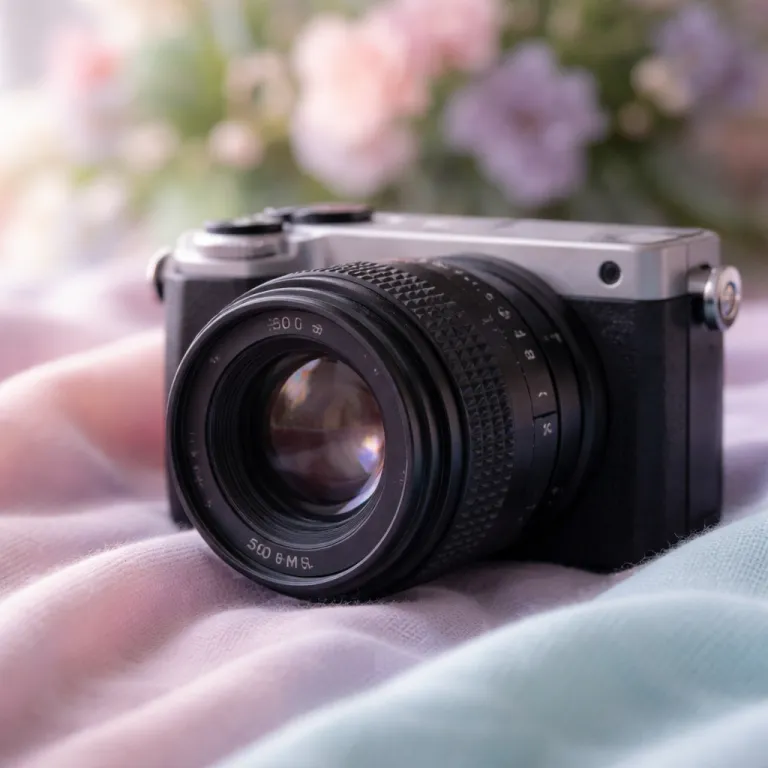
Why the best budget portrait lens starts with focal length
The best budget portrait lens for most people is a fast 50 mm prime. At this focal length on a full frame camera you get natural perspective, gentle compression and enough working distance for relaxed portrait photography. On an APS C body that same lens behaves more like a longer focal of around 75 mm, which is ideal for tighter portrait framing.
Understanding focal length is more important than chasing the absolute best specifications. A 50 mm portrait lens lets you shoot half body portraits in small rooms, while an 85 mm portrait lens or other longer focal lenses portrait are better for head and shoulders work outdoors. Portrait photographers who use both focal lengths quickly learn that the best portrait framing depends as much on the space as on the lens itself.
For a first budget portrait prime, a 50 mm f/1.8 is usually the best budget choice. This type of lens canon, lens Nikon or Sony FE 50 mm f/1.8 gives you a wide aperture without the weight or price of f/1.4 glass, and it keeps your kit compact enough that you will actually bring the camera everywhere. If you already own a kit zoom, adding one of these portrait lenses instantly upgrades your low light performance and your ability to blur backgrounds for great portraits.
50 mm versus 85 mm for portraits on canon, nikon and other mounts
Choosing between 50 mm and 85 mm portrait lenses is really about distance and background. With a 50 mm portrait lens on a full frame camera you can shoot full body portraits in a small living room, while an 85 mm lens needs more space but gives stronger background separation. On APS C bodies from Canon, Nikon or Sony, a 35 mm prime often plays the same role as a 50 mm, so always think about the effective focal length.
On Canon mirrorless, the RF 50 mm f/1.8 STM is the best budget portrait lens for most beginners. It is small, light and sharp enough that in real photography it outperforms many zoom lenses that cost several times more, especially when used wide open at f/1.8. If you want a longer focal for tighter portrait photography, pairing that lens canon with an 85 mm f/2 macro style lens gives you both classic portrait and close up macro options in one compact kit.
Nikon shooters have similarly strong lens options in the Z mount system. The Nikon Z 50 mm f/1.8 S is not the cheapest lens Nikon makes, but its build quality, autofocus consistency and rendering make it a best portrait tool for serious enthusiasts. For those who want the classic 85 mm look, the Nikon Nikkor Z 85 mm f/1.8 S is widely regarded as one of the best portrait lenses per dollar, and many portrait photographers consider it their main budget portrait workhorse for both studio and outdoor sessions; if you also enjoy landscapes, pairing one of these primes with a dedicated wide angle from a guide on choosing the best camera lens for landscape photography creates a very versatile two lens kit.
Aperture myths, low light reality and autofocus hit rate
Many photographers assume that the best portrait lens must have an f/1.4 or even wider aperture. In practice, the difference between f/1.4 and f/1.8 is just one stop of light, while the price jump can be several hundred euros for the same focal length. For a best budget setup, that money is often better spent on a second lens, a flash or a comfortable strap that improves camera handling.
Shooting wide open at f/1.4 sounds great for low light, but the depth of field can be razor thin. On a portrait lens at 85 mm, an aperture of f/1.8 already gives strong background blur while keeping both eyes sharp, which improves your autofocus hit rate on moving subjects. If your camera body has reliable eye detection autofocus, you will see more keepers at f/1.8 or f/2 than at f/1.2, especially when you are working quickly with children or couples.
Budget primes from Canon and Nikon often use STM or USM style motors that balance speed, silence and price. These autofocus systems are fast enough for portrait photography, street work and even some action, provided you learn your camera’s focus modes and use back button AF where available. If you are exploring people pictures alongside candid city work, a guide on how to choose the best lens for street photography with confidence can help you decide whether a 35 mm or 50 mm prime should be your first budget portrait purchase.
Vintage glass, macro tricks and real world build quality
If your budget is extremely tight, manual focus vintage lenses can be a surprisingly great path into portrait photography. Classic 50 mm f/1.4 lenses from systems like Canon FD or old Nikon Nikkor film cameras often adapt easily to modern mirrorless mounts, and many cost less than a night out. A Helios 44 2 with its swirly bokeh can turn a simple portrait into something artistic, as long as you accept manual focus and slower shooting.
These older lenses lack modern autofocus and electronic aperture control, but they teach you to slow down and really see the light. On mirrorless bodies with focus peaking and magnification, manually focusing a portrait lens is far easier than it was on film SLRs, and your hit rate improves quickly with practice. For close up details like hands, eyes or jewellery, adding a cheap macro extension tube behind a 50 mm prime can simulate a dedicated macro lens without breaking your budget.
Build quality on budget modern lenses is better than many people expect. The Canon RF 50 mm f/1.8 STM and Nikon Z 50 mm f/1.8 S both use plastic barrels but solid mounts, and they withstand regular use in real photography, from family sessions to travel. If you often shoot outdoors, pairing these lenses with a comfortable leather strap, as explained in guides about how leather strapping can transform camera handling and field reliability, will do more for your shooting experience than chasing heavier metal barrels.
Practical exercises and choosing your own best budget portrait kit
Before you spend more on glass, push your current portrait lens as far as it will go. Set your 50 mm or 85 mm prime to f/1.8, shoot at least twenty portraits in different light and review them critically on a large screen. Look at where the autofocus missed, how the background blur feels and whether the focal length suits your style of portrait photography.
If you consistently wish for more background separation, you might benefit from a longer focal such as an 85 mm or even 105 mm lens. Portrait photographers who work mostly outdoors often prefer these longer portrait lenses because they compress features slightly and simplify busy backgrounds, especially when used wide open. Those who shoot families in small homes usually find that a 35 mm or 50 mm lens is the best budget compromise between space, distortion and subject comfort.
When you read any lens review, focus less on lab charts and more on autofocus behaviour, build quality and how the lens handles flare and low light. Real world photography is about whether a lens will help you connect with your subject, not just whether it is technically the best on paper. In the end, the best budget portrait lens is the one that fits your mount, feels balanced on your camera and keeps you excited to shoot portraits long after the novelty of new gear has faded.
FAQ
Is a 50 mm or 85 mm better for portraits on a budget ?
A 50 mm f/1.8 is usually the best budget choice for your first portrait lens, especially if you shoot in small indoor spaces. An 85 mm f/1.8 works better for tighter head and shoulders portraits outdoors, where you have room to step back. Many portrait photographers eventually own both focal lengths, but starting with a 50 mm gives more flexibility for everyday photography.
Do I really need an f/1.4 lens for great portraits ?
For most people, an f/1.8 prime offers more than enough background blur and low light performance. The extra stop from f/1.8 to f/1.4 costs significantly more and often brings only a subtle visual difference, along with a thinner depth of field that can reduce your autofocus hit rate. Unless you already shoot confidently at f/1.8 and know exactly why you need faster glass, your money is usually better spent on lighting or a second focal length.
Can I use a macro lens for portrait photography ?
Yes, many macro lenses around 90 mm to 105 mm work very well as portrait lenses. They tend to be extremely sharp, so you may want to soften skin slightly in post processing, but their focal length and close focusing ability make them versatile tools. If you already own a macro lens in this range, try it for portraits before buying a dedicated portrait lens.
Are vintage manual focus lenses worth it for portraits ?
Vintage manual focus lenses can be a great low cost way to explore different looks, especially classic 50 mm and 85 mm primes. On modern mirrorless cameras with focus peaking, manual focusing is much easier than on old film bodies, though it is still slower than autofocus. If you mostly shoot posed portraits and enjoy a deliberate pace, a well chosen vintage lens can be a very satisfying budget portrait option.
What should I look for in a budget portrait lens ?
Key factors are focal length, maximum aperture, autofocus reliability and how the lens balances on your camera. A 50 mm or 85 mm f/1.8 with consistent autofocus, decent build quality and a metal mount will usually serve you better than a heavier, more expensive lens you hesitate to carry. Always check real world user feedback about low light performance and handling, not just the specifications on paper.