
Summary
Editor's rating
Value for money: who it makes sense for in 2026
Design: pocketable and simple, but a few small annoyances
Battery life: okay for a day if you’re not trigger‑happy
Build quality and long‑term feel
Image quality and autofocus: good daylight, average low‑light
What the Canon IXUS 285 HS actually offers
Pros
- Very compact and light, easy to carry everywhere
- 12x optical zoom (25–300 mm equivalent) useful for travel and everyday shots
- Simple point‑and‑shoot operation with decent daylight image quality
Cons
- Average low‑light performance and noisy images at higher ISO
- Fixed screen and dated feature set (no 4K, limited controls)
- Battery life only moderate, especially with video and Wi‑Fi use

Specifications
View full product page →| Brand | Canon |
Why I picked up this little Canon instead of just using my phone
I bought the Canon IXUS 285 HS because I wanted something small I could throw in a pocket for holidays and family stuff, without dragging around a big DSLR. My phone camera is fine in daylight, but I wanted a proper zoom and a real camera feel without getting into interchangeable lenses and all that. The price was reasonable for a compact, and Canon usually does decent imaging, so I gave it a go.
After a couple of weeks of use – walks, a short city trip, some indoor family shots – I’ve got a pretty clear idea of what this thing is good at and where it’s just average. It’s a 20.2 MP compact camera with a 12x optical zoom, a 3" screen, and Wi‑Fi. So on paper, it sounds like a nice upgrade over a basic point‑and‑shoot from a few years ago. In practice, it’s more of a convenience tool than a serious camera.
The main thing that made me stick with it during these tests is the zoom. Being able to go from a fairly wide 25 mm to a 300 mm equivalent in a shirt pocket is handy. For street signs, details on buildings, kids on a playground when you’re sitting on a bench – it gets the job done. But you do feel the limits of the small 1/2.3" sensor, especially when the light drops.
So this review is from the point of view of a normal user: someone who just wants nice holiday photos, a bit of video, and doesn’t want to carry a big camera. I’ll go through design, performance, battery, and value, with the good and the bad. It’s not perfect, and there are phones that will beat it in some areas, but it still makes sense for certain people.
Value for money: who it makes sense for in 2026
Talking about value, you really have to compare this camera to two things: modern smartphones and slightly more advanced compact cameras. Compared to a mid‑range phone, the IXUS 285 HS gives you a real 12x optical zoom and a dedicated camera you can hand to someone without worrying about your messages popping up. In daylight, image quality is roughly on par with a decent phone, sometimes a bit better at full zoom. In low light, many newer phones with computational tricks will do better.
If you look at higher‑end compacts or small mirrorless cameras, those will beat the IXUS easily in image quality, controls, and features – but they also cost more and are bulkier. So the IXUS 285 HS sits in a middle zone: it’s for people who want something simple, small, and separate from their phone, but don’t care about going deep into photography. For that group, the price is fair. You’re paying for convenience and zoom, not cutting‑edge tech.
The downsides for value are mainly the dated features: no 4K video, no RAW in practice, average low‑light performance, basic stabilisation, and a fixed screen. In 2026, some other compacts and even budget mirrorless options give you more room to grow as a photographer for a bit more money. If you think you might get more serious about photography, I’d say skip this and put your money toward something with a larger sensor and better controls.
For someone who just wants a reliable pocket camera for holidays, kids’ events, and the occasional city break, it’s good value but nothing special. It gets the job done, does what it says, and most Amazon buyers seem reasonably satisfied, with a 4/5 average. Just be aware of the limits and don’t expect it to replace a proper camera system or the latest flagship phone in every situation.
Design: pocketable and simple, but a few small annoyances
Design‑wise, the IXUS 285 HS is very compact and light. At about 150 g, it feels almost like a chunky smartphone. It slips easily into jeans or a jacket pocket, and that’s probably its biggest strength. I often just tossed it in my pocket next to my keys (not recommended, but that’s what I did) and didn’t really notice the weight. For travel and day trips, that’s great – you don’t think twice about taking it with you.
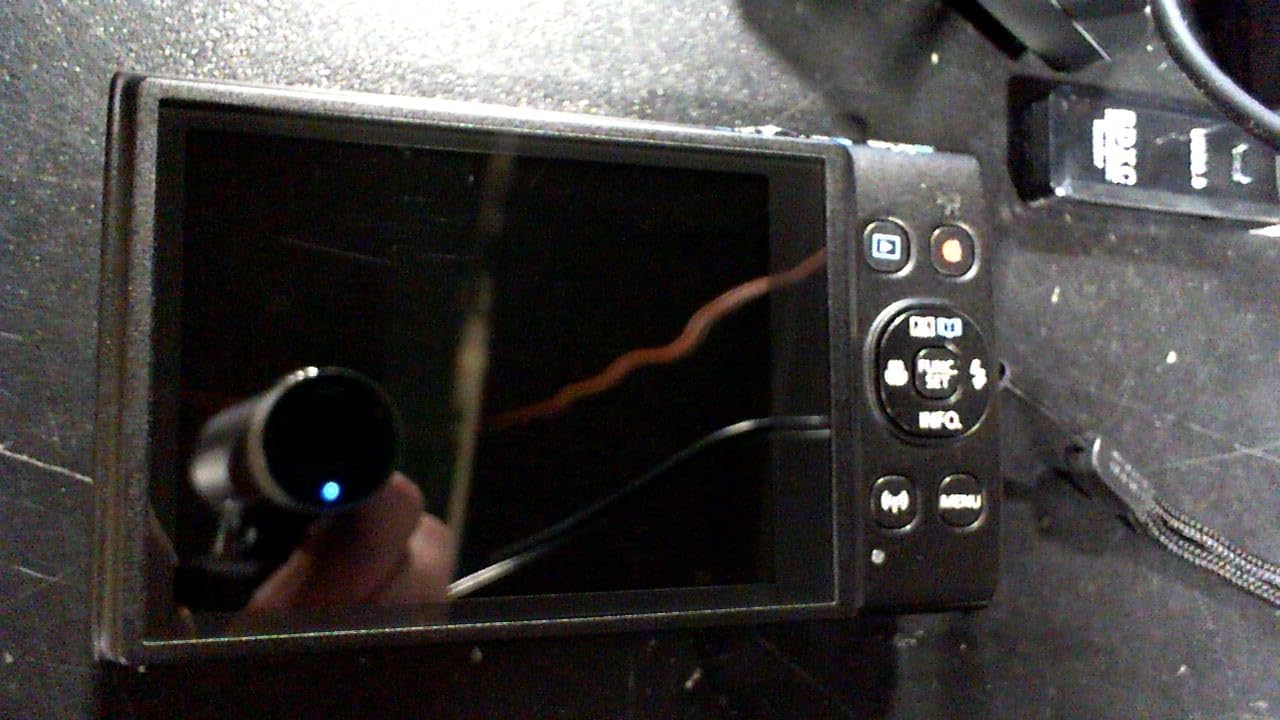
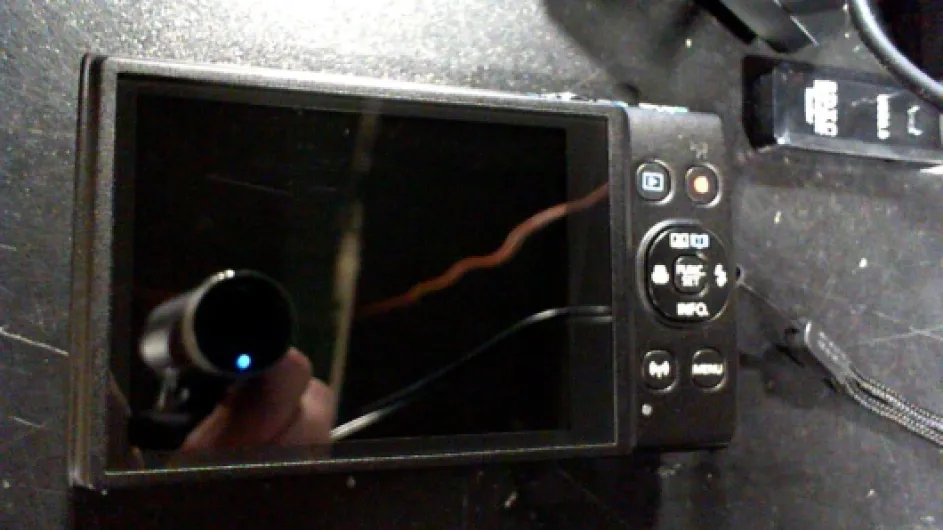
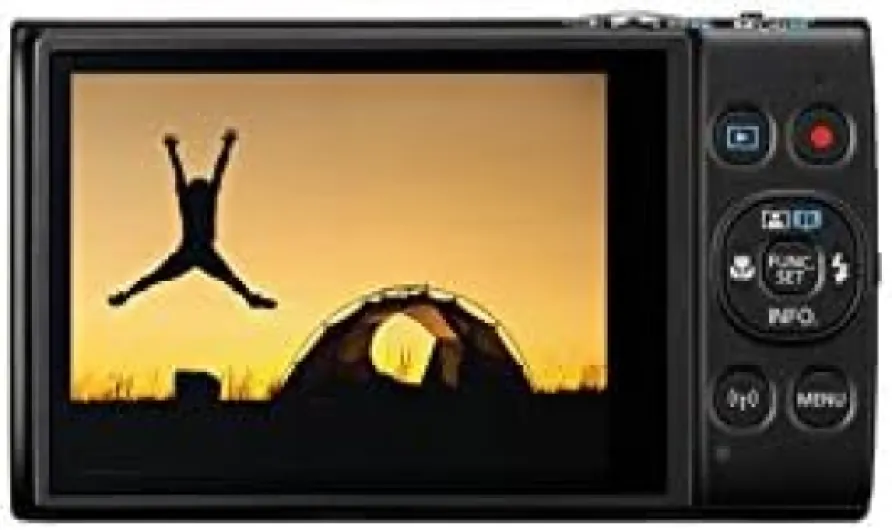
The body is metal, with a black finish that looks decent and not too flashy. The front is dominated by the lens, which extends when you power it on. On top you have a simple layout: power button and shutter, plus the zoom rocker. On the back, the 3" LCD takes most of the space, surrounded by a directional pad and a few buttons for menu, playback, Wi‑Fi, etc. It’s pretty straightforward and you get used to it after a day or two. I could operate it with one hand most of the time, which is handy when you’re juggling bags or kids.
On the downside, the buttons are quite small and a bit cramped, especially if you have bigger fingers. I sometimes pressed the wrong thing when trying to change settings quickly. Also, the screen doesn’t tilt or swivel, so shooting from low angles or above a crowd is guesswork. You just hold it up and hope the framing is okay. In bright sunlight, the screen is usable but not great; reflections can be annoying, and there is no viewfinder as backup.
One more thing worth mentioning: some users reported units arriving with Japanese menus and manuals. Mine came with English menus by default, but the printed manual was very basic, and the full instructions were only available online. Not a deal breaker, but it adds to the feeling that the camera is a bit bare‑bones in terms of user support. Overall, the design is practical and compact, but not especially comfortable for long shooting sessions, and the fixed screen feels dated in 2026 terms.
Battery life: okay for a day if you’re not trigger‑happy
The IXUS 285 HS uses a small lithium‑ion battery, which is included in the box. In real use, I got roughly 200–250 shots on a full charge, mixing photos and a few short 1080p videos, plus some time spent reviewing images on the screen. That’s more or less in line with what you expect from a compact of this size. For a normal sightseeing day, taking photos here and there, it’s fine. I rarely hit the low‑battery warning before getting back to the hotel.
However, if you like to shoot a lot of video or you constantly check and zoom through your photos on the LCD, the battery drains pretty quickly. Wi‑Fi also eats into battery life if you use it to transfer pictures to your phone. After one afternoon where I filmed several clips and used Wi‑Fi to share them, the camera was almost dead by the evening. So if you’re planning a long day of heavy use – like a theme park or a full wedding as a backup camera – you’ll want a spare battery. They’re not huge or expensive, but it’s an extra thing to remember.
Charging is done by taking the battery out and putting it into a separate charger. Personally, I prefer that to charging over micro‑USB, because you can charge a spare while using the camera. But it also means you can’t just plug the camera into a power bank on the go if you forget the charger. The charge time is roughly a couple of hours from empty to full, which is acceptable.
So in short: battery life is acceptable but not impressive. It gets the job done for a casual user or a holiday day, but if you’re used to a phone that can shoot all day, you’ll notice the difference. If you buy this camera, I’d strongly recommend budgeting for at least one extra battery if you travel a lot or shoot many videos.
Build quality and long‑term feel
In the hand, the IXUS 285 HS feels solid enough for a small camera, thanks to the metal body. It doesn’t creak or flex when you grip it, and the buttons haven’t gotten mushy during my time with it. I carried it loose in a bag, in a jacket pocket, and once even dropped it from about waist height onto a wooden floor. It survived without any obvious damage, just a tiny mark on the corner. So it’s not fragile, but of course it’s not built like a rugged action camera either.
The moving part that worries me the most is the lens mechanism. Like all compact zooms, the lens extends and retracts every time you power it on and off. If dust or sand gets in there, you can have problems. I avoided using it on a very windy beach day for that reason. So far, the zoom has worked smoothly and quietly, but I wouldn’t abuse it. A simple case or at least not tossing it into a sandy bag would help a lot with long‑term durability.
The screen has held up fine, but it will scratch if you’re careless. There’s no special tough glass here, it’s just a normal LCD cover. I’d consider a cheap screen protector if you’re picky about marks. The ports (USB and HDMI) are behind a small flap that feels a bit flimsy; I wouldn’t yank it too hard. The battery and SD card door is better, with a proper latch that clicks into place.
Overall, the durability is pretty solid for normal adult use: city trips, family events, holidays. It’s not waterproof, it has no shockproof rating, and it’s not meant for hardcore outdoor abuse. If you treat it like an electronic device and not like a GoPro, it should last several years without drama. The only real risk is the extending lens, which is the same story with almost all compact zoom cameras.
Image quality and autofocus: good daylight, average low‑light
In terms of image quality, this camera is decent for what it is. In daylight, photos look sharp enough, with good detail at the wide end of the zoom. The 20.2 MP resolution is plenty for social media and prints up to A4. Colours are on the slightly punchy side, which most casual users will like. Faces look fine, and the automatic scene detection usually picks a reasonable setting. For holiday shots, city walks, and outdoor family events, I was generally happy with the results.
Once you zoom in towards the 300 mm end, you start to see the limits. Sharpness drops a bit, especially in the corners, and the digital stabilisation struggles if your hands aren’t steady. I had several shots at full zoom that looked a bit soft or slightly blurred if the light wasn’t great. You can still get usable photos, but you have to pay attention to how you hold the camera and maybe take a couple of shots of the same scene to be safe.
Low‑light performance is where you really feel the small sensor. Indoors in the evening or in darker streets, noise creeps in quickly. The camera pushes the ISO up to keep the shutter speed usable, and fine detail turns into a sort of grainy mush. For casual snaps it’s okay, but if you compare it side by side with a good modern smartphone, the phone often wins in low light. Autofocus is also slower in darker situations; it hunts a bit, especially at full zoom, and you can miss moments if you’re not patient.
Autofocus in good light is fine – not lightning fast, but quick enough for normal use. Continuous AF is basic; don’t expect to track fast‑moving kids running around toward the camera with perfect success. Burst mode is about 2.5 fps, which is modest. So overall, performance is solid for daylight snapshots and moderate zoom, but not impressive in low light or fast action. If that’s your main use case, you should probably look at something more advanced or just rely on a top‑tier phone.
What the Canon IXUS 285 HS actually offers
On the spec sheet, the IXUS 285 HS is a compact 20.2 MP camera with a 1/2.3" CMOS sensor, 12x optical zoom (25–300 mm equivalent), Full HD video (1080p), and Wi‑Fi. It’s sold as a simple take‑anywhere camera with enough zoom to cover most casual situations: landscapes, portraits, a bit of wildlife at the zoo, that kind of thing. You get a 3" LCD screen on the back (fixed, not tilting), and it uses a small lithium‑ion battery that’s included in the box.
In terms of shooting modes, it’s very much a point‑and‑shoot. You have automatic exposure, scene modes, some creative filters, and a basic movie mode. You don’t get full manual control like on higher‑end models, so if you’re the type who wants to set shutter speed and aperture precisely, this is not really aimed at you. ISO goes up to 3200, but honestly, anything above 800 starts to look noisy and a bit muddy, which is typical for this sensor size.
The camera saves photos as JPEG, even though some product data says RAW – mine is JPEG only in practice, so don’t expect a full RAW workflow like on a DSLR. Video is 1080p at around 30 fps, which is fine for holidays and casual YouTube clips, but you won’t get slow motion or fancy codecs. There’s digital image stabilisation, which helps a bit with handshake, but don’t expect miracles at full zoom in low light.
Overall, the presentation is clear: this is a simple compact camera designed for adults who want something better than a cheap basic compact from years ago, but not a full system camera. If you keep that in mind and don’t expect pro features, the spec sheet makes sense. Where it gets interesting is how all this behaves in real life, which I’ll cover in the performance and value sections.
Pros
- Very compact and light, easy to carry everywhere
- 12x optical zoom (25–300 mm equivalent) useful for travel and everyday shots
- Simple point‑and‑shoot operation with decent daylight image quality
Cons
- Average low‑light performance and noisy images at higher ISO
- Fixed screen and dated feature set (no 4K, limited controls)
- Battery life only moderate, especially with video and Wi‑Fi use
Conclusion
Editor's rating
The Canon IXUS 285 HS is a straightforward pocket camera that does what most casual users need: decent photos in daylight, a useful 12x zoom, and simple operation. It’s light, easy to carry, and doesn’t feel cheap in the hand. For holidays, day trips, and family gatherings, it’s a practical tool. You turn it on, point, shoot, and you usually get a usable photo without digging into menus. Wi‑Fi is handy for quickly sending pictures to your phone, though it’s not the fastest or most polished system.
On the flip side, it’s clearly built with casual use in mind. Low‑light performance is just okay, the stabilisation struggles at full zoom in dim conditions, and there’s no real room to grow if you get more serious about photography. The fixed screen and basic controls feel dated in 2026, and a good modern smartphone will match or beat it in many situations, especially indoors. Battery life is acceptable but nothing more, so a spare battery is a good idea if you shoot a lot.
So who is this for? It’s for people who want a simple, compact camera separate from their phone, mainly for travel and family photos, and who value the 12x optical zoom. If you already own a strong recent smartphone camera or you’re thinking about learning photography properly, I’d look elsewhere. But if you just want an easy little camera that lives in your pocket and keeps your phone free, the IXUS 285 HS is a solid, no‑nonsense option.