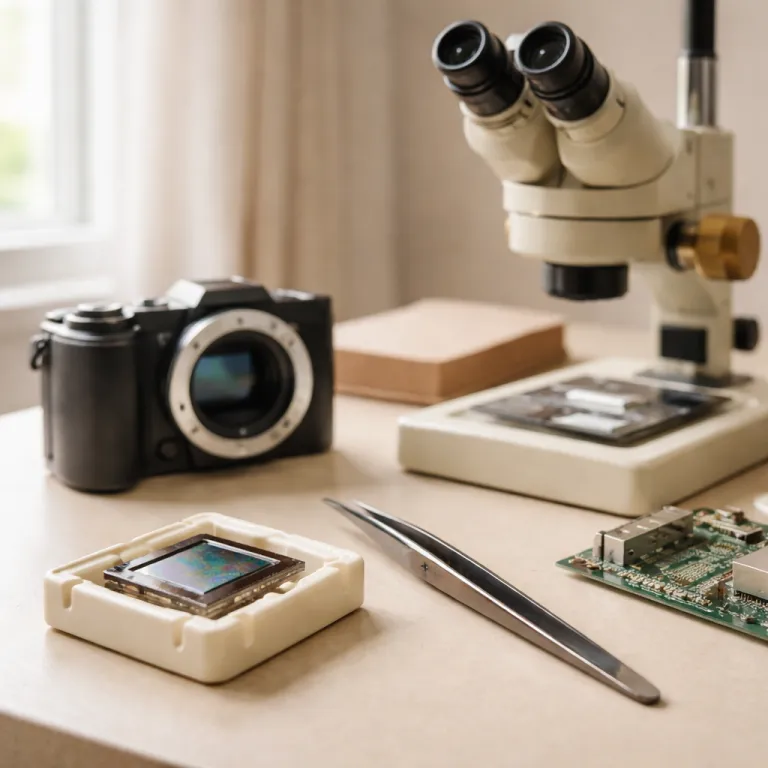
Leica–Gpixel sensor partnership and the end of Sony’s quiet monopoly
The Leica–Gpixel sensor partnership signals a rare shift in a camera industry that has leaned heavily on Sony for image sensors. For years, Sony Semiconductor has supplied roughly seventy percent of the sensors inside mirrorless cameras, according to Sony’s own image sensor business reports for the mid‑2020s, which quietly limited how far brands could push unique design, dynamic range, and low light performance on their own terms. This new strategic partnership between Leica Camera AG and Chinese CMOS image specialist Gpixel will not change your photos tomorrow, but it may decide what kind of image sensor sits in your bag five years from now.
Leica confirmed in a 2024 corporate announcement that the company and Gpixel will co-develop next-generation Leica sensor technology rather than simply buying off-the-shelf Gpixel sensor parts. In Leica’s wording, the agreement covers “joint development of customized CMOS image sensors” for future Leica cameras, which matters because a true Leica approach to sensor tuning has always been about color, highlight roll-off, and a wide range of tonal subtlety, not just high-resolution numbers on a spec sheet. When Gpixel shares its experience from industrial and professional imaging markets, where BSI sensors and stacked CMOS image designs already push extremely high performance—such as Gpixel’s GMAX and GSPRINT families with fast readout and high full-well capacity—Leica cameras gain access to architectures that were previously reserved for machine vision and scientific imaging.
For everyday photographers, the headline is simple yet important. More companies building serious image sensors means less dependence on a single supplier, which in time can ease pricing pressure on full-frame bodies and open space for more experimental Gpixel-based camera designs. If you are weighing a move from a first-generation Leica body or a Panasonic Lumix to something more modern, this news is less about the next six months and more about the generation of Leica and Panasonic cameras you will be shooting in the next cycle, because developing, validating, and ramping a new sensor platform typically takes three to five years from initial announcement to volume production.
What next generation Leica–Gpixel sensors could mean for Panasonic cameras
Panasonic cameras sit in a particularly interesting spot as the Leica–Gpixel sensor partnership takes shape, because Panasonic already shares lens mounts and some imaging pipelines with Leica cameras in the L-Mount Alliance. Right now, many Panasonic full-frame bodies rely on Sony-made image sensors, which deliver solid dynamic range and low noise but also lock Panasonic into the same base silicon as rivals from Nikon and Sony itself. If a future series of Leica sensor designs co-engineered with Gpixel reaches L-Mount Panasonic cameras, you could see a wider range of bodies that prioritize different aspects of performance instead of chasing the same spec sheet targets, for example trading headline resolution for faster readout or improved rolling-shutter control.
Think about a future Panasonic S-series body tuned for high-performance video with a Gpixel sensor optimized for readout speed, sitting next to a compact travel camera based on a Gpixel BSI architecture for cleaner high-ISO stills. BSI (back-side illuminated) sensors move wiring behind the light-sensitive area to capture more photons, while stacked CMOS designs place fast logic beneath the pixel layer for dramatically quicker readout and reduced rolling shutter—similar in concept to Sony’s stacked Exmor RS sensors used in high-speed cameras. That kind of segmentation already exists in smartphones, but the dedicated camera market has been slower to adopt such specialized image sensors because the supply chain has been narrow. For a deep dive into how one current Panasonic body already balances size, image quality, and handling, the analysis of the Panasonic Lumix GX80 and GX85 for enthusiasts shows how much room there is for sensor-driven evolution in this range.
Gpixel comes from industrial and scientific imaging, where professional imaging demands push CMOS image designs far beyond what casual cameras need, and that heritage could feed directly into a new generation of Leica-tuned sensor modules. In practice, that might mean full-frame Panasonic cameras with more forgiving highlight headroom, richer color in mixed light, and autofocus that holds on better in dim interiors because the underlying image sensors gather more usable signal per unit of time. If you are the kind of photographer who already shoots a Panasonic G-series or S-series body and is wondering when to upgrade, the realistic answer is that products based on this strategic partnership will likely land closer to the end of the decade than your next seasonal sale, assuming a multi-year development and testing cycle before any Leica–Gpixel sensor appears in a shipping Panasonic camera.
Timeline, industry impact, and what photographers should do now
The Leica–Gpixel sensor partnership is long term by design, and Leica has been clear in its press communications that this strategic collaboration is about co-developing platforms, not rushing a single sensor into the next Leica camera body. Building a new family of high-performance image sensors, validating them for stills and video, and then integrating them into cameras takes years, especially when you are targeting premium full-frame models that promise true Leica rendering. That means you should not delay an upgrade to a current Panasonic or Leica body if your existing camera is holding back your work, because Gpixel-based products are unlikely to appear in stores before several more product cycles, and any concrete launch dates beyond that are still speculative.
For context, Canon continues to design its own image sensors in-house, while Samsung focuses its CMOS image business on smartphones, leaving Sony as the dominant third-party supplier for interchangeable-lens cameras. A credible alternative pipeline where Gpixel supplies custom BSI and possibly stacked image sensor designs to Leica, and potentially to Panasonic cameras through alliance channels, introduces real competition at the silicon level. Over time, that competition can translate into a wider range of bodies at different price points, from compact high-resolution travel cameras to robust professional imaging tools with exceptional dynamic range and low-light performance, rather than a market where most full-frame cameras share similar Sony-derived sensor characteristics.
If you are comparing a current Panasonic S5 II to other full-frame options, resources such as the hands-on EOS RP full-frame mirrorless review help frame what today’s sensors already deliver in real use. The Leica–Gpixel sensor partnership will not rewrite those comparisons overnight, but it sets the stage for a future in which Leica sensor technology, Gpixel’s industrial imaging expertise, and Panasonic’s pragmatic camera design converge into tools that feel less constrained by one supplier’s roadmap. When you plan your next upgrade, think less about chasing every new series name in the news and more about choosing the camera whose image, handling, and reliability will still suit your work after many minutes of reading spec sheets and many years of shooting, while keeping an eye on official Leica and Gpixel announcements for concrete sensor timelines.
Sources
Leica Camera AG corporate communications, including the 2024 announcement of a strategic partnership with Gpixel for co-developed CMOS image sensors; Gpixel product documentation and corporate announcements describing GMAX and GSPRINT industrial BSI and high-speed CMOS families; Sony Semiconductor business reports outlining market share for image sensors in digital cameras and smartphones.