
Summary
Editor's rating
Is it good value or should you look elsewhere?
Retro look, modern guts, and a couple of quirks
Battery life and the annoying charging situation
Build quality, wear over time, and what feels fragile
Image quality, autofocus, and video: how it behaves in real life
What you actually get with this kit
Pros
- Very compact and light body with a flat 14‑42mm pancake lens, easy to carry daily
- Good 20 MP image quality in normal light plus effective 5‑axis in-body stabilisation
- User-friendly controls with dual dials, EVF, and tilt/flip touchscreen for flexible shooting
Cons
- No weather sealing and flip-down screen feels a bit fragile and awkward with some cases
- Battery charges only via USB in-camera unless you buy a separate charger and spare batteries
- Kit lens is relatively slow (F3.5-5.6) and only "decent", limiting low-light and background blur

Specifications
View full product page →| Brand | Olympus |
A small camera that made me leave my phone in my pocket
I’ve been using the Olympus OM-D E-M10 Mark IV kit with the 14‑42mm pancake lens for a few weeks now, mainly for walks around town, family stuff, and a short weekend trip. I’m not a pro, just someone who was fed up with phone photos looking noisy and flat in the evening. I wanted something small enough to actually take with me, not a chunky DSLR that stays on a shelf. This one kept popping up as a good beginner/intermediate mirrorless, so I gave it a shot.
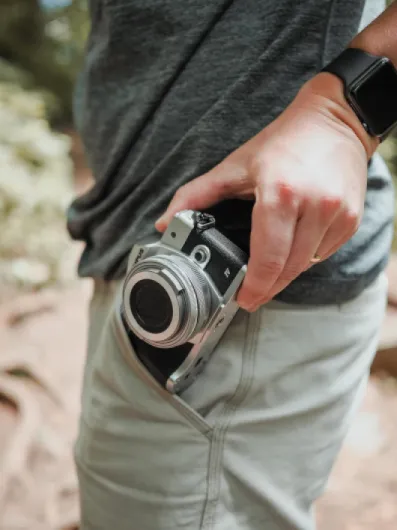
First impression when I unboxed it: it feels like a real camera, not a toy, but it’s way lighter than any DSLR I’ve owned. With the tiny pancake zoom, it fits in a small sling bag and doesn’t drag your shoulder down. That already made a difference: I actually brought it along instead of leaving it at home "just in case". The kit I got was the silver body with the matching silver 14‑42mm EZ lens.
In use, the camera is pretty straightforward if you stick to Auto, Aperture Priority, or Shutter Priority. The menus have a bit of Olympus weirdness, but after an evening of poking around and watching a couple of YouTube videos, I could set it up how I wanted. The flip-down screen is handy for low angles and the occasional selfie, even if the mechanism feels a bit old-school compared to fully articulating screens.
Overall, my first weeks with it were positive: the photos look much cleaner than my phone in bad light, the 5‑axis stabilisation actually helps, and it’s quick enough for kids running around. It’s not perfect – low light beyond ISO 3200 gets grainy, the kit lens is more "decent" than "wow", and there’s no weather sealing – but for the price and size, it’s a pretty solid little camera.
Is it good value or should you look elsewhere?
In terms of value, I’d say this kit sits in a "pretty solid but not crazy cheap" zone. You get a 20 MP sensor, in-body stabilisation, an electronic viewfinder, a compact zoom lens, and 4K video in a small package. For someone moving up from a phone, the jump in control and consistency is clear. Photos look cleaner, the stabilisation helps a lot, and having real dials for exposure is just nicer. You also get access to the Micro Four Thirds lens ecosystem, which has plenty of small primes that match the body well and aren’t insanely priced.
Where the value is a bit less clear is if you compare it to some APS‑C cameras in the same price range, especially used ones. For similar money, you might find a camera with better low-light performance, a more modern autofocus system, or weather sealing. On the flip side, those options are often bigger and heavier. That’s basically the trade-off here: this camera is about portability and ease of use more than raw specs. If you know you’ll leave a bigger camera at home, then having a smaller one that you actually carry is worth more than a slightly better sensor on paper.
Another point for value: the kit lens is okay, but it’s not doing the sensor full justice. If you end up liking the camera, you’ll probably want to add at least one prime lens (like a 25mm f/1.8 or 17mm f/1.8) to get nicer background blur and better low-light performance. That’s extra cost you should factor in. Same with the spare battery and charger situation I mentioned earlier. So the "real" price of the system is body + at least one extra battery + eventually a better lens.
Overall, I think the E‑M10 Mark IV kit is good value for people who care about size and usability, and who aren’t chasing the highest specs. If your priority is the best low‑light performance or advanced video features for the money, there are better choices. If your priority is a small, capable camera you’ll actually bring everywhere, this one makes sense and doesn’t feel overpriced for what it offers.
Retro look, modern guts, and a couple of quirks
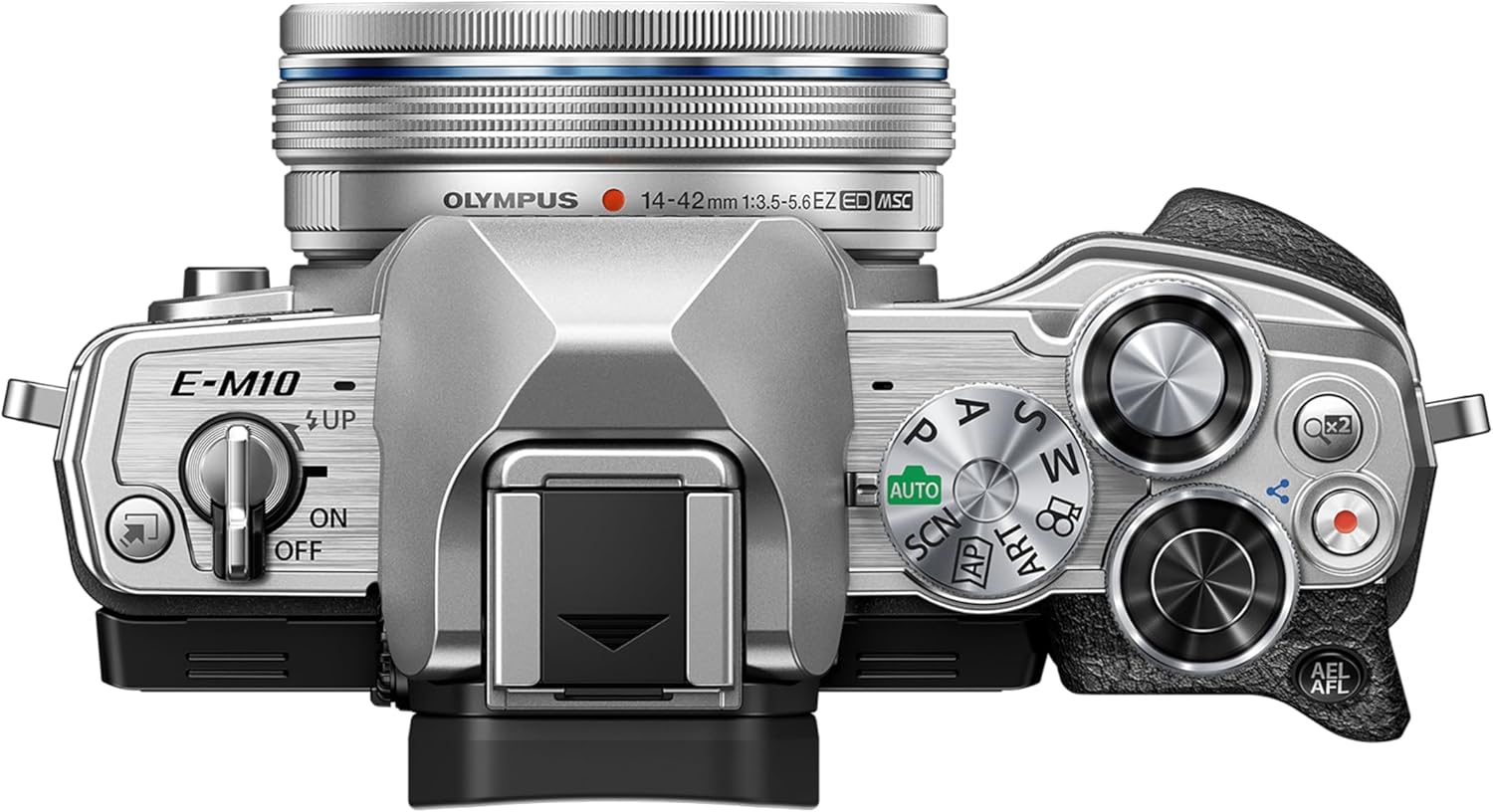
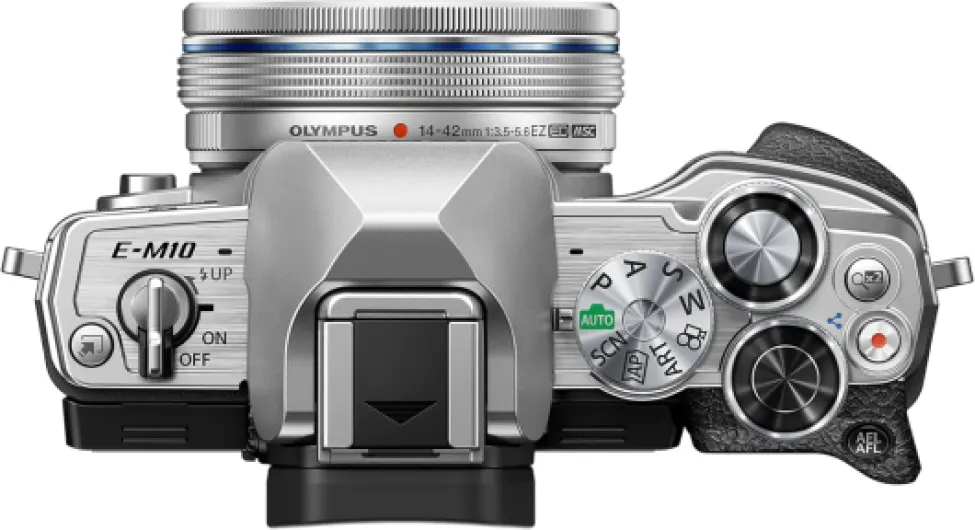
The design is clearly trying to look like a small old-school film camera: silver top and bottom plates, black grip area, and a bunch of metal-looking dials on top. Visually, I liked it straight away. It doesn’t scream "tech gadget" like some other mirrorless bodies. On the street it feels discreet, and people react less to it than to a big black DSLR with a huge lens. If you care about looks, this one is nice enough to leave on a shelf instead of hiding it in a drawer.
In the hand, the small front grip and thumb rest do a decent job, but if you’ve got big hands you may feel a bit cramped, especially with heavier lenses. With the little pancake zoom, though, it’s a comfortable combo. The dials on top (two main control wheels plus mode dial) are easy to reach, and I like that you can quickly adjust aperture and exposure compensation without diving into menus. The shutter button has a clear half-press feel and the mechanical shutter sound is actually quite satisfying, not too loud, not too soft.
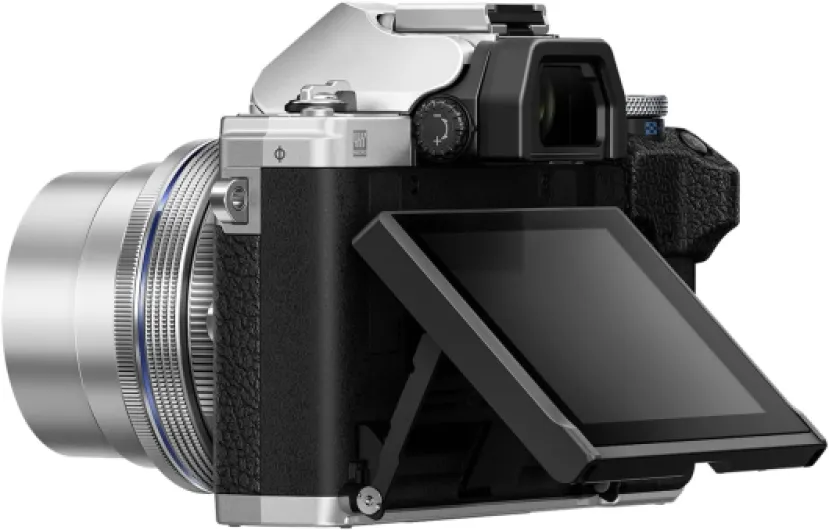
The flip-down screen is both a plus and a minus. It tilts up for waist-level shots and flips all the way down under the camera for selfies or vlogging. In practice, flipping it down is a bit awkward if you have the camera on a tripod, or if you use a bulky case – some cases block the screen completely in selfie mode. A fully articulating side-hinged screen would have been more practical, but at least you can see yourself if you really need to. Touchscreen works fine for focus point selection and menu navigation, though it’s not as snappy as a modern smartphone screen.
Port layout is simple: USB (for charging and data) and HDMI on one side, card slot in the battery compartment at the bottom. Only one SD card slot, which is normal at this level. The downside is that if you use a tripod plate, you may have to remove it to change the card or battery. Not a deal-breaker, but a small daily annoyance if you shoot a lot. Overall, the design is pretty solid for casual use, just with a few practical compromises that show it’s more of an enthusiast/consumer body than a pro tool.
Battery life and the annoying charging situation
Battery life is decent but not impressive. On a typical day out, shooting a mix of stills and a few short videos, I got around 250–350 shots per charge, depending on how much I used the screen versus the viewfinder. If you chimp a lot (constantly checking photos), use Wi‑Fi, or shoot bursts, you’ll drain it faster. For a casual half-day walk, one battery is fine. For a full day of travel or an event, I’d definitely want at least one spare battery in the bag.
The part that bugged me is the charging setup. Olympus doesn’t include a separate battery charger in the box. You have to charge the battery inside the camera via USB. That means if you drain the battery, the camera is basically stuck to a cable while it charges. If you have two batteries, you can’t charge one while using the camera with the other unless you buy a third-party charger. It feels like a corner cut that saves them a few pounds but adds hassle for the user.
Charging speed over USB is fine but not fast. I usually plugged it in at night and it was ready by morning, so in daily life it wasn’t a big issue, but on trips where you shoot a lot and might only have short charging windows, it’s less practical than having a standalone charger. Also, depending on your region, you may need to check the plug situation; one Amazon review mentioned getting a non-UK-compliant power cable, which is just annoying.
My advice: if you buy this camera, plan on getting at least one extra battery and a cheap external charger from day one. With that setup, battery life stops being a problem. Without it, you’ll end up nursing the battery and turning off features like Wi‑Fi and image review just to make it through the day, which takes away some of the fun of using a modern mirrorless camera.
Build quality, wear over time, and what feels fragile
Build quality is better than the "plasticky" complaints you sometimes see online, but you can tell this is not a pro-grade, weather-sealed body. The top dials feel solid, the grip doesn’t creak, and the lens mount is metal. After a few weeks of daily carry in a bag (no dedicated camera compartment, just tossed in with a small cloth pouch), I haven’t picked up any obvious marks on the body. The silver finish still looks clean, and the buttons haven’t gone mushy or weird.
Where it feels less tough is in the flip-down screen and the powered kit lens. The screen hinge works fine, but it’s the part I’m most careful with. I wouldn’t be rough with it or flip it quickly with one hand all the time. Same for the 14‑42mm EZ lens: the powered zoom mechanism is convenient but feels more fragile than a simple manual zoom. It also extends when powered on, which adds a bit of moving parts to worry about if you bump it into things. I haven’t had issues yet, but I wouldn’t call this a camera to toss around without a second thought.
One important point: the body is not weather sealed. That means no shooting in rain or dusty environments without some caution. I got caught in light drizzle once, wiped it down quickly, and it was fine, but I wouldn’t risk it in heavy rain or at the beach with blowing sand. If you need a camera for rough outdoor trips, this is probably not the best pick. For urban, travel, and home use, it’s okay as long as you use a bit of common sense.
Over time, what will probably age first is the battery (like any camera), the rubber on the grip if you handle it a lot, and possibly the pancake lens mechanism if you’re unlucky. The good thing is that Micro Four Thirds lenses are easy to find, and there are quite a few affordable options. So even if the kit lens dies one day, you’re not stuck. In short: durability is decent for normal use, but this is not a tank. Treat it like consumer electronics, not like a hammer, and it should last.
Image quality, autofocus, and video: how it behaves in real life
On the image quality side, the 20 MP Micro Four Thirds sensor does a good job for everyday use. In daylight or decent indoor light, photos are sharp, colours look natural, and you can crop a bit without things falling apart. 20 MP is enough for prints and for posting online without any problem. Compared to my phone, the biggest difference is in dynamic range and how the camera handles tricky lighting – it keeps more detail in highlights and shadows, especially if you shoot RAW. Olympus JPEG colours are quite pleasant straight out of camera, so you don’t have to edit heavily if you don’t want to.
Low light is where the sensor size shows its limits compared to APS‑C or full frame. Up to ISO 1600, it’s fine. At ISO 3200 it’s still usable, especially for small prints and social media. Above that, noise gets more visible and detail starts to smear if you rely on in-camera noise reduction. The 5‑axis stabilisation helps a lot for static subjects: I’ve shot handheld at 1/5s at 14mm and still got sharp results, which is not something I can do with a basic DSLR. For moving subjects in low light, though, you’ll hit the limits of the sensor and the relatively slow kit lens.
The autofocus system uses 121 contrast-detect points. In practice, for stills, it locks focus quickly and accurately in good light. Face and eye detection work fairly well for portraits, though it can sometimes grab the wrong face in a group. For fast-moving kids or pets, it can keep up most of the time in decent light, especially if you use continuous AF and burst mode (up to 15 fps). It’s not a sports camera, but for normal family and travel use, it’s fine. The AF in low contrast or darker scenes slows down and hunts a bit more, which is expected at this level.
For video, it can shoot 4K, but I’d call it more of a "nice to have" than a main selling point. 4K footage looks clean enough for YouTube or home videos, and the in-body stabilisation helps smooth out handheld shots. However, autofocus in video is not as confident as some newer competitors (especially Canon and Sony with better tracking). The flip-down screen makes it usable for vlogging if you don’t mind the awkward angle, but there’s no mic input on the body, which is a big limitation if you care about audio quality. So: for casual clips and travel videos, it gets the job done; for serious video work, you’ll probably want something else.
What you actually get with this kit
This kit is the Olympus OM-D E-M10 Mark IV body plus the M.Zuiko Digital ED 14‑42mm F3.5‑5.6 EZ pancake zoom, both in silver. The body has a 20 MP Micro Four Thirds sensor, in-body 5‑axis stabilisation, an electronic viewfinder, a flip-down touchscreen, and it shoots up to 4K video. It’s not the newest camera on the market (released 2020), but the specs are still very usable for everyday photography and some casual video.
The 14‑42mm lens gives you a 28‑84mm equivalent range in full-frame terms, so basically: a bit wider than your phone at 14mm, up to a short telephoto at 42mm. It’s a powered zoom (you control zoom electronically with the ring), which is handy for video because it’s smoother than a fully manual zoom, but it does feel less direct if you’re used to traditional lenses. Aperture is F3.5 at the wide end and F5.6 at 42mm, so it’s not a bright lens, but that’s normal for a compact kit zoom.
Out of the box you get: body, lens, battery, USB cable for charging, and the usual paperwork. There’s no separate battery charger, which is a bit annoying. You have to charge the battery via the camera’s USB port unless you buy an external charger. That’s one of those cost-cutting choices that feels a bit cheap on a camera at this price. Also, don’t expect any fancy extras like a lens hood – you’re getting the bare minimum to start shooting.
In terms of who this kit is aimed at, I’d say: people moving up from a phone or basic compact camera, or someone who had an older DSLR and wants something smaller without going broke. If you’re already deep into another system with lots of lenses, this is probably more of a side toy than a main workhorse. But if you’re starting from scratch, Micro Four Thirds has a decent lens ecosystem, especially small primes that match the compact body nicely.
Pros
- Very compact and light body with a flat 14‑42mm pancake lens, easy to carry daily
- Good 20 MP image quality in normal light plus effective 5‑axis in-body stabilisation
- User-friendly controls with dual dials, EVF, and tilt/flip touchscreen for flexible shooting
Cons
- No weather sealing and flip-down screen feels a bit fragile and awkward with some cases
- Battery charges only via USB in-camera unless you buy a separate charger and spare batteries
- Kit lens is relatively slow (F3.5-5.6) and only "decent", limiting low-light and background blur
Conclusion
Editor's rating
After using the Olympus OM-D E-M10 Mark IV kit for a while, my feeling is pretty clear: it’s a very capable little camera that nails the "small, light, and good enough for almost everything" brief. The 20 MP sensor, 5‑axis stabilisation, and decent autofocus give you sharp, clean photos in normal conditions, and the body is compact enough that you actually want to carry it. The retro design is nice, the controls are straightforward once you’ve tamed the menus, and the electronic viewfinder plus flip screen make shooting more enjoyable than with a phone.
It’s not without flaws. Low-light performance is okay but not on the level of bigger-sensor cameras, the kit lens is more practical than impressive, there’s no weather sealing, and the lack of an external charger is just cheap. For video, it’s fine for casual 4K clips, but if you’re serious about filming, the missing mic jack and average AF tracking are limiting. So this isn’t the best choice for hardcore videographers or people who constantly shoot in dark venues.
Who is it for? It’s ideal for beginners and enthusiasts who want a compact travel or everyday camera that’s clearly better than a phone, without diving into a heavy and expensive system. It’s also good for someone who values portability and stabilisation more than ultimate image quality. Who should skip it? People who need strong low-light performance, weather sealing, or advanced video features, and anyone already invested in another system with better bodies available. If you accept those limits, the E‑M10 Mark IV is a solid, enjoyable camera that gets the job done in most real-world situations.