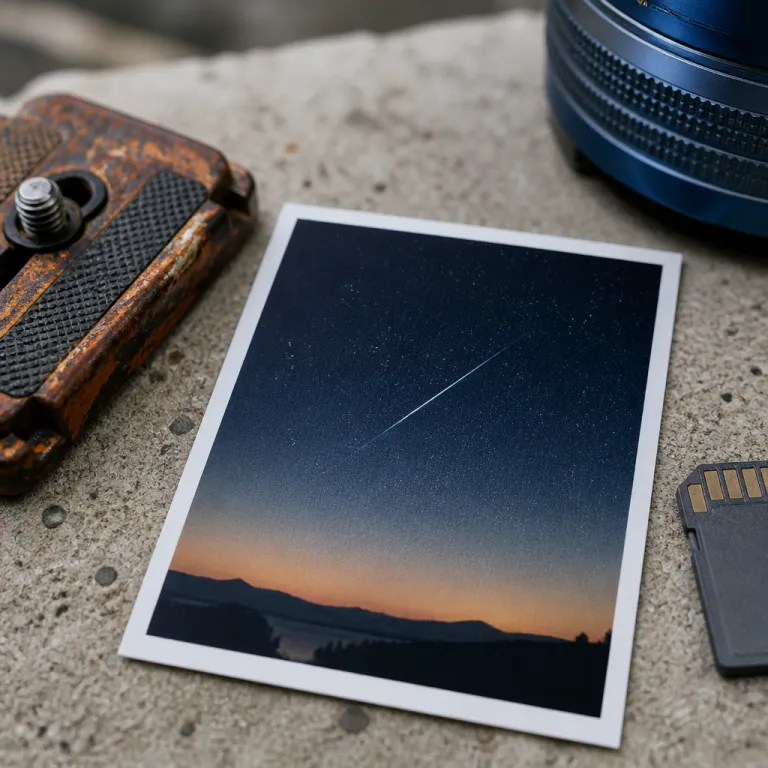
Why this Perseid meteor shower is the best night to start
The Perseid meteor shower photography 2026 moment is unusually forgiving for beginners. With the Perseids peak under a new moon in mid August, the night sky will be darker than during most meteor showers, because the moon contributes almost no glow and the earth atmosphere scatters far less stray light from nearby towns. That combination means even a basic digital camera can record each bright meteor as it streaks through space, as long as you respect a few low light rules.
During this year peak of the Perseid meteor shower, the shower active window runs from late July August through late august, but the single night when the peak falls near a moonless sky is when your odds are highest. On that night the Perseid meteor rate can reach dozens of meteors per hour under dark conditions, and those meteors appear in every part of the sky rather than only near the constellation Perseus. Think of the perseid meteor stream as debris from the comet Swift Tuttle that the earth plows through each year, with each tiny meteor burning up in the earth atmosphere and leaving a brief glowing trail.
Astrophotographers love this shower because the Perseids are both active and predictable, and because the radiant near the constellation Perseus climbs high in the northern sky by local midnight. The parent comet, formally named comet Swift Tuttle or comet Tuttle, orbits the sun every many decades and refreshes the dust trail that feeds these meteor showers, so each year Perseid activity remains strong compared with many december showers. For most travelers and outdoor hobbyists, this shower best balances comfort, warm night air, and reliable meteors, making it the ideal time to learn long exposure technique without freezing on a winter hillside.
Choosing a camera and lens for the Perseid night sky
You do not need a flagship body to attempt Perseid meteor shower photography 2026, but you do need manual control and a stable tripod. A basic APS C mirrorless camera such as a Canon EOS R10, Nikon Z50, or Sony a6400 paired with a kit zoom can still capture a meteor shower if you use the widest aperture available and keep the shutter open long enough for meteors to appear sky wide. Full frame cameras like a Nikon Z5 or Sony a7 III offer cleaner high ISO files, yet the technique matters more than the badge when you are under a dark sky in august.
For lens choice, aim for a wide angle between 14 and 24 millimetres on full frame, or roughly 10 to 18 millimetres on a crop sensor, so that the night sky fills most of the frame and random meteors have room to cross it. Set the lens to its widest aperture, ideally f/2.8, but f/3.5 or f/4 on a kit zoom still works if the meteor shower is active and you raise ISO to 1600 or 3200. If you are curious about how cutting edge sensors handle extremely faint light, research how ultrafast SPAD imaging is reshaping single photon digital cameras, because that technology hints at where low light astronomy and space imaging may go next.
Whatever camera you own, switch to manual focus and focus at a bright star or distant light, then use magnified live view to fine tune until the star is a crisp point. Turn off image stabilization when the camera sits on a tripod, because IBIS or lens IS can introduce blur during long exposures of the night sky. If your camera allows it, enable a built in intervalometer so it can shoot continuously while you relax and watch the meteor showers with your own eyes.
Dialing in exposure settings for meteors and the Milky Way
For most Perseid meteor shower photography 2026 setups, start with ISO 1600, an aperture of f/2.8 to f/3.5, and a shutter speed between 15 and 25 seconds. The exact time depends on focal length, because longer lenses show star trails sooner as the earth rotates and the sky appears to move, so a 14 millimetre lens can tolerate 25 seconds while a 24 millimetre lens looks cleaner around 15 seconds. These settings balance the faint Milky Way glow, the bright streak of each meteor, and the background noise from your sensor.
Use continuous shooting with an intervalometer so the camera takes one frame after another all night, because meteors hour rates are statistical and you never know which exposure will catch the brightest meteor. When the shower active period is near its peak falls time, usually after midnight local time, the radiant in the constellation Perseus climbs higher and the number of meteors per hour increases, so keep the camera running even when the pace feels slow. Remember that the american meteor community and groups like the American Meteor Society report that the shower best rates often occur in the hours before dawn, when your patience is most tested.
If your camera struggles with hot pixels or fixed bright dots during long exposures, learn how to handle dead pixel photo problems and protect your images before this important night. Long exposure noise reduction can map out some sensor defects, but it doubles the time between frames, which means fewer chances to record a bright perseid meteor. For many photographers, it is better to leave that feature off, accept a few sensor artifacts, and later clean them during editing while preserving every meteor shower streak you captured.
Scouting locations, composing frames, and processing your Perseid images
Location matters more than camera brand for Perseid meteor shower photography 2026, because dark skies multiply the number of meteors you actually see. Aim to travel at least 50 kilometres from major city centres, use dark sky maps to find rural areas where the night sky still shows the Milky Way, and arrive before sunset so you can set up safely while you can see the terrain. A new moon in august means the moon will not wash out the sky, so any remaining glow will come from nearby towns and the earth atmosphere scattering that light.
When you frame your shot, avoid pointing only at empty sky, and instead anchor the meteor shower with a foreground such as a mountain ridge, a lone tree, or a reflective lake. The Perseids radiant near the constellation Perseus sits in the northeast to overhead for much of the night, but meteors appear in every direction, so you can compose for an interesting landscape and still catch plenty of streaks. If you are still choosing the ideal camera for capturing night scenes, consider how comfortable the body feels on a tripod, how clean its high ISO files look, and how easily you can change settings in the dark with gloves on.
After the session, sort your frames to find those with the brightest meteors, then stack several images without meteors to reduce noise in the background sky. You can blend a sharp foreground taken at a lower ISO and shorter exposure with a separate sky frame that shows the meteor showers, creating a final image that reflects how the night felt rather than a single raw exposure. As you edit, adjust white balance toward cooler tones to keep the space background neutral, preserve the natural colours of each meteor and the faint green airglow in the earth atmosphere, and remember that the image you will treasure is not the megapixel count, but what you will still want to share in five years.
FAQ
What is the best time of night to photograph the Perseids
The best time to photograph the Perseid meteor shower is from local midnight to the hours before dawn, when the radiant in the constellation Perseus is highest. During this window the shower active rate of meteors per hour usually reaches its year peak, especially under a new moon. Plan to start shooting by about 23:00 and keep your camera running until twilight brightens the sky.
Do I need a full frame camera for meteor shower photos
You do not need a full frame body to capture a meteor shower, because an APS C or Micro Four Thirds camera with manual controls can record bright meteors just fine. Full frame sensors offer cleaner high ISO performance, which helps when the night sky is not perfectly dark or when you push ISO beyond 3200. For most people, a stable tripod, a wide angle lens, and dark skies matter more than sensor size.
How many meteors per hour can I expect during the Perseids
Under dark rural skies during the Perseids peak, observers often report dozens of meteors per hour, and sometimes more when the shower best conditions align with a moonless night. The actual meteors hour rate you see depends on light pollution, your local weather, and how long you watch without looking at your phone. Even if the theoretical rate is high, expect lulls and bursts rather than a steady stream.
Which direction should I point my camera for Perseid photos
You do not need to aim directly at the constellation Perseus, even though the Perseid radiant lies there. Meteors appear across the entire sky, so choose a direction with an interesting foreground and minimal light pollution, such as north or east away from city glow. A wide angle lens lets you cover a large swath of sky so that more meteors cross your frame.
Can I photograph the Perseids in other months like december
The Perseids are an august shower, active mainly from late july august into late august, so you cannot photograph this specific shower in december. Other meteor showers occur near december, such as the Geminids, but they have different radiants and parent bodies than the comet Swift Tuttle stream that creates the Perseids. Each year Perseid activity returns in roughly the same summer window as the earth crosses the debris trail of comet Tuttle again.