
Summary
Editor's rating
Price vs what you actually get
Design & handling: compact but serious
Battery life & recording reliability
Build, weather resistance & long-term feel
Image, video & autofocus: strong output, with a clear weak spot
What you actually get with the LUMIX S5 kit
Pros
- Very good image and video quality with 4K 10-bit and V-Log included
- Compact, solid body with good ergonomics, IBIS, and flip screen
- Reliable recording with no overheating issues and dual SD card slots
Cons
- Continuous autofocus in video can pulse and hunt, especially on faces
- L-mount native lenses are limited and can be expensive compared to other systems

Specifications
View full product page →| Brand | Panasonic |
Full-frame camera that wants to do it all
I’ve been using the Panasonic LUMIX S5 kit (body + 20–60 mm lens) for a few weeks, mainly for YouTube-style video, some talking-head stuff, and casual photos. I came from smaller APS-C cameras and a Sony A7 III I could borrow now and then, so I had a decent point of comparison. I didn’t buy it for fancy specs on paper, I just wanted a full-frame camera that could handle 4K, not overheat, and give me decent photos on the side.
First thing: this camera is clearly built with video in mind. 4K 10-bit, V-Log, anamorphic options, RAW over HDMI… it’s packed. But in daily use, what stands out more than the spec sheet is how stable it is, how nice the image looks straight out of camera, and how comfortable it is to hold for long sessions. It feels more like a small work tool than a tech toy.
On the flip side, the big topic with this camera is autofocus. Before buying it, I had already seen people arguing online: some say “AF is fine now with firmware”, others say “it ruins your videos”. After actually using it, I’d say both sides are kind of right. For stills and simple shots it’s okay. For serious solo video work where your face needs to stay locked all the time, it can be frustrating.
So overall, my experience is pretty positive, but not blind. It’s not perfect, and if you rely a lot on continuous autofocus for video, you really need to know what you’re getting into. If you’re more into controlled shooting, manual focus, or mostly photos with some video, it becomes a very solid camera that doesn’t overheat and has a lot of pro features for the price.
Price vs what you actually get
In terms of value, the LUMIX S5 sits in an interesting spot. It’s not budget, but compared to some Sony and Canon full-frame options, the price (especially when on sale or in a kit with a lens or extra 50 mm) is pretty reasonable for what it offers. You get full-frame, 4K 10-bit, V-Log, dual card slots, IBIS, and a decent kit lens covering 20–60 mm. For someone who wants to step up from APS-C or an older DSLR into a more serious hybrid camera, it’s quite a complete package.
The main thing that drags the value down a bit is the autofocus situation for video. If you look at it purely as a hybrid stills camera with strong video options for more controlled setups, the price-performance ratio is good. But if your main need is fast, reliable continuous AF for run-and-gun video, then a Sony A7 IV or even some Canon R bodies will serve you better, though usually at a higher price. So you kind of trade AF performance for a lower cost and more built-in video tools.
Another factor to consider is the lens ecosystem. L-mount lenses, especially full-frame ones, are not cheap. The included 20–60 mm is genuinely useful, but once you start looking at bright primes or telephoto options, the bill climbs quickly. If you’re okay with building your kit slowly or using some third-party and adapted lenses, that’s manageable. If you want a full set of native lenses quickly, it gets expensive and that affects the overall value of choosing this system.
So, for me, the S5 is good value for a specific type of user: someone who cares more about image quality, color, and video features than about perfect autofocus tracking, and who is okay with a slower, more thoughtful way of shooting. If that’s you, the price makes sense. If you want a camera that “just locks on and follows everything” for video, you might feel you’re paying good money and still not getting what you really need.
Design & handling: compact but serious
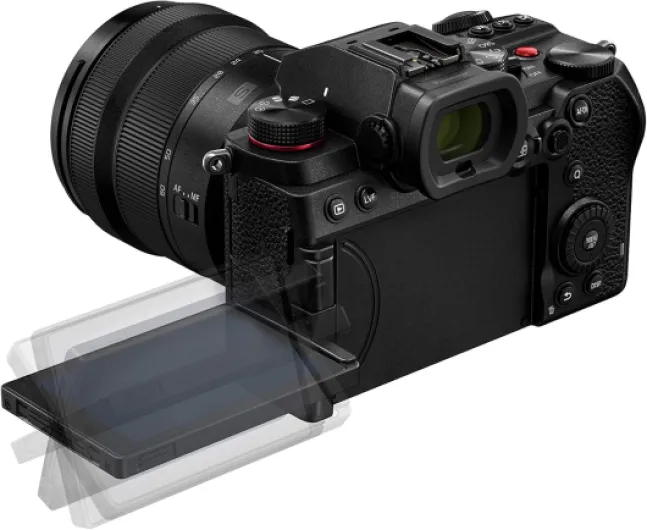
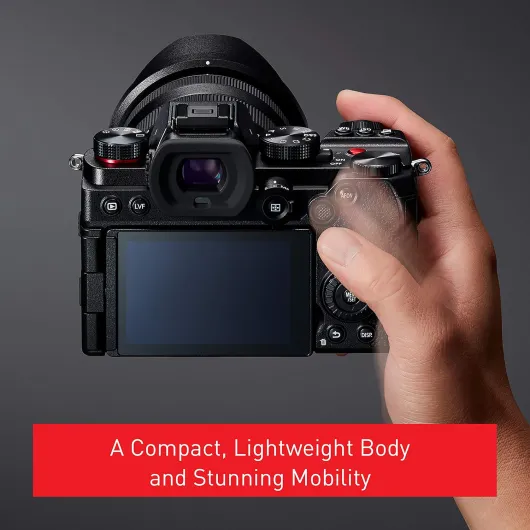
Physically, the LUMIX S5 feels like a smaller version of a proper pro camera. It’s not tiny like some APS-C bodies, but for a full-frame mirrorless with IBIS it’s pretty compact and light. Once I mounted the 20–60 mm lens, the combo felt nicely balanced, not front-heavy. I was comfortable holding it for a 40-minute walk-and-talk vlog without my wrist complaining, which wasn’t the case with some heavier DSLRs I used before.
The grip is deep and secure, which matters way more than people think. With some mirrorless cameras, I always feel like I’m going to drop them, especially when shooting one-handed. With the S5, the grip and rubber texture give you confidence. The buttons are well placed, and the top dials are easy to reach with the thumb and index finger. I reassigned a few buttons within 10 minutes and after that, I almost never had to dive into the menu mid-shoot.
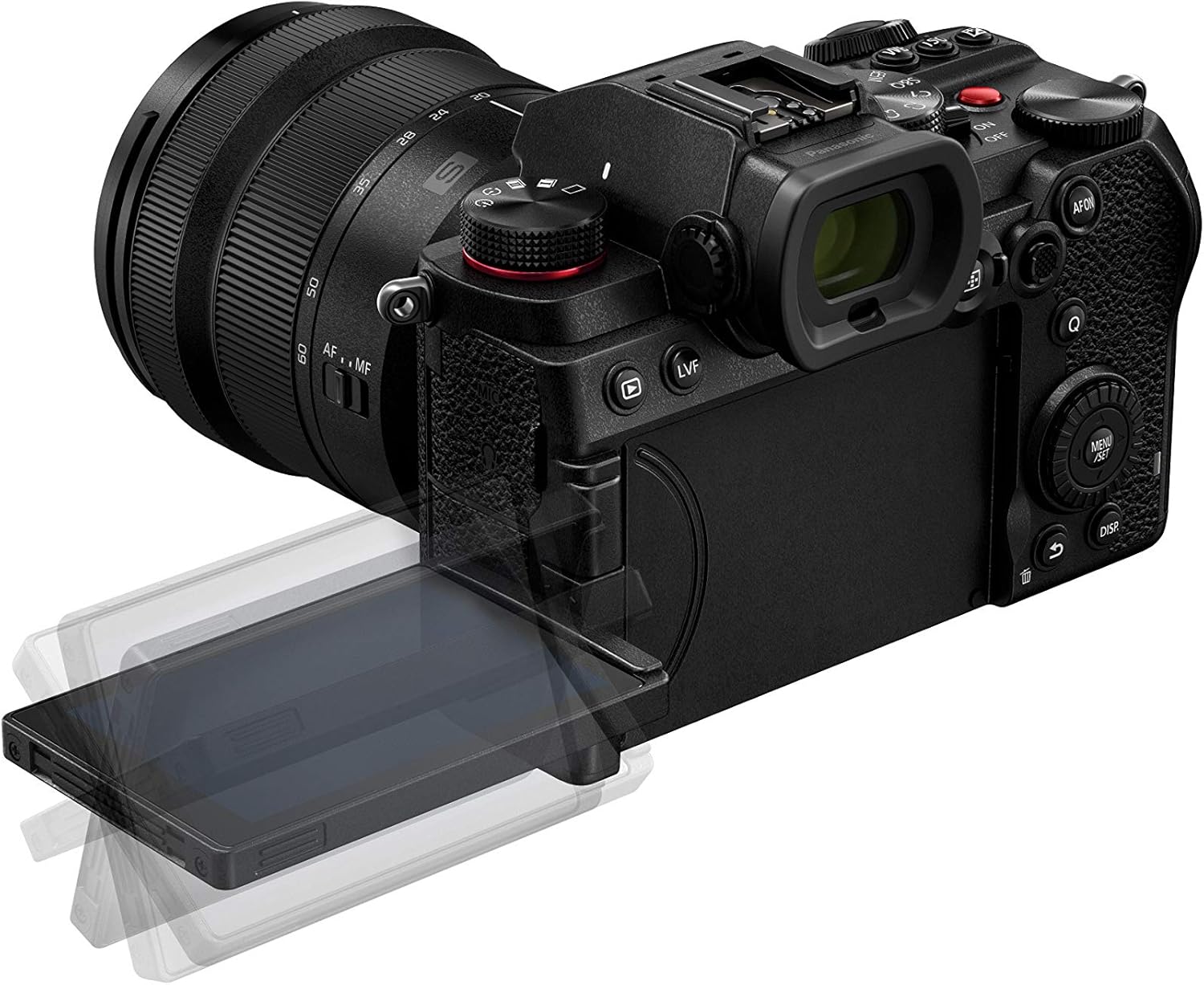
The fully articulating screen is a big plus if you film yourself. Being able to flip it to the side and see framing and focus while in front of the camera is just practical. The LCD is bright enough for most situations, though under strong midday sun I sometimes had to shade it with my hand. The EVF is okay but not great: resolution and brightness are usable, but not on the level of more expensive bodies. For photos it didn’t bother me much, but if you’re picky about viewfinders, you’ll notice it’s just “fine” rather than top tier.
One more detail I appreciated: the camera feels tough without being a brick. The magnesium alloy body and weather sealing mean I wasn’t panicking every time there was a bit of drizzle or dust. I wouldn’t throw it in the sand obviously, but for real-life use (light rain, humid environments, dusty streets) it holds up and doesn’t feel fragile. Overall, the design is very practical: not flashy, not pretty for Instagram, but focused on comfort and control.
Battery life & recording reliability
The S5 uses the smaller BLK22 battery, and I was a bit worried at first because smaller usually means worse battery life. In practice, it held up better than I expected. For a normal mixed day (some photos, some 4K clips, a bit of menu fiddling, Wi-Fi off), I was getting around 400–450 shots or roughly 1.5 to 2 hours of actual video recording spread across the day. It’s not DSLR-level, but for a mirrorless with IBIS and 4K 10-bit, it’s decent.
When I recorded longer talking-head videos in 4K 25p 10-bit, I could comfortably get through about an hour of recording on a single battery, with some pauses in between takes. The camera never overheated on me, even after repeated takes in a warm room. That’s one of the key reasons I chose this over the Canon R6, which has a reputation for overheating in 4K. With the S5, I just didn’t have to think about temperature, which is a relief when you’re trying to focus on what you’re saying.
Charging and powering options are practical too. You can power it via USB-C, which is handy for longer stationary shoots. I used a USB-C power bank for a couple of longer sessions and basically ignored the battery level. For home studio setups, that’s pretty convenient: plug it into a power source and you’re set for hours. I still recommend at least one spare battery if you plan to shoot outside a lot, but it’s not like some cameras where you feel forced to buy three or four right away.
So in terms of battery and reliability, I’d say the S5 is pretty solid. It’s not unbeatable, but it doesn’t drain itself in an hour either. More important for me: it stays stable in 4K and doesn’t randomly shut down. If you’re doing client work or just don’t want your camera dying mid-take, that matters more than squeezing 50 extra shots out of a charge.
Build, weather resistance & long-term feel
Even though I only had the S5 for a few weeks, you can usually tell pretty quickly if a camera feels fragile or not. This one gives a solid impression. The magnesium alloy body doesn’t flex or creak, the seams look well sealed, and the dials don’t feel loose. I carried it in a backpack without a dedicated hard case, just wrapped in a simple insert, and it handled bumps and knocks without any issues.
I shot a couple of times in light rain and damp conditions. Panasonic says it’s splash and dust resistant, and from what I’ve seen that seems realistic. I wouldn’t shoot in a storm without extra protection, but for drizzle, mist, or dusty streets it didn’t complain. Buttons remained responsive, and I didn’t notice any fogging in the EVF or LCD. The 20–60 mm lens also feels decently built for a kit zoom: not premium tank-level, but not toy-like either.
The moving parts are what usually worry me long-term: the flip screen, the card slot doors, and the battery door. On the S5, the flip screen hinge feels firm and doesn’t wobble, even after flipping it around a lot for vlogging. The card door has a positive click and isn’t flimsy. Same for the battery door: it doesn’t feel like it will snap off if you open it a bit too fast. These are small details but they matter if you use the camera often or travel with it.
Obviously, I can’t pretend to know how it will hold up after 3–4 years of daily abuse, but compared to cheaper bodies I’ve used, this one feels like it’s built to last a decent amount of time. It’s not indestructible, but for regular creators and small production work, I’d be comfortable relying on it. Just don’t treat it like a GoPro and you should be fine.
Image, video & autofocus: strong output, with a clear weak spot
Let’s start with the good side: the image quality is genuinely strong, both for stills and video. The 24 MP sensor delivers sharp photos with good dynamic range. I could pull back shadows and highlights in RAW without the file falling apart. Colors out of camera are one of the things I liked most: skin tones looked natural without much tweaking, and I didn’t have to fight weird color casts like I sometimes do with older Sony bodies. For quick JPEGs, the standard profile is already quite usable.
Video is where the S5 starts to look like more camera than most people will fully use. 4K 10-bit, V-Log, anamorphic modes, 5.9K/RAW externally if you have a Ninja V or Blackmagic recorder… it’s built for people who want flexibility in post. In practice, I mostly used 4K 25p 10-bit and occasionally 50p in 8-bit for slow motion. The files held up well for grading, and the in-body stabilization combined with the lens IS gave me very usable handheld shots, even at 20–30 mm while walking. It’s not gimbal-level, but it calmed down my shaky hands a lot.
Now the big downside: continuous autofocus in video. For stills, AF is quick and accurate enough; I didn’t miss many shots there. But in video, especially with face/eye detect, you can see the contrast-based system doing tiny focus corrections, what people call “pulsing” or “micro hunting”. When I sat at a desk talking to the camera at a consistent distance, I noticed the background breathing slightly as the camera adjusted focus. It’s not totally unusable, but once you notice it, you can’t unsee it. For moving subjects, it sometimes lost the face and snapped to the background for a moment.
If you’re okay with using manual focus or you work in more controlled situations (interviews, B-roll, locked shots), the image and video performance are very solid for the price. But if your main use is run-and-gun vlogging, events, or fast-moving subjects where you absolutely need reliable continuous AF, this camera will probably annoy you. It can work, but it needs more babysitting than phase-detect systems from Sony or Canon. That’s the trade-off: strong image and video features, weaker AF for video.
What you actually get with the LUMIX S5 kit
The version I used is the Panasonic LUMIX S5 body with the 20–60 mm f/3.5–5.6 L-mount kit lens. So you’re not just getting a body: you have a pretty flexible zoom from ultra-wide (20 mm) to a normal focal length (60 mm). For everyday stuff like vlogging, room shots, travel, and basic portraits, that range is honestly very handy. I didn’t feel forced to buy another lens right away, which is good given L-mount glass isn’t cheap.
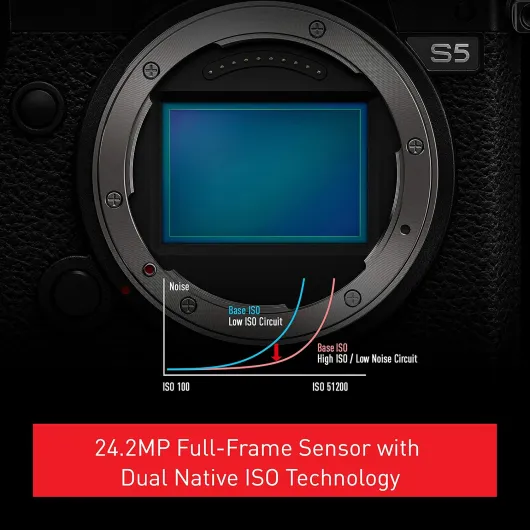
The sensor is 24.2 MP full frame with Dual Native ISO, which in practice means it handles low light better than older cameras I’ve tried. I could push ISO to 6400 for video indoors without the image falling apart. It records 4K up to 60p (with a crop at 60p) and 10-bit internally, which is something many older Sony bodies don’t offer. If you’re into grading, V-Log is included, and you can load LUTs in-camera so you see something closer to the final look while filming. That’s actually very useful on real shoots.
In terms of connections, it’s got a full set for content creation: mic input, headphone jack, USB-C, micro HDMI, and Wi-Fi/Bluetooth for file transfer or remote control. Dual SD card slots are a big plus for paid work or just peace of mind. You can do backup recording or stills on one card and video on the other. Compared to entry-level bodies with only one slot, this feels more “pro ready”.
On paper, the S5 is positioned kind of in the middle: not as big and heavy as the S1/S1H, but not a basic beginner body either. After using it, I’d say that’s accurate. It has a lot of advanced video options that most beginners won’t touch at first, but the basic modes are simple enough that you can just set it to 4K 25p, enable face detect, and shoot. The camera doesn’t constantly scream “pro cinema tool”, but it has enough depth to grow into if you want to.
Pros
- Very good image and video quality with 4K 10-bit and V-Log included
- Compact, solid body with good ergonomics, IBIS, and flip screen
- Reliable recording with no overheating issues and dual SD card slots
Cons
- Continuous autofocus in video can pulse and hunt, especially on faces
- L-mount native lenses are limited and can be expensive compared to other systems
Conclusion
Editor's rating
After using the Panasonic LUMIX S5 with the 20–60 mm kit lens in real life, I’d sum it up like this: it’s a compact full-frame workhorse with strong image quality and video tools, held back mainly by its continuous autofocus for video. The body feels solid, the controls are well thought out, and the flip screen plus IBIS make it very practical for solo creators. Colors look good out of camera, low-light performance is solid, and the camera just keeps recording without overheating, which is more important in practice than one extra stop of dynamic range.
Where it stumbles is AF in video. For stills or simple, slower shots, it’s fine. But if you rely heavily on face/eye tracking while moving around, the small focus pulsing and occasional hunting can get on your nerves. If you’re comfortable with manual focus, locked-off shots, or more controlled environments, it’s less of an issue and you can really enjoy everything else the camera offers. Lens choice and system cost are also things to keep in mind if you plan to grow your kit.
I’d recommend the S5 for content creators, small production shooters, and photographers who want a capable hybrid body with strong video options and don’t mind working around the AF a bit. If you want a “point it at me and let AF do everything” vlogging or event camera, I’d say look at Sony or Canon instead, even if you have to pay more. As long as you know its limits going in, the S5 is a pretty solid tool that gets a lot of jobs done without drama.