
Summary
Editor's rating
Is the X-T5 + 16-50mm kit worth the money?
Retro look, modern guts, a bit bigger than it looks online
Battery life and overheating: decent, but bring a spare
Box, shipping, and the missing-lens horror story
Build quality, scratches and long-term confidence
Image quality and autofocus: strong sensor, mixed kit lens
What you actually get with this kit
Pros
- 40MP APS-C sensor with very detailed stills when paired with good lenses
- In-body stabilisation and classic external dials make it enjoyable for stills shooting
- Compact, solid-feeling body that’s easy to carry and reasonably durable for everyday use
Cons
- XF 16-50mm kit lens is only average and doesn’t fully match the sensor’s potential
- Not very beginner-friendly; 40MP makes focus and motion blur mistakes more obvious
- Packaging and seller issues (poor padding, missing lens reports, long delays) can spoil the experience

Specifications
View full product page →| Brand | Fujifilm |
High-res body, average kit lens
I’ve been using the Fujifilm X-T5 with the XF 16-50mm kit lens for a few weeks, mainly for city walks, casual portraits and a couple of short trips. I came from a smaller APS-C body and a basic DSLR before that, so I’m not new to cameras, but I’m also not trying to pretend I’m shooting for a magazine. I just want something that gives me good photos without babysitting it every second.
The first thing that hits you is the 40MP sensor. On paper it sounds huge for APS-C, and in good light the files are genuinely very sharp with a decent lens. You can crop a lot and still keep enough detail for prints or social media. But that resolution is also a double-edged sword: with the 16-50mm kit lens, if your shutter speed is a bit too low or your focus is slightly off, the softness is very noticeable when you zoom in.
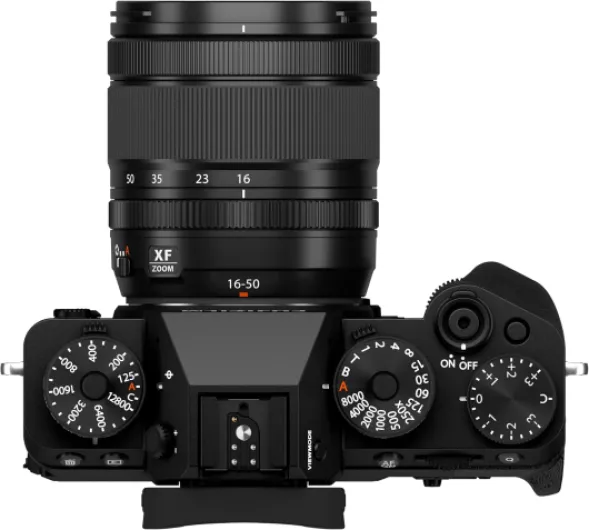
In daily use, the camera feels like a tool that’s built for stills first. The dials for ISO, shutter speed and exposure comp are all on top, so you can see your basic settings without diving into menus. That’s nice, but you do need a bit of time to get used to it, especially if you’re coming from a camera with a PASM mode dial. Once you get your muscle memory sorted, it’s pretty quick to handle.
Overall, my first impression is: the body is strong, the sensor is strong, the autofocus is decent, and the kit lens is the weak link. If you’re buying this as your first “serious” camera, it can give you very good results, but it’s not a plug-and-play experience like a phone. You’ll get rewarded if you take time to learn it, but if you want something totally carefree, this combo might feel a bit fussy and unforgiving.
Is the X-T5 + 16-50mm kit worth the money?
Value-wise, this kit sits in a slightly awkward spot. The X-T5 body on its own is strong: high-res sensor, IBIS, classic controls, and good stills performance. If you already have Fujifilm lenses, or you’re ready to invest in better glass, the body makes a lot of sense. The problem is that the included 16-50mm lens doesn’t let the camera fully shine, especially at 40MP. It’s usable and versatile, but it’s basically limiting the potential you’re paying for in the body.
Compared to something like a kit with the 16-80mm, you’re giving up range and arguably some optical quality and flexibility. Several users said they regretted choosing the 16-50mm kit after learning more, and I kind of get it. If you’re mostly shooting travel, landscape and general stuff, the extra reach and stabilised, better-value zoom might be worth the price bump. The 16-50mm is lighter and a bit faster at the wide end, but it feels more like a temporary solution than a long-term main lens.
There’s also the fact that this combo is not very beginner-friendly for the price. The body expects you to understand shutter speed, ISO and focus behaviour to really avoid soft photos and motion blur at 40MP. If you just leave it on auto and don’t pay attention, you’ll sometimes get images that look a bit "mushy" when zoomed in, and you may blame the camera when it’s actually a mix of the sensor density, lens limits and technique. For someone starting out, there are cheaper kits that are easier to handle and more forgiving.
So in my view, the value is decent if you think long term and treat this as a body you’ll grow into with better lenses. If you plan to just use the kit lens forever and don’t want to spend more on glass, it’s harder to justify the price. You’re paying for performance you’re not fully using. If money is tight, I’d either get the body only and pair it with one good prime, or look at a cheaper body with a simpler kit lens and spend the difference on learning and trips.
Retro look, modern guts, a bit bigger than it looks online
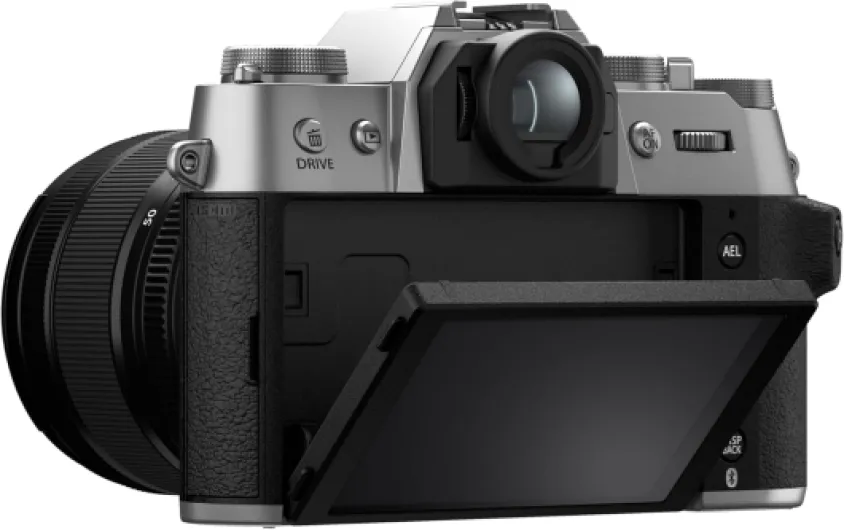
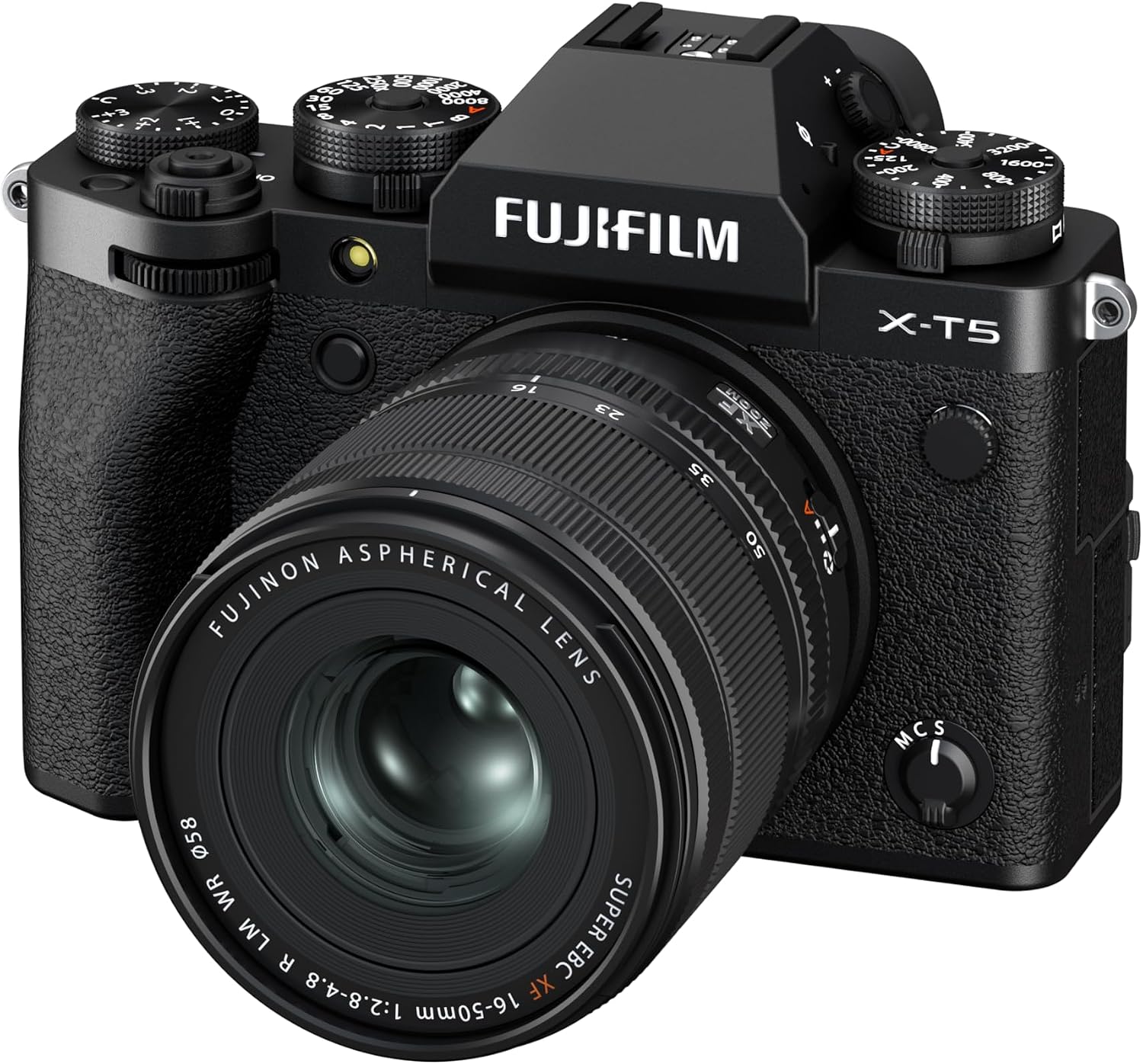
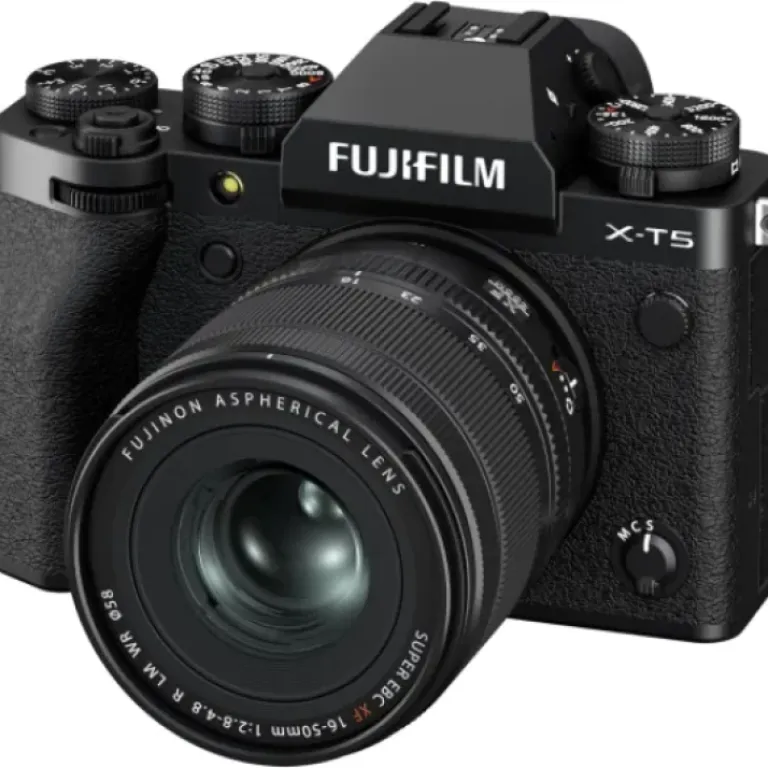
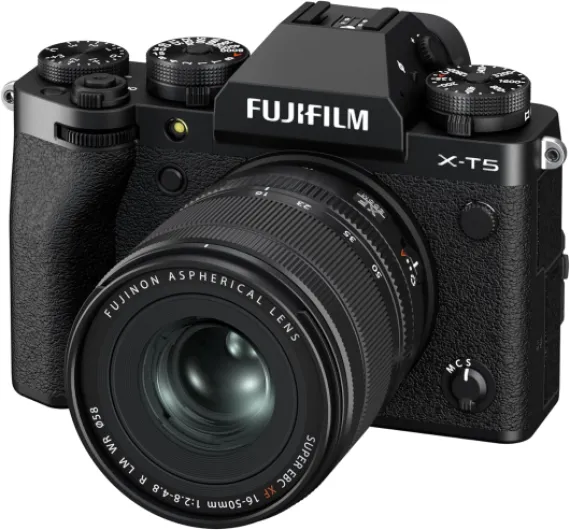
Design-wise, the X-T5 sticks to Fujifilm’s usual retro SLR style: big dials on top, central viewfinder hump, and a pretty clean front. I have the black version, which looks low-key and doesn’t scream “expensive camera” as much as the silver one. Compared to photos online, it’s actually a bit larger and chunkier in hand than I expected, which I ended up liking. The grip is not DSLR-deep, but it’s enough for my average-sized hands, and I don’t feel like I’m going to drop it.
The top plate has separate dials for ISO, shutter speed and exposure compensation, plus a small switch for stills/movie. If you come from a PASM dial, the layout looks busy at first. After a few days, it starts to make sense: you can glance down and see your core settings without waking the screen. It’s not perfect, though. Some of the dials can be a bit fiddly with gloves and they can get knocked in a bag if you’re not careful, so you might want to lock the ones that can be locked.
The rear screen is a 3-way tilting LCD, not a fully articulating flip-out. That’s fine for photos, especially low and high angles in landscape orientation, but less handy if you film yourself or do a lot of vertical video. The EVF is decent: 0.80x magnification, bright enough, and I had no trouble framing in daylight. It’s not the biggest or sharpest viewfinder I’ve ever used, but it does the job and doesn’t feel cheap.
One thing I noticed is the USB-C port placement and feel. It works for charging and data, but it doesn’t feel like something I want to plug/unplug a hundred times a week. The port has a bit of play, and with the stories about repair costs, I baby it a lot. Also, the camera has weather sealing, but the 16-50mm kit lens is not on the same level, so don’t assume the combo is fully weatherproof. Overall, the design is pretty solid for stills shooters, but video people might complain about the tilting screen and port confidence.
Battery life and overheating: decent, but bring a spare
Battery life on the X-T5 is pretty solid for a mirrorless but not mind-blowing. On a full day walking around the city, shooting a mix of stills and a few short clips, I usually got through one battery with around 400–500 shots and some chimping. If I started doing more bursts or more 4K video, the battery dropped faster. It’s noticeably better than older Fujifilm bodies I’ve tried, but I still wouldn’t leave home for a full day without at least one spare.
Charging is mainly via USB-C in the body, which is convenient if you’re travelling light and already carry a USB-C charger or power bank. The downside is that you’re stressing that single port more often, and as I mentioned earlier, it doesn’t feel like the strongest port in the world. I personally prefer having a separate wall charger, but that’s an extra cost if it’s not in the box in your region. On trips, I often just plug the camera into a power bank at night and let it charge while I sleep.
Regarding overheating, I did manage to get the camera a bit warm when I shot several 4K clips back-to-back indoors right after a full charge. I saw the temperature warning once, but it never fully shut down on me. On the next day outside, with more normal stop-and-go shooting, it behaved fine. For typical mixed use (stills + occasional short video) it’s not a big deal. If you plan to record long high-res clips often, you might find the recording limits and heat a bit annoying.
Overall, the power side is "good enough" but not a strong selling point. Plan on buying at least one extra battery and possibly an external charger if you travel a lot. If you’re used to DSLR battery life, this will feel like a step down. If you’re used to other mirrorless cameras, it’s roughly on par or slightly better, but nothing that changes your life.
Box, shipping, and the missing-lens horror story
The official Fujifilm box itself is what you’d expect: camera body and lens laid out in cardboard inserts, manuals, strap, battery, and so on. The problem isn’t the internal layout, it’s how some sellers and shippers handle it. In my case, the outer Amazon box had minimal padding and no fragile label. The camera box had clearly been bounced around a bit. Inside, everything was there, but the lens cap had small scratches, which made me wonder if it was a return or just sloppy handling.
Looking at other buyers’ experiences, there are some worrying stories. One person straight up received the camera body without the lens, even though it was sold as a kit. That sounds like a seller-level or packing-level failure, but it shows that quality control isn’t always there. Another user got their camera two and a half months late, with no compensation for the delay. So while the product itself is from Fujifilm, your experience will heavily depend on which third-party seller or marketplace you use.
For a camera in this price range, getting it in a box that rattles around with barely any foam doesn’t feel great. We’re not talking about a phone case; this is a relatively fragile electronic device with glass. Personally, I’d prefer slower shipping with better padding over a quick delivery where the box looks like it’s been kicked around a warehouse. If you’re picky about getting a truly new unit, check everything carefully on arrival: shutter count, lens condition, and that all parts of the kit are actually there.
So packaging and logistics are a weak point of the whole experience, even if the camera itself is fine. If possible, I’d buy from a seller with a good track record for camera gear specifically, not just the cheapest option. And open it as soon as it arrives so you can return or exchange quickly if something’s missing or looks used.
Build quality, scratches and long-term confidence
In hand, the X-T5 body feels solid but not tank-like. The magnesium alloy shell and the weather sealing give some confidence, and the dials and buttons have a decent click. It doesn’t feel toy-ish, but if you’re coming from a big pro DSLR or a very rugged body, you’ll notice it’s lighter and a bit less dense. I carried it in a small sling bag with no extra padding for a few days and it handled bumps and daily use without any drama.
One thing to watch out for is cosmetic wear, especially on the silver version. Users have reported scratches showing up easily on that finish. On the black version I have, minor scuffs don’t stand out as much, but I’d still use at least a small half-case or a cage if you’re rough on your gear. The lens barrel is mostly plastic, and while it doesn’t feel cheap, it’s not something I’d want to drop. The lens cap on my copy came with tiny marks that looked like it had rubbed against something in transit, which doesn’t inspire a lot of confidence in the packing.
The part that worries me most is the USB-C port. It works, but it doesn’t feel super robust. Given how often you might plug in for charging, tethering or file transfer, I’d be gentle with it. Repairs for ports like that are not cheap, and from other people’s experiences, official service can be pricey and slow. So if you can, use a card reader instead of constantly yanking the cable from the camera.
In day-to-day use, though, I didn’t have any mechanical failures, no loose dials, and no random creaks. The camera survived light rain and a bit of dust without issues, though I tried to keep the kit lens out of real bad weather since it’s not fully sealed. I’d call the durability good enough for regular enthusiast use, but I wouldn’t abuse it like a dedicated pro body. Treat it with some care and it should last, but it’s not something I’d throw in a bag without thinking.
Image quality and autofocus: strong sensor, mixed kit lens
In terms of image quality, the X-T5 body is clearly the star. At base ISO, the 40MP files look very detailed, and Fujifilm’s film simulations give you nice colours straight out of camera. I mostly used Classic Chrome and Provia, and the JPEGs were already good enough that I didn’t feel forced to shoot RAW all the time. Dynamic range is decent: I could pull some detail from shadows without the image falling apart, but you still need to expose with some care, especially in high contrast scenes.
The problem is that the XF 16-50mm kit lens doesn’t fully keep up with the sensor. In the centre it’s fine, especially around 16–35mm and stopped down to f/5.6–f/8, but once you pixel-peep at 40MP, you start to see the limits. Corners and edges get a bit soft, and at 50mm it feels more "okay" than sharp. For web use and casual prints, it’s fine; for heavy cropping or large prints, you’ll notice the difference compared to a better prime. The high pixel density also makes motion blur and camera shake more visible, so you really have to pay attention to your shutter speed.
Autofocus is good but not perfect. Face and eye detection work most of the time for portraits and street, but it’s not magic. I had a few cases where it claimed to lock on the eye and the final shot was slightly soft when I zoomed in to 100%. It’s usually fine for normal use, but if you’re picky and used to top-end full-frame AF, you might find it a bit inconsistent. Tracking moving subjects like kids or dogs is usable, but I wouldn’t rely on it for serious sports or very fast action.
For video, 4K and 6K look clean, but this camera clearly feels more tuned for stills. There can be heat buildup if you push high resolutions or long clips, especially in warmer weather. Also, rolling shutter is noticeable if you pan quickly in 6K. For casual clips and simple B-roll it’s okay, but if your main goal is video, there are better options at this price, especially with flip-out screens and friendlier video controls.
What you actually get with this kit
This kit is the Fujifilm X-T5 body plus the XF 16-50mm zoom lens. It’s an APS-C mirrorless camera with a 40.2 MP X-Trans CMOS 5 HR sensor and in-body image stabilisation (IBIS). In plain language: it’s a high-res crop-sensor camera that tries to give you serious image quality in a relatively compact package. The lens covers 16-50mm, which on APS-C is roughly 24-76mm full-frame equivalent, so it goes from a fairly wide angle to a short telephoto, good for travel, street, and casual portraits.
The body itself is quite loaded on paper: 5-axis sensor-shift stabilisation, up to 20 fps bursts, 6K and 4K video, and Fujifilm’s film simulations baked in. ISO goes from 64 (expanded to 50) up to 51200, though in reality I tried to stay under 6400 for cleaner files. Shutter speeds go insanely high (1/180,000 sec electronic in the spec, 1/8000–1/32000 in the listing), which is handy if you shoot wide open in bright daylight without an ND filter.
Out of the box, you get the body, the 16-50mm lens, battery, and the usual bits. No external charger in some regions, so charging via USB-C is the main way. The lens itself is a variable aperture zoom, f/2.8–4.8, which is fine but not very fast at the long end. If you’re used to phone cameras that fake background blur, you might be a bit underwhelmed by the depth of field at 50mm f/4.8 unless you get close to your subject.
On the whole, the kit is clearly designed as an entry into the Fujifilm ecosystem for someone who wants a compact but capable camera. Just keep in mind that the kit lens is more about versatility than pure sharpness or low-light power. The body can definitely handle better glass. So I see this combo as a starting point: it gets you going, but you’ll probably want at least one better prime or zoom later if you really want to see what the 40MP sensor can do.
Pros
- 40MP APS-C sensor with very detailed stills when paired with good lenses
- In-body stabilisation and classic external dials make it enjoyable for stills shooting
- Compact, solid-feeling body that’s easy to carry and reasonably durable for everyday use
Cons
- XF 16-50mm kit lens is only average and doesn’t fully match the sensor’s potential
- Not very beginner-friendly; 40MP makes focus and motion blur mistakes more obvious
- Packaging and seller issues (poor padding, missing lens reports, long delays) can spoil the experience
Conclusion
Editor's rating
After using the Fujifilm X-T5 with the XF 16-50mm kit lens, my feeling is pretty clear: the body is strong, the kit lens is just okay. The camera delivers sharp, detailed photos when paired with decent glass and when you pay attention to your settings. The controls and film simulations make it a solid stills camera for people who enjoy actually shooting, not just pointing and tapping like on a phone. IBIS, 40MP and the classic dials make it a nice tool if you’re willing to learn it.
On the other hand, the 16-50mm lens doesn’t fully match the potential of the sensor. It’s fine for everyday use, travel and family photos, but it’s not the kind of lens that makes you go "wow" when you zoom in on a 40MP file. Add in some mixed stories about packaging, missing lenses from some sellers, and a learning curve that’s not ideal for beginners, and this kit becomes a bit of a niche choice. It suits someone who wants a compact stills-focused body and is ready to upgrade lenses fairly soon.
If you’re an enthusiast who already likes Fujifilm or wants that style of shooting, and you see the 16-50mm as a temporary starter zoom, this kit can work and will give you good images. If you’re a total beginner or you want maximum value out of the box with no immediate lens upgrade, I’d either look for the X-T5 with a better kit lens (like the 16-80mm) or consider a cheaper body where the kit lens and sensor are more balanced. It’s a good camera held back by an average lens and some delivery quirks.