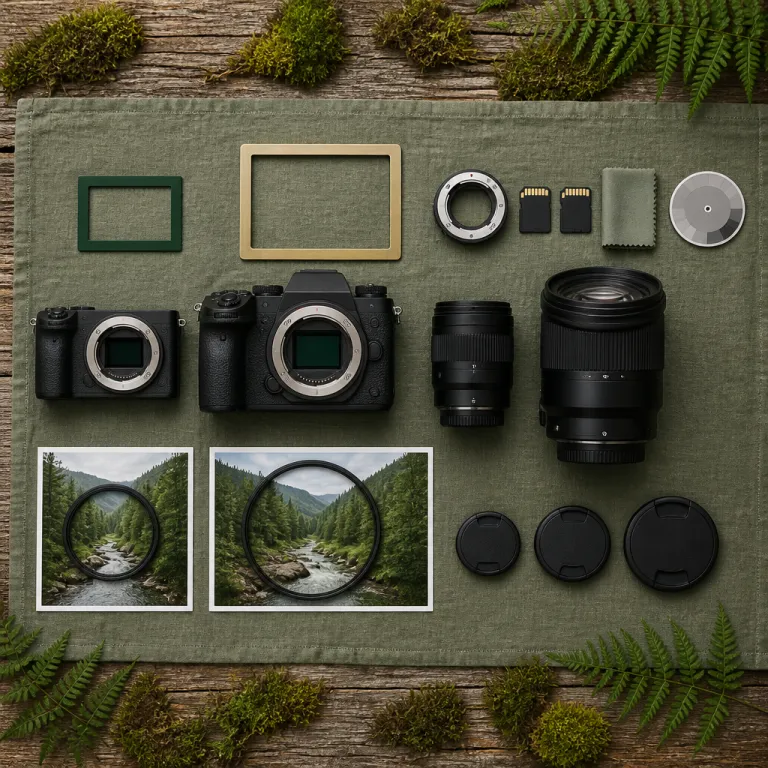
APS-C vs full frame camera 2026: what really changes in your photos
When people compare an APS-C vs full frame camera 2026, they usually start with sensor size charts and stop at marketing slogans. A more honest look at the full story asks how those different sensors, bodies and lenses actually affect your photography when you are shooting in mixed light, juggling travel weight and trying to stay within a real budget. The right format is less about abstract specs and more about which camera you will still carry after a long day.
An APS-C sensor is physically smaller than a full frame sensor, which is based on the classic 36 × 24 mm film frame. That smaller APS-C sensor introduces a crop factor, typically 1.5x for many APS-C cameras and 1.6x for some Canon bodies, meaning any given focal length gives a tighter field of view compared with a full frame camera using the same lens. In practice, a 70 mm focal length on an APS-C camera behaves like roughly 105 mm in angle of view, which quietly boosts your telephoto reach for wildlife or sports.
On the flip side, that same crop factor works against you when you want very shallow depth of field for portraits. To match the creamy background blur of a full frame camera at a given framing, an APS-C camera needs a wider aperture or a longer focal length, which can push you into heavier lenses and higher cost. This is why professional portrait shooters still lean toward full frame cameras with fast primes when depth of field control is the priority.
Sensor physics also favors full frame sensors for extreme low light performance. A larger full frame sensor can gather more light at the same ISO, which translates into cleaner files, better dynamic range and more flexible editing latitude when you lift shadows. That said, modern APS-C sensors have narrowed the gap so much that for most real world shooting, especially at moderate ISO values, image quality differences are subtle rather than night and day.
Noise reduction technology is the wild card in the APS-C vs full frame camera 2026 debate. In-camera processing on recent mirrorless cameras from Fujifilm, Nikon and Canon, combined with software like DxO PureRAW or Adobe’s AI Denoise, lets APS-C sensors punch far above their weight in low light. When you expose carefully and keep ISO within a reasonable range, an APS-C kit can deliver image quality that satisfies demanding enthusiasts who print large or crop aggressively.
Field tests with bodies like the Fujifilm X-T5 and Nikon Z fc show how far APS-C cameras have come. Autofocus tracking on these mirrorless cameras now locks onto eyes, animals and vehicles with a confidence that used to be reserved for high end full frame cameras, even when light levels drop indoors. For many photographers, the limiting factor becomes their technique and lens choice, not the smaller sensor format inside the camera.
Lens ecosystems used to be the Achilles heel of crop sensor systems. Today, Fujifilm’s X mount and Nikon’s Z DX lines prove that dedicated APS-C lens designs can cover everything from ultra wide to serious telephoto without forcing you into oversized full frame glass. When you match an APS-C sensor body with lenses built specifically for that format, you get a balanced kit where focal length, weight and price all align with how enthusiasts actually shoot.
One practical detail often overlooked in the APS-C vs full frame camera 2026 conversation is connectivity for hybrid creators. If you care about clean video output for streaming or external recording, you should look at curated lists of top digital cameras with HDMI output, which highlight both APS-C cameras and full frame cameras that integrate well into photo video workflows. Whether you choose an APS-C camera or a full frame body, the presence of a reliable HDMI port can matter more than a marginal sensor advantage.
Reach, weight and travel: where crop factor quietly wins
Out in the field, the 1.5x crop factor of many APS-C sensors is not a compromise, it is a feature. Wildlife and sports photographers routinely pay thousands for more telephoto reach on full frame cameras, while an APS-C camera turns a modest 300 mm focal length into a tight 450 mm equivalent field of view without adding a gram. That extra effective length means you can frame distant subjects more easily, using smaller lenses that fit into a standard travel backpack.
Consider a typical telephoto zoom for an APS-C sensor body, such as a 70–300 mm lens designed for APS-C mounts. On an APS-C camera, that zoom covers a field of view similar to 105–450 mm on a full frame camera, which is a huge range for wildlife, airshows or kids on a soccer field. To match that telephoto reach on a full frame camera, you would need a bulkier 100–400 mm or 150–600 mm lens, which adds significant weight and cost to your photography kit.
Weight matters once you start packing for a two week travel itinerary. A full frame body with a 36 × 24 mm sensor and three fast zoom lenses can easily add 1 to 1.5 kg more than an equivalent APS-C kit built around compact lenses and a lighter APS-C sensor body. That difference is the camera you leave in the hotel room versus the camera you sling over your shoulder for a full day of city shooting.
Travel photographers often underestimate how much aperture and focal length they truly need. On an APS-C camera, a modest f/4 aperture zoom still delivers pleasing depth of field separation at portrait distances, especially around 50 to 85 mm equivalent, while keeping size manageable. Meanwhile, a full frame camera with a constant f/2.8 zoom offers more blur but also tempts you to carry a heavier setup that may stay in your bag when the light gets interesting.
Telephoto primes tell a similar story. A 300 mm f/4 lens on an APS-C camera gives you serious telephoto reach for birds or distant landscapes, with a field of view that many full frame shooters only get from 400 mm or 500 mm glass. Because the APS-C sensor crops the image circle, lens designers can sometimes keep length and weight lower, which again favors photographers who hike or travel frequently.
There is also a financial weight to consider alongside physical grams. In many systems, a complete APS-C camera setup with a body, a wide zoom, a standard zoom and a telephoto zoom costs less than a single flagship full frame camera body. That price gap leaves room in your budget for a sturdy tripod, extra batteries, a better camera bag or even a dedicated APS-C telephoto lens that extends your shooting range further.
Hybrid shooters who care about both stills and video should also pay attention to ports and monitoring options when comparing travel kits. If you plan to use external recorders or live stream from your camera, it is worth checking guides to top digital cameras with HDMI output, where you will see both APS-C cameras and full frame cameras evaluated for their real world connectivity. In many cases, an APS-C camera with clean HDMI, good autofocus and solid image quality will outperform a cheaper full frame body that skimps on video features.
For long days, the ergonomics of smaller mirrorless cameras also matter. Many APS-C cameras strike a sweet spot where the grip is deep enough for stability with telephoto lenses, yet the overall body remains compact enough to fit into a sling bag. When you are shooting from sunrise to blue hour, that balance of size, weight and handling often matters more than the theoretical low light edge of a larger full frame sensor.
Lens ecosystems and real costs: APS-C systems finally grow up
The old narrative said that APS-C cameras were just stepping stones toward a full frame camera, with limited lenses and compromised features. That story no longer holds when you look at Fujifilm X mount, Nikon Z DX and the more recent Canon EOS R APS-C bodies, which now anchor complete ecosystems with primes, zooms and specialty lenses designed around APS-C sensors. These systems treat the APS-C format as a destination, not a temporary stop on the way to a full frame camera.
Fujifilm’s X series is the clearest example of a mature APS-C camera ecosystem. From compact f/2 primes to the XF 50–140 mm f/2.8 and the XF 150–600 mm telephoto, APS-C lens options cover almost every focal length and aperture combination an enthusiast might need, without forcing you into oversized full frame glass. When you mount these lenses on an X-T5 or X-S20, the balance in hand feels intentional, with the APS-C sensor and lens length working together rather than fighting physics.
Nikon’s Z DX line is smaller but growing in a focused way. Bodies like the Nikon Z50 and Z fc pair well with compact zoom lenses that keep the overall camera and lens package light for travel, while still offering respectable image quality from their APS-C sensors. If you later add a full frame Nikon Z body, your DX lenses still function in crop mode, which lets you treat APS-C cameras and full frame cameras as complementary tools rather than rivals.
Canon EOS R APS-C bodies, such as the EOS R7 and EOS R10, show how a brand can leverage shared mounts across formats. These cameras use APS-C sensors but accept RF mount lenses, meaning you can mix dedicated APS-C zooms with full frame RF primes as your budget grows. For many photographers, that flexibility makes the APS-C vs full frame camera 2026 decision less stressful, because one lens investment can serve both a full frame camera and an APS-C camera in the same bag.
Cost comparisons are stark when you price complete kits instead of isolated bodies. A solid APS-C setup with a midrange body, a wide zoom, a standard zoom and a telephoto zoom often totals less than a single high end full frame camera body before you even add lenses. That difference can fund software, workshops or a second APS-C camera body for backup, all of which arguably improve your photography more than a marginal sensor upgrade.
For enthusiasts leveling up, the question is not just which camera to buy, but which system to grow into. Guides to the best digital cameras for enthusiasts often highlight both APS-C cameras and full frame cameras, because the right choice depends on your shooting range, your preferred focal length and how much you value low light performance versus portability. When you look at the full ecosystem, including lenses, accessories and future upgrade paths, APS-C sensors frequently offer a better balance of cost and capability.
Depth of field control remains one of the few clear advantages for full frame sensors, especially for portrait and wedding work. A 50 mm f/1.2 lens on a full frame camera produces a different look than the same focal length on an APS-C sensor, even when you adjust distance and framing, because the larger full frame sensor allows a thinner plane of focus at equivalent composition. If that specific aesthetic is central to your photography, then a full frame sensor body with fast primes may justify the extra weight and expense.
For most enthusiasts, though, the combination of modern APS-C sensors, fast f/1.4 or f/1.8 primes and intelligent autofocus delivers more than enough subject separation. When you can lock focus on an eye reliably, even in low light, and trust your camera to track movement across the frame, the creative difference between formats shrinks. At that point, the best choice is the system whose lenses you can actually afford and whose camera you are happy to carry every day.
Low light, AI noise reduction and when full frame still matters
There is no way around physics, and full frame sensors still hold an edge in extreme low light. A larger full frame sensor gathers more light at the same ISO, which means cleaner shadows, smoother gradients and more forgiving files when you push exposure in post. If you routinely shoot indoor events, concerts or astrophotography, a full frame camera with a fast lens can still be the right tool.
What has changed is how much that edge matters for everyday photography. AI driven noise reduction, both in camera and in software, has dramatically improved the usable ISO range of modern APS-C sensors, to the point where an APS-C vs full frame camera 2026 comparison often comes down to roughly one stop of difference rather than a chasm. When you expose carefully and avoid underexposing by more than a stop, an APS-C camera can deliver image quality that satisfies even critical viewers.
Real world tests with cameras like the Fujifilm X-H2S, Nikon Z50 and Canon EOS R7 show that ISO values once considered emergency only now produce files that clean up well. In many cases, the limiting factor is not the sensor format but the photographer’s tolerance for grain and their skill with noise reduction tools. For social media, web use and moderate prints, the gap between APS-C sensors and full frame sensors is often invisible without pixel peeping.
Autofocus performance has also shifted the balance. Modern mirrorless cameras, whether APS-C cameras or full frame cameras, use subject detection algorithms that recognize eyes, faces, animals and vehicles across the frame, even in challenging light. When your camera can lock focus confidently at f/1.4 in a dim restaurant, the practical advantage of a larger full frame sensor narrows, because you are no longer forced to shoot at the very highest ISO settings.
Battery life and heat management are other practical considerations in the APS-C vs full frame camera 2026 discussion. Smaller APS-C sensors generate less heat at a given resolution and frame rate, which can help with long video recording sessions or extended burst shooting. For hybrid shooters who record 4K video and stills on the same camera, an APS-C camera that stays cool and stable may be more valuable than a full frame camera that overheats or throttles.
Some photographers worry that choosing an APS-C system will limit their professional credibility. In practice, clients care about the final images, not whether you used a full frame camera or an APS-C camera, as long as the image quality meets their needs and the files hold up in print. The industry’s quiet shift toward smaller, lighter mirrorless cameras has normalized the idea that serious work does not require the largest possible sensor.
When you evaluate your own needs, be brutally honest about how often you truly shoot at the edge of low light. If most of your photography happens between blue hour and bright daylight, with occasional indoor events, an APS-C sensor paired with fast lenses and good technique will serve you well. Reserve full frame for cases where you consistently need ultra thin depth of field or the cleanest possible files at very high ISO values.
In the end, the best format is the one inside the camera you actually carry and use. A lighter APS-C camera with a thoughtful set of lenses encourages more spontaneous shooting, more travel photography and more experimentation, which matters more than a theoretical advantage you leave on a shelf. The real upgrade is not the megapixel count, but what you will still be excited to shoot with in five years.
Key figures on APS-C and full frame adoption
- According to CIPA shipment data for 2022–2023, interchangeable lens cameras with APS-C sensors consistently represent a majority of mirrorless unit sales worldwide, often exceeding 60 percent of volume, which shows that crop format bodies remain the mainstream choice for most photographers. These figures are drawn from CIPA’s 2022 and 2023 annual shipment summaries for digital still cameras.
- Market analyses from firms such as BCN Retail in Japan indicate that full frame cameras account for a significantly higher share of revenue than unit sales, sometimes approaching 35–40 percent of value with a much smaller share of units, highlighting how full frame cameras concentrate in higher price brackets. BCN’s 2022 and early 2023 mirrorless rankings illustrate this split between volume and value.
- Weight comparisons between typical enthusiast kits show that an APS-C body with three lenses can be 800 to 1,500 grams lighter than an equivalent full frame kit, a difference large enough to noticeably reduce fatigue on long travel days or hikes. For example, manufacturer specifications for a Fujifilm X-T5 with XF 16–80 mm f/4 and XF 70–300 mm f/4–5.6 total roughly 1.6–1.8 kg, while a comparable full frame setup with a 24–70 mm f/2.8 and 70–200 mm f/2.8 from major brands often exceeds 2.5–3.0 kg.
- Lens catalog counts from major manufacturers reveal that Fujifilm X mount offers more than 30 native autofocus lenses for APS-C, while Canon RF and Nikon Z systems each provide multiple dedicated APS-C zooms and primes, confirming that lens ecosystems for crop sensors are now broad and practical. These numbers are based on official lens lists published by Fujifilm, Canon and Nikon as of late 2023.
- Independent lab testing from organizations such as DxOMark and Imaging Resource often finds that modern APS-C sensors deliver dynamic range within roughly one stop of comparable generation full frame sensors at base ISO, which explains why real world image quality differences are smaller than many marketing claims suggest. For instance, DxOMark’s measurements for cameras like the Fujifilm X-T5 and Canon EOS R7 versus midrange full frame bodies show dynamic range scores that differ by about 0.5–1.0 EV at low ISO.
- As a concrete example, a travel kit built around a Fujifilm X-T5 with XF 16–80 mm f/4 and XF 70–300 mm f/4–5.6 typically weighs around 1.6–1.8 kg, while a similar full frame setup with a 24–70 mm f/2.8 and 70–200 mm f/2.8 can easily exceed 2.5–3.0 kg, illustrating how sensor format influences real carrying weight. These figures come directly from the official weight specifications listed on manufacturer product pages.