
Summary
Editor's rating
Value for money: worth it at the right price, not at full original retail
Design & handling: familiar Canon feel with some weird choices
Battery life & connectivity: okay but not outstanding
Build quality & reliability: robust body, but watch the screen and kit contents
Autofocus, speed & image quality: strong for stills, mixed for action
What the Canon EOS R actually offers in real life
Pros
- Good 30.3 MP full-frame image quality, similar to 5D Mark IV for stills
- Comfortable grip and familiar Canon handling with fully articulating touchscreen
- Works very well with existing EF lenses via adapter, no big AF penalty for stills
Cons
- Single SD card slot and no in-body stabilization limit it for pro work
- 4K video has a heavy crop and rolling shutter, not ideal for serious video
- Autofocus and burst speed are behind newer mirrorless bodies for fast action

Specifications
View full product page →| Brand | Canon |
A DSLR shooter trying Canon’s first EOS R
I’ve been using Canon DSLRs for years (mainly a 6D and borrowing a 5D Mark III now and then), and I picked up the Canon EOS R body to see if it was finally time to move over to mirrorless. I didn’t get it new at launch price; I bought it used with low shutter count, because on paper it’s still a pretty capable camera but the price has dropped into a more reasonable zone. I’ve had it for a few weeks now, using it for family photos, a couple of paid portrait sessions, and some casual travel shots.
The first thing to know: this is not Canon’s latest mirrorless tech anymore. If you’re expecting an R5 or R6 level of speed, it’s not that. But if you’re coming from older DSLRs like a 6D / 5D II / 5D III, the EOS R still feels like a decent step up in autofocus coverage, live view usability, and overall handling. It’s kind of a bridge between the DSLR world and Canon’s newer R series.
In day-to-day use, the camera feels familiar enough if you’ve used Canon before. Menus are the same logic, buttons mostly make sense, and you don’t need to fight the body to get what you want. But there are also some weird choices, like the touch bar and the single card slot, that feel a bit half-baked in 2026. You can work around them, but they’re there.
So this review is from the point of view of someone who actually went out and shot with it, not just read the spec sheet. I’ll go through how it handles, image quality, autofocus, battery life, and whether it still makes sense to buy now that there are newer bodies around. Spoiler: it’s good in many ways, but you really need to know your priorities before putting money down.
Value for money: worth it at the right price, not at full original retail
The EOS R launched at a price that, in my opinion, didn’t make much sense once you looked at what other brands were offering. In 2026, though, the situation is different because the price has dropped a lot on both new old stock and the used market. At a lower price point, it starts to look like a pretty solid stills camera for people already in the Canon system who want to move into RF mount without dropping R5/R6 kind of money.
The value really depends on how you plan to use it. If you mainly shoot portraits, travel, family, and general photography, the EOS R gives you: good image quality, decent autofocus, a nice EVF, and full compatibility with your old EF lenses via an adapter. In that case, it can be good value for money, especially if you grab it used or during a discount. You’re getting something close to 5D Mark IV level results in a smaller body for less cash, with the bonus of mirrorless features like live exposure preview and more flexible AF point coverage.
On the other hand, there are clear compromises: single SD card slot, no in-body stabilization, cropped 4K, and autofocus that’s now behind Canon’s newer R6/R8/R7 bodies. If you shoot weddings, sports, or anything where redundancy and top-tier AF tracking matter, I’d be careful. Spending more on a newer body, or even looking at competitors, might save you headaches later. Also, if video is a big part of your work, the crop and lack of IBIS are annoying enough that you might regret not picking a more video-focused model.
So, value-wise, I’d say the EOS R is decent but not mind-blowing in 2026. It makes sense for existing Canon shooters who find a good deal and care more about stills than cutting-edge video or action performance. If you’re starting from zero or you shoot a lot of demanding work, I’d at least compare prices and features with newer Canon R bodies and other brands before committing.
Design & handling: familiar Canon feel with some weird choices
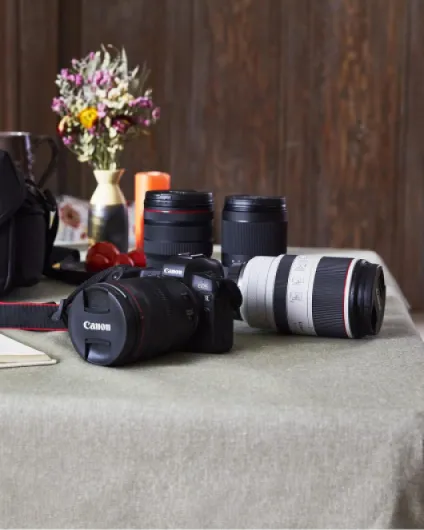
Design-wise, the EOS R sits somewhere between a 6D and a 5D series in the hand. It’s lighter at around 660 g, but the grip is still deep and comfortable. With a 24–105 on it, it feels balanced, not front-heavy. I carried it around a city for a full day with a strap and didn’t feel the same wrist fatigue I get from a big DSLR. If you’re used to Canon bodies, most of the buttons and dials fall under your fingers as expected, and the learning curve is short.
The electronic viewfinder (EVF) is decent: 3.69M dots, clear, and bright enough outdoors. Coming from an optical viewfinder, it feels a bit like watching a very small TV inside the camera. You do see a tiny bit of lag and some flicker in certain indoor lighting. After a few days I stopped noticing it much, but if you shoot fast action or just really like the pure optical feel, this will bother you at first. The trade-off is you see your exposure, white balance, and even a live histogram right in the EVF, which is very practical.
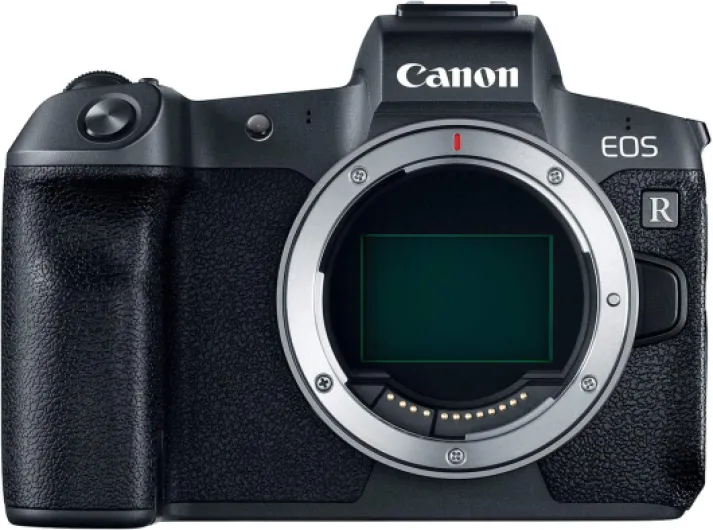
The fully articulating touchscreen is one of the things I ended up using a lot. For low angles, overhead shots, and quick vlogging or self-recording, it’s just handy. Touch to focus works well, and the screen is responsive. The weak point is that when the screen is flipped out, it feels a bit fragile. I wouldn’t want the camera to fall with the screen open; it doesn’t give the same sturdy vibe as the rest of the body. Closed and facing in, it’s fine and protected.
The most controversial design bit is the M‑Fn touch bar on the back. Honestly, I tried to love it, but I ended up disabling it. It’s not as precise as a real dial, and it’s too easy to trigger by accident. Canon clearly realized this because they didn’t put it on later R bodies. You can ignore it and rely on the standard dials and buttons, but it’s one of those things that makes the camera feel like a first attempt rather than a finalized design. Overall though, the body shape and handling are pretty solid and familiar, just with a couple of odd decisions.
Battery life & connectivity: okay but not outstanding
The EOS R uses the standard Canon LP‑E6 type batteries, which is convenient if you’ve been on Canon DSLRs before. In real use, I was getting around 400–600 shots per charge depending on how much I chimped the screen, how much I used the EVF, and whether Wi‑Fi/Bluetooth were on. That’s less than a DSLR like a 5D or 6D, which can easily do double that, but for a mirrorless body it’s acceptable. You just need to be realistic and carry at least one spare battery for a full day of shooting.
Using the EVF drains more battery than using the rear screen sparingly, and having the camera constantly waking up when you bring it to your eye also adds up. I noticed that during an indoor birthday party where I was shooting in short bursts over several hours, the battery dropped faster than I expected. It never died on me mid-event because I swapped batteries proactively, but I would not go to a job with only one battery in the bag. For casual travel or a day out, one and a half to two batteries is a safer bet.
On the connectivity side, you get Wi‑Fi and Bluetooth. Pairing with the Canon app is a bit clunky the first time, but once it’s set up, remote control and image transfer work fine. It’s not lightning fast, but it’s enough to send a few JPEGs to your phone on the go or to use your phone as a remote screen for tripod shots. I wouldn’t use it to dump a full shoot, but for quick sharing it does the job. The camera also has USB and HDMI out, so you can use it as a webcam or for external recording with the right setup.
Overall, battery life and connectivity are in the “good enough” category. They don’t stand out in a positive way, but they’re not deal-breakers either. Just factor in the cost of extra batteries if you’re upgrading from an older DSLR where you were used to getting 1,000+ shots per charge. The fact it uses the common Canon battery type is a small practical plus, especially if you already have a few lying around from previous bodies.
Build quality & reliability: robust body, but watch the screen and kit contents
In the hand, the EOS R feels solid. The grip is firm, the buttons and dials have a nice click, and nothing rattles. It doesn’t feel like a cheap plastic toy. I used it in light rain and dusty environments and didn’t run into any problems, though I didn’t abuse it. Canon doesn’t shout too loudly about weather sealing on this model like they do with their higher-end bodies, but for normal use it seems fine. I’d still use some common sense and not stand in a heavy storm with it unprotected.
The main weak area, like I mentioned earlier, is the fully articulating screen. Mechanically, it’s handy and has a nice range of motion, but when it’s flipped out, the hinge doesn’t inspire a lot of confidence if the camera were to take a hit. I never actually broke anything, but you can feel the difference in sturdiness between the main body and that thinner screen housing. My workaround is simple: I keep it folded in when I’m walking around and only flip it out when I actually need it.
One thing to flag, based on user reviews and my own buying experience: depending on the seller, the box contents can be inconsistent. Some folks reported missing the adapter or accessories, or getting a camera that felt like it was previously opened or used. Mine came in decent condition with the expected accessories, but the packaging didn’t scream “premium”. If you buy from third-party sellers, double-check what’s included and be ready to return it if the kit isn’t complete. The camera itself is fine; the issue is more about how some sellers handle it.
Long term, Canon bodies normally hold up well, and I don’t see anything on the EOS R that looks like it will fall apart quickly if you treat it reasonably. The shutter rating isn’t officially shouted everywhere, but for most enthusiasts and many working photographers, it should last several years of regular use. Just don’t expect tank-like weather sealing of a 1D series, and be a bit careful with the screen and with where you buy it from.
Autofocus, speed & image quality: strong for stills, mixed for action
For stills, the EOS R performs well, especially if you’re coming from older Canon DSLRs. The Dual Pixel CMOS AF system covers a huge area of the frame, and being able to move the AF point almost anywhere is a big change from older DSLRs where you were stuck with a cluster in the middle. Focus is quick and generally accurate, especially in good light. Eye detection works well for portraits when your subject isn’t too far away and the light is decent. It’s not on the level of Canon’s newer animal/people/vehicle tracking, but for human portraits it does a decent job.
For continuous autofocus and moving subjects, it’s a bit more mixed. The camera can shoot up to around 8 fps, but in proper continuous AF tracking mode it slows down, more like 5 fps, and can feel even slower depending on settings. For kids running around in a yard or casual sports, it’s usable, and I got more keepers than with my old 6D. But if your main thing is birds in flight, serious sports, or anything very fast, it’s not the ideal tool. The buffer and card write speed on a good UHS‑I or UHS‑II SD card are fine for normal bursts, but this is not a high-speed sports body.
Image quality from the 30.3 MP sensor is honestly the strong point. Files are clean, with good detail and plenty of room to edit RAWs. Dynamic range is not class-leading in 2026 terms, but it’s good enough for most real uses. I comfortably pushed shadows a couple of stops without the files falling apart too badly. Low light performance is also solid: ISO 3200 is clean, 6400 is still usable for events and indoor family stuff, especially if you don’t mind a bit of grain. Compared to a 6D or 5D II, it’s an upgrade; compared to an R6, it’s a bit behind in high ISO but you get more resolution.
For video, performance is okay but clearly not the focus of this body. 1080p looks good and is fine for YouTube or simple client work. 4K has a heavy crop, which is annoying if you like wide shots, and rolling shutter is visible if you pan too fast. The Dual Pixel AF in video is nice and smooth, but combined with the crop and no in-body stabilization, it’s not the most flexible camera for run‑and‑gun video. It works, but if video is your main goal, there are better picks now in Canon’s lineup and from other brands.
What the Canon EOS R actually offers in real life
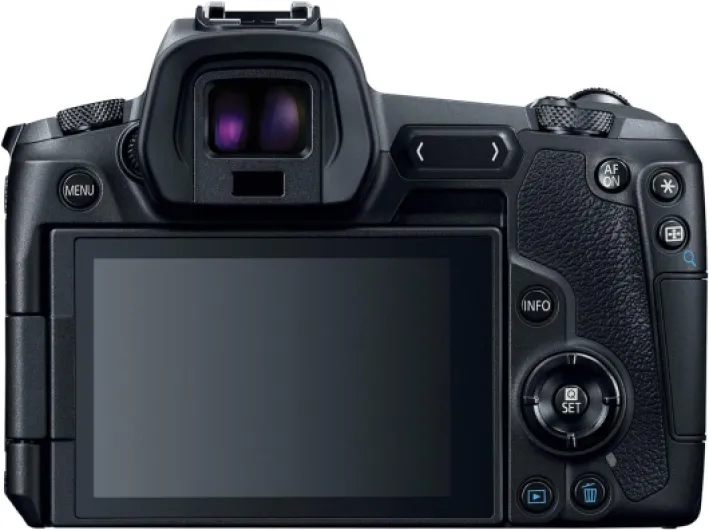
On paper, the EOS R is a 30.3 MP full-frame mirrorless body with Canon’s RF mount, a 3.69M dot electronic viewfinder, and a fully articulating touchscreen. It uses Canon’s Dual Pixel CMOS AF system with a huge number of selectable AF points (Canon says 5,655, which sounds more like marketing than something you’ll actually scroll through one by one). It records 4K video (with a crop), has Wi‑Fi and Bluetooth, and shoots up to around 8 fps in certain modes, less when you use continuous autofocus properly.
In practice, what this means is: image quality is roughly on par with a 5D Mark IV in a smaller, lighter body. Dynamic range and low-light performance are fine for most normal use. I comfortably shot up to ISO 6400 for indoor family stuff and events, and the files were still usable with a bit of noise reduction. You get Canon’s usual color rendering, which to my eye is still one of the main reasons to stick with the brand, especially for skin tones.
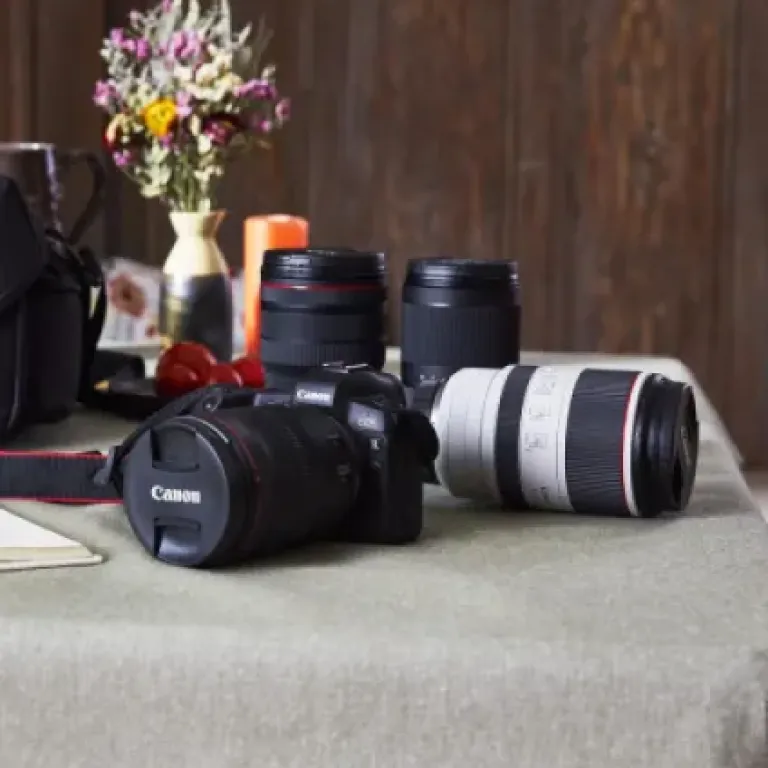
The body works with RF lenses natively, and with EF / EF‑S lenses via an adapter. I used it mostly with the EF 24–105 f/4L and a 50mm prime on the EF‑RF control ring adapter. Autofocus with adapted EF glass felt basically native for stills, which is nice if you already own a bunch of Canon lenses and don’t want to switch systems. You don’t feel punished for not buying RF lenses right away, except in size and maybe a bit of AF speed in some edge cases.
Where it starts to show its age is more in the details: single SD card slot, 4K crop, no in-body stabilization, and some autofocus limitations compared to the newer R6/R8/R7 bodies. It still gets the job done if your work is mostly portraits, travel, general photography, or light video. If your thing is sports, wildlife, or you need rock-solid redundancy and modern AF tracking, it starts to look more like a compromise body than a main tool in 2026.
Pros
- Good 30.3 MP full-frame image quality, similar to 5D Mark IV for stills
- Comfortable grip and familiar Canon handling with fully articulating touchscreen
- Works very well with existing EF lenses via adapter, no big AF penalty for stills
Cons
- Single SD card slot and no in-body stabilization limit it for pro work
- 4K video has a heavy crop and rolling shutter, not ideal for serious video
- Autofocus and burst speed are behind newer mirrorless bodies for fast action
Conclusion
Editor's rating
After actually using the Canon EOS R in real situations, I’d sum it up as a solid first-gen full-frame mirrorless from Canon that still holds up for many use cases, but clearly shows its age in some areas. The body feels good in the hand, image quality is strong, and if you already own EF lenses, the transition with an adapter is smooth. For portraits, travel, and general photography, it does the job well and gives you that familiar Canon color and handling without a massive learning curve.
Where it falls short is mainly in continuous autofocus for fast action, video limitations (4K crop, no IBIS), and some design quirks like the single card slot and the touch bar. None of these are deal-breakers for casual shooters or people who mostly do controlled work, but if you shoot weddings, sports, or rely heavily on video, there are better options now in Canon’s lineup and elsewhere. The key is the price: if you can get the EOS R at a good discount or used in clean condition, it’s a reasonable buy. At anything close to its original launch price, I’d say skip it and look at a newer body.