
Summary
Editor's rating
Is the G9M2 good value for money?
Design & handling: chunky for MFT, but it feels like a real camera
Battery life, charging and the missing charger situation
Build, weather sealing and how it holds up in the field
Autofocus, bursts and real-world image quality
What this camera actually offers on paper
Pros
- Fast and reliable Phase Hybrid AF with good subject detection and 60 fps bursts
- Strong 5-axis stabilisation and good 4K/5.7K 10-bit video options for hybrid use
- Solid, weather‑sealed body with good ergonomics, EVF and controls
Cons
- Battery life is only average and no charger or USB‑C cable in the box
- Body is relatively heavy for Micro Four Thirds and the system still lags full frame in low light and shallow depth of field

Specifications
View full product page →| Brand | Panasonic |
A serious Micro Four Thirds body that finally fixes autofocus
I’ve been using Micro Four Thirds bodies on and off for a few years, mostly Olympus/OM and an old Panasonic G7. I picked up the Panasonic LUMIX DC-G9M2E because I wanted something faster for action and better for video, without going all-in on a huge full-frame setup. I’ve used it for about three weeks now: family stuff, a football match, some street shooting, and a couple of quick talking‑head videos.
The short version: it’s a very capable hybrid camera that feels like a proper tool, not a toy. The new phase-detect autofocus is the main reason I was interested, and in real life it changes how usable the camera is compared with older contrast‑only Panasonic bodies. I can finally trust continuous AF for moving subjects instead of fighting focus pumping all the time.
It’s not perfect though. The body is on the heavier side for Micro Four Thirds, the menus are packed (sometimes too packed), and the whole “universal USB‑C but no charger in the box” policy is a bit annoying if you don’t already have the right stuff. Also, if you’re chasing ultra‑shallow depth of field or crazy low‑light performance, the small sensor still has limits compared with full frame.
Still, after a few thousand shots and several hours of video, I’d say it’s a pretty solid all‑rounder. It slots nicely between casual hobby gear and full‑on pro kits. If you already have Micro Four Thirds lenses and you want a modern body with fast burst, strong stabilisation and proper video features, this one deserves a real look.
Is the G9M2 good value for money?
Value is where opinions will split a bit. As of now, the G9M2 sits in the upper mid‑range price bracket for mirrorless cameras. It’s cheaper than many full‑frame hybrids with similar video specs, but more expensive than basic APS‑C models. If you already own Micro Four Thirds lenses, I think the value is quite good: you get a modern sensor, proper phase‑detect AF, strong stabilisation and serious video options without having to rebuy glass.
Compared to older Panasonic bodies like the original G9, the big gain is autofocus and video flexibility. If you mainly shoot stills of slow or static subjects, a discounted G9 or an OM‑5/EM‑1 II might be enough and cheaper. But if you care about reliable continuous AF for moving subjects and 10‑bit 4K/5.7K recording, the G9M2 makes more sense. It feels like a body that can handle both paid gigs and personal projects without being overkill.
On the downside, there are some hidden costs: no charger or USB‑C cable in the box, body-only so you need at least one decent lens, and probably a second battery and fast SD cards (UHS‑II recommended if you’re shooting high‑bitrate video or long bursts). When you add all that, the real cost creeps up. If you’re starting from zero, you might look at entry full‑frame kits and wonder if those are a better long‑term bet for low light and background blur.
Personally, I think the price is fair for what it does, especially if you value smaller lenses and the overall compact system. It’s not a bargain, but it’s also not overpriced for the feature set. For someone who shoots a mix of travel, family, events and some paid video or photo work, it’s a good value workhorse. If you just want a casual camera for holidays, it’s probably more than you need, both in features and in cost.

Design & handling: chunky for MFT, but it feels like a real camera
The first thing I noticed when I unboxed the G9M2 is that it’s not tiny for a Micro Four Thirds body. At around 0.98 kg with battery and card (body only), it’s closer to a mid‑size DSLR than a compact mirrorless. Personally, I like that: the grip is deep, and with a 12–35mm or 35–100mm zoom it feels well balanced, not front‑heavy. If you prefer super small street cameras, this one might feel a bit overbuilt, but for longer sessions it’s comfortable.
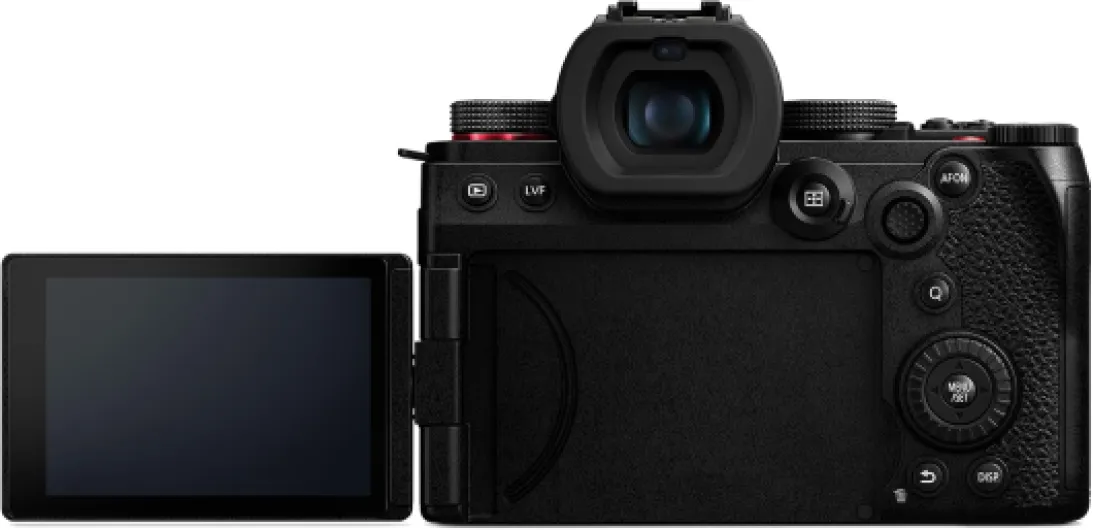
The controls are clearly aimed at people who actually use manual settings. You get dedicated front and rear dials, a top dial for shooting modes, and a separate drive mode selector. The 8‑way joystick is very handy for moving the focus point quickly, especially in the viewfinder. After two or three days, I was changing AF areas, ISO and drive modes without taking my eye off the EVF, which is exactly what I want from a camera like this.
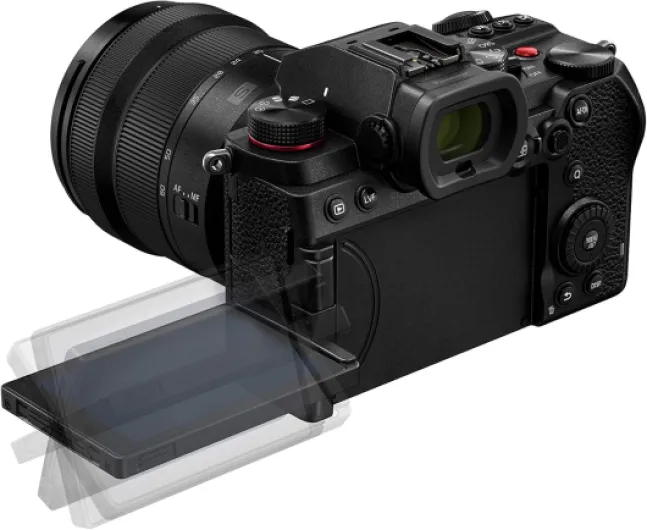
The 3680k-dot OLED viewfinder is sharp and bright, and the fully articulating 1840k-dot rear screen is good for both low angles and for filming yourself or others. The EVF magnification (0.8x) feels big and clear. I had no trouble composing in bright sunlight. The only small gripe: in very fast bursts, the EVF can feel a bit jittery with blackout patterns, but that’s expected at 60 fps and didn’t really stop me tracking subjects.
Button layout is mostly logical. A couple of things are buried in menus (like some video profiles and stabilisation tweaks), but you can fix that by customising the function buttons. There are plenty of them. It took me about a week to get everything mapped how I wanted: AF mode on one button, switching between normal and high‑speed bursts on another, etc. Build quality feels solid: no creaks, doors close firmly, and the weather‑sealing gaskets look decent. It doesn’t feel cheap or plastic, more like a compact pro body.
Battery life, charging and the missing charger situation
Battery life is okay, not great, not terrible. With mixed use (stills, a bit of 4K video, some chimping), I usually got through about 350–450 shots plus 20–30 minutes of video on a single charge. If I was only shooting stills in bursts and not reviewing every shot, I pushed closer to 600 frames. It’s not DSLR-level endurance, but it’s in line with many modern mirrorless cameras. For a full day out, I’d want a second battery, no question.
The part that annoyed me a bit is Panasonic’s “universal USB‑C charging but no cable or AC adapter included” policy. I get the environmental argument, but in reality it just means you need to make sure you already own a decent USB‑C cable and a charger that can provide enough power. I tried a random cheap cable at first and the camera charged very slowly. With a proper USB‑C PD charger from my laptop, it was much faster and more reliable.
On the positive side, being able to charge via USB‑C directly in the camera is handy when travelling. I charged it from a power bank in my bag between locations, which saved me once when I forgot to bring the spare battery. Just keep in mind that if you’re shooting and charging a lot through the same port, you’ll want to treat that USB‑C connector carefully, because if it gets damaged you lose both data and charging.
If you plan on using this for longer events or serious video work, I’d say budget for at least one extra official battery and a dedicated charger. Third‑party batteries exist but I haven’t tested them on this body yet, and I usually prefer original ones with these more demanding cameras. Overall, battery life is acceptable but nothing special, and the missing charger is a bit of a hidden cost, especially if this is your first serious camera.
Build, weather sealing and how it holds up in the field
In terms of durability, the G9M2 feels reassuringly solid. The body has a splash, dust and freeze‑resistant design, and while I haven’t thrown it in a river, I did use it in drizzle, cold wind, and a bit of sea spray at the coast. No issues at all. The rubber doors for the ports and card slot close tightly, and there’s no wobble in the articulating screen hinge, which is something that often worries me on these flip‑out designs.
The buttons and dials feel firm, not mushy. After a few weeks of daily use, nothing has loosened, and the mode dial still has a nice click. The grip covering hasn’t started peeling or shining yet, which is a good sign. At just under a kilo, it can take a knock without feeling fragile, but of course it’s still a camera, not a hammer. I had it swinging on a strap and bumped it lightly into a door frame once; no marks, no issues with function afterwards.
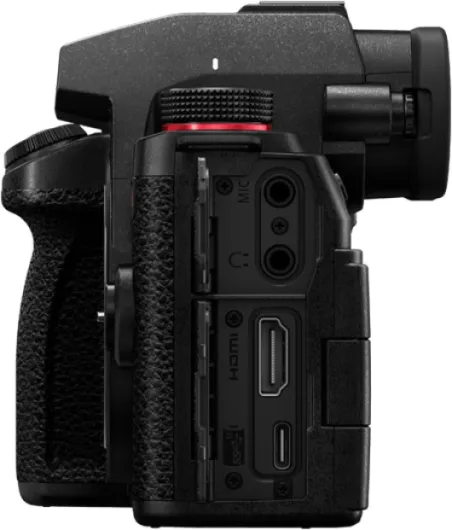
The HDMI and USB‑C ports are the only parts I’m a bit careful with. HDMI is full-size, which is good for durability compared with micro HDMI, but if you’re constantly plugging and unplugging for external monitors, I’d avoid putting stress on the cable. Same for USB‑C: since it’s your charging and data port, I try not to hang the camera from the cable or twist it while connected. These are general concerns with any modern camera, not just this one, but worth mentioning.
Overall, it gives the impression of a workhorse body that can handle travel, outdoor shooting and regular use. If you treat it like a tool and not a delicate ornament, it should hold up fine. I wouldn’t baby it, but I also wouldn’t expect it to survive a serious drop on concrete without damage. For normal enthusiast or semi‑pro use, durability seems pretty solid so far.
Autofocus, bursts and real-world image quality
Performance-wise, this is where the G9M2 feels like a big jump over older Panasonic bodies. The Phase Hybrid AF with 779 points is a clear step up from the usual contrast‑only hunting. In practice: tracking a football player running towards me at 60 fps, I got a much higher keeper rate than with my old G7 or even some mid‑range APS‑C bodies I’ve tried. Eye and face detection work well, and the animal and car/motorcycle detection is actually useful if you shoot pets or motorsports.
The 60 fps burst with AFC is honestly more than most people need, but it’s handy for sports or birds. Just be aware that it eats through your SD card space and sorting the files afterwards is a bit of a chore. For most stuff I settled on 20 fps, which feels like a good balance. Rolling shutter with the electronic shutter is present if you pan quickly, but with the smaller sensor it’s not as bad as some full‑frame cameras I’ve tried.
Image quality from the 25.2MP MOS sensor is solid. Dynamic range is good enough for recovering shadows and highlights in RAW, and noise handling is decent up to ISO 3200–6400 for stills. It’s not full‑frame level, but for most real‑world use (travel, family, events) it’s fine. The 100MP handheld high‑res mode actually works if you hold reasonably steady and your subject isn’t moving much. I used it for a couple of static landscapes, and the extra detail is noticeable when you zoom in on a big screen.
For video, the 5.7K and 4K 10‑bit modes look clean, with plenty of detail. V‑Log gives you flexibility if you know what you’re doing in post, but even the standard profiles look good straight out of camera. The Active I.S. helps a lot for handheld walking shots; it’s not gimbal-smooth, but it’s usable for YouTube or casual work. Overall, in real use, the camera feels quick, responsive, and reliable enough for semi‑pro jobs, not just hobby shooting.
What this camera actually offers on paper
On paper, the LUMIX DC-G9M2E is a 25.2MP Micro Four Thirds mirrorless body that targets people who shoot both stills and video. The sensor is paired with Phase Hybrid AF with 779 points, which is a big shift for Panasonic, since older models were mostly contrast‑based. It shoots up to 60 fps with continuous autofocus using the electronic shutter, which is genuinely fast if you’re into sports, wildlife or just kids running around everywhere.
For video, it’s not some basic 4K-only body. You get C4K/4K up to 120p/100p in 10‑bit 4:2:0, and C4K/4K 60p in 10‑bit 4:2:2, plus 5.7K up to 30p. There’s also V‑Log / V‑Gamut with around 13+ stops claimed dynamic range, which is more for people who know how to grade footage, but it’s good that it’s there. In practice, this means you can shoot slow motion, high‑resolution and log video without needing an external recorder.
Stabilisation is another key point: 5‑axis in‑body stabilisation rated up to 8 stops, and up to 7.5 stops with certain lenses in Dual I.S. mode. There’s also an “Active I.S.” mode for video to smooth out walking shots. Combined with the small sensor and lighter lenses, it makes handheld shooting in low light or at slower shutter speeds much more forgiving.
Connectivity is pretty standard but complete: Wi‑Fi, Bluetooth, USB‑C, HDMI out. The body is weather‑sealed (splash, dust and freeze‑resistant), so it’s fine for shooting in rain or cold as long as your lens can handle it too. Important detail: it’s sold here as body only, no lens, and Panasonic doesn’t include a USB‑C cable or AC adapter in the box. So if this is your first camera or you don’t have many USB‑C bits lying around, plan for that extra cost.
Pros
- Fast and reliable Phase Hybrid AF with good subject detection and 60 fps bursts
- Strong 5-axis stabilisation and good 4K/5.7K 10-bit video options for hybrid use
- Solid, weather‑sealed body with good ergonomics, EVF and controls
Cons
- Battery life is only average and no charger or USB‑C cable in the box
- Body is relatively heavy for Micro Four Thirds and the system still lags full frame in low light and shallow depth of field
Conclusion
Editor's rating
After a few weeks with the Panasonic LUMIX DC-G9M2E, my feeling is that it’s a strong hybrid camera aimed at people who actually use manual controls and care about both stills and video. The new phase‑detect autofocus finally makes Panasonic a realistic option for action, sports and wildlife, not just static scenes and video on a tripod. Add the fast bursts, solid 25.2MP image quality, and very effective stabilisation, and you get a body that handles most situations without fuss.
It’s not flawless. Battery life is just okay, the missing charger and cable are a bit of a cheap move, and the body is on the heavier side for Micro Four Thirds. If you’re chasing ultra‑low‑light performance and extreme background blur, a full‑frame system still has clear advantages. Also, if you’re a casual user who mostly shoots auto mode and the odd 1080p video, this camera is probably overkill in both price and complexity.
I’d recommend the G9M2 mainly to existing Micro Four Thirds users who want a modern, fast body, and to hybrid shooters who need strong video tools without hauling huge lenses. It’s good for travel, events, sports, YouTube or small commercial work. People starting from scratch with no lenses should at least compare it with similarly priced APS‑C and full‑frame kits before deciding. But overall, as a dependable, well‑rounded tool, it does the job very well and feels like a camera you can actually grow with.