
Summary
Editor's rating
Value: cheap entry ticket, but there are better options
Design: familiar Canon look, but very basic
Battery and connectivity: okay endurance, gimmicky Wi‑Fi
Build and durability: feels cheap but not fragile
Performance: fine in daylight, weak everywhere else
What you actually get with the EOS 2000D kit
Pros
- Cheap entry point into Canon EF‑S lens system, especially if bought on sale or used
- Decent image quality in good light with 24MP sensor and basic optical stabilization
- Simple, familiar controls that make it easy for beginners to learn manual settings
Cons
- Poor performance in low light and limited dynamic range, often blowing out skies
- Basic autofocus and no spot metering, which makes tricky scenes harder to handle
- Outdated design with fixed non‑touch screen and weak video features compared to modern alternatives

Specifications
View full product page →| Brand | Canon |
A budget DSLR that feels a bit too budget
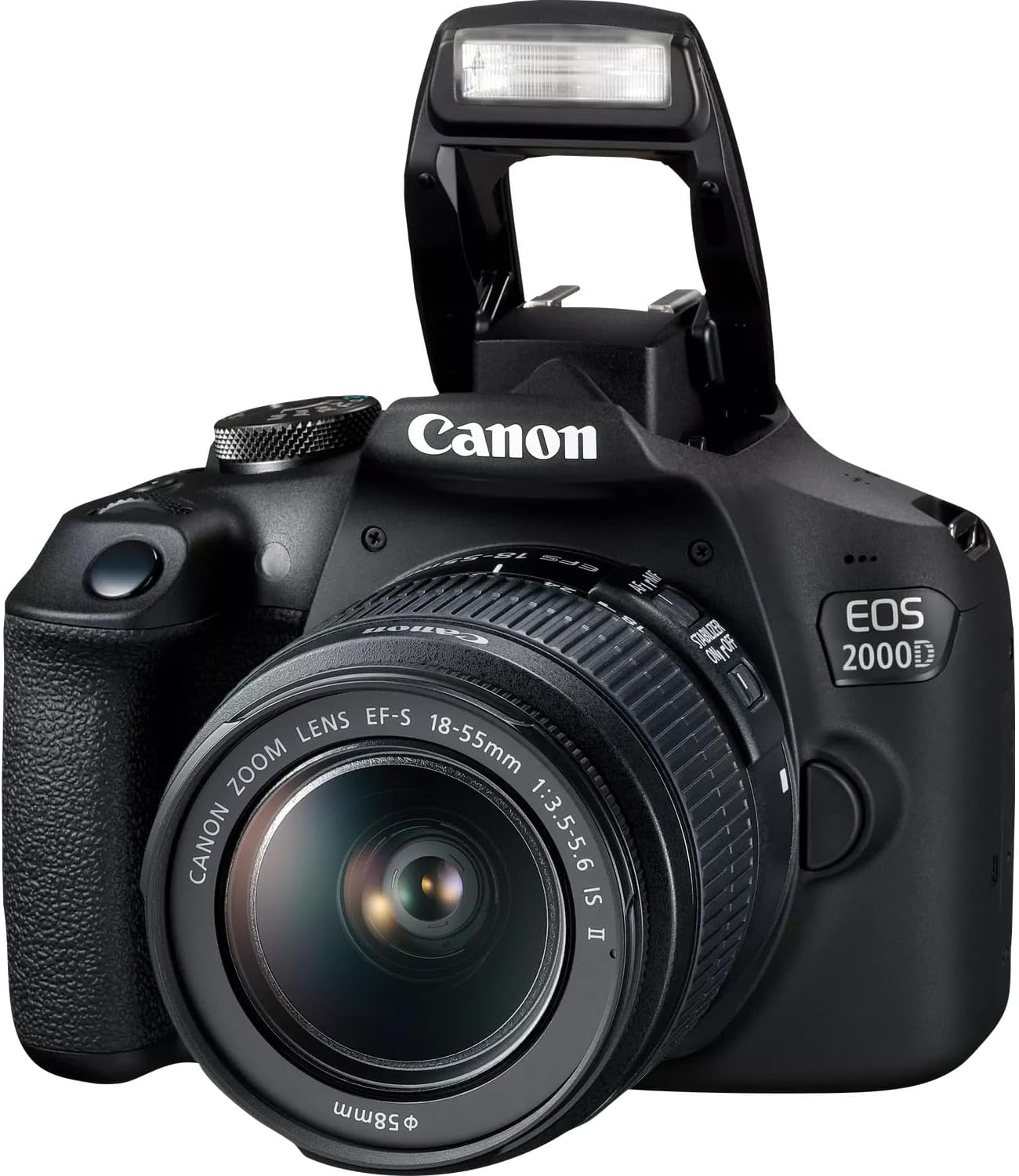
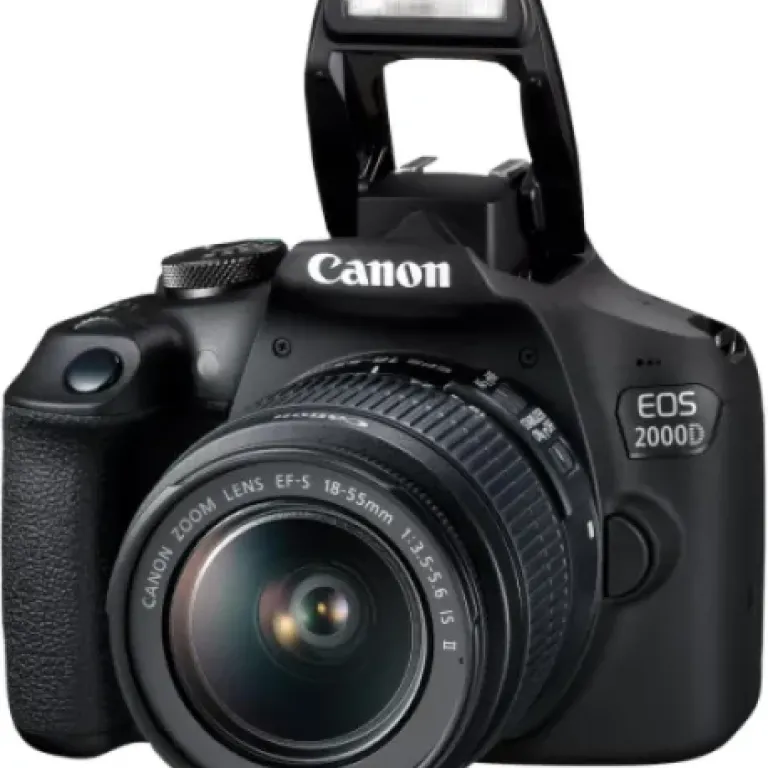
I picked up the Canon EOS 2000D kit with the 18‑55mm IS II lens because I wanted a cheap way back into DSLR photography. On paper it looked fine: interchangeable lenses, an APS‑C sensor, Wi‑Fi/Bluetooth, and a familiar Canon layout. In reality, it feels like a very old camera being kept on life support and sold to beginners who don’t know the difference yet.
I used it for a couple of weeks for normal stuff: walks in the park, family photos indoors, a bit of street shooting, and some quick video clips. My main reference is a mid‑range phone and an older Canon DSLR (a 700D) I used to own. That’s important, because compared to a phone from the last 3–4 years, the 2000D doesn’t always come out on top, which is a bit embarrassing for a dedicated camera.
The first thing that hit me is that the camera can produce decent photos in good light, but it’s very easy to mess up exposure and end up with blown skies or flat, washed‑out images. The user review saying the sky is always blown out isn’t totally wrong. The metering is basic, and there’s no spot metering, which makes it harder to control tricky scenes if you’re just starting.
Overall, my first impression is that it’s a functional DSLR that lets you learn the basics, but it feels dated in almost every way. It gets the job done for simple photography, but between the weak autofocus, limited dynamic range, and clunky handling, it’s not a camera I’d recommend to anyone who’s even slightly serious about learning photography in 2026.
Value: cheap entry ticket, but there are better options
The big question with the Canon EOS 2000D kit is whether it offers good value. It’s often priced low and sometimes heavily discounted, which makes it tempting for beginners. You see “Canon DSLR, 18–55mm lens, Wi‑Fi” and think you’re getting a solid starter setup. In reality, you’re paying for an old design that Canon keeps around mainly for the budget segment, and it shows in the performance and features.
If your budget is very tight and you absolutely want a DSLR with an optical viewfinder and the option to change lenses, then yes, this kit can make sense. It lets you learn the basics of exposure, depth of field, and focal length without spending a fortune. You can also pick up used Canon EF/EF‑S lenses fairly cheap, which is a plus. For someone who just wants to move away from full auto on a phone and experiment a bit, it’s a workable starting point.
But when you compare it to alternatives—used mid‑range DSLRs, entry‑level mirrorless cameras, or even some modern phones—the value is less clear. A slightly older but higher‑end Canon body bought used will often give you better autofocus, better build, and more features for similar money. An entry‑level mirrorless kit from Canon, Sony, or Nikon will give you a more modern sensor, better video, and a nicer shooting experience, even if the body costs a bit more.
So my take is: the 2000D is “cheap, but you feel it.” It’s not a rip‑off, but it’s not a smart long‑term buy either unless you get it at a very low price or second‑hand. If you can stretch your budget or are open to buying used gear, you can get more camera for the same or slightly more money. If you just want something simple to learn the basics and don’t care about future‑proofing, it’s acceptable but nothing more.
Design: familiar Canon look, but very basic
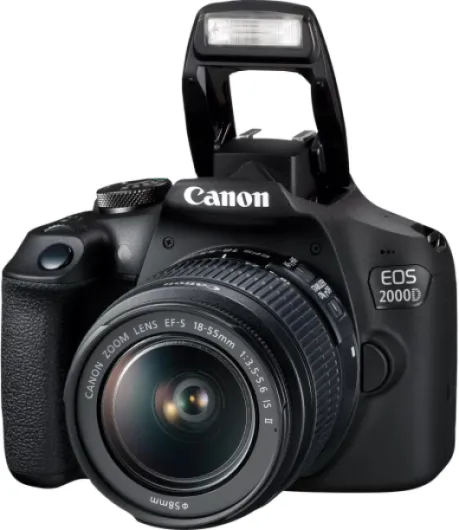
Design‑wise, the EOS 2000D is exactly what you expect from an entry‑level Canon DSLR. It’s a black plastic body, fairly light, with the classic Canon button layout. If you’ve ever used a Canon DSLR before, you’ll feel at home in about five minutes. The mode dial on top is clear, and you’ve got the usual auto, scene modes, and the manual modes (P, Av, Tv, M). For a beginner, that’s actually a plus: it’s not intimidating.
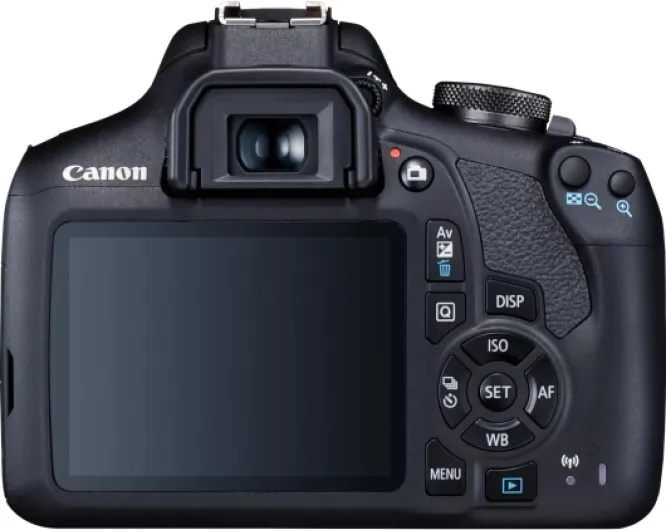
The downside is that the design is stuck in the past. The rear screen is fixed, not articulated, and it’s not touch‑enabled. That means no flipping the screen for selfies or vlogging, and navigating menus feels slow. You’re stuck with the directional pad and buttons, which is fine, but once you’ve used a camera with a touchscreen, going back feels clunky. The optical viewfinder is small and basic, good enough to compose, but nothing more.
There’s no weather sealing or anything fancy. The grip is decent, but a bit shallow if you’ve got big hands. The buttons are small and feel a bit cheap, but they work. I didn’t get the feeling it would break in my hands, but it doesn’t give much confidence either. It’s clearly built to hit a low price point, not to impress.
From a practical point of view, the design does the job: you can change settings, hold it securely, and access all the basics quickly once you know where things are. But compared to newer entry‑level mirrorless cameras with tilting touchscreens and better ergonomics, the 2000D feels like a leftover body Canon keeps selling because the tooling is paid off. It’s not painful to use, but it’s not enjoyable either, and that matters if you plan to shoot a lot.
Battery and connectivity: okay endurance, gimmicky Wi‑Fi
Battery life on the EOS 2000D is decent but not impressive. On a full charge, I managed roughly a full afternoon of casual shooting, around 300–400 shots with some chimping on the screen. That’s normal for an entry‑level DSLR. If you’re out for a full day, you’ll want a spare battery, especially if you use live view a lot or record video. The spec sheet saying “1 x 9V battery” is clearly a listing error; in reality it uses Canon’s standard rechargeable pack, but the important point is: don’t expect miracles.
Because there’s no USB‑C charging, you’re stuck with the external charger. For some people that’s fine, but I’ve gotten used to topping up devices via power bank, and you just can’t do that here. It’s another reminder that this design is old. If the seller really doesn’t include a battery (as the listing suggests), that’s a red flag and an extra cost you need to factor in right away.
On the connectivity side, you get built‑in Wi‑Fi and Bluetooth. In theory, that sounds handy: transfer photos to your phone, remote control, etc. In practice, it’s slow and a bit painful to set up. The Canon app works, but the connection drops sometimes, and transferring a batch of full‑resolution files takes ages. After trying it twice, I mostly gave up and just used a card reader, which was faster and less annoying.
So yes, the camera has modern buzzwords like Wi‑Fi and Bluetooth, but they don’t really improve the experience much. The one solid point is that the battery life is good enough for casual use, but nothing more. If you’re planning events, travel days, or long shoots, budget for at least one extra battery and don’t count on the wireless features to save you time in the field.
Build and durability: feels cheap but not fragile
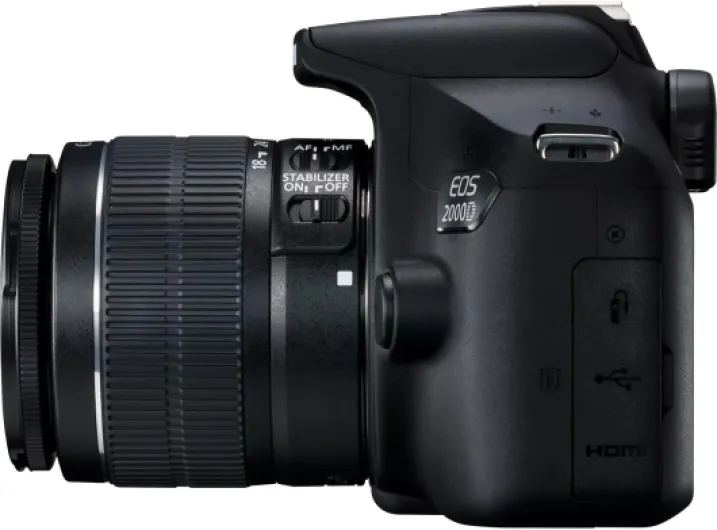
The body of the EOS 2000D is made almost entirely of plastic. It’s light, which is nice for carrying around, but it doesn’t feel particularly strong. There’s a bit of creak if you squeeze the grip, and the finish looks like it will pick up scratches fairly quickly if you’re rough with it. This isn’t a camera I’d want to drop or use in heavy rain. There’s no weather sealing, no rubber gaskets, nothing like that.
That said, it doesn’t feel like it’s going to fall apart in normal use. I tossed it in a backpack a few times (in a basic camera insert), took it out in cold and slightly damp weather, and it behaved fine. The buttons and dials didn’t wobble or break, and the lens mount held the kit lens securely. For everyday hobby use—walks, holidays, family events—it should hold up as long as you don’t abuse it.
The lens itself is also very plasticky, including the mount on some copies. The zoom and focus rings are a bit rough and not very precise. After some use, I can imagine zoom creep and maybe a bit of play developing, but that’s pretty standard for cheap kit lenses. Optically it’s okay, but you’re not buying this kit for high‑end build quality. It’s a compromise to keep the price low.
In short, durability is “fine if you’re careful.” It’s not built like a tank, and I wouldn’t expect it to survive heavy professional use or harsh conditions. If you treat your gear reasonably well—strap around your neck, basic bag, don’t shoot in a sandstorm—it should last a few years. Just don’t expect premium feel or confidence when the weather turns bad or if you’re a bit clumsy.
Performance: fine in daylight, weak everywhere else
This is where the EOS 2000D really shows its age. In good light, the camera can produce decent photos: 24MP gives you enough detail, and the kit lens is sharp enough in the center at normal apertures. For casual shooting outside on a sunny day, you can get photos that look clearly better than a cheap phone, mainly thanks to the natural background blur at longer focal lengths. But you have to work a bit for it.
The autofocus is basic: 9 AF points and none of the clever tracking you see on newer cameras. It’s fine for static subjects, but if you’re trying to shoot kids running around or anything moving quickly, it misses quite a lot. I noticed it hunts a bit in lower light, and sometimes just locks focus on the wrong thing. The lack of spot metering is also annoying: in high‑contrast scenes, the camera tends to protect shadows and blow the sky, just like the Amazon review mentioned. You can work around it with exposure compensation, but beginners won’t know that at first.
Low‑light performance is where it falls apart compared to modern phones. At ISO 1600 and above, noise becomes pretty visible, and the images lose detail and contrast. Phones use aggressive processing and night modes to hide that; the 2000D just gives you a noisy file. The kit lens doesn’t help, with its f/3.5–5.6 aperture, so indoors you quickly end up at high ISO or with blurry shots if you try to keep ISO down.
Video is very basic: HD, no fancy autofocus, and the overall look is soft and a bit dated. For vlogging or YouTube, you’re honestly better off with a mid‑range phone unless you’re ready to invest in better lenses and learn manual settings. In short, the performance is acceptable for learning and daylight photography, but for anything beyond that, it feels underpowered and behind the times.
What you actually get with the EOS 2000D kit
The kit is very straightforward: you get the Canon EOS 2000D body and the EF‑S 18–55mm f/3.5–5.6 IS II lens. No fancy extras, no battery included according to the spec sheet (which is odd and worth double‑checking with the seller), and usually just the basic strap, charger, and cable. It’s clearly pitched as a beginner combo: one lens that covers wide to short telephoto, basic image stabilization, and a simple DSLR body.
The sensor is APS‑C, 24 megapixels, which sounds good on paper. Resolution isn’t the problem here. The body has built‑in Wi‑Fi and Bluetooth, but that’s mostly to move photos to your phone or control it remotely. There’s a movie mode, but it’s limited and feels dated, especially if you’re thinking about vlogging. No fancy 4K, just basic HD video with autofocus that’s not very smooth or silent.
The lens is a standard kit zoom: 18–55mm, variable aperture f/3.5–5.6, optical image stabilization. It’s fine for daytime walks and general use, but it’s not bright, so indoors you’ll quickly hit higher ISO and see noise. The mount is Canon EF‑S, so you can add other lenses later, which is the one thing this camera still has going for it: it’s a cheap ticket into the Canon DSLR ecosystem if you find used lenses.
In practice, the overall package feels like a starter pack from about 2014 that never got properly updated. It’s fine if you just want to play with aperture, shutter speed, and focal lengths, but if you’re hoping for strong low‑light performance, reliable video, or modern autofocus, this kit is going to feel limited very quickly. It’s more of a learning tool than something you’ll want to keep long‑term.
Pros
- Cheap entry point into Canon EF‑S lens system, especially if bought on sale or used
- Decent image quality in good light with 24MP sensor and basic optical stabilization
- Simple, familiar controls that make it easy for beginners to learn manual settings
Cons
- Poor performance in low light and limited dynamic range, often blowing out skies
- Basic autofocus and no spot metering, which makes tricky scenes harder to handle
- Outdated design with fixed non‑touch screen and weak video features compared to modern alternatives
Conclusion
Editor's rating
After using the Canon EOS 2000D with the 18–55mm IS II lens for a while, my overall feeling is pretty lukewarm. It works, it takes photos, and in good light you can get decent results, especially if you’re willing to learn the basics and shoot in manual or semi‑manual modes. As a very first camera for someone on a tight budget, it can serve as a training tool to understand aperture, shutter speed, and ISO.
But the downsides are hard to ignore: basic autofocus, no spot metering, weak low‑light performance, dated video, and a body design that feels stuck in the past. The Wi‑Fi/Bluetooth features are more of a gimmick than a real advantage, and the build quality is just okay. Compared to modern phones and newer entry‑level mirrorless cameras, it doesn’t stand out much, and sometimes it even falls behind, especially in low light and ease of use.
If you’re a beginner who just wants a cheap DSLR to play with and you find this kit at a bargain price, it’s usable. If you’re already into photography, or you care about video, autofocus, or long‑term growth, I’d skip it and look for a used mid‑range Canon body or a newer mirrorless kit. It’s basically a budget learner’s camera that already feels one or two generations too old.