
Summary
Editor's rating
Value for money: worth it if you really need the zoom
Design: pocketable, familiar, a bit cramped at times
Battery life: fine for a day, but bring a spare for heavy use
Durability and build: solid enough, but not a tank
Performance: strong zoom, decent autofocus, average low-light
What you actually get with the SX740 HS Lite
Pros
- 40x optical zoom (24–960mm) in a genuinely pocketable body
- Simple operation with good auto modes and flip-up screen for selfies/vlogging
- Decent 4K video and stabilisation for casual travel clips
Cons
- No memory card in the box and only one battery, so real cost is higher
- Average low-light performance and no RAW support
- No viewfinder, screen can be hard to see in bright sun

Specifications
View full product page →| Brand | Canon |
A travel camera for people who still like real buttons
I’ve been using the Canon PowerShot SX740 HS Lite for a couple of weeks, mostly for walks, a weekend trip, and some quick family shots. I usually rely on my phone (Pixel) and sometimes a bigger mirrorless camera, so this little compact had to justify the extra weight in my pocket. Short version: it’s not magic, but it does a few things phones still struggle with, mainly the long zoom.
The first thing that hit me is how familiar it feels if you’ve ever owned an older Canon compact. Menus, buttons, the overall logic – it’s very Canon. You don’t need to be a pro to use it; leave it on auto and it basically behaves like a point-and-shoot, but with way more reach. I didn’t have to dig into the manual except for a couple of settings like Wi‑Fi transfer and 4K video options.
In daily use, the camera is clearly built for travel and casual shooting: 40x zoom (24–960mm equivalent), 20 MP sensor, 4K video, flip-up screen for selfies or vlogging, and Wi‑Fi/Bluetooth to get photos onto your phone. That’s the core of it. No RAW, no fancy manual dials, no viewfinder; this is not a mini DSLR. If you want full control and pro-level quality, this isn’t the right tool.
For someone who just wants something better than their phone for zoom, with a real grip and physical controls, it’s pretty solid. But there are annoyances: no memory card in the box, low-light performance is just average, and 4K has some limits. I’ll go through all that, but keep in mind this is basically a compact travel zoom that gets the job done without being mind-blowing.
Value for money: worth it if you really need the zoom
In terms of value, this camera sits in a slightly awkward spot. Phones keep getting better, and for many people, a modern smartphone already covers 80% of what they do with photos. Where the SX740 HS Lite still makes sense is if you specifically want the 40x zoom and a real camera feel without going into interchangeable-lens territory. For travel, wildlife at a casual level, and family events where you’re far from the action, it offers something most phones simply can’t: real reach with optical stabilisation.
On the other hand, you have to factor in the extras. No memory card in the box, no USB cable, and ideally you’ll want a spare battery and maybe a small case. That annoyed Amazon reviewer who mentioned spending about £35 extra for card and cable isn’t wrong. If you add those costs, the total price starts creeping up. At that point, you’re not far from entry-level mirrorless kits on discount, which give you better image quality but less zoom and more bulk.
Compared to older Canon compacts I’ve used, this one is clearly faster and more capable, mainly thanks to the DIGIC 8 processor and 4K support. The price you pay is for convenience and zoom, not for pro-level image quality. The lack of RAW will be a deal-breaker for some. For me, it means this camera is clearly aimed at people who mostly shoot JPEG and just want good-looking photos straight out of camera without heavy editing.
So, is it good value? If your main goal is a small camera with big zoom and simple operation, I’d say it’s reasonably priced for what it does, especially considering the 4.4/5 rating from other users. If you rarely zoom past what your phone can do and you’re picky about low-light quality, then no, it’s probably not the best use of your money. It’s one of those products that makes sense for a specific use case, not as a universal upgrade over a decent smartphone.
Design: pocketable, familiar, a bit cramped at times
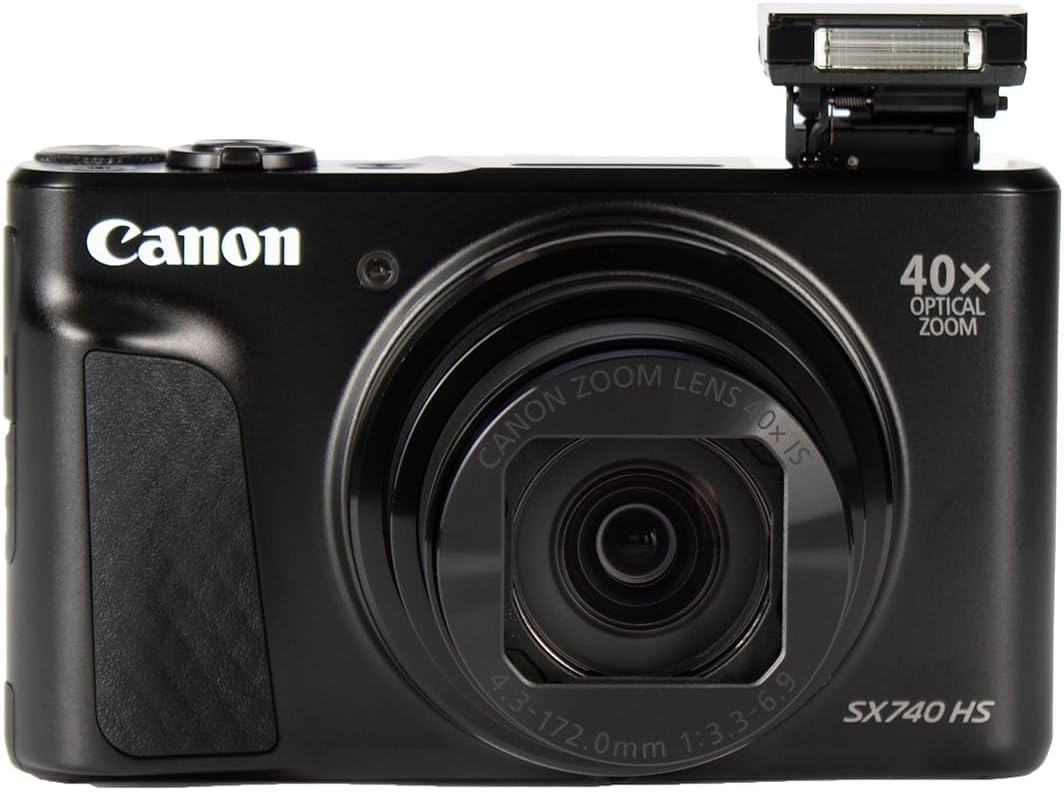
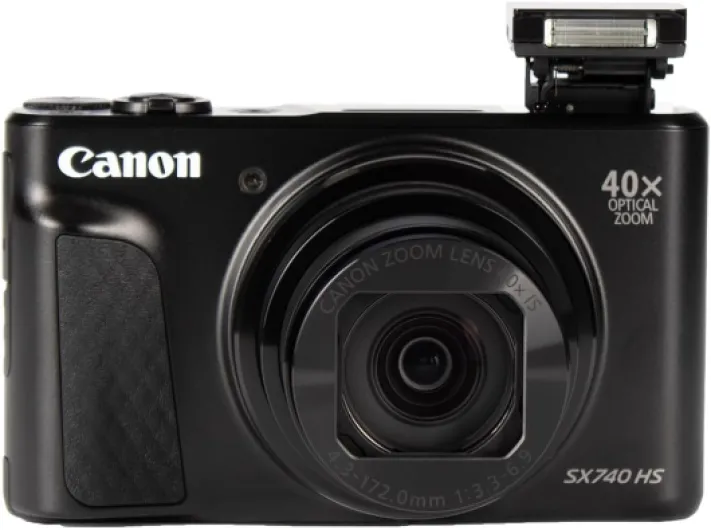
Design-wise, the SX740 HS Lite is pretty much what you’d expect from a Canon compact zoom in 2024: small, black, and fairly anonymous. It weighs about 280g, so it’s light enough to carry all day without thinking about it, but it still feels more solid than a phone. I could slip it into jeans pockets or a small shoulder bag and forget it was there. For travel, that’s a big plus compared to lugging around a mirrorless with a long lens.
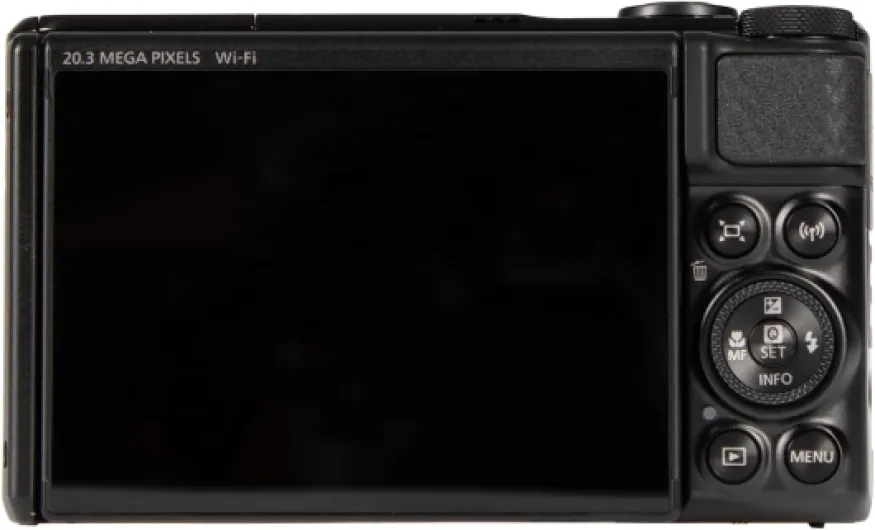
The front has a tiny grip area. It’s not huge, but with the textured surface and the thumb rest on the back, it’s enough to hold securely with one hand when you’re shooting at the wide end. At full 40x zoom, I felt safer using two hands because any small shake is amplified, even with stabilisation. The buttons on the back are typical Canon: mode dial, playback, menu, directional pad, and a dedicated video record button. After a day or two, I could operate most of it without looking too much.
The 3" LCD tilts up 180° for selfies or vlogging, which is handy. It doesn’t flip sideways like some cameras, so if you’re using a small tripod in front of you, it’s fine, but for more complex setups it can get blocked. Brightness is decent outdoors but not perfect under harsh sun; there’s no viewfinder, so you’re stuck with the screen. A couple of times on a very sunny day, I had to shade the screen with my hand to check composition properly.
One thing I found slightly annoying is how small and close the buttons are, especially if you have larger fingers. I occasionally hit the wrong button when trying to change settings quickly. Also, the battery and SD card share the same compartment at the bottom, right next to the tripod mount. That means if you’re using a tripod and need to swap the card or battery, you have to remove the camera from the tripod first. Not a deal-breaker, but definitely a practical detail that shows this is a consumer camera, not a pro tool.
Battery life: fine for a day, but bring a spare for heavy use
The SX740 HS Lite uses the NB‑13L battery, which is a small Canon battery also used in a few other compact models. In real use, I was getting roughly 250–300 shots per charge with a mix of stills and short video clips, screen always on, some zooming, and a bit of Wi‑Fi transfer. That lines up with the usual compact camera numbers. For a normal sightseeing day, shooting occasionally, it’s enough. I went through a full afternoon in the city plus an evening meal and still had a bit of juice left.
Where it starts to feel tight is when you’re doing lots of zooming, reviewing images frequently on the screen, and recording 4K video. On one day trip where I shot a good amount of 4K and used the zoom heavily for wildlife, the battery warning popped up by late afternoon. I didn’t fully kill it, but it was close. If you’re the type who fires away at everything, I’d say a second battery is almost mandatory. Unfortunately, only one battery is included in the box, and original Canon spares aren’t cheap.
Charging is done via the included CB‑2LHE external charger, not through USB on the camera body. Personally, I like external chargers because you can charge one battery while using another, but it does mean carrying yet another brick and cable when travelling. Also, no USB-C here – it’s the older style Canon charger. Depending on your setup, that might be a minor annoyance if you’ve moved everything else to USB-C.
In short, battery life is okay but nothing special. It gets the job done for casual users, but if you’re really using 4K and long zoom a lot, plan on a spare. It’s clearly not designed as an all-day workhorse for events or paid shoots, but for holidays and family stuff, it’s workable as long as you manage your screen time and don’t chimp every single shot for minutes.
Durability and build: solid enough, but not a tank
Build quality on the SX740 HS Lite is what I’d call "solid consumer". The body is mostly plastic with some metal elements, and it doesn’t feel cheap in the hand. There’s no creaking when you grip it, and the buttons have a decent click. I tossed it into a small bag with keys and other stuff a few times (probably not smart), and it came out without obvious scratches on the body or screen. That said, this is not a rugged or weather-sealed camera, so you still need to treat it with some care.
The lens mechanism extends and retracts smoothly. I didn’t notice any grinding or hesitation, even after lots of zooming in and out during a wildlife walk. Like any compact with a retractable lens, dust and sand are the big enemies. I used it at the beach once, kept it in a pouch when not shooting, and made sure my hands were clean before using it. No issues so far, but I wouldn’t dare use it in blowing sand or heavy rain. There’s no official weather sealing, so water or fine dust could end its life pretty quickly.
The tilting screen feels reasonably sturdy. I flipped it up and down a lot for selfies and low-angle shots, and it never felt like it was about to snap, but I still wouldn’t put pressure on it or let kids play with it. The hinge has enough resistance to stay in place without wobbling. Only thing I’d suggest is maybe slapping a cheap screen protector on, because the LCD is the most exposed part and will take the brunt of scratches.
After a couple of weeks of use, there’s no obvious wear on the buttons or dial, and the finish still looks new. Long term, I’d expect it to last several years of normal travel and family use if you don’t abuse it. Just don’t expect it to survive drops on concrete or a rainstorm. It’s a regular compact camera, not an action cam or a weather-sealed mirrorless, so if you’re rough on gear, you might want to look elsewhere or invest in a decent case.
Performance: strong zoom, decent autofocus, average low-light
The main selling point here is clearly the 40x optical zoom (24–960mm equivalent). In practice, that’s the part that actually feels useful. I used it to shoot birds on a lake, details on buildings, and my kid playing on a far side of a field. Compared to my phone, there’s no contest: the phone just turns into a noisy mess at that distance, while the Canon still gives you a usable photo. At full zoom, you do need a steady hand or a railing/tripod, but the optical stabilisation does a decent job of keeping shots sharp if you’re not totally shaky.
Autofocus is contrast-detect with 9 AF points, so don’t expect lightning-fast tracking like on newer mirrorless cameras. For static subjects and casual portraits, it’s fine. It locks focus reasonably quickly in daylight and doesn’t hunt too much. Moving subjects are more hit-and-miss. I tried to photograph a dog running around and some kids on bikes; it got some shots sharp, but I had a fair number of soft frames too, especially at longer focal lengths. The 10 fps burst rate sounds good, but it’s only really helpful when light is decent and subjects aren’t moving erratically.
Image quality in good light is pretty solid for a small sensor compact. At ISO 100–400, photos are sharp enough, with decent colour and contrast straight out of camera. You can happily use them for social media, photo books, and normal-sized prints. Once you go above ISO 800, noise starts to creep in, and details get smeared by noise reduction. Indoors in dim rooms, you quickly see the limits: it’s still better than many older compacts, but don’t expect miracles. Phone cameras with strong computational tricks sometimes look cleaner in very low light, even if they don’t have the zoom.
4K video looks crisp, and it’s nice to have that option at this price, but there are compromises: there’s a noticeable crop, and rolling shutter can show up if you pan too fast. Autofocus in video is okay as long as you’re not pushing it too hard; it can breathe a bit when light is low. For casual travel clips or vlogs, it does the job, but if video is your main thing, there are better options. Overall, performance is good for everyday use and travel, but you have to keep your expectations in line with the small sensor and consumer-focused AF system.
What you actually get with the SX740 HS Lite
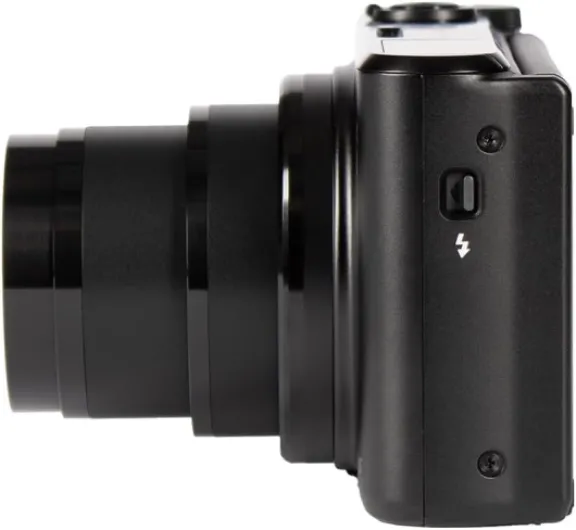
Out of the box, the Canon PowerShot SX740 HS Lite comes with the camera, a small wrist strap, the NB‑13L battery, the charger, and a power cable. That’s it. No memory card and no USB cable, which matches what one annoyed Amazon reviewer said. So yes, if you don’t already own an SD or microSD card and a USB cable, you’ll have to buy them separately before you can really use it. Personally, I just threw in a spare 32 GB SD card I already had, but if you’re a first-time buyer, that’s an extra cost worth keeping in mind.
Specs on paper are straightforward: 20.3 MP CMOS sensor (1/2.3"), 40x optical zoom (24–960mm equivalent), 4K video (MP4), DIGIC 8 processor, 7.5 cm (3") tilting LCD, 10 fps burst, optical image stabilisation, Wi‑Fi and Bluetooth. It shoots JPEG only, no RAW. Shutter range goes from 15s to 1/3200s, aperture is f/3.3–6.9 depending on zoom. So it’s clearly built for convenience rather than deep manual photography.
The "Lite" label is a bit confusing. In practice, it feels like a standard SX740 HS body with a more stripped-down retail package or slightly different regional configuration. Functionally, it behaves like the regular SX740: same zoom, same processor, same 4K options. If you were worried that Lite means a weaker lens or missing major features, that’s not what I saw. It’s basically the same camera with a different bundle and marketing name.
Overall, this is a compact travel zoom with a focus on auto modes and ease of use. If you’re the kind of person who wants to fiddle with RAW files and custom picture profiles, you’ll probably find it too basic. If you want something to throw in a jacket pocket for holidays and family events, the feature set makes sense – as long as you accept the extra memory card purchase and the limitations of a small sensor.
Pros
- 40x optical zoom (24–960mm) in a genuinely pocketable body
- Simple operation with good auto modes and flip-up screen for selfies/vlogging
- Decent 4K video and stabilisation for casual travel clips
Cons
- No memory card in the box and only one battery, so real cost is higher
- Average low-light performance and no RAW support
- No viewfinder, screen can be hard to see in bright sun
Conclusion
Editor's rating
The Canon PowerShot SX740 HS Lite is a straightforward travel zoom camera that does a few things well and doesn’t pretend to be more than it is. The 40x optical zoom is the main reason to buy it, and in that area it delivers: you can grab shots of distant subjects that your phone simply can’t handle, and the optical stabilisation helps keep things usable even at the long end. In good light, image quality is perfectly fine for everyday use, and the camera is easy enough for anyone to pick up and shoot in full auto.
On the flip side, it has clear limits. Low-light performance is only average, autofocus struggles a bit with fast-moving subjects, and there’s no RAW for people who like to edit heavily. The lack of a memory card in the box is a bit cheeky, and you should budget for at least one spare battery if you plan to shoot a lot, especially video. 4K is nice to have, but it comes with a crop and isn’t on the same level as dedicated video-focused cameras.
I’d recommend this camera to travellers, parents, and casual users who want more zoom than a phone offers and prefer real buttons and a proper grip. It’s also a decent starter option for light vlogging thanks to the flip-up screen and 4K. If you mainly shoot indoors, care a lot about low-light quality, or already own a good recent smartphone and don’t miss the zoom, you can easily skip this and put the money elsewhere. It’s a pretty solid tool for a specific niche, not a universal upgrade for everyone.