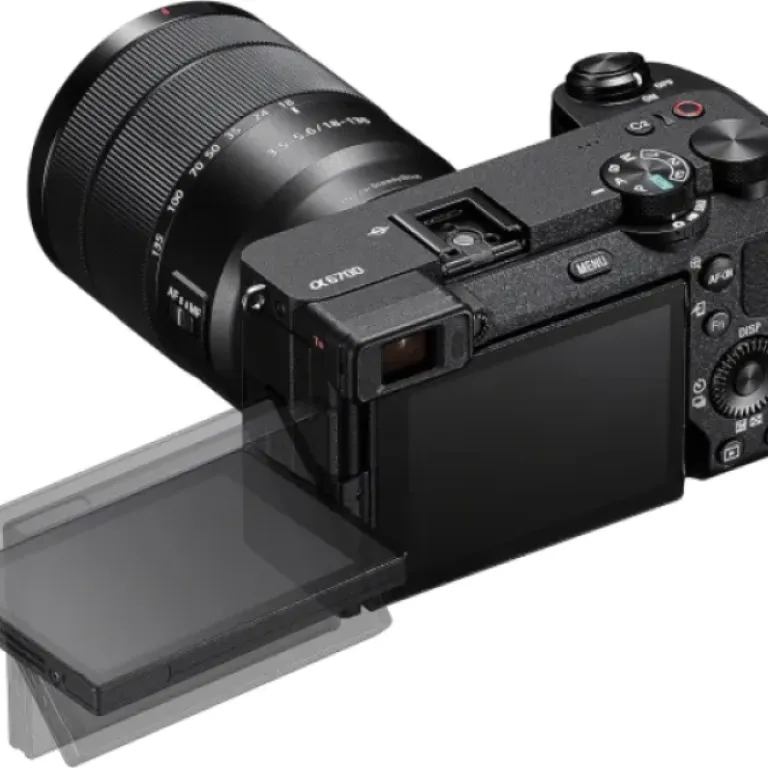

Summary
Editor's rating
Is the A6700 + 18–135mm kit worth the money?
Compact body, good grip, and a lot of controls stuffed into a small space
Battery life and charging: good but not infinite, and no external charger
Build quality and reliability: solid body, but electronics can still fail
Image quality and autofocus: where the camera really earns its price
What you actually get with the A6700 + 18–135mm kit
Pros
- Compact but solid body with a good grip and fully articulating touchscreen
- Fast, reliable AI autofocus and strong 26MP image quality for both photo and video
- 18–135mm lens gives a very practical zoom range for everyday use and travel
Cons
- Menu system and advanced video options have a real learning curve
- Potential overheating in longer 4K recording sessions, especially indoors
- No external charger included and extra NP-FZ100 batteries are expensive

Specifications
View full product page →| Brand | Sony |
A serious camera that doesn’t feel like a brick
I picked up the Sony Alpha 6700 kit with the 18‑135mm lens because I was tired of dragging around a heavy DSLR and also fed up with hitting the limits of my phone camera. I wanted one body that could handle casual street photos, family trips, and some YouTube-style video without needing a whole backpack of gear. After a few weeks of use, I’ve got a pretty clear idea of where this camera shines and where it’s just okay.
The short version: it’s a very capable hybrid camera in a body that’s small enough to actually carry every day. Image quality is strong, autofocus is basically cheating, and video options are way beyond what most hobby users will fully use. At the same time, some things are annoying: Sony menus are still a bit of a maze, overheating is possible if you push video hard, and this is not a cheap setup once you start looking at more lenses and accessories.
I’ve mostly used it for street shots, indoor family photos, and a few test videos in 4K, both handheld and on a small tripod. I came from an older Canon DSLR and occasionally a compact camera, so moving to a modern mirrorless like this is a big jump. Some parts were easy to get used to, others required digging into forums and YouTube tutorials, especially for picture profiles and autofocus settings.
In this review I’ll keep it simple: I’m not going to throw lab charts at you. I’ll just explain what it’s like to live with this camera day to day, what works well, what annoyed me, and whether I think the body + 18‑135mm kit is worth the money for someone who wants one flexible camera for both photo and video.
Is the A6700 + 18–135mm kit worth the money?
Let’s be honest: this kit is not cheap, especially compared to just using your phone or buying an older used body. You’re paying for a modern sensor, strong autofocus, decent IBIS, and good video specs in a compact body. The 18–135mm lens adds a lot of flexibility: you can shoot wide, normal, and telephoto without changing lenses. For someone who wants one lens that covers most situations, that’s a big plus, and it saves you from buying two or three separate lenses right away.
In terms of value, I think it depends who you are. If you’re a casual user who just wants nicer photos than a phone and doesn’t care about video or autofocus tracking, this is probably overkill, and a cheaper body or even a premium compact might make more sense. But if you’re into both photo and video, want strong AF, and like the idea of growing into more advanced settings like S‑Log, LUTs, and custom buttons, then the A6700 gives you a lot to work with. It’s also nice that it ranks high in mirrorless camera lists and has a big ecosystem of Sony E‑mount lenses around it.
On the downside, there are hidden costs. Extra NP‑FZ100 batteries aren’t cheap. A decent SD card that can handle 4K (V30, U3) is mandatory. If you get into video, you might want a mic, a small tripod, maybe a cage or an external fan for long shoots. Suddenly the total spend goes up quite a bit. Also, this is APS‑C, not full frame, so if you’re dreaming of ultra‑shallow depth of field and the best low‑light performance, there are better (and more expensive) options in Sony’s full‑frame line or from other brands.
Overall, I’d rate the value as good but not mind‑blowing. You’re paying a fair price for a modern, very capable hybrid camera with a genuinely useful zoom lens. There are cheaper APS‑C options if budget is tight, and there are more high‑end bodies if you’re a pro. This sits in the middle: a solid choice for enthusiasts, creators, and serious hobbyists who actually plan to use the advanced features instead of leaving it on full auto forever.
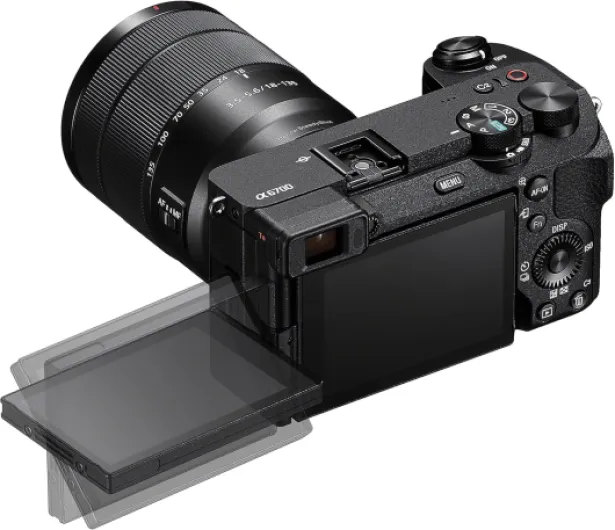
Compact body, good grip, and a lot of controls stuffed into a small space
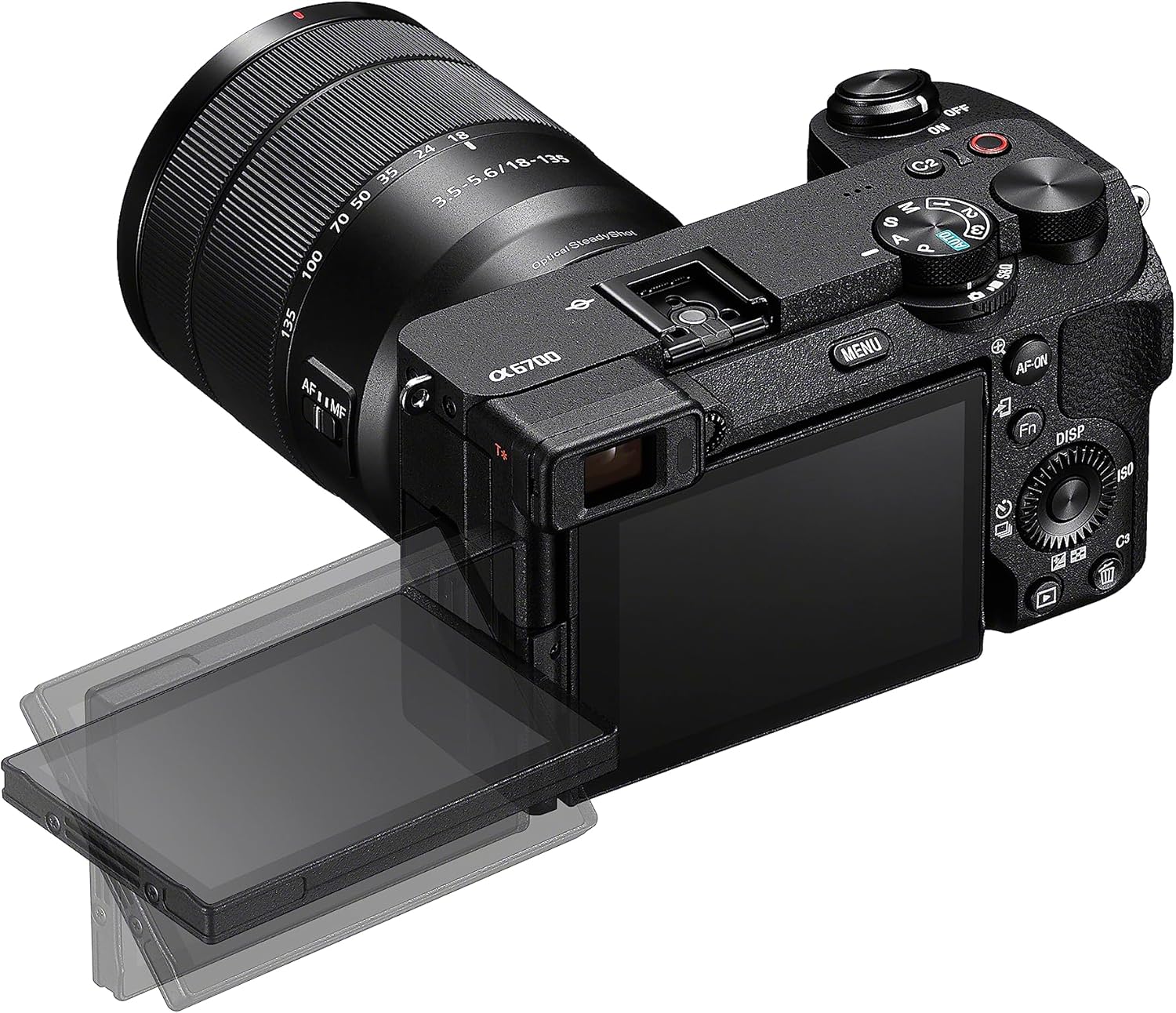
The design is one of the reasons I picked this over a bigger full‑frame body. The A6700 is small but not toy‑like. The grip is surprisingly deep for such a compact camera, so even with the 18–135mm lens mounted, it doesn’t feel like it’s going to slip out of your hand. I can carry it with a wrist strap for a couple of hours without my hand cramping, which was not the case with my old DSLR. The front dial they added compared to older a6000 series bodies is genuinely useful: I set it to aperture, and it just feels quicker to shoot.
Buttons and dials are packed in quite tightly, which is the trade‑off with the compact body. If you have big hands, you might hit the wrong button at first. After a week or two, muscle memory kicks in and it gets better, but it’s not as comfortable as a chunkier body with more space. The top custom buttons and the rear wheel are handy once you assign useful functions like ISO, white balance, AF mode, etc. The menu system is still very Sony: better than older generations, but there are a lot of pages and submenus. You can set up a custom My Menu and function menu, and that helps a lot, but expect to spend an evening setting it up the way you like.
The fully articulating touchscreen is a big plus in real life. For low‑angle street shots or filming yourself, it’s a lifesaver. Touch response is decent: you can move focus points and use it for some settings, but Sony still doesn’t let you do everything by touch. It’s not as smooth as a phone screen, but it gets the job done. The electronic viewfinder is fine: not the highest resolution in the world, but clear enough for composing and checking focus, and way better than trying to use the rear screen in bright sun.
Physically, it feels like a serious tool but still portable. It fits in a small sling bag with the 18–135mm attached and maybe a small prime and a tiny flash, which for me is the ideal balance. If you’re coming from a phone, it will feel big. If you’re coming from a DSLR, it will feel oddly small and light in a good way. Overall, the design is practical and focused on usability, not looks. Nothing fancy, but it works, and once you set it up, it’s quick to operate.
Battery life and charging: good but not infinite, and no external charger
The A6700 uses the NP‑FZ100 battery, which is one of Sony’s better batteries and a big step up from the older a6000 series. In real use, I can get a full day of casual shooting (a few hundred photos, some short 4K clips) on one battery without stressing. If I shoot a lot of 4K video, especially 60p, the battery does drain faster, and I’d say one battery is more like half a day. For a mixed photo/video day, I’m comfortable but I still like having a spare in the bag, just in case.
One downside: the camera only comes with in‑body USB‑C charging, no separate wall charger. That means if you want to charge a second battery while using the camera, you need to buy a charger separately. Plugging it into a USB‑C power bank works fine, and that actually saved me a couple of times when I forgot to fully charge before going out. It’s practical for travel since you can reuse your phone/laptop chargers, but for people who like to rotate multiple batteries, an external charger is simply easier.
In terms of power management, the camera has a few sleep and power saving options that help. If you’re just taking occasional photos throughout the day and let it sleep between shots, the battery holds up well. If you keep the camera on constantly with the screen at full brightness and Wi‑Fi on, you’ll see the percentage drop faster. Using the EVF instead of the rear screen seems to save a bit of power too, but the difference is not huge in my experience.
Overall, I’d say battery life is solid but not limitless. It’s good enough that you’re not constantly stressed about it, especially compared to older mirrorless cameras that ate batteries for breakfast. But if you’re planning a long event, a wedding, or a heavy video shoot, you should absolutely budget for at least one extra NP‑FZ100. Also, bear in mind that cold weather and long 4K sessions will bring the real‑world battery life down, so don’t expect the spec sheet to match every situation.
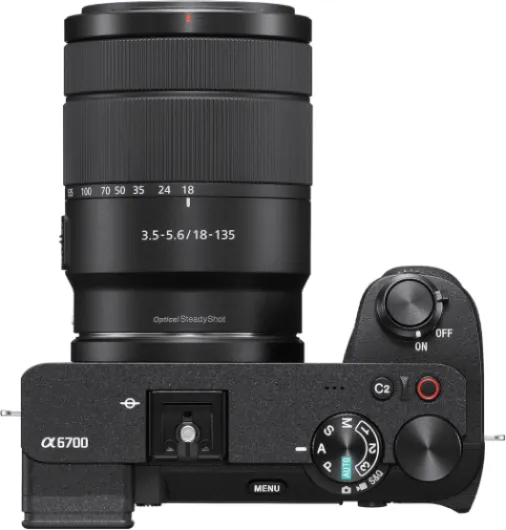
Build quality and reliability: solid body, but electronics can still fail
Physically, the A6700 feels well put together. The body uses a magnesium alloy frame, and the panels don’t creak or flex when you grip it. The buttons have a clear click, the dials feel firm, and the doors for the ports and card slot close properly. It’s rated as dust and moisture resistant, which in practice means it can handle light rain, dust, and being carried around every day without babying it. I’ve used it in light drizzle and dusty streets and had no issues so far, though I still wouldn’t push it in a heavy downpour without some sort of cover.
The weak spot, like on most modern cameras, is the moving screen. The flip‑out, fully articulating LCD is great for usability but is also the part I worry about bumping into something. I’m careful when walking through crowds or putting the camera back in a bag; I usually flip the screen inwards to protect it. That said, the hinge feels more solid than cheap cameras I’ve handled. The 18–135mm lens also feels decently built for a kit zoom: the zoom ring is smooth, there’s no weird wobble, and the lens doesn’t feel like it’s going to snap off if you knock it lightly.
On the electronics side, it’s a mixed bag. Personally, I haven’t had failures, but one of the Amazon reviews mentions a dead-on-arrival unit with a faulty charging circuit. That shows that QC is not perfect, which is sadly pretty normal with complex electronics. If you buy this, I’d strongly suggest testing everything properly in the first week: charging via USB‑C, reading/writing to SD cards, video recording for at least 20–30 minutes, and checking the EVF and screen for glitches. If something is wrong, you want to find out while you’re still well within the return window.
Day to day, I’m not babying it. I throw it in a small sling bag, I use it one‑handed with a wrist strap, I’ve bumped it a few times, and so far everything is fine. Long term, I think the body will hold up, but like any camera with a lot of electronics, if something fails, it’s usually not cheap to fix. So I’d say the durability feels good physically, but I wouldn’t rely on it as my only pro workhorse without some sort of backup body or extended warranty if you shoot paid jobs.
Image quality and autofocus: where the camera really earns its price
On the image quality side, the 26MP APS‑C sensor does a pretty solid job. Photos are sharp, and the dynamic range is good enough that you can pull back shadows and highlights in RAW without the files falling apart. In practice, this means if you slightly mess up exposure, you often can fix it in Lightroom. At lower ISOs, images look very clean. Indoors or in the evening, I’m comfortable up to ISO 6400 for general use; above that, you see more noise, but it’s still usable if you don’t pixel-peep.
The real star here is the autofocus system. The AI-based subject detection actually helps in real life, not just in marketing. Eye AF for humans and animals locks on quickly and stays locked, even when people move around. I used it for kids running around indoors and for people crossing the street, and the hit rate of sharp shots is way higher than what I was getting with my old DSLR. Tracking a moving subject while half-pressing the shutter is almost too easy – it feels like cheating compared to older cameras. For video, continuous AF is also reliable, though sometimes it can be a bit too eager to jump to another face in the frame if you’re not careful with AF settings.
For video performance, the camera is honestly more capable than I need. 4K downsampled from 6K at up to 30p looks very detailed. The 4K 60p and 120p modes are nice for slow motion, though the 120p has a crop and you need more light. The 10‑bit 4:2:2 files grade well if you shoot in S‑Log3 or S‑Cinetone, but there is a learning curve there. If you just want decent footage, the standard profiles already look good. I did run into some heat after longer 4K recordings indoors; the body gets warm and can eventually shut down if you push it in a hot room. For short clips, travel videos, vlogs, it’s fine. For long interviews or events, you may need to watch the settings or add an external fan.
Continuous shooting at 11 fps with AF is more than enough for most hobby users. I used it on a windy day to catch a flag mid‑wave and for a few action shots, and it did what it needed to do. The buffer isn’t endless, so if you hold the shutter down like a machine gun, it will slow after a bit, but for short bursts it’s perfectly usable. Overall, performance is the strong point of this camera: it’s fast, responsive, and produces clean, detailed files if you do your part, though it’s not magic – bad light and bad technique will still show up in your photos.

What you actually get with the A6700 + 18–135mm kit
Out of the box, you get the A6700 body, the 18–135mm f/3.5–5.6 OSS zoom lens, a battery, and the usual strap, charger cable and manuals. No external charger, which is a bit annoying at this price; you charge the battery in-camera via USB‑C. The 18–135mm is basically your walk‑around lens: it goes from a fairly wide 18mm (nice for landscapes and streets) up to 135mm (good enough for portraits, kids sports, and grabbing details from a distance).
The camera has a 26MP APS‑C sensor, which in practice gives you detailed photos with enough resolution to crop a bit without things falling apart. It shoots up to 11 fps in continuous mode, has in‑body image stabilisation (IBIS), and an AI-based autofocus system that tracks eyes, faces, animals, and even birds. For video, you get 4K up to 60p (and 120p with a crop), 10‑bit 4:2:2 recording, S‑Log3, S‑Cinetone, and a bunch of other pro-style options that most casual users won’t touch at first but are nice to grow into.
Connectivity-wise, you’ve got Wi‑Fi and Bluetooth, plus USB‑C and HDMI. It works as a USB webcam without extra nonsense, which is handy for calls or streaming. The screen is a fully articulating vari-angle touchscreen, so it flips out to the side and rotates, which is great for vlogging or filming yourself. There’s also an electronic viewfinder that’s decent, not mind-blowing, but perfectly usable in bright light.
All this fits into a body that’s on the compact side for a camera with this kind of spec. It’s not pocketable, but it’s way smaller and lighter than most DSLRs with a similar zoom lens. For me, the main selling point of this kit is that it really can be a single setup that covers a lot of use cases: travel, street, portraits, some sports, and proper video. That said, don’t expect miracles straight out of the box – the camera has a learning curve, and the auto modes are decent but not magical. You’ll get the most out of it once you start tweaking settings and understanding what all those autofocus and video options actually do.
Pros
- Compact but solid body with a good grip and fully articulating touchscreen
- Fast, reliable AI autofocus and strong 26MP image quality for both photo and video
- 18–135mm lens gives a very practical zoom range for everyday use and travel
Cons
- Menu system and advanced video options have a real learning curve
- Potential overheating in longer 4K recording sessions, especially indoors
- No external charger included and extra NP-FZ100 batteries are expensive
Conclusion
Editor's rating
The Sony Alpha 6700 with the 18–135mm lens is a strong all‑rounder for people who take their photo and video hobby seriously but don’t want a huge, heavy setup. The sensor delivers clean, detailed images, the autofocus is genuinely helpful for moving subjects, and the video options are more than enough for YouTube, travel films, and even semi‑pro work if you’re willing to learn how to use them. Paired with the 18–135mm, you get a flexible zoom range that covers pretty much everything from wide city scenes to portraits and casual sports.
It’s not perfect. The menu system has a learning curve, overheating can show up in long 4K sessions, and you’ll likely want at least one extra battery and a fast SD card, which adds to the cost. Also, this is APS‑C, so if you’re chasing the absolute best low‑light performance and crazy background blur, full frame will still beat it (and cost you more in bodies and lenses). But as a compact hybrid camera you can actually carry around without hating your shoulders, it does the job very well.
I’d recommend this kit to enthusiast photographers, content creators, and vloggers who want one camera that can handle almost everything: travel, street, family, and serious video. If you’re just looking for a simple point‑and‑shoot experience, it’s probably too much camera and too much money. If you’re a working pro who needs dual card slots, bulletproof cooling, and full‑frame performance, you should look higher up the range. For everyone in the middle, it’s a pretty solid choice that you’re likely to keep using for several years.