
Summary
Editor's rating
Is the Essential Combo worth the money?
Small, discreet, and very gimbal‑ish
Battery life and charging: good, but plan ahead
Build quality and how fragile it actually feels
Video quality, stabilization and autofocus in real life
What you actually get with the Essential Combo
Is it actually better than just using your phone?
Pros
- Very smooth 3‑axis stabilization and reliable 4K video quality, even when walking
- 1‑inch sensor and 10‑bit options give cleaner low‑light footage than most phones
- Compact, pocketable design with 107 GB of fast internal storage that works even without a microSD card
Cons
- Not water resistant and gimbal feels fragile in dusty or rough environments
- Photo mode while moving is prone to blur and hyperlapse is limited to 10‑minute clips
- Essential Combo lacks useful extras like a hard case, ND filters, and charger brick, which adds to total cost

Specifications
View full product page →| Brand | DJI |
A pocket camera that actually leaves your pocket
I’ve been using the DJI Osmo Pocket 4 Essential Combo for a few weeks, mostly for family stuff, short trips, and some test vlog clips. I’m not a filmmaker, I’m just someone who usually films with a phone and gets annoyed when the footage looks shaky or noisy at night. I bought this because I wanted something small that I’d actually carry, but with better stabilization than my phone and a bit more of a “real camera” look.
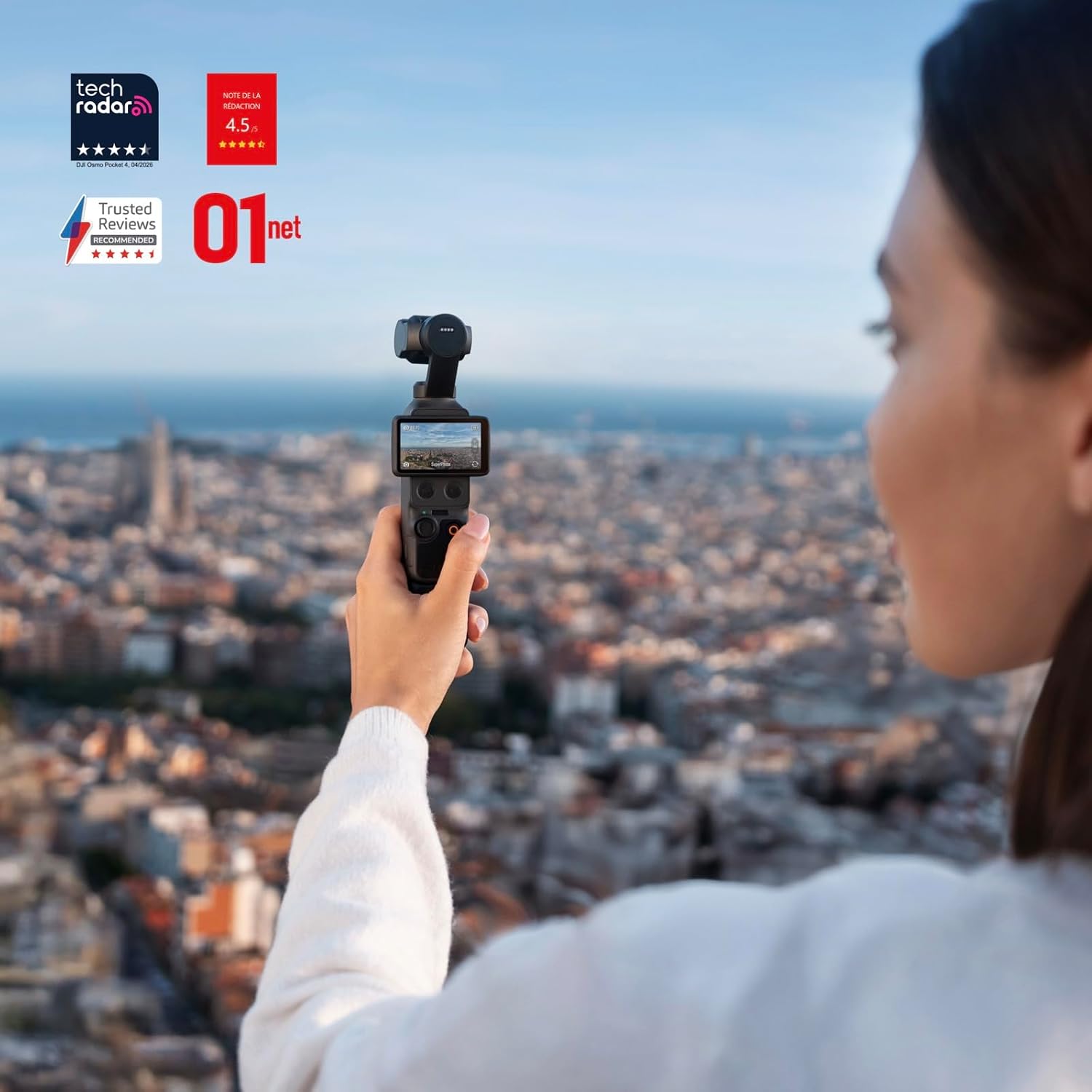
The first thing that hit me is how much this thing pushes you to actually record more. Because it’s already a camera with a built-in gimbal, there’s no setup. You just flip the screen, it powers on, and in a couple of seconds you’re recording. Compared to taking a phone, unlocking it, opening the camera, then worrying about holding it steady, it’s just easier and less annoying.
My use has been pretty mixed: walking in the city at night, recording the kids running around in the park, a couple of slow‑motion clips, and some quick talking‑to‑camera bits for social media. I also tested low‑light footage inside a restaurant and a small concert. So not a lab test, just normal life. I also tried it with and without a microSD card to see if the internal storage is enough.
Overall, I’d say it’s a very capable little camera with some real strengths (stabilization, low light, slow‑mo, built‑in memory), but it’s not perfect. The photo mode while moving is so‑so, the 10‑minute hyperlapse limit is annoying, and you start piling accessories pretty fast if you want to use it seriously. But if you’re mostly into video and you’re tired of wobbly phone footage, it’s a pretty solid upgrade.
Is the Essential Combo worth the money?
In terms of value for money, I’d put the Osmo Pocket 4 Essential Combo in the “good but not cheap” category. You can clearly feel where the money goes: the gimbal, the 1‑inch sensor, the 4K/240 fps, and the built‑in 107 GB storage. The footage quality and stabilization justify a higher price than a basic compact camera. But if you start adding accessories (ND filters, hard case, tripod, maybe a mic), the total cost climbs quickly.
Compared to just using a smartphone, the value depends on how serious you are about video. If you already have a top‑end phone with good stabilization and you mostly shoot casual clips, the Osmo Pocket 4 is a nice upgrade but not a life‑changing one. If your phone is mid‑range or older, the difference in video quality, especially when moving or in low light, is much more noticeable, and then the price feels easier to accept.
Where the Essential Combo feels a bit barebones is accessories. You get enough to start – camera, handle with 1/4" thread, pouch, cable – but no charger brick, no ND filters, no tripod, no hard case. For the price, including at least a simple hard case and a basic tripod would have made the package feel more complete. As it is, you’ll probably end up spending a bit more to make it truly “creator ready”.
Overall, I’d rate the value as solid if you mainly shoot video and actually use it regularly. If it ends up staying in a drawer and you keep using your phone, then obviously it’s a waste. But if you travel, vlog, or record events often and want smoother, cleaner footage without lugging a big camera, the Osmo Pocket 4 gives you a lot of capability in a very small body. Not a bargain, but not overpriced either for what it does.
Small, discreet, and very gimbal‑ish
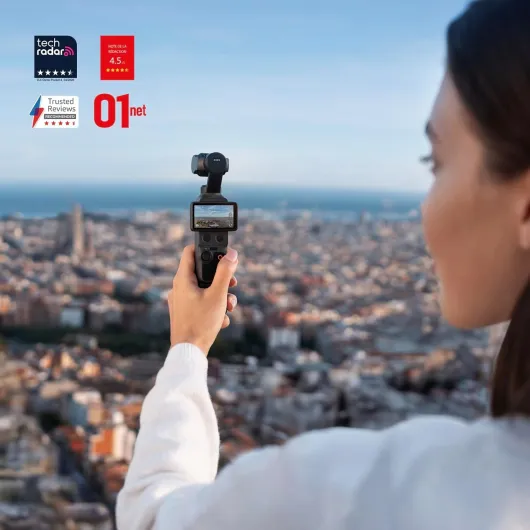
Design‑wise, the Osmo Pocket 4 is basically a tiny camera head on a stick, but in a good way. It’s compact (144 × 44 × 34 mm) and only 265 g, so it really does fit in a jeans pocket or a small sling bag. I carried it in the supplied pouch in my jacket pocket for a full day and never felt it was bulky. Compared to walking around with a mirrorless camera, it’s night and day. Compared to just a phone, it’s obviously one more object to carry, but not a big one.
The rotatable 2‑inch touchscreen is actually more useful than I expected. You can flip it for selfie mode in one quick motion and it automatically adjusts orientation. The screen is bright enough outdoors, but under strong sun it does get a bit hard to see exposure details, like any small screen. I like that most settings are only a couple of swipes away: swipe left/right for modes, up/down for more options. It takes a day or two to remember the gestures, but then it’s quick.
The buttons are simple: record, power, and a multi‑function button. Once you get used to what a short press vs long press does, you can operate it mostly by feel. For walking shots, I barely touched the screen and just hit record and pointed. The handle with 1/4" thread is handy because you can throw it on a small tripod for talking‑head shots. I used a cheap mini tripod and it worked fine.
On the downside, the design is not water resistant, which matters more than I thought. You can’t really relax when using it near the pool, in the rain, or on a beach with kids throwing water and sand around. Also, the moving gimbal head feels a bit fragile in dusty or dirty environments. I personally wouldn’t take this on a building site or use it where sawdust flies around. So the design is great for city trips, indoor events, and clean outdoor use, but it’s not a rugged action cam replacement.
Battery life and charging: good, but plan ahead
The battery life is one of the things that surprised me in a good way. DJI claims up to around 166 minutes (and up to 240 minutes in very specific 1080p/24 fps conditions). In real use, filming mostly in 4K with some slow‑mo and checking clips on the screen here and there, I was getting roughly a day of casual shooting: a few minutes here, a few minutes there, over several hours of walking around. On a full tourist day, I ended around 30–40% battery by the evening, which is decent.
If you’re doing continuous recording, like filming a whole event or long timelapses, it’s a different story. You’ll drain it faster and you’ll probably want a power bank. The good news is that it can be powered via USB‑C while recording. I tried it with a basic 20W power bank and it worked fine. Not the most elegant setup, but for static shots or timelapses on a tripod, it’s very practical.
One downside: no charger brick in the box. You get a USB‑C to USB‑C cable, and DJI recommends their 65W charger, but any decent USB‑C PD charger works. I used my phone charger and it charged at a reasonable speed. Still, for the price, it would have been nice to at least include a small charger. If you travel a lot and already carry multiple devices, you’ll probably just share one charger, so it’s not a dealbreaker, just slightly cheap from DJI.
Overall, I’d say the battery is solid but not endless. For light to medium use, one battery is fine. For heavy vlog days or long hyperlapse sessions, bring a power bank or consider the extra handle with built‑in battery. Personally, I’d rather have this battery life plus the small form factor than a much bigger device with a huge battery. Just don’t expect action‑cam‑style “set and forget for hours” without external power.
Build quality and how fragile it actually feels
In the hand, the Osmo Pocket 4 feels well put together. The plastics don’t feel cheap, the gimbal head doesn’t wobble, and the buttons have a clean click. I tossed it in a small bag and jacket pocket (inside the soft pouch) for a couple of weeks and it came out without scratches. So for everyday use – city, home, normal travel – it feels reliable enough.
That said, you always have that slight “don’t break the gimbal” feeling. Because the camera is on a moving 3‑axis arm, it doesn’t feel as tough as a GoPro or a rugged action cam. I was careful not to drop it, and I definitely wouldn’t want it to hit the ground gimbal‑first. I’d strongly recommend buying a hard case if you plan to throw it into a backpack with other gear. The Essential Combo only gives you a soft pouch, which is fine for pockets but not great for rough bags.
Another thing: the camera is not water resistant. No splash rating, nothing. So you really have to baby it around water, dust, and sand. I used it on a slightly rainy day but kept it under a jacket most of the time. For a beach holiday, I’d be pretty nervous about it around sand and salt water. Same with dusty work environments – if you’re a handyman or you work on construction, I wouldn’t trust the gimbal mechanism around sawdust or debris.
From a long‑term perspective, DJI gimbals usually hold up okay if you don’t abuse them. The moving parts are the obvious weak point, but that comes with the type of product. This is not a throw‑it‑anywhere camera. Treat it like a small piece of tech gear, not like an action cam you can slam around. If you accept that and protect it properly, I think it will last, but if you’re rough on your gear, this might annoy you pretty fast.
Video quality, stabilization and autofocus in real life
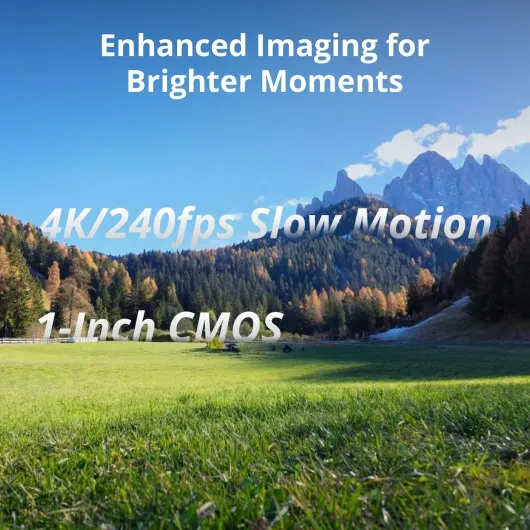
In terms of video performance, this is where the Osmo Pocket 4 actually earns its place. The 1‑inch CMOS sensor and 4K recording give very clean footage in most situations. Walking through the city at night, I got usable clips without that ugly phone‑style smearing and heavy noise reduction. It’s not magic – if it’s really dark, you still see noise – but compared to my mid‑range phone, the difference is obvious, especially when moving.
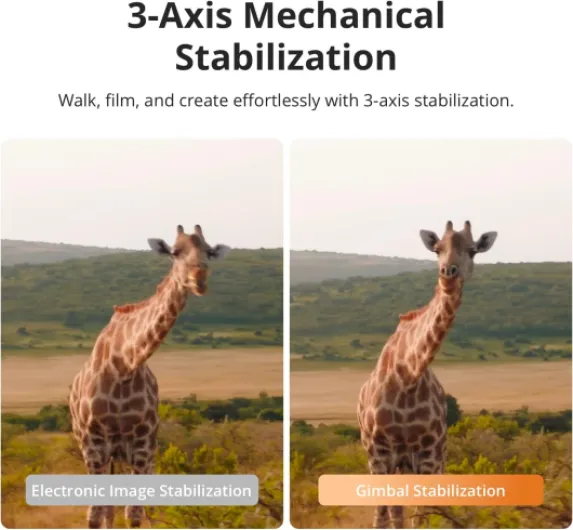
The 3‑axis stabilization is the big win. Even when I walked quickly or jogged a bit, the footage stayed level and smooth. It’s not like a full pro gimbal, but for a pocket device, it’s very good. I barely had to think about how I was holding it. If you’re used to phone footage where every step shows, this is a clear upgrade. For slow, careful walking shots, it looks almost like you were on a small slider. For running, you still see some bounce, but without the crazy jitters.
Autofocus is also pretty reliable. The camera has intelligent autofocus with subject tracking (ActiveTrack). I tested it on my kid running around in a playground and on my partner walking toward the camera. Once it locks on, it generally stays sharp. It’s not perfect – it sometimes hunts a bit in low light or when there are many people in the frame – but for casual use and vlogging, it’s more than good enough. The Subject Lock feature that follows a face works nicely for talking‑to‑camera pieces, especially if you move slightly left/right.
As for slow motion and dynamic range, 4K/240 fps is fun, but you need a lot of light. In good daylight, the clips look crisp and are great for action or water shots. In lower light, noise creeps in fast. The 10‑bit D‑Log profile and 14‑stop dynamic range are more for people who like to color‑grade. I tried D‑Log and it definitely gives you more room in highlights and shadows, but if you don’t enjoy editing, you can just ignore it and stick with standard color. Overall, the performance is strong for video, clearly better than a basic phone, but you need to understand it’s built for video first, not for fancy photography.
What you actually get with the Essential Combo
The version I tried is the Osmo Pocket 4 Essential Combo, not the full Creator Combo. In the box you get the camera itself, a USB‑C to USB‑C cable, the handle with 1/4" thread (handy for tripods or mini grips), and a soft carrying pouch. No charger brick, no ND filters, no hard case, no extra mic, and no tripod. So if you’re expecting a full all‑in‑one creator kit, this isn’t it. It’s more like the “bare minimum to start filming right away” bundle.
The built‑in 107 GB of internal storage is actually a big deal in real life. I managed to fill it on a 2‑day trip with a mix of 4K clips and some photos, but it’s enough that you don’t panic if you forget your microSD card at home. For a longer holiday you’ll definitely want a V60 card, though. The camera supports microSD and I tested with a 128 GB card without any issue. Transfer speed from the internal memory is pretty quick; copying files to my laptop over USB‑C didn’t feel slow.
The camera can shoot up to 4K/240 fps, which sounds a bit like spec sheet bragging, but the slow‑motion clips actually look good if you have enough light. In low light at 240 fps it gets noisy, which is expected. The 1‑inch sensor and 37 MP stills sound fancy, but the main gain you notice as a normal user is that night video looks cleaner and less mushy than most phones, especially when you’re moving.
The Essential Combo is clearly aimed at people who want to start simple: no extra mics, no crazy rig, just a stabilized camera with a handle. If you already know you want a wireless mic, lights and all that, you’ll probably end up buying the Creator Combo or adding accessories, which drives the price up. For casual vloggers and travel users, this combo is workable, but be aware you may quickly want a small tripod, ND filters, and maybe an extra power bank for long sessions.
Is it actually better than just using your phone?
For me, the big question was simple: does this actually do something my phone can’t? After using it in different situations, I’d say yes – mainly for video. The combination of a 1‑inch sensor, 3‑axis stabilization, and the built‑in gimbal gives smoother, more “camera‑like” footage than my phone, especially when I’m walking or filming at night. It’s not mind‑blowing cinema, but it’s clearly a step up from handheld phone clips.
Where it really works well is for vlogging and travel clips. Flip the screen, it tracks your face, and you can walk and talk without constantly worrying about framing and shake. The ActiveTrack and face tracking features do a good job of keeping you in frame, even if you move a little. For family stuff – kids running around, quick moments – the camera reacts fast enough and stabilization keeps everything watchable. I noticed I was more willing to record longer clips because I trusted the results more.
On the flip side, for photos while moving, it’s not great. Several users mentioned it and I saw the same: if you’re walking and snap photos, they can blur. Standing still, photos are fine, but if you want something like a point‑and‑shoot for still images, this is not the best choice. Also, the 10‑minute limit on hyperlapse is annoying. I tried to do a long city walk hyperlapse and had to restart the recording every 10 minutes, which breaks the flow.
So in terms of effectiveness, I’d say: for video, especially moving shots and low light, it earns its place. For photos and long, unattended creative modes, it’s more limited. If you mostly shoot Instagram Stories and quick clips, a good phone might be enough. If you care about smoother footage, more control, and a more consistent look without carrying a big camera, the Osmo Pocket 4 feels like a useful step up, not just a gimmick.
Pros
- Very smooth 3‑axis stabilization and reliable 4K video quality, even when walking
- 1‑inch sensor and 10‑bit options give cleaner low‑light footage than most phones
- Compact, pocketable design with 107 GB of fast internal storage that works even without a microSD card
Cons
- Not water resistant and gimbal feels fragile in dusty or rough environments
- Photo mode while moving is prone to blur and hyperlapse is limited to 10‑minute clips
- Essential Combo lacks useful extras like a hard case, ND filters, and charger brick, which adds to total cost
Conclusion
Editor's rating
After a few weeks of normal use, the DJI Osmo Pocket 4 Essential Combo feels like a very capable little video tool with some clear strengths and a few annoyances. The main positives are straightforward: great stabilization, good video quality for such a small device (especially in low light), a genuinely useful 1‑inch sensor, and the comfort of having 107 GB of fast internal storage. You pull it out, flip the screen, hit record, and you usually get smooth, usable footage with minimal effort.
It’s not perfect, though. The lack of water resistance and the delicate gimbal mean you have to treat it more carefully than an action cam. Photo performance while moving is mediocre, hyperlapse is limited to 10 minutes per clip, and the Essential Combo doesn’t include many accessories, so you may end up buying a hard case, ND filters, and maybe a small tripod on top. Battery life is good but not endless; for long sessions you’ll want a power bank.
I’d say this camera is great for people who mainly care about video: vloggers, travelers, parents who want better footage of family moments, and anyone tired of shaky, noisy phone clips. It’s less suited to people who mainly shoot photos, want something rugged for sports, or don’t like carrying extra gear beyond their phone. If you see yourself using it often for video, the Osmo Pocket 4 is a pretty solid investment. If you’re unsure and mostly happy with your phone, you might want to think twice before dropping the cash.