
Summary
Editor's rating
Is the QooCam Ego worth the money?
Chunky little brick with a very VR‑nerd layout
Battery life: usable, but don’t leave home with just one
Build quality and durability: fine, but protect those lenses
3D quality is the strong point, everything else is secondary
What the QooCam Ego actually is (and what it isn’t)
Pros
- Strong, natural 3D effect thanks to 65 mm lens spacing and dual-lens design
- Good 3D photo and video quality for VR headsets and AR glasses at a relatively accessible price
- Compact body with removable battery and decent digital stabilization for everyday use
Cons
- Average battery life and slow startup, so you really want at least one spare battery
- No lens cover and only water resistant, so you have to be careful not to damage the exposed lenses
- Limited autofocus/focus options and slightly sluggish interface make it less convenient than a regular action cam

Specifications
View full product page →| Brand | KanDao |
A niche little 3D camera that actually makes sense
I’ve been playing with the KanDao QooCam Ego for a couple of weeks, mainly to see if 3D photos and videos are just a gimmick or if it’s actually worth carrying a separate camera for. I already own a couple of regular action cams and I use a Meta/Quest headset, so I wasn’t exactly desperate for yet another gadget. But I was curious about having proper stereoscopic memories instead of flat clips.
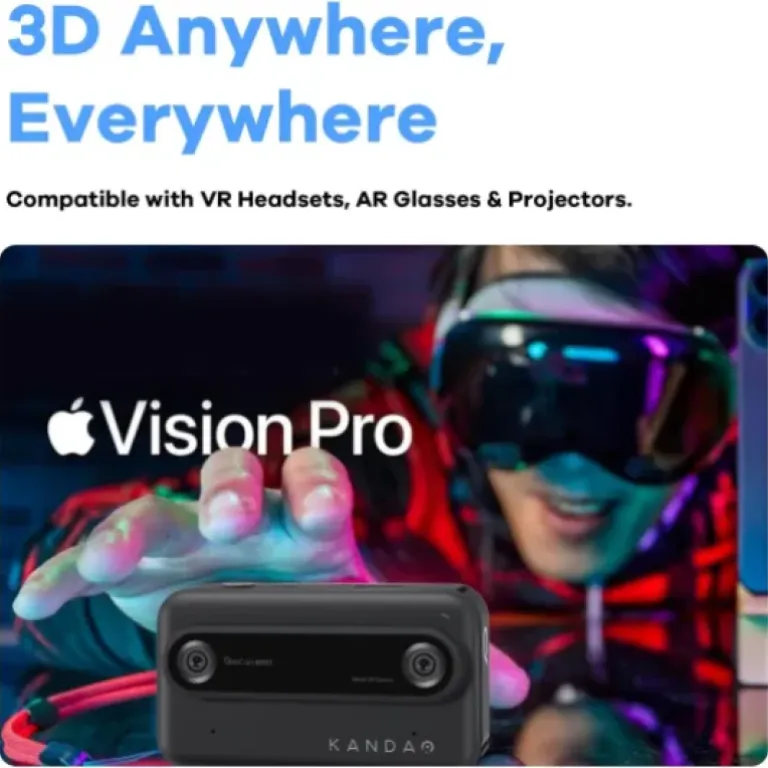
In short: the QooCam Ego is clearly a niche product, but it does what it says. The 3D effect is strong and feels natural, especially if you’re used to VR. When you watch the footage in a headset or on AR glasses, it really feels like you’re back in the scene, way more than a normal 2D video. That part is the main reason to even consider this camera, and it delivers.
On the flip side, you have to accept some compromises. It’s not a general-purpose camera. No zoom, limited controls, startup is slow, and the battery life is just okay. The app is usable but a bit clunky, and exporting / sharing 3D files still takes a bit of effort compared to just posting a normal video on social media.
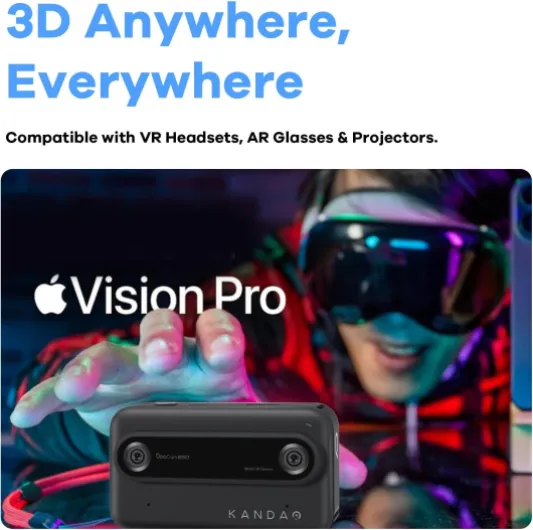
If you’re expecting a GoPro with 3D on top, you’ll be disappointed. If you specifically want 3D content for a VR headset, AR glasses, or 3D projectors, then the QooCam Ego starts to make sense. It’s not perfect, it’s a bit nerdy, but it’s one of the simplest ways right now to get proper stereoscopic footage without spending a fortune.
Is the QooCam Ego worth the money?
Value-wise, the QooCam Ego sits in a weird spot. It’s not cheap, especially considering it’s quite limited as a general camera: no zoom, limited focus control, average battery, and not the toughest build. If you compare it to a standard 4K action cam purely on specs, the Ego looks a bit weak for the price. But that’s not a fair comparison, because the whole point here is stereoscopic 3D, and in that niche, there aren’t many real alternatives unless you go much more expensive or start hacking together two cameras.
Where it starts to feel like decent value is if you already own a VR headset or AR glasses and you actually use them a lot. Watching your own 3D clips from holidays, family events, or hobbies in VR is genuinely different from watching flat videos. If that’s the experience you’re after, the Ego gives you a relatively simple all‑in‑one way to get there: shoot, import into the QooCam app, export side‑by‑side MP4, and watch on your headset. It’s still more work than posting an Instagram story, but for VR folks it’s manageable.
You do have to factor in extras: spare battery, possibly a better case, and time spent figuring out your ideal workflow (Google Drive, YouTube, or direct file transfer to Quest, etc.). For someone who just wants a casual camera, that’s probably too much hassle. For someone who’s already editing video and comfortable with file management, it’s fine. The 2‑year warranty is a plus and gives a bit more confidence, especially for a relatively niche Chinese brand.
So, is it good value? If you’re just curious about 3D and not sure you’ll stick with it, I’d say it’s a bit expensive for an experiment. If you’re already deep into VR, or you run a small studio, or you’re serious about 3D content creation without spending pro‑camera money, then it’s pretty solid value for what it does. It’s one of those gadgets that either makes total sense for your use case or feels like an overpriced toy. There’s not much middle ground.
Chunky little brick with a very VR‑nerd layout
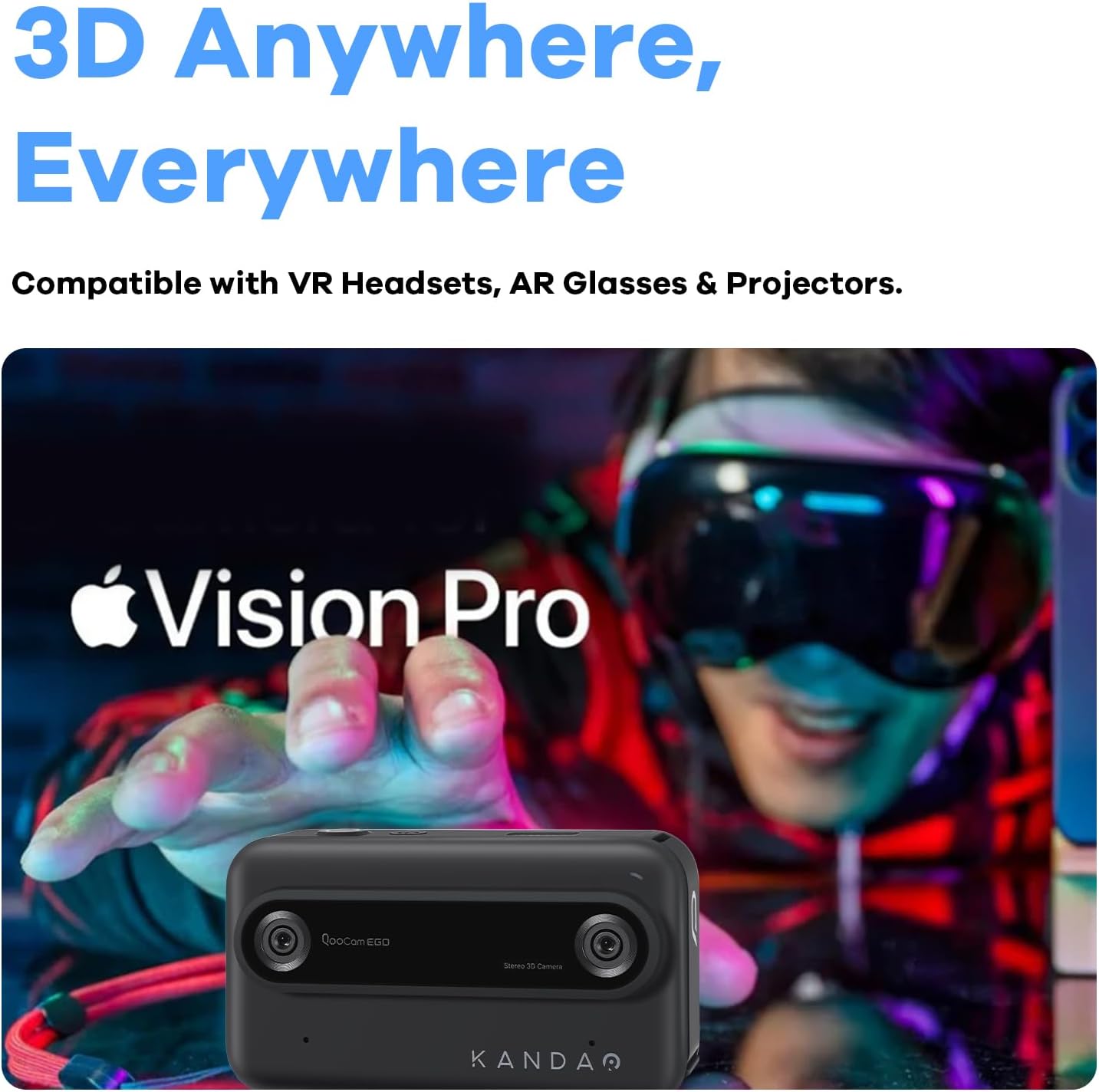
Design-wise, the QooCam Ego is small but a bit chunky, like a compact camera that someone cut in half and glued side by side. It’s clearly built around those two lenses spaced at 65 mm, so the front is basically all glass and plastic with minimal decoration. No fancy design tricks here: it looks like a tool, not a lifestyle object, which honestly I prefer for something I’m going to toss in a bag.
The 2.4-inch touchscreen on the back is usable but not huge. It’s fine for framing shots and checking focus roughly, but don’t expect smartphone-level brightness or clarity. In bright sunlight, I had to tilt the camera and shade it with my hand to see the screen properly. The interface is fairly basic: swipes and taps to change modes, a couple of on‑screen icons, and a few hardware buttons. The menus are a bit sluggish; you sometimes feel a delay between touch and reaction, which is annoying but not a deal-breaker once you know what you’re doing.
One thing that stands out is the lack of a physical lens cover. For a camera with two exposed lenses up front, that feels like a miss. You’ll want to keep it in the supplied bag or buy some kind of case, because a scratch on either lens will ruin your day. The battery compartment is also a bit fiddly the first time; I actually had to look up a video to be sure I wasn’t forcing it the wrong way. After that, it’s fine, but it doesn’t scream intuitive design.
Overall, the design is functional and clearly aimed at people who know exactly why they’re buying this thing. It’s pocketable in a jacket or bag, but not really jeans-pocket comfortable. It doesn’t try to be pretty, it just focuses on getting the dual‑lens layout and screen in a compact body. For this type of camera, that’s acceptable, but if you’re used to super polished action cams, it’ll feel a bit more “project” than “polished gadget”.
Battery life: usable, but don’t leave home with just one
Battery life on the QooCam Ego is honestly just average. It’s not terrible, but if you plan to shoot a lot in one go, you’ll hit the limit faster than you’d like. In my use, mixing short clips and photos, I was getting roughly an hour of active shooting before I started to worry about the percentage. One user mentioned taking 92 photos plus a video over about an hour and a half and ending with around 34% left, but they were turning the camera off between shots to save power. That matches my experience: if you’re disciplined about turning it off when not in use, it’s fine for casual outings.
If you leave it on, use Wi‑Fi a lot, and keep reviewing clips on the screen, the battery drains quicker. Also, the slow startup (around 20 seconds) pushes you to leave it on more than you’d like, which doesn’t help. This is one of those products where a second battery is pretty much mandatory if you’re serious about recording a full event, a day trip, or anything more than a quick walk. The good news is the battery is removable, so you’re not stuck with just one cell like on some cheaper cameras.
Charging is via USB‑C, which is standard and convenient. You can charge from a power bank while out and about, but of course you can’t really use the camera comfortably while it’s tethered. I found it easier to just carry a spare battery and swap. It would have been nice if this listing included the extra battery and charger, but since it’s the “camera only” package, you’ll likely have to buy those separately.
So, in practice: for quick 3D clips, family moments, and short sessions, the battery is okay. For heavy use, especially if you’re on holiday or filming an event, you either manage it carefully or you bring backup. It’s one of the main weak points of the Ego, not a deal-breaker, but definitely something you need to plan around if you don’t want to end up with a dead camera halfway through the day.
Build quality and durability: fine, but protect those lenses
Build quality on the QooCam Ego feels decent but not bulletproof. The body is a compact plastic shell that doesn’t creak, and it feels solid enough in the hand. It’s not super heavy, but it doesn’t feel like a toy either. I tossed it in a backpack a few times (inside the included bag), and it came out without any visible marks or issues. Buttons still click properly, and the battery door hasn’t loosened up.
The big concern is the front lenses. There’s no built-in lens cover, and since there are two lenses right up front, they’re just asking to get smudged or scratched if you’re careless. Fingerprints are constant, and you really need to get into the habit of wiping them with a microfiber cloth. I wouldn’t throw this camera loose into a pocket or bag; at minimum, use the supplied pouch or buy a hard case. A simple lens cap solution from the factory would have helped a lot here.
The camera is listed as water resistant, but not fully waterproof like a GoPro you can dunk in the sea without worry. I’d treat it as splash-resistant: light rain, a bit of moisture, fine. But I wouldn’t risk submerging it or using it near heavy spray without extra housing. There’s no rugged rubber armor or anything like that, so if you drop it on concrete, you’re rolling the dice, especially with those exposed lenses.
On the plus side, firmware updates are supported and KanDao seems to keep tweaking things, which is good for long-term use. The removable battery also means you’re not throwing the whole camera away when the battery starts to age. Overall, durability is acceptable if you’re careful, but this is not a hardcore action cam you can strap anywhere and forget. Treat it more like a compact camera with a special trick (3D), and handle it with some care.
3D quality is the strong point, everything else is secondary
Let’s talk about the main thing: 3D performance. This is where the QooCam Ego earns its place. The 65 mm lens spacing feels natural, and both photos and videos have solid depth when you watch them in a VR headset or on AR glasses. Faces, objects, and foreground/background separation look convincing. It doesn’t feel like a gimmick; it actually gives you that “I’m back there” feeling, especially for close to mid-range shots (say within 1–5 meters).
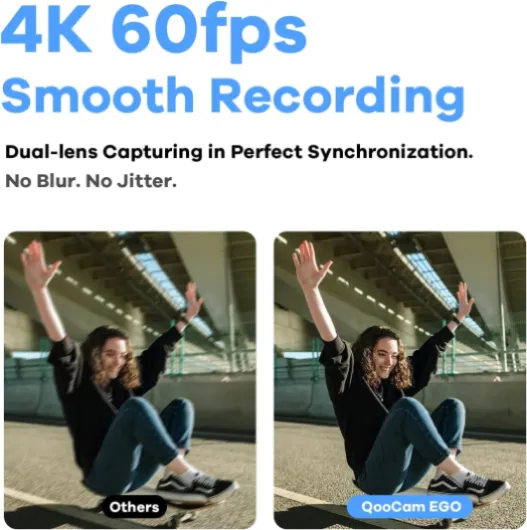
Video quality at 3840 × 1080 (per frame, split between eyes) at 30/60 fps is pretty solid. It’s not razor-sharp 4K per eye, but for most VR viewing it’s good enough. Colors are decent out of the box, a bit on the neutral side, which I prefer because it’s easier to adjust later. In good light, the footage looks clean. In low light, you start to see noise and softness, like most small-sensor cameras. The night mode helps a bit but doesn’t work miracles; this is still a small action camera sensor, not a mirrorless.
There’s digital stabilization, and it does a decent job for walking, handheld panning, and casual movement. If you start running, biking fast, or doing very shaky stuff, you’ll see the limitations, but for normal use it keeps things watchable. Rolling shutter is there if you whip the camera around, but nothing worse than most budget action cams. One thing I noticed is that it takes around 20 seconds to boot up, which is slow. You can miss spontaneous moments because you’re waiting for the camera to wake up and stabilize.
Autofocus is a bit of a weird point. Officially, there are focus options rather than full autofocus, and you have to pick the right one depending on distance. Some users complain about blurry shots; personally, once I got used to switching focus modes and paying attention to distance, my hit rate was okay. It’s not point-and-shoot simple, though. If you just expect your phone-like autofocus, you’ll get frustrated. Overall, performance is very good for 3D content, average for everything else. That’s pretty much the trade-off of this device.
What the QooCam Ego actually is (and what it isn’t)
The QooCam Ego is basically a compact dual-lens 3D camera that shoots 4K stereoscopic video (3840 × 1080 per eye at up to 60 fps) and high-res 3D photos (8000 × 3000). It’s not a 360° camera; it’s more like two small cameras side by side with a 65 mm distance between the lenses, which roughly matches human eye spacing. That’s what gives you the natural depth when you watch the footage in VR or on 3D displays.
In practice, you use it like a small point-and-shoot: you frame your shot on the 2.4-inch touchscreen, press record, and it saves side‑by‑side MP4 files to a microSD card (you’ll want a fast V60 card as they recommend). These files are then compatible with most VR headsets and AR glasses once you copy them over or run them through the QooCam app. There’s built-in Wi‑Fi and USB‑C for transfer, and the camera supports basic shooting modes like sports and night, but don’t expect fancy photography features.
There’s digital image stabilization using an IMU sensor, which helps keep the footage fairly smooth without a gimbal. It’s not on the same level as top-tier action cams, but it’s good enough for walking around, casual movement, and light action. Audio is recorded in AAC and is okay for ambient sound or quick commentary, but if you care about clean audio, you’ll still want an external recorder and sync it in post because there’s no Bluetooth mic support.
Important detail: this listing is for the camera only, no snap‑on viewer. Personally, I used it with a Quest headset and AR glasses, and that works fine once you figure out your workflow. But if you like instant on‑device 3D preview without fiddling with a headset, you might want to look for the bundle that includes the viewer. The Ego is built first and foremost for people who already live in the VR ecosystem and are okay dealing with files and apps.
Pros
- Strong, natural 3D effect thanks to 65 mm lens spacing and dual-lens design
- Good 3D photo and video quality for VR headsets and AR glasses at a relatively accessible price
- Compact body with removable battery and decent digital stabilization for everyday use
Cons
- Average battery life and slow startup, so you really want at least one spare battery
- No lens cover and only water resistant, so you have to be careful not to damage the exposed lenses
- Limited autofocus/focus options and slightly sluggish interface make it less convenient than a regular action cam
Conclusion
Editor's rating
The KanDao QooCam Ego is a specialised 3D camera that does one thing well: it gives you proper stereoscopic photos and videos that look good in VR and on 3D displays. The 65 mm lens spacing feels natural, the 3D depth is strong, and when you watch the footage back in a Quest or with AR glasses, it genuinely feels more like a memory than a flat clip. If that’s exactly what you’ve been looking for, this camera makes sense despite its quirks.
Those quirks are real, though. Startup is slow, the interface is a bit laggy, battery life is just okay, and you need to pay attention to focus distance if you don’t want soft shots. There’s no zoom, no Bluetooth mic support, and the lenses are exposed, so you have to treat it with care. It’s also not plug‑and‑play for sharing; you’ll be doing some app work or manual file transfers if you want friends to see your 3D content on their headsets.
Who is it for? People who already own a VR headset or AR glasses and want to record personal moments in 3D, content creators who want a relatively affordable way into stereoscopic video, and hobbyists who don’t mind a slightly nerdy workflow. Who should skip it? Anyone just wanting a general action camera, or someone who rarely uses VR. In that case, a normal 4K action cam will give you more for the money. For the right user, though, the QooCam Ego is a pretty solid tool that finally makes consumer 3D capture practical without spending a fortune.