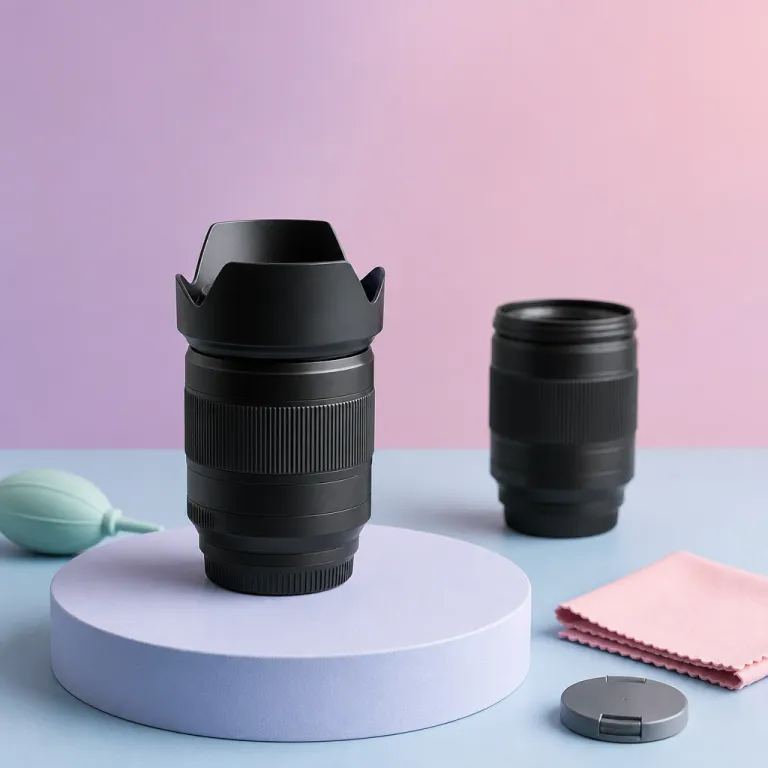

What a photo lens hood really does for your images
A well designed photo lens hood is the simplest way to protect your camera lens from unwanted light. When strong illumination hits the front element from the side, the hood blocks stray rays before they reach the glass and cause lens flare. This single accessory quietly improves image quality while also shielding the front lens surface from bumps, fingerprints, and light rain.
Think of the hood as a sunshade for your lenses that keeps contrast high and colours rich even in harsh midday light. Without a proper lens hood in place, flare and ghosting can wash out the image, reduce apparent sharpness, and make black areas look grey rather than deep and clean. Photographers who shoot outside all the time quickly learn that a good lens hood is as essential as a reliable lens cap or a sturdy tripod.
On modern digital camera bodies, sensors are extremely sensitive to every light source in the frame and just outside it. That sensitivity means lens hoods are more important than ever, because even a small reflection can degrade image quality in high resolution files. If you care about getting the best possible image from your expensive camera lens, treating the hood as part of the optical system rather than an optional extra is a smart habit.
How lens hoods control flare, contrast, and colour
Lens flare happens when stray light bounces around inside the lens and reaches the sensor as haze, streaks, or coloured blobs. A correctly shaped photo lens hood narrows the angle from which light can hit the front element, cutting most of that stray light before it enters the optical path. The result is cleaner photography with deeper blacks, stronger contrast, and more accurate colour.
Different types of lens designs react differently to flare, so manufacturers create specific lens hoods for each focal length and optical formula. A telephoto camera lens such as the Canon RF 100–400mm, often used for wildlife photography and aviation as reviewed in this detailed Canon RF 100–400mm test, can use a long, deep hood because its angle of view is narrow. Wide angle lenses need shorter petal hoods, since the angle lenses cover is much broader and an overly long hood would appear in the frame as dark corners.
When you add filters to the front lens thread, the risk of lens flare increases because each filter surface can reflect a light source. Quality multi coated filters reduce this, but a well matched lens hood still does most of the work by blocking unwanted light before it ever reaches those filters. If you stack several filters on the front element, you must check carefully that your lens hood remains compatible and does not cause vignetting at the widest focal length.
Choosing the right hood for your camera and shooting style
Every camera system offers a mix of original and third party lens hoods, and choosing the right one starts with your focal length and shooting habits. A hood compatible with a standard zoom around 24–70mm will look very different from the deep cylinder used on a 300mm telephoto or the shallow petal hood supplied with an ultra wide angle. Matching the hood to the exact camera lens model matters more than chasing the cheapest product you can find.
Manufacturers like Canon design each hood model, such as the Canon EW-73D for the EF-S 18–135mm, to match the field of view of a specific lens so the hood will block as much stray light as possible without intruding into the frame. Third party products sold on marketplaces such as Amazon can work well, but you must check that the hood compatible design is made for your exact front element diameter and focal length range. When a generic hood is too long for wide angle lenses, you will see dark corners in your image that no amount of post processing can fully fix.
Serious photographers often treat lens hood selection with the same care they give to bags and straps, because these small products affect how quickly they can react on location. If you move a lot between interiors and exteriors, a bayonet mount lens hood that clicks on and off in one second saves time compared with a screw in design. For travel and street photography, pairing a compact hood with a protective camera bag such as the Billingham Mini Eventer, reviewed as a smart upgrade for serious photographers on this in depth camera bag guide, keeps your gear ready while still protected.
Petal, cylindrical, and rubber hoods: which shape suits which lens
Not all lens hoods share the same shape, and that shape is not cosmetic. Petal hoods with their scalloped edges are designed for wide angle lenses, where the sensor sees more in the frame horizontally than vertically. The cutouts prevent the hood from blocking the corners of the image while still shading the front lens from a strong light source just outside the frame.
Cylindrical hoods work best on telephoto lenses, because the narrow angle lenses use allows a longer tube without vignetting. This type of lens hood gives excellent protection from unwanted light and also from rain or snow hitting the front element during outdoor photography. Collapsible rubber hoods are more flexible and can be folded flat in a bag, but they are often less precisely matched to focal length and can cause problems on very wide angle designs.
When you compare these types of lens options, remember that the most effective hood will always be the one engineered for your specific camera lens. A Canon hood supplied with an L series product, for example, is carefully tuned to that optical design and usually outperforms generic hoods. If you invest in high end lenses that you expect to outlast several camera bodies, as argued in this analysis of why the lens you pick today will outlast three camera bodies on lens ecosystem strategy, it makes sense to treat the matching hood as part of the long term system.
Filters, caps, and practical handling with lens hoods
Real world photography rarely happens in controlled studio light, so filters and hoods must work together in changing conditions. A clear protective filter or UV filter can keep dust and salt spray off the front element, while the lens hood shields that filter from side light and physical impact. Used together, filters and hoods give you a practical, worry free way to handle your camera in rough environments such as beaches, festivals, or city streets.
Many modern lens hoods are shaped so that you can reach the lens cap through a small opening, which saves time when you remove the cap quickly as a subject appears. Reversible designs let you mount the hood backwards over the camera lens barrel for transport, making the product more compact in your bag. When you buy third party products on Amazon or in local stores, check that the hood compatible design still allows easy access to the cap and filter threads, otherwise you will end up leaving the hood at home.
Handling details like these matter because they influence whether you actually use the lens hood in the field or leave it in a drawer. On a recent backlit street photography session, for example, shooting a 35mm lens without its hood produced pale veiling flare across the top of the frame, while repeating the same shot with the hood attached restored deep shadows and crisp micro contrast. Choosing lens hood models that support your working style, rather than fighting it, is one of the quiet decisions that separate consistently strong image quality from occasional lucky shots.
When to remove the hood and when it is non negotiable
There are rare moments when removing the lens hood is justified, but you should understand the trade offs. In very tight spaces, such as shooting through glass or against a window, the hood can bump the surface and make framing difficult, so taking it off for a short time can help. Some creative photographers also embrace lens flare as an artistic effect, deliberately letting a light source hit the front lens without protection.
Most of the time, though, keeping the hood on the camera is the safer and more consistent choice. Backlit portraits, cityscapes at sunset, and night scenes with street lamps all involve strong light sources just outside the frame, and a good hood will tame that unwanted light before it washes across your image. In rain or snow, the hood also acts as a small roof for the front element, reducing the number of drops that reach the glass and protecting the coatings over long time exposures.
For travel and documentary work, many professionals simply leave lens hoods mounted permanently, treating them as part of the lens rather than an accessory. This habit keeps the front element safer if the camera swings into a doorframe or table edge, and it costs nothing once you own the hood. When you look at the price of modern camera lenses and compare it with the modest cost of their matching hoods, the value equation is clear for any photographer who cares about long term image quality.
Key figures about lens hoods and image quality
- Side by side test shots with and without a correctly matched lens hood typically show visibly higher contrast in strong backlight, especially in deep shadow areas near the frame edges.
- Manufacturers such as Canon, Nikon, and Sony design dedicated hoods for nearly every camera lens they release, and it is common for the vast majority of their professional telephoto products to ship with a hood included in the box.
- Field surveys and interviews with working photojournalists regularly report that most keep lens hoods mounted at all times, citing protection of the front element and reduced lens flare as the main reasons.
- Optical engineers often note that a single strong light source just outside the frame can significantly reduce effective dynamic range when no hood is used, which is critical for high contrast scenes such as sunsets or night cityscapes.
FAQ about photo lens hoods
Do I really need a lens hood if I already use a filter
A protective or UV filter shields the front element from dust and scratches, but it does almost nothing to block stray light from the sides. A lens hood is still necessary to control lens flare and maintain contrast, especially in backlit scenes. Using both together gives you physical protection and better image quality at the same time.
Can one generic hood work on all my lenses
Generic hoods can fit several lenses that share the same front thread size, but they are rarely optimal for every focal length. A hood that is long enough for a telephoto lens will usually cause vignetting on a wide angle lens, while a shallow hood for wide angle work will not protect a telephoto design effectively. For best results, use hoods that are specifically matched to each camera lens you own.
Will a lens hood affect exposure or autofocus accuracy
A correctly designed hood does not affect exposure, because it only blocks light that would not contribute to the image. Autofocus systems are calibrated with the hood in place, so performance remains stable and reliable. Problems arise only when an incompatible hood intrudes into the frame or casts uneven shadows, which is why hood compatibility matters.
Is a petal hood better than a cylindrical hood
Neither shape is universally better, because each is designed for a different type of lens. Petal hoods are optimised for wide angle lenses, where the sensor sees more horizontally than vertically, while cylindrical hoods suit telephoto lenses with a narrow field of view. The best choice is always the hood shape recommended for your specific lens model.
Can I leave the lens hood on when storing my camera
Many photographers store their camera with the hood reversed over the barrel to save space in the bag. This position still protects the lens body from minor knocks, although it does not shield the front element, so a lens cap remains essential. If your bag is deep enough, you can also store the camera with the hood in shooting position for faster access.