
Summary
Editor's rating
Value: good for creators, less convincing for hardcore photographers
Design: small, light, and clearly built for video
Battery and reliability: decent life, but some worrying reports
Durability and build: fine for normal use, but not a tank
Performance: autofocus and video are the main selling points
What this camera actually is (and what it isn’t)
Pros
- Very good autofocus with Real-time Eye AF for humans and animals
- 4K60 and 120 fps Full HD video with a fully articulating screen, ideal for vlogging
- Compact and lightweight body with access to a wide range of Sony E-mount lenses
Cons
- Reports of units not powering on raise concerns about reliability and quality control
- Kit lens is average in low light and feels a bit flimsy
- Single card slot and limited stills-focused features make it less attractive for serious photographers

Specifications
View full product page →| Brand | Sony |
A creator-focused camera that actually feels built for YouTube
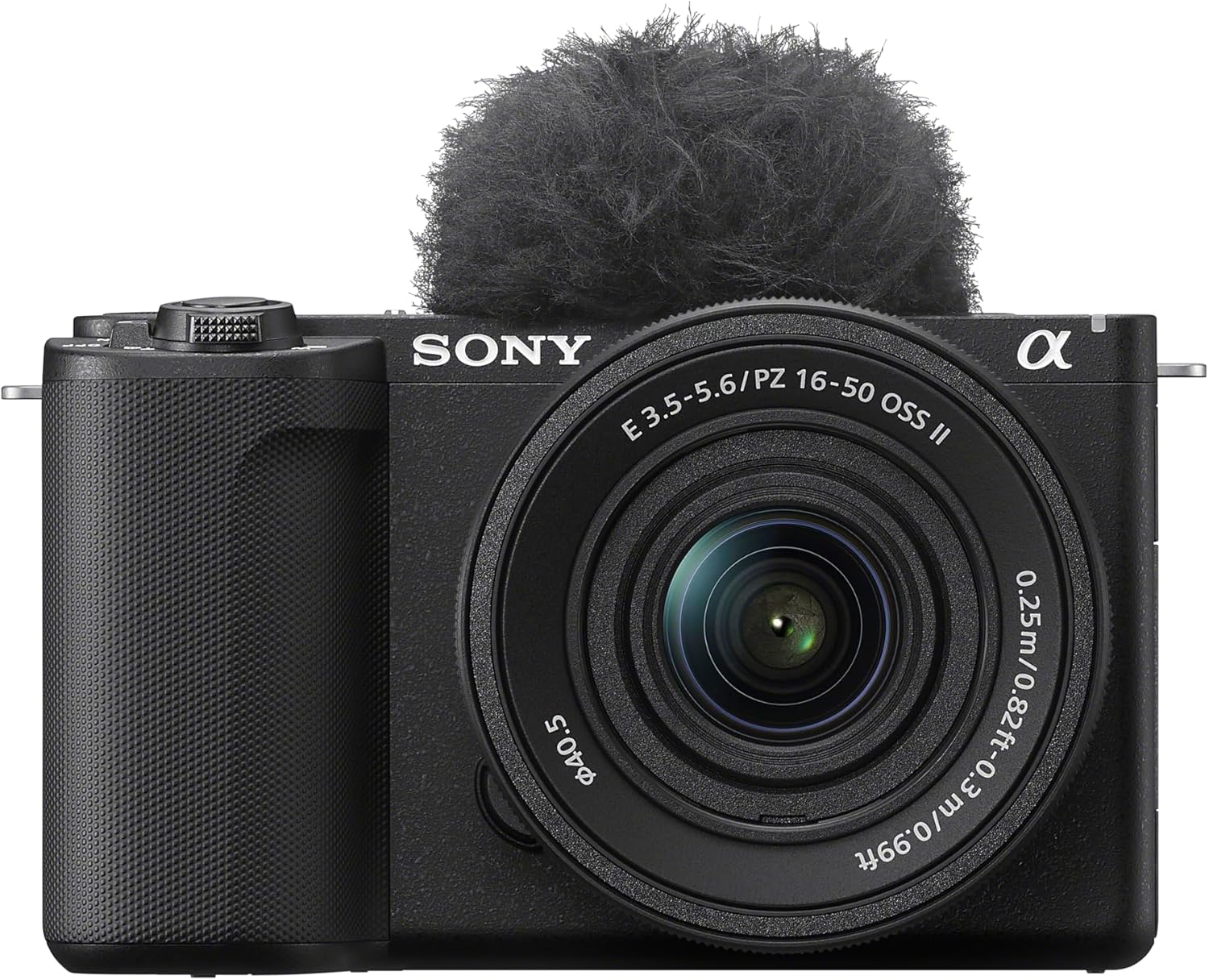
I’ve been using the Sony ZV-E10 II with the 16-50mm kit lens for a few weeks, mainly for YouTube videos, some B-roll, and casual photos when I don’t want to drag a full-size camera bag. I came from a mix of a smartphone (Galaxy S24 Ultra) and an older mirrorless body, so I wasn’t expecting miracles, just something small that records good video without too much hassle.
The first thing I noticed is that this camera is clearly built with video and vlogging in mind. The fully articulating screen, the simple video-centric buttons, and the autofocus behavior all push you to hit record and talk to the camera. You don’t have to dig into menus for basic stuff like background blur or face tracking, which is a relief compared to some older Sony bodies I’ve used.
That said, it’s not perfect. There are a few things that bugged me pretty quickly: the kit lens is fine but not great in low light, the menus are still a bit dense for beginners, and I’m not super relaxed about the power/charging situation after reading reports of units that just refused to turn on. Mine works, but it’s something you keep in the back of your mind.
Overall, my first impression is: this is a pretty solid hybrid camera for people who shoot a lot of video, especially if you’re moving up from a phone. But you do need to accept some compromises, and I wouldn’t buy it without planning to get at least one better lens later if you care about low light or a more “cinematic” look.
Value: good for creators, less convincing for hardcore photographers
On the value side, the ZV-E10 II sits in that slightly awkward space: not dirt-cheap, but positioned as an entry/mid-level camera. For what you pay, you get solid 4K60 video, very good autofocus, a flip screen, and access to the Sony E-mount ecosystem. If your main goal is YouTube, TikTok, streaming, or casual lifestyle content, it offers good value because it does a lot more than a smartphone in terms of control, lens options, and image quality, without being huge or super expensive.
Where the value starts to feel less clear is if you’re more into photography than video. The specs listed focus heavily on JPEG, and there’s only one card slot, no real mention of strong weather sealing, and a fairly basic kit lens with a variable f/3.5–5.6 aperture. For stills-focused shooters, there are other APS-C or even entry full-frame options that might make more sense, especially if you want RAW workflows, better low-light performance out of the box, or a more robust body.
You also have to factor in the cost of lenses and accessories. The kit lens is fine to get started, but if you want that clean blurred-background look indoors, you’ll probably end up buying at least one fast prime (like an 11mm f/1.8 or a 35mm f/1.8). Add a decent mic, maybe a small tripod or grip, and suddenly the total cost goes up quite a bit. That’s not unique to this camera, but it’s something to keep in mind if you’re moving up from a phone and not used to system costs.
Compared to just using a recent smartphone, the value is there if you’re actually going to use the extra control: interchangeable lenses, proper audio inputs, and better subject tracking. If you’re the kind of person who will leave it in full auto and barely touch settings, a high-end phone might be enough. But if you’re serious about making regular video content and want something more flexible than a phone, this camera sits in a pretty reasonable spot in terms of price versus what it can do.
Design: small, light, and clearly built for video
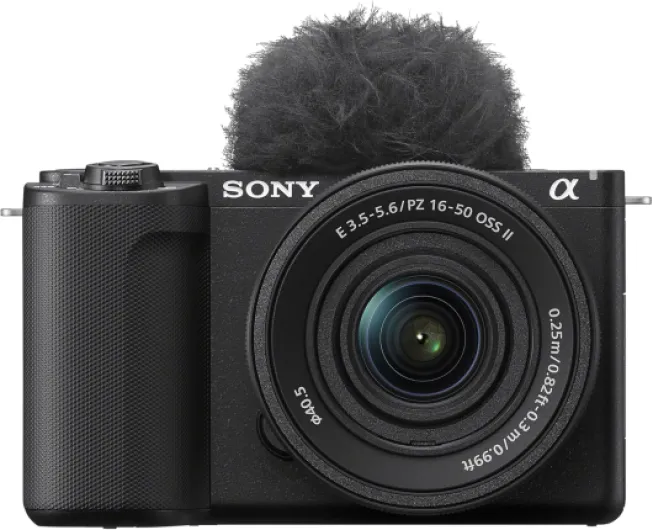
Design-wise, the ZV-E10 II is pretty compact and light. At around 14 ounces (body plus lens), it doesn’t feel like a brick in your hand or on a small tripod. I’ve used it mostly on a mini tripod or handheld with a small grip, and after 30–40 minutes of vlogging or B-roll, my arm is fine. Compared to a full-frame body with a big zoom, this feels almost like a toy in weight, which is nice when you’re traveling or walking around a city all day.
The layout is clearly video-oriented. There’s a big record button on top, a mode switch that makes it easy to jump into movie mode, and a fully articulating LCD that flips all the way to face you. The tilting/vari-angle screen is a big deal: you can frame yourself properly for talking-head shots and still see your exposure and audio levels. The touch controls are decent for basic stuff like focus point and some quick settings, but you’ll still need the physical buttons and dials for deeper settings.
On the grip side, it’s okay but not amazing. The body is small, so if you have big hands you might feel a bit cramped, especially with the light kit lens. Once you put a bigger lens on, like an 11mm f/1.8 or something heavier, you start to notice that the grip isn’t very deep. It’s usable, just not super comfortable for long sessions with heavier glass. Buttons are generally reachable, but the usual Sony menu structure is still there, so expect to spend some time customizing function buttons to avoid menu diving.
Ports are fairly straightforward: micro HDMI, USB, and a 3.5 mm audio jack. Personally I would have preferred full-size HDMI and maybe an extra dial on the top, but at this size and price I get why they cut some things. Overall, the design is practical for creators, with a few compromises in ergonomics if you’re used to bigger, more serious bodies. But for backpack and travel use, I liked the size a lot.
Battery and reliability: decent life, but some worrying reports
Battery life in normal use is fine but not outstanding. For a typical day of shooting a mix of clips for a vlog, some B-roll, and a few photos, I could get through on a single charge if I was careful with screen-on time and didn’t review footage constantly. Realistically, if you’re doing long talking-head sessions or streaming, you either want a second battery or to keep it plugged in via USB. That’s pretty standard for small mirrorless bodies, so nothing shocking there.
Charging via USB is convenient. You can plug it into a power bank, wall charger, or even a laptop. I used the supplied USB cable and a standard phone charger, and it charged without any drama. Having the option to power it externally is useful if you’re doing longer indoor shoots or using it as a webcam. The camera doesn’t feel like a battery hog, but it’s also not one of those bodies that runs all day on a single battery. Plan on at least one spare if you shoot a lot.
What does worry me a bit are the user reports of units that just don’t turn on, even after charging. One reviewer mentioned having this happen with two separate kits, and Sony apparently confirmed it as a fault that required return. I haven’t had this issue personally, but if two out of two units fail for someone, that’s not something you ignore. It suggests there might be a bad batch or some quality control issues around power or battery detection.
So in practice, the battery life itself is okay and usable, but I’d be extra careful when you first get the camera. Test it thoroughly in the return window: charge it fully, power it on and off several times, record longer clips, and make sure it behaves consistently. If you get a good unit, you’ll be fine; if you’re unlucky, you don’t want to find out after the return window closes.
Durability and build: fine for normal use, but not a tank
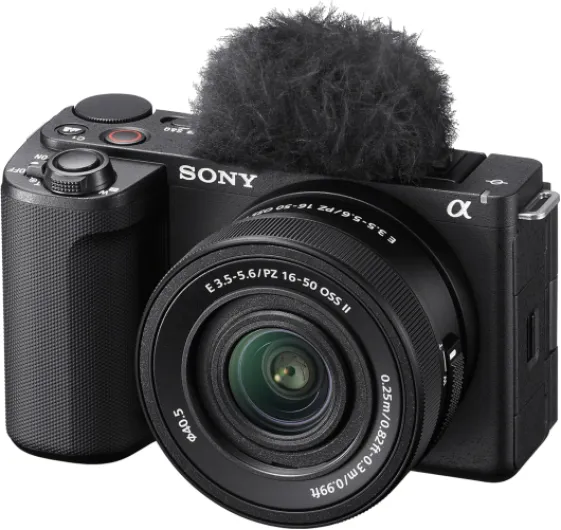
In terms of durability, the ZV-E10 II feels like a typical mid-range mirrorless camera: mostly plastic shell, light weight, and not something I’d want to drop on concrete. The body doesn’t feel cheap, but it also doesn’t give you that rugged, metal-brick impression you get from higher-end models. For regular use — travel, home studio, street shooting — it’s totally fine, as long as you’re not throwing it around or shooting in heavy rain.
I’ve thrown it in a backpack a few times with a small pouch around it, and it survived just fine. The articulating screen is the part I’m most careful with. It’s handy for vlogging, but any flip-out screen is a potential weak point if you bump it hard. The hinge feels decent, not loose, and it stays in place when you position it. Still, I try not to leave it flipped out when I’m walking around, just to avoid accidental hits.
The kit lens (16–50mm OSS II) is also pretty light and mostly plastic. The power zoom mechanism works, but it doesn’t feel super premium. I wouldn’t expect it to take hard knocks or a lot of abuse. The zoom is controlled electronically, which is convenient for smooth zooms in video, but it can feel a bit less precise than a fully mechanical zoom ring for stills. If you plan to build a small lens collection, I’d treat this kit lens as a starter and maybe move to sturdier primes or better zooms when you can.
Considering the reports of units not turning on, I’d say durability and reliability are okay but not bulletproof. For normal careful use, it should hold up, but this is not a pro-level, weather-sealed body you’d take into harsh conditions with full confidence. If you’re careful and use a small bag or cage, it should last, but I wouldn’t rely on it as my only camera for paid work in rough environments.
Performance: autofocus and video are the main selling points
In terms of performance, the two things that stood out the most for me are autofocus and video quality. The camera uses 759 phase-detect AF points and Sony’s Real-time Eye AF, and it locks onto faces and eyes very quickly. When I pointed it at myself at arm’s length or on a small tripod, it stuck to my eye even if I moved around a bit or turned my head. I also tried it on a dog running around a park, and while it’s not perfect, it did a much better job than any phone I’ve used. For casual and creator use, the AF is very reliable.
Video quality at 4K60 is clean and sharp, especially in good light. You can also do 120 fps in Full HD for slow motion, which is nice for B-roll. The S&Q mode makes it easy to set up slow motion or time-lapse directly in-camera, so you don’t have to mess with editing as much. The 26 MP APS-C sensor is a clear step up from a phone sensor: you get more detail, better dynamic range, and less noise when the light starts to drop. It’s not magic, but side by side with my S24 Ultra, the Sony footage looks more natural and holds up better when you grade it or crop.
Continuous still shooting at 11 fps is decent for this type of camera. I used it for some casual sports and kids running around, and it was fast enough to get a series of usable shots. Just keep in mind that buffer and card speed will limit how long you can spray, so this is more for occasional bursts than hardcore action photography. Also, based on the specs listed (JPEG only), this feels more aimed at users who don’t want to deal with big RAW files, which fits the target audience but might annoy more advanced shooters.
Overall, performance is solid for content creators and hobbyists. If your priority is fast and accurate autofocus, sharp 4K video, and okay burst shooting, it gets the job done. If you’re a pixel-peeper stills photographer or a pro who needs robust file options and deep buffers, you’ll probably hit its limits faster.
What this camera actually is (and what it isn’t)
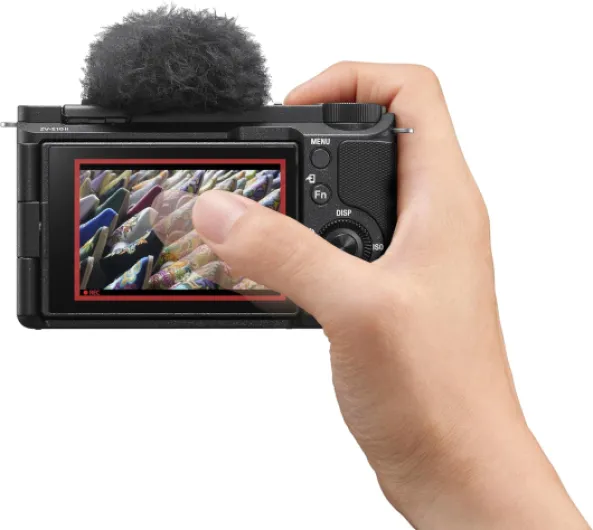
The ZV-E10 II is basically a compact APS-C mirrorless camera built around a 26 MP Exmor R sensor, with a strong focus on content creation and vlogging. You get 4K video up to 60 fps, Full HD up to 120 fps, and continuous still shooting at 11 fps with AF/AE tracking. It uses Sony’s E-mount, so you can attach a big range of lenses, from cheap primes to pricey G Master glass. Out of the box in this kit, you get the body and the 16–50mm f/3.5–5.6 power zoom lens, battery, and the usual basic accessories.
In practice, the headline features that matter most are: 4K60 recording, reliable Real-time Eye AF for humans and animals, and that fully articulating 3-inch touch screen. The camera is clearly designed to be easy for solo shooters: you can flip the screen to face you, plug in a mic via the 3.5 mm jack, and monitor audio while recording. Wi-Fi and USB connectivity let you transfer files or use it as a webcam, which is handy if you stream or do calls a lot.
On the downside, there are limits. There’s only one SD card slot, and it only officially supports JPEG for stills in the specs here (which is weird for a camera at this level; I’d strongly expect RAW in real life, but I’ll stick to the given data). Write speeds are listed at around 11 fps for stills and 60–120 MB/s for video, so it’s not a speed demon for pro sports shooters. Also, there’s no built-in flash; you just get a hotshoe, so you’ll need an external flash or light if you shoot indoors a lot.
So, if you think of it as a compact, video-first APS-C camera for YouTube, TikTok, and casual photo work, it makes sense. If you’re expecting a hardcore stills workhorse or a rugged pro body with dual card slots and weather sealing, this is not that. It’s more like a step up from a smartphone or entry-level DSLR, not a replacement for a Sony A7 series for serious photography jobs.
Pros
- Very good autofocus with Real-time Eye AF for humans and animals
- 4K60 and 120 fps Full HD video with a fully articulating screen, ideal for vlogging
- Compact and lightweight body with access to a wide range of Sony E-mount lenses
Cons
- Reports of units not powering on raise concerns about reliability and quality control
- Kit lens is average in low light and feels a bit flimsy
- Single card slot and limited stills-focused features make it less attractive for serious photographers
Conclusion
Editor's rating
Overall, the Sony ZV-E10 II is a solid choice for creators who mainly care about video and want something better than a smartphone without going full pro-level. The autofocus is reliable, the 4K60 and 120 fps options cover most content needs, and the flip screen plus mic jack make it easy to shoot yourself without help. It’s light, portable, and the E-mount opens the door to a lot of lens options as your skills and needs grow.
On the downside, the kit lens is just okay, especially in low light, and the overall build is more “careful hobbyist” than “hardcore workhorse”. The single card slot and the JPEG-focused spec sheet make it less appealing for serious stills photographers. The user reports of units that don’t power on are also a red flag: I’d only buy this from a seller with a clear return policy and test it hard during the first days.
If you’re a vlogger, streamer, or content creator looking to step up from a phone and want strong autofocus, good 4K video, and a compact body, this camera makes sense and offers decent value. If you’re mainly a photographer, or you need rock-solid reliability and pro features, I’d look at other bodies in the Sony lineup or even other brands. This one is built for creators first, photographers second, and it shows in both its strengths and its weak spots.