
Summary
Editor's rating
Value for money: good starter kit, but factor in future upgrades
Design & handling: cute, light, and a bit plasticky
Battery life: okay for casual days, tight for heavy shooting
Build quality & long-term feel: light but not tank-like
Photo & video performance: great for beginners, with a few limits
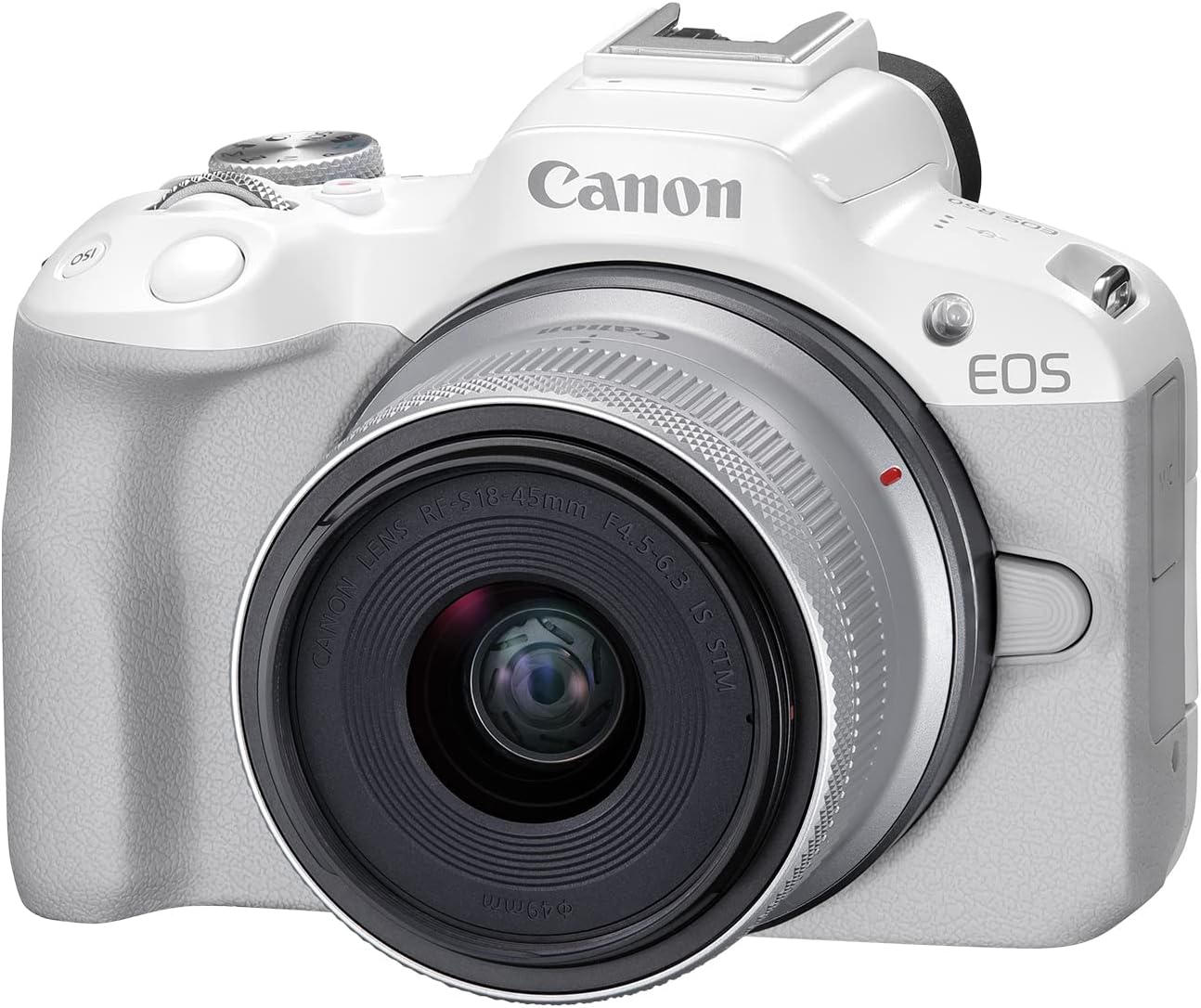
What you actually get with the EOS R50 kit
Autofocus & usability: does it actually make shooting easier?
Pros
- Lightweight, compact body with a very usable flip-out touchscreen and friendly interface
- Autofocus and subject tracking work well for both photos and video, great for beginners and vloggers
- 4K oversampled video and 24.2 MP stills give clean, detailed results in good light
Cons
- Kit lens is slow (f/4.5–6.3) with limited zoom range, which hurts low-light and flexibility
- Battery life is only average, a second battery is almost mandatory for heavy use
- Body and kit lens feel plasticky and lack serious weather sealing, not ideal for rough conditions

Specifications
View full product page →| Brand | Canon |
A small Canon that actually made me leave my phone at home
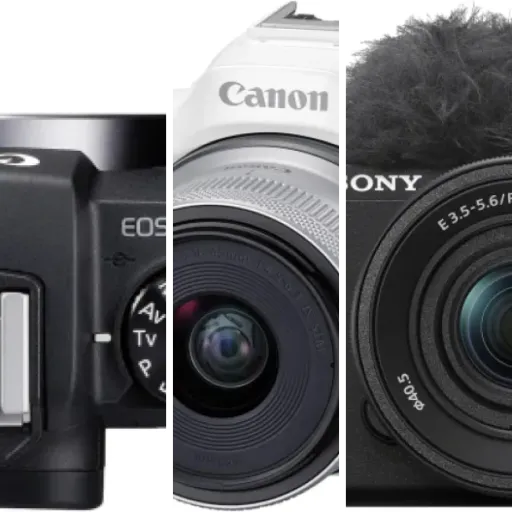
I’ve been using the Canon EOS R50 with the RF-S 18‑45mm kit lens (the white version) for a few weeks now, mainly for weekend trips, some YouTube-style talking head videos, and casual photos instead of my phone. I’m not a pro photographer, I’m more the "I want better than my phone but I don’t want to study a manual for 3 days" type. So I’ll stick to what it’s like in real life, not lab charts.
My usual reference is a modern smartphone and an older Canon DSLR I still have lying around (Rebel series). Compared to those, the R50 is basically a compact body with a much better sensor than a phone, and way better autofocus than my old DSLR. It’s clearly built with beginners and content creators in mind: flip screen, strong autofocus, easy smartphone connection, and video options that are more than enough for YouTube, TikTok, and travel clips.
What pushed me to test it was the mix of 24.2 MP photos, 4K video oversampled from 6K, and all the subject tracking stuff Canon keeps talking about. I wanted to see if that actually helps or if it’s just buzzwords. Plus, the white version looks kind of fun and less "serious photographer" than a big black brick.
Overall, after several outings and a few home video sessions, I’d say it’s a pretty solid little camera for beginners and casual creators, but it’s not magic. The kit lens is limited, low light has its quirks, and the body is clearly designed more for ease of use than deep manual tweaking on the fly. I’ll go through what works well and what annoyed me a bit so you can see if it fits the way you shoot.
Value for money: good starter kit, but factor in future upgrades
Price-wise, the EOS R50 kit sits in that entry-to-mid range mirrorless segment. It’s not dirt cheap, but it’s also not in pro territory. For what you pay, you get a modern sensor, solid autofocus, 4K video, and a lens that covers basic everyday use. If you’re upgrading from just a phone or a very old DSLR, the jump in flexibility and image control feels worth the money. The Amazon rating around 4.7/5 also matches my feeling: it’s generally well liked, with a few expected compromises.
Where you need to be realistic is the hidden costs. The kit lens is usable, but if you get into this hobby, you’ll probably want at least one more lens (a brighter prime like a 50mm, or a wider zoom, or a telephoto). Canon RF lenses, especially the nicer ones, are not super cheap. Add a second battery, a decent memory card (UHS‑I or UHS‑II, U3 for 4K), maybe an external mic for better audio, and you’re quickly adding a good chunk to the base price.
Compared to other beginner mirrorless options (like some older Sony or Canon M‑series bodies on the used market), the R50 gives you newer tech and a current mount, which is a plus for long-term. Autofocus is much better than older models, and the smartphone connectivity is smoother. So even if the initial price is a bit higher than picking up a used body, you’re getting a platform that won’t feel outdated right away.
So in my opinion, value is pretty solid if you know what you’re buying: a friendly starter body that can grow with you a bit, but not a pro workhorse. If your plan is casual travel, vlogging, and family photos, it’s a good package. If you already know you want multiple lenses, heavy low-light work, or long shooting days, you might either need to budget more for extras or look at a slightly higher tier body right from the start.
Design & handling: cute, light, and a bit plasticky
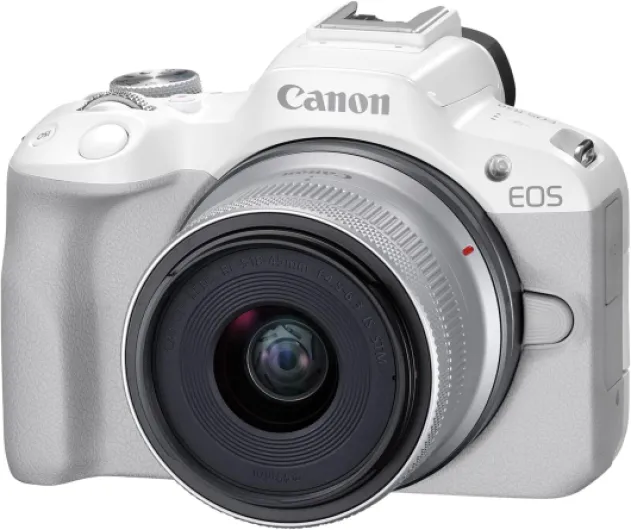
The white body honestly looks nice in person. It has a more casual vibe than a typical black camera, and it doesn’t scream "pro gear" when you pull it out in public. The finish is mostly matte plastic, which keeps it light but also makes it feel less "serious" in the hand. It doesn’t feel cheap to the point of being fragile, but you can tell it’s not a high-end metal body either. I’ve tossed it in a backpack without a dedicated case a few times (not recommended but I did it) and it survived fine, no creaks or weird flex.
In terms of handling, it’s very compact and lightweight (around 1 pound with the kit lens). For small to medium hands, it’s comfortable. The grip is decent, but if you have big hands, your pinky might hang off the bottom, which can get annoying after a while. The buttons are fairly well placed, but there aren’t tons of dedicated dials like on more advanced cameras. You can still access most settings, but sometimes you need to tap the touchscreen or dive into the menu for stuff you’d maybe want a physical control for.
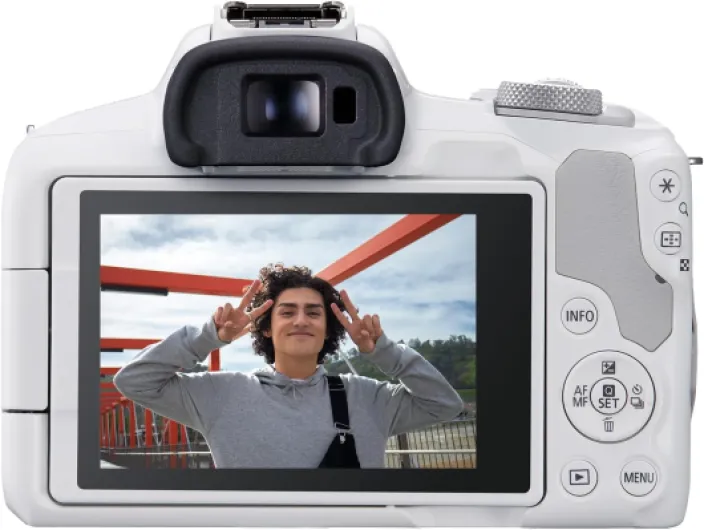
The flip-out 3" touchscreen is one of the best parts of the design. For vlogging or selfie photos, it’s perfect: you flip it to the side, rotate it toward you, and you can frame yourself easily. The screen is sharp enough and bright enough outdoors most of the time, although in strong sunlight I occasionally had to shade it with my hand to see properly. The touch response is quick, so selecting focus points or navigating menus feels like using a phone, which is a big plus if you hate fiddly controls.
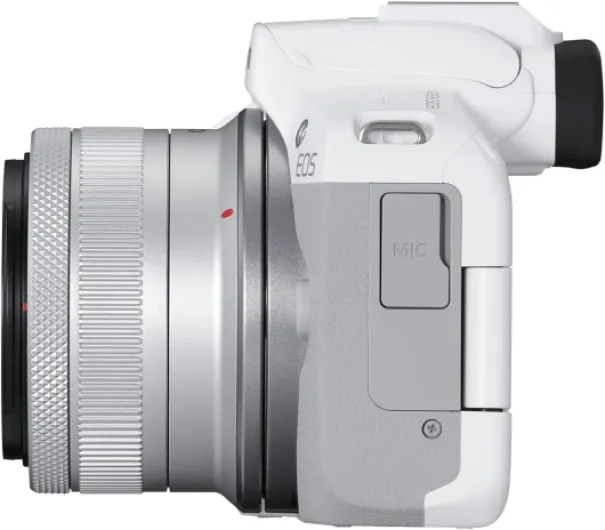
Connectivity ports are basic but useful: USB, HDMI, and mic input (the mic input is crucial for vlogging). No headphone jack for monitoring sound, which is a bit of a letdown if you’re picky about audio. The memory card slot is in the battery compartment at the bottom, which is standard on this level of camera but a bit annoying if you use a tripod and need to swap cards. Overall, the design is clearly about being compact and user-friendly rather than "pro tool" style, and it does that job pretty well.
Battery life: okay for casual days, tight for heavy shooting
Battery life is one of those things where this camera is fine but not impressive. For a light day of shooting – say a mix of photos and some short 4K clips – I usually got through the day on a single charge, but it was often down to the last bars by the evening. If I shot mostly video or checked my shots a lot on the screen, the battery drained much faster. For a full-on vlog day or a long event, I would not trust just one battery.
Compared to my old DSLR, battery life is clearly weaker, but that’s pretty normal for mirrorless cameras. The electronic viewfinder and the always-on screen use more power. If you come from a smartphone, it’ll feel kind of familiar: you manage battery life the same way you manage your phone’s – turn the camera off between shots, don’t leave it idling, dim the screen a bit if you can.
The good point is that you can charge via USB, which is handy. I plugged it into a power bank a couple of times during the day and it topped up while I was having a coffee. That’s a life saver if you forget your spare battery at home. Just be aware that shooting while charging is not always ideal and can get a bit warm depending on what you’re doing.
So in practice, my advice is simple: if you plan to use the R50 for more than casual family photos – like full-day vlogging, travel days with lots of video, or events – buy at least one extra battery right away. With two batteries and a power bank, you’re pretty safe. On a single battery only, it’s workable for relaxed use, but you’ll always have that little voice in your head checking the battery indicator.
Build quality & long-term feel: light but not tank-like
In terms of durability, this is clearly not a tank, but it doesn’t feel like a toy either. The plastic body keeps weight down, but it also means you probably don’t want to abuse it. I’ve used it in a backpack without a dedicated padded case several times, walked around cities, tossed it on tables, and so far there are no cracks, no weird noises, and all buttons still feel crisp. The white finish will probably show dirt and scuffs more than a black body over time, but so far a quick wipe has been enough.
I didn’t test it in heavy rain or extreme conditions, and honestly, I wouldn’t. There’s no serious weather sealing advertised, so I treated it like a normal electronic device: fine in light drizzle if you’re careful, but not something I’d leave exposed for long. If you want something for hiking in bad weather or very dusty places, you might want a tougher body or at least a good protective bag and maybe a rain cover.
The kit lens feels fairly basic in the hand: lightweight, mostly plastic, and the zoom ring is a bit small. That said, it does the job. The built-in image stabilization helps keep shots steady at slower shutter speeds or when handholding video. Over several weeks, I didn’t notice any zoom creep or wobble. For an entry-level kit piece, it’s fine, but if you plan to keep the camera for years and get serious about photography, you’ll probably outgrow this lens and want something better built and brighter.
Overall, I’d say the R50 is durable enough for normal everyday use: travel, casual outings, home studio, that kind of thing. It’s not designed for rough professional use or extreme environments, but for someone who just wants to carry a small hybrid camera around, treat it reasonably well, and not baby it too much, it holds up. Just don’t expect the same rugged feel as more expensive, weather‑sealed Canon bodies.
Photo & video performance: great for beginners, with a few limits
On the photo side, the 24.2 MP APS‑C sensor delivers sharp, clean images in good light. Compared to my phone, details in textures (like leaves, hair, clothing) look more natural and less processed. The colors are typical Canon: slightly warm, skin tones look flattering with minimal tweaking. For travel, family, and casual portraits, I’ve been very happy with the photos straight out of camera using JPEG in auto mode or the scene modes. If you shoot RAW and like editing, there’s more flexibility, but most beginners will be fine with JPEGs.
In low light, things get a bit more mixed. The camera can handle indoor scenes and evening shots decently well if you don’t push the ISO too high. From my tests, ISO up to around 3200 is usable for casual use; beyond that, noise starts to creep in and details drop. The kit lens doesn’t help here: at f/4.5–6.3 it’s fairly slow, so you’re quickly forced into higher ISOs or slower shutter speeds. For static subjects it’s okay, but for moving people in dim bars or concerts, it’s a bit of a struggle unless you add light or upgrade to a brighter lens.
Video performance is where the R50 starts to shine for content creation. The 4K 30p oversampled from 6K actually looks very clean: good detail, decent dynamic range, and the Dual Pixel autofocus tracks faces and eyes very well. I recorded a few talking head clips for YouTube-style content, and the camera kept my face in focus even when I moved slightly or brought an object closer. The "Movie for Close-up Demo" mode is genuinely useful if you do product videos: it quickly shifts focus from your face to the object you bring closer, without hunting like crazy.
The weak point for video is that there’s no 4K 60p, only 4K 30p and slow motion in Full HD up to 120 fps. For most people posting on social media or YouTube, 4K 30p is fine. If you want very smooth slow motion in 4K, you’ll need to look at more expensive bodies. Rolling shutter (jello effect when panning quickly) is present but not horrible; just don’t whip the camera around too fast. In general, for a beginner or intermediate user, photo and video performance are more than enough, as long as you accept the limits of the kit lens and don’t expect miracles in very dark conditions.
What you actually get with the EOS R50 kit
In the box, you get the EOS R50 body in white, the RF‑S 18–45mm f/4.5–6.3 IS STM lens, a battery, charger, and a basic strap. No SD card, no external charger dock beyond the included one, and obviously no microphone or extra lens. So if you’re starting from zero, budget for at least an SD card and ideally a second battery. It’s a simple kit, but enough to start shooting right away.
The camera uses Canon’s RF mount (APS-C sensor with 1.6x crop), so if you ever want to upgrade lenses, you have access to the whole RF line (though some of the nicer lenses are not cheap). The kit lens covers a basic range: 18–45mm, which is roughly 29–72mm full-frame equivalent. In practice, that means: a bit wide for landscapes and rooms at 18mm, and a short portrait/standard at 45mm. No real telephoto reach, so don’t expect to zoom in on wildlife or sports from far away with this lens.
The camera is sold as a "vlogging" and "content creator" body, and you can see it in the specs: 4K uncropped up to 30 fps, Full HD up to 120 fps, flip-out touchscreen, good autofocus with eye and subject tracking, and built-in Wi‑Fi/Bluetooth to sync with your phone. You also get a built-in flash for quick snapshots in dark bars or indoors, which I actually used more than I thought, even if the light is a bit harsh.
Feature-wise, it’s not aimed at hardcore pros. There’s no crazy weather sealing, no dual card slots, no massive battery. But you do get a 24.2 MP APS‑C sensor, Canon’s DIGIC X processor, and Dual Pixel CMOS AF II with a lot of focus points and automatic subject detection (people, animals, vehicles). For someone coming from a phone or an old entry DSLR, it’s a clear step up in control and image quality, while still staying relatively simple to handle out of the box.
Autofocus & usability: does it actually make shooting easier?
The main selling point for me was the Dual Pixel CMOS AF II with subject detection. In real life, it does help a lot. For photos, the camera usually grabs faces and eyes quickly and keeps them in focus, even if the person moves a bit. I tried it with kids running around in a park and it did a decent job following them, especially in good light. It’s not perfect – sometimes it jumps to the background or picks the wrong subject – but overall, it’s way more reliable than old entry-level DSLRs and way less annoying than tapping on a phone screen all the time.
The Advanced A+ auto mode is honestly quite handy if you don’t want to think. It analyzes the scene (backlit, night, close‑up, etc.) and adjusts settings. I tried it in tricky situations like a friend standing in front of a bright window. Instead of giving me a silhouette, the camera balanced things reasonably well and even used the built-in flash when needed. It’s not magic, but for someone who doesn’t know how to play with exposure compensation or manual mode, it gets the job done most of the time.
For video, autofocus is also pretty solid. For my talking head tests, it locked onto my eye and stayed there, even when I leaned forward or picked something up. The "Movie for Close-up Demo" mode is clearly made for YouTubers who show products on camera: it switches focus from your face to the object near the lens very quickly, without hunting back and forth. That sounds like a small thing, but if you’ve ever fought with focus on a cheaper camera, you’ll appreciate it.
On the usability side, the touchscreen interface is what makes the camera feel "smartphone-friendly". Menus are still Canon-style (a bit dense in some areas), but tapping to change settings or move focus points is much easier than using only buttons and wheels. For a beginner, it’s not instant, but after a few days you get used to where things are. The downside is that if you want to go deeper into manual settings and custom functions, you’ll feel the limits of the body quickly compared to higher-end models with more direct controls. But for someone just starting or doing casual content, it really does make shooting easier, not more complicated.
Pros
- Lightweight, compact body with a very usable flip-out touchscreen and friendly interface
- Autofocus and subject tracking work well for both photos and video, great for beginners and vloggers
- 4K oversampled video and 24.2 MP stills give clean, detailed results in good light
Cons
- Kit lens is slow (f/4.5–6.3) with limited zoom range, which hurts low-light and flexibility
- Battery life is only average, a second battery is almost mandatory for heavy use
- Body and kit lens feel plasticky and lack serious weather sealing, not ideal for rough conditions
Conclusion
Editor's rating
After actually using the Canon EOS R50 with the 18–45mm kit lens, I’d sum it up like this: it’s a very capable beginner and content creator camera that keeps things simple without feeling too dumbed down. Photos in good light look clean and detailed, colors are pleasant, and autofocus does most of the heavy lifting for you. For video, 4K 30p oversampled from 6K and face/eye tracking make it easy to record yourself without constantly worrying about focus or settings. The flip-out screen and smartphone connection fit well with how people actually create content today.
On the flip side, it’s not flawless. The kit lens is slow and short in range, which limits low-light and zoom. Battery life is just okay, not great. The body is light and a bit plasticky, so it’s not the sort of camera you’d want to abuse. And if you really get into photography or video, you’ll quickly look at brighter lenses and extra batteries, which adds to the total cost.
I’d recommend the R50 to: beginners who want something better than a phone, vloggers and small creators who want easy autofocus and a flip screen, and casual shooters who appreciate compact size. People who should probably skip it: those who need strong low-light performance out of the box, heavy event shooters, or folks who already know they want a very rugged, fully-featured body. For most everyday users though, it’s a good balance of ease of use, performance, and price, as long as you’re aware of its limits and plan for at least one extra battery and, eventually, a better lens.