
Summary
Editor's rating
Is the EOS R10 kit good value for money?
Compact body, good grip, a few layout quirks
Battery life: fine for a day out, not for heavy video shoots
Build quality and long-term feel
Autofocus and burst speed: this is where it earns its keep
What you actually get with the EOS R10 kit
Pros
- Fast and reliable autofocus with face/eye/subject detection for both photo and video
- Compact and lightweight body with a useful flip-out touchscreen and comfortable grip
- Good 4K video quality and high burst rates (up to 23 fps) for action and hybrid shooting
Cons
- Kit lens is slow in low light and limits background blur
- No in-body stabilisation and only one SD card slot
- Battery life is average, especially for heavy 4K video use

Specifications
View full product page →| Brand | Canon |
A serious step up from a phone without being a brick
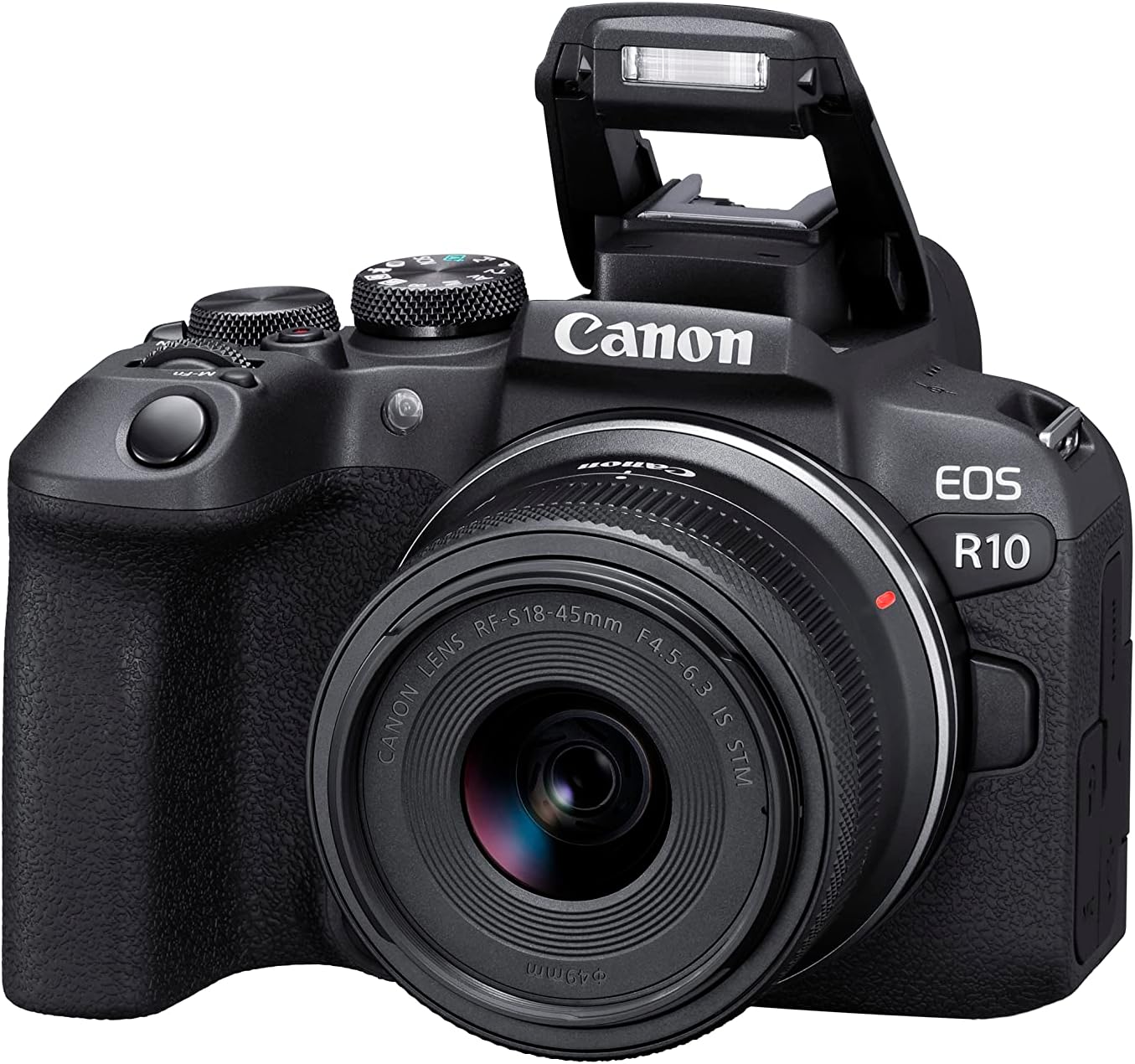
I’ve been using the Canon EOS R10 with the RF‑S 18‑45mm kit lens for a few weeks now, mainly for family stuff, a bit of YouTube-style video, and some casual wildlife and travel shots. Before this I was on a Canon DSLR that was getting old, plus my phone for quick clips. I wanted something small, quick to use, and decent in low light without going into full pro territory or carrying a huge body and lenses.
The first impression: this thing is light and compact for what it does. With the 18‑45mm lens on, it fits in a small sling bag and I’ve actually taken it with me instead of leaving it at home, which is honestly half the battle. The grip feels like a real camera, not like holding a soap bar, so shooting one‑handed is doable when you’re juggling bags or kids.
In terms of what it can do, 24.2 MP on an APS‑C sensor is plenty for prints, cropping, and general use. The big thing I noticed is the autofocus: it locks onto faces and eyes very quickly, even in a messy background. For moving kids, dogs, or birds, that’s a big upgrade from my old DSLR and obviously much better than my phone.
It’s not perfect though. The kit lens is fine for daytime and travel, but it’s not very bright (f/4.5–6.3), so indoors you hit higher ISO pretty fast. Also, there’s only one SD card slot and no in‑body stabilisation, which might be a dealbreaker for some. But for a compact hybrid camera that can do 4K and 23 fps bursts, it’s a pretty solid package if you know those limits.
Is the EOS R10 kit good value for money?
Price-wise, the R10 with the RF‑S 18‑45mm sits in that mid-range mirrorless zone: not cheap, not high-end. For the money, you’re getting fast autofocus, solid 4K video, 24.2 MP stills, and a very usable everyday zoom. If you compare it to some competitors from Sony or Nikon, it holds up well on AF speed and burst rate, and the handling will feel familiar if you’ve used Canon before. The Amazon rating around 4.7/5 lines up with my feeling: most people will be happy, as long as they know what they’re buying.
The biggest value question is the kit lens and the RF system in general. The 18‑45mm does its job: it’s small, stabilised, and sharp enough for everyday use. But it’s slow in low light, and you’ll fairly quickly hit its limits if you want shallow depth of field or shoot indoors a lot. Several reviewers mention buying another lens (like a telephoto or a 50mm) pretty early. That’s where the costs start stacking up, because Canon RF lenses, even RF‑S ones, are not the cheapest on the market.
On the positive side, you’re buying into a modern system that Canon is actively pushing, so there are new lenses coming and you’re not stuck with a dead mount. The body itself has enough features – 23 fps bursts, 4K up to 60p, good connectivity – that you probably won’t feel the need to upgrade it right away, unless you go very deep into pro work. For someone moving up from a phone or a really old DSLR, the jump in autofocus speed, video quality, and ease of sharing via Wi‑Fi is pretty big.
So in terms of value, I’d say: it’s a good but not crazy bargain. You pay a fair price for what you get. If your budget is tight and you don’t care about 4K or fast AF, there are cheaper options. If you want full-frame or serious weather sealing, you’ll need to spend more. For a compact hybrid that you can actually carry every day and grow with by adding lenses over time, it hits a sensible middle ground.
Compact body, good grip, a few layout quirks
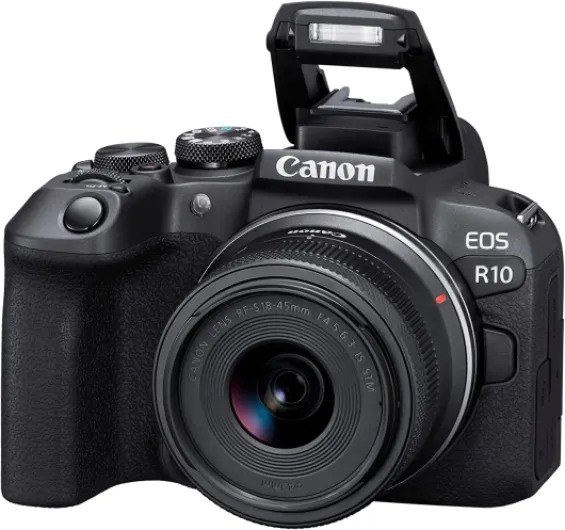
In the hand, the EOS R10 feels like a shrunken DSLR in a good way. The grip is deep enough that I never felt like I was about to drop it, even with one hand. With the 18‑45mm lens, the whole setup is small and balanced; it doesn’t feel front-heavy. I could wear it around my neck for hours without neck pain, which is not something I can say about older Canon DSLRs with heavier lenses.
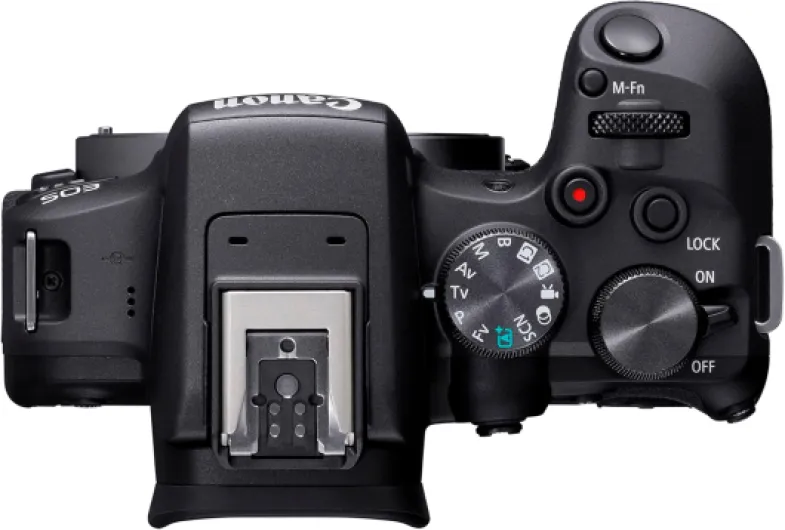
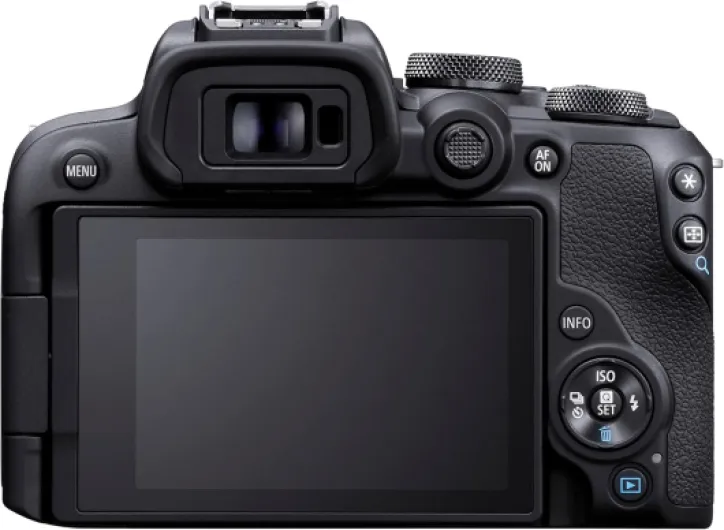
The control layout is mostly sensible. You’ve got a mode dial on top, a main command dial, and a second dial near the back, plus the joystick for AF point control. The fully articulating touchscreen flips out and rotates, so shooting low, high, or selfie-style video is straightforward. I used the touchscreen a lot to change AF points and menus, and it responds quickly. The EVF is decent: 2.36M dots, not premium-level, but clear enough to compose and check focus.
There are a few design choices I’m less into. There’s only one SD card slot, which is fine for casual use but not ideal if you’re shooting paid jobs and want backup. The micro HDMI port feels a bit fragile; I’d have preferred a full-size HDMI for serious video work. Also, no top LCD, which I expected at this price point, but if you come from higher-end DSLRs you might miss that quick exposure glance.
On the plus side, the buttons are customizable, and after a couple of days I had my usual layout set up: back-button focus, quick access to ISO and drive mode, etc. The camera doesn’t feel "cheap", but it also doesn’t feel like a tank. It’s very much a modern mid-range body: light, practical, good ergonomics, with some compromises to keep the size and cost under control.
Battery life: fine for a day out, not for heavy video shoots
The R10 uses a relatively small battery, and you can feel that in real use. For mixed shooting (a few short 4K clips, lots of photos, some chimping on the screen, and Wi‑Fi transfers), I got through roughly 300–400 shots plus a bit of video before the battery icon started to make me nervous. That’s okay for a casual day trip or an afternoon event, but if you plan to film longer YouTube videos or record a full sports match, one battery is not enough.
When I shot mostly stills, using the viewfinder more than the rear screen and turning off Wi‑Fi, the battery obviously lasted longer. I could stretch it through a full sightseeing day, but I was not spraying 23 fps bursts all the time. If you’re used to DSLRs that get 700–1000 shots per charge, this will feel like a step down. That’s pretty much the trade-off of mirrorless in general, not just Canon, but it’s worth knowing.
On the video side, 4K drains the battery fairly quickly. A couple of 10–15 minute takes plus some B‑roll and you’re basically done. For any kind of serious video use, I’d say a second battery is mandatory, maybe a third if you don’t want to think about it. The good thing is that batteries are small and easy to carry, but it’s an extra cost that doesn’t show on the box.
Charging is done with the included external charger, which I prefer over only USB charging, but I would have liked the option to charge via USB‑C directly in the camera for travel. As it stands, battery life is acceptable but not impressive. For casual photographers, it gets the job done. For heavier shooters and creators, you just plan for extra batteries and maybe a power bank with a dummy battery if you film long static stuff.
Build quality and long-term feel
In terms of build, the EOS R10 feels like a mid-range camera: mostly plastic shell but well put together. There are no creaks or weird flexing when you grip it tight, and the dials and buttons have a firm click. It’s made in Japan, and it does give a sense of decent manufacturing, even if it’s not in the same league as Canon’s higher-end weather-sealed bodies. This is more of a travel and everyday camera than something you’d throw into a war zone.
I used it in light drizzle and cold weather and didn’t have any issues, but there’s no strong weather sealing advertised, so I wouldn’t push it in heavy rain or sandstorms. The 18‑45mm lens also feels fairly basic: it’s light and compact, which is nice, but it doesn’t feel particularly tough. It’s the type of lens you treat with normal care, not something you’d want to bang around on rocks or toss loose into a backpack without protection.
The moving parts – flip screen, lens zoom mechanism, and dials – all feel smooth. The articulating screen hinge especially is something I always worry about, but on this camera it feels reasonably solid. I still wouldn’t use it as a handle, but it doesn’t feel like it will snap off with normal use. The built-in flash pops up cleanly and goes back in without drama; I don’t use it much, but it’s handy in a pinch.
Long-term, if you’re coming from older Canon gear, you probably know these mid-range bodies can last many years if you don’t abuse them. That’s my expectation here: sturdy enough for regular travel and daily use, but not a tank. If you shoot in harsh conditions or professionally in bad weather, this probably isn’t the body you rely on as your only camera. For home, holidays, city photography, and casual paid gigs, it feels reliable enough, as long as you treat it like electronics and not like a hammer.
Autofocus and burst speed: this is where it earns its keep
The main thing that stood out once I started actually shooting with the R10 is the autofocus performance. Dual Pixel CMOS AF II with subject detection is genuinely handy. For portraits and family shots, the face and eye detection lock on quickly and stay there, even when the person turns their head or moves around. I used it at a kids’ birthday party indoors with mixed lighting and it still grabbed focus reliably. Compared to my older Canon DSLR, the hit rate of sharp eyes is noticeably higher.
For action, the 15 fps mechanical and 23 fps electronic burst modes are more than enough for casual sports, pets, or wildlife. I tried it on birds in the park and some dog agility stuff; it rattles off frames fast and the buffer handled short bursts without choking, using a decent U3 SD card. The electronic shutter is silent, which is great for events or wildlife, but you can see a bit of rolling shutter if you pan very quickly or if the subject moves across the frame fast.
Video performance is also pretty solid for this level. 4K/30p oversampled from 6K looks clean and detailed, better than simple line-skipped 4K you get on some cheaper cameras. 4K/60p is there if you want smoother motion, though you do have to keep an eye on crop and settings depending on the mode. The continuous AF in video tracks faces and eyes well, and the STM lens focuses quietly enough that you don’t hear annoying whirring in normal indoor conditions.
Low light is decent but not magic. The ISO goes up to 32,000 (expandable to 51,200), and I found up to ISO 6400 very usable, 12,800 still okay with some noise reduction. The limiting factor is really the kit lens’s slow aperture; indoors in the evening you’re often at high ISO or slower shutter speeds than you’d like. Once I put a faster lens on (like a brighter prime), the sensor and AF showed their strength a lot more. So performance-wise, the body is strong, but the kit lens slightly holds it back in darker situations.
What you actually get with the EOS R10 kit
Out of the box, you get the EOS R10 body, the RF‑S 18‑45mm f/4.5‑6.3 IS STM lens, a battery, charger, and the usual strap and paperwork. No SD card, no bag, no extra battery. So be ready to buy at least a U3 SD card and ideally a second battery if you plan to shoot a full day. The camera weighs about 510 g with the lens, so overall it feels closer to a larger compact than to a chunky DSLR.
The body is an APS‑C RF-mount camera with 24.2 MP, Dual Pixel CMOS AF II, and it can shoot up to 15 fps with the mechanical shutter or 23 fps with the electronic shutter. Video-wise, you get 4K up to 60p and 1080p if you want higher frame rates. Files are MP4 for video and you can shoot JPEG, RAW, and C‑RAW for photos. There’s Wi‑Fi and Bluetooth built-in so you can hook it up to your phone for remote control and quick transfers.
The bundled RF‑S 18‑45mm lens covers a basic zoom range: on APS‑C it’s roughly 29–72 mm full-frame equivalent. So it’s good for everyday stuff: streets, family, travel, a bit of product or food shots, but not ultra-wide and not telephoto. It has optical stabilisation, which helps a lot since the camera itself doesn’t have IBIS. The STM motor is pretty quiet for video, which is nice if you record in a silent room.
Overall, this kit is clearly aimed at people moving up from a phone or an older Canon DSLR who want a small hybrid camera. You get most of the modern Canon AF tricks (face/eye/animal/vehicle detection) in a compact package. The flip side is you’re locked into Canon RF/RF‑S lenses, and those can get pricey once you start wanting brighter glass or more reach. So as a starter combo it’s solid, but you’ll probably want at least one extra lens down the line.
Pros
- Fast and reliable autofocus with face/eye/subject detection for both photo and video
- Compact and lightweight body with a useful flip-out touchscreen and comfortable grip
- Good 4K video quality and high burst rates (up to 23 fps) for action and hybrid shooting
Cons
- Kit lens is slow in low light and limits background blur
- No in-body stabilisation and only one SD card slot
- Battery life is average, especially for heavy 4K video use
Conclusion
Editor's rating
After spending time with the Canon EOS R10 and the RF‑S 18‑45mm kit lens, my overall feeling is pretty straightforward: it’s a very capable everyday camera with a few clear limits. The body itself is the strong part: fast autofocus with face and eye detection, decent 24.2 MP image quality, 4K video that looks clean, and a compact design that you actually feel like carrying around. For travel, family, casual sports, and YouTube‑style content, it does the job without being a pain to use.
The weak spots are mostly around the kit lens and some missing features. The 18‑45mm is fine in good light and nice for its size, but it’s not great in low light and doesn’t give you much background blur. There’s no in‑body stabilisation and only one SD card slot, and the battery life is okay but not great, especially if you do a lot of 4K video. None of these are dealbreakers for a typical hobbyist, but if you’re planning serious paid work or heavy video use, you’ll want extra batteries, better lenses, and maybe even a higher-end body down the line.
I’d recommend the R10 kit to people who want to step up from a phone or old DSLR into a modern mirrorless world: travellers, parents, content creators starting out, and enthusiasts who like fast AF but don’t need pro-level build. If you already own lots of Canon EF lenses and want to adapt them, or you know you need strong weather sealing, dual card slots, or full-frame performance, I’d look higher up the range. For most regular users though, it’s a pretty solid, no-nonsense hybrid camera that gets a lot right and only really stumbles if you push it into more demanding, pro-style use.