
Summary
Editor's rating
Value for money: worth it if you know what you’re buying
Design and handling: small body, surprisingly usable controls
Battery life and connectivity: carry a spare and you’re fine
Build quality and renewed condition: feels solid, but check what you receive
Image quality and autofocus: great in daylight, struggles in the dark
What this camera actually offers (without the brochure talk)
Pros
- 30x optical zoom in a genuinely pocketable body
- Pop-up OLED viewfinder and tilting LCD make it usable in bright light and awkward angles
- Good daylight image quality and decent 1080p video for travel and casual use
Cons
- Small older sensor struggles in low light compared to modern phones and larger cameras
- No 4K video, no touch screen, and somewhat dated Wi‑Fi/app experience
- Battery life is only average, especially with GPS enabled, so a spare battery is almost mandatory

Specifications
View full product page →| Brand | Sony |
A compact travel zoom I actually want to carry
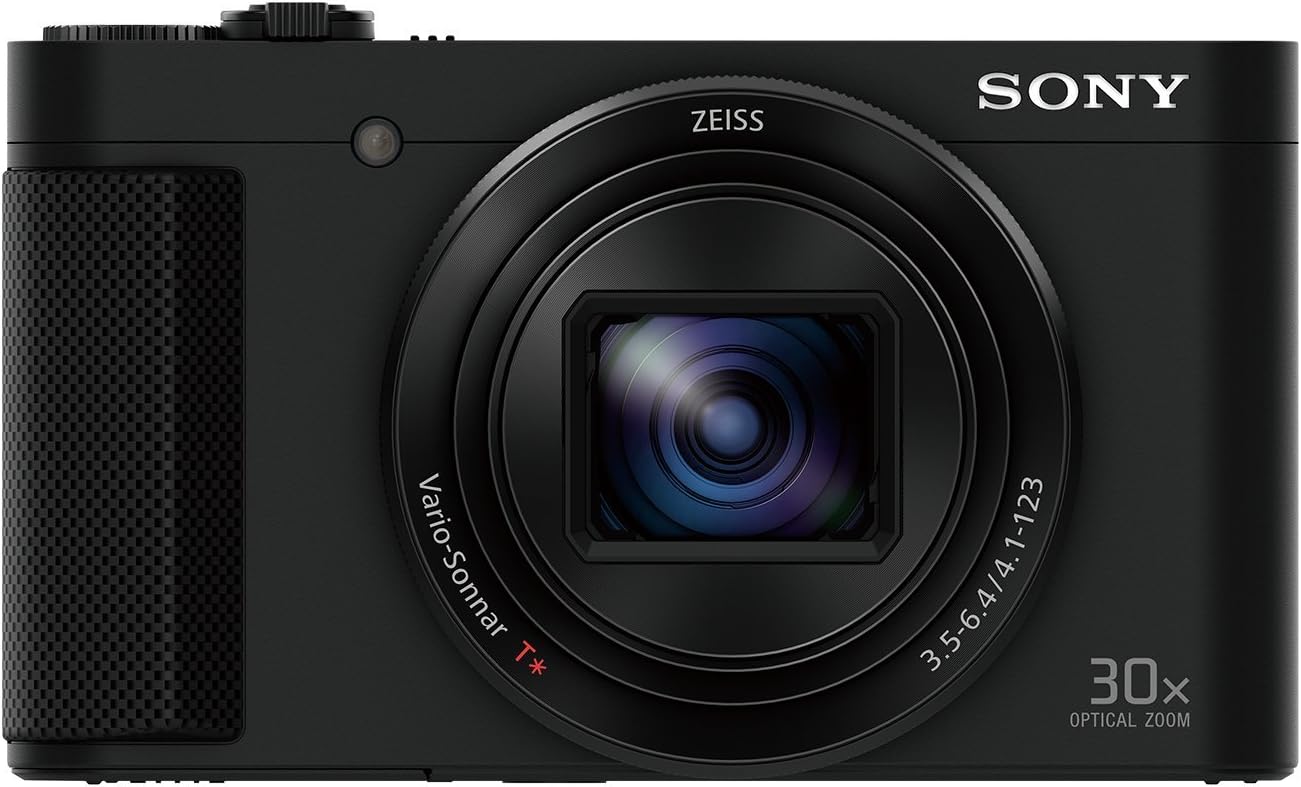
I picked up this renewed Sony DSC-HX90V mainly as a small travel camera, because I was tired of always pulling out my phone and missing proper zoom shots. I didn’t want to spend the price of a new camera, so the renewed option looked like a decent compromise. I’ve used it for a couple of weeks on walks, a weekend trip, and some casual family shots to see if it’s still worth buying in 2026.
First thing: this is not a new model. It’s an older compact with a 30x zoom (24–720mm equivalent) and an 18.2MP 1/2.3-inch sensor. So you shouldn’t expect miracles in low light or pro-level image quality. But I was mainly looking for something small, with a viewfinder, proper zoom, and better handling than a phone. On that, it delivers pretty well.
Because it’s a renewed unit, I was a bit nervous about condition and reliability. In practice, mine arrived clean, no visible scratches on the lens, and the body only had tiny marks you only notice if you look for them. Functionally, everything worked: zoom, pop-up viewfinder, pop-up flash, Wi‑Fi, GPS, tilting screen. It feels more like a lightly used camera than a heavily refurbished one.
Overall, after these first weeks, my feeling is simple: it’s a handy little travel camera with clear strengths (zoom, viewfinder, portability) and predictable weaknesses (low light, small sensor). If you go in with that mindset and don’t expect DSLR quality, it’s a pretty solid tool. If you’re picky about image quality, you might want to think twice or look at bigger-sensor compacts instead.
Value for money: worth it if you know what you’re buying
In terms of value, this renewed Sony DSC-HX90V sits in an interesting spot. You’re not paying new-camera prices, but you’re also not getting the latest tech. What you do get is a compact body with a serious zoom, a proper viewfinder, GPS, and decent stills and video quality in good light. If you tried to match that feature set with a new compact from a big brand, you’d likely pay noticeably more, especially for the viewfinder and 30x zoom combo.
Where the value is strongest is for travel and general photography. Compared to using just a phone, the zoom alone is a big upgrade. Being able to pull in distant details or compress a scene at 720mm is something most phones still can’t really mimic, at least not without heavy digital zoom and mushy detail. If that matters to you, this camera earns its place in your bag. If you mostly shoot wide or standard focal lengths and rarely zoom, a newer phone or a simpler compact might make more sense.
On the downside, you’re accepting older tech: no 4K video, small sensor, mediocre low-light performance, non-touch screen, and a slightly clunky app experience. If you’re picky about image quality and often shoot in dim conditions, you might be better off saving for a larger-sensor compact or a basic mirrorless kit. There’s also the usual renewed risk: even with checks and warranty, you’re still buying something that has already lived one life.
For me, the balance is this: if you want a pocketable travel zoom with a viewfinder and don’t care about 4K or cutting-edge low-light performance, the price of a renewed unit feels fair. If you’re more into serious photography, printing large, or low-light shooting, I’d see this more as a backup or casual camera rather than your main tool. So value is good, but very dependent on your expectations and how much you prioritize zoom and portability over pure image quality.
Design and handling: small body, surprisingly usable controls
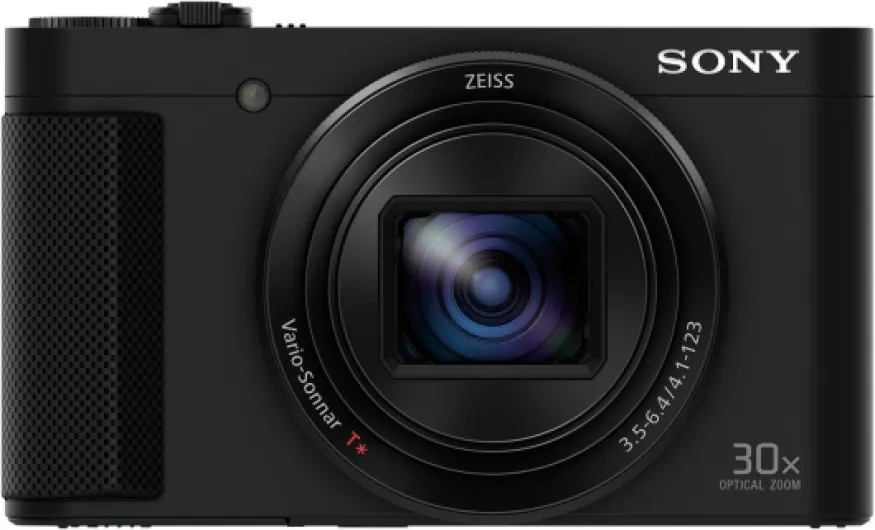
Design-wise, the DSC-HX90V is properly compact. It fits in a coat pocket or a small bag without any issue, and even in jeans pockets if you don’t mind the slight bulge. The weight (around 218g) is light enough that you barely notice it on a strap. For travel or daily carry, that’s a big plus. Compared to a mirrorless body with a zoom lens, this thing feels like a toy in terms of size, in a good way.
Despite the small body, Sony managed to squeeze in a decent grip and a control ring around the lens. I found the grip usable with my medium-sized hands, though my pinky tends to hang off the bottom. The control ring can be assigned to various settings (zoom, aperture, etc.), and once you set it up the way you like, it makes the camera faster to use. Buttons are small but not unbearable. The mode dial is firm enough that it doesn’t turn by accident in your bag, which is nice.
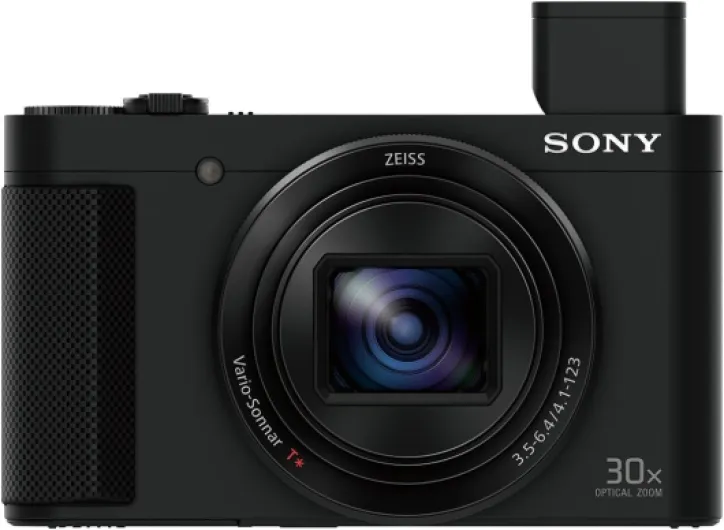
The pop-up OLED viewfinder is one of the main reasons I wanted this model. You slide a switch, it pops up, and then you pull it back a bit to extend the eyepiece. It’s a bit of a two-step dance at first, but you get used to it quickly. For shooting in bright sun, it’s a real advantage over screen-only compacts. The image in the EVF is not huge, but it’s clear enough and lets you actually compose without guessing. The fact that it retracts flush into the body keeps the camera pocketable.
The tilting LCD screen is also handy. It flips up for selfies or vlogging-style framing and tilts down a bit for shooting above your head. It’s not fully articulated to the side, but for travel use it’s fine. The downside: the screen is not touch-sensitive, so you still rely on buttons and dials for focus selection and menu navigation. Overall, the design is a good compromise between size and usability, but if you have very large hands, you might find it a bit cramped for longer sessions.
Battery life and connectivity: carry a spare and you’re fine
Battery life on this camera is okay but not great. It uses a small battery, and with the viewfinder, GPS, and Wi‑Fi all possible, it drains faster than a basic point-and-shoot. In my use, with mixed LCD and viewfinder shooting, some GPS tagging, and a few short video clips, I was getting roughly 200–250 shots per charge before it started to feel risky. If you shoot a lot of video or leave GPS on constantly, expect less.
This is where I’d say: just budget for at least one spare battery. For a full day of sightseeing, having a second battery in your pocket makes a big difference. Swapping batteries is quick and simple, and the camera doesn’t feel like it’s guzzling power insanely fast, but it’s not a long-distance runner either. For short outings or casual use, one battery is fine. For travel days, two is more comfortable.
On the connectivity side, you get Wi‑Fi and NFC for transferring images to your phone or tablet. It works, but it’s not as smooth as modern systems. You have to connect via Sony’s app, which feels a bit dated. Once it’s set up, though, sending a few JPEGs to your phone for quick sharing is straightforward enough. I wouldn’t rely on it to dump hundreds of photos, but for a handful of favorites it’s perfectly workable.
The GPS is a nice extra if you like geotagging. It tags your photos with location data, and later you can see your route on a map with software like Sony’s PlayMemories or even in tools that read GPS EXIF data. The downside is extra battery drain and sometimes slower satellite lock if you move between locations quickly. I ended up using GPS only on proper outings where I cared about the map, and turning it off the rest of the time. In summary: battery life is acceptable if you’re prepared and use GPS wisely; Wi‑Fi is handy but a bit old-school.
Build quality and renewed condition: feels solid, but check what you receive
Considering it’s a compact camera with a retractable lens and pop-up viewfinder, the build feels pretty solid for the size. The body is mostly plastic with some metal touches, but nothing feels flimsy. The zoom mechanism is smooth, the viewfinder pops up and retracts cleanly, and the tilting screen doesn’t wobble excessively. It’s not a rugged camera, though: no weather sealing, no shock protection. So you still need to treat it like electronics, not like an action cam.
On the renewed side, my unit arrived in good cosmetic condition. Light micro-scratches on the body, nothing on the lens glass, no dust specks obvious in photos. Buttons all worked, the zoom was quiet, and the EVF and flash both popped up properly. It didn’t feel abused or heavily used. Of course, with renewed gear, there’s always some variation, so I’d say: when you get it, test everything in the first days—zoom through the full range, fire the flash, try the EVF multiple times, check Wi‑Fi and GPS if you plan to use them.
One thing to keep in mind: moving parts can wear over time. Pop-up mechanisms, zoom barrels, and small dials are the first to show issues if a camera has had a rough life. In my case, nothing felt loose or worn out. The lens didn’t show any weird grinding noises or obvious decentering. For a renewed unit, that’s reassuring. Still, this is not a camera I’d throw loose in a bag with keys and coins. A basic padded case is a good idea if you want it to last.
Overall, for an older compact, durability seems reasonable as long as you treat it with some care. It’s not built like a tank, but it doesn’t feel cheap either. The one-year limited warranty on the renewed listing adds a bit of safety net, but personally I’d still do a full functional check in the first week and return it if anything feels off. If it passes that initial test, I’d expect it to handle regular travel and family use without drama.
Image quality and autofocus: great in daylight, struggles in the dark
Let’s be blunt: this is a small 1/2.3-inch sensor camera from an older generation, so you can’t expect miracles. In good light, though, the results are honestly pretty solid. At lower ISO values (80–400), photos look sharp enough, colors are decent, and dynamic range is okay for casual use. For travel shots, family photos outdoors, and general daytime use, I was happy with what I got. The 18MP resolution is plenty for social media, small prints, and even some larger prints if you don’t crop too aggressively.
When the light drops, things get more complicated. Indoors or at night, noise creeps in quickly and the camera tends to push ISO up to keep the shutter speed reasonable, especially at the long end of the zoom where the lens is slower (f/5.6). You can help it a bit by using the built-in flash or by keeping the zoom shorter, but it’s still not a low-light beast. Compared to a modern phone with aggressive computational processing, the phone might actually win in some darker situations, especially for static scenes.
Autofocus is fast enough for casual shooting. In good light, it locks focus quickly and accurately most of the time. Tracking moving subjects like kids running or birds is hit-or-miss, especially at high zoom; it will get some shots right, but don’t expect sports-camera performance. The continuous shooting spec (up to around 10 fps in burst, despite the 30 fps confusion in the listing) is handy, but the buffer fills and slows down if you keep the shutter pressed too long. For short bursts, it’s okay.
Video quality at 1080p is clean, with decent detail and usable stabilization, especially at moderate zoom. At full 30x, you still need a steady hand or a support. Autofocus during video is generally fine, but you can see it hunting a bit in lower light or with complex scenes. For simple travel clips and family videos, it gets the job done. If you’re used to 4K and higher bitrates, you’ll obviously see the difference, but for basic use it’s acceptable. Overall, performance is very good in daylight, average in low light, and fine for casual video.
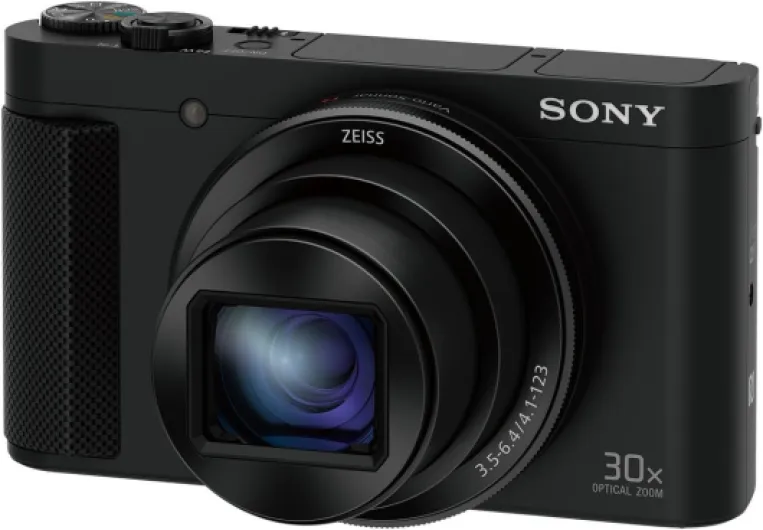
What this camera actually offers (without the brochure talk)
On paper, the Sony DSC-HX90V ticks a lot of boxes: 18.2MP sensor, 30x optical zoom, pop-up OLED viewfinder, tilting 3-inch screen, GPS, Wi‑Fi, NFC, Full HD video, and a bunch of modes (Program, Aperture Priority, Shutter Priority, Manual, plus scene modes). For a compact that fits in a jacket pocket, it’s pretty loaded. This renewed version doesn’t change any of that; it’s basically the same camera, just pre-owned and checked.
In day-to-day use, the main thing you notice is the zoom range. Going from 24mm wide to 720mm equivalent lets you cover almost everything: buildings, landscapes, portraits, and far-away details like signs or animals in the distance. The camera also has optical image stabilization, which clearly helps at the long end; without it, most shots at 720mm would be a blurry mess. It’s not magic, but it makes long-zoom shots usable if you’re not shaking like crazy.
For video, it tops out at 1080p (XAVC S, AVCHD, MP4). No 4K here, and if you’re used to modern phones, that feels a bit dated. That said, the 1080p footage looks clean enough for casual use, travel clips, and social media. The built-in GPS is a nice extra if you like to see where you took your photos on a map later; it tags the files automatically. Just know it can drain the battery faster if you leave it on all the time.
The renewed listing I got included camera body and battery only, no memory card and no strap in my case, so don’t expect a full kit unless clearly stated. You’ll need at least an SD card (UHS‑I works fine) and ideally a spare battery. In short, it’s a compact travel zoom with a good feature set for stills and decent video, but not a modern hybrid camera. If you’re okay with that, it’s a practical little package.
Pros
- 30x optical zoom in a genuinely pocketable body
- Pop-up OLED viewfinder and tilting LCD make it usable in bright light and awkward angles
- Good daylight image quality and decent 1080p video for travel and casual use
Cons
- Small older sensor struggles in low light compared to modern phones and larger cameras
- No 4K video, no touch screen, and somewhat dated Wi‑Fi/app experience
- Battery life is only average, especially with GPS enabled, so a spare battery is almost mandatory
Conclusion
Editor's rating
The renewed Sony DSC-HX90V is basically a compact travel zoom that still makes sense if you know its limits. The strong points are clear: 30x optical zoom in a genuinely pocketable body, a handy pop-up viewfinder for bright light, a tilting screen, GPS tagging, and decent 1080p video. In good daylight, the photos look clean and sharp enough for most casual use, and the zoom lets you get shots that phones still struggle with. As a lightweight camera for trips, hikes, or family outings, it’s very practical.
On the flip side, it’s an older design with a small sensor. In low light, noise and softer detail show up quickly, and phones with strong computational photography can sometimes beat it for night scenes. No 4K video, no touch screen, and the app experience feels dated. You also have the usual renewed uncertainty, even if the condition and one-year warranty help a bit. It’s not a camera for pixel peepers or for people who mainly shoot indoors in dim light.
If you’re a traveler, casual shooter, or someone who just wants a proper zoom and a viewfinder without spending a fortune, this renewed HX90V is pretty solid value. If you’re more serious about photography, want the best possible image quality, or care about modern video features, you should probably skip this and look at bigger-sensor compacts or entry-level mirrorless kits instead.