
Summary
Editor's rating
Value for money: pricey, and only worth it if you use what it offers
Design: pocketable but a bit slippery
Battery life: acceptable but you’ll want a spare
Durability and build: solid feel, but not a tank
Performance: autofocus and burst speed are the real selling points
What this camera actually is (and isn’t)
Pros
- Fast and reliable autofocus with eye tracking and subject tracking
- Versatile 24–200mm zoom in a genuinely pocketable body
- Good 4K video with mic input and tilting screen for vlogging or travel
Cons
- High price for a compact, especially given the 1‑inch sensor
- Battery life is only average and basically requires at least one spare for long days
- Smooth, small body can be uncomfortable and a bit slippery without a grip or case

Specifications
View full product page →| Brand | Sony |
A very expensive way to stop using your phone camera
I’ve been using the Sony RX100 VII for a few weeks now, mainly for walks, trips, and the usual family stuff (kids, pets, random city shots). I bought it knowing it was old and still pricey, but I wanted something small that actually behaves like a real camera, not just a backup for my phone. I came from a mix of a full-frame mirrorless and a decent smartphone, so my expectations were pretty clear: if this thing didn’t beat my phone in most situations, it was going back.
The first impression is basically: tiny body, serious features. It looks like a compact from the outside, but once you start shooting, it behaves more like a cut‑down mirrorless. The autofocus, burst speed, and the 24–200mm zoom are what stand out immediately. It locks focus on faces and eyes fast, and it feels made for situations where things move quickly: kids running, birds, street scenes. This is where it pulls ahead of a phone in a very obvious way.
That said, it’s not perfect. The sensor is still a 1‑inch one, so in low light you can’t expect DSLR or full‑frame quality. Indoors in bad light, your phone with aggressive processing can sometimes look cleaner at first glance, especially if you’re just scrolling on a screen. Also, the menu system is dense, and you need to sit down for at least an evening to set it up the way you like. If you hate fiddling with menus, this will annoy you at the start.
Overall, after a few weeks, I get why people keep buying this even if it’s not new anymore. It’s basically for people who know a phone is fine, but want more control, a real zoom, and a viewfinder in a body that still fits in a jacket pocket. It’s expensive for a compact, and there are cheaper options, but if you actually use the autofocus, burst mode, and zoom range, it starts to feel less like a toy and more like a serious tool in a small shell.
Value for money: pricey, and only worth it if you use what it offers
The RX100 VII is not cheap, especially considering it’s an older model now. You can get an entry‑level mirrorless body with a kit lens for similar money, or a phone upgrade that will also improve your day‑to‑day life. So the big question is: is this little camera worth the asking price? For me, the answer is “yes, but only if you actually use its strengths regularly”. If you just want nicer photos than your phone in good light, there are cheaper compacts or even mid‑range phones that will get you close enough.
Where the value starts to make sense is if you often find yourself in situations like concerts, kids’ performances, travel, or street shooting where you need: a real zoom, a viewfinder, fast AF and burst, and removable batteries. One Amazon reviewer nailed it listing those use cases. In those scenarios, phones simply don’t compete, and cheaper compacts don’t have the same AF or 4K features. If these points matter to you, the RX100 VII becomes more like a pocketable tool than just another gadget, and then the price is easier to swallow.
On the other hand, if you mostly shoot static scenes, landscapes on holidays, or indoor family shots where people are sitting around, you’re probably paying for features you won’t really exploit. A cheaper RX100 from an older generation, or even a different brand’s travel zoom, might give you 70–80% of the experience for a lot less money. Also, the 1‑inch sensor has limits; for the same price, an APS‑C camera will give you better low‑light and more room to grow with lenses, at the cost of size and convenience.
So in terms of value, I’d say: good value if you know exactly why you want it, and mediocre value if you’re just vaguely “upgrading from a phone”. It’s a specialist tool in a compact body. If you match its strengths to your needs (fast AF, zoom, viewfinder, small size), it feels like money well spent. If you don’t, it will just feel like an expensive toy that doesn’t look that different from your phone on Instagram.
Design: pocketable but a bit slippery
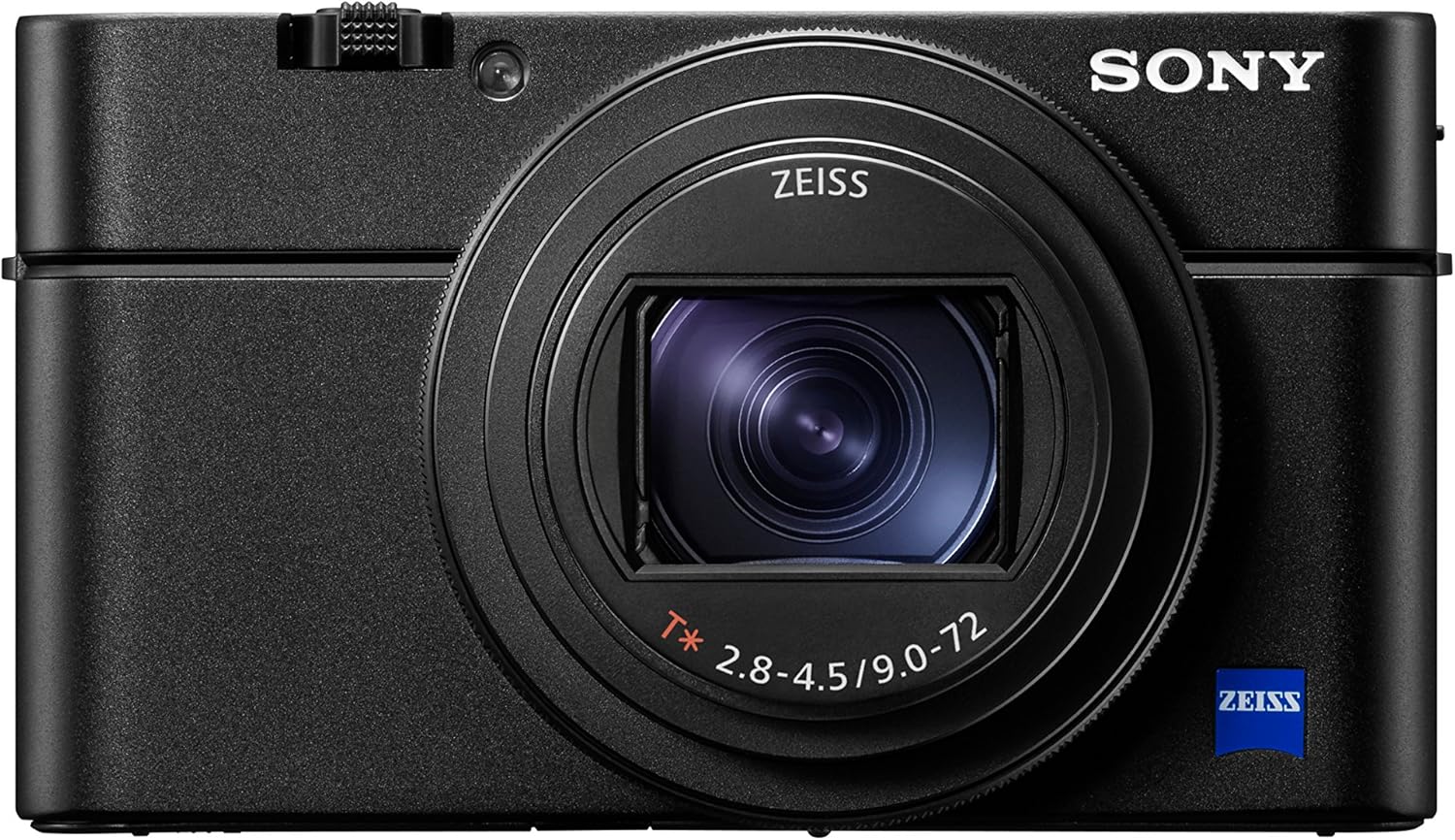
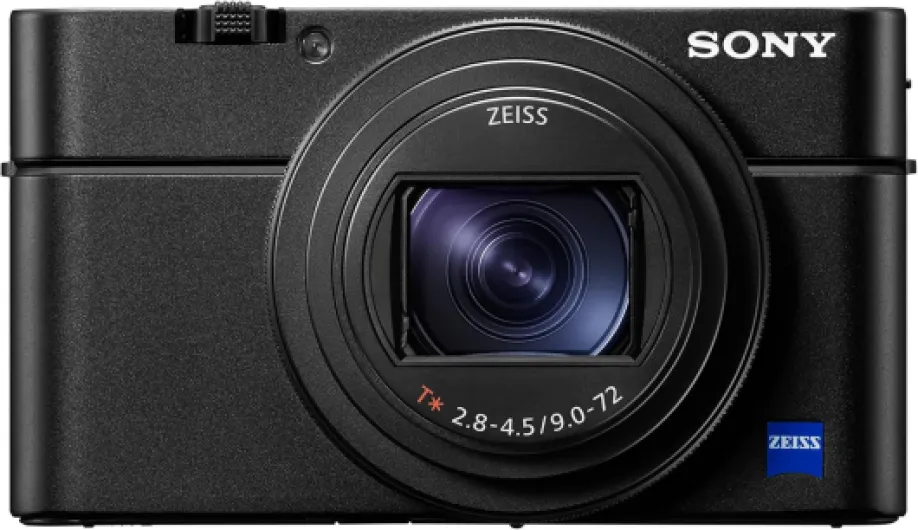
Design-wise, the RX100 VII is very compact and very dense. It’s around 0.45 kg, which feels heavier than it looks, but in a good way. It fits easily into a jacket pocket or a small bag, and that’s honestly one of its biggest strengths: you actually take it with you. Compared to carrying even a small mirrorless with a zoom lens, this is much less of a hassle. I found myself grabbing it for quick walks where I wouldn’t have bothered with a bigger camera.
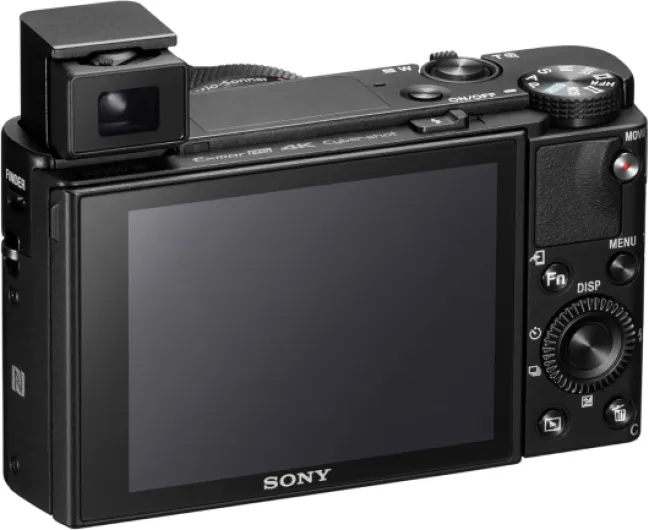
The layout is a mix of smart and slightly annoying. You get a pop‑up EVF on the top left, a small built‑in flash, a mode dial, and a control ring around the lens. On the back, there’s the tilting LCD and the usual Sony buttons. The viewfinder is actually usable, not just a gimmick. It’s especially helpful in bright daylight or in dark concert halls where you don’t want a glowing screen bothering people behind you. The one‑push pop‑up mechanism is neat, but it’s still a bit of a two‑step motion (pop up + pull out), so it’s not as quick as a fixed EVF.
The downside: the body is quite smooth and doesn’t have a chunky grip. After a bit of shooting, I started to wish for either a small add‑on grip or at least some grippier texture on the front. Holding it one-handed feels slightly risky, especially at 200mm where any tiny shake is more obvious. The buttons are also small, and if you have big hands, you’ll occasionally mis-press something at first. It gets better with muscle memory, but it’s not as comfortable as a bigger body.
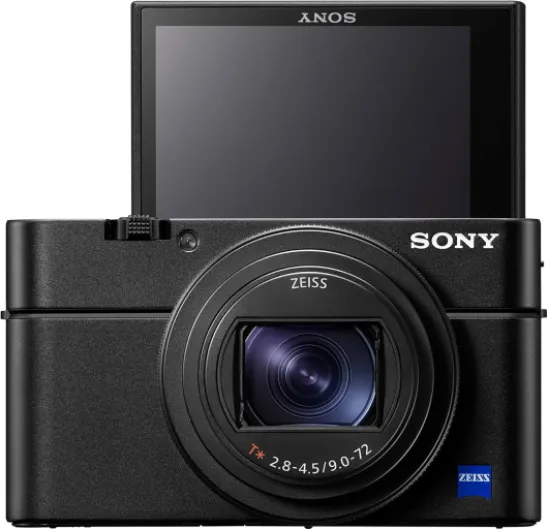
On the positive side, the tilting screen goes up 180° for selfies or vlogging and tilts down for overhead shots, which is actually useful. The mic jack is tucked on the side, so you can plug in a small shotgun or lav mic without blocking the screen. Overall, the design is focused on portability first, comfort second. If your priority is pocket size, it’s great. If you like a big grip and lots of physical dials, you’ll probably find it a bit fiddly and might want a small grip accessory or a case to improve handling.
Battery life: acceptable but you’ll want a spare
Battery life on the RX100 VII is fine but not great. It’s a small camera with a small battery, so you can’t expect DSLR‑level endurance. In my use, shooting a mix of stills and short clips, I was getting roughly a few hundred shots per charge, depending on how much I used the screen and Wi‑Fi. If you hammer the burst mode and 4K video, you will drain it faster. It’s not unusable at all, but you do need to think about it a bit more than with a bigger camera.
One nice thing is that the batteries are removable and small, so carrying one or two spares is easy. They’re not super expensive either, especially if you go for third‑party ones, though I tend to use at least one official Sony battery to be safe. For longer days out or a trip, I just throw a spare in the bag and don’t really worry. Also, you can charge the camera via USB, which is handy when travelling: just plug it into a power bank or wall charger like a phone.
There’s also a practical trick that helps: turning on Airplane Mode. With Bluetooth and Wi‑Fi off, standby drain is noticeably lower, and I got more life out of each charge. If you don’t constantly transfer photos to your phone, this setting is worth leaving on by default. The EVF also uses less power than the rear screen, so if you like shooting through the viewfinder, that helps a bit too.
Overall, I’d call the battery life “decent but nothing more”. It gets the job done for a casual day of shooting if you’re not filming tons of 4K. But if you’re planning a full day event (wedding as a guest, long hike, or heavy video use), a spare battery is basically mandatory. It’s not a deal breaker, just something you need to factor into the real cost and how you plan to use the camera.
Durability and build: solid feel, but not a tank
The RX100 VII feels sturdy for its size, but it’s still a compact with moving parts, so I wouldn’t abuse it. The body has a metal feel and doesn’t creak or flex, and the lens mechanism feels fairly tight when extending and retracting. After a few weeks of regular use (bag, jacket pocket, quick draws, etc.), I didn’t notice any play in the lens or loose panels. The buttons and dials still feel crisp. It gives the impression of a well‑built little brick rather than a cheap plastic compact.
However, there’s no official weather sealing, and you can tell. This isn’t a camera I’d happily use in heavy rain or a dusty environment without some care. I got caught in a light drizzle once and just kept it under my jacket between shots. It survived fine, but I wouldn’t push my luck. The pop‑up EVF and flash are also small mechanical parts that can, in theory, be more fragile if you’re rough with them or drop the camera. I’m careful when popping the EVF up and down and don’t slam it shut.
One practical thing: because the body is smooth and compact, it’s more likely to slip out of your hand than a big grippy DSLR. I highly recommend at least a wrist strap or a small case. I used a compact case (similar to what one reviewer mentioned with the Canboc type) that fits the camera, charger, and spare battery; it made me a lot less nervous about tossing it in a bag. The lens also sits quite close to the front, so I try not to keep it loose with keys or anything that could scratch it.
In short, the durability feels pretty solid for normal use, but this is not a rugged camera. Treat it like a nice piece of electronics, not like a GoPro. If you’re careful, it should last several years easily. If you’re the type who drops things often or wants to shoot in heavy rain, snow, or sand, this wouldn’t be my first choice without some protection or a backup plan.
Performance: autofocus and burst speed are the real selling points
This is where the RX100 VII actually justifies a good chunk of its price. The autofocus is very fast and very sticky for a compact. With 357 phase‑detect points and Sony’s Real‑time Eye AF and tracking, it behaves much more like a small mirrorless than a typical point‑and‑shoot. In real life, that means it locks onto faces and eyes quickly, follows kids moving around a room, and even tracks birds in flight reasonably well for this class of camera. I had far fewer missed focus shots compared to older compacts I’ve used.
The continuous shooting at up to 20 fps with AF/AE tracking is frankly overkill for casual users, but it’s nice to have. I used it for birds and for a small sports event, and it gave me plenty of frames to choose from. The camera is doing AF/AE calculations up to 60 times per second, which you can feel when you half‑press the shutter and see the boxes lock onto subjects. For action, this is where it clearly beats a phone, which tends to lag or misfocus when things move quickly across the frame.
Image quality is solid for a 1‑inch sensor. At low to mid ISO (100–800), JPEGs look sharp, with good detail and colors that are a bit on the punchy side but still look natural enough. You can crop a fair bit, especially at 200mm, and still get usable shots for prints or social media. Once you push ISO above 3200, noise becomes more visible, and the camera’s noise reduction starts to smear fine detail. Indoors in bad light, you’re better than a lot of phones in terms of real detail, but the difference isn’t night and day when just viewed on a small screen.
Video performance is also strong. It does 4K with full pixel readout, has Real‑time Eye AF in video, and the mic jack is a big plus if you want better audio. For vlogging or travel videos, it’s more than enough. Rolling shutter is there if you pan too fast, and stabilization is digital, so it’s decent but not magic. Overall, performance is the main reason to buy this over cheaper compacts: fast AF, good tracking, solid 4K, and a zoom range that covers most everyday needs. If you mostly shoot static scenes or only care about basic snaps, you’re probably overpaying for features you won’t really use.
What this camera actually is (and isn’t)
The RX100 VII is a premium compact camera with a 1‑inch 20 MP sensor and a built‑in 24–200mm equivalent zoom lens (f/2.8–4.5). It shoots stills and video, does 4K, has a pop‑up electronic viewfinder, a tilting touchscreen, and even a 3.5 mm mic jack. On paper, it reads like a mini travel and vlog camera crammed into something that still fits in a pocket. Sony clearly built it for people who want serious features but refuse to carry a big body and separate lenses.
In practice, the main things that define this camera are: the zoom range, the autofocus, and the size. 24–200mm covers a lot: wide enough for landscapes and city scenes, long enough for kids on a stage, wildlife at a distance, and general travel. The autofocus uses 357 phase-detect points, eye detection for humans and animals, and tracking that actually follows a face or subject around the frame. It also shoots up to 20 fps with AF/AE tracking, which is frankly more than most people will ever need, but it’s handy if you shoot sports, birds, or kids.
Where it’s more limited is the sensor size and ergonomics. The 1‑inch sensor is bigger than a phone but smaller than APS‑C or full frame, so low light and background blur are decent but not mind‑blowing. Also, the body is small and smooth, with no big grip. This makes it pocketable but not the most comfortable camera to hold for long sessions, especially if you’re used to a DSLR. Sony also went with a built‑in lens and no hot shoe on this version, so you’re locked into this lens and you can’t easily mount a big external flash or accessories on top.
So, what it isn’t: it’s not a cheap entry camera, not a low‑light monster, and not a replacement for a full system if you’re really into lenses and big prints. What it is: a high‑end point‑and‑shoot for people who care about control and AF performance, and a solid travel / everyday camera when you’re tired of dragging a big body and lens around but still want something clearly better than a phone.
Pros
- Fast and reliable autofocus with eye tracking and subject tracking
- Versatile 24–200mm zoom in a genuinely pocketable body
- Good 4K video with mic input and tilting screen for vlogging or travel
Cons
- High price for a compact, especially given the 1‑inch sensor
- Battery life is only average and basically requires at least one spare for long days
- Smooth, small body can be uncomfortable and a bit slippery without a grip or case
Conclusion
Editor's rating
The Sony RX100 VII is a powerful compact camera aimed at people who are serious enough about photos and video to care about autofocus, zoom range, and manual control, but who don’t want to carry a big camera. The main strengths are clear: fast and reliable AF with eye tracking, a very useful 24–200mm zoom, strong 4K video features, and a real viewfinder in a body that fits in a pocket. In everyday use, it handles kids, pets, travel, and casual wildlife far better than a phone, especially when things move quickly or are far away.
It’s not perfect. Low‑light performance is good for a 1‑inch sensor but still limited compared to bigger cameras. The body is small and a bit slippery, battery life is only okay, and the price is high for a compact, especially considering its age. If you mostly shoot static scenes in good light and don’t care about a viewfinder or burst shooting, you’re probably overspending here. Cheaper cameras or even a solid phone will be enough.
I’d recommend the RX100 VII to people who already like using a camera, want something much smaller than a DSLR or mirrorless, and know they’ll use the AF, burst, and zoom range regularly—parents at school events, travellers who hate bulk, and casual wildlife or street shooters. If you’re on a tight budget, mainly shoot indoors, or just want a simple upgrade from your phone, I’d skip this and look at cheaper compacts or an entry mirrorless instead.