
Summary
Editor's rating
Value: decent deal if you accept its limits
Design: light, plasticky, but easy to handle
Battery: AA convenience with the usual downsides
Durability: feels cheap but survives everyday use
Performance: fine for daylight, weak in low light and video
What you actually get in this FZ45 bundle
Pros
- Very simple to use: point‑and‑shoot with clear buttons and auto modes
- Runs on AA batteries, so you can buy power anywhere and don’t depend on proprietary chargers
- Bundle includes a 32GB Class 10 memory card and batteries, so you can start using it immediately
Cons
- Image quality drops quickly in low light with noticeable noise and blur
- Video is limited to 720p, which feels outdated compared to phones and newer cameras
- Build feels cheap and plasticky, with a small, low‑resolution screen

Specifications
View full product page →| Brand | KODAK |
A cheap little camera when you don’t want to use your phone
I’ve been using the Kodak PIXPRO FZ45 bundle for a couple of weeks, mainly for family stuff and a short weekend trip. I bought it because I wanted something my kids could use without worrying about them dropping my phone or messing with a pricey camera. So this is coming from a normal user point of view, not a pro photographer. I’ve used compact cameras before and obviously I use my phone a lot, so I had some idea of what to expect.
In practice, this thing is very much a basic point‑and‑shoot. You turn it on, point it at whatever you want, half‑press to focus, and click. No complicated menus, no crazy settings. If you’re used to modern smartphones, the image quality won’t blow you away, but for casual prints, social media, and holiday snaps, it’s fine. The bundle with the 32GB card and AA batteries is convenient because you literally have everything to start shooting out of the box.
Where it stands out for me is the fact that it runs on AA batteries and is not too fragile. I could throw it in a backpack with a cheap case and not stress. On the flip side, the screen is small, the video tops out at 720p, and low‑light photos get noisy pretty fast. So if you’re expecting something close to a mid‑range phone camera, you’ll probably be a bit disappointed.
Overall, after a couple of weeks, I see it as a simple, family‑friendly camera. It’s good for kids, older relatives, or anyone who just wants a dedicated camera with real buttons instead of a touchscreen. It’s not perfect, there’s better tech out there, but for the price and the target user, it gets the job done without too much fuss.
Value: decent deal if you accept its limits
When you look at the whole package – camera, 32GB Class 10 card, and AA batteries – the FZ45 bundle is good value for someone who just wants a simple camera that works out of the box. You don’t have to worry about compatibility, extra accessories, or hidden costs on day one. For gifting, that’s pretty handy: the person can start shooting right after unboxing, and later they can upgrade to rechargeables if they want.
Compared to using a mid‑range smartphone, the image quality is honestly not better in most cases, especially in low light. Where it makes sense is if you: a) don’t want kids using your phone, b) want a dedicated camera for holidays or school trips, or c) are buying for someone who isn’t comfortable with smartphones. In those cases, the price feels fair: you get real buttons, a simple interface, and a camera you’re not afraid to lose or break.
There are other budget point‑and‑shoots and older used cameras in a similar price range that might offer better image quality or 1080p video, but then you often lose the simplicity of AA power and the benefit of a fresh warranty. So it’s a trade‑off: the FZ45 is not the best spec monster for the money, but it’s straightforward and backed by Kodak with a one‑year warranty.
So in terms of value, I’d say it’s pretty solid for beginners and casual users, but not great for anyone chasing top image quality or modern video features. If you go in with realistic expectations – basic photos, basic video, easy to use – you’ll probably feel you got what you paid for. If you expect it to beat your phone camera, you’ll be underwhelmed.
Design: light, plasticky, but easy to handle
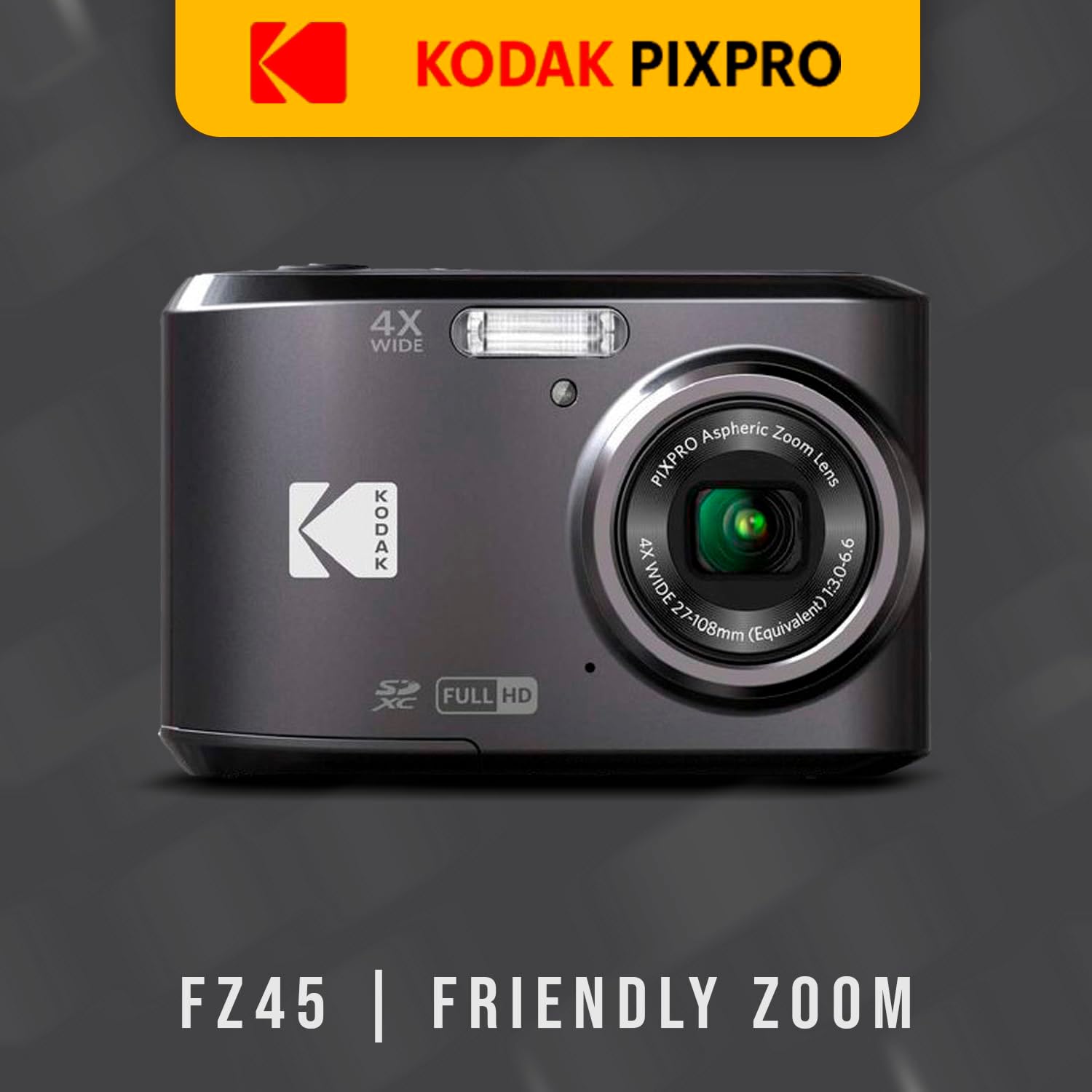
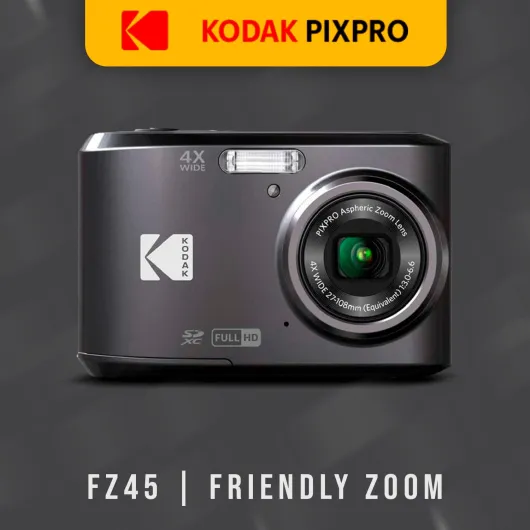
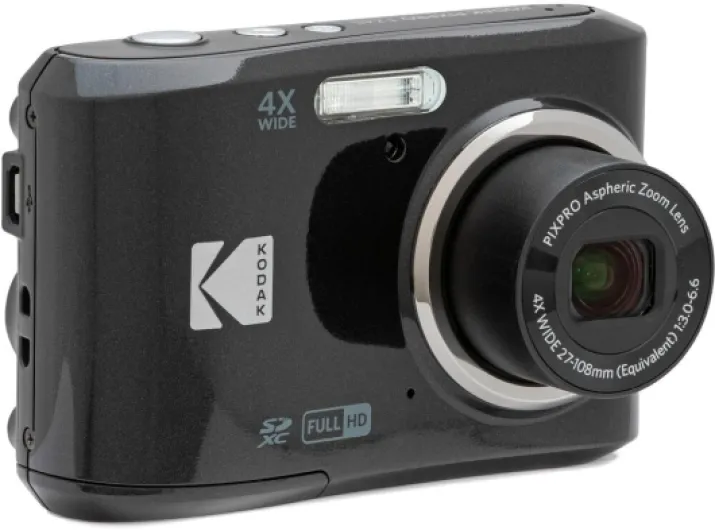
Design‑wise, the FZ45 is small, light, and clearly made of plastic. Don’t expect anything premium. The black finish looks fine from a distance, but once you hold it, you can tell it’s a budget camera. That said, the light weight is actually nice if you’re handing it to kids or someone who doesn’t want a heavy device hanging around their neck. I could keep it in a jacket pocket all day without noticing it.
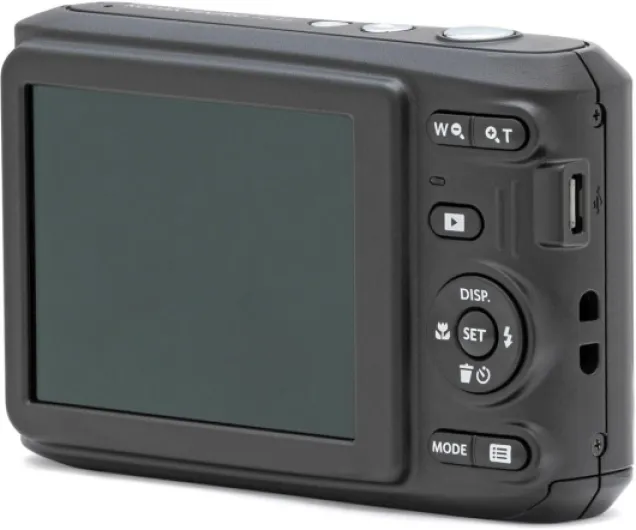
The button layout is simple: a power button, shutter button, zoom rocker, and a dedicated video button. On the back you get a directional pad for navigating menus and changing basic settings. It’s all pretty self‑explanatory, and I didn’t need the manual for anything besides checking a couple of icons. After a day of use, I could operate it one‑handed without thinking too much, which is exactly what you want in this price range.
The 2.7‑inch LCD screen is on the small side by today’s standards, and the resolution is not great. It’s usable for framing and checking if a shot is roughly in focus, but don’t expect to judge fine detail or color accuracy off the screen. In bright sunlight, it gets a bit hard to see, so I often just trusted the camera and checked the photos later on my laptop. For a casual user, it’s “good enough,” but it definitely feels dated compared to phone screens.
One thing I did like is that the camera doesn’t have a ton of moving parts. The lens extends when you power it on, but overall the build is simple and functional. It doesn’t feel premium, but it also doesn’t feel like it will fall apart if it bumps around in a bag. So, design verdict: looks basic, feels cheap but light, and the ergonomics are decent for anyone who just wants straightforward controls.
Battery: AA convenience with the usual downsides
The AA battery setup is probably the most divisive thing about this camera. Personally, I see it as both a strength and a weakness. On the good side, you can buy AA batteries literally anywhere. During my weekend trip, I ran through the included alkaline set after a day and a half of on‑and‑off shooting (roughly 150–200 photos plus some short videos). When they died, I just grabbed another pack at a corner shop and kept going. No hunting for a charger, no waiting for a battery to refill.
On the downside, alkaline AAs don’t last that long, especially if you use the flash a lot or spend time reviewing photos on the screen. If you plan to use this camera regularly, I’d strongly recommend getting a couple of sets of rechargeable NiMH AAs and a basic charger. With rechargeables, you’ll save money and waste a lot fewer batteries. Once I switched to my own rechargeables, the battery life felt more reasonable, roughly a full day of casual shooting without worry.
From a usability angle, the battery door is easy enough to open, and swapping batteries is quick. The camera doesn’t show a very detailed battery indicator – it’s more of a general icon that suddenly drops when you’re close to empty. So I got into the habit of carrying a spare set in my bag, just in case. If you’re planning a long day out, that’s something to keep in mind.
Overall, battery life is acceptable but not impressive. The real advantage is the flexibility: if you’re traveling or giving this to someone who doesn’t want to think about proprietary chargers, AA power is practical. But if you compare it to compact cameras with dedicated lithium‑ion packs, those usually last longer per charge and have more predictable battery indicators.
Durability: feels cheap but survives everyday use
In terms of durability, the FZ45 feels light and a bit toy‑like, but it’s handled normal use just fine so far. I’ve tossed it into a backpack without a padded case, carried it in a jacket pocket, and let my kids use it with their not‑so‑gentle hands. No cracks, no weird rattles, and the lens mechanism still extends and retracts smoothly. The plastic body does pick up small scratches, but nothing that affects how it works.
The buttons have a slightly mushy feel, but they haven’t failed or stuck during my time with it. The zoom rocker still responds as expected, and the shutter button half‑press for focus is consistent. The battery and SD card doors are clearly budget parts – thin plastic with simple latches – but they close securely if you’re not rough. I’d avoid dropping it on hard floors, though; it doesn’t feel like something that would love repeated falls.
The screen has no real protection beyond the basic plastic surface, so I’d suggest at least a cheap camera case or putting it in a pocket by itself rather than with keys or coins. After a couple of weeks, my screen had a couple of light marks but nothing major. It’s not a deal‑breaker, just something to be aware of if you’re picky about keeping gear pristine.
Overall, durability is fine for everyday family use, but I wouldn’t call it tough. It’s not a rugged camera, it’s not waterproof, and it’s not shockproof. For normal travel, kids’ parties, and holidays, it should hold up if you use a bit of common sense. If you need something to survive heavy abuse, this probably isn’t the right category anyway.
Performance: fine for daylight, weak in low light and video
On the performance side, the FZ45 is okay for casual daytime shooting. The 20MP sensor gives you enough resolution for prints and cropping a bit, and the 27mm wide‑angle is handy for group shots or landscapes. In good light – outdoors, near windows, or on a bright day – the photos look decent: colors are a bit on the punchy side, sharpness is fine in the center, and the autofocus usually locks on quickly enough. It’s nothing mind‑blowing, but for holidays and family gatherings, it’s usable.
Once the light drops, things go downhill pretty fast. Even though the specs mention a wide ISO range and all that, in practice you start seeing noise and blur pretty quickly indoors or at night. The built‑in flash helps, but the photos then get that typical compact‑camera flash look: flat and harsh. If you’re buying this for night city photography or indoor sports, I’d say look elsewhere. For birthday parties in a reasonably lit room, it’s okay, but you’ll have to accept some grain and motion blur.
Video is limited to 720p HD, which honestly feels dated now. For quick clips of the kids or the dog, it works, but if you’re used to 1080p or 4K from your phone, you’ll notice the drop in detail. The one‑touch video button is convenient though – I used it a lot because it’s simple: press once to start, again to stop. Audio is average: you can hear people talking, but it picks up background noise and handling noise from your fingers.
Speed‑wise, the camera is not super fast but not painfully slow either. Startup time is okay, focusing is decent in good light and slower in dim conditions, and the 5 FPS continuous mode is there but not something I relied on much. For everyday snapshots, it’s fine. If you’re trying to catch fast action, like sports or running kids in low light, you’ll hit its limits quickly. Overall, the performance is in line with a low‑cost compact: decent in good conditions, clearly struggling once things get tricky.
What you actually get in this FZ45 bundle
The bundle is pretty straightforward: you get the Kodak PIXPRO FZ45 camera in black, a 32GB Class 10 UHS‑I SDHC/microSDHC card with adapter, and a pack of four AA alkaline batteries. That’s it. No fancy case, no strap more advanced than the basic wrist strap, no charger because the batteries are standard disposable AAs. On the plus side, you don’t need to buy anything extra to start using it the same day.
The camera itself is a compact 20MP point‑and‑shoot with a 27mm wide‑angle lens, a 2.7‑inch LCD screen, and a built‑in flash. It’s clearly aimed at beginners: there’s face detection, red‑eye removal, and one‑touch video recording. Most things are on auto – exposure, white balance, focus – so you don’t really have to think too much. The spec sheet mentions Wi‑Fi and wireless video output, but in my day‑to‑day use I mostly ignored that and just pulled the SD card to transfer photos.
The memory card is decent: 32GB Class 10 is enough for a casual user. I shot a mix of photos and short clips over several days and didn’t come close to filling it. The card speed is fine for stills and 720p video; you’re not shooting 4K or burst‑heavy sports, so you won’t really hit a bottleneck here. It’s basically one of those things that you forget about because it just works.
In practice, this bundle feels like a starter kit for non‑techy people: someone who doesn’t want to dig through listings for cards and compatible batteries. If you’re a bit more into cameras, you’ll probably think, “Okay, this is bare minimum, nothing special.” But for gifting – like to a kid or a grandparent – it’s actually convenient. They open the box, put in the batteries, and they’re ready to go without extra shopping.
Pros
- Very simple to use: point‑and‑shoot with clear buttons and auto modes
- Runs on AA batteries, so you can buy power anywhere and don’t depend on proprietary chargers
- Bundle includes a 32GB Class 10 memory card and batteries, so you can start using it immediately
Cons
- Image quality drops quickly in low light with noticeable noise and blur
- Video is limited to 720p, which feels outdated compared to phones and newer cameras
- Build feels cheap and plasticky, with a small, low‑resolution screen
Conclusion
Editor's rating
After using the Kodak PIXPRO FZ45 bundle for everyday stuff and a short trip, my take is simple: it’s a basic, no‑nonsense point‑and‑shoot that suits beginners, kids, and people who hate fiddly tech. The image quality is fine in good light, average in low light, and the 720p video is serviceable but clearly dated. The big advantage is the ease of use: turn it on, point, shoot. The AA batteries and included 32GB card make it a ready‑to‑go kit, which is great for gifting or for someone who doesn’t want to shop for extras.
If you’re the type who already uses a decent smartphone camera and cares about sharpness, low‑light performance, and high‑res video, this will probably feel like a step back. There are better cameras out there, and even many phones will beat it in tricky lighting. But if your priority is a cheap, simple, dedicated camera that you’re not afraid to hand to kids or take to the beach, it does the job. I’d recommend it mainly for casual family use, older relatives, or as a first camera for a child. More demanding users should either spend more or look at used higher‑end compacts instead.