
Summary
Editor's rating
Value: who this makes sense for, and who should skip it
Design: small DSLR vibes, but clearly a budget body
Battery life: okay for casual use, not great for heavy shooting
Durability and renewed condition: better than I expected, but still a plastic body
Performance: good zoom, decent photos, but clearly an older camera
What you actually get with this renewed SX400
Pros
- 30x optical zoom (24–720mm) gives much more reach than a phone at this price
- Renewed unit arrived in very good condition with a solid battery and clean lens
- Simple to use in Auto mode, good for beginners and casual family/travel shots
Cons
- Weak low‑light performance and noticeable noise indoors or at night
- Video limited to 720p and slow continuous shooting, not ideal for action or content creation
- Battery life only moderate; heavy shooters will likely need a spare battery

Specifications
View full product page →| Brand | Canon |
A cheap way to get a long zoom without going full DSLR
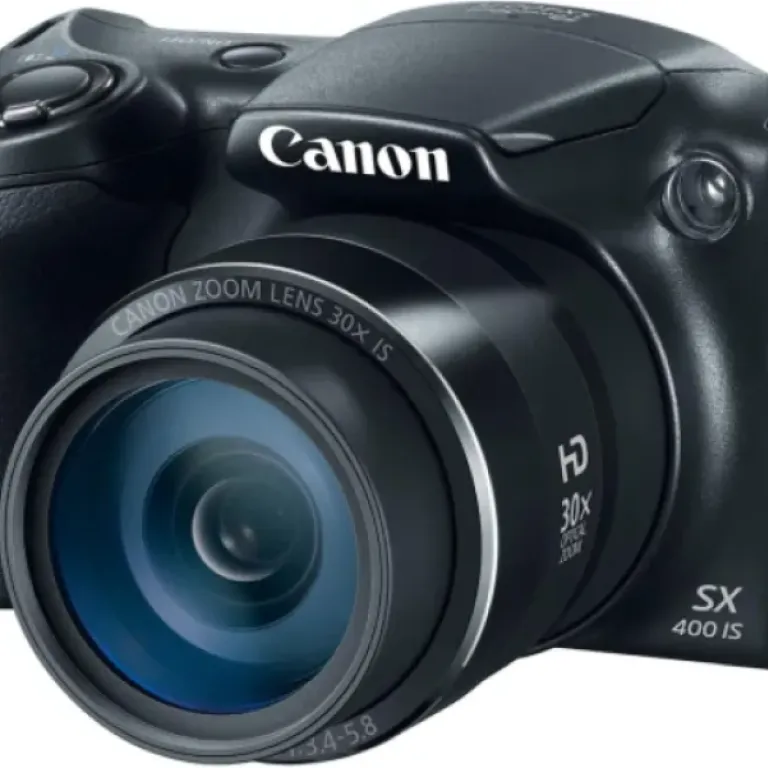
I grabbed this renewed Canon PowerShot SX400 mainly because I wanted a simple camera with a long zoom for trips and family stuff, without dragging around a big DSLR and lenses. I used it for about two weeks: one short city trip, a kids’ birthday, and some random walks. So this is not lab testing, it’s just how it behaved in normal day-to-day use. I’ve used entry‑level DSLRs and phone cameras (Pixel and iPhone), so that’s what I’m comparing it to in my head.
The first thing to know: this is an older camera, 16 MP, 720p video, and a 30x zoom (24–720mm equivalent). On paper it looks decent for the price, especially in renewed condition. But you feel right away that it’s not a modern mirrorless or a high‑end compact. It’s more like a bridge camera for someone who wants more reach than a phone, and doesn’t care about the latest specs.
Because it’s renewed, I also paid attention to the condition: scratches, battery, buttons, and whether anything felt off. A lot of renewed stuff is hit or miss, so I was ready to send it back if it looked rough. The one I got was clean, no visible damage, and everything powered on fine. It really did look like a well‑kept second‑hand camera.
Overall, my mindset with this thing was simple: if it gives me better zoom and more stable photos than my phone, and it doesn’t die after 30 minutes, I’m happy. If you go in expecting pro quality or modern 4K video, you’re going to be disappointed. I’ll break down where it does the job and where it clearly shows its age.
Value: who this makes sense for, and who should skip it
Price‑wise, as a renewed camera, the SX400 sits in that awkward spot between “cheap used gear” and “entry‑level new camera or just use your phone”. For the money, what you’re really paying for is the 30x optical zoom and the DSLR‑style handling. If you specifically want a long zoom without messing with lenses, this is a pretty solid deal. You’re not getting the latest tech, but you are getting reach that phones still struggle to match optically, especially at this price.
Where the value starts to look weaker is if you don’t actually need that zoom. If you mostly shoot indoors, at night, or you care a lot about video quality, a mid‑range phone will simply do better. Your phone will give you cleaner low‑light photos, higher‑res video, and easier sharing. In that scenario, this camera becomes a bit redundant. Also, the lack of full manual controls and 1080p/4K video makes it a poor choice for someone who wants to learn photography in a more serious way.
On the other hand, if you’re buying for a beginner or a teenager who wants something that feels like a “real camera” with a big zoom, but you don’t want to spend on a DSLR or worry about lens costs, this makes sense. It’s simple enough not to intimidate them, and if they drop it or lose interest, you haven’t burned a huge amount of money. The fact that several Amazon reviews mention it arriving in great condition lines up with my experience: the renewed program, at least at the “excellent” level, seems decent.
So in terms of value, I’d call it good but niche. Great if you know you want a cheap superzoom for daylight travel and family use. Not great if you’re chasing image quality, low‑light performance, or serious video. In that case, either save up for a newer bridge camera or stick with your phone and maybe a small tripod.
Design: small DSLR vibes, but clearly a budget body
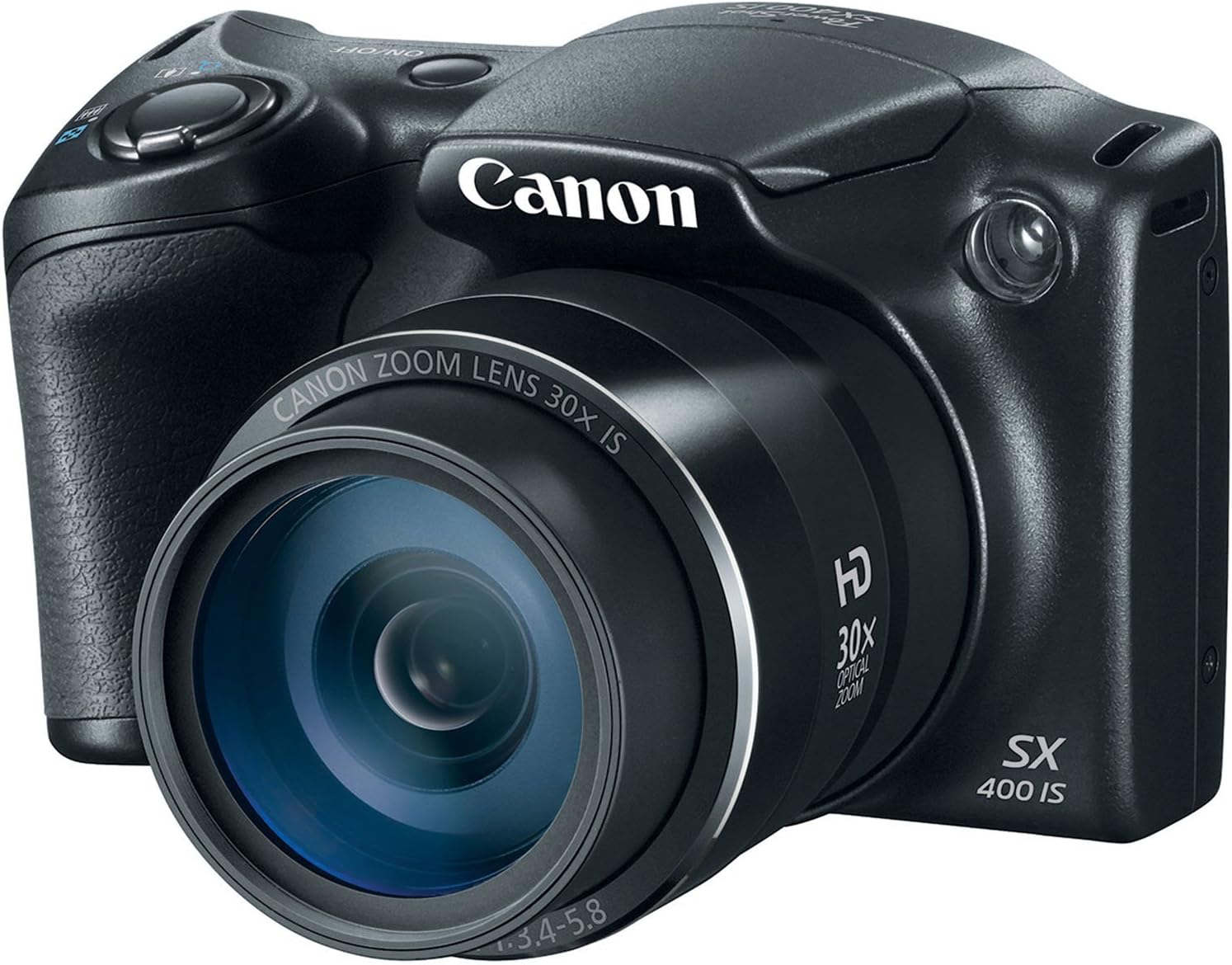
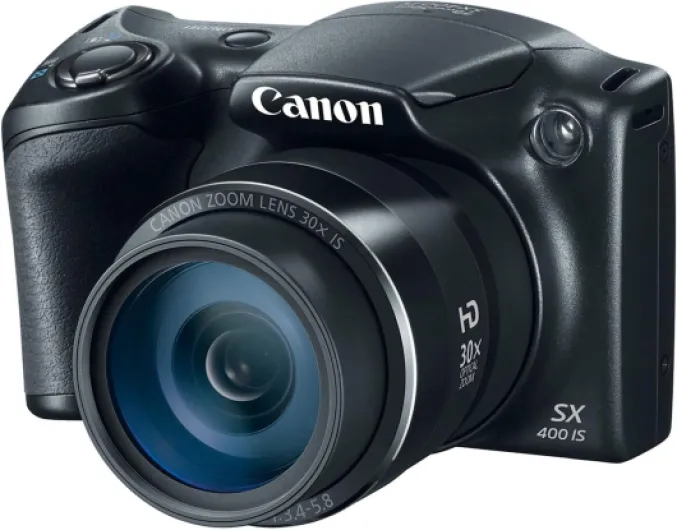
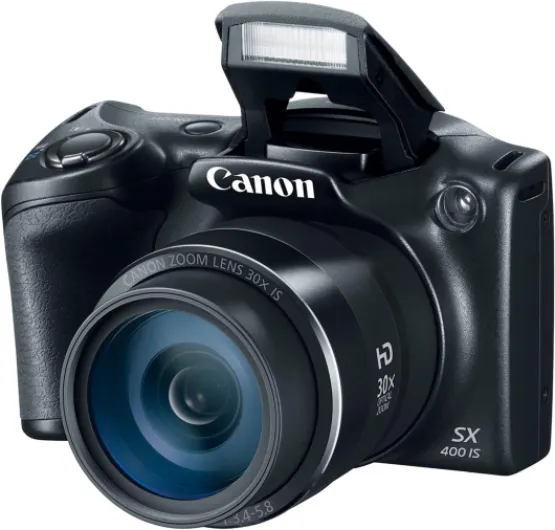
The design is basically “mini DSLR”. It’s got a chunky grip on the right, the lens sticks out a bit even when powered off, and there’s a pop‑up style built‑in flash. In the hand, it feels more like a small bridge camera than a compact point‑and‑shoot. I actually liked that: compared to those slippery flat compacts, this one is easier to hold with one hand while you chase kids or move around. At around 0.6 kg, it’s light enough to carry all day, but you’ll feel it more than a phone in your pocket.
The buttons are classic Canon: a mode dial on top, shutter button with a zoom rocker, and a few buttons on the back for playback, menu, and exposure stuff. Nothing fancy, mostly plastic. The dial has basic modes like Auto, Program, Live View Control, and Movie. No dedicated manual exposure (M) mode, so if you’re used to full manual control, you’ll feel limited. For a beginner, though, it keeps things simple. The dedicated movie button on the back is handy – you just tap it and it starts recording, no need to change modes.
Build quality feels okay but clearly budget. The plastics don’t creak much, but they’re not premium either. The renewed unit I had didn’t have any looseness in the zoom ring or buttons, which is a good sign. The lens mechanism extends smoothly when you power it on, and retracts when you switch it off. The only thing that felt a bit cheap was the battery/SD card door; it works, but I wouldn’t abuse it. I could see that part being the first to fail if you’re rough.
In short, the design is practical, not fancy. It’s shaped well for actual use, with a grip that helps with stability, but the materials and finish remind you that this is an entry‑level camera. If you’re okay with that trade‑off – better handling vs. fancy materials – then the design does the job. If you want something slim and pocketable, this is not it; you’ll need a small compact or just stick to your phone.
Battery life: okay for casual use, not great for heavy shooting
Battery is one of those things where older compact cameras often feel behind, and this one is no exception. With the renewed SX400, I got roughly a day of light use: maybe 150–200 photos plus a few short 720p clips before the battery indicator started blinking. That was with the screen on full time (you don’t really have a choice) and some zooming in and out. For a half‑day outing or a family event, it’s fine. For a long day of sightseeing where you’re shooting a lot, you’ll probably drain it before you get back to the hotel.
The good news: the battery in my renewed unit seemed healthy. It held charge overnight, and there was no random shut‑off at high battery levels. So even though it’s a renewed product, they clearly didn’t throw in some half‑dead battery. Still, compared to my phone, which I can top up with a power bank while walking, this camera is less flexible. You need to either carry a spare battery or be a bit conservative with how much you review photos and how long you leave it powered on.
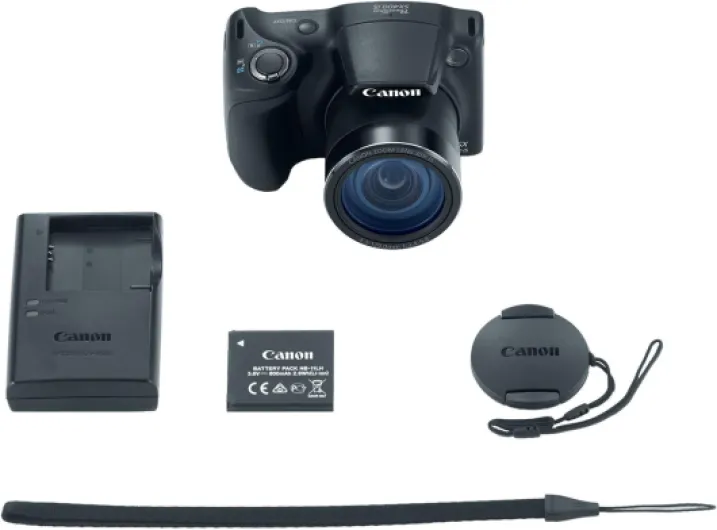
Charging is done with the usual Canon wall charger: you pop the battery out, slide it into the charger, and plug it into the wall. No USB‑C, no charging through the camera body. It’s old‑school but reliable. A full charge from empty took around 2 hours in my case. Not terrible, but if you forget to charge the night before, you’re stuck. I’d honestly recommend grabbing a cheap second battery if you plan to travel with this camera.
So in practice, battery life is acceptable but not strong. It matches what I’d expect from a small‑sensor compact of this age: okay for casual shooters, a bit limiting for heavy users. If you’re the type who takes a few dozen shots per day, you’ll be fine. If you hammer the shutter and record lots of video, either bring a spare battery or look at something more modern with better power management.
Durability and renewed condition: better than I expected, but still a plastic body
Since this is a renewed camera, I paid a lot of attention to how it felt out of the box and after being thrown in a bag a few times. My unit arrived in very good shape: no visible scratches on the lens, no big marks on the body, and the screen only had very light hairlines that you only see when it’s off and under direct light. Buttons had a consistent click, the zoom mechanism felt smooth, and the battery/SD door still had a decent snap. It didn’t feel like something that had been abused for years.
Over about two weeks, I didn’t baby it. I carried it in a backpack without a dedicated camera case, just not at the bottom with heavy stuff on top. It handled that fine. No new marks showed up, and the plastic finish didn’t start peeling or anything like that. That said, this is clearly not a rugged camera. No weather sealing, no shock protection, and the lens barrel is the usual telescoping design that does not like sand or hard impacts. If you drop it lens‑first on concrete, you’re probably done.
The good part of buying renewed is that someone presumably checked it before shipping. In my case, that seems true: sensor was clean, no dust blobs in the images even at small apertures, and the lens elements looked clear. The zoom mechanism didn’t jam and there was no weird grinding noise. For a camera that’s been around a few years, that’s honestly all I need. Of course, it’s still a used product, so long‑term reliability is a bit of a question mark, but the 1‑year limited warranty gives at least some backup if something dies quickly.
So durability wise, I’d say pretty solid for normal, careful use, but don’t treat it like an action camera. If you’re careful with your gear, this should last you a few years more. If you’re rough on stuff, toss cameras in the sand, or leave them bouncing around in a car, this plastic bridge body won’t magically survive that. The renewed condition on my copy was honestly better than I expected, though, which is a plus.
Performance: good zoom, decent photos, but clearly an older camera
Let’s talk about how it actually shoots. The main selling point is that 30x optical zoom (24–720mm equivalent). In real use, that zoom is the best part. I was able to grab shots of birds in trees, signs across the street, and kids on a playground without walking right up to them. At the wide end (24mm), it’s fine for group photos and landscapes. At full zoom, you really need to hold it steady or lean on something, but the optical stabilization does help a lot. Without it, half my shots would have been blurry.
Image quality is fine in good light. At ISO 100–400, outdoor daytime shots look sharp enough, with decent color. It’s not on the level of a modern APS‑C or full‑frame camera, obviously, but for family photos and travel snaps, it’s okay. Indoors or at night, things drop off quickly. The small 1/2.3" sensor struggles in low light: you see noise, and details get smeared when the camera pushes the ISO. If you’re mainly shooting outdoors in daylight, you’ll be happy enough. If you want nice clean night photos, this is not the right tool.
Autofocus speed is acceptable but not fast. In bright light it locks focus in maybe half a second or so. In lower light or at full zoom, it hunts a bit more, especially on moving subjects. For still objects, it’s okay. For fast kids running around indoors, I missed a few moments because the camera was still trying to focus. Continuous shooting is rated around 0.8 fps, and it feels slow. Don’t buy this expecting to shoot sports bursts; it’s more of a one‑shot, recompose, one‑shot kind of camera.
Video tops out at 720p HD, which in 2026 is pretty dated. For quick clips of family moments, it’s usable, but if you’re used to 1080p or 4K from your phone, the footage looks soft. The zoom during video works, and the stabilization helps, but you can hear the zoom motor a bit if the room is quiet. For social media, it’s fine; for serious video work, no. Overall, performance is decent but nothing more: solid zoom, okay photos in good light, clearly limited in low light and action. If you keep your expectations realistic, it gets the job done.
What you actually get with this renewed SX400
Out of the box (well, the renewed version of a box), I got the camera body, a battery, charger, strap, and a memory card. The card wasn’t Canon branded, but it was a 32 GB SD card and it worked fine. The battery and charger looked original Canon, at least the labels matched what I’ve seen before. No fancy extras, no camera bag, just the basics. For a renewed product, that’s pretty much what I expected.
The camera itself is a 16 MP compact with a fixed 30x zoom lens (24–720mm equivalent). It shoots stills and 720p HD video. You get basic auto modes, a movie mode, and some scene presets. It’s not one of those cameras full of manual dials; it’s more point‑and‑shoot with a big zoom. The screen is a 3‑inch LCD with 230k dots, so don’t expect a super sharp display. Menus are the usual Canon style: not pretty, but understandable once you poke around for a bit.
In practice, this feels like a starter camera for someone who wants more reach than their phone and doesn’t want to bother with lenses. You turn it on, leave it on Smart Auto, half‑press to focus, and shoot. The camera tries to guess the scene and set things for you. It also has optical image stabilization, which is crucial at 30x zoom. Without that, every photo at full zoom would be a blurry mess unless you used a tripod.
If you’re expecting Wi‑Fi transfers and fancy app integration, this one is pretty old‑school. The spec sheet mentions Wi‑Fi, but in my unit I ended up just using the USB cable and card reader, which was honestly faster and less annoying. Overall, what you get is a straightforward superzoom compact that feels like a small SLR, with enough features for casual shooting but nothing that screams “modern”. For the renewed price, that setup is fair, but you need to know what you’re walking into.
Pros
- 30x optical zoom (24–720mm) gives much more reach than a phone at this price
- Renewed unit arrived in very good condition with a solid battery and clean lens
- Simple to use in Auto mode, good for beginners and casual family/travel shots
Cons
- Weak low‑light performance and noticeable noise indoors or at night
- Video limited to 720p and slow continuous shooting, not ideal for action or content creation
- Battery life only moderate; heavy shooters will likely need a spare battery
Conclusion
Editor's rating
After using the renewed Canon PowerShot SX400 for a couple of weeks, my feeling is pretty straightforward: it’s a decent budget superzoom that does what it says, as long as you keep your expectations in check. The 30x optical zoom is the star of the show. For daylight travel, zoo trips, and general family use, it lets you get shots your phone simply can’t reach optically. In good light, photos are perfectly usable, colors are fine, and stabilization helps a lot at the long end. The renewed unit I had arrived in very good physical condition, with a healthy battery and no functional issues, so on that front I was pleasantly surprised.
Where it falls short is in areas where tech has moved on: low‑light performance, autofocus speed, and video resolution. Indoors or at night, the small sensor struggles; images get noisy and soft. Video being stuck at 720p feels dated, and the continuous shooting speed is slow, so this isn’t for sports or serious content creation. Battery life is okay for casual use but not great for heavy shooters. So who is this for? Someone who wants a cheap, simple camera with a big zoom for daylight outings, maybe as a first “real” camera or a backup to a phone. Who should skip it? Anyone focused on low‑light photography, modern video, or learning full manual control. For them, there are better options, even if it means spending a bit more.